Wender·Vista
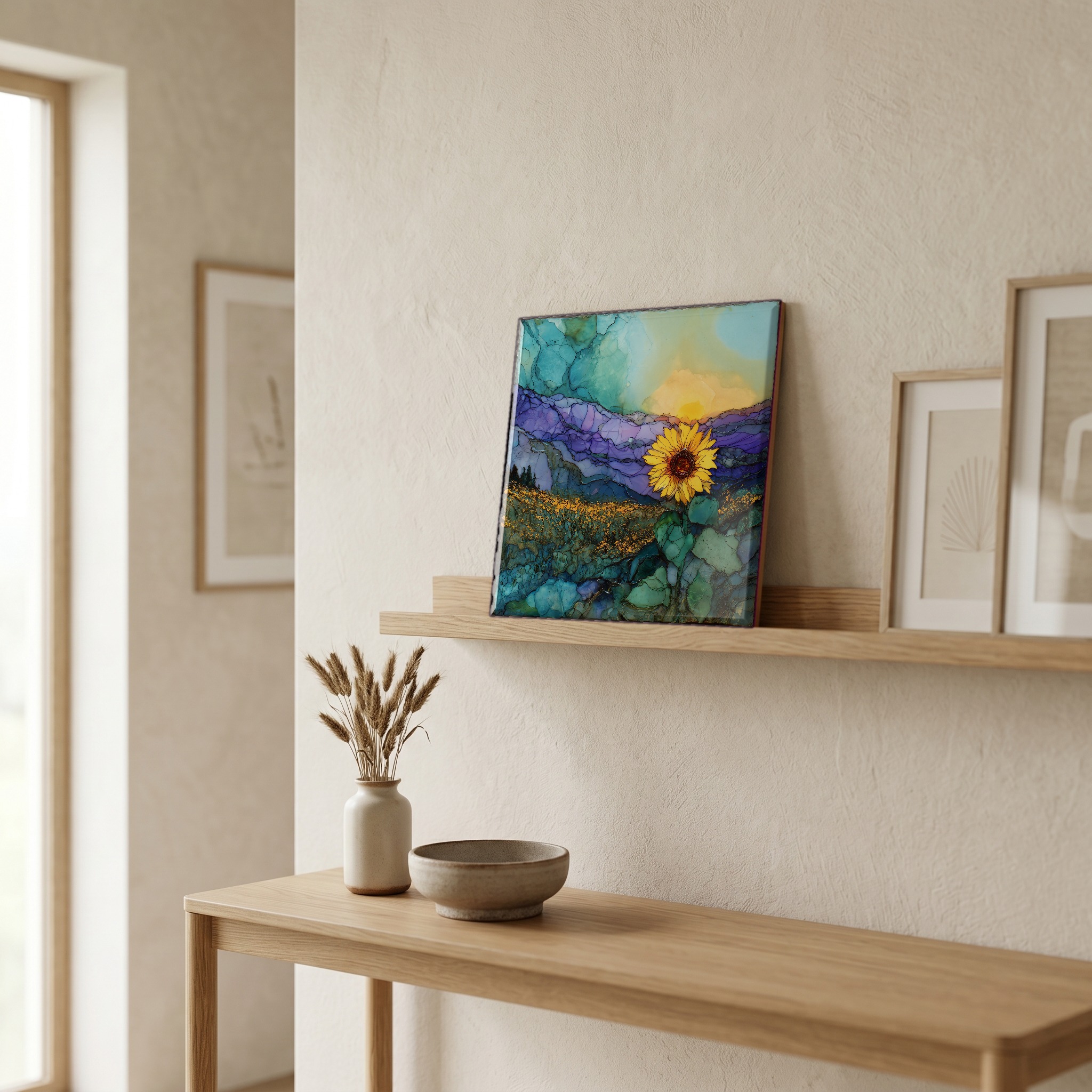
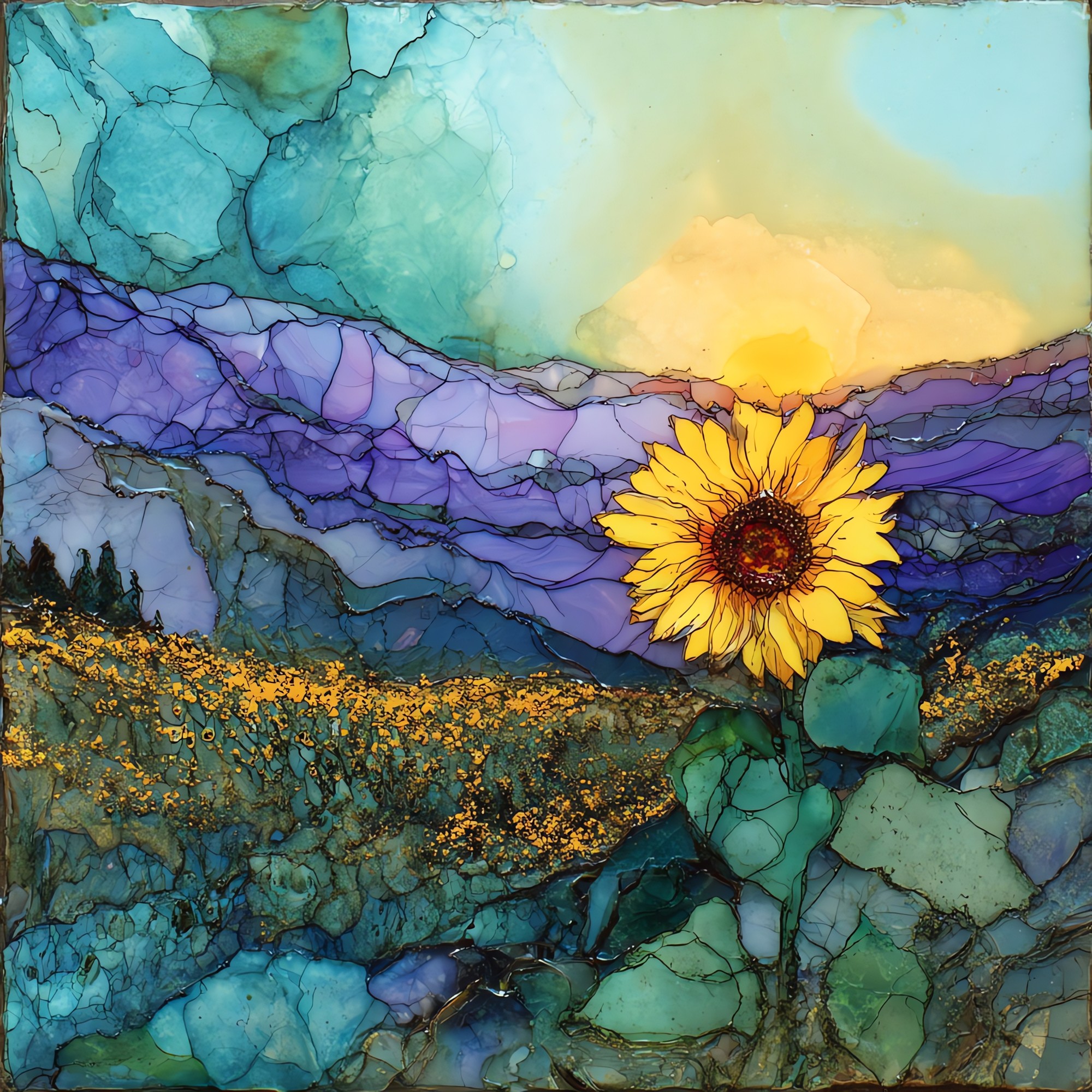
Provence Sunflower Field
shown on ceramic, 12-inch tileFrance
on the Valensole Plateau, north of Aix

Provence Sunflower Field

a thousand heads, all facing east.

Where it lives

Not only on a wall.

A small tile on the nightstand catching the morning. A larger one above the fire. Yours, wherever you spend the slow hours.
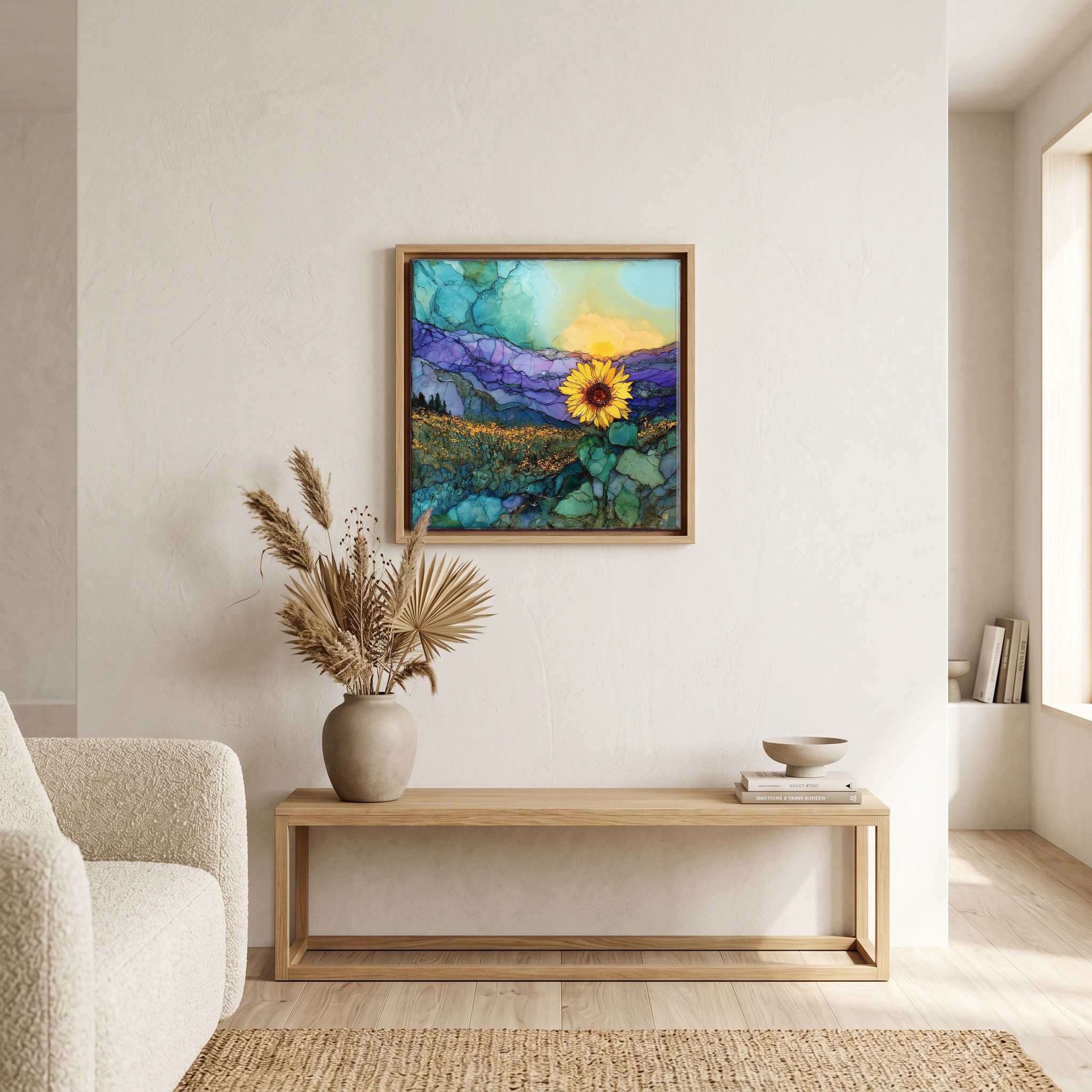
Above the bench, in a warm oak surround.
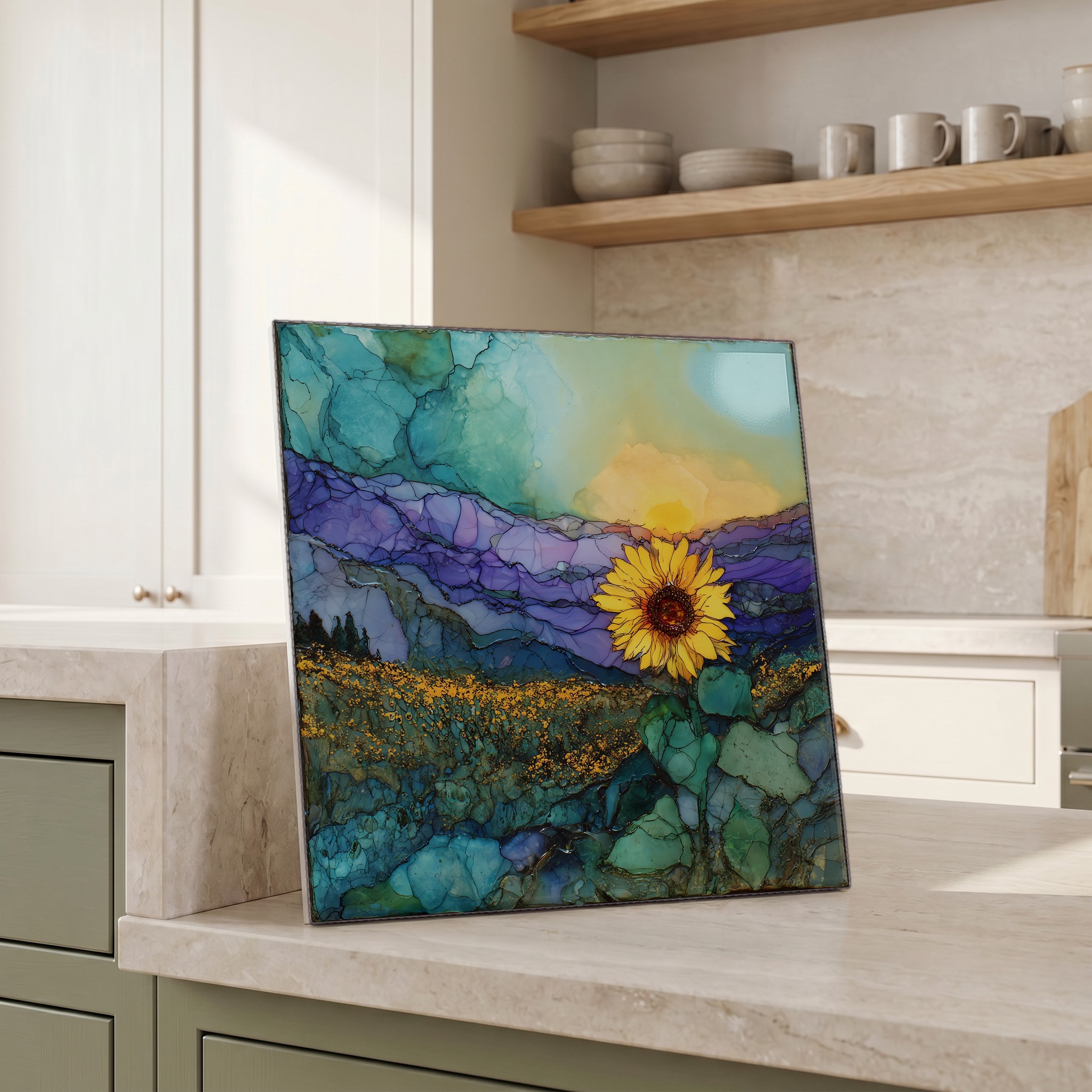
Beside the kettle, propped on the counter.
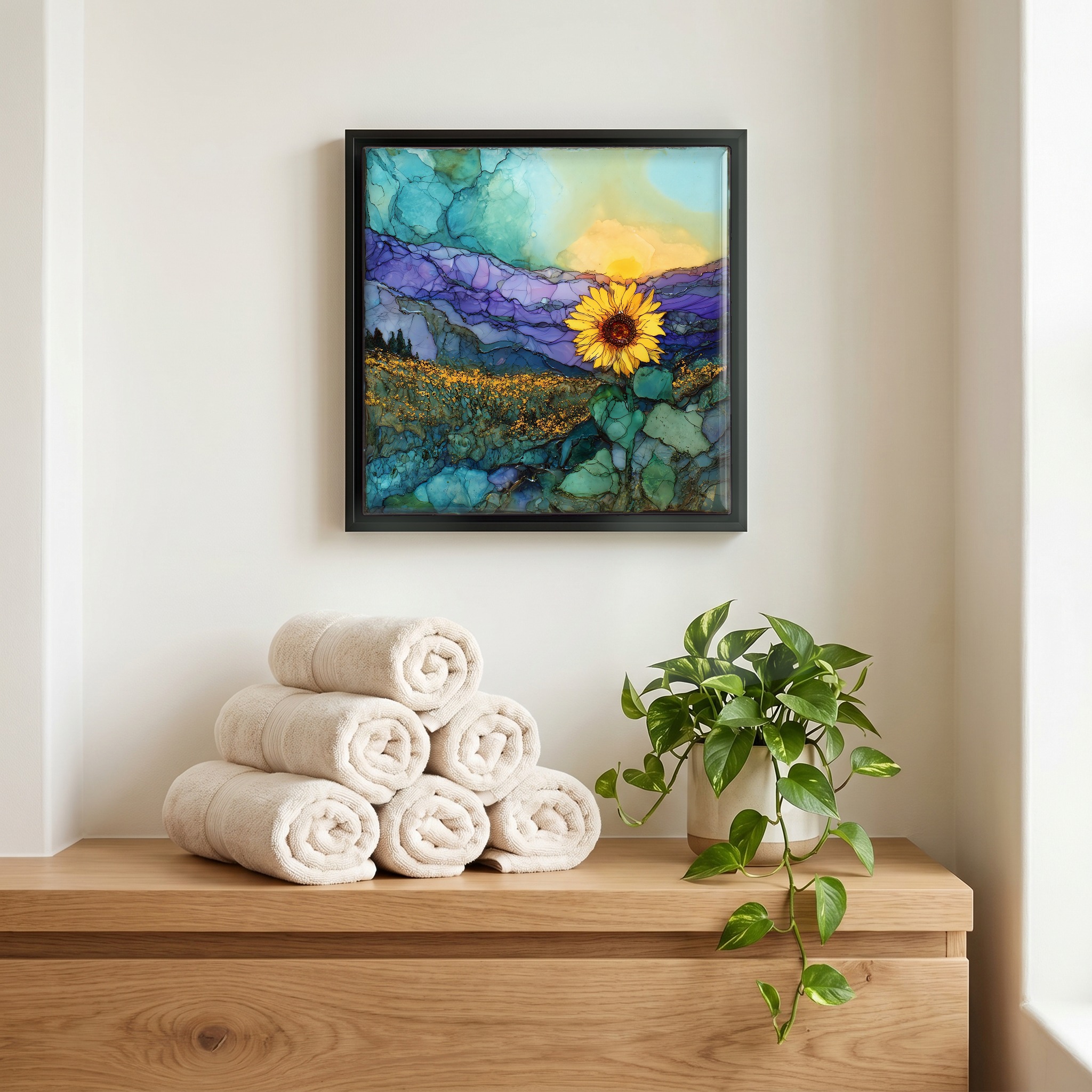
Above the linens, in a slim black surround.
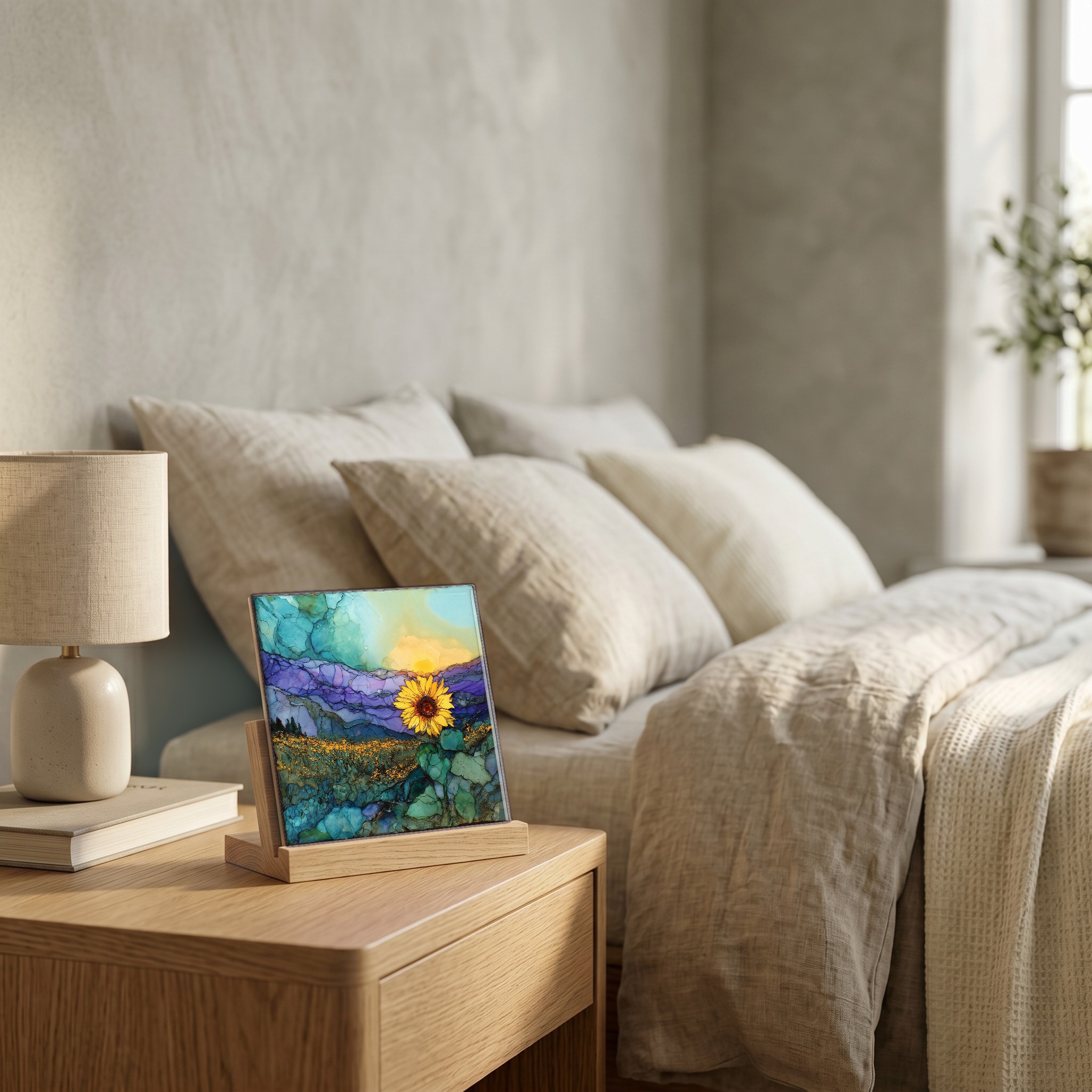
On the nightstand, on a light oak stand.
On a picture ledge, where the light comes in.
a note from the studio

The Valensole Plateau in late July, when the lavender rows give way to sunflower rows and both crops are at their height. The young plants follow the sun through the day; by the time the heads are heavy with seed, they hold east and don't move. Growers harvest in August for oilseed, and the colour lasts only a few weeks. Van Gogh painted his Sunflowers around Arles in 1888, two hours southwest. The light here hasn't changed.
from the studio
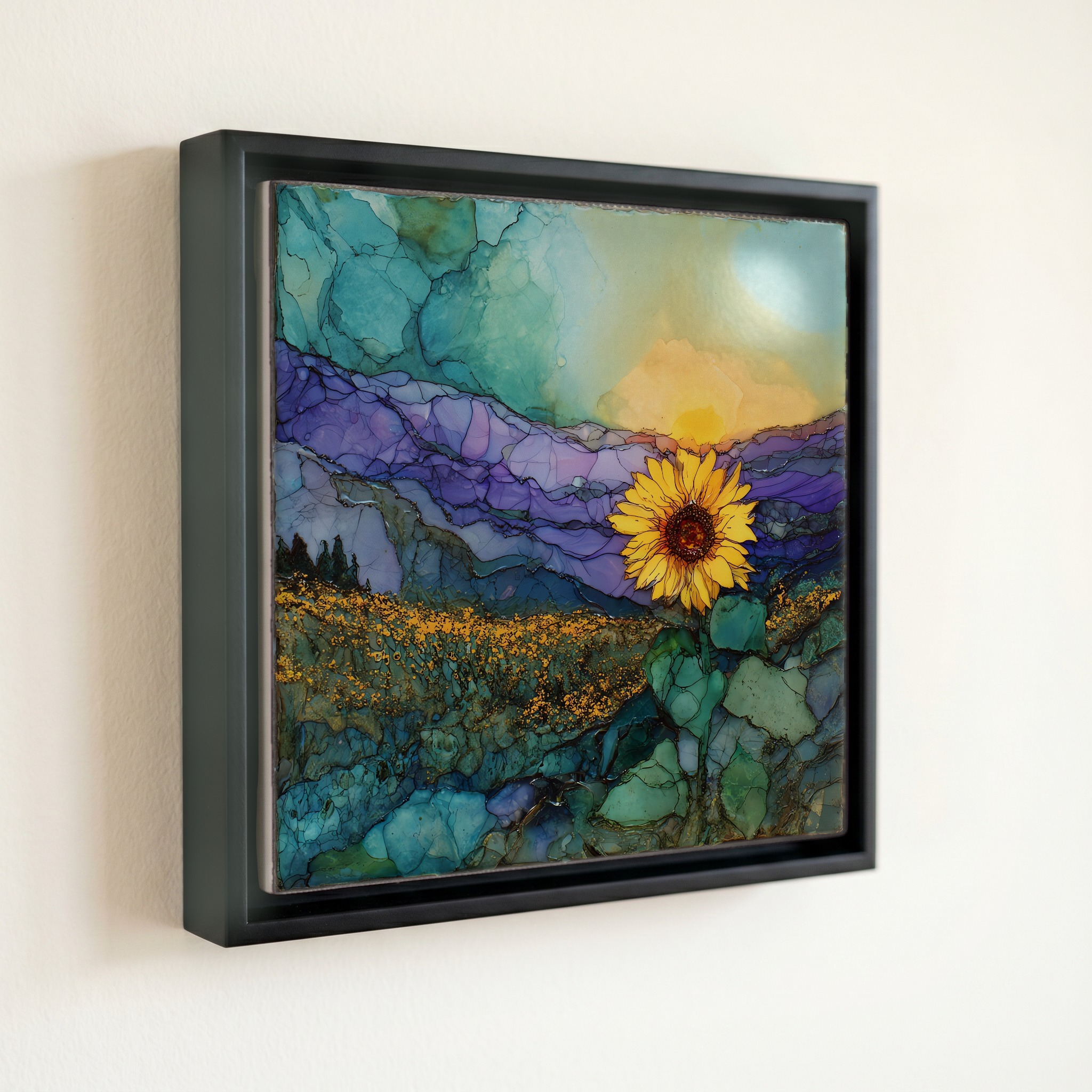
shown in a slim black floating frame · 6 × 6 in
— bring it home

Provence Sunflower Field, on ceramic.

Each tile is finished by hand in our Knoxville studio. Artwork is slowly infused into the ceramic surface under high heat and pressure, and rests beneath a thin glossy finish. The colour lives in the surface, not on top of it.

What kind of piece?
One tile — square or rectangle.
How big?
the popular one — counter, shelf, nightstand
6 × 6 in · 15 cm · 1.6 lb
Surface finish
A clear glossy finish — the artwork reads as if under resin. Ideal for show-pieces and framed wall art.
How it sits
A hidden cleat — sits ¼″ proud of the wall.
$58
Hand-finished and shipped from our studio at the foot of the Smokies. On your wall in about ten days.
size
6 × 6 in
15 cm
weighs
1.6 lb
solid in the hand
surface
ceramic, hand-finished
art rests beneath a thin glossy finish
from
Knoxville, TN
our family studio, at the foot of the Smokies
— start a Coaster Set

Pick any four 4-inch tiles — National Parks you've been to, a Smokies set, the four seasons of one place. $ for a set of , cork-backed, ready to live on the table.
comes gift-ready
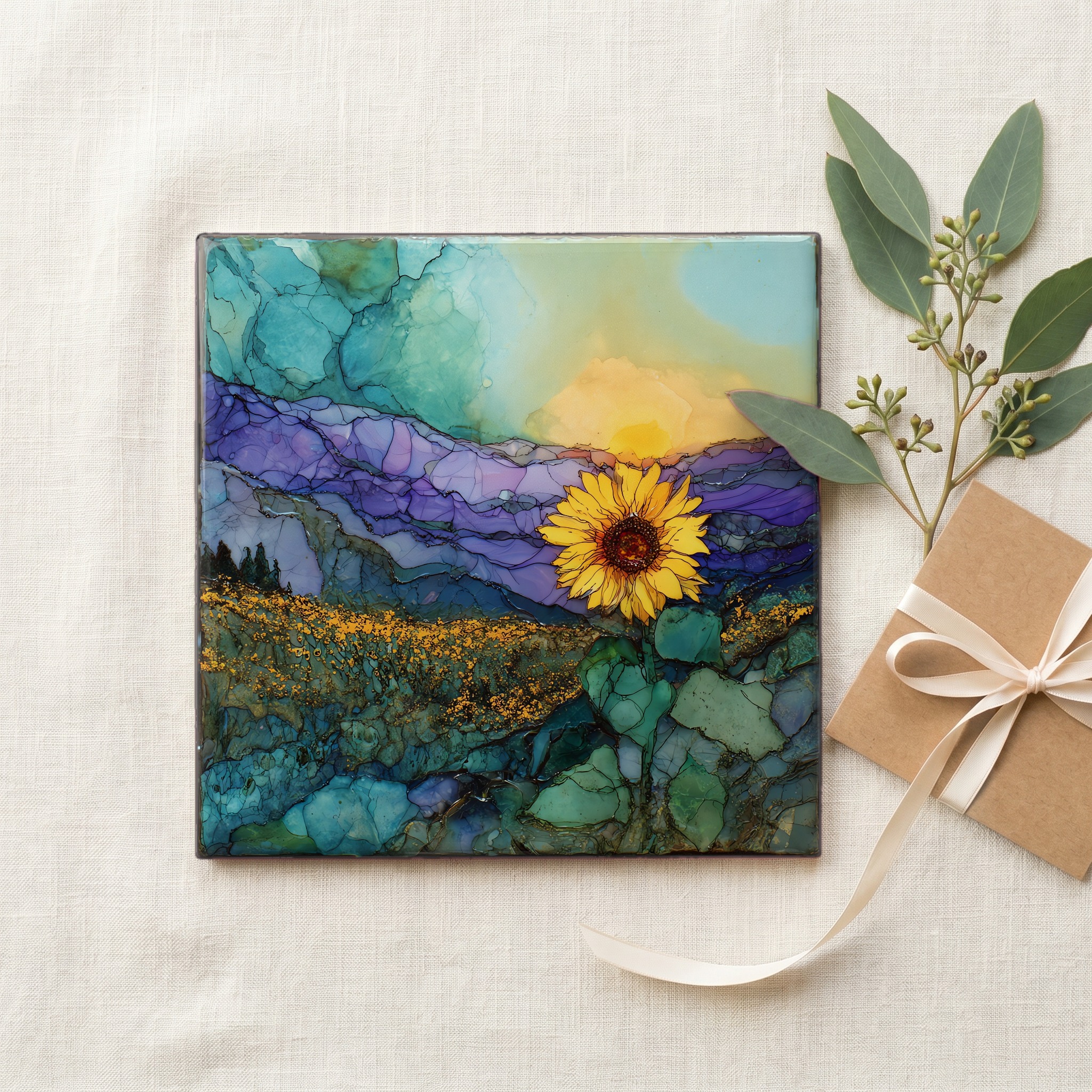
comes gift-ready

Each tile ships in a kraft box, tied with cream ribbon, with a handwritten note from the studio if you'd like to add one.
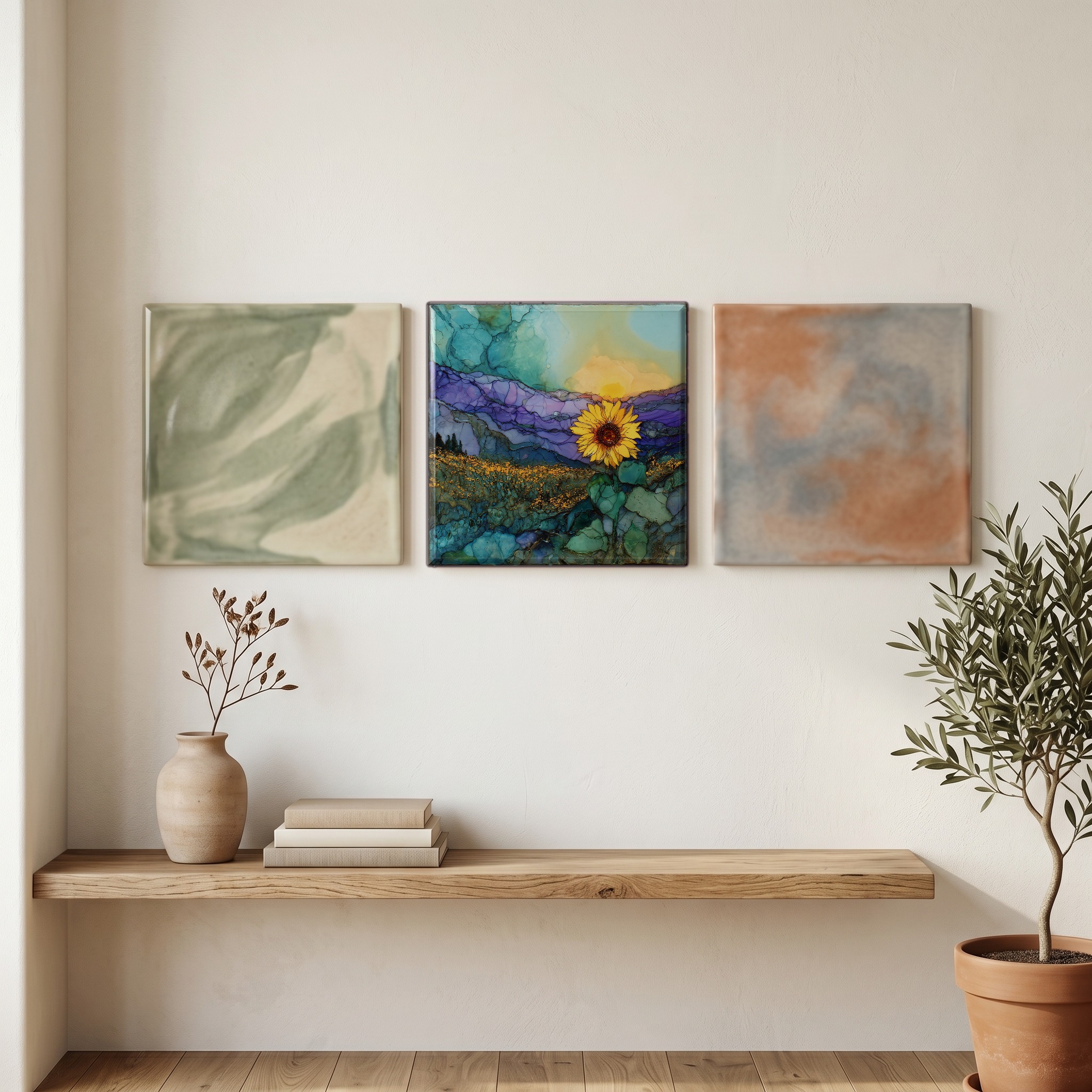
or build a grouping
or build a grouping

Three or five different vistas, hung together — a chapter of places you've been, or want to go.

about Provence Sunflower Field

The place, in three passes.

A little of what's known, in case you fall down the rabbit hole — or want to go see it yourself.
the place

The Valensole Plateau spreads across about 800 square kilometers in Alpes-de-Haute-Provence, the eastern département of the Provence-Alpes-Côte d'Azur region. The plateau sits at roughly 500 to 600 meters of elevation, bordered to the south by the Verdon Gorge and to the north by the Durance River. The town of Valensole, population near 3,300, gives the plateau its name and anchors a working agricultural landscape of lavender, almonds, and sunflowers. The closest international airport is Marseille Provence, about ninety minutes by car, and the plateau is reached most often via the D6 from Manosque or the D952 from the Verdon.

the season

The sunflower bloom on the Valensole Plateau is brief, usually peaking between late June and the third week of July and sometimes holding into early August. The window lasts about three weeks in a typical summer. It overlaps the lavender harvest, which is why the plateau in July reads as gold and violet at once. Growers plant for oilseed rather than tourism, so the rows are functional and the heads are cut in August once the seeds dry. The crop rotates with wheat and lavender, so the same field is rarely yellow two summers in a row.

the light

The light over Provence is the reason the painters came. Vincent van Gogh moved to Arles in February 1888, two hours southwest of the Valensole Plateau, and painted four major Sunflowers canvases that summer for the bedroom he was preparing for Paul Gauguin. He wrote to his brother Theo that he was trying to catch the yellow, the way the Provençal sun falls on the fields after noon. The plateau receives more than 2,800 hours of sunshine each year, among the highest in mainland France, and the air is dry enough that the colour does not soften across distance.

where
France · Valensole Plateau, Alpes-de-Haute-Provence
the neighborhood

What's nearby.

A handful of named places within an hour's walk or short drive. Some we've already painted; some we will.
at the lake
Valensole
market town
22 km SW
Manosque
market town
25 km SE
Moustiers-Sainte-Marie
hilltop village
28 km S
Lac de Sainte-Croix
reservoir
30 km S
Verdon Gorge
canyon
N
Provence Sunflower Field
Valensole
Manosque
Moustiers-Sainte-Marie
Lac de Sainte-Croix
Verdon Gorge
common questions

What people ask.

A few questions we get about Provence Sunflower Field — and about bringing the piece home.
about the place

The most photographed fields are on the Valensole Plateau in Alpes-de-Haute-Provence, between the Verdon Gorge and the Durance River. Sunflowers also grow in fields around Arles, Aix-en-Provence, and the Luberon, often in rotation with wheat and lavender. The plateau sits at about 500 to 600 meters of elevation.

The bloom usually peaks between late June and the third week of July, with some fields holding into early August. Heat waves can shorten the window. The bloom often overlaps the lavender harvest, so visitors in mid-July can see both crops at full colour.

Young sunflower plants follow the sun across the sky each day, a behavior called heliotropism. Once the heads grow heavy with seed and the stem stiffens, they stop tracking and lock facing east. That is why a mature field reads as a single direction, especially in the morning.

They are working fields, planted for oilseed and harvested in August once the heads dry. France is one of Europe's largest sunflower producers, and Provence growers rotate the crop with lavender and wheat. The tourism is incidental, with no ticketed access points or fenced viewing platforms.

Yes. Vincent van Gogh moved to Arles in February 1888 and painted four major Sunflowers canvases that summer for the bedroom he was preparing for Paul Gauguin. Arles sits about two hours southwest of the Valensole Plateau. The paintings now hang in London, Munich, Amsterdam, and Tokyo.

The fields are crossed by small departmental roads such as the D6 and D952, with informal pull-offs along the verges. Drivers should stay on hard ground and not walk into the rows, since the plants are a commercial crop and the soil is easily compacted.

The Valensole Plateau is best known for lavender, which blooms in the same window. Almond orchards cover the lower slopes, and durum wheat fills the rotation between flower crops. Olive groves appear at lower elevations toward the Durance valley. The combined planting is what gives the plateau its colour palette in July.

about the piece in your home

It has been a meaningful gift for customers with ties to Provence or to the south of France generally. The sunflower field is one of the region's defining summer images, alongside lavender and the Mediterranean coast. A Coaster Set or a Small with a handwritten note from the studio carries well.

The yellow-and-violet palette sits well with French country, Provençal, and warm modern interiors. It also holds its own in maximalist rooms with botanical or floral elements. The deep tones in the piece keep it from reading as a pure summer image, so it works through autumn into winter.

Yes. It sits within both the warm-tone interiors trend (gold, terracotta, ochre) and the broader biophilic movement that brings agricultural and botanical imagery indoors. Designers working in French country and warm modern have featured field-and-flower work as a counter to the cool-tone palettes of the last decade.

A single Large tile reads well above a console or a narrow entry table. Above a standard sofa, a 4-tile Mural fills the wall more proportionately, and a 9-tile Mural makes the field itself a room-scale piece. The Medium suits a bedroom or hallway grouping.

Yes, with the Dura Satin or Matte finish. Both are scratch-resistant and stand up to humidity, splashes, and regular cleaning. The Glossy finish is best kept to dry display walls, away from the stove or shower. The colour holds in all three finishes.

A soft microfiber cloth with water is enough for most surfaces. For the Dura Satin and Matte finishes in kitchen or bathroom use, a mild dish soap diluted in warm water removes splatter without affecting the colour. Avoid abrasive pads and ammonia-based cleaners.

Yes. Every WenderVista piece is original to the studio. Reid Wender curates the atlas of places, and each image is hand-finished in Knoxville, Tennessee. The work is not licensed from any third party and is not sold through other ceramic tile or print retailers.

if this one stayed with you

A few you might also love.

Hand-picked by the eye that found Sorapis. Same air, same kind of quiet.