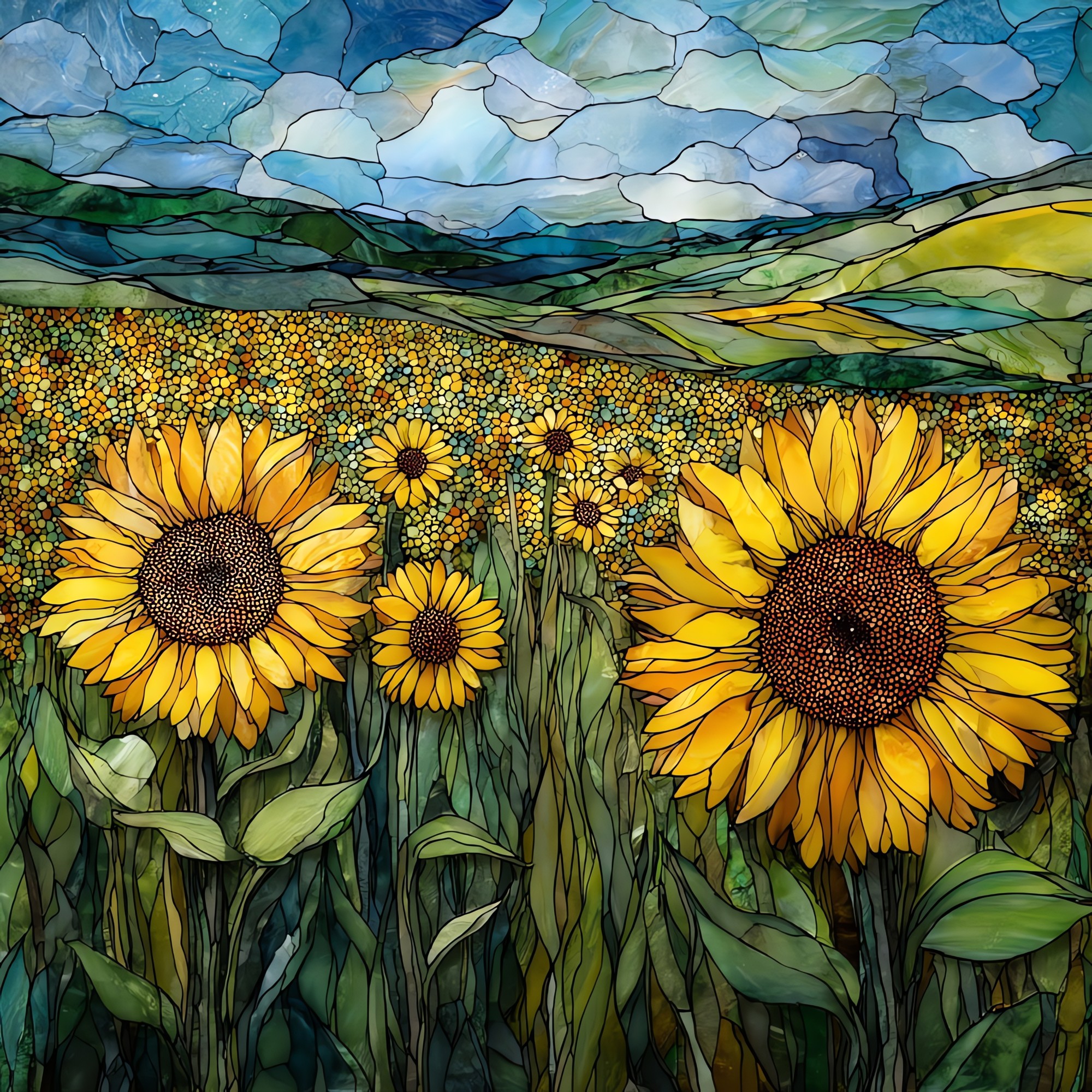
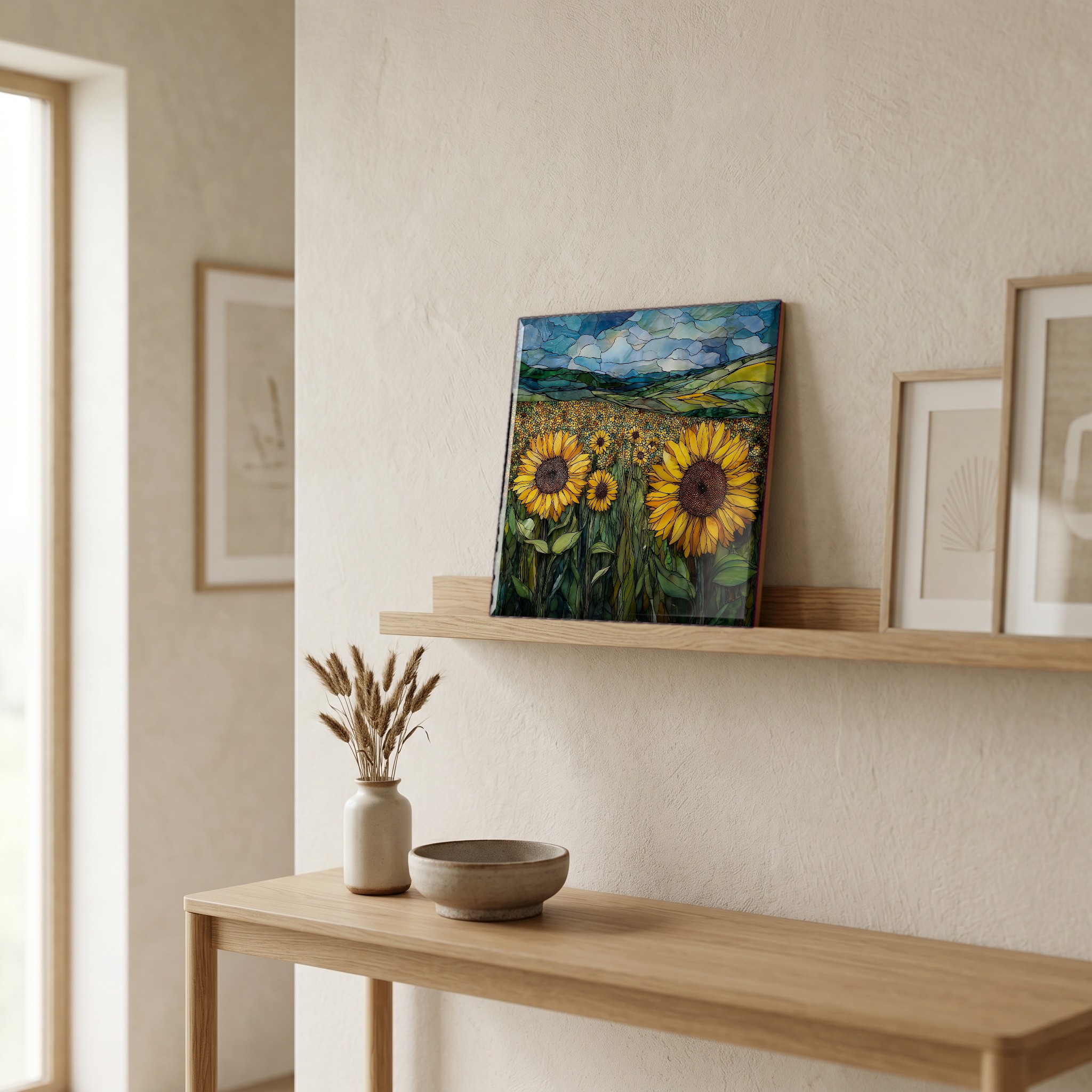
Provence Sunflower Field
— — the week the heads turn east and hold.
Not only on a wall.
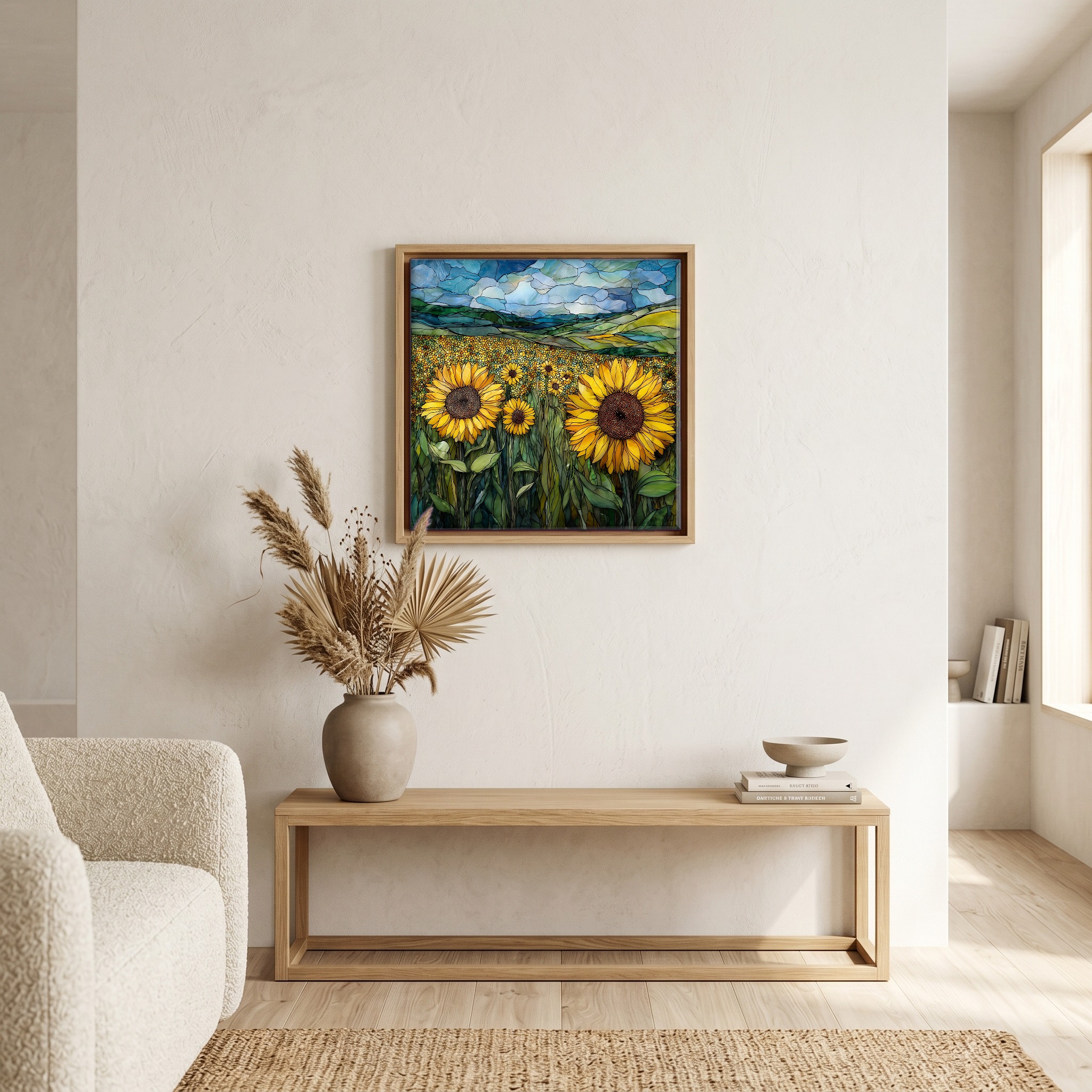
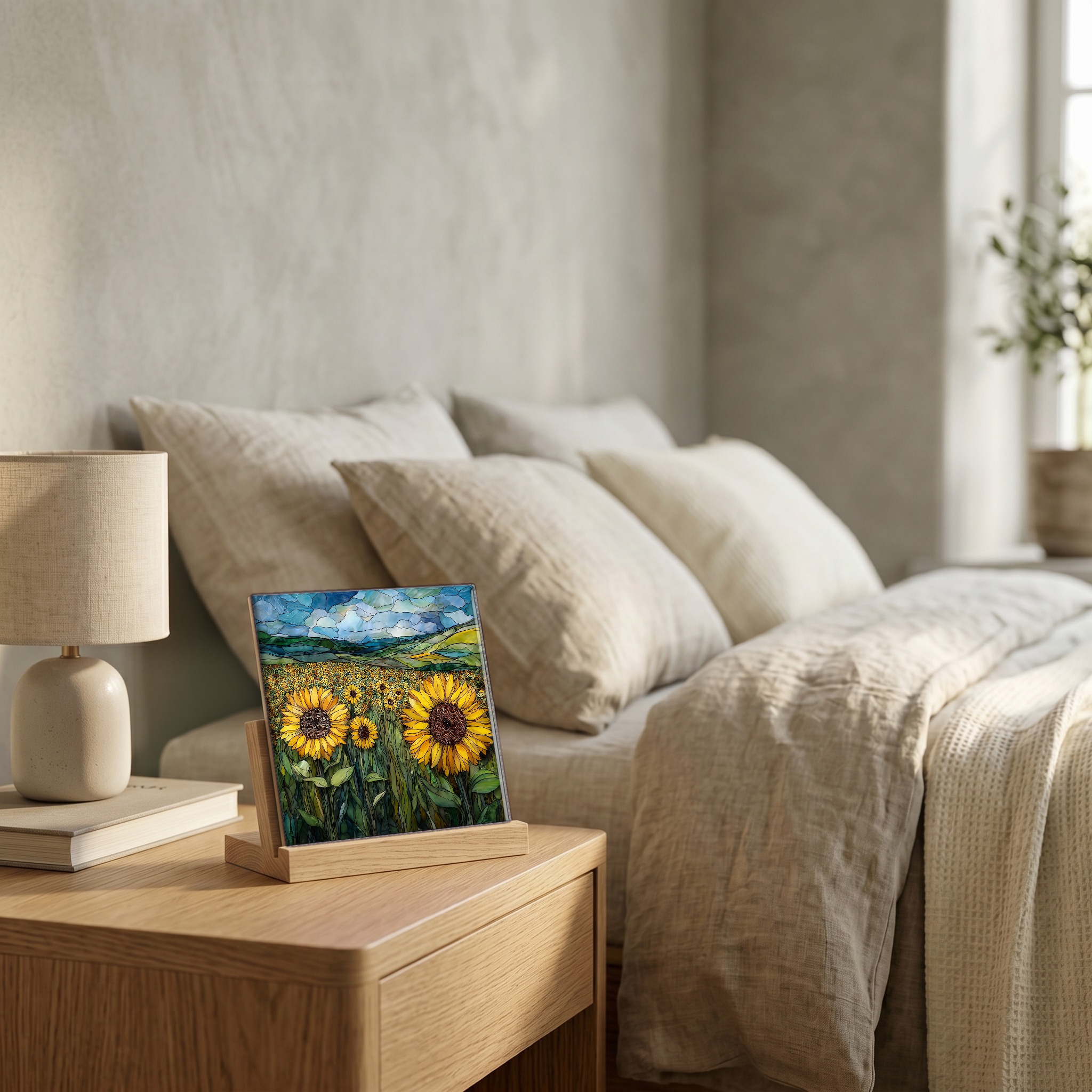
“Summer fields above the Verdon gorge, on the Valensole plateau in Alpes-de-Haute-Provence. Farmers plant sunflowers in rotation with the lavender, so the colour arrives in waves: purple by late June, yellow by mid-July, each holding for about three weeks. By the second week of the bloom the flowers have stopped tracking the sun. The heads lock east at sunrise and stay there. The D6 runs through it. By late July there are cars pulled half-off the road every few hundred metres, hazard lights blinking in the heat.
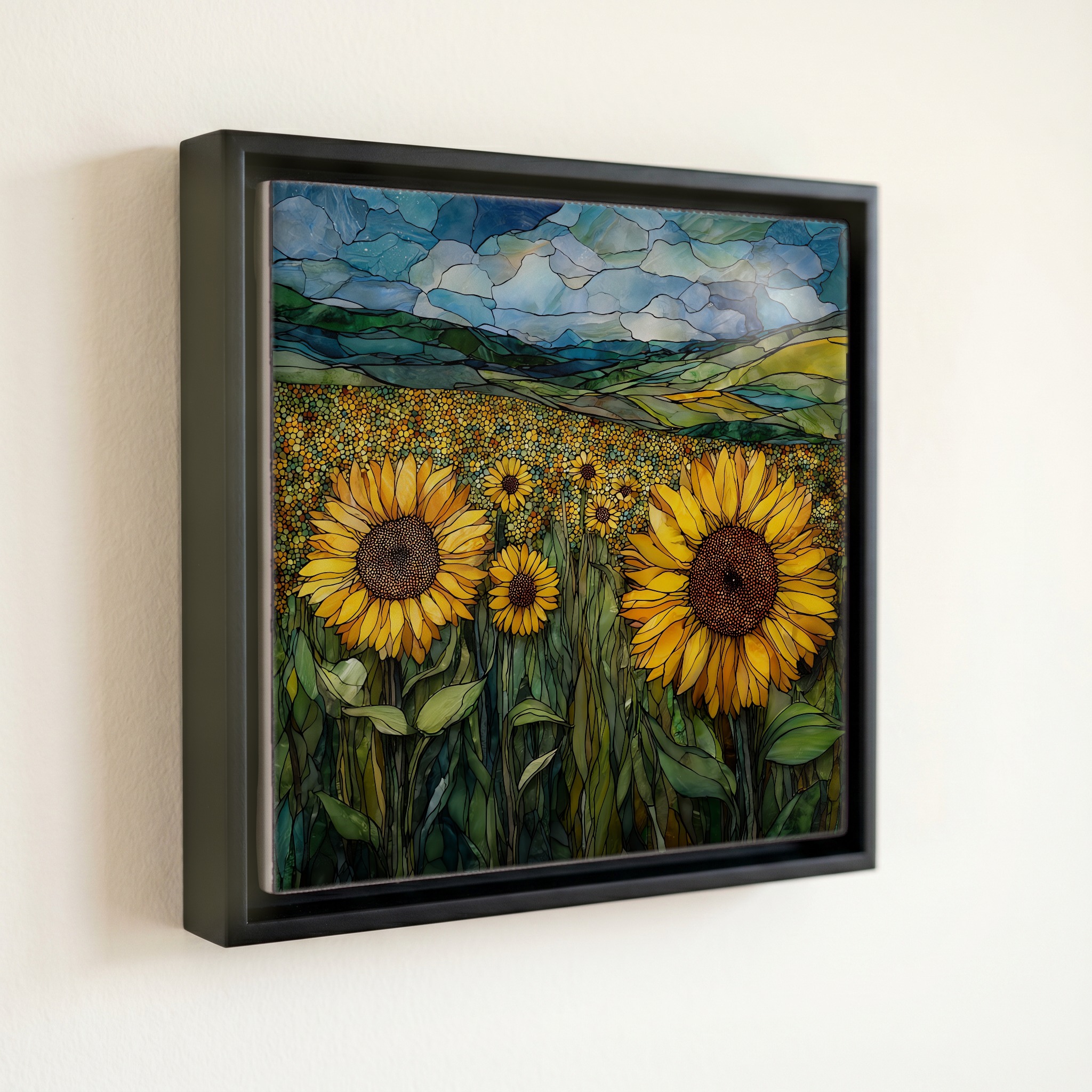
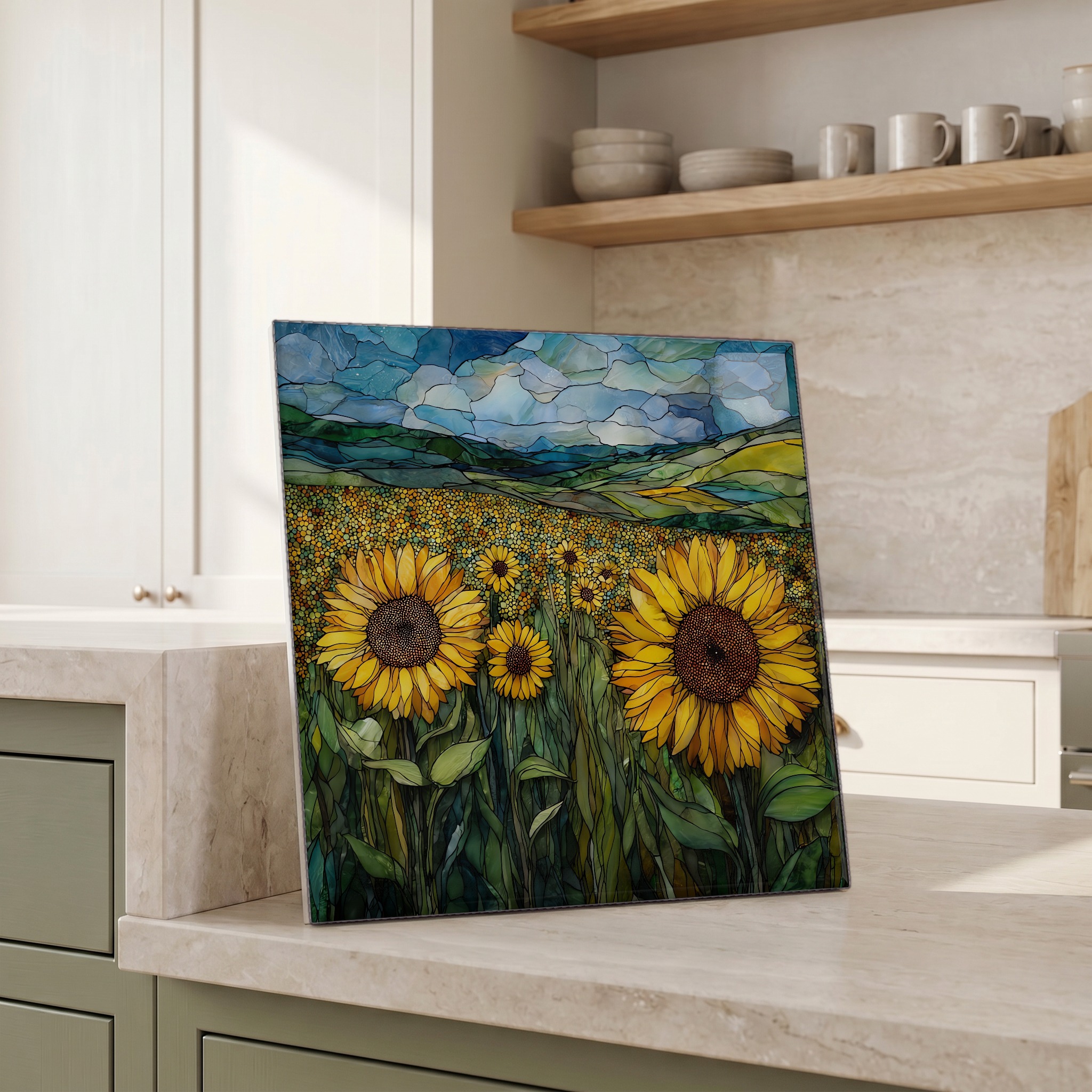
Provence Sunflower Field, on ceramic.
Each tile is finished by hand in our Knoxville studio. Artwork is slowly infused into the ceramic surface under high heat and pressure, and rests beneath a thin glossy finish. The colour lives in the surface, not on top of it.
Pick any four 4-inch tiles — National Parks you've been to, a Smokies set, the four seasons of one place. $ for a set of , cork-backed, ready to live on the table.
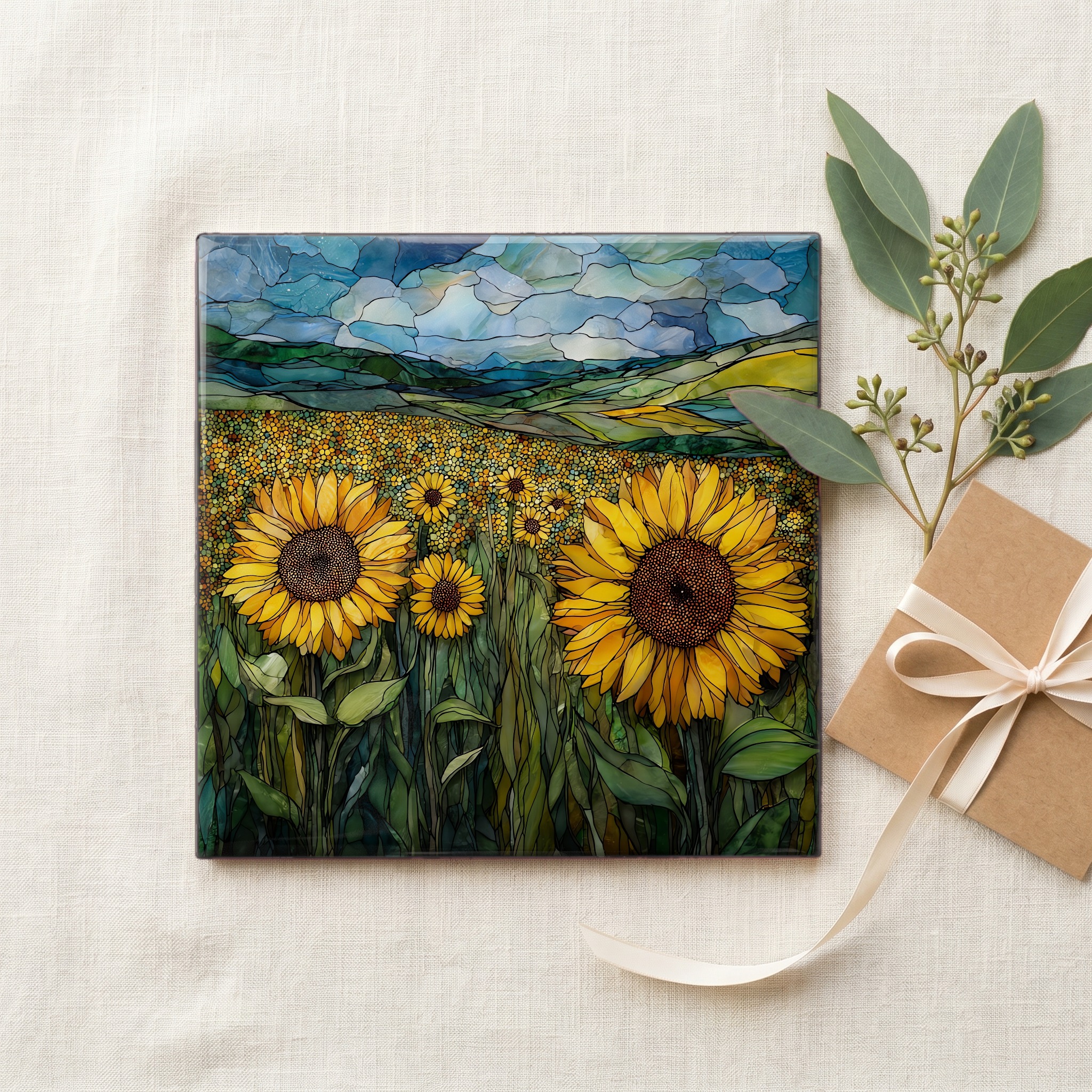
Each tile ships in a kraft box, tied with cream ribbon, with a handwritten note from the studio if you'd like to add one.
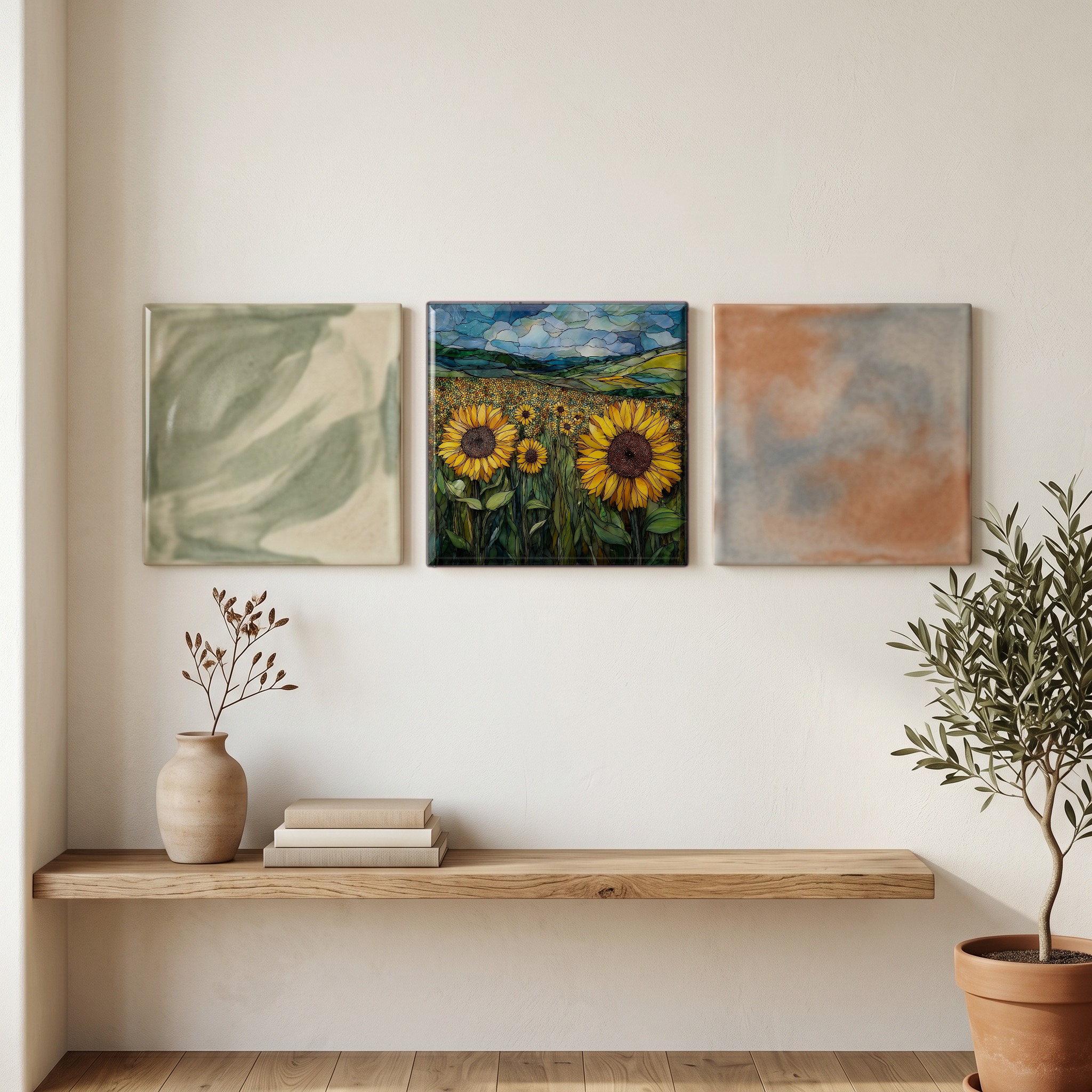
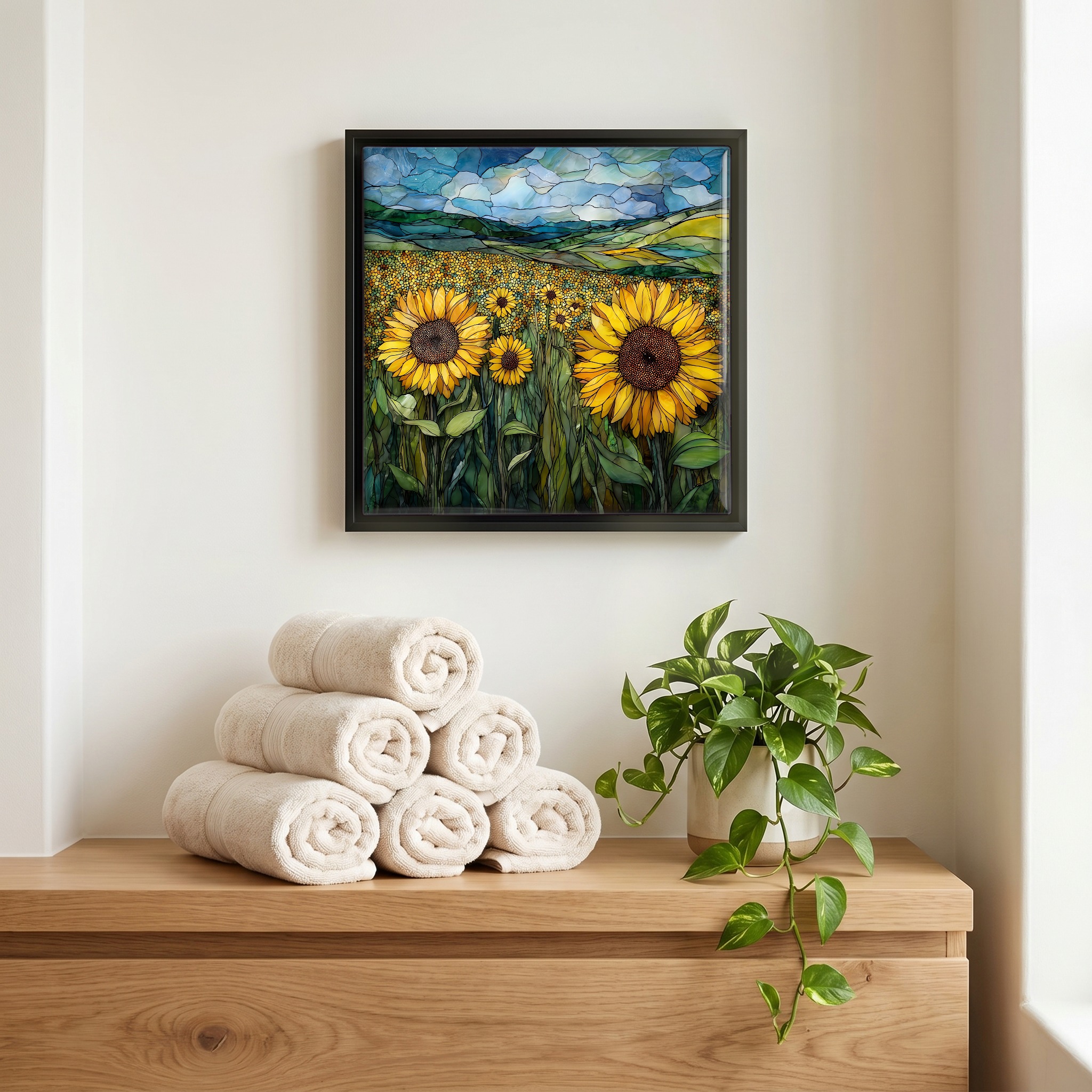
Three or five different vistas, hung together — a chapter of places you've been, or want to go.
The place, in three passes.
The Plateau de Valensole sits in Alpes-de-Haute-Provence, the upper département of the Provence-Alpes-Côte d'Azur region, between the Durance river to the west and the Verdon gorge to the east. The plateau spans roughly 800 km² at elevations between 500 and 700 metres. Its main commune, Valensole, was settled in Roman times and lies about 60 kilometres northeast of Aix-en-Provence. The soil is calcareous, low in clay, with a strong limestone base, and drains quickly in summer. That dryness is why the plateau favours dryland crops: lavender, durum wheat, almonds, and the late-season tournesols that draw photographers each July.
Sunflower bloom on the plateau runs from roughly mid-July through mid-August, after the lavender peak in early July. The sequencing isn't accidental: local rotations time the two crops so the same field can support both within a season. Helianthus annuus needs about 100 to 130 days from sowing to bloom, so growers plant around early April and the flower-heads open in midsummer. The window is narrow. A late spring frost or an August heatwave can shorten it by a week, and the heads are harvested for oil by early September. After the harvest the rows go down to stubble overnight.
Mature sunflowers face east. Young plants follow the sun across the sky each day, a behaviour called solar tracking, or heliotropism, but as the flower-heads reach full size the stalks stiffen and the heads lock in their final orientation. They settle facing east, toward the sunrise. The mechanism, documented in a 2016 study in the journal Science by Atamian and colleagues, is thought to give the disc florets a warmer morning surface, which attracts more pollinators. The visual effect on the plateau is striking: in any given field, every flower in every row turns the same way at the same moment, like a congregation.