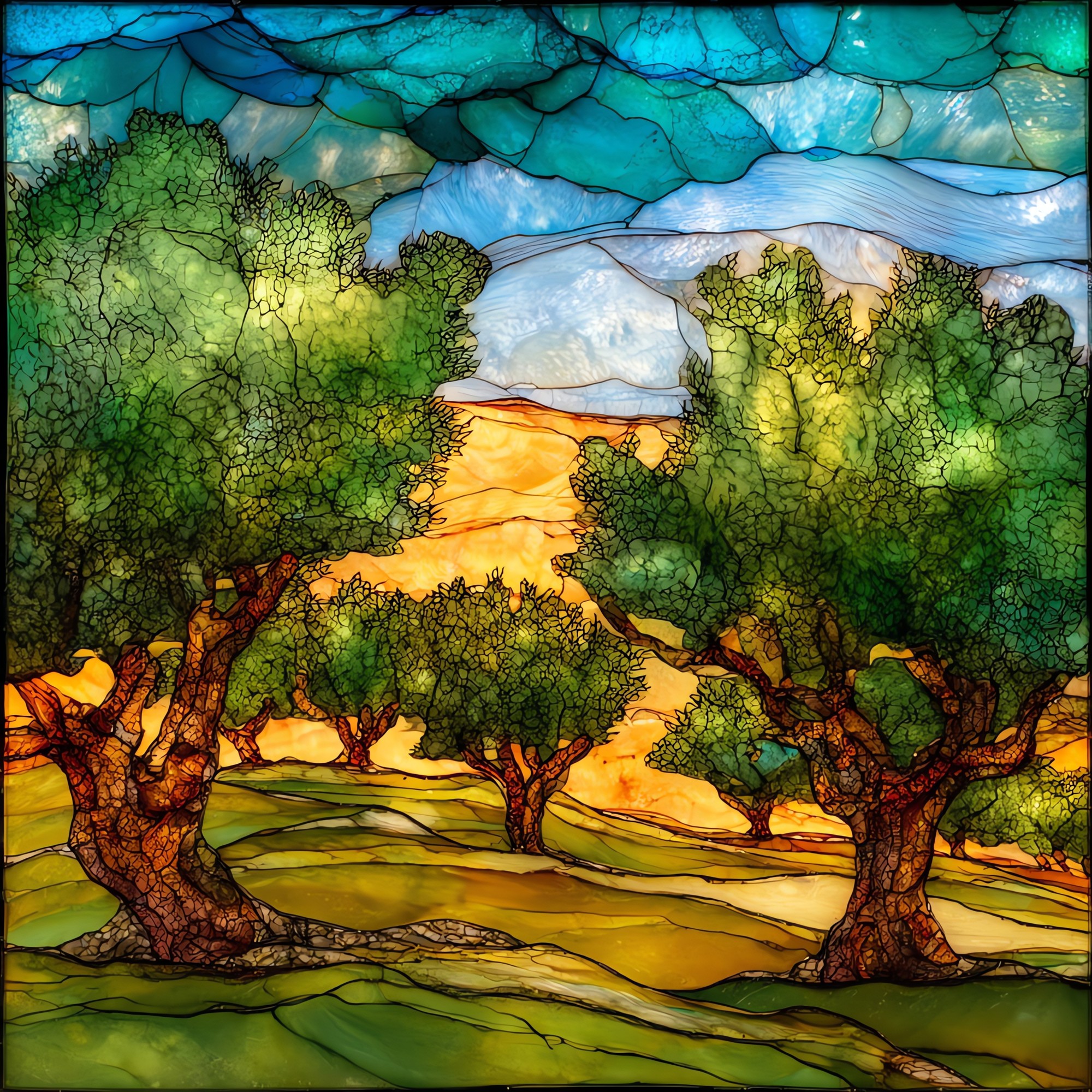
Provencal Olive Grove
— the silver the wind keeps turning over.
Not only on a wall.
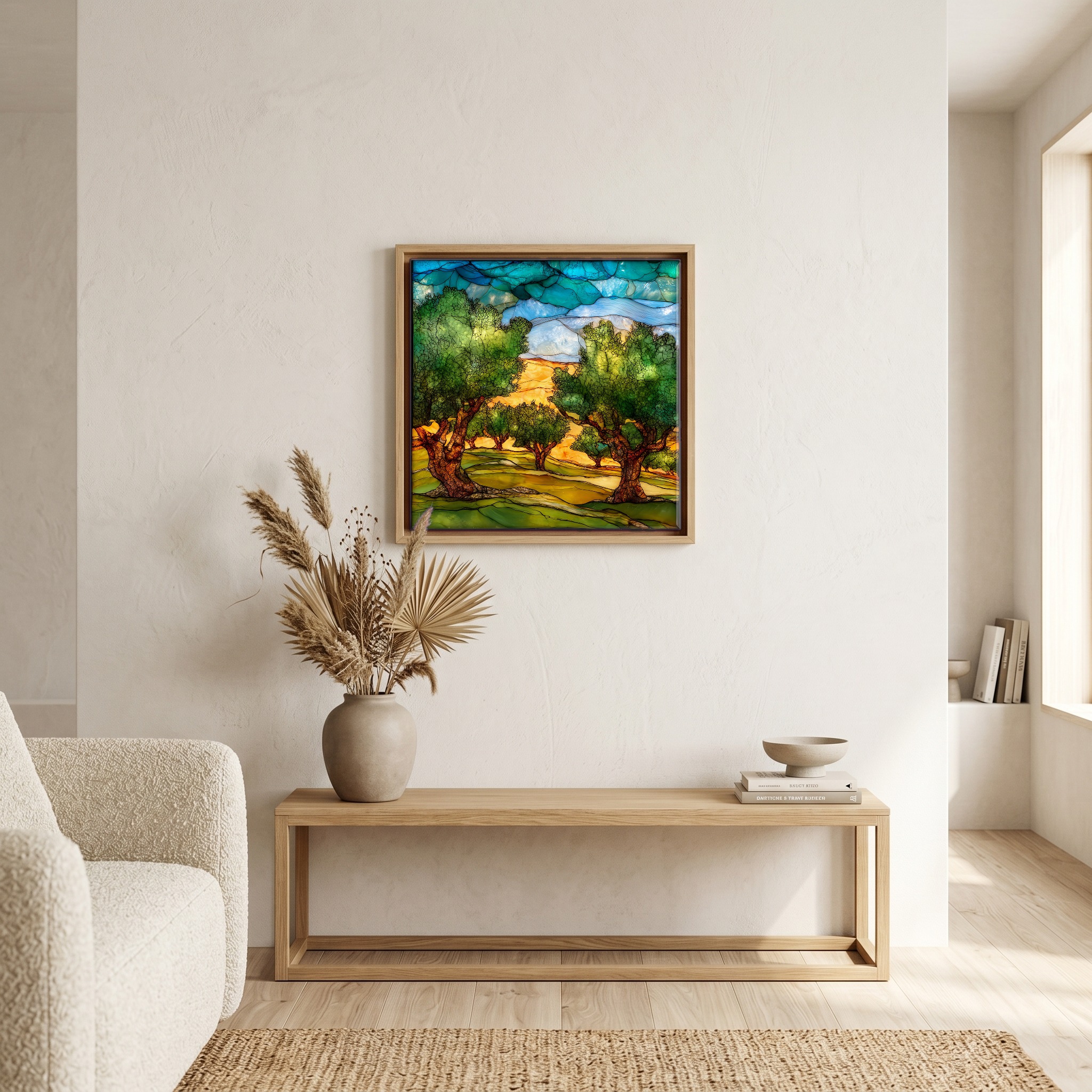
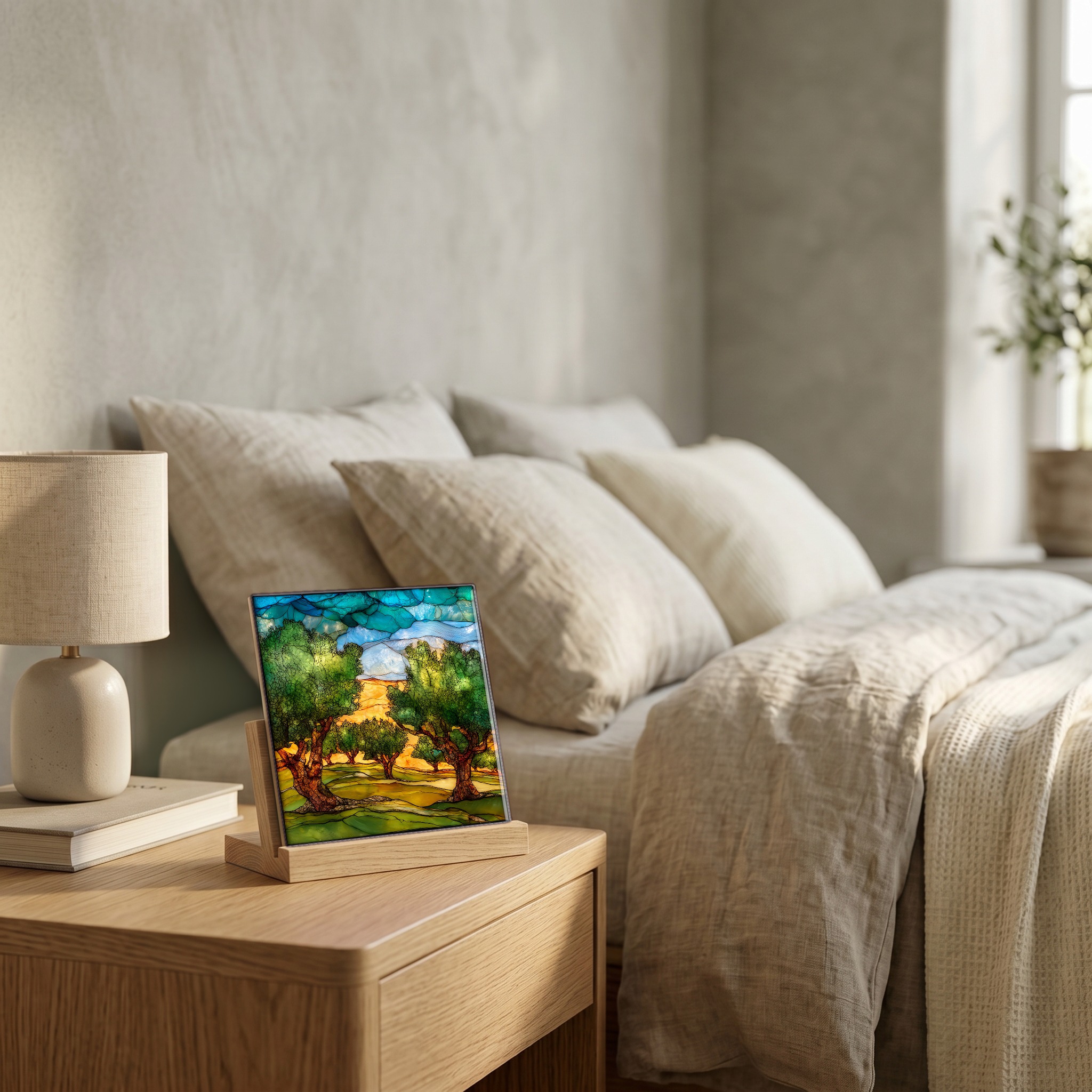
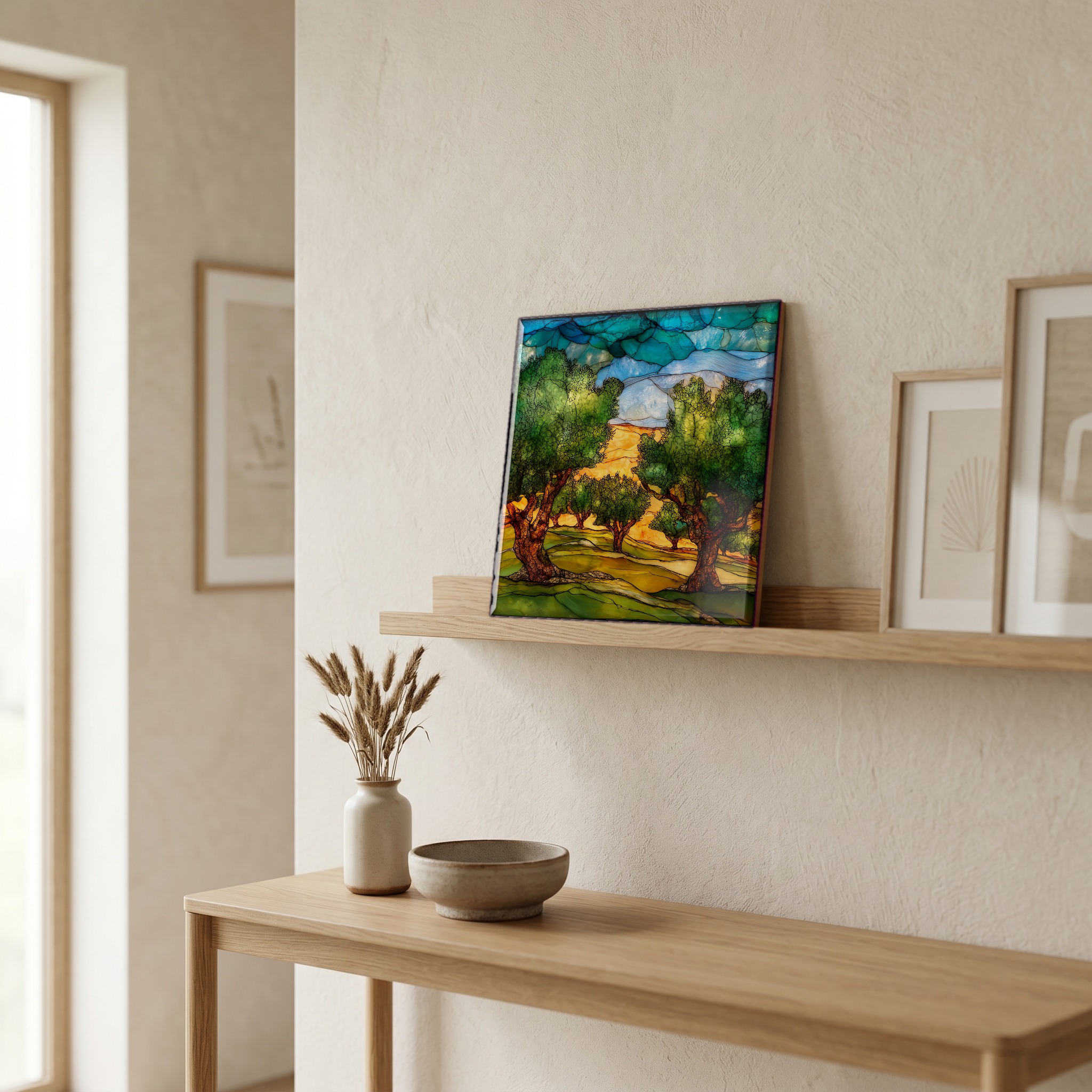
“Five million olive trees give Provence its colour. The Alpilles hold the densest stand, anchored by the Vallée des Baux-de-Provence, where the AOP olives have been pressed since 1997. The trees are gnarled, low, often replanted from the roots after the February 1956 frost killed almost everything above ground and the growers came back the next year and cut everything off and waited. Harvest runs from November into January. The leaves are silver-green on top and silver-white underneath, so the mistral shows you both at once.
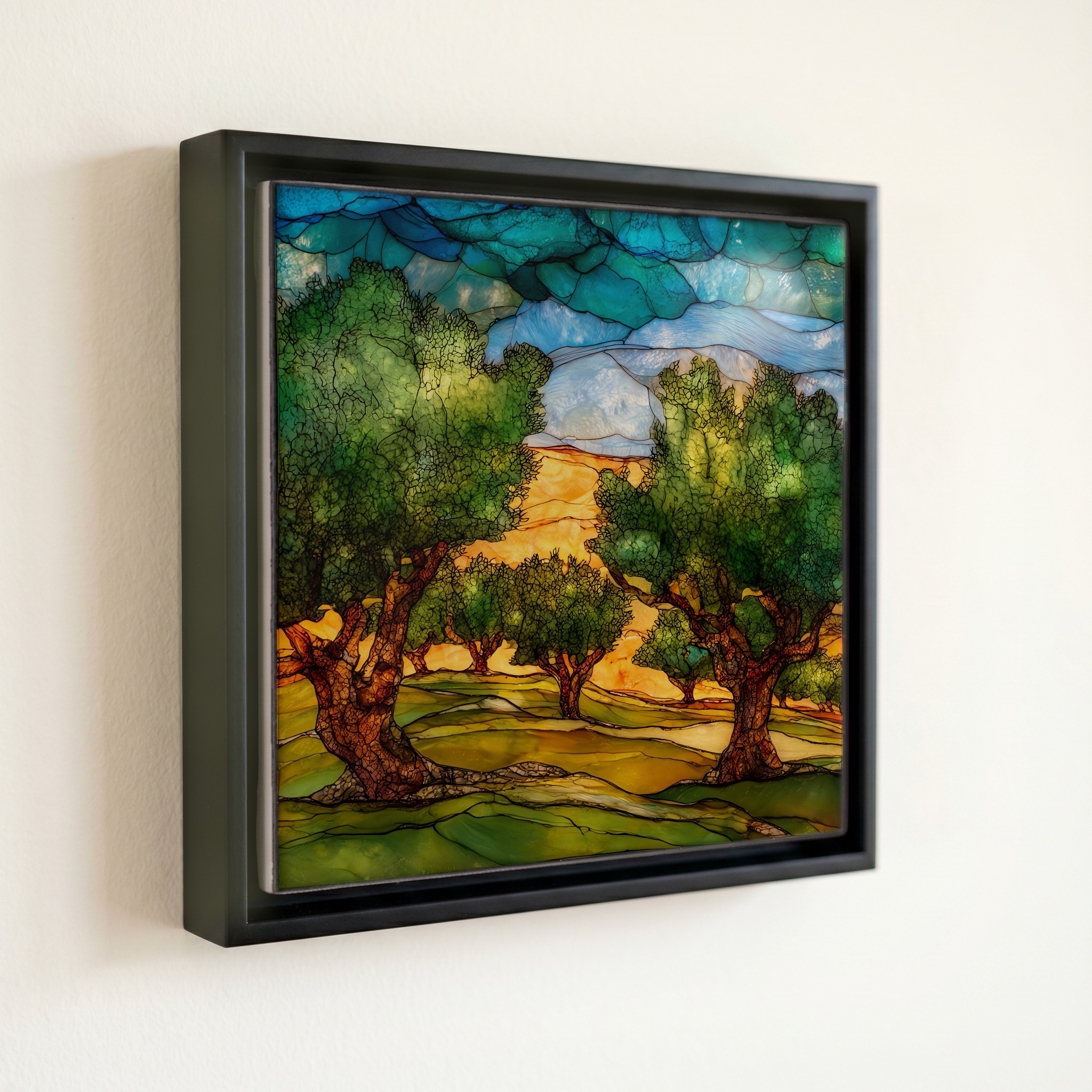
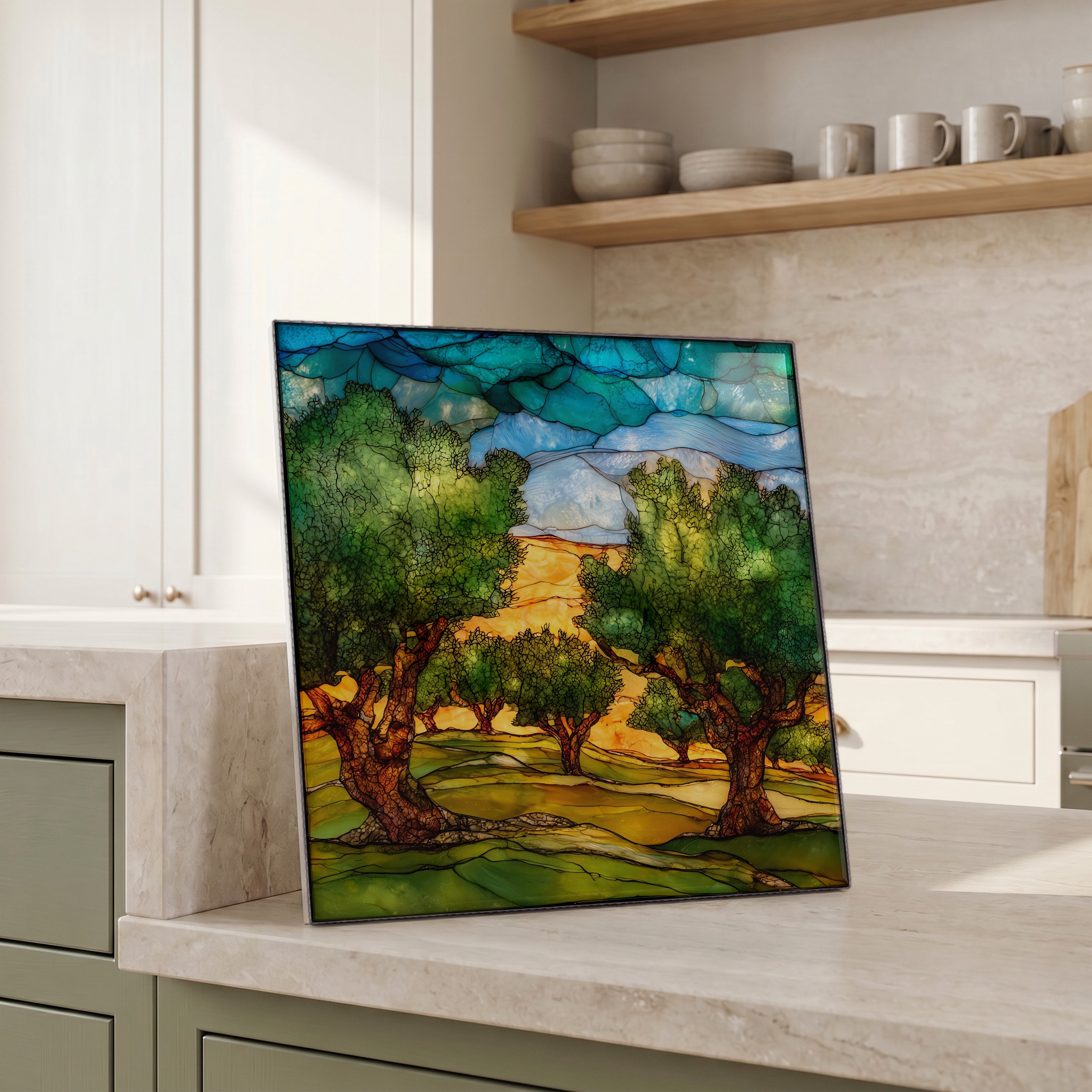
Provencal Olive Grove, on ceramic.
Each tile is finished by hand in our Knoxville studio. Artwork is slowly infused into the ceramic surface under high heat and pressure, and rests beneath a thin glossy finish. The colour lives in the surface, not on top of it.
Pick any four 4-inch tiles — National Parks you've been to, a Smokies set, the four seasons of one place. $ for a set of , cork-backed, ready to live on the table.
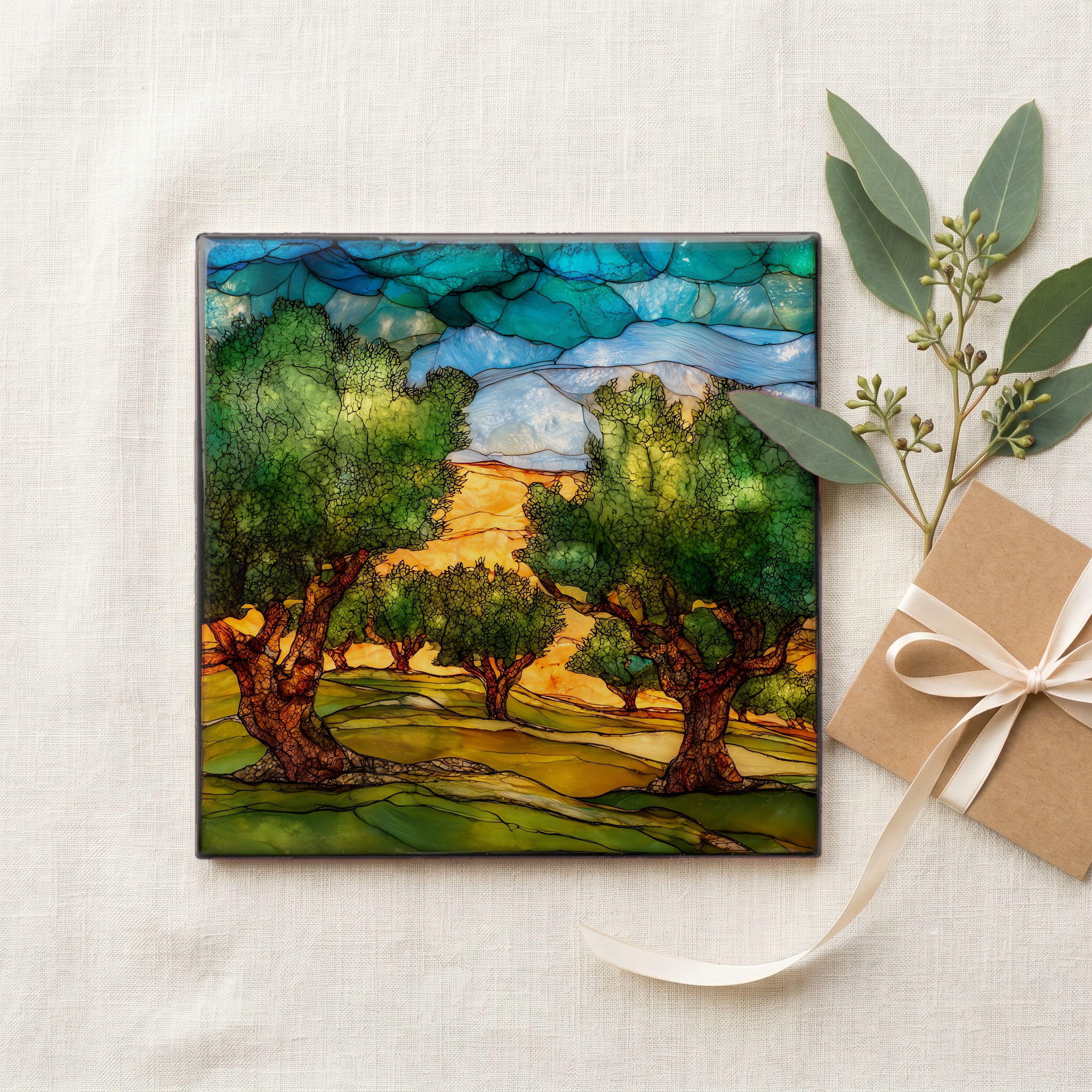
Each tile ships in a kraft box, tied with cream ribbon, with a handwritten note from the studio if you'd like to add one.
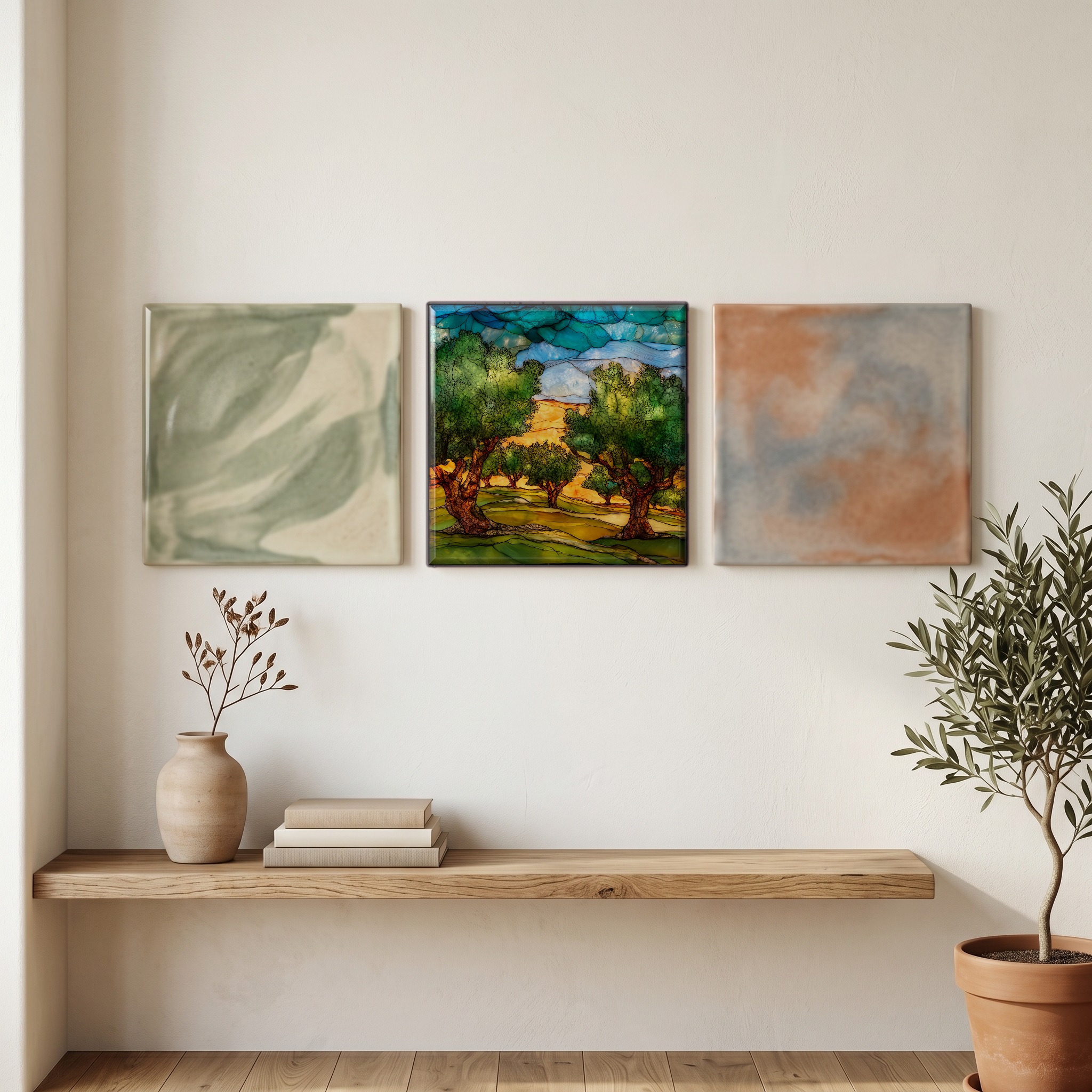
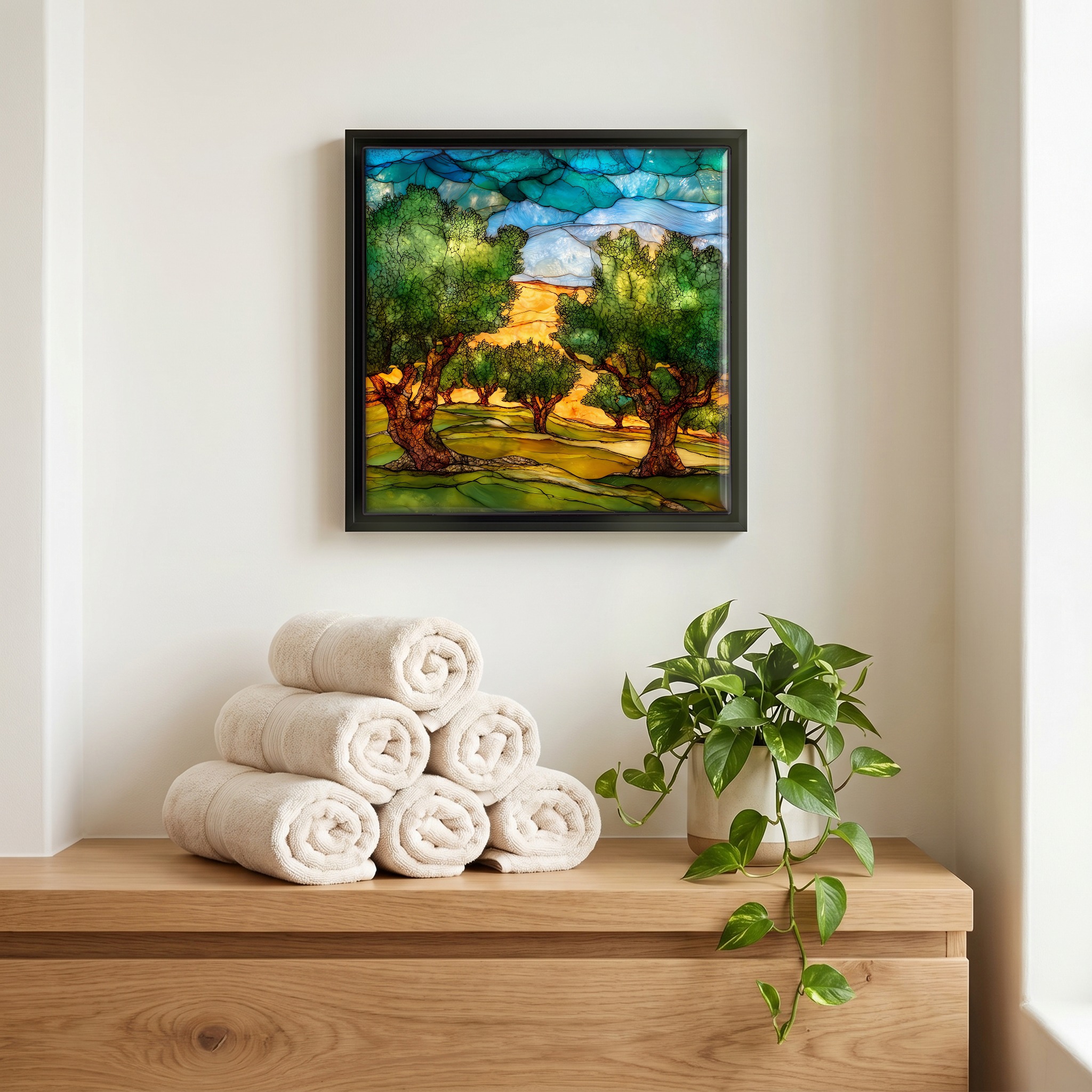
Three or five different vistas, hung together — a chapter of places you've been, or want to go.
The place, in three passes.
The Vallée des Baux-de-Provence sits at the centre of the Alpilles, a small limestone range in Bouches-du-Rhône, southeastern France, rising to 493 metres at Les Opies. The valley is anchored by Les Baux-de-Provence, a hilltop village carved into the rock, and by Maussane-les-Alpilles and Mouriès below, the largest olive-producing commune in France. The Alpilles became a Parc naturel régional in 2007, covering around 51,000 hectares across sixteen communes. The light is steadier than further north and the mistral, the dry north wind from the Rhône valley, shapes both the trees and the air.
The light of Provence is the light Cézanne walked into and Van Gogh chased: clear, hard, low in winter and high in summer, with about 2,800 sunshine hours a year, among the highest in France. Olive leaves are silver-green on the upper surface and dense silver-white below, coated with fine hairs that reflect ultraviolet light and slow water loss in the dry air. When the mistral blows down the Rhône corridor, which it does roughly a hundred days a year, often for three days at a time, the canopy turns over and the whole grove flashes white.
Olive harvest in the Vallée des Baux-de-Provence runs from mid-November through January, set by the AOP rules that have governed the appellation since 1997. The fruit is picked green for the early oil and black for the ripe oil, the two presses producing the region's signature taste: bitter and peppery, then round and ripe. Five varieties are sanctioned: Salonenque, Béruguette, Grossane, Verdale, and Picholine. The commune of Mouriès alone produces more olive oil than any other in France, with around 80,000 trees on its slopes.