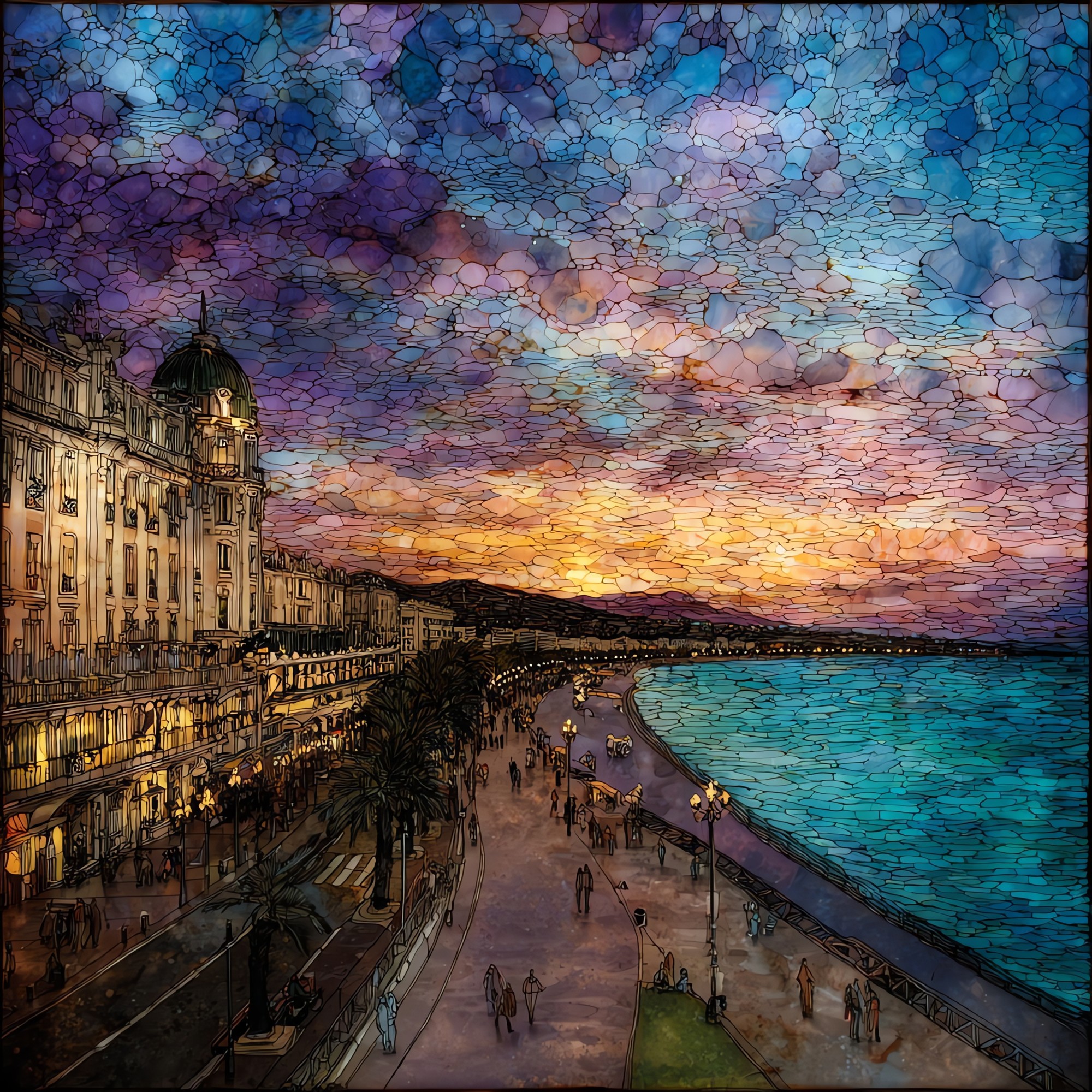
Promenade des Anglais
— a blue chair, facing the long Mediterranean.
Not only on a wall.
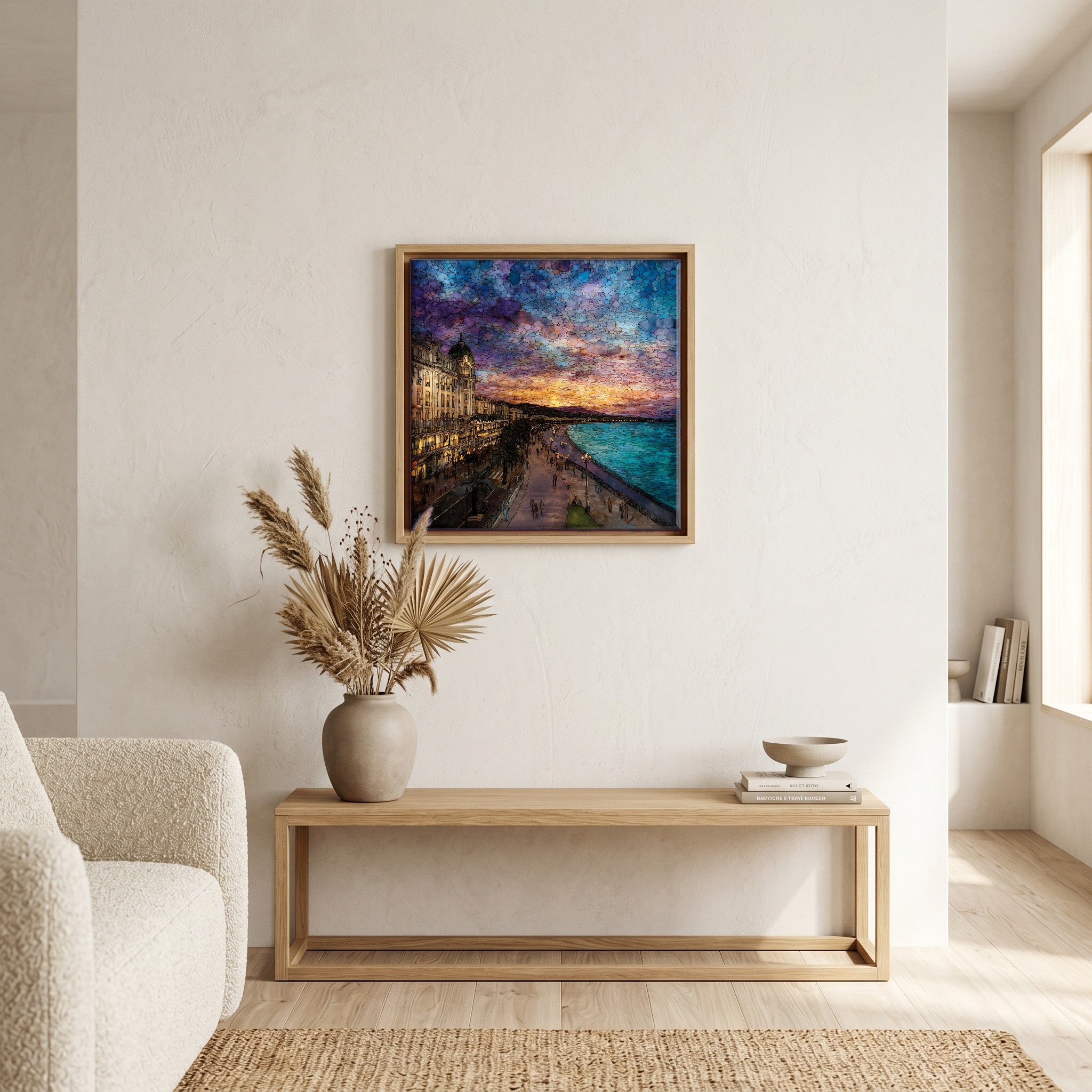
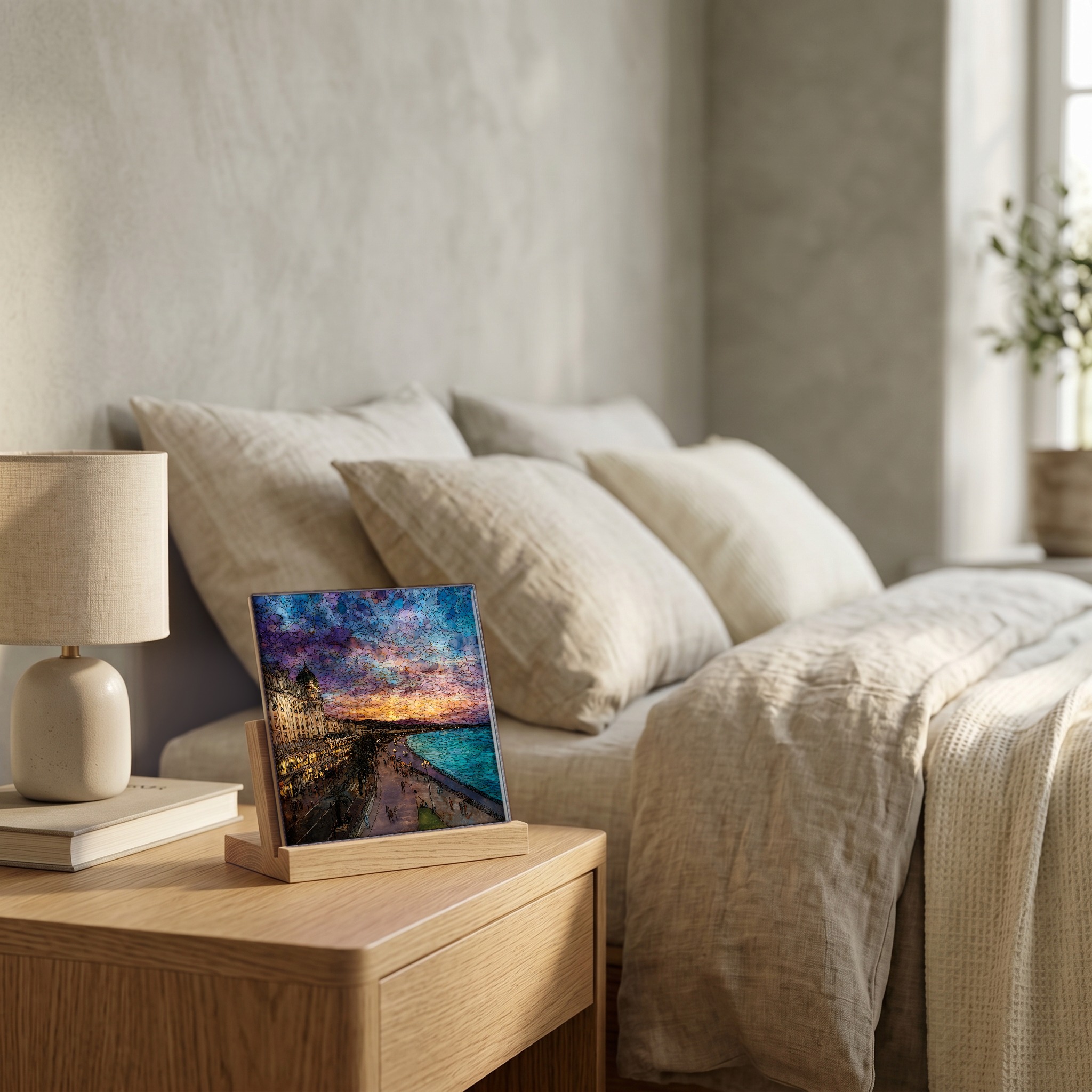
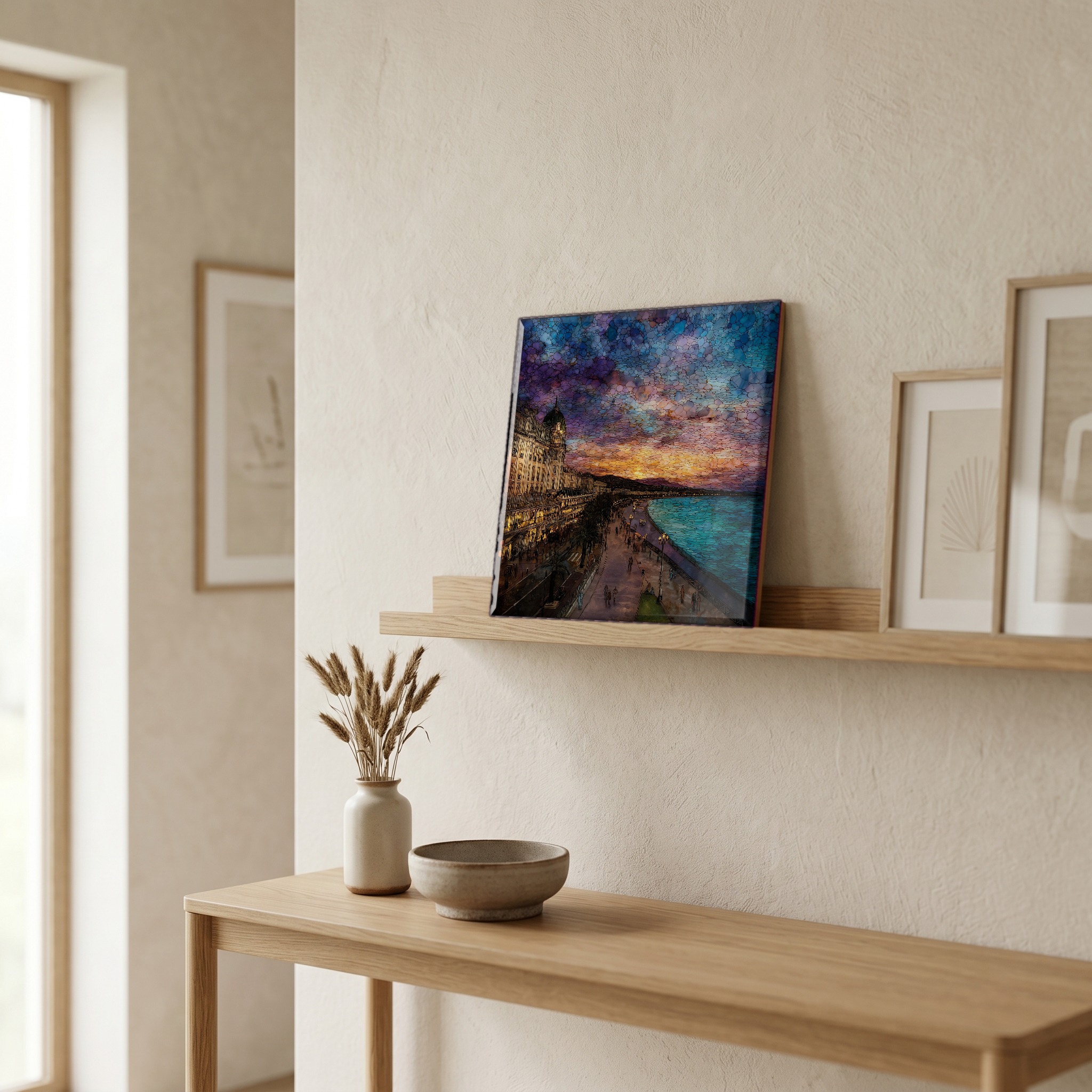
“A seven-kilometre walk along the Baie des Anges, on the Côte d'Azur. The chairs are a pale cobalt, set in twos and threes facing the water, the same blue Charles Tordo settled on in the 1950s. The palms are Canary Island date palms, planted along a path the English winter colony funded in the 1820s. Mornings are slow: joggers, a few cyclists, the small sound of waves on pebbles. By afternoon the bay is full of swimmers. The light here is the light the painters came for, long and slightly silvered on the water.
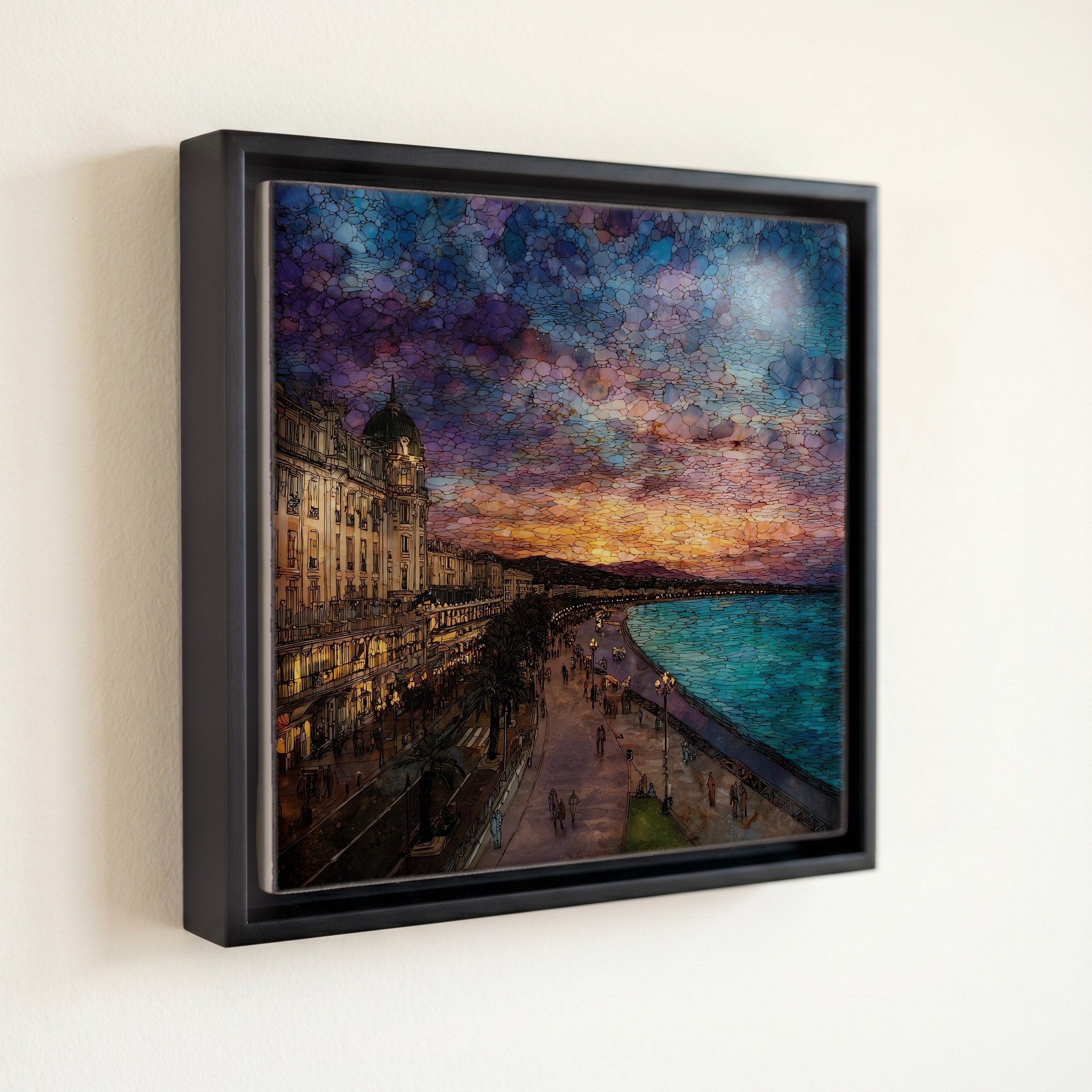
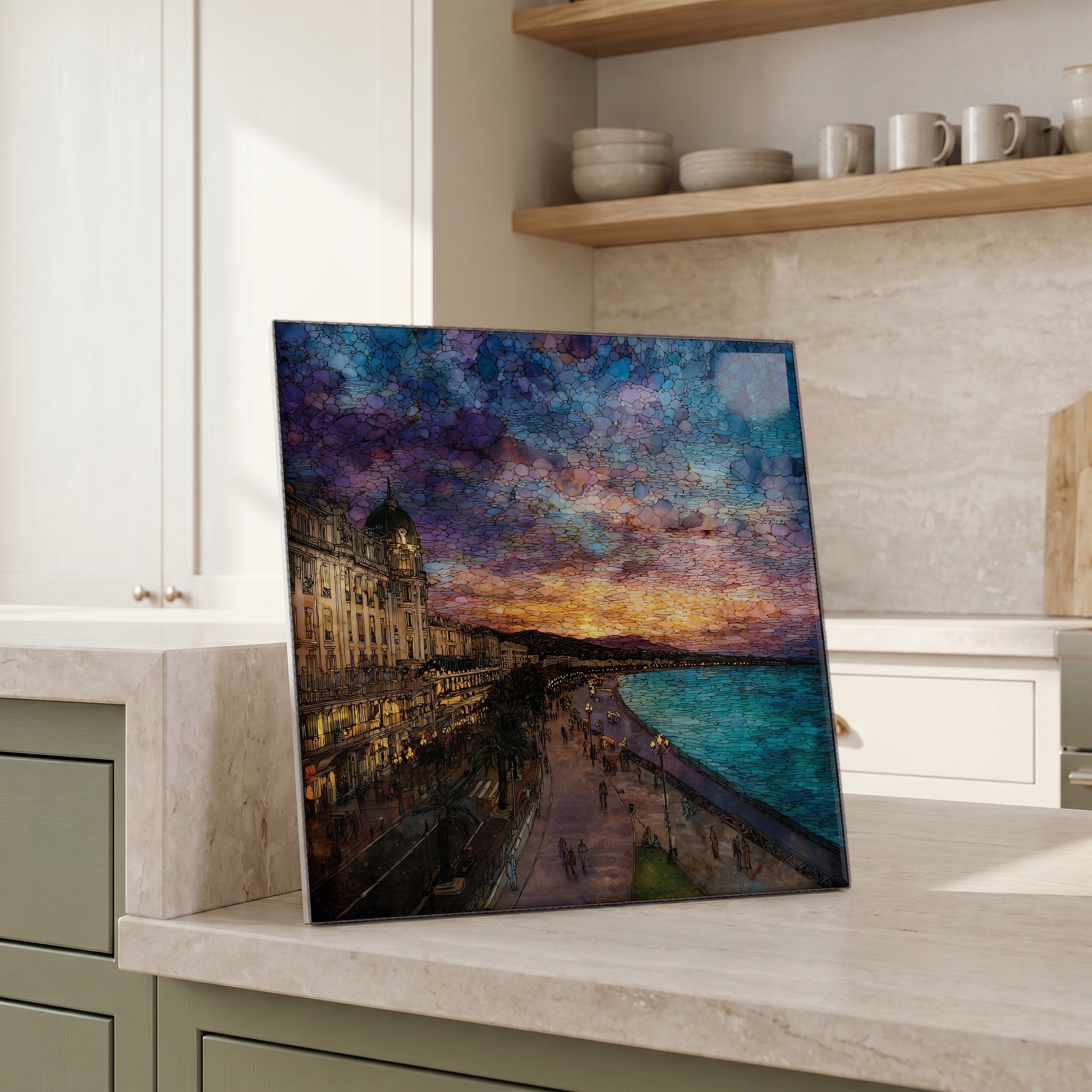
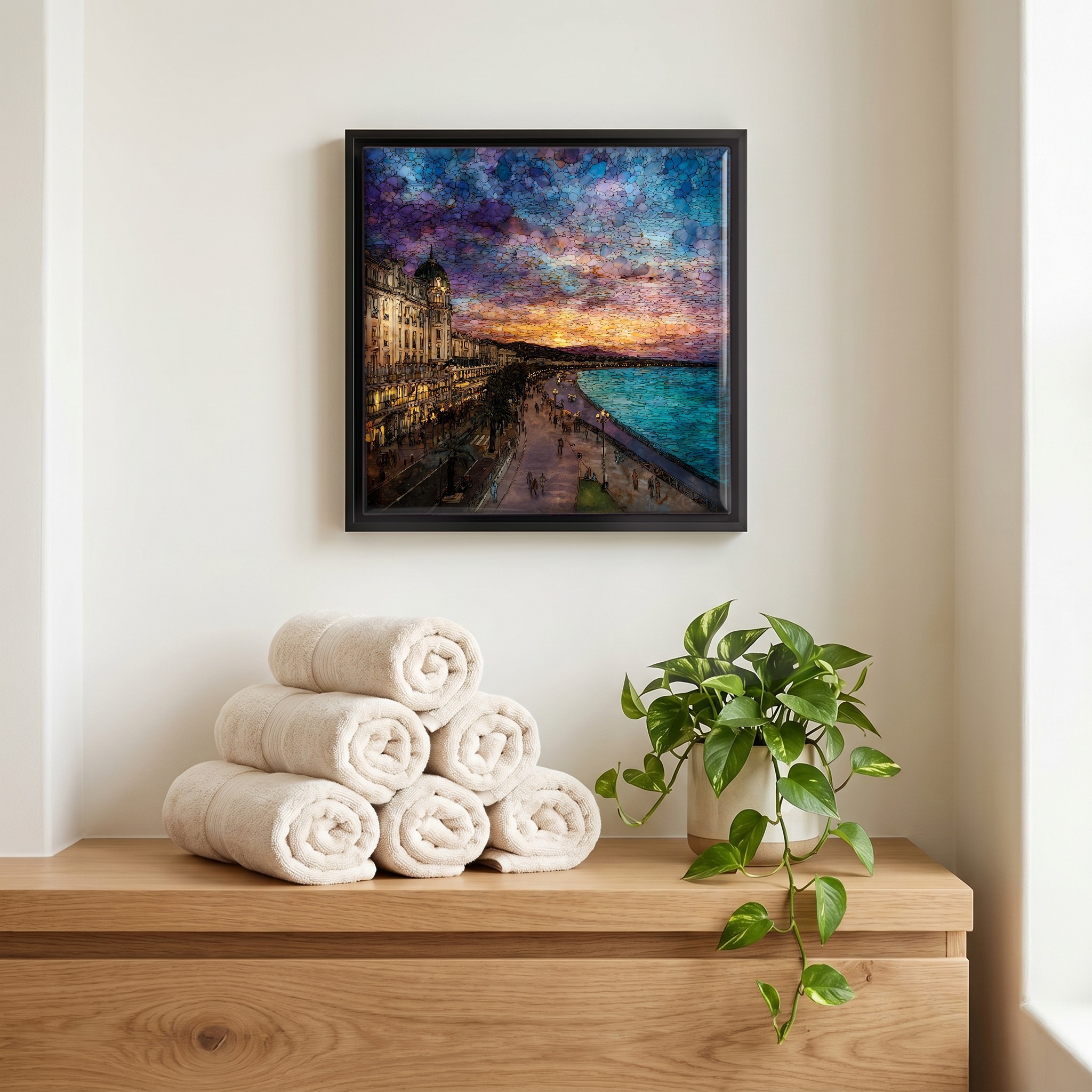
Promenade des Anglais, on ceramic.
Each tile is finished by hand in our Knoxville studio. Artwork is slowly infused into the ceramic surface under high heat and pressure, and rests beneath a thin glossy finish. The colour lives in the surface, not on top of it.
Pick any four 4-inch tiles — National Parks you've been to, a Smokies set, the four seasons of one place. $ for a set of , cork-backed, ready to live on the table.
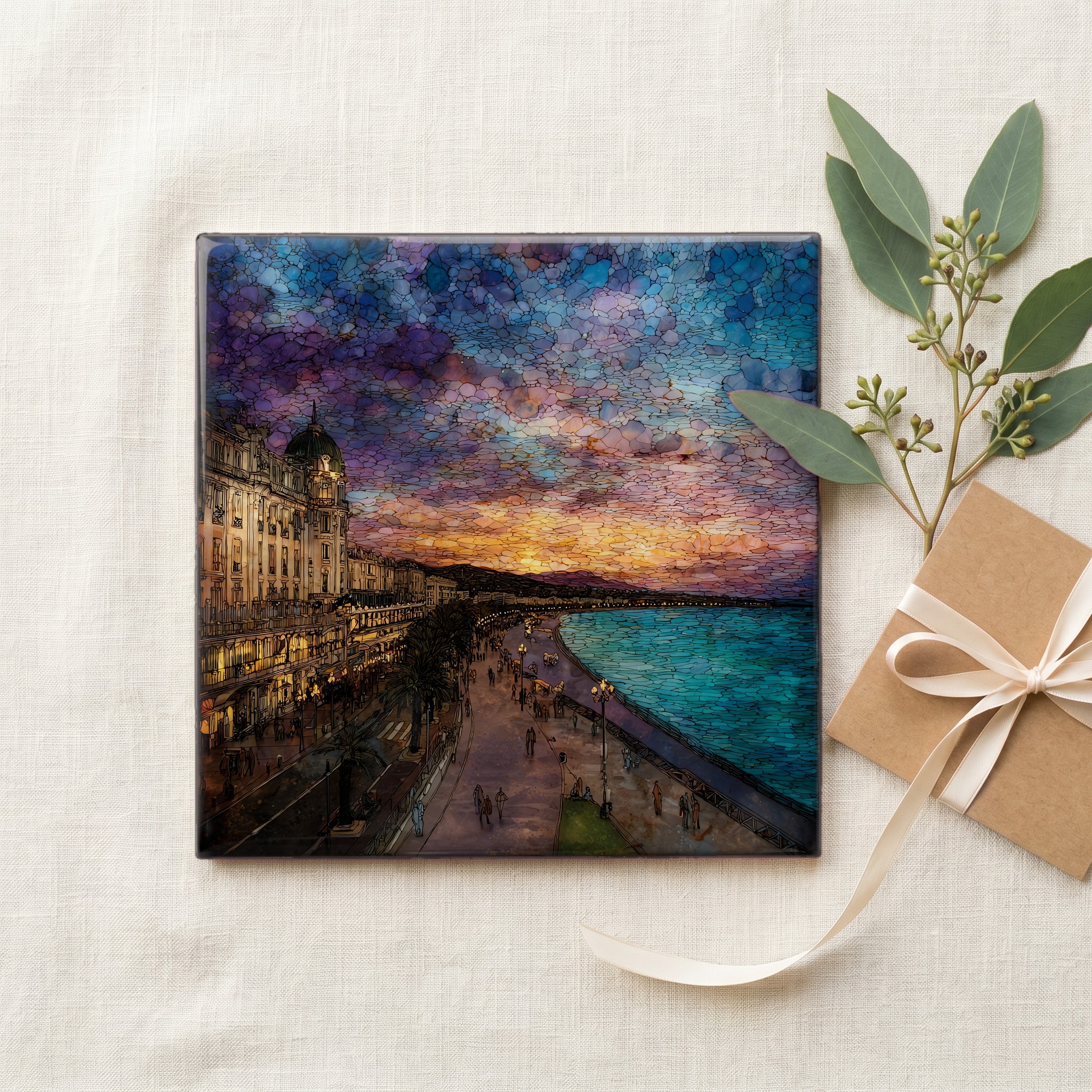
Each tile ships in a kraft box, tied with cream ribbon, with a handwritten note from the studio if you'd like to add one.
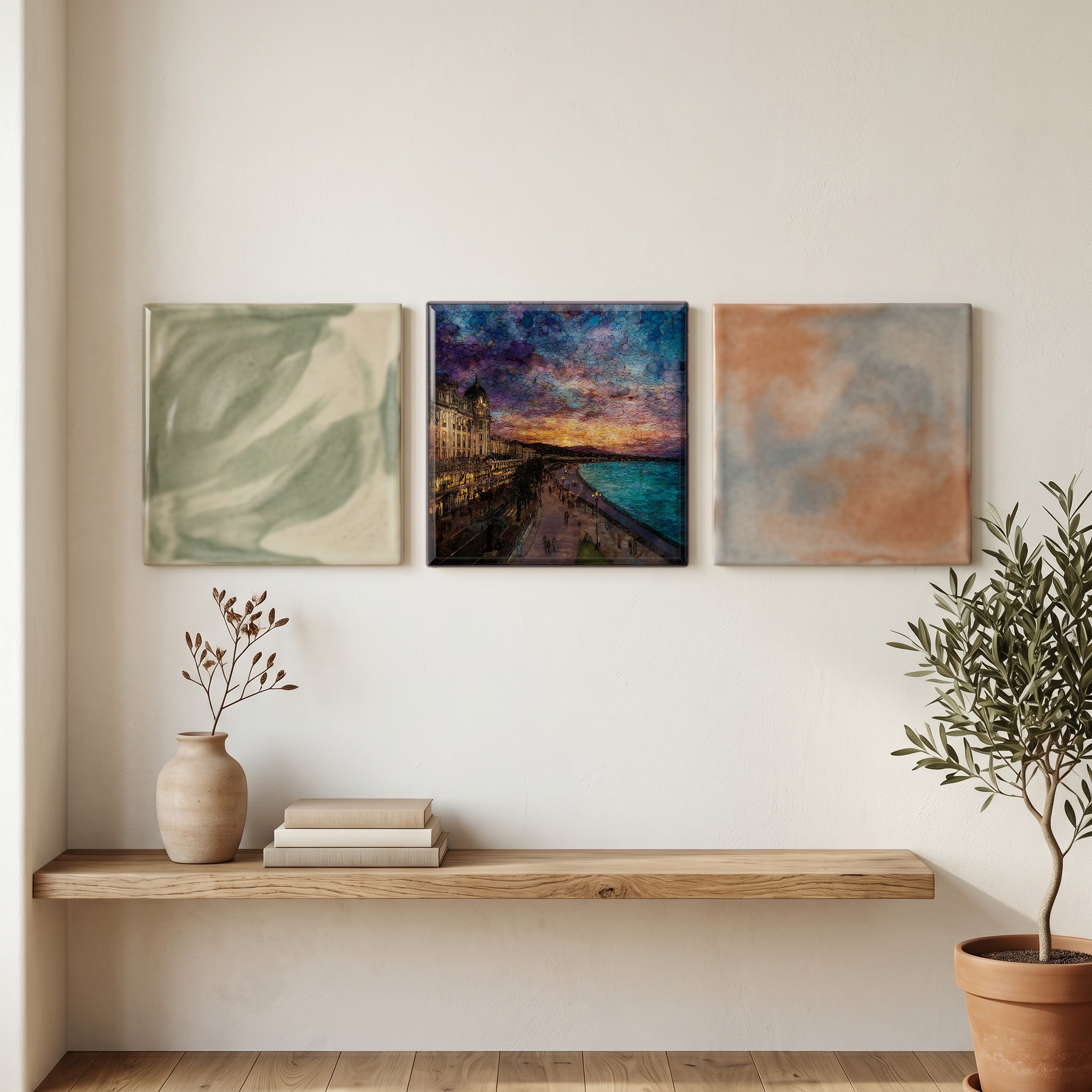
Three or five different vistas, hung together — a chapter of places you've been, or want to go.
The place, in three passes.
The Promenade des Anglais runs along the Baie des Anges on the southern coast of France, in the city of Nice, the capital of the Alpes-Maritimes department in Provence-Alpes-Côte d'Azur. It traces roughly seven kilometres of waterfront, from the foot of the old town and the Colline du Château at its eastern end to the Aéroport Nice Côte d'Azur at its western end. The pedestrian walkway sits a few metres above a pebble beach, separated from the avenue traffic by a wide cycle path. Public transit reaches the promenade by the Ligne 2 tram and several bus lines; from the Vieux-Nice quarter it is a five-minute walk.
The light along this stretch of the Mediterranean is the reason a hundred and fifty years of painters came south. Henri Matisse, who lived in Nice from 1917 until his death in 1954, said that on the morning he realised he would see this light again every day, he could not believe his luck. The Maritime Alps rise behind the coast and shelter the bay from the Mistral that scours the Rhône valley to the west; the air here clarifies, the horizon hardens. In late afternoon the western sky turns from cobalt to a pale apricot, the water beneath it taking the same colour. The chairs are placed for this hour.
The Promenade is free, open every hour of the day, and never gated. The famous chaises bleues, Charles Tordo's 1950s design, sit in two-seat and three-seat clusters along most of the walkway, repainted each spring in the same pale cobalt. The pedestrian walkway separates from the cycle lane at most points, though the lane is busy on weekend mornings. The pebble beach below is public; private beach clubs occupy stretches between Boulevard Gambetta and the Vieux-Nice. The Hôtel Negresco, opened in 1913 and a Belle Époque survivor, sits roughly a third of the way along. Summer Sundays draw heavy crowds; winter mornings are nearly empty, the water flat, the cobalt at its quietest.