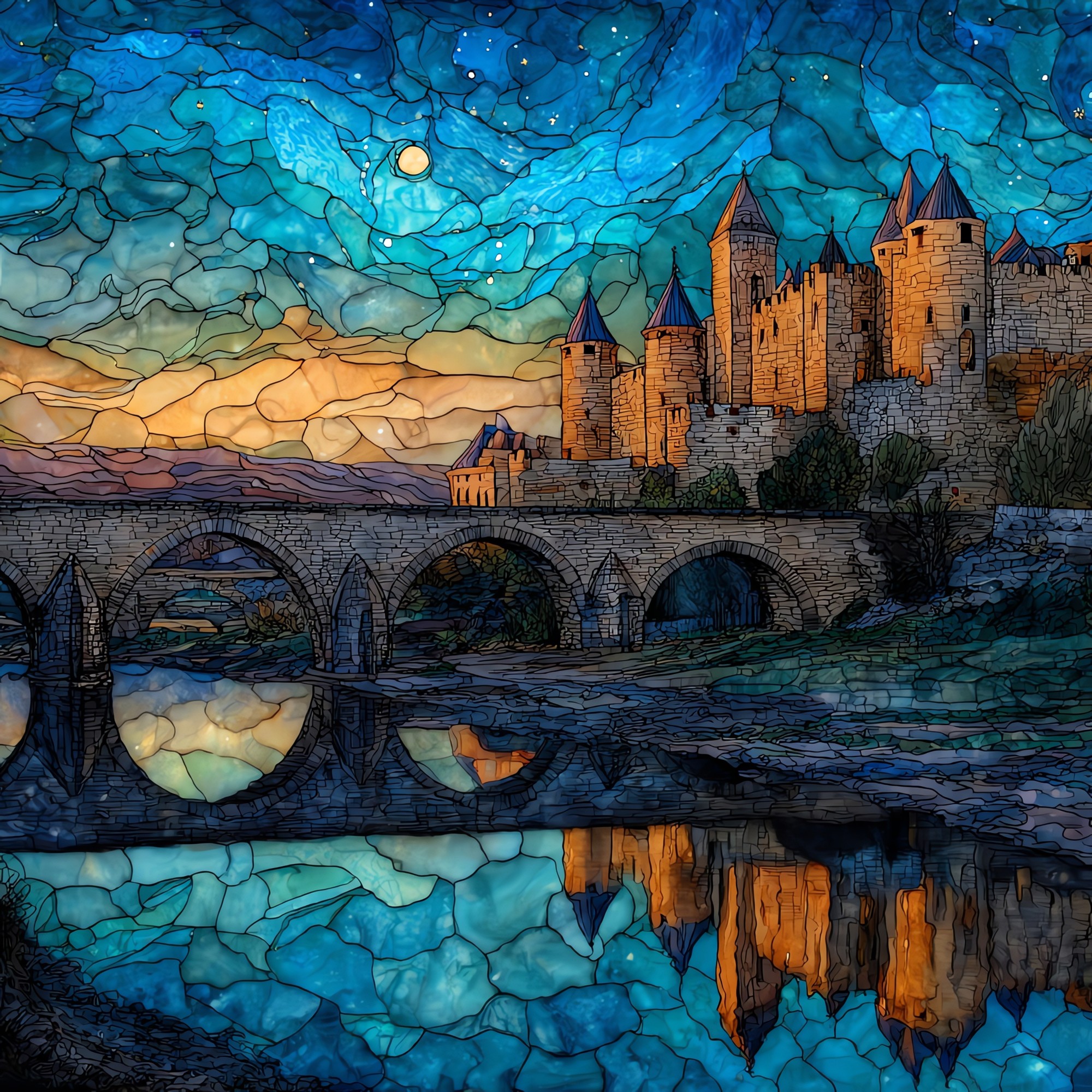
Pont Vieux Carcassonne
— — the slow crossing, the walls held in late gold.
Not only on a wall.

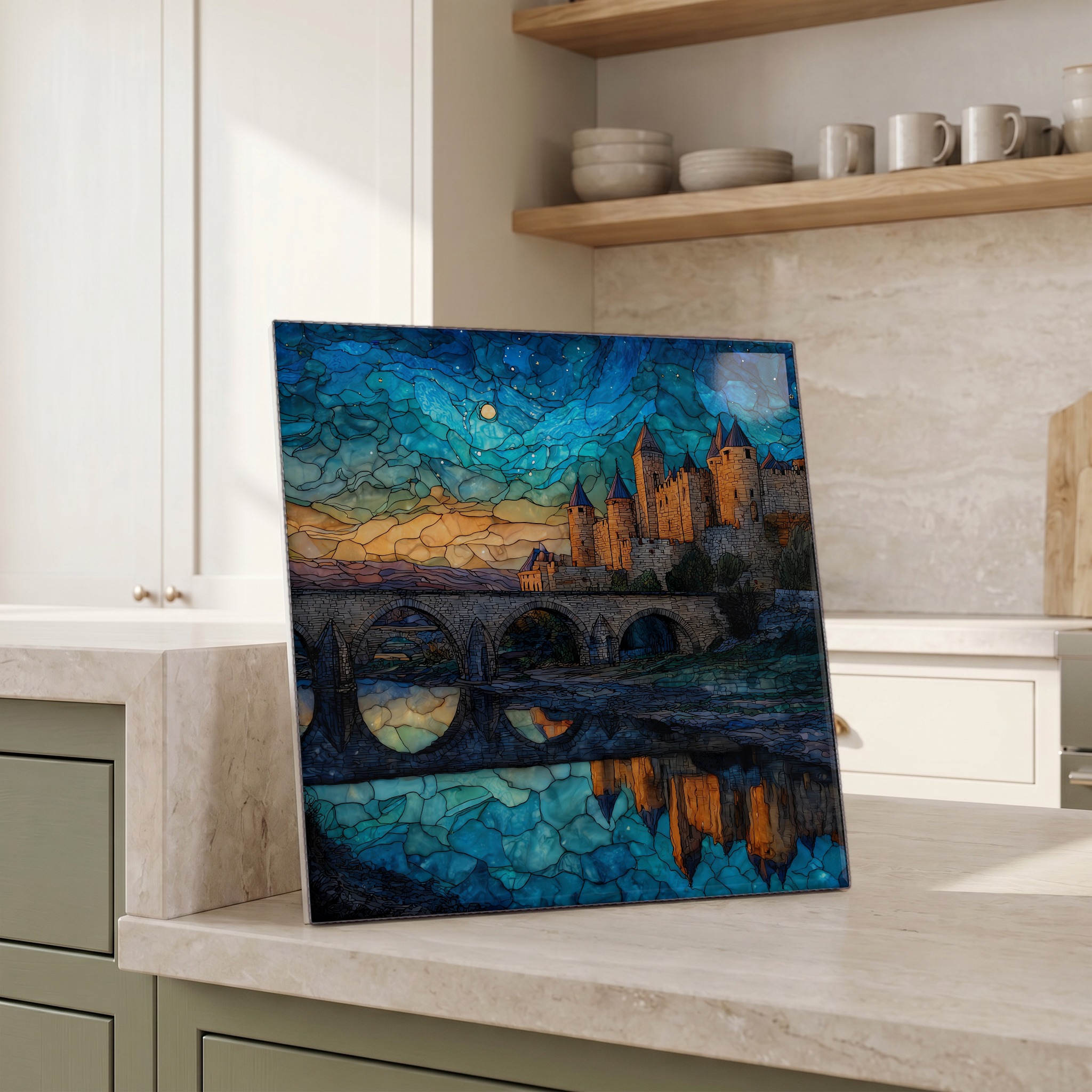


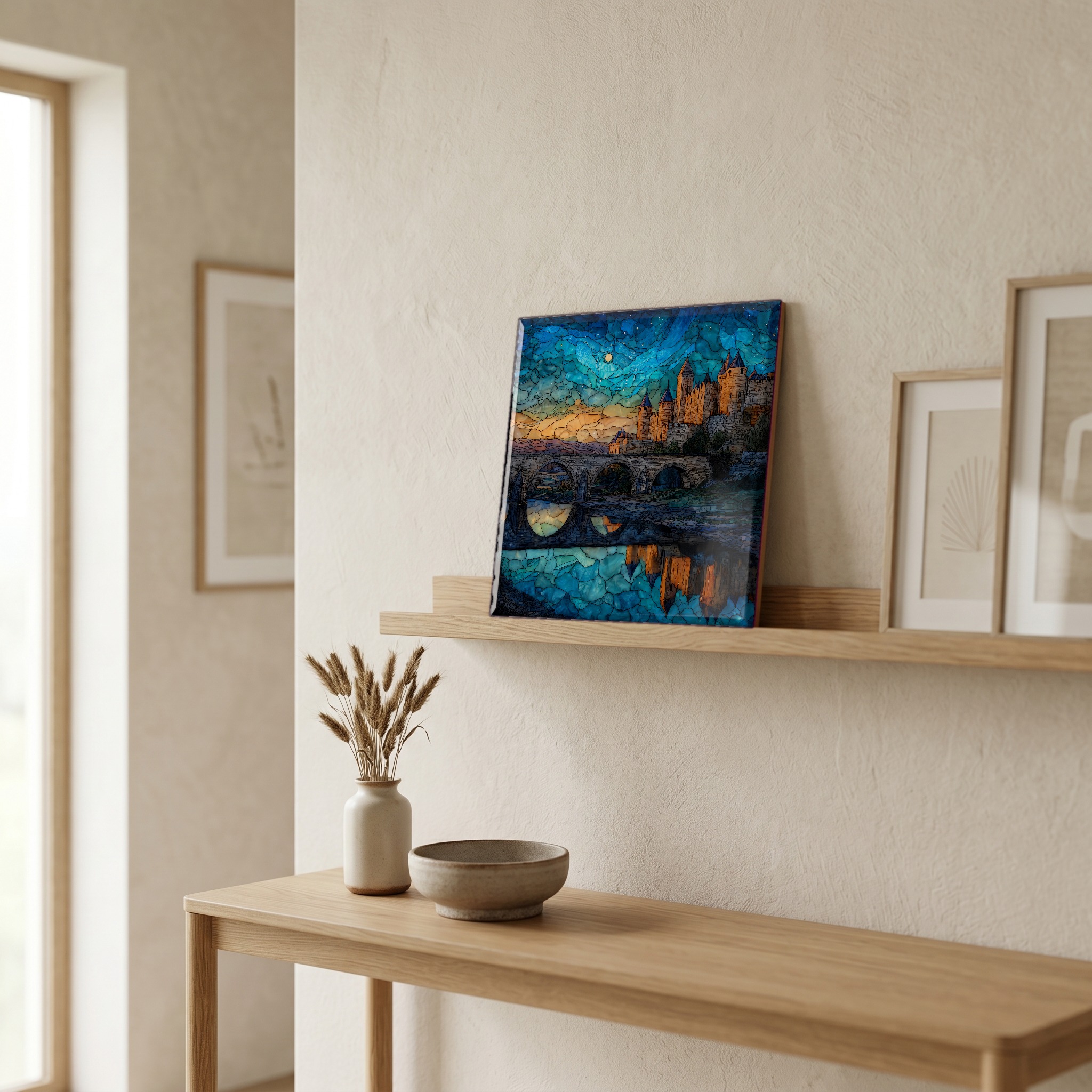
“Twelve stone arches across the River Aude, finished sometime around 1320, one of the few medieval bridges still standing in France. For five hundred years it was the only crossing between Carcassonne's lower town and the walled citadel above. The bridge belongs to walkers now. Either direction holds a long view: the Cité gathering on the far bank, the Bastide laid out behind. The light worth the trip is the forty minutes before sunset, when the gold rises up the walls and the river runs cold underneath.
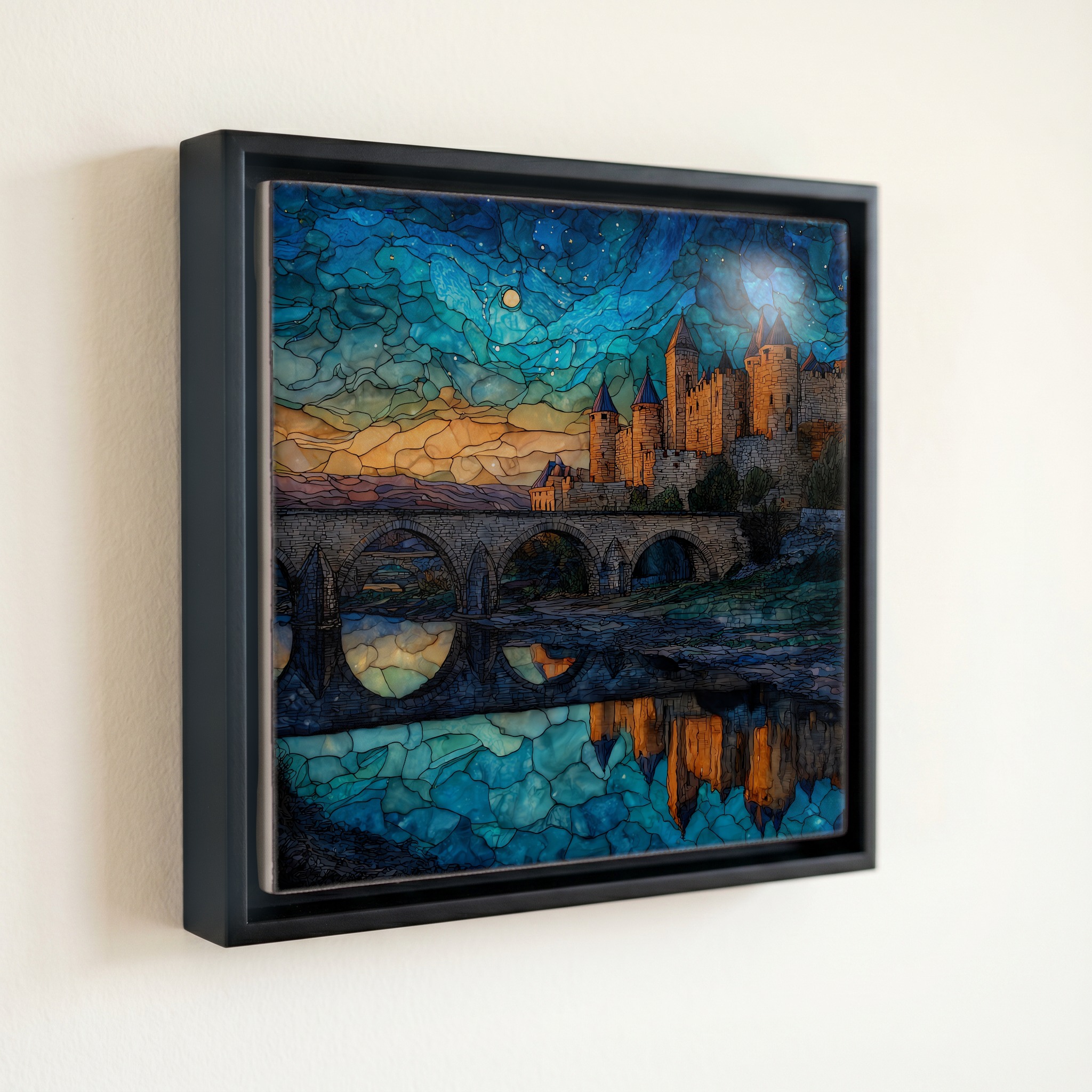
Pont Vieux Carcassonne, on ceramic.
Each tile is finished by hand in our Knoxville studio. Artwork is slowly infused into the ceramic surface under high heat and pressure, and rests beneath a thin glossy finish. The colour lives in the surface, not on top of it.
Pick any four 4-inch tiles — National Parks you've been to, a Smokies set, the four seasons of one place. $ for a set of , cork-backed, ready to live on the table.
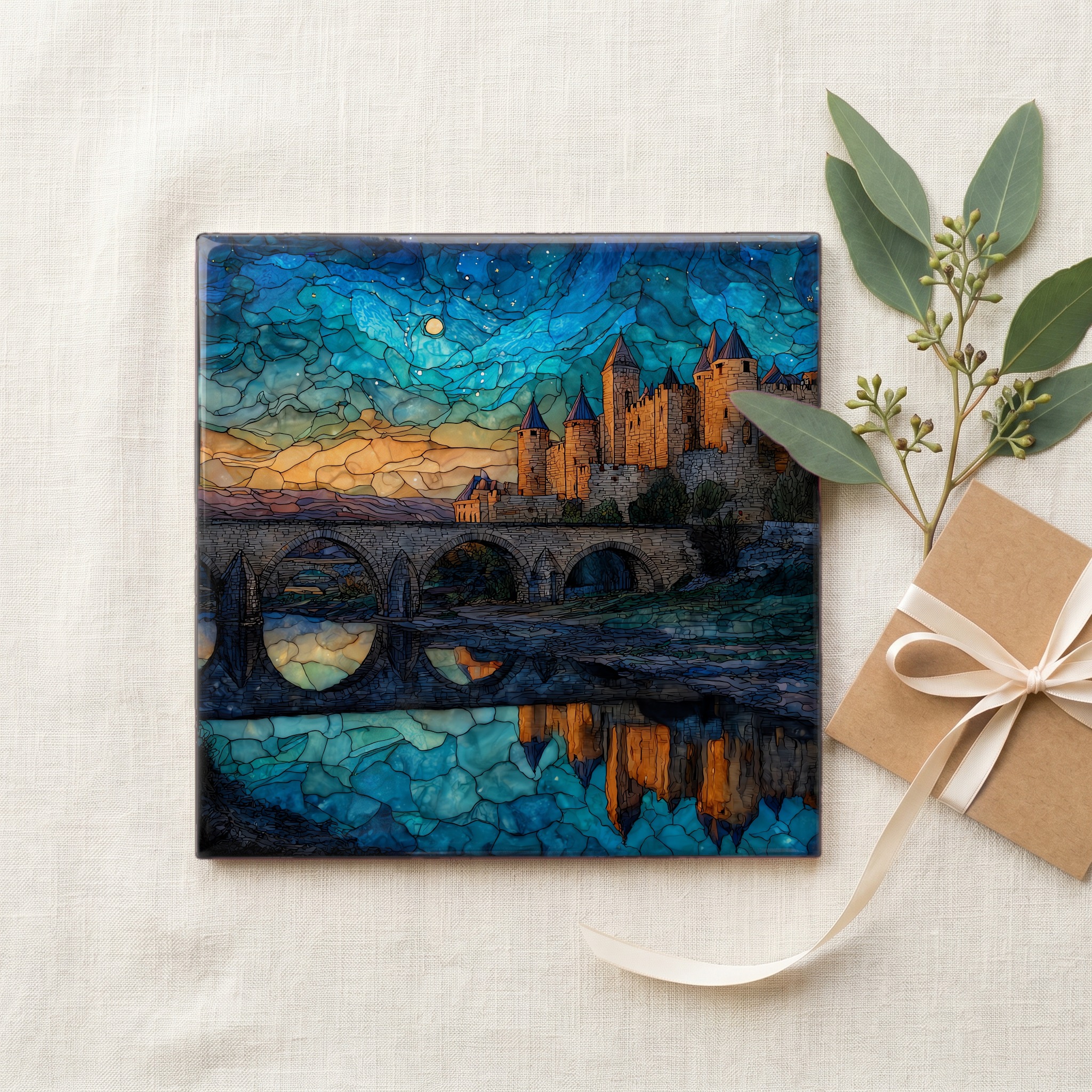
Each tile ships in a kraft box, tied with cream ribbon, with a handwritten note from the studio if you'd like to add one.
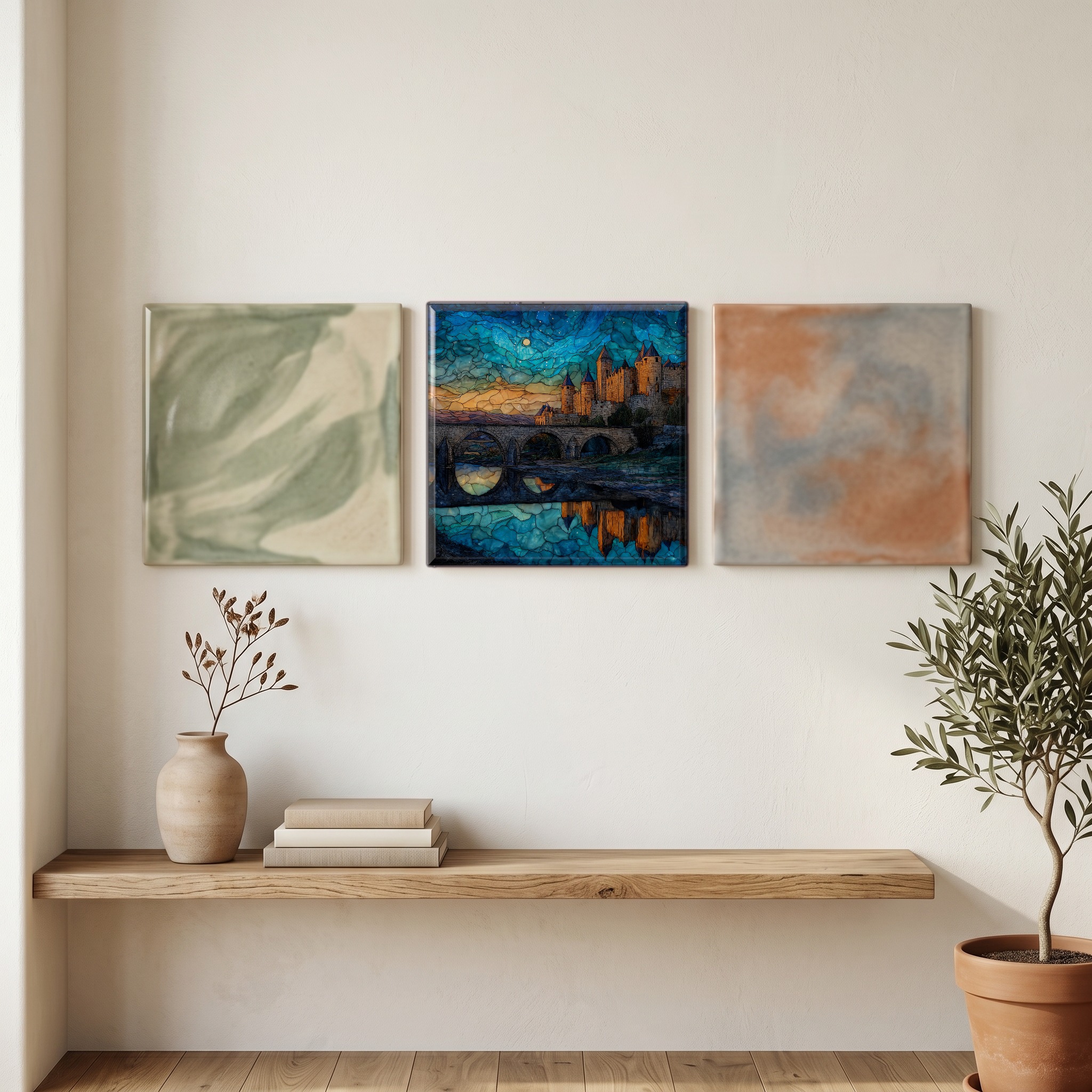
Three or five different vistas, hung together — a chapter of places you've been, or want to go.
The place, in three passes.
The Pont-Vieux crosses the River Aude in the city of Carcassonne, in the Aude department of Occitanie, France. It runs 225 meters from the lower town (the Bastide Saint-Louis, the gridded medieval district laid out by King Louis IX in the thirteenth century) to the Trivalle quarter at the foot of the walled Cité on the eastern bank. Twelve semicircular stone arches of unequal length carry it across the water. Construction in stone was under way by 1315 and the bridge was in regular use by 1353. It was the only crossing between the two halves of Carcassonne until the nineteenth century. Listed as a Monument Historique in 1926.
Twelve semicircular arches of unequal span rest on piers shaped with pointed cutwaters fore and aft. The cutwaters split the current and break ice; small refuges set into each pier once let pedestrians step aside for passing carts. The bridge belongs to a small surviving family of medieval stone road-bridges in France, alongside the Pont Valentré at Cahors and the Pont Saint-Bénézet at Avignon. A small stone cross, the Croix de Mémoire, stands at the third pier; it replaced an earlier cross knocked down during the Wars of Religion. The structure was rebuilt in part in the nineteenth century and protected as a Monument Historique in 1926.
The Pont-Vieux gives the picture most people carry of Carcassonne. Walking east toward the Cité, the walls and towers rise on the far bank in their full medieval profile, the river holding them upside-down in the slow water below. The light worth waiting for arrives forty to sixty minutes before sundown, when the limestone of the western ramparts pulls warm and the line of the towers stays sharp against the pale southern sky. Photographers gather on the bridge and on the river path beneath it; locals tend to take the crossing in the other direction, west into the Bastide, after the gold has gone and the lamps in their fleur-de-lis brackets come on along the railings.