Wender·Vista
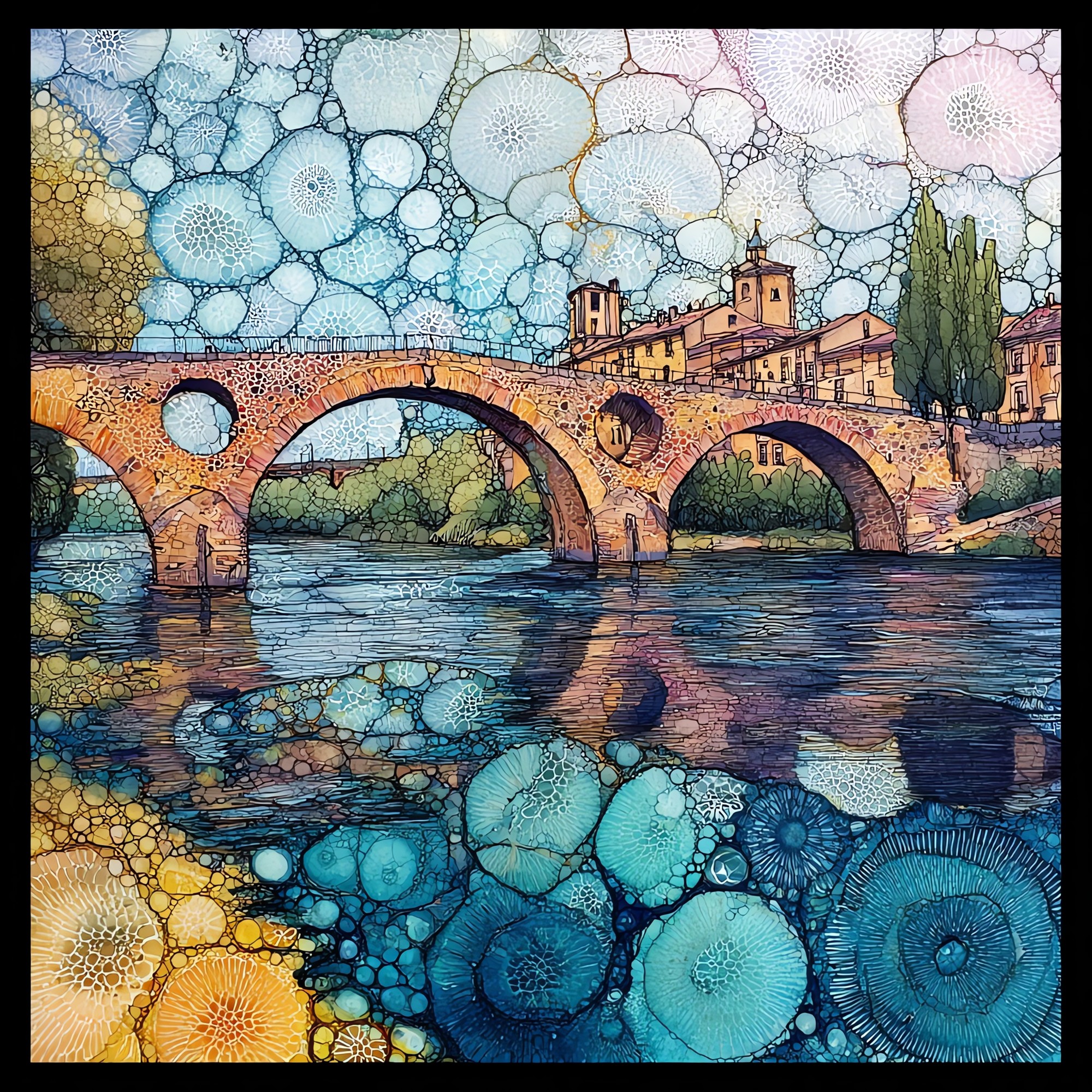
Pont Vieux d'Albi
shown on ceramic, 12-inch tileFrance
in Albi, the red city on the Tarn

Pont Vieux d'Albi

the red the cathedral lays on the water.

Where it lives

Not only on a wall.

A small tile on the nightstand catching the morning. A larger one above the fire. Yours, wherever you spend the slow hours.
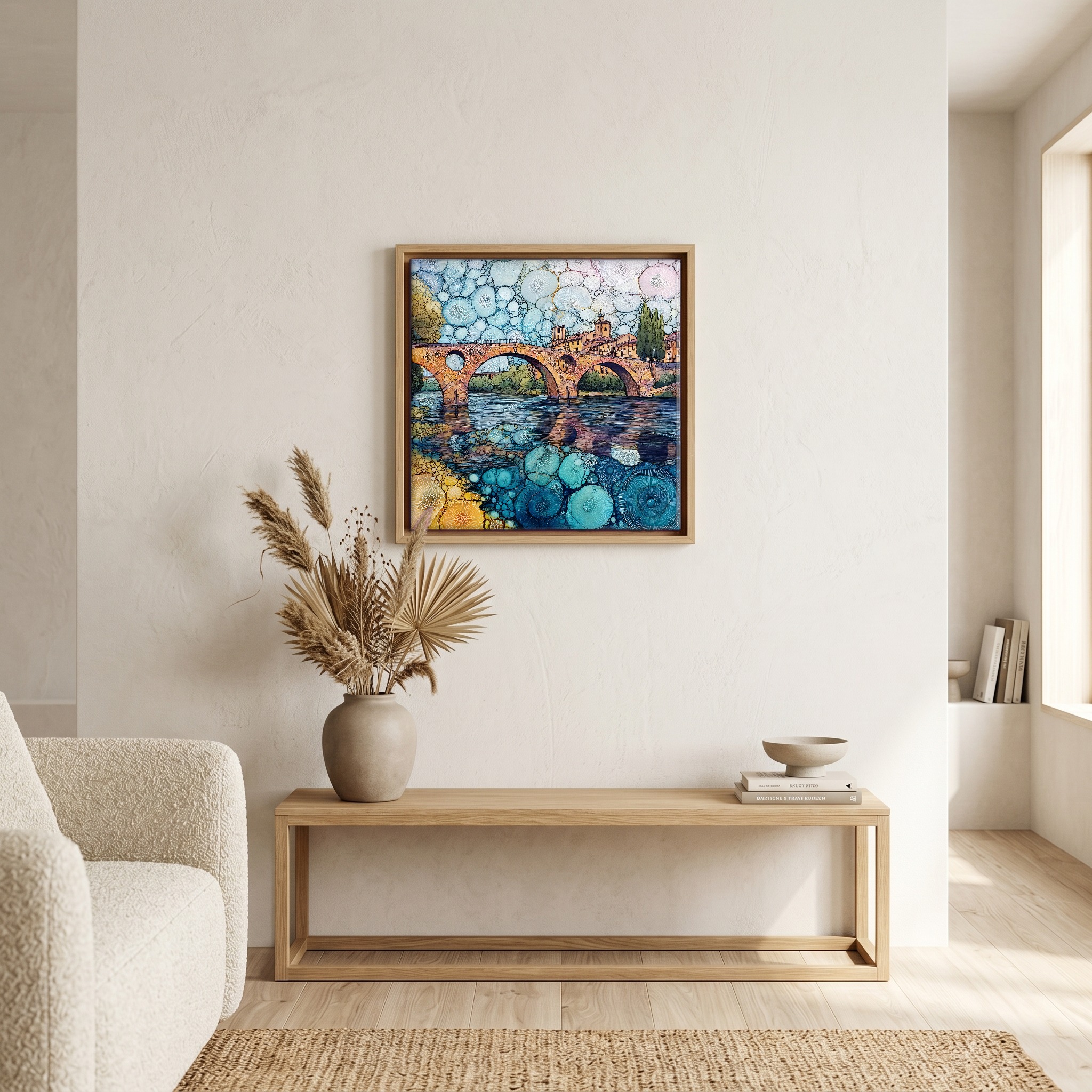
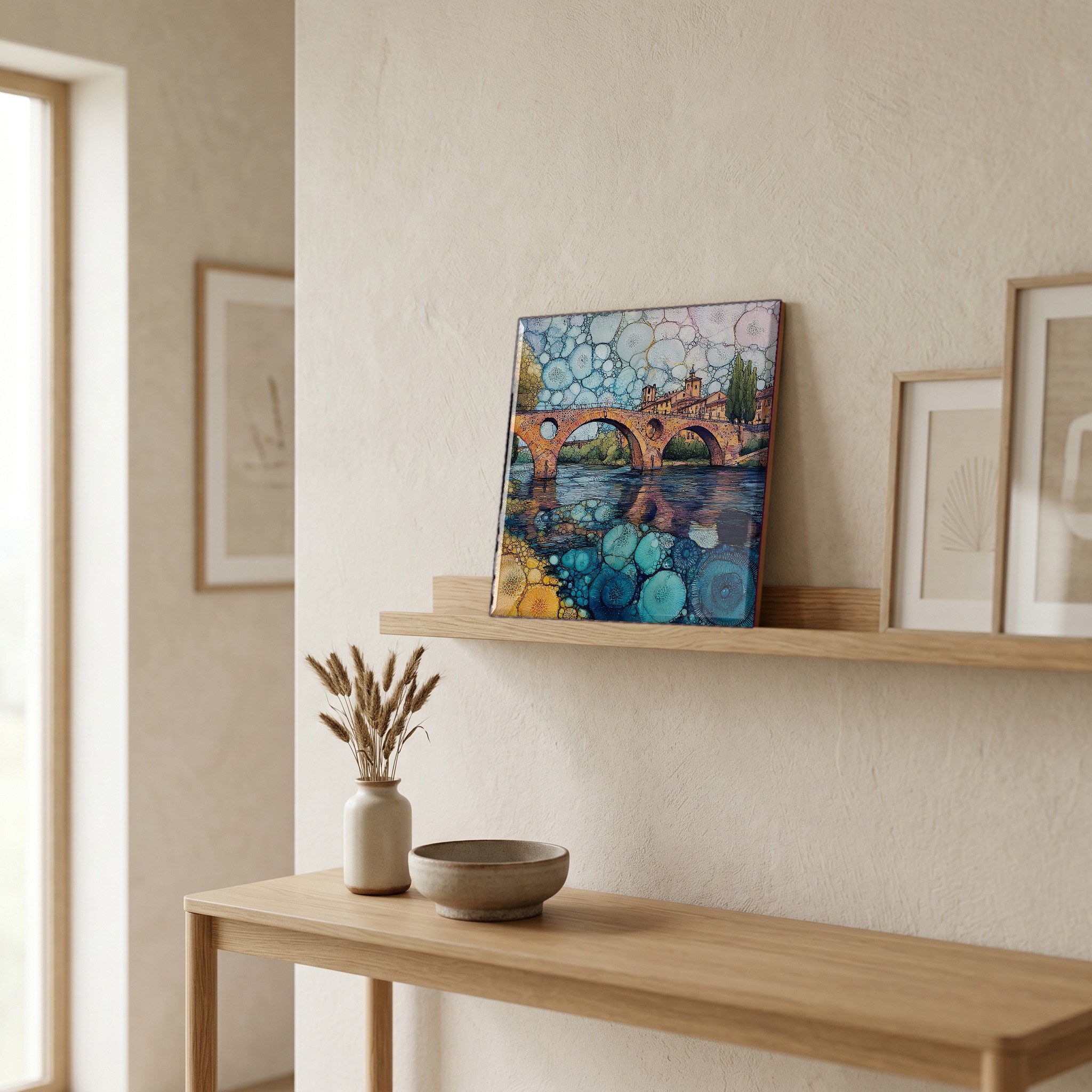
Above the bench, in a warm oak surround.
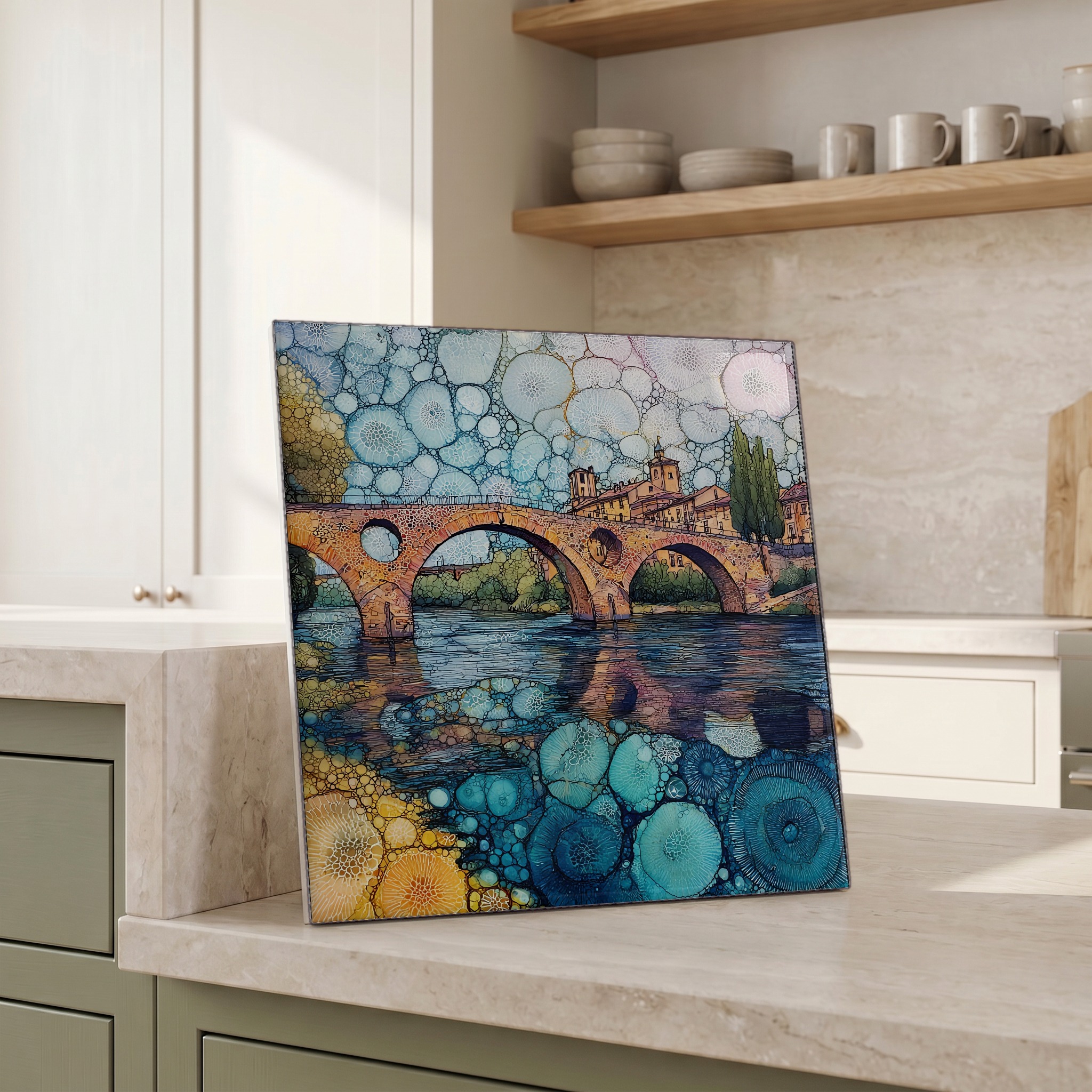
Beside the kettle, propped on the counter.
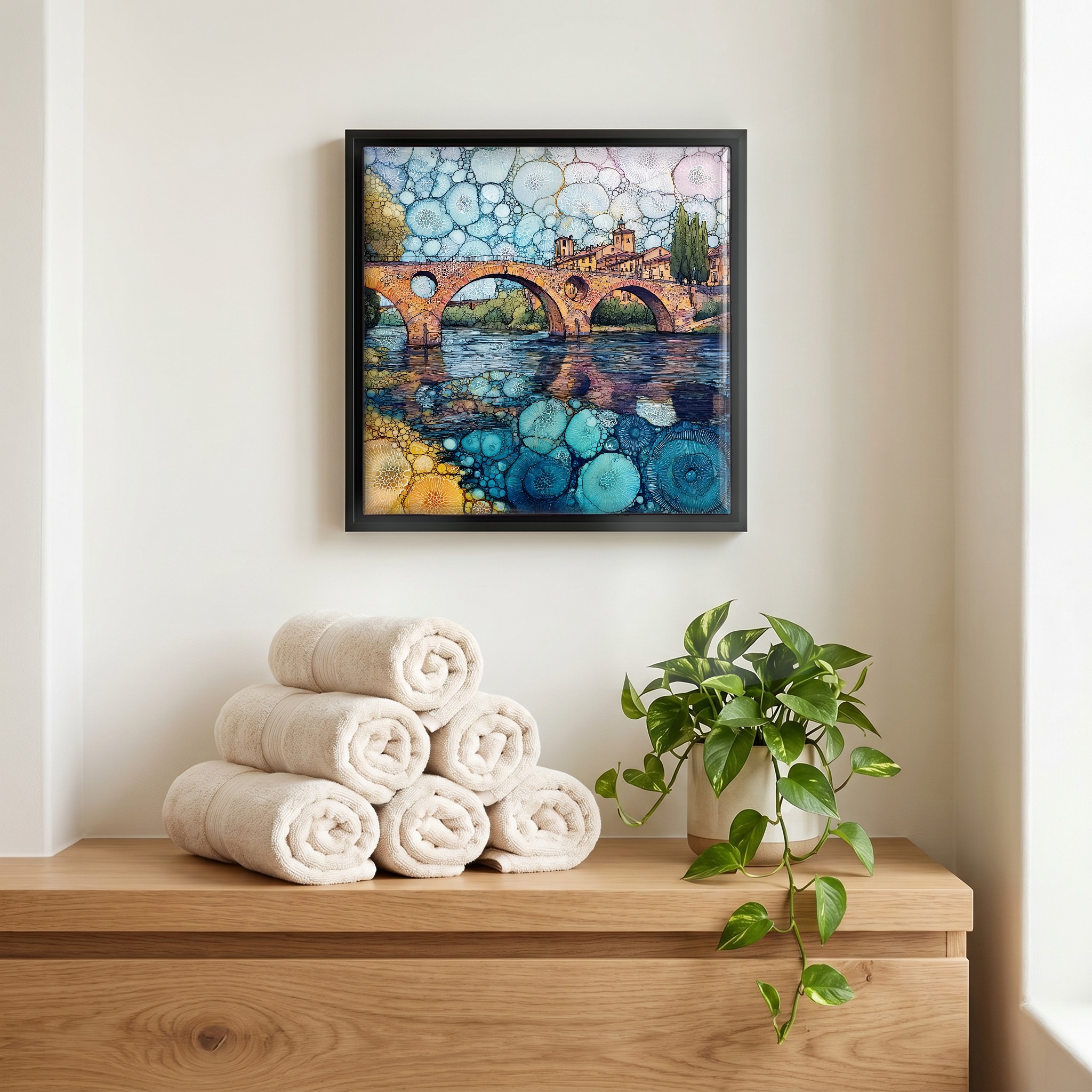
Above the linens, in a slim black surround.
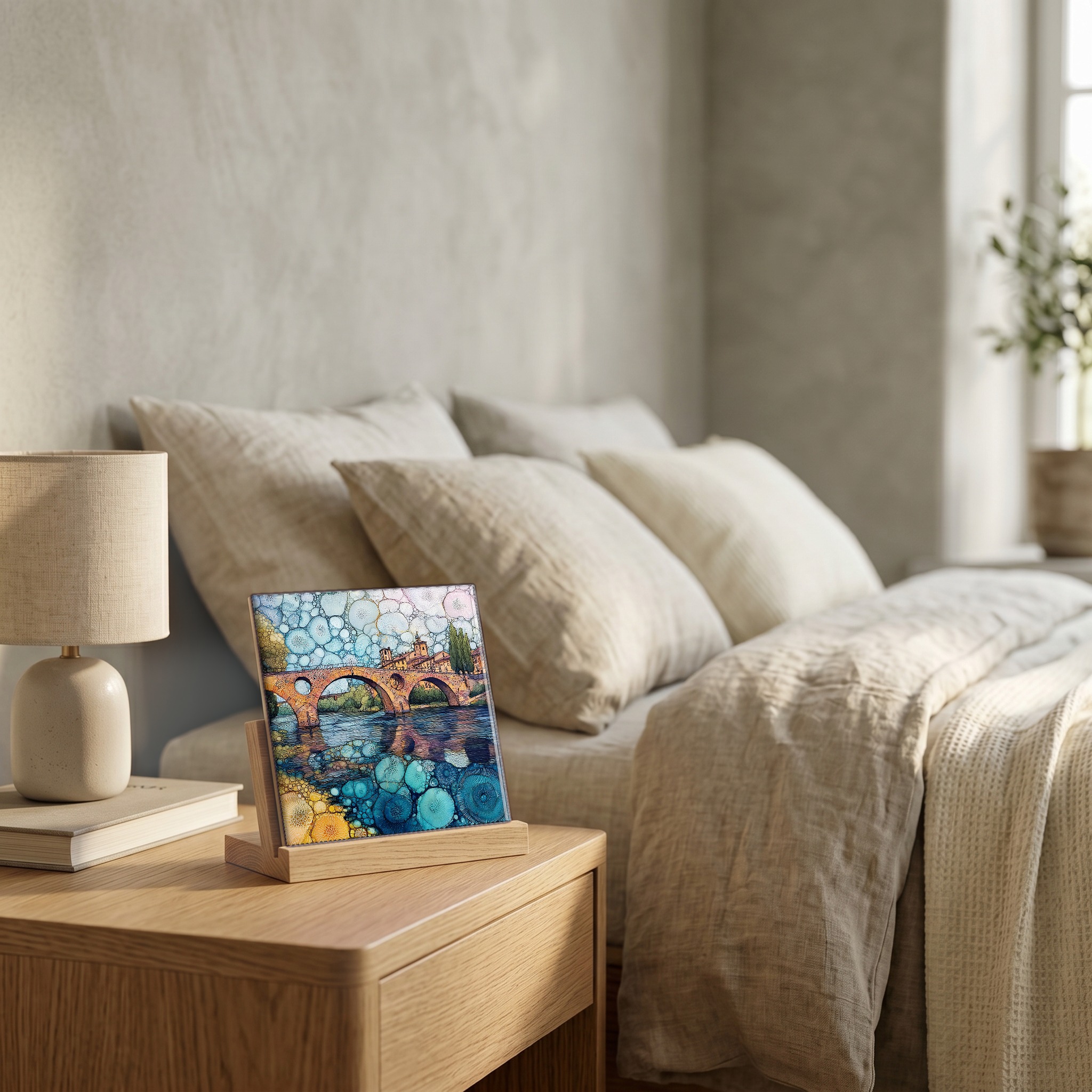
On the nightstand, on a light oak stand.
On a picture ledge, where the light comes in.
a note from the studio

The oldest bridge in Albi, begun in 1035 and still carrying foot traffic across the Tarn. It runs below the Cité Épiscopale, the brick fortress of Sainte-Cécile cathedral and the Palais de la Berbie, where the Toulouse-Lautrec collection now lives. The bricks of the bridge are the same warm pink-red the whole city is made from, which is why Albi is called la ville rouge. The Tarn underneath is slow and green. The view back across the river to the cathedral is one of the things people come a long way for.
from the studio
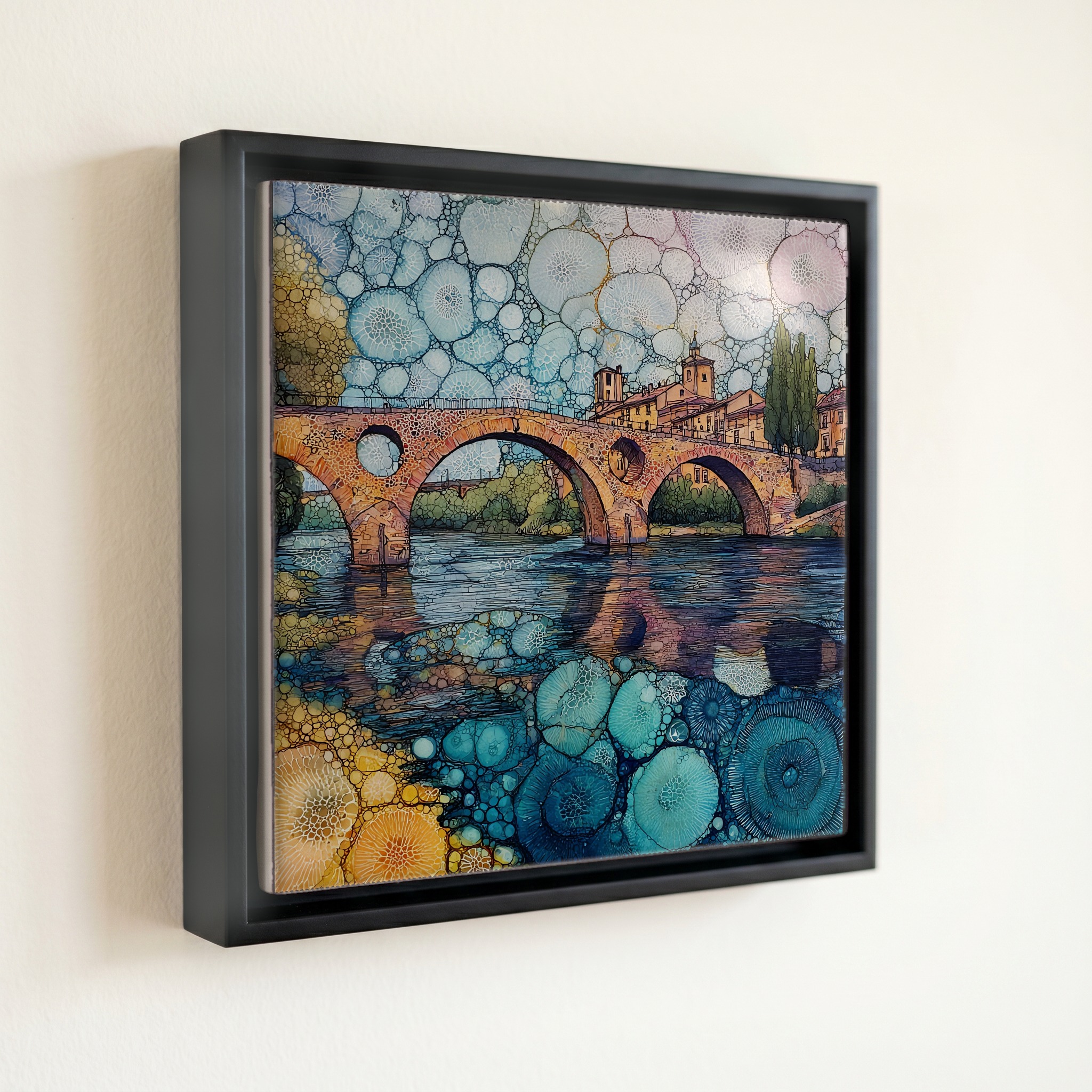
shown in a slim black floating frame · 6 × 6 in
— bring it home

Pont Vieux d'Albi, on ceramic.

Each tile is finished by hand in our Knoxville studio. Artwork is slowly infused into the ceramic surface under high heat and pressure, and rests beneath a thin glossy finish. The colour lives in the surface, not on top of it.

What kind of piece?
One tile — square or rectangle.
How big?
the popular one — counter, shelf, nightstand
6 × 6 in · 15 cm · 1.6 lb
Surface finish
A clear glossy finish — the artwork reads as if under resin. Ideal for show-pieces and framed wall art.
How it sits
A hidden cleat — sits ¼″ proud of the wall.
$58
Hand-finished and shipped from our studio at the foot of the Smokies. On your wall in about ten days.
size
6 × 6 in
15 cm
weighs
1.6 lb
solid in the hand
surface
ceramic, hand-finished
art rests beneath a thin glossy finish
from
Knoxville, TN
our family studio, at the foot of the Smokies
— start a Coaster Set

Pick any four 4-inch tiles — National Parks you've been to, a Smokies set, the four seasons of one place. $ for a set of , cork-backed, ready to live on the table.
comes gift-ready
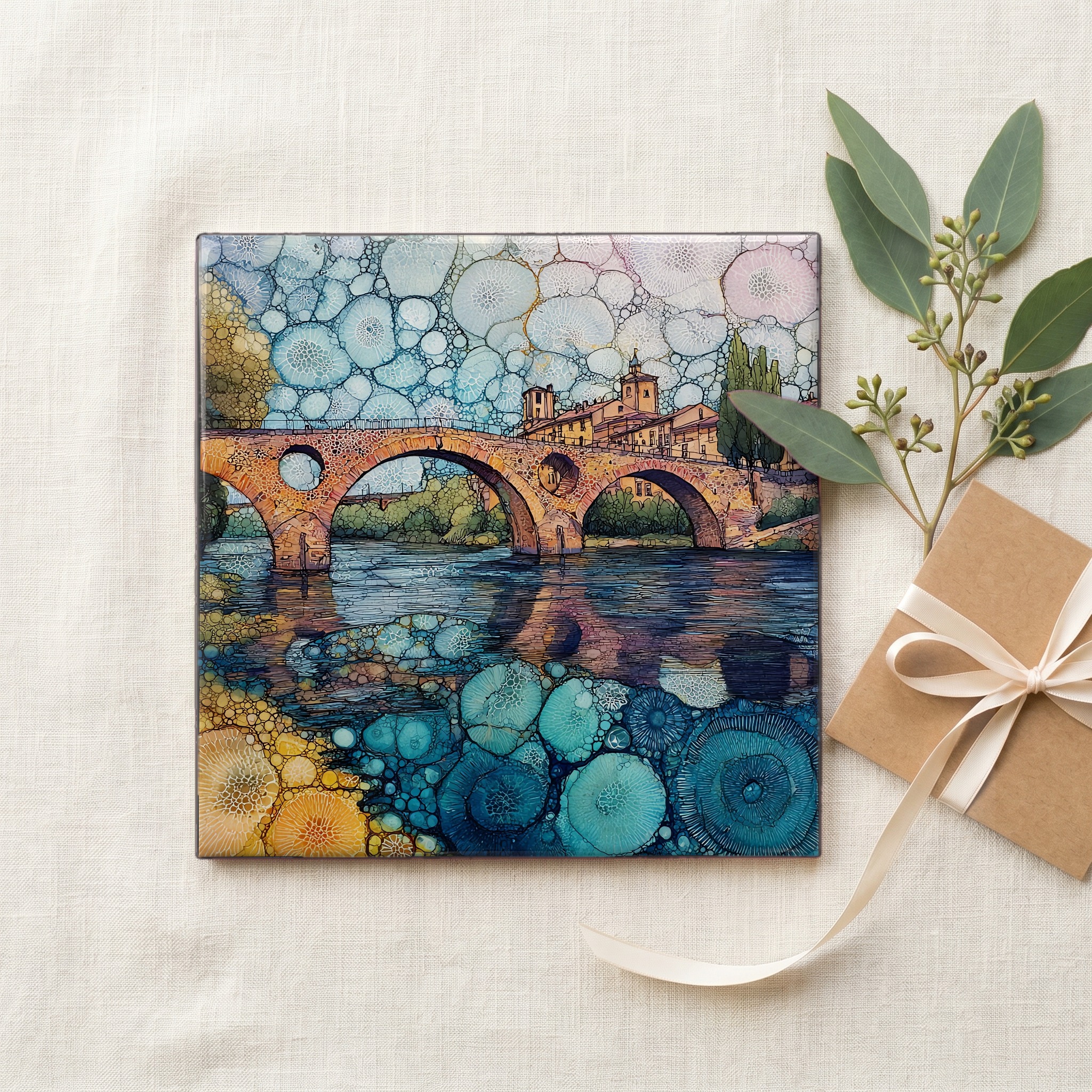
comes gift-ready

Each tile ships in a kraft box, tied with cream ribbon, with a handwritten note from the studio if you'd like to add one.
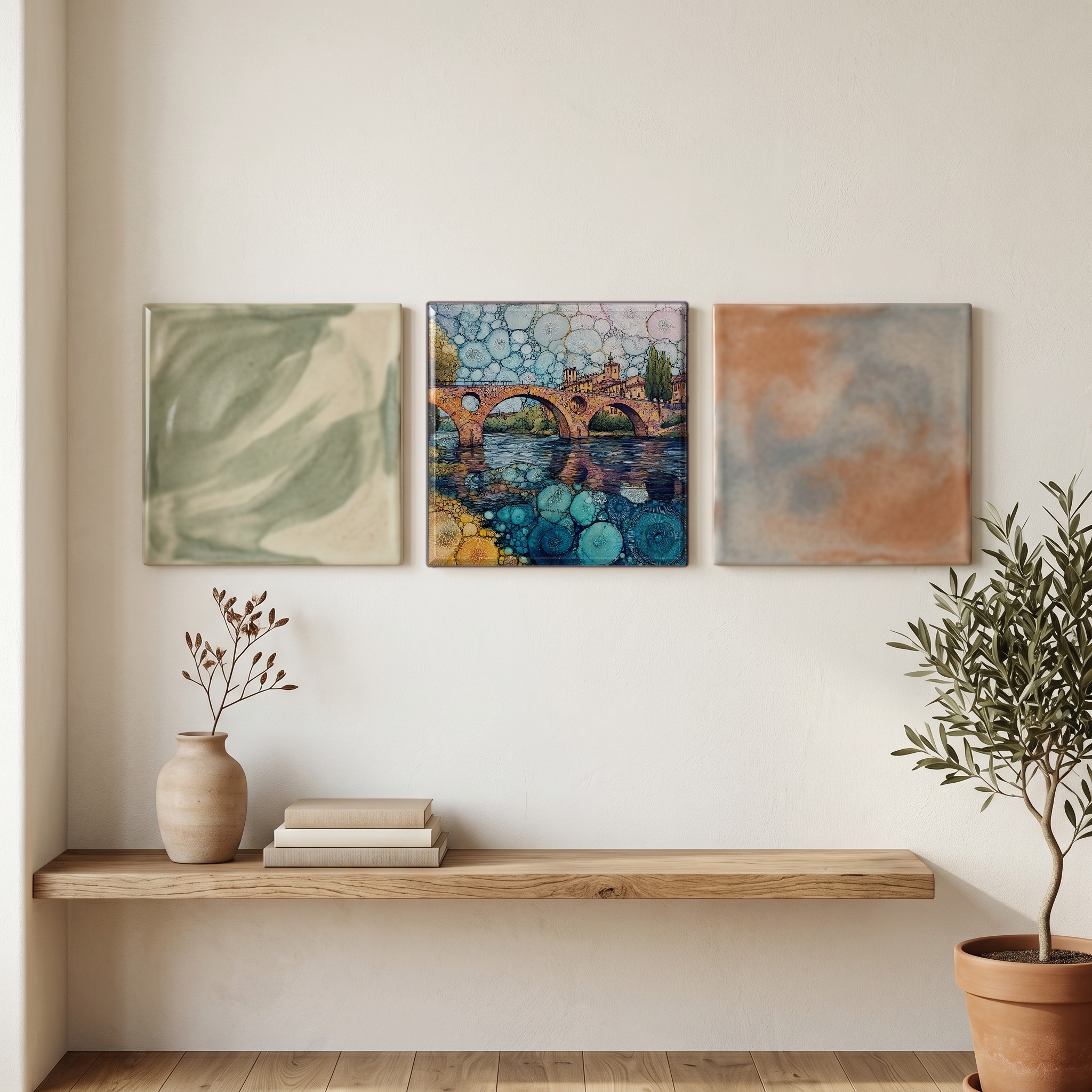
or build a grouping
or build a grouping

Three or five different vistas, hung together — a chapter of places you've been, or want to go.

about Pont Vieux d'Albi

The place, in three passes.

A little of what's known, in case you fall down the rabbit hole — or want to go see it yourself.
the place

Pont Vieux d'Albi crosses the Tarn River in Albi, the seat of the Tarn department in the Occitanie region of southern France, about 75 kilometres northeast of Toulouse. The bridge runs roughly 151 metres long and rests on eight arches of stone foundation faced in the local pink-red brick that gives Albi its nickname, la ville rouge. It was begun in 1035 under the direction of the abbey of Saint-Salvi, completed around 1042, and is one of the oldest bridges still in everyday use in France. On the far bank, the bridge meets the Cité Épiscopale d'Albi, inscribed on the UNESCO World Heritage list in 2010.

the stone

The bridge is built largely from Albi's namesake brick, the warm pink-red briquette foraine fired from clay along the Tarn, which gives the whole city its colour. Beneath the brick facing, the piers are massive stone foundations sunk into the riverbed in the 11th century. The bridge originally carried small houses and shops along its length, the way the Ponte Vecchio in Florence still does, until the catastrophic Tarn flood of 1766 destroyed the medieval superstructure and the houses were not rebuilt. It has been listed as a Monument historique since 1921. The brick has been re-pointed many times but the load-bearing core is largely the original 11th-century work.

the visit

The bridge is open to foot traffic and a narrow lane of one-way light vehicles; the main vehicular crossing of Albi has long since moved to the Pont Neuf downstream. The most photographed view is from the right bank looking back at the Cité Épiscopale, with the brick mass of Sainte-Cécile cathedral and the Palais de la Berbie rising above the Tarn. The Berbie Palace now houses the Musée Toulouse-Lautrec, which holds the largest single collection of works by the painter, who was born in Albi in 1864. The Cité Épiscopale was inscribed on the UNESCO World Heritage list in 2010, and the Pont Vieux is part of the inscribed perimeter.

where
France · Albi, Tarn, Occitanie
position
43.9290° N · 2.1420° E
the neighborhood

What's nearby.

A handful of named places within an hour's walk or short drive. Some we've already painted; some we will.
0.2 km W
Sainte-Cécile Cathedral
Gothic brick cathedral
0.2 km W
Palais de la Berbie
Bishop's palace and museum
0.2 km W
Musée Toulouse-Lautrec
Art museum
0.4 km W
Collégiale Saint-Salvi
Romanesque-Gothic church
25 km NW
Cordes-sur-Ciel
Medieval hilltop bastide
N
Pont Vieux d'Albi
Sainte-Cécile Cathedral
Palais de la Berbie
Musée Toulouse-Lautrec
Collégiale Saint-Salvi
Cordes-sur-Ciel
common questions

What people ask.

A few questions we get about Pont Vieux d'Albi — and about bringing the piece home.
about the place

The Pont Vieux crosses the Tarn River in Albi, a city in the Tarn department of southern France's Occitanie region, about 75 kilometres northeast of Toulouse. The bridge links the Cité Épiscopale to the Madeleine quarter on the right bank.

Construction began in 1035 under the abbey of Saint-Salvi and was completed around 1042, making it one of the oldest bridges still in everyday use in France. It has carried traffic across the Tarn for nearly a thousand years.

Albi is built almost entirely from briquette foraine, the warm pink-red brick fired from clay deposits along the Tarn. The cathedral, the Berbie Palace, the bridge facing, and most of the medieval city all share the same colour, which is why Albi is called la ville rouge, the red city.

The bridge gives the canonical view of the Cité Épiscopale: the brick fortress of Sainte-Cécile cathedral and the Palais de la Berbie rising above the Tarn. The Berbie Palace now houses the Musée Toulouse-Lautrec, the largest collection of works by the painter, who was born in Albi in 1864.

Yes. The Cité Épiscopale d'Albi was inscribed on the UNESCO World Heritage list in 2010, and the Pont Vieux falls inside the protected perimeter as a contributing medieval structure. The bridge has also been a French Monument historique since 1921.

Yes. Through the Middle Ages, small houses and shops lined the length of the bridge, the way they still do on the Ponte Vecchio in Florence. The houses were removed after the catastrophic Tarn flood of 1766 damaged the medieval superstructure, and they were not rebuilt.

Pedestrians and a single lane of one-way light vehicle traffic still cross it daily. Heavier traffic has long since moved to the Pont Neuf, the 19th-century bridge a short distance away. The Pont Vieux has been a Monument historique since 1921.

about the piece in your home

It has been a meaningful gift for many of our customers with roots in the Tarn or in southern France. The Pont Vieux is one of Albi's most recognised images and a fixture of the Cité Épiscopale. A Small or Medium with a handwritten note from the studio carries well.

The piece sits well in interiors that already use warm earth tones. Mediterranean-modern, Tuscan, Provençal, and bookish library palettes all carry it well. The pink-red brick and the slow green river lift terracotta, oak, brass, and limewashed walls.

Yes. Warm earth tones and old-world references are a continuing thread in current interior direction, particularly the move away from cool greys toward terracotta, plaster, and patinated brass. The piece sits naturally in that direction without leaning into kitsch.

Above a standard three-seat sofa, a single Large is the usual choice; above a wider sectional or a long console, a 4-tile Mural sits well. For a hallway or a feature wall, a 9-tile Mural gives the bridge its full sweep across the Tarn.

Yes. For bathrooms, kitchens, or any vertical installation, choose the Dura Satin or Matte finish rather than the Glossy. Both are scratch-resistant and stand up to humidity. The colour is slowly infused into the ceramic surface under high heat and pressure, so it lives in the surface itself.

A microfibre cloth and water is all the tile needs. Avoid abrasive cleaners and scouring powders, which can dull the surface over time. The thin glossy finish protects the colour underneath, and the colour itself lives in the ceramic, not on top of it.

Yes. Every WenderVista piece is original to our studio in Knoxville, Tennessee. We do not license images from third parties. Reid Wender chooses each place that enters the atlas and oversees the painting and the finish.

if this one stayed with you

A few you might also love.

Hand-picked by the eye that found Sorapis. Same air, same kind of quiet.