Wender·Vista
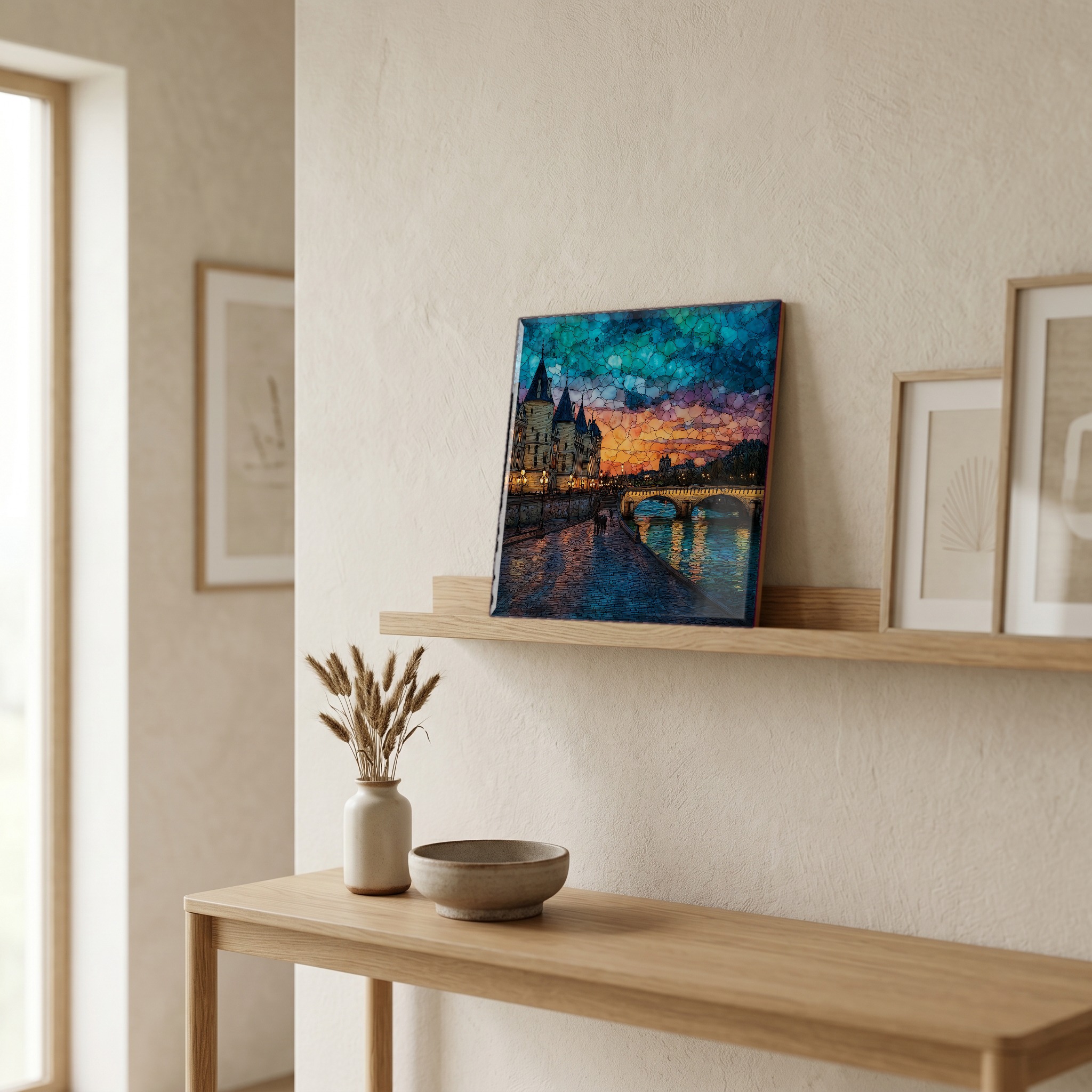
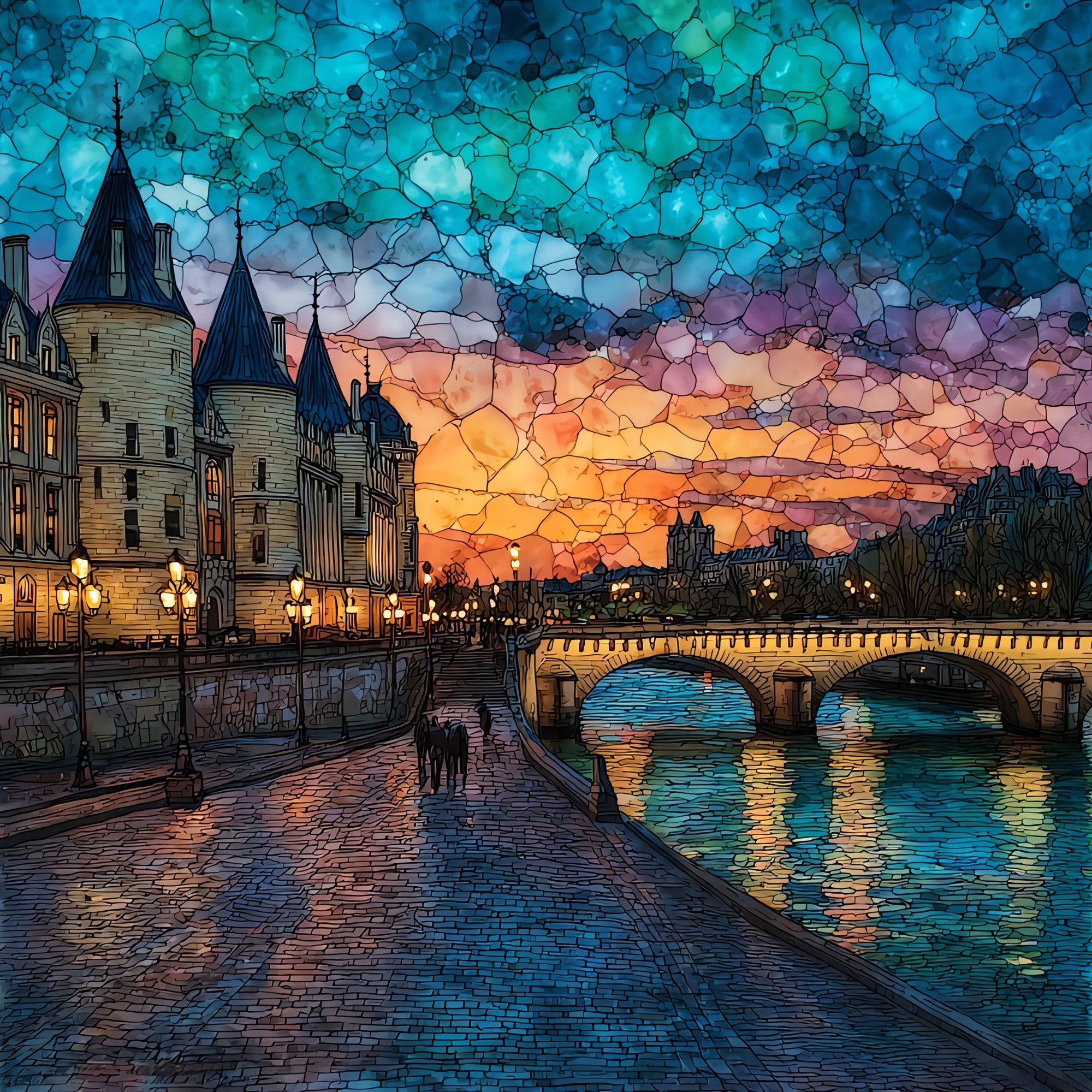
Pont Neuf
shown on ceramic, 12-inch tileFrance
in central Paris, at the tip of the Île de la Cité

Pont Neuf

the bridge from which Paris first saw its river.

Where it lives

Not only on a wall.

A small tile on the nightstand catching the morning. A larger one above the fire. Yours, wherever you spend the slow hours.
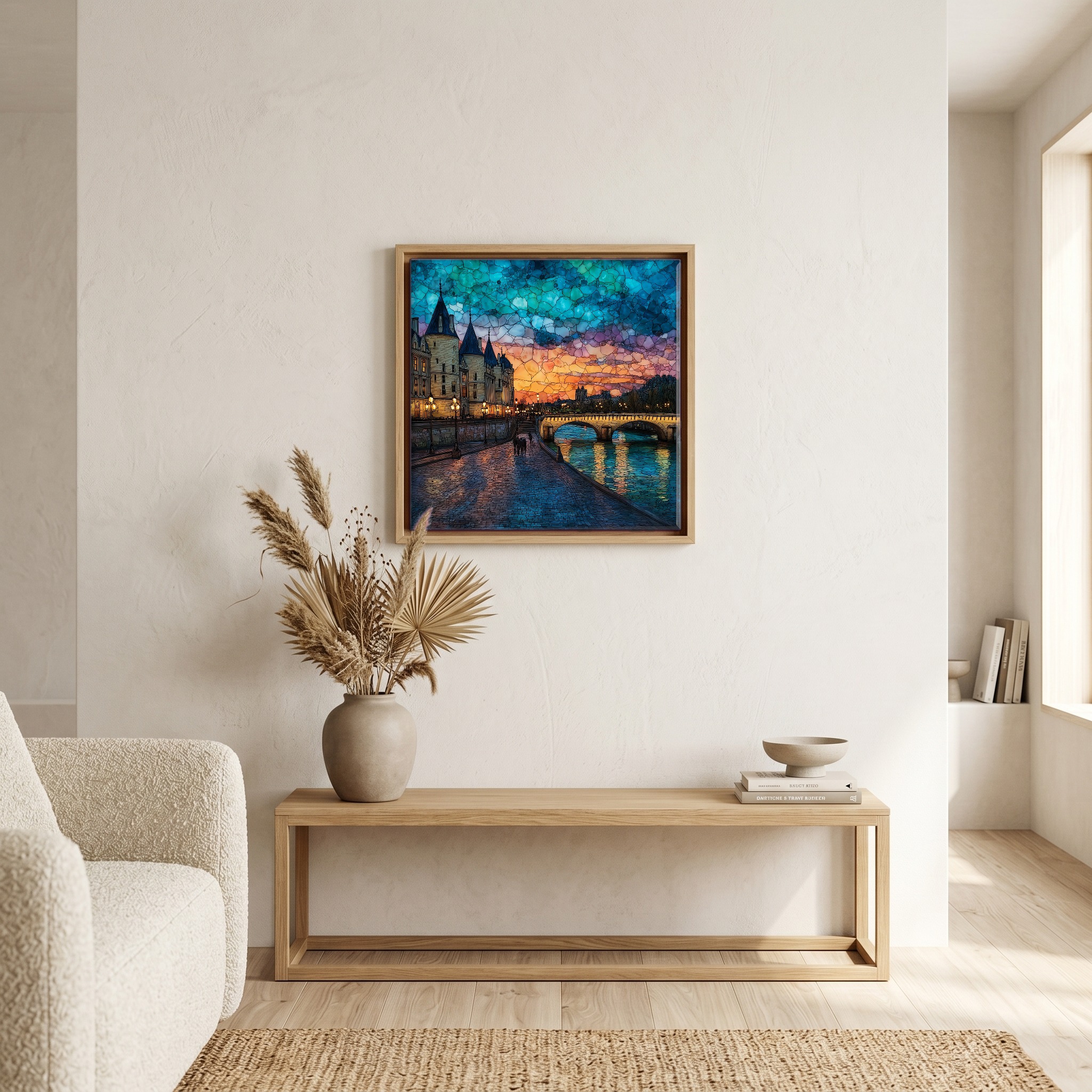
Above the bench, in a warm oak surround.
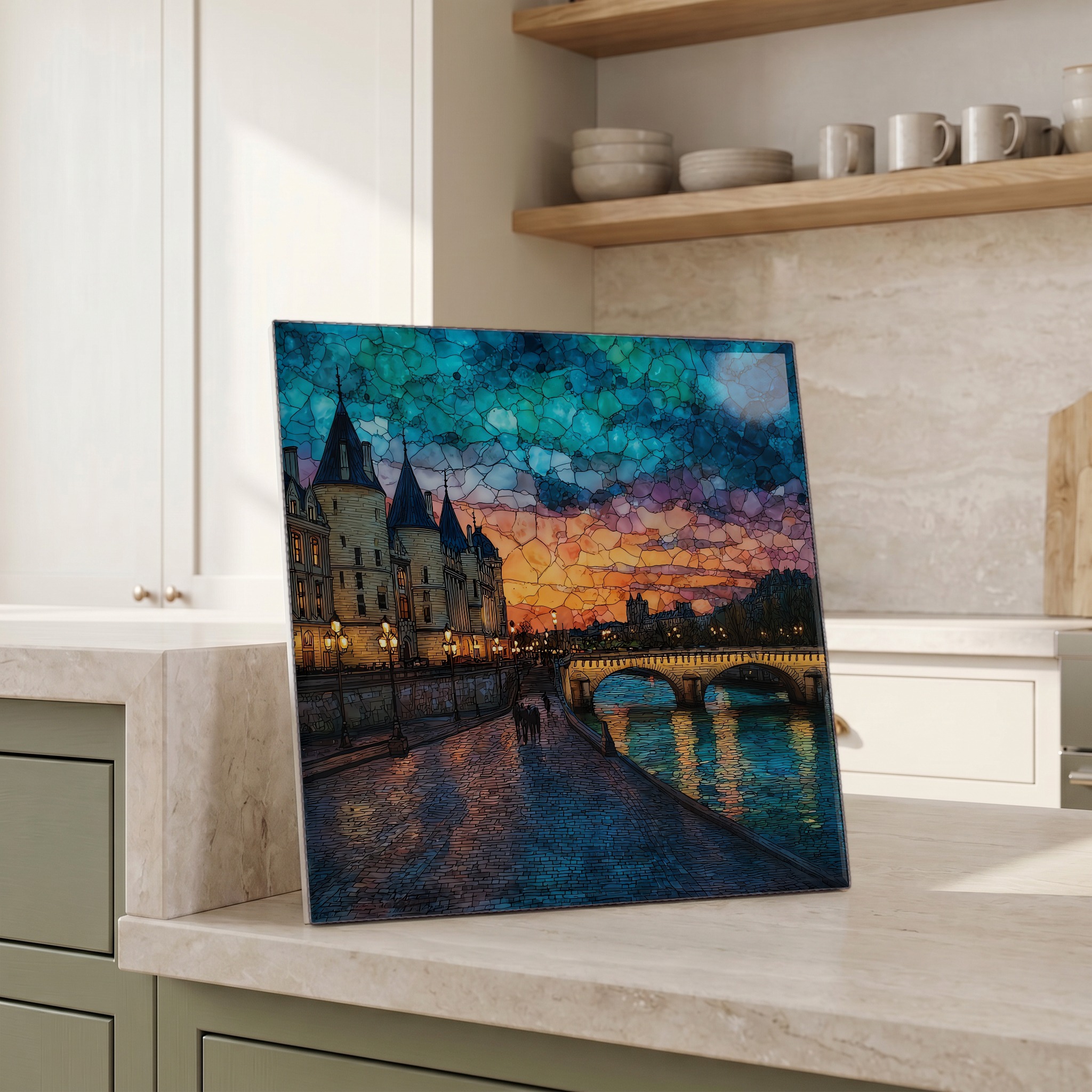
Beside the kettle, propped on the counter.
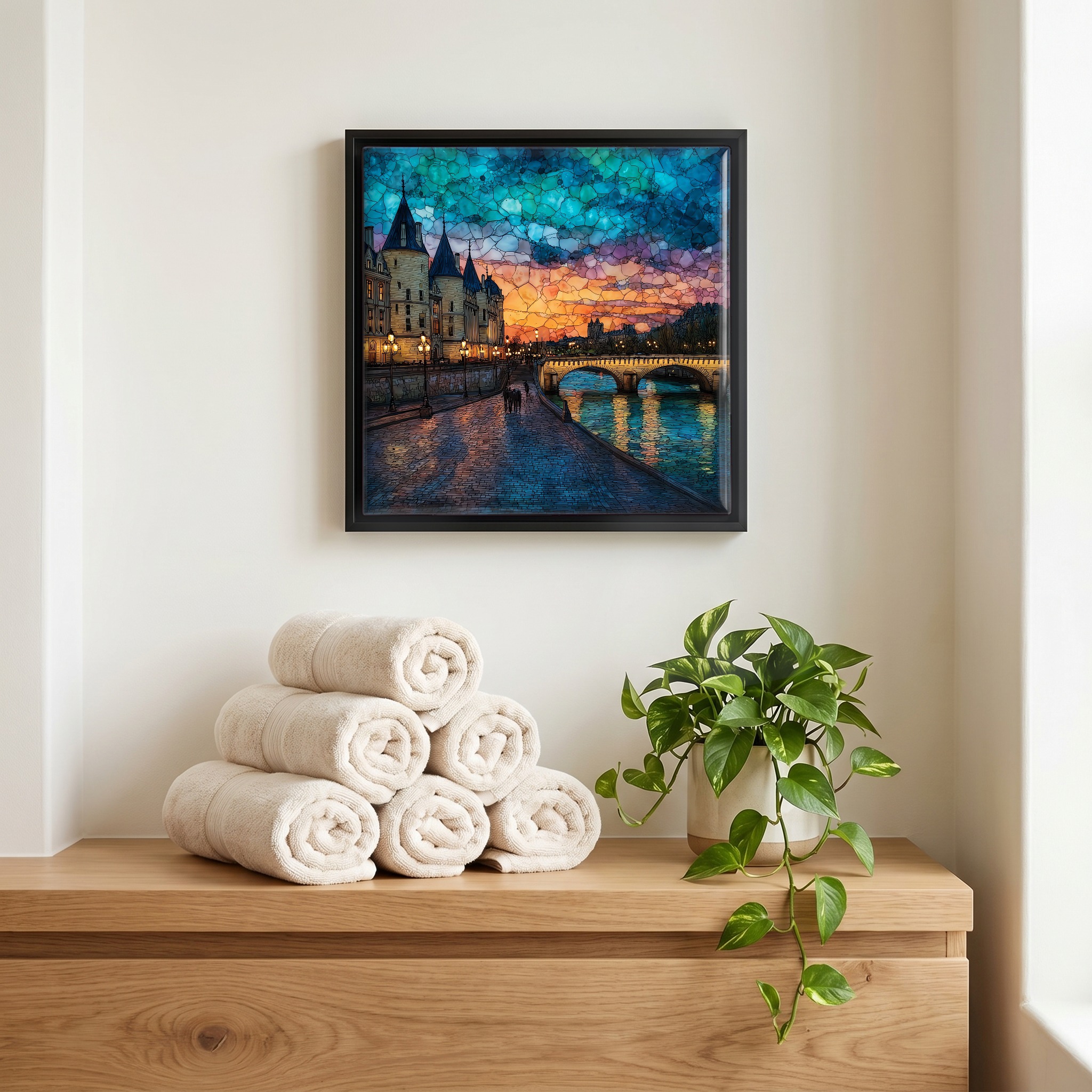
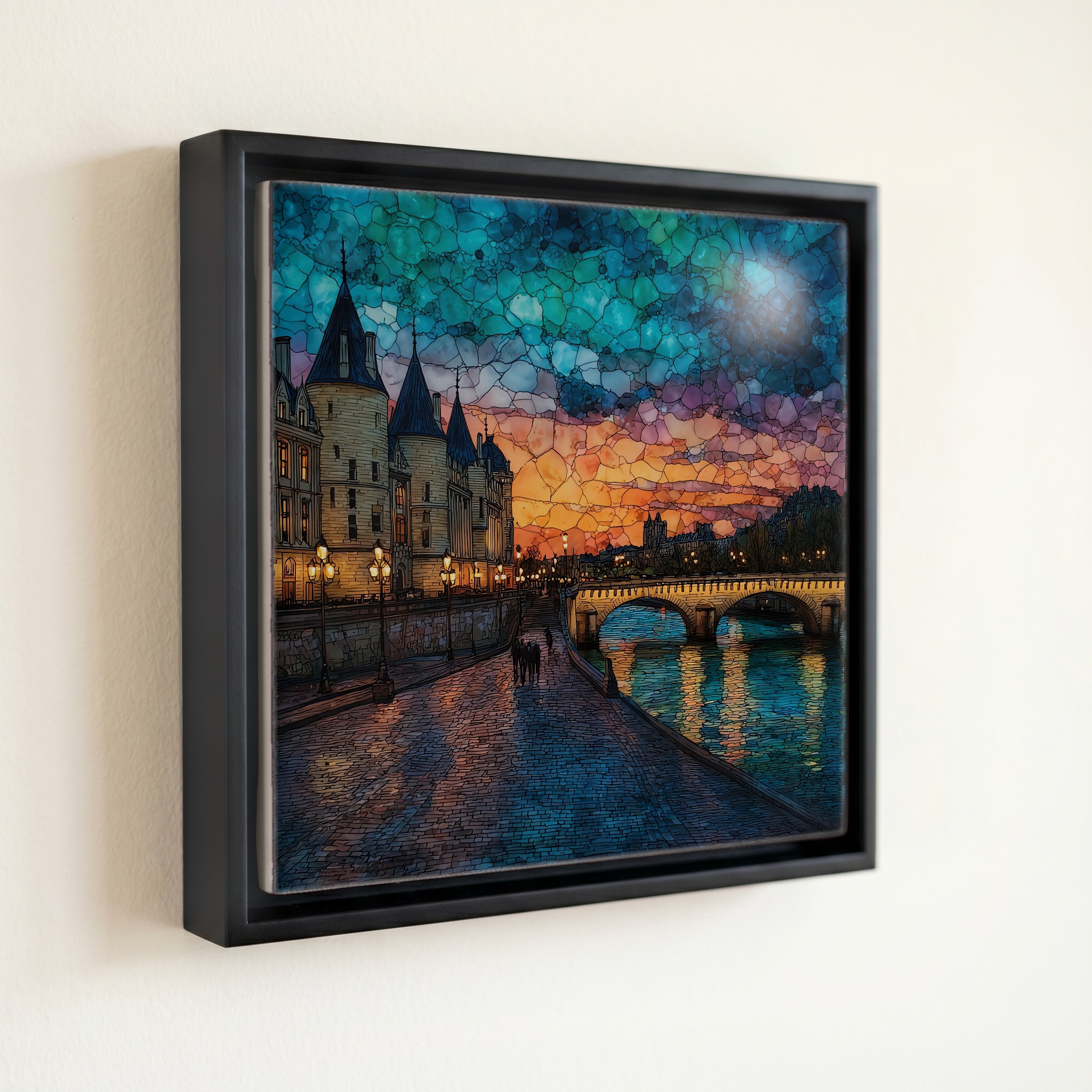
Above the linens, in a slim black surround.
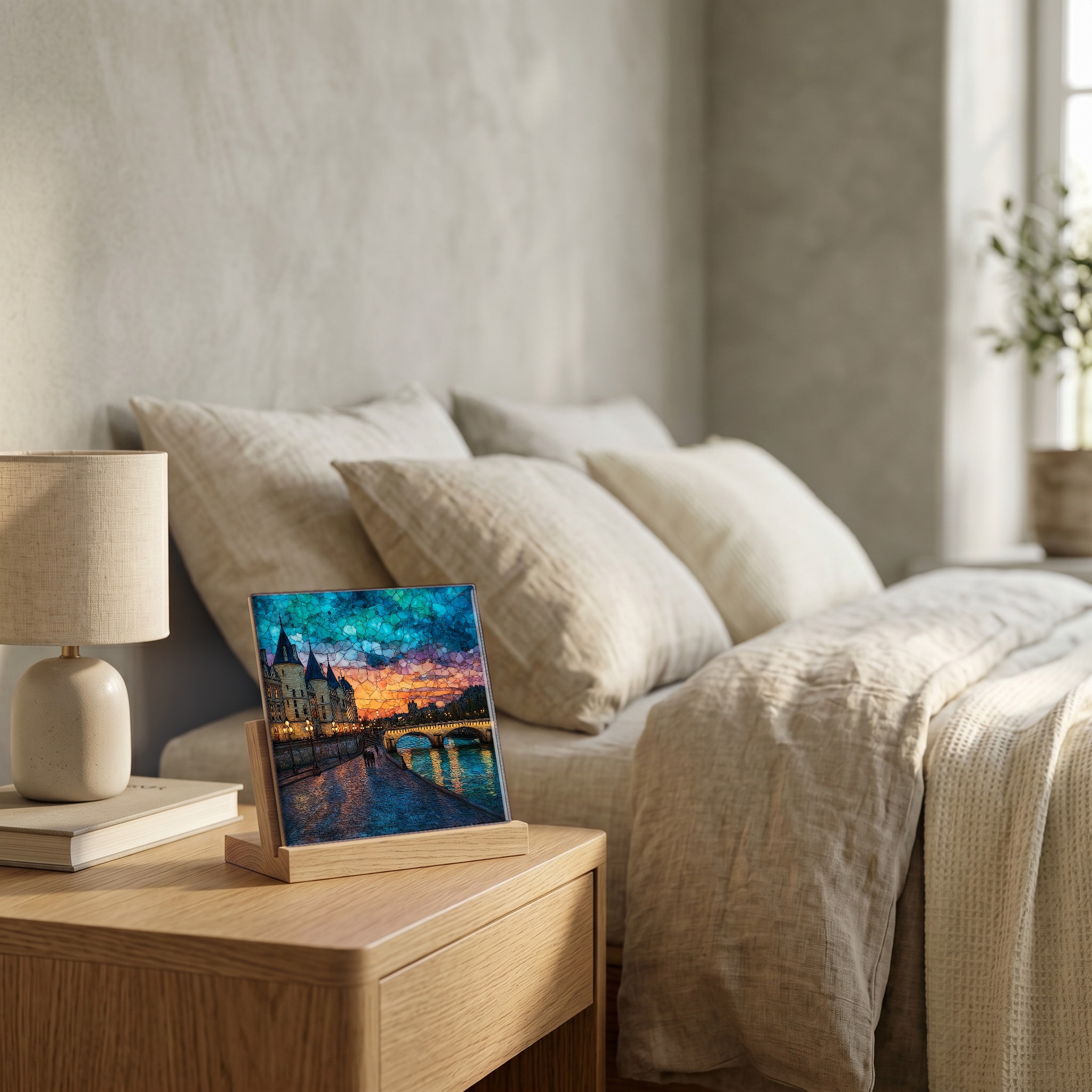
On the nightstand, on a light oak stand.
On a picture ledge, where the light comes in.
a note from the studio

The oldest bridge in Paris, despite the name. Twelve stone arches across the Seine, the first crossing built without a row of houses pressing in on either side. That's why Parisians remember it: it was the bridge from which they could finally see their own river. Three hundred and eighty-four carved stone faces watch the water from the bastions along its flanks. At the centre, the Square du Vert-Galant drops down to a small wedge of garden where the Île de la Cité meets the current. Couples sit there in summer with bottles of wine. The light is best an hour before sunset.
from the studio
shown in a slim black floating frame · 6 × 6 in
— bring it home

Pont Neuf, on ceramic.

Each tile is finished by hand in our Knoxville studio. Artwork is slowly infused into the ceramic surface under high heat and pressure, and rests beneath a thin glossy finish. The colour lives in the surface, not on top of it.

What kind of piece?
One tile — square or rectangle.
How big?
the popular one — counter, shelf, nightstand
6 × 6 in · 15 cm · 1.6 lb
Surface finish
A clear glossy finish — the artwork reads as if under resin. Ideal for show-pieces and framed wall art.
How it sits
A hidden cleat — sits ¼″ proud of the wall.
$58
Hand-finished and shipped from our studio at the foot of the Smokies. On your wall in about ten days.
size
6 × 6 in
15 cm
weighs
1.6 lb
solid in the hand
surface
ceramic, hand-finished
art rests beneath a thin glossy finish
from
Knoxville, TN
our family studio, at the foot of the Smokies
— start a Coaster Set

Pick any four 4-inch tiles — National Parks you've been to, a Smokies set, the four seasons of one place. $ for a set of , cork-backed, ready to live on the table.
comes gift-ready
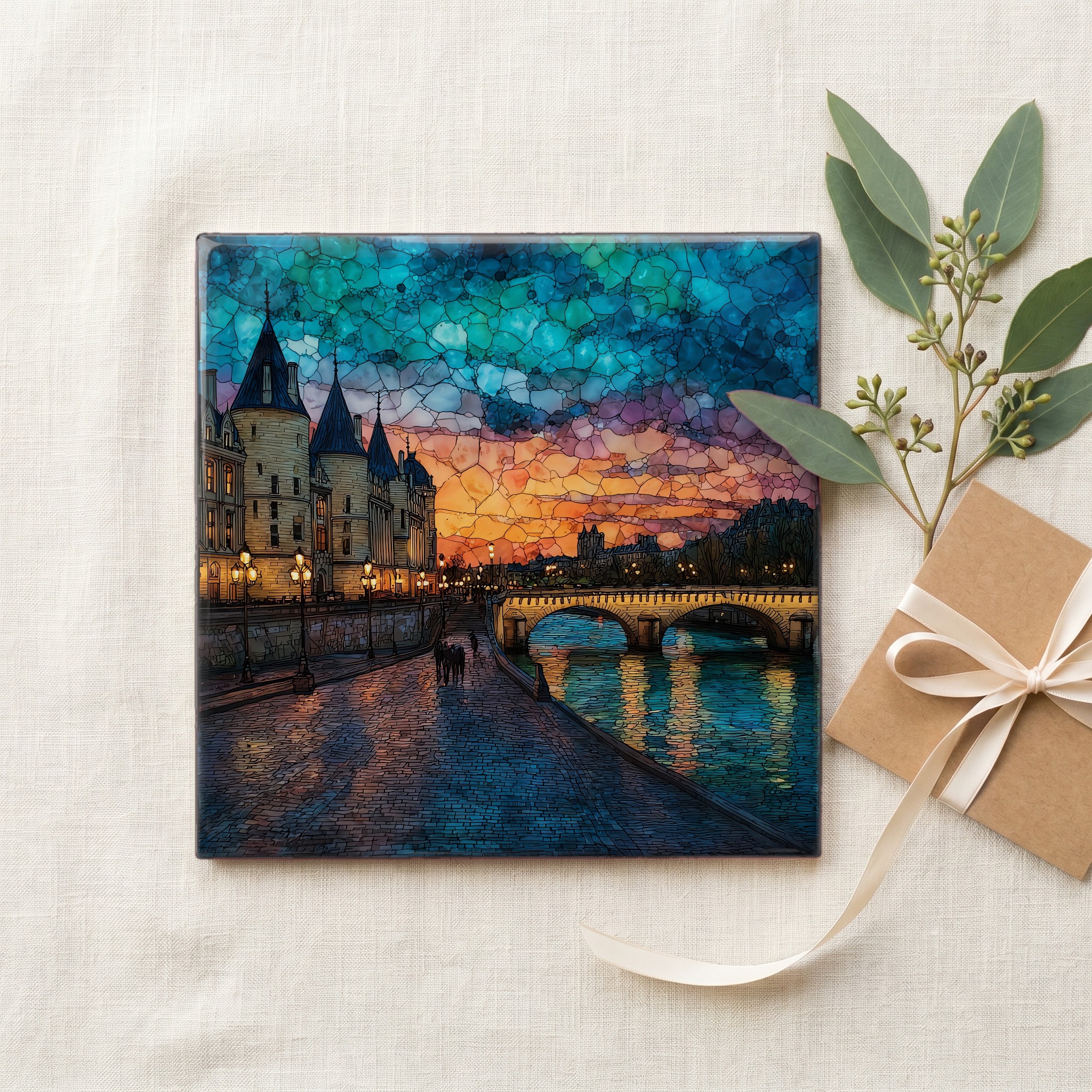
comes gift-ready

Each tile ships in a kraft box, tied with cream ribbon, with a handwritten note from the studio if you'd like to add one.
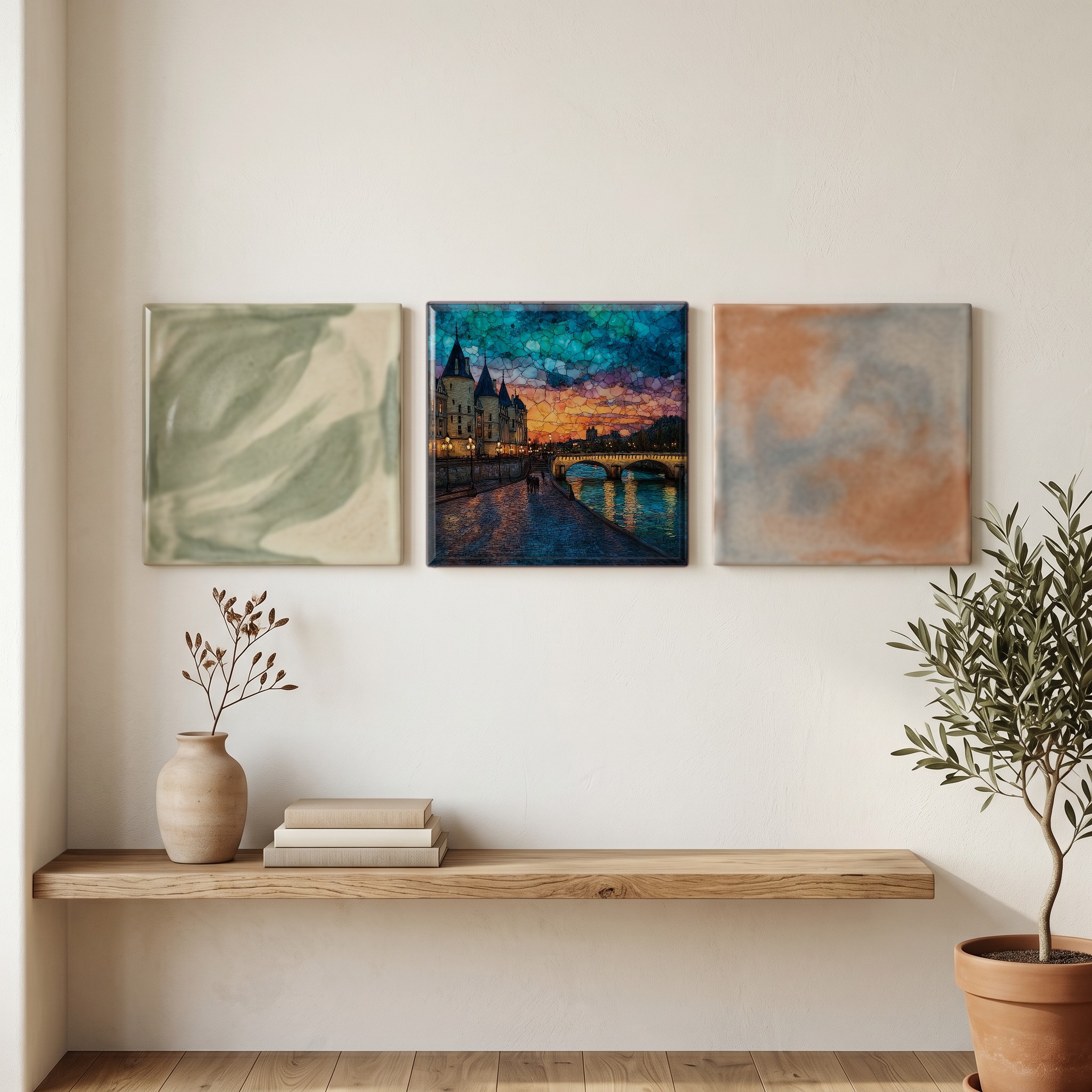
or build a grouping
or build a grouping

Three or five different vistas, hung together — a chapter of places you've been, or want to go.

about Pont Neuf

The place, in three passes.

A little of what's known, in case you fall down the rabbit hole — or want to go see it yourself.
the place

The Pont Neuf crosses the Seine in central Paris, linking the western tip of the Île de la Cité to both the Right and Left Banks. Despite the name (Pont Neuf means 'new bridge') it is the oldest standing bridge in the city: construction began in 1578 under Henri III and was completed in 1607 under Henri IV. The bridge runs in two unequal spans, with seven arches on the Right Bank side and five on the Left, meeting at the island, where the Square du Vert-Galant descends to river level beneath a bronze equestrian statue of Henri IV. Since 1991 the bridge has been part of the UNESCO World Heritage Site 'Paris, Banks of the Seine.'

the stone

The Pont Neuf is built of cut limestone, and the bridge's most familiar detail is the row of 384 mascarons carved into the cornices of its semicircular bastions. Each face is a grotesque mask of a forest or river deity, a satyr, or a Renaissance courtier; no two are identical, and they have been recut several times over the centuries, most recently in a campaign completed in 2007 for the bridge's four-hundredth anniversary. The semicircular bastions themselves were a practical decision: they let pedestrians step out of the way of horse traffic, and they made the Pont Neuf the first bridge in Paris with proper sidewalks. The French state listed the bridge as a monument historique in 1889.

— informed by Wikipedia
the visit

The Pont Neuf is a public street with no fee, no hours, and no closure: it has carried traffic continuously since June 20, 1607, when Henri IV inaugurated it. Cross on foot from the Right Bank near the Louvre, from the Left Bank along the Quai des Grands Augustins, or step down from the centre into the Square du Vert-Galant for a view of the bridge from water level. The square sits a few feet above the Seine and floods occasionally during high water, as it did during the 2016 and 2018 Seine floods. The closest Métro stations are Pont Neuf on Line 7 and Cité on Line 4. The bridge is most often photographed an hour before sunset, when the limestone warms and the river goes copper.

— informed by Wikipedia
where
France · Paris, Île-de-France
position
48.8569° N · 2.3408° E
the neighborhood

What's nearby.

A handful of named places within an hour's walk or short drive. Some we've already painted; some we will.
0.1 km E
Place Dauphine
17th-century square
0.3 km E
Conciergerie
medieval royal palace
0.3 km W
Pont des Arts
pedestrian bridge
0.4 km N
Louvre
former royal palace and museum
0.4 km E
Sainte-Chapelle
Gothic royal chapel
0.7 km E
Notre-Dame de Paris
Gothic cathedral
N
Pont Neuf
Place Dauphine
Conciergerie
Pont des Arts
Louvre
Sainte-Chapelle
Notre-Dame de Paris
common questions

What people ask.

A few questions we get about Pont Neuf — and about bringing the piece home.
about the place

The Pont Neuf crosses the Seine in central Paris in two spans that meet at the western tip of the Île de la Cité. The Right Bank end sits near the Louvre and La Samaritaine; the Left Bank end opens onto the Quai des Grands Augustins. The nearest Métro is Pont Neuf on Line 7.

Pont Neuf means 'new bridge' in French, the name given when Henri III laid the first stone in 1578. Older bridges in Paris have since been replaced or rebuilt; the Pont Neuf has stood continuously since it was inaugurated by Henri IV in 1607.

The 384 carved stone faces are called mascarons. Each one is a grotesque mask of a forest or river deity, a satyr, or a Renaissance courtier, set into the cornices of the half-circle bastions that line both sides of the roadway. No two are identical.

The bridge was commissioned by Henri III in 1578 and completed under Henri IV in 1607. The chief architect was Baptiste Androuet du Cerceau, working with Pierre des Isles and others. A bronze equestrian statue of Henri IV stands at the centre, on the Île de la Cité.

The bridge is open at all hours. Photographers favour the hour before sunset, when the limestone warms and the river turns copper. The Square du Vert-Galant, beneath the centre of the bridge, draws people at dusk in late spring and summer.

Yes. Since 1991 the Pont Neuf has been part of the UNESCO World Heritage Site 'Paris, Banks of the Seine,' which protects the historic riverfront from the Pont de Sully to the Pont d'Iéna. The French state also listed the bridge as a monument historique in 1889.

about the piece in your home

It works as a gift for someone who studied in Paris, honeymooned there, or returns each year. The Pont Neuf is the bridge most Parisians cross without thinking, the one in the back of every river photograph. A Keepsake or Coaster Set with a handwritten note from the studio carries well.

The piece suits Parisian-classic, European-modern, and Old-World-maximalist rooms. The Voynich palette of deep blues, stained-glass greens, and alcohol-ink amber reads as a painting rather than a photograph, so it sits well over a velvet sofa or in a panelled study where a print would feel thin.

Yes. European-modern interiors have moved toward art that looks hand-made and historically anchored, away from minimalist line art. The Pont Neuf piece carries the studio's stained-glass and alcohol-ink visual language, which sits well beside antique maps, brass fixtures, and panelled walls. A Medium centred over a writing desk reads as a small painting.

Above a standard sofa, a single Large is the simplest choice; a four-tile Mural carries more presence. Above a console, a Medium centred between two sconces reads as a painting rather than a print. A nine-tile Mural is the move when the sofa wall is the whole room.

Yes, ordered in either the Dura Satin or Matte finish. Both are scratch-resistant and rated for high-moisture rooms. The Glossy finish is intended for framed wall display rather than humid installations, where the soft sheen of Dura Satin reads better in the steam.

A soft microfibre cloth and warm water are enough. The colour is slowly infused into the ceramic surface under high heat and pressure beneath the finish, so it will not fade or wipe off. Avoid abrasive pads and citrus-based cleaners on the Glossy finish.

Yes. Every WenderVista piece is painted by Reid Wender in the studio's Voynich stained-glass and alcohol-ink language and is sold only by Wender Studios. The Pont Neuf piece is not licensed from any third party and is not available elsewhere.

if this one stayed with you

A few you might also love.

Hand-picked by the eye that found Sorapis. Same air, same kind of quiet.