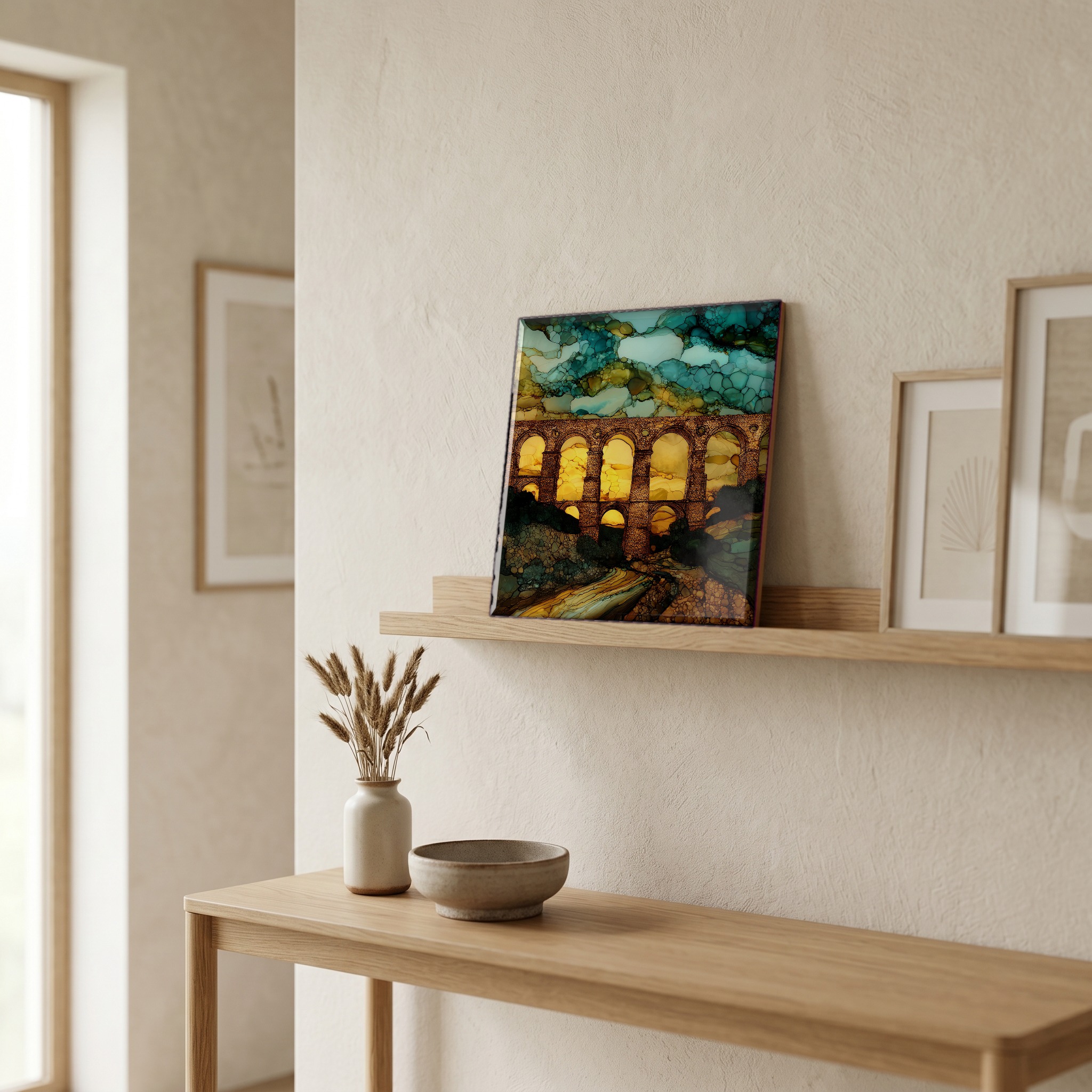
Wender·Vista
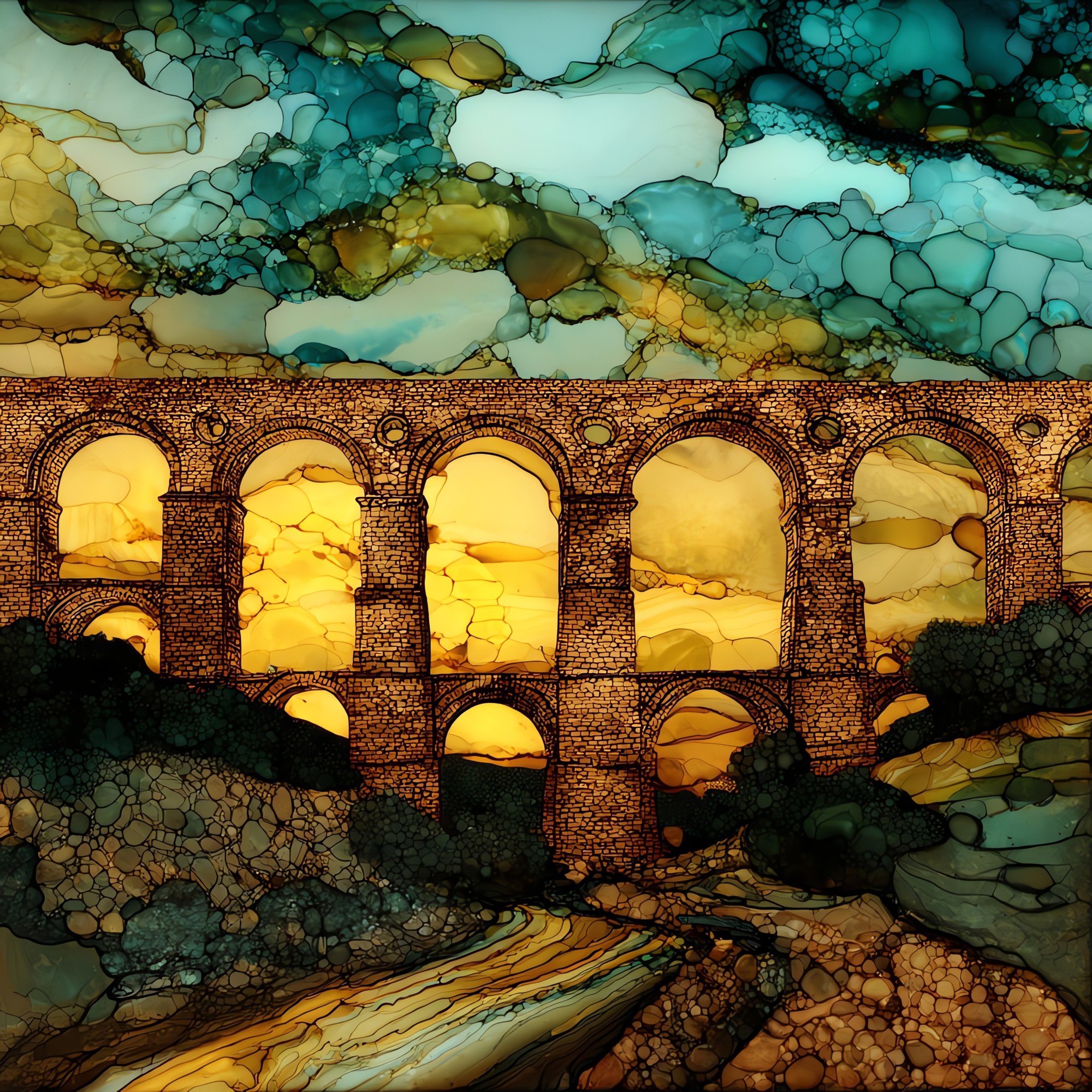
Pont du Gard
shown on ceramic, 12-inch tileFrance
above the Gardon, in the south of France

Pont du Gard

— two thousand years above the river.

Where it lives

Not only on a wall.

A small tile on the nightstand catching the morning. A larger one above the fire. Yours, wherever you spend the slow hours.
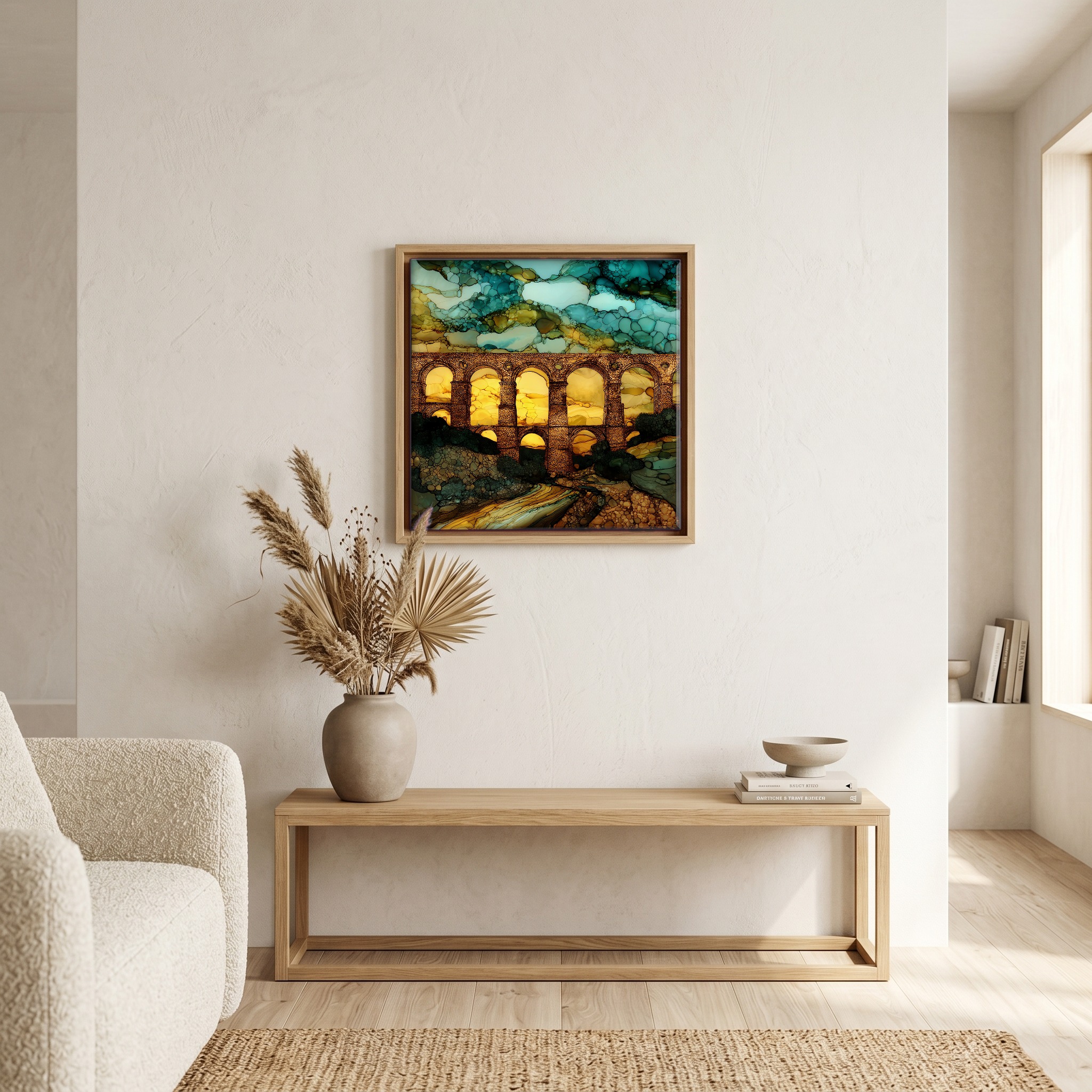
Above the bench, in a warm oak surround.
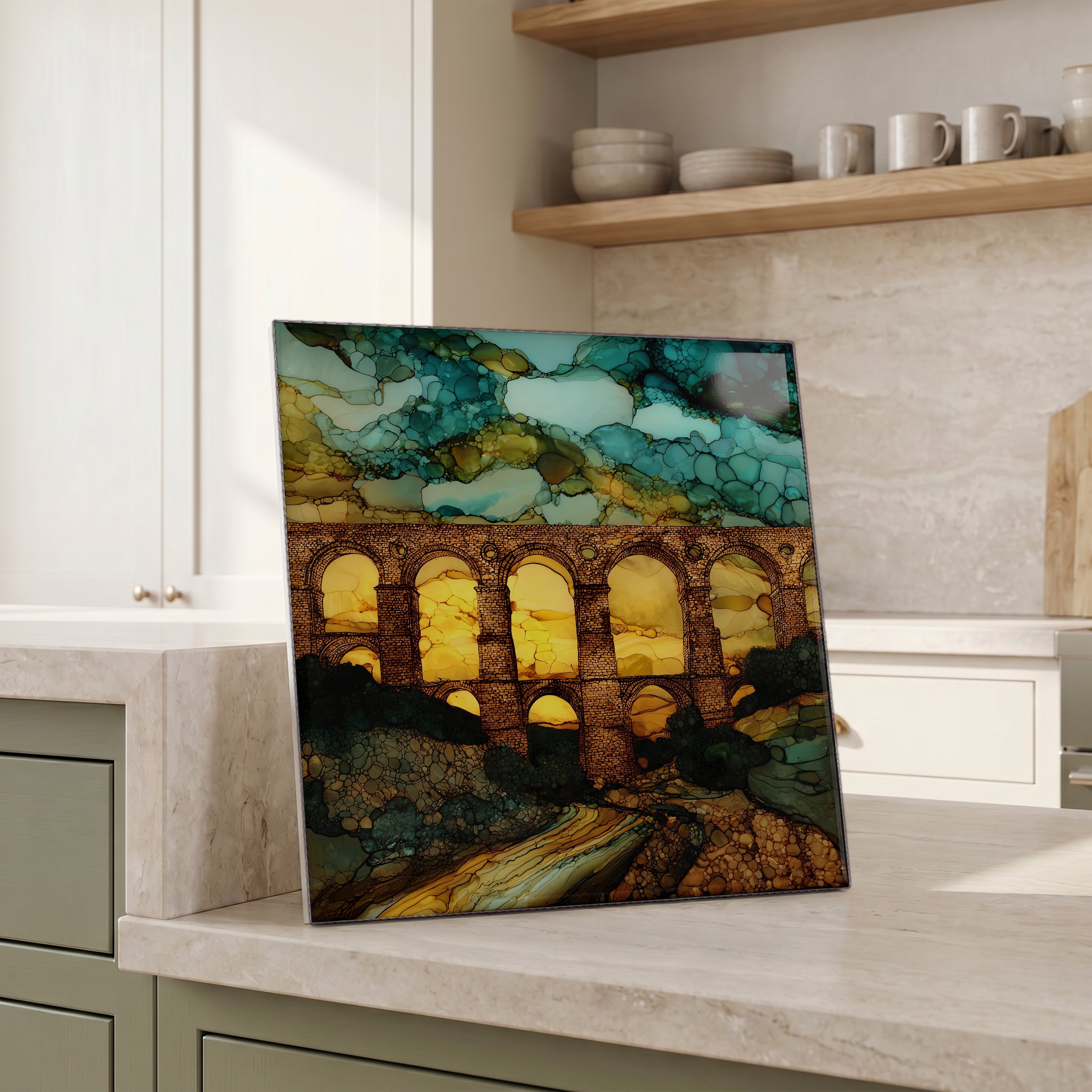
Beside the kettle, propped on the counter.
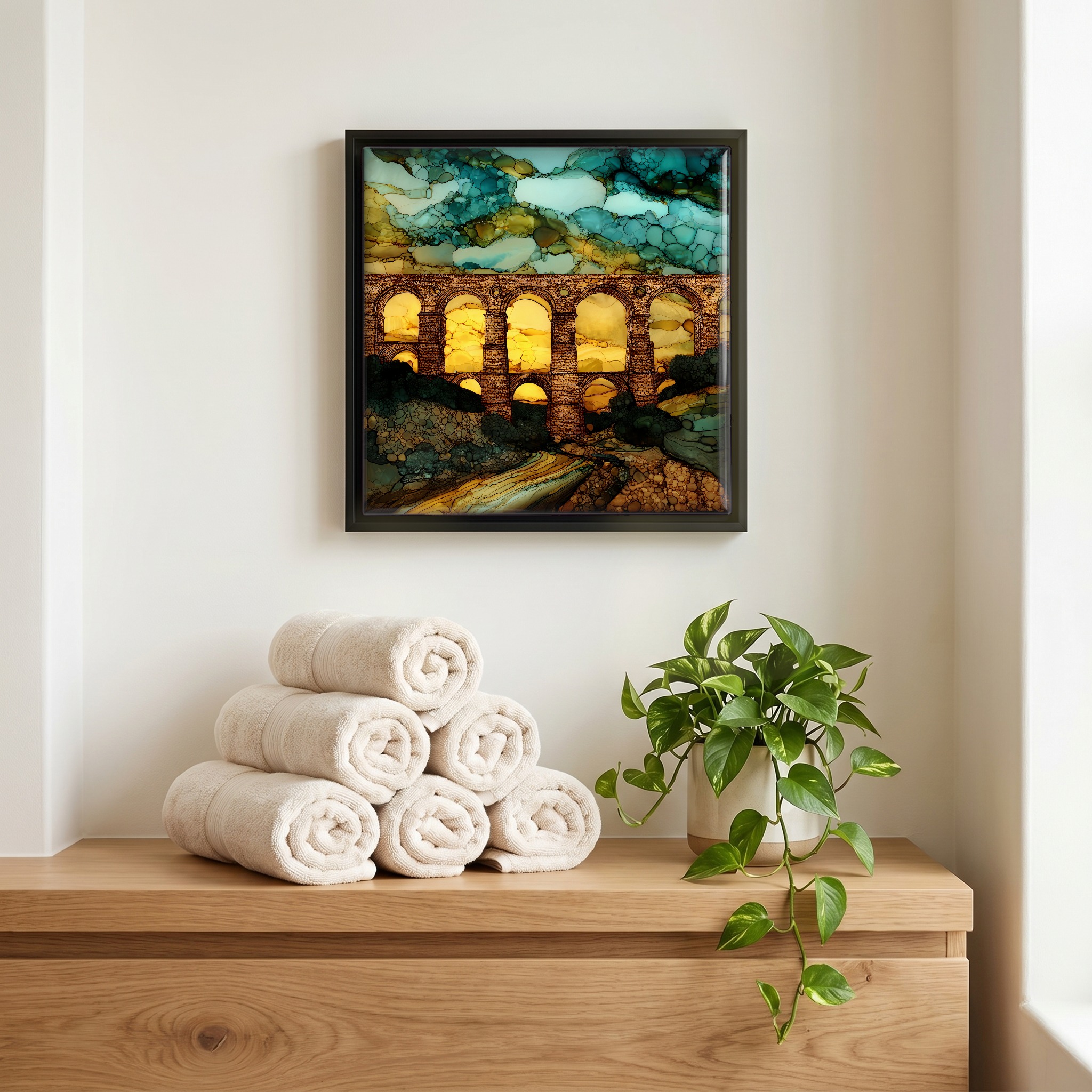
Above the linens, in a slim black surround.
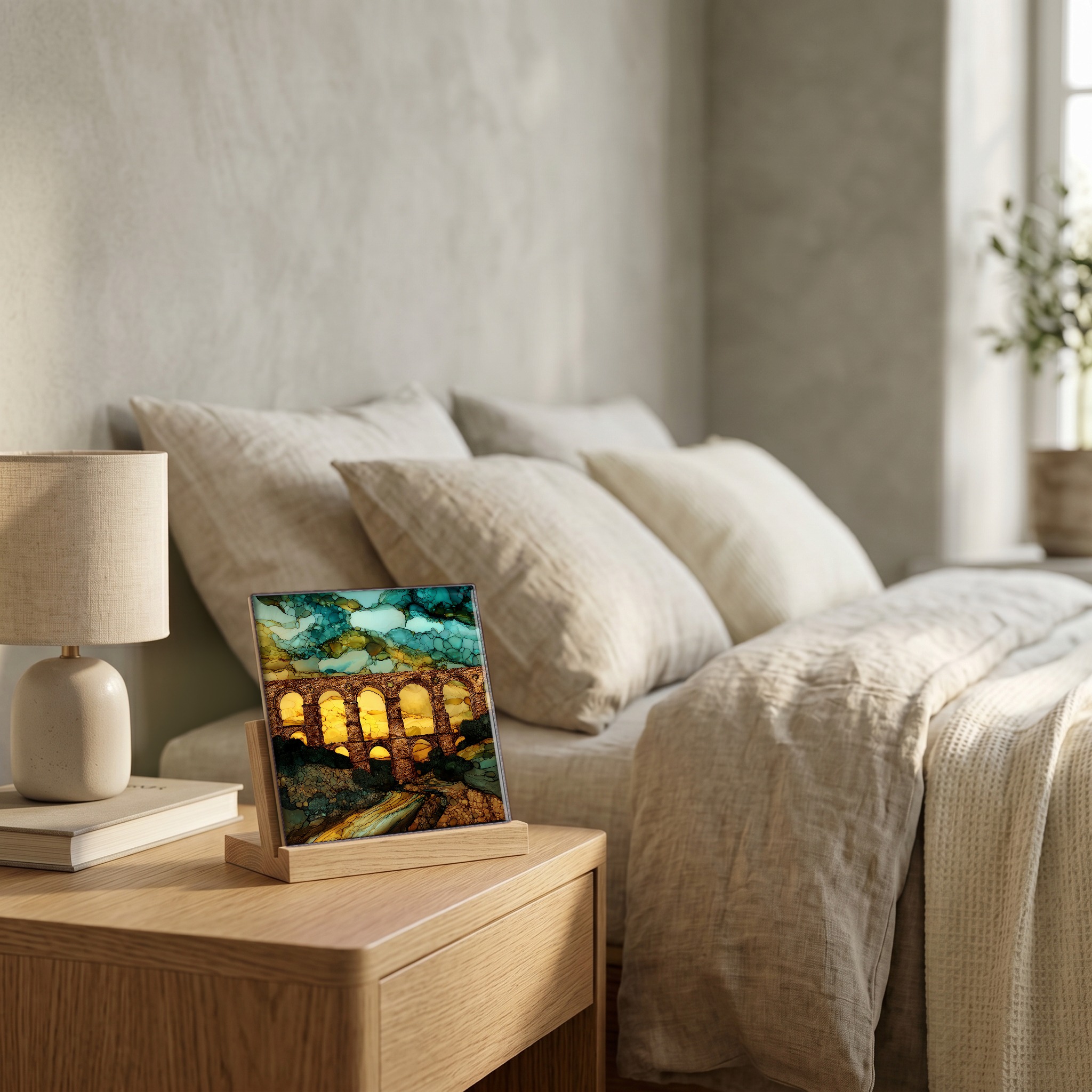
On the nightstand, on a light oak stand.
On a picture ledge, where the light comes in.
a note from the studio

The aqueduct Rome left across the Gardon, north of Nîmes. Three tiers of arches in honey-coloured limestone, the lowest courses laid without mortar, stones cut to hold each other. It carried water from the springs at Uzès for nearly four centuries, then sat for fifteen hundred more while locals crossed the river on its lower deck. The river runs underneath the way it always has. Late afternoon is when the stone warms.
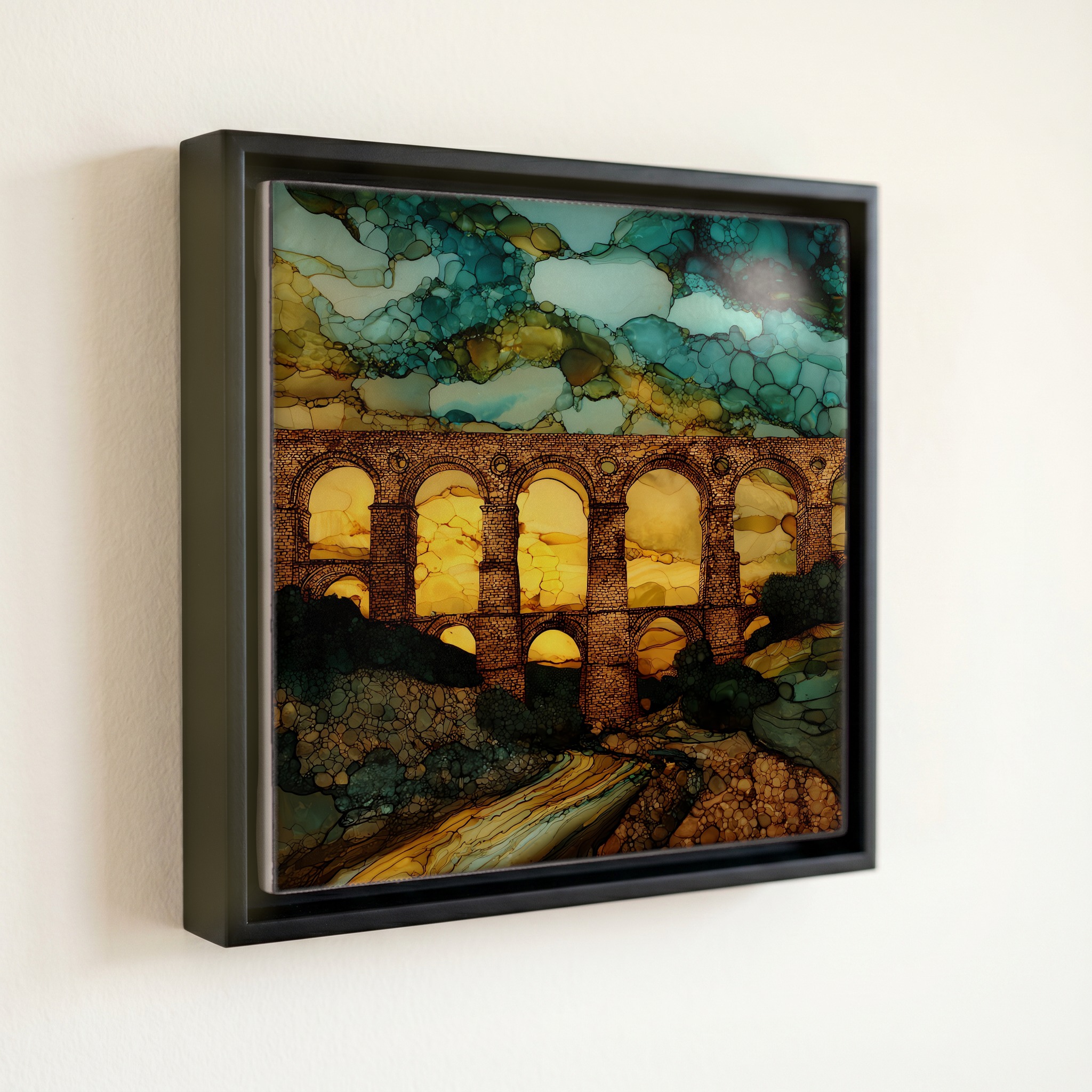
from the studio
shown in a slim black floating frame · 6 × 6 in
— bring it home

Pont du Gard, on ceramic.

Each tile is finished by hand in our Knoxville studio. Artwork is slowly infused into the ceramic surface under high heat and pressure, and rests beneath a thin glossy finish. The colour lives in the surface, not on top of it.

What kind of piece?
One tile — square or rectangle.
How big?
the popular one — counter, shelf, nightstand
6 × 6 in · 15 cm · 1.6 lb
Surface finish
A clear glossy finish — the artwork reads as if under resin. Ideal for show-pieces and framed wall art.
How it sits
A hidden cleat — sits ¼″ proud of the wall.
$58
Hand-finished and shipped from our studio at the foot of the Smokies. On your wall in about ten days.
size
6 × 6 in
15 cm
weighs
1.6 lb
solid in the hand
surface
ceramic, hand-finished
art rests beneath a thin glossy finish
from
Knoxville, TN
our family studio, at the foot of the Smokies
— start a Coaster Set

Pick any four 4-inch tiles — National Parks you've been to, a Smokies set, the four seasons of one place. $ for a set of , cork-backed, ready to live on the table.
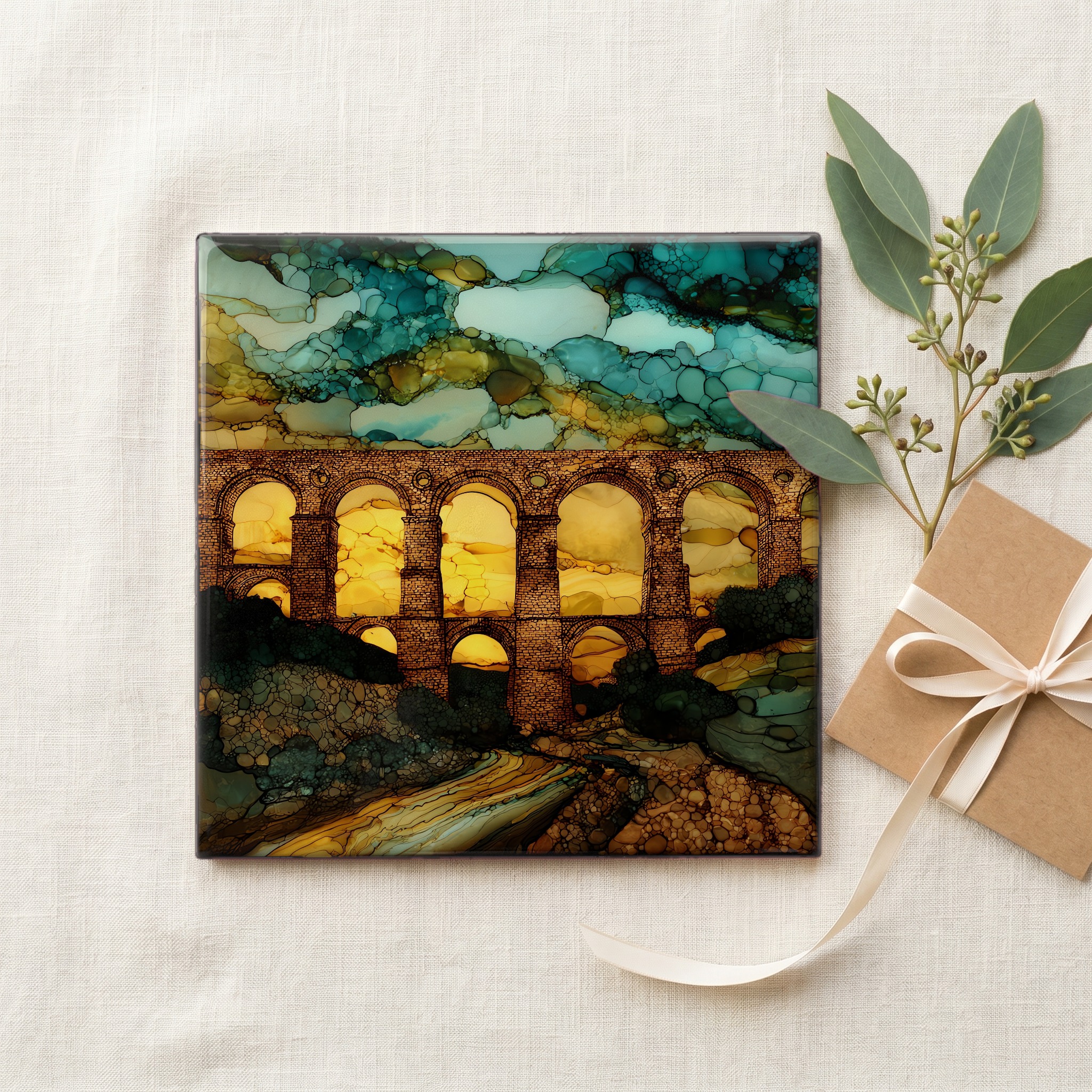
comes gift-ready
comes gift-ready

Each tile ships in a kraft box, tied with cream ribbon, with a handwritten note from the studio if you'd like to add one.
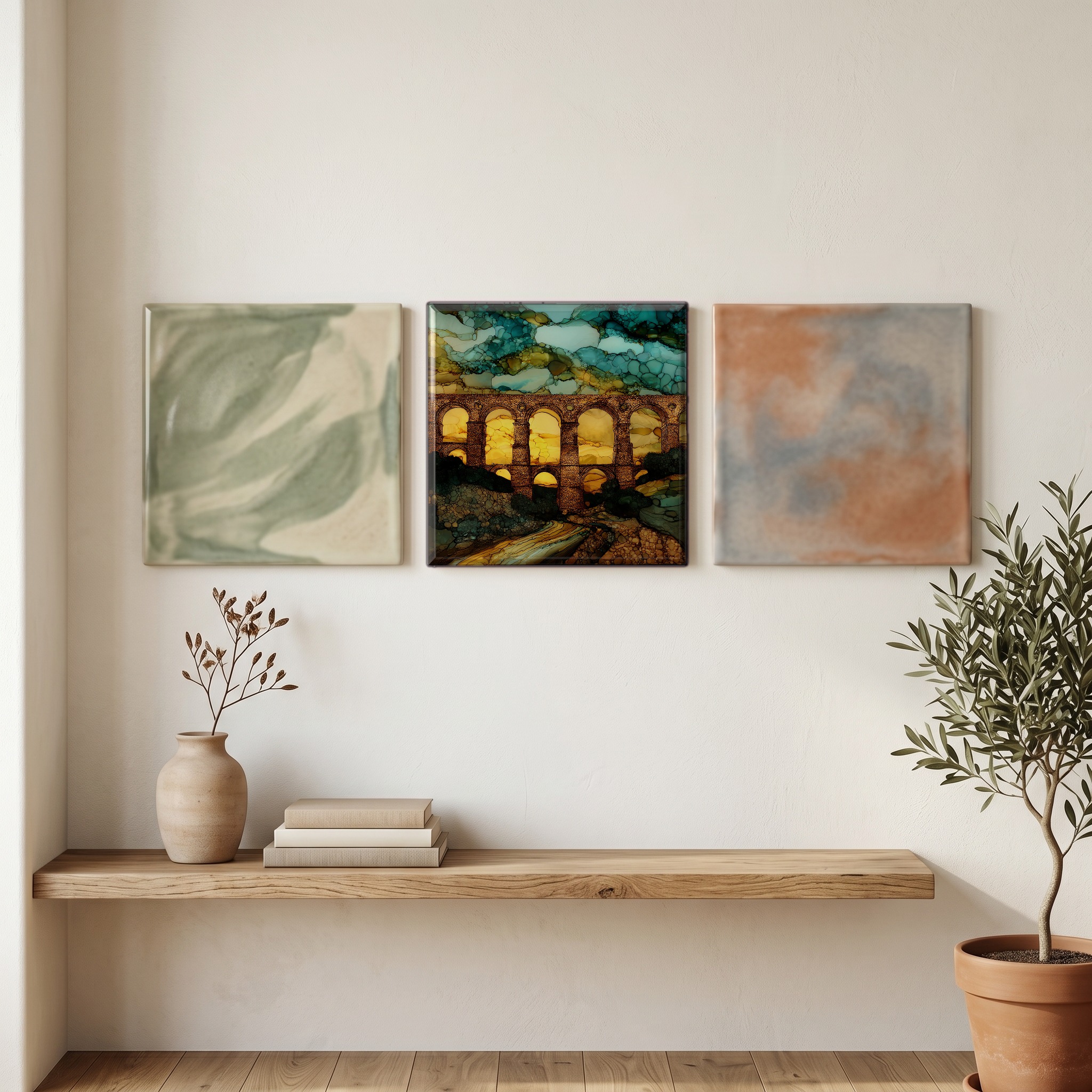
or build a grouping
or build a grouping

Three or five different vistas, hung together — a chapter of places you've been, or want to go.

about Pont du Gard

The place, in three passes.

A little of what's known, in case you fall down the rabbit hole — or want to go see it yourself.
the place

The Pont du Gard stands in the commune of Vers-Pont-du-Gard, in the Gard department of Occitanie, southern France. It is the surviving bridge of a Roman aqueduct that carried water roughly 50 kilometres from springs near Uzès to the colony of Nemausus, now Nîmes. The bridge crosses the Gardon River on three superimposed tiers of arches and rises 48.8 metres above the riverbed, making it the tallest surviving Roman aqueduct bridge. The aqueduct dropped only about twelve metres over its full length, a tolerance that explains why the section over the gorge had to be carried so high. UNESCO inscribed the site as a World Heritage monument in 1985.

the stone

The bridge is built of limestone quarried from the Estel quarry, roughly 600 metres upstream, a soft shell-rich stone that weathers to a warm honey-gold. The lower and middle tiers were laid largely without mortar, blocks fitted dry and held by their own weight and the geometry of the cuts. Some courses still show the projecting bossages the Roman masons left for the scaffolding ropes. In the upper conduit, where water once flowed, the builders used hydraulic mortar and a thick interior lining; sections of the lining survive. The largest blocks weigh several tonnes. The colour darkens through the afternoon and turns amber after the sun is low.

the visit

The site sits on the D981 between Remoulins and Uzès, about 25 kilometres northeast of Nîmes and 25 kilometres west of Avignon. Both banks have car parks, a visitor centre on the left bank, and a museum that opened in 2000. Walkers can cross the lower deck of the bridge during the day; access to the upper aqueduct channel runs by guided tour only and requires reservation. The grounds open in every season; admission is charged per vehicle rather than per person. Late afternoon to sunset is when the limestone catches the most colour, and the swimmers who use the Gardon's pebble beach in summer thin out.

— informed by Pont du Gard (official)
where
France · Gard, Occitanie
position
43.9478° N · 4.5350° E
the neighborhood

What's nearby.

A handful of named places within an hour's walk or short drive. Some we've already painted; some we will.
17 km NW
Uzès
medieval ducal town and the aqueduct's source
25 km SW
Nîmes
Roman city with the Maison Carrée and arena
25 km E
Avignon
walled city of the Papal Palace
35 km SE
Saint-Rémy-de-Provence
Provençal town near the Roman site of Glanum
N
Pont du Gard
Uzès
Nîmes
Avignon
Saint-Rémy-de-Provence
common questions

What people ask.

A few questions we get about Pont du Gard — and about bringing the piece home.
about the place

The aqueduct is generally dated to the middle of the first century AD, most likely under the emperor Claudius. Recent inscription and dating work narrows the bridge itself to roughly 40 to 60 AD.

The bridge rises 48.8 metres above the bed of the Gardon, the tallest surviving Roman aqueduct bridge in the world. The top tier runs about 275 metres long; the lower tier carries the road across the river.

It is the river-crossing of an aqueduct that carried water about 50 kilometres from the springs of the Eure near Uzès to the Roman colony of Nemausus, now Nîmes. The total drop over the route is only about twelve metres.

Yes. The lower deck is open to pedestrians during daylight hours and carried road traffic until the late twentieth century. The upper water channel can be entered only by guided tour with a prior reservation.

The bridge is built of Estel limestone, a soft shell-rich stone quarried about 600 metres upstream. It weathers to a warm honey-gold and darkens further in late-afternoon light, when the colour reads almost amber.

UNESCO inscribed the Pont du Gard as a World Heritage Site in 1985, in recognition of the engineering achievement and the unusually intact state of the surviving structure.

The full aqueduct ran roughly 50 kilometres from the springs of the Eure near Uzès to Nîmes, with the Pont du Gard carrying it across the gorge of the Gardon. It went out of regular use by about the sixth century.

about the piece in your home

It has been a thoughtful gift for customers who have lived in or travelled the Gard. The Pont du Gard is one of the most recognised images of southern France, carrying Roman antiquity and the warm light of the region together. A Small or Medium with a handwritten note from the studio carries well.

The honey-gold limestone and amber tones sit well with Mediterranean, French Country, and Mountain-modern interiors. The piece also reads naturally in a Maximalist palette where warm ochres, terracotta, and burnt sienna are already in the room.

The 2026 interior cycle has continued the move toward warm minerals: terracotta, ochre, sand limestone, undyed linen. A Roman aqueduct in honey limestone reads naturally in that palette. A single Large above a console or a 4-tile Mural over a sofa anchors the room without competing with the textiles.

A single Large suits most consoles and narrower walls. Above a standard sofa, a 4-tile Mural carries the distance. For a wider feature wall, a 9-tile Mural sets the scale of the room.

Yes, with the Dura Satin or Matte finish. Both resist scratching and humidity well enough for a backsplash, a shower wall, or a powder room. The Glossy finish is for framed wall pieces in dry rooms.

A soft microfibre cloth and warm water. The colour is slowly infused into the ceramic surface under high heat and pressure, beneath a thin glossy finish, so it will not fade or wipe off. No abrasive cleaner is needed.

Yes. The Pont du Gard piece was made for Wender Studios by Reid Wender, the studio's curator, and is not licensed from any third party. The atlas is built piece by piece in our Knoxville, Tennessee studio.

if this one stayed with you

A few you might also love.

Hand-picked by the eye that found Sorapis. Same air, same kind of quiet.