Wender·Vista
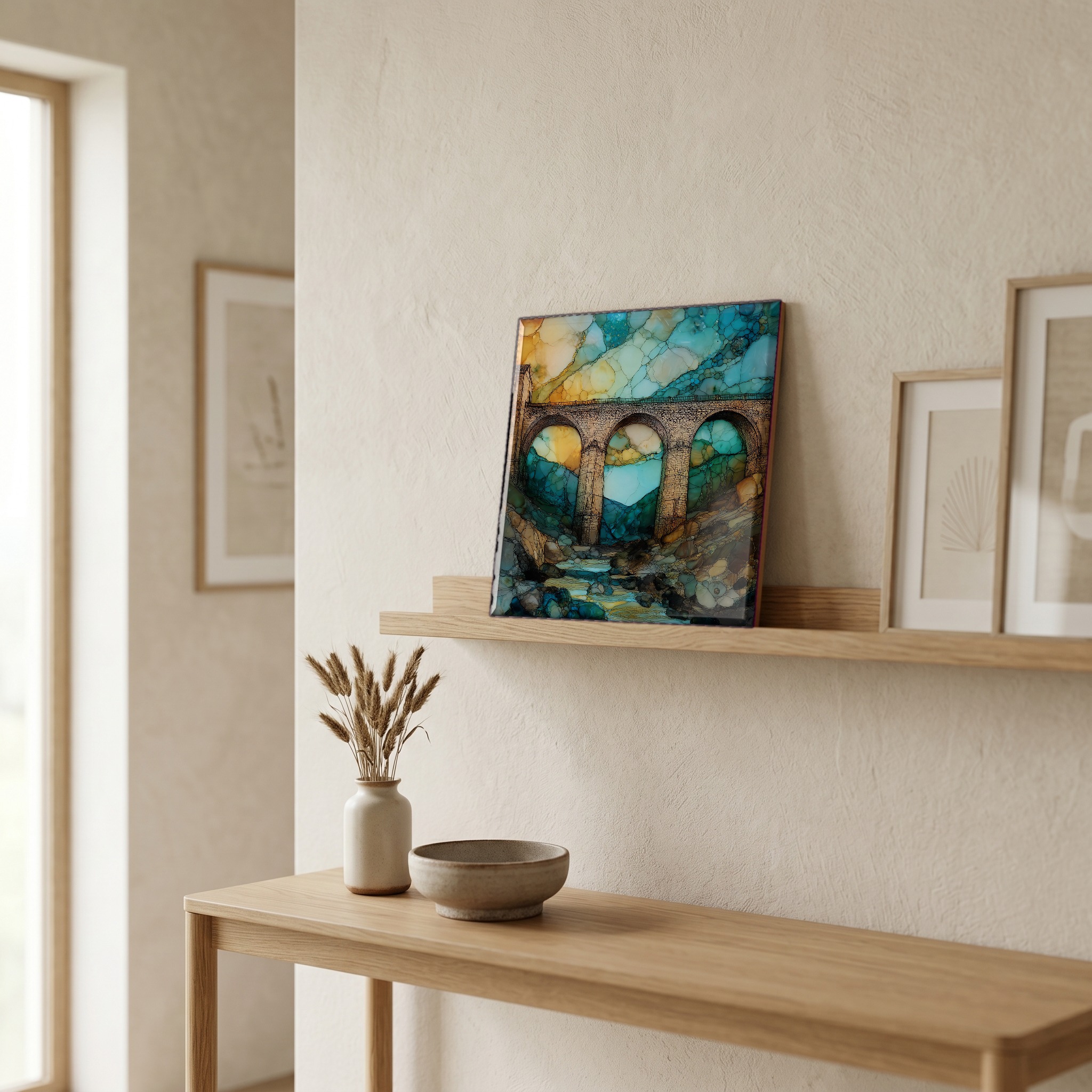
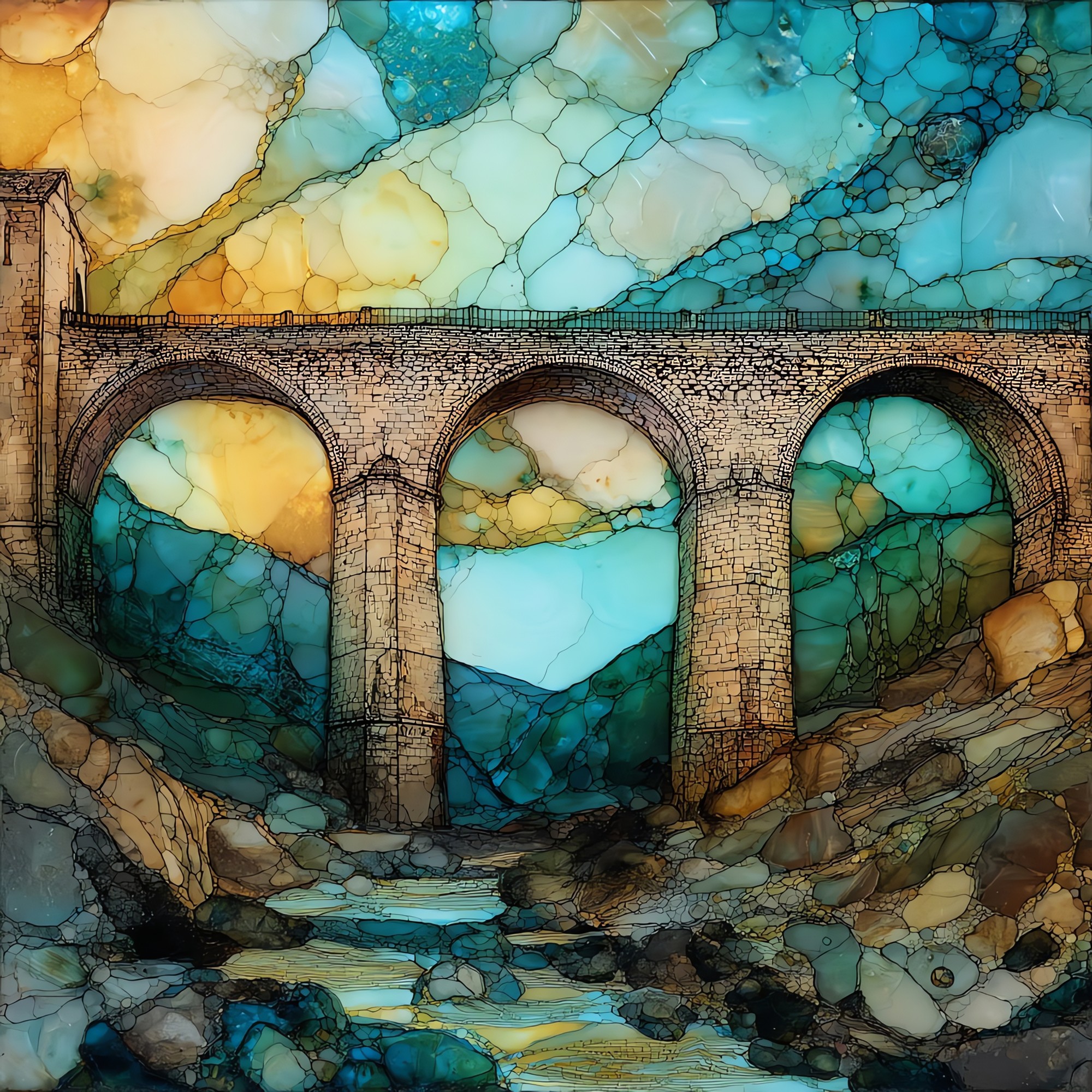
Pont du Diable
shown on ceramic, 12-inch tileFrance
where the Hérault leaves its gorges below Saint-Guilhem-le-Désert

Pont du Diable

— a thousand years of pilgrim feet and the same green water.

Where it lives

Not only on a wall.

A small tile on the nightstand catching the morning. A larger one above the fire. Yours, wherever you spend the slow hours.
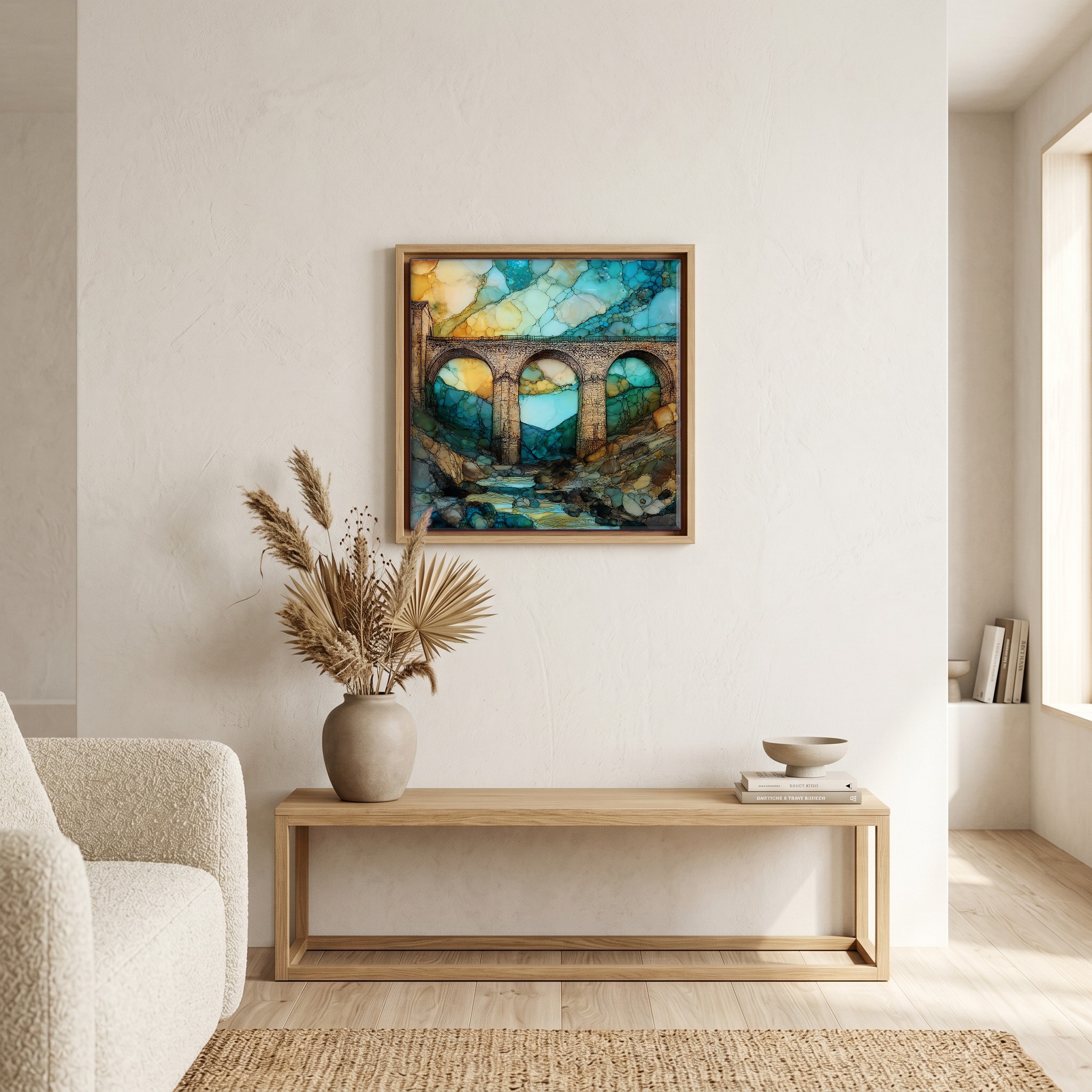
Above the bench, in a warm oak surround.
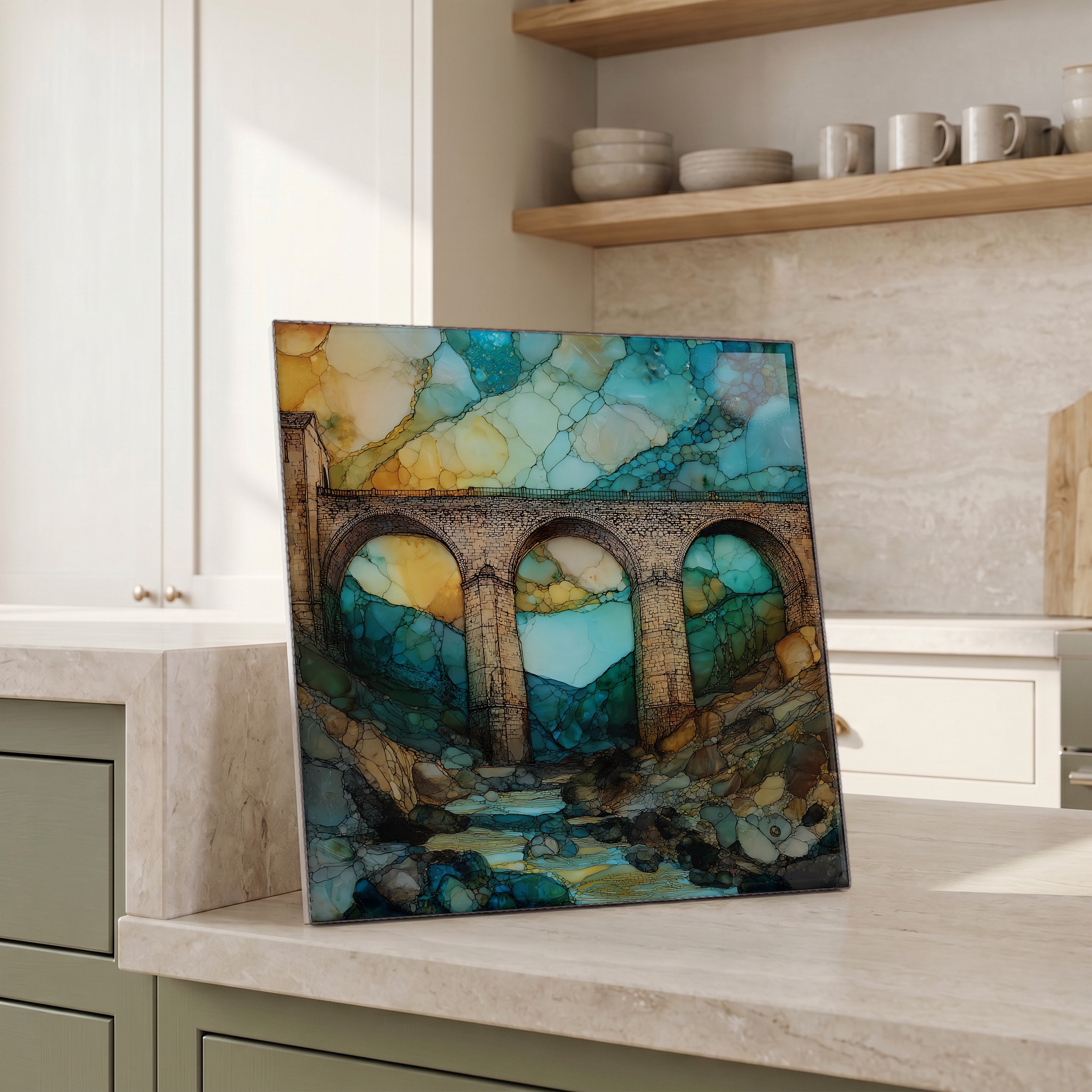
Beside the kettle, propped on the counter.
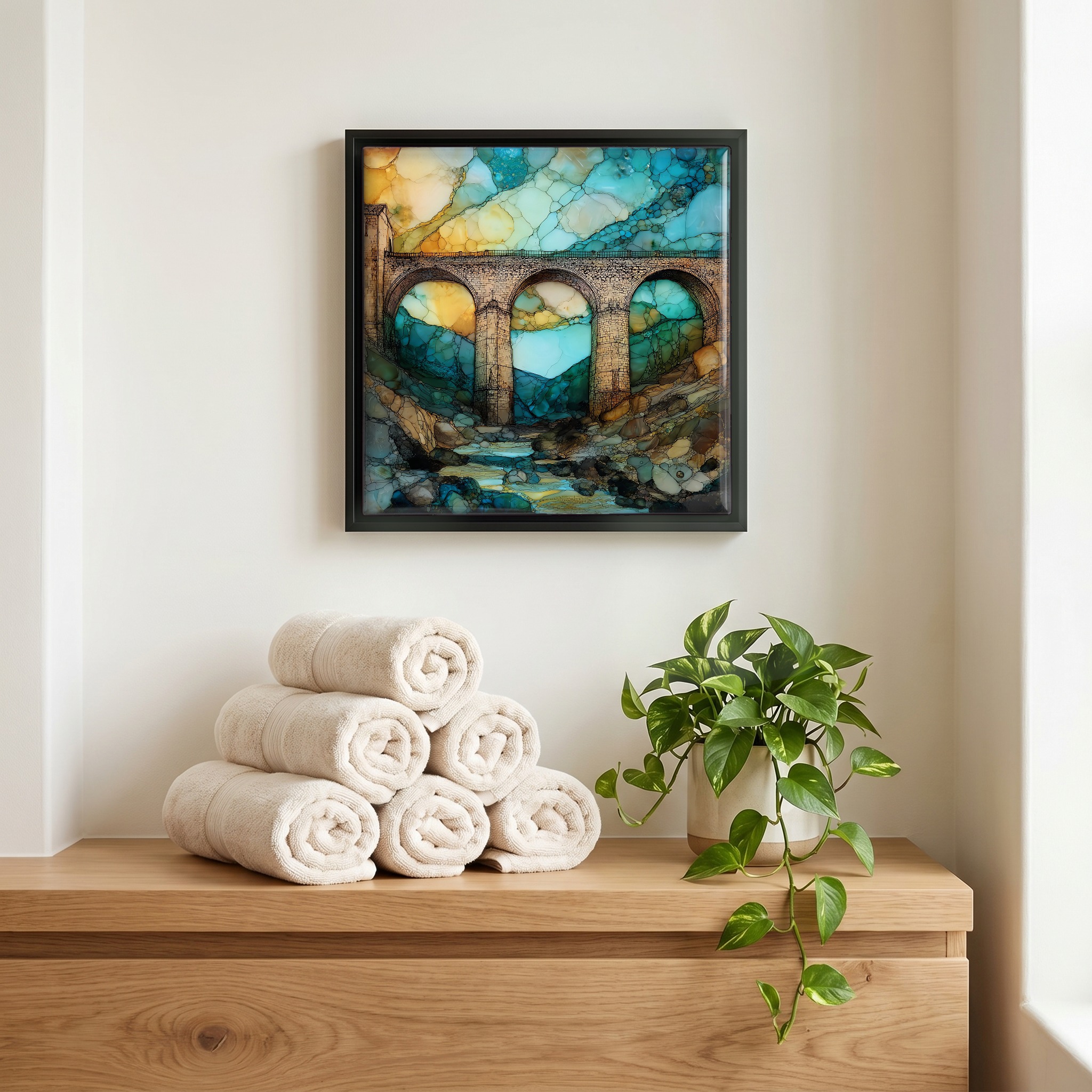
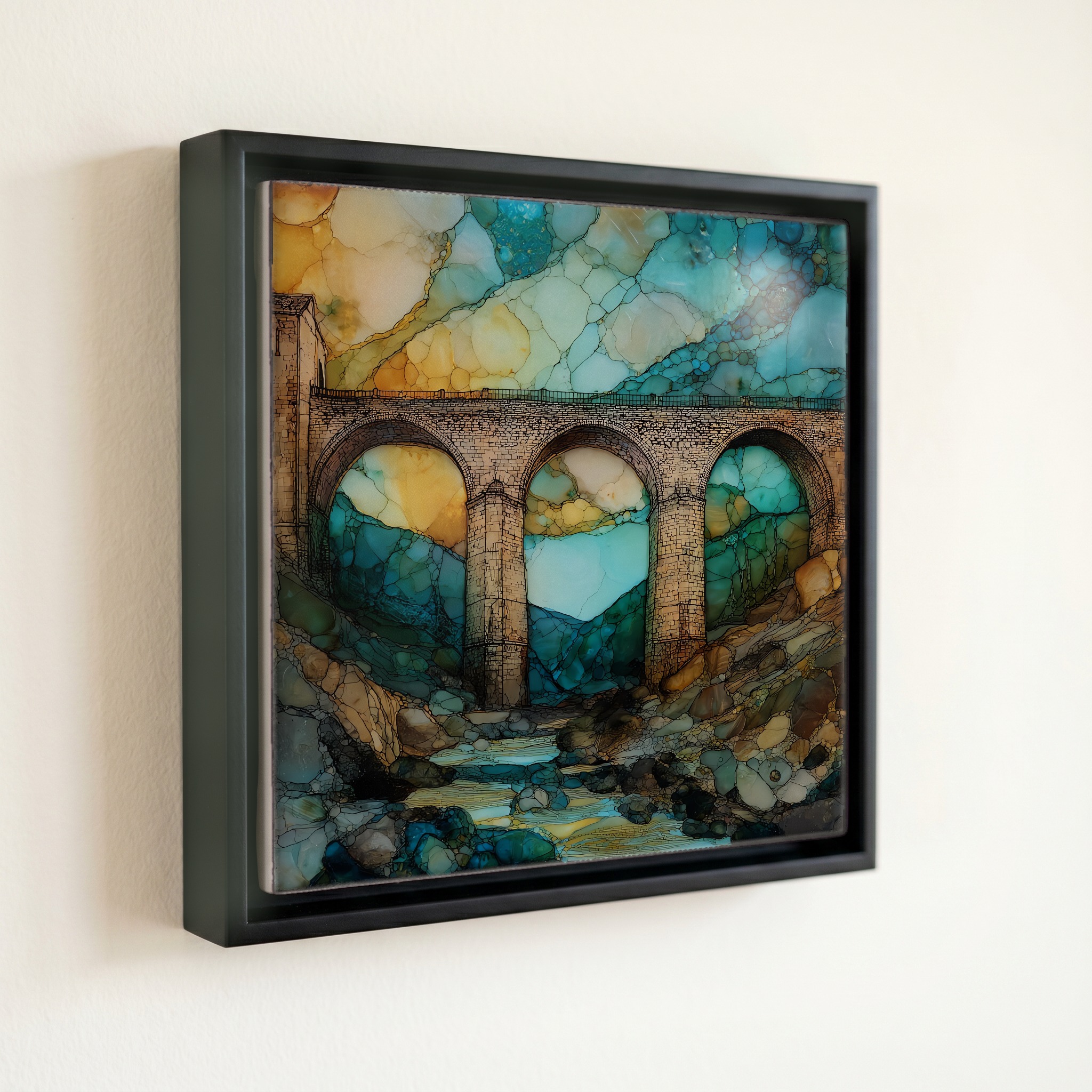
Above the linens, in a slim black surround.
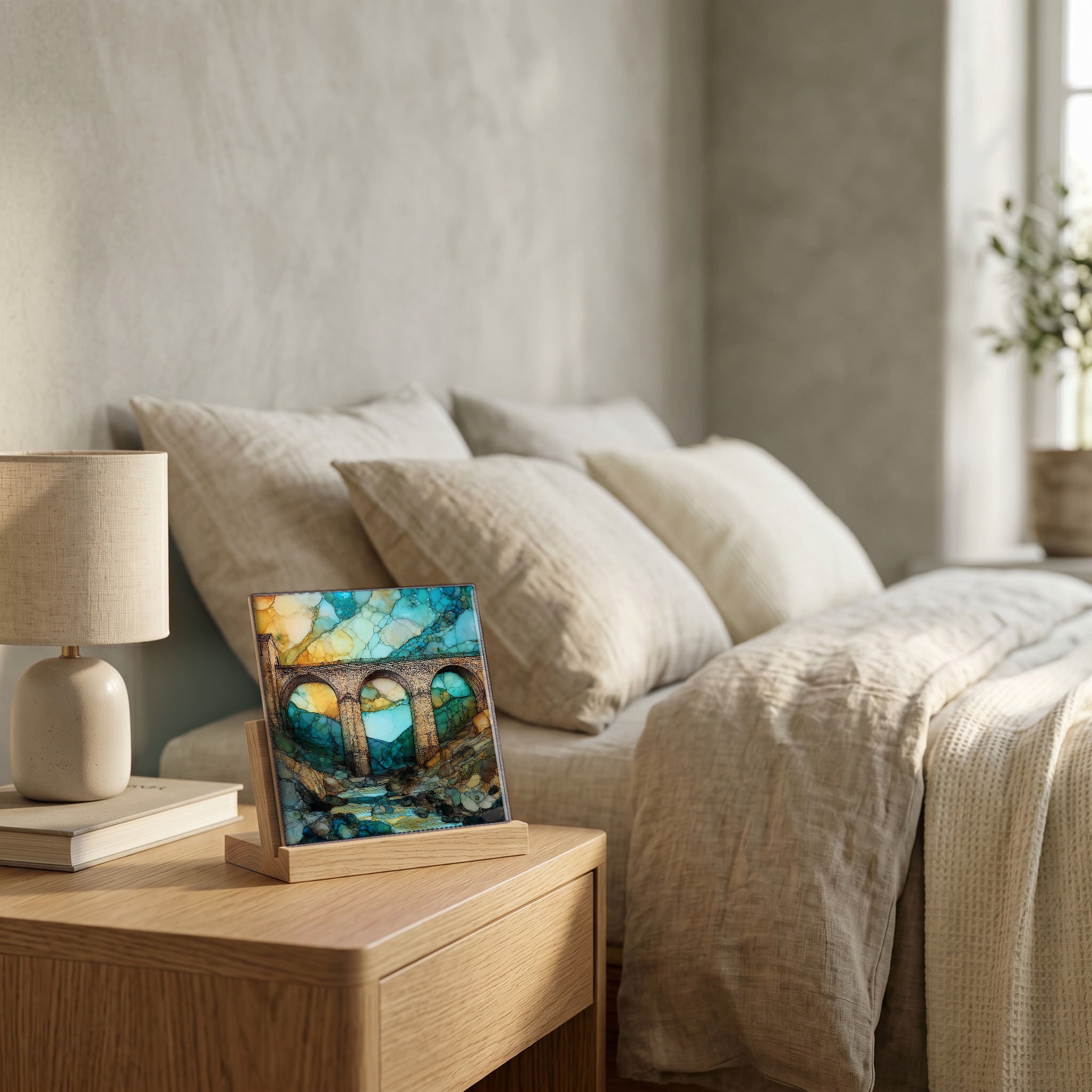
On the nightstand, on a light oak stand.
On a picture ledge, where the light comes in.
a note from the studio

Two stone arches over the Hérault, where the gorge widens and the limestone goes pale. Benedictine monks from Aniane and Saint-Guilhem-le-Désert built it in the early eleventh century, among the oldest medieval bridges in France. The pilgrim road from Arles to Santiago de Compostela crosses here, and has for nearly a thousand years. The river underneath stays green most of the year, the colour of bottle glass held to light. Locals swim from the rocks below in summer. The bridge takes no notice.
from the studio
shown in a slim black floating frame · 6 × 6 in
— bring it home

Pont du Diable, on ceramic.

Each tile is finished by hand in our Knoxville studio. Artwork is slowly infused into the ceramic surface under high heat and pressure, and rests beneath a thin glossy finish. The colour lives in the surface, not on top of it.

What kind of piece?
One tile — square or rectangle.
How big?
the popular one — counter, shelf, nightstand
6 × 6 in · 15 cm · 1.6 lb
Surface finish
A clear glossy finish — the artwork reads as if under resin. Ideal for show-pieces and framed wall art.
How it sits
A hidden cleat — sits ¼″ proud of the wall.
$58
Hand-finished and shipped from our studio at the foot of the Smokies. On your wall in about ten days.
size
6 × 6 in
15 cm
weighs
1.6 lb
solid in the hand
surface
ceramic, hand-finished
art rests beneath a thin glossy finish
from
Knoxville, TN
our family studio, at the foot of the Smokies
— start a Coaster Set

Pick any four 4-inch tiles — National Parks you've been to, a Smokies set, the four seasons of one place. $ for a set of , cork-backed, ready to live on the table.
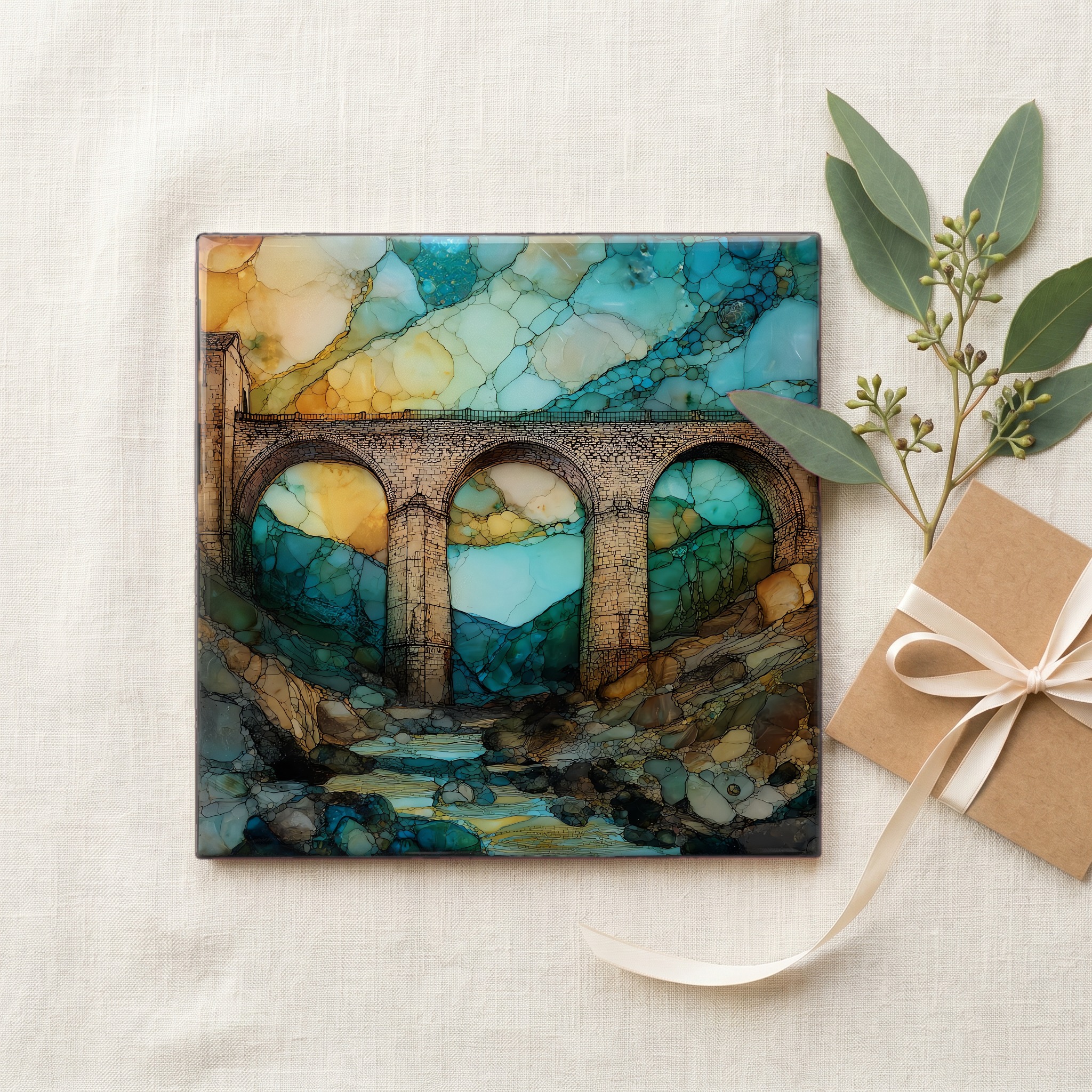
comes gift-ready
comes gift-ready

Each tile ships in a kraft box, tied with cream ribbon, with a handwritten note from the studio if you'd like to add one.
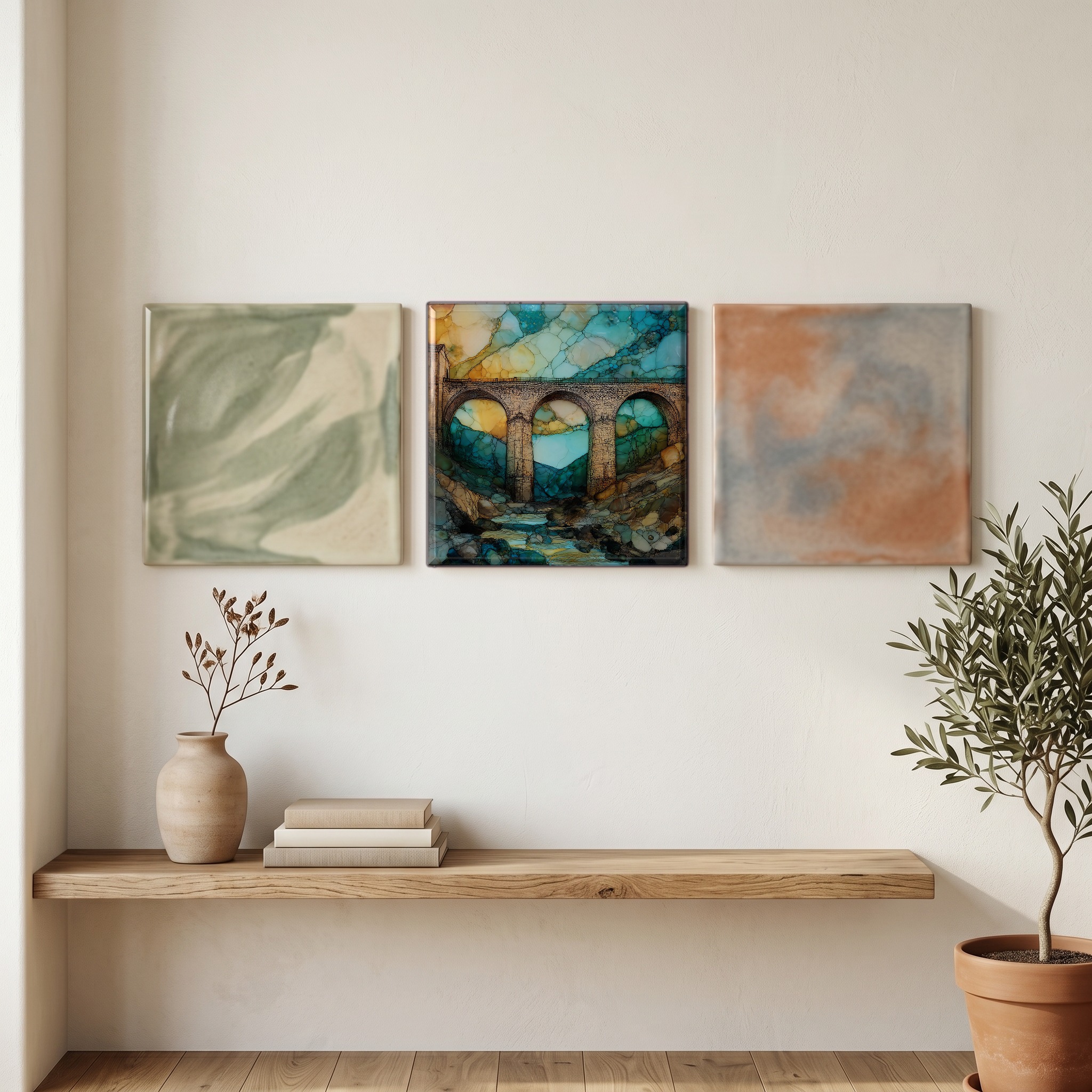
or build a grouping
or build a grouping

Three or five different vistas, hung together — a chapter of places you've been, or want to go.

about Pont du Diable

The place, in three passes.

A little of what's known, in case you fall down the rabbit hole — or want to go see it yourself.
the place

The Pont du Diable spans the Hérault River where the gorges open below the medieval village of Saint-Guilhem-le-Désert, in the Languedoc of southern France. Built between 1025 and 1031 by Benedictine monks from the abbeys of Aniane and Gellone, it is one of the oldest surviving Romanesque bridges in France. Two stone arches carry the road from Aniane to Saint-Jean-de-Fos across the river, roughly forty kilometres west of Montpellier. The bridge has been listed as a UNESCO World Heritage Site since 1998 as part of the Routes of Santiago de Compostela in France, along the Via Tolosana, the pilgrim path from Arles toward the Pyrenees.

— informed by Wikipedia, UNESCO
the stone

The two arches are unequal, the larger noticeably wider than the smaller, and the pale limestone was quarried from the cliffs of the gorge itself. The Romanesque builders left a triangular cutwater on the central pier to break the current of the Hérault when it rises in autumn. The road across is single-lane, paved with stones worn smooth by nearly a thousand years of feet, hooves, and cartwheels. The cliffs above are the same limestone, terraced with garrigue and the occasional juniper. The bridge has been repaired and re-pointed many times, but the original stones from around 1030 still carry the load.

— informed by Wikipedia
the visit

The bridge is part of the Grand Site du Pont du Diable, a protected area with a visitor centre, a riverside parking lot, and a free shuttle that runs up to the medieval village of Saint-Guilhem-le-Désert in summer, about four kilometres upstream. Road traffic on the bridge itself is restricted, and most visitors walk across. The Hérault below is a popular swimming spot, with rocky platforms on either bank. Local authorities post warnings every summer about jumping from the bridge or the cliffs, where the water is deep but the currents and submerged rocks have caused fatalities. Spring and early autumn carry the gentlest light and the quietest crowds, while July and August fill the river beaches by mid-morning.

— informed by Wikipedia
where
France · Hérault, Occitanie
within
Grand Site du Pont du Diable
position
43.7144° N · 3.5544° E
the neighborhood

What's nearby.

A handful of named places within an hour's walk or short drive. Some we've already painted; some we will.
4 km N
Saint-Guilhem-le-Désert
medieval village
4 km N
Abbey of Gellone
Benedictine abbey
2 km NW
Grotte de Clamouse
limestone cave
1 km S
Saint-Jean-de-Fos
pottery village
6 km SE
Aniane
abbey village
N
Pont du Diable
Saint-Guilhem-le-Désert
Abbey of Gellone
Grotte de Clamouse
Saint-Jean-de-Fos
Aniane
common questions

What people ask.

A few questions we get about Pont du Diable — and about bringing the piece home.
about the place

The Pont du Diable spans the Hérault River where its gorges open below Saint-Guilhem-le-Désert, in the Hérault department of Occitanie, southern France. It connects the communes of Aniane and Saint-Jean-de-Fos, roughly forty kilometres west of Montpellier.

A medieval legend says the monks building the bridge struck a pact with the Devil after his nightly destruction of their work: he could claim the first soul to cross. The monks sent a dog across first, and the bridge stood.

The bridge was built between 1025 and 1031 by Benedictine monks from the abbeys of Aniane and Gellone, which makes it one of the oldest surviving Romanesque bridges in France. It has been in continuous use for nearly a thousand years.

Yes. It was inscribed in 1998 as part of the Routes of Santiago de Compostela in France, on the Via Tolosana, the pilgrim path from Arles across the Hérault toward the Pyrenees and northern Spain.

Yes. The rocky pools below the bridge are a popular summer swimming spot, accessed from either bank. Local authorities prohibit jumping from the bridge and the cliffs; the water is deep, but currents and submerged rocks have caused fatalities.

Drive about forty minutes west of Montpellier to the Grand Site du Pont du Diable visitor centre, where there is a paid riverside parking lot. From there, walk across the bridge or take the free summer shuttle up to Saint-Guilhem-le-Désert.

Saint-Guilhem-le-Désert, a medieval village built around the Abbey of Gellone, sits about four kilometres upstream. The Grotte de Clamouse, a limestone cave system, is a short walk from the parking lot. Saint-Jean-de-Fos, a traditional pottery village, lies just south of the bridge.

about the piece in your home

It has been a meaningful gift for pilgrims who crossed the Pont du Diable on the Via Tolosana from Arles. The bridge marks a quiet, water-cooled stretch of a long walk. A Small or Medium with a handwritten note from the studio carries the memory well.

The warm limestone of the bridge and the deep green of the Hérault sit comfortably in Mediterranean-modern, Provençal farmhouse, and earth-tone Maximalist rooms. The cool greens and stone neutrals also read well against linen, walnut, and unfinished oak.

Yes. Old-stone-and-water imagery from southern France, Italy, and Iberia is a steady current in the European-modern style. These pieces anchor a room without shouting. The Pont du Diable tile fits that vocabulary cleanly and reads as inherited rather than new.

A single Large reads well above a console table or a narrow sofa, with the bridge at near life-size. Above a full-length sofa, a 4-tile Mural carries the room. For a feature wall, the 9-tile Mural is the right scale.

Yes, with the Dura Satin or Matte finish. Both are scratch-resistant and hold up to splashes, steam, and daily wiping. The Glossy finish is the right choice for a framed wall piece in a dry room.

A microfibre cloth and water is all it needs. The colour is slowly infused into the ceramic surface under high heat and pressure, so the image lives in the surface and cannot be scratched off by routine cleaning. Avoid abrasive scrubs and harsh chemicals.

Yes. The painting is original to our studio in Knoxville, Tennessee, and is not licensed from any third party. Each tile is hand-finished in-house. The painting is the work of Reid Wender, the curator of the WenderVista atlas.

if this one stayed with you

A few you might also love.

Hand-picked by the eye that found Sorapis. Same air, same kind of quiet.