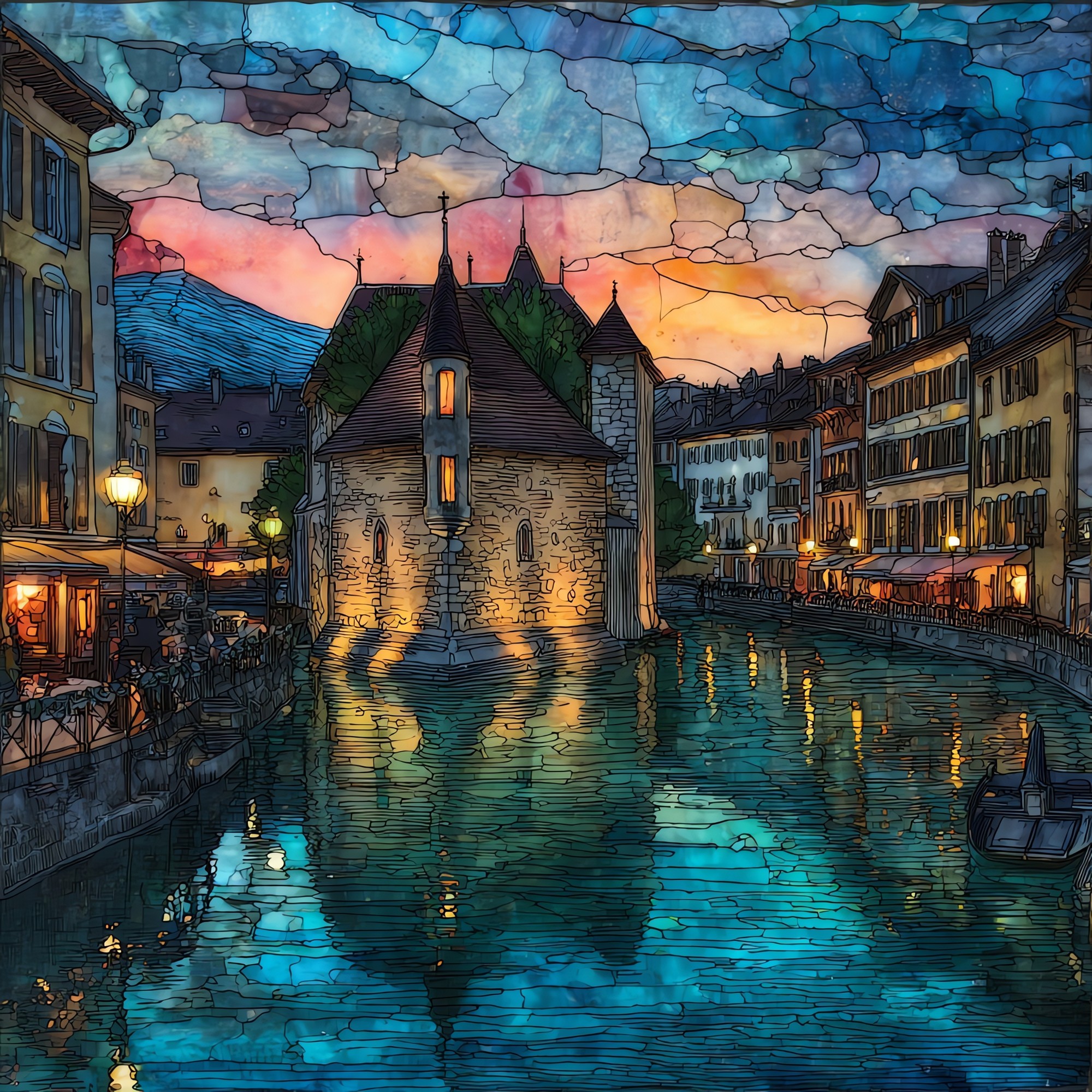
Pont des Amours
— an iron arch, and the lake just beginning.
Not only on a wall.



“A small iron footbridge at the mouth of the Canal du Vassé, where the still canal opens into Lake Annecy. It connects two parks, the Champ de Mars and the Jardins de l'Europe, and crosses water no wider than a city street. The legend is that couples who kiss on it stay together. Whether the legend pre-dates the bridge or arrived with the tourists, the bridge keeps its quiet either way. Best in the early morning, before the rowers are out and the willows are still holding the light.
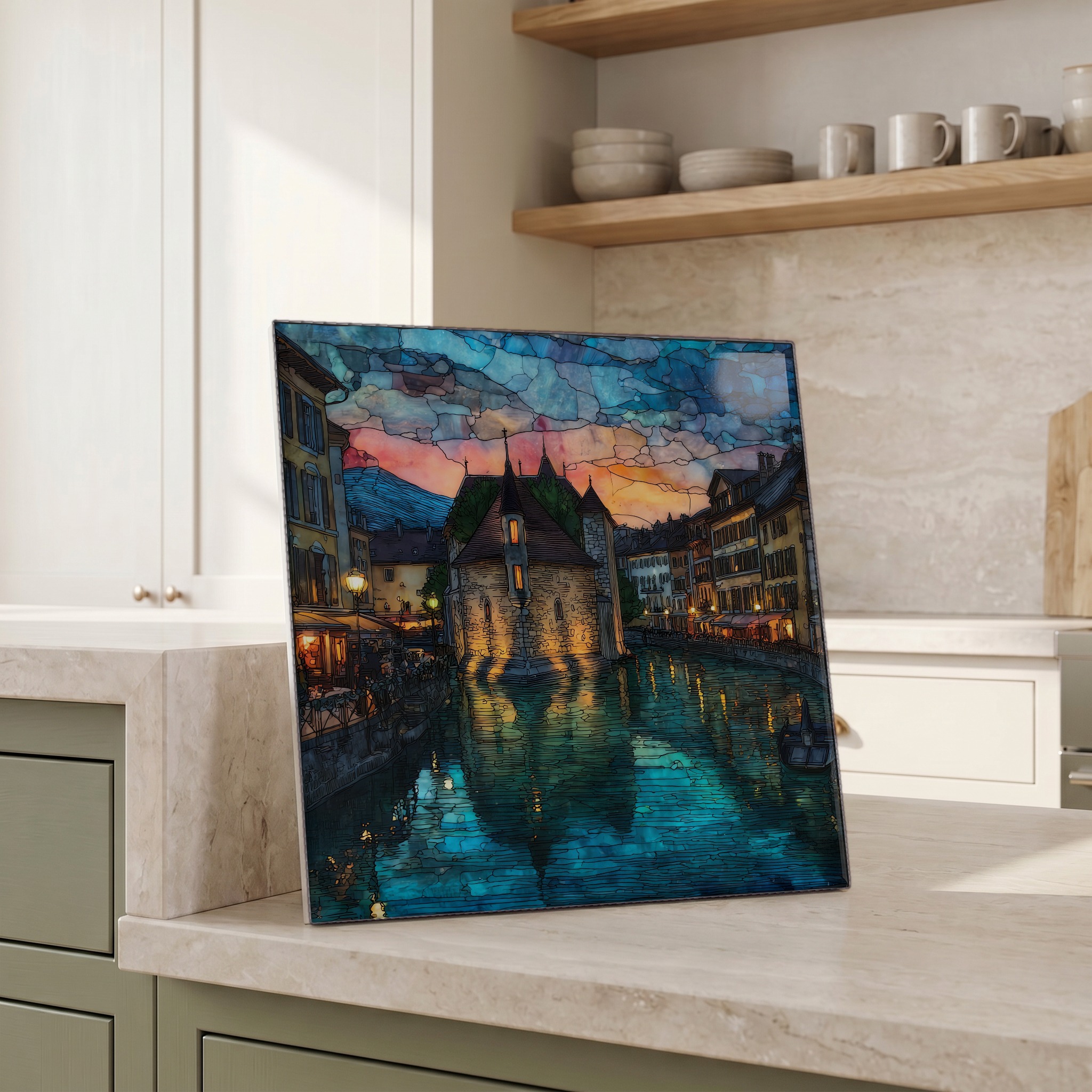
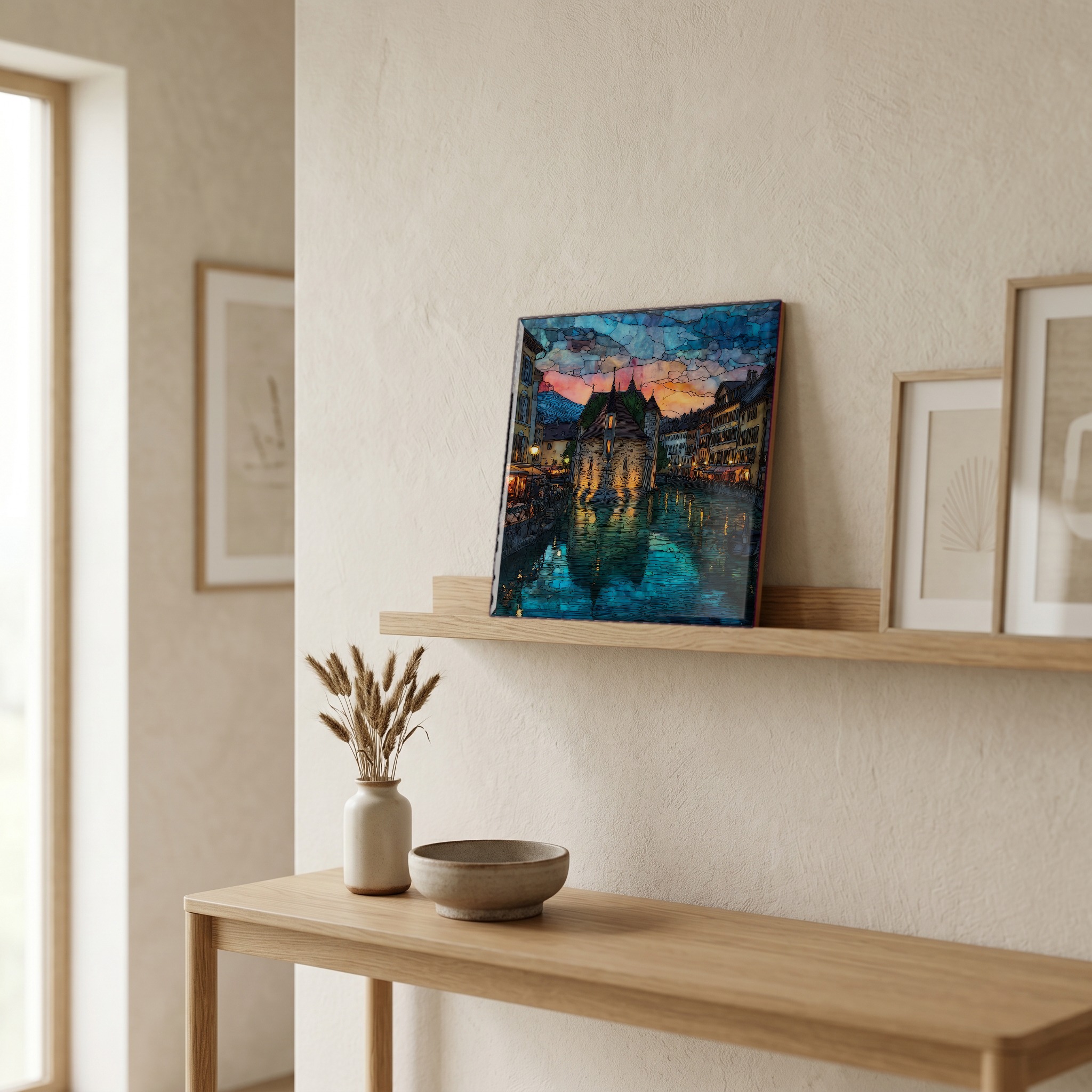
Pont des Amours, on ceramic.
Each tile is finished by hand in our Knoxville studio. Artwork is slowly infused into the ceramic surface under high heat and pressure, and rests beneath a thin glossy finish. The colour lives in the surface, not on top of it.
Pick any four 4-inch tiles — National Parks you've been to, a Smokies set, the four seasons of one place. $ for a set of , cork-backed, ready to live on the table.

Each tile ships in a kraft box, tied with cream ribbon, with a handwritten note from the studio if you'd like to add one.

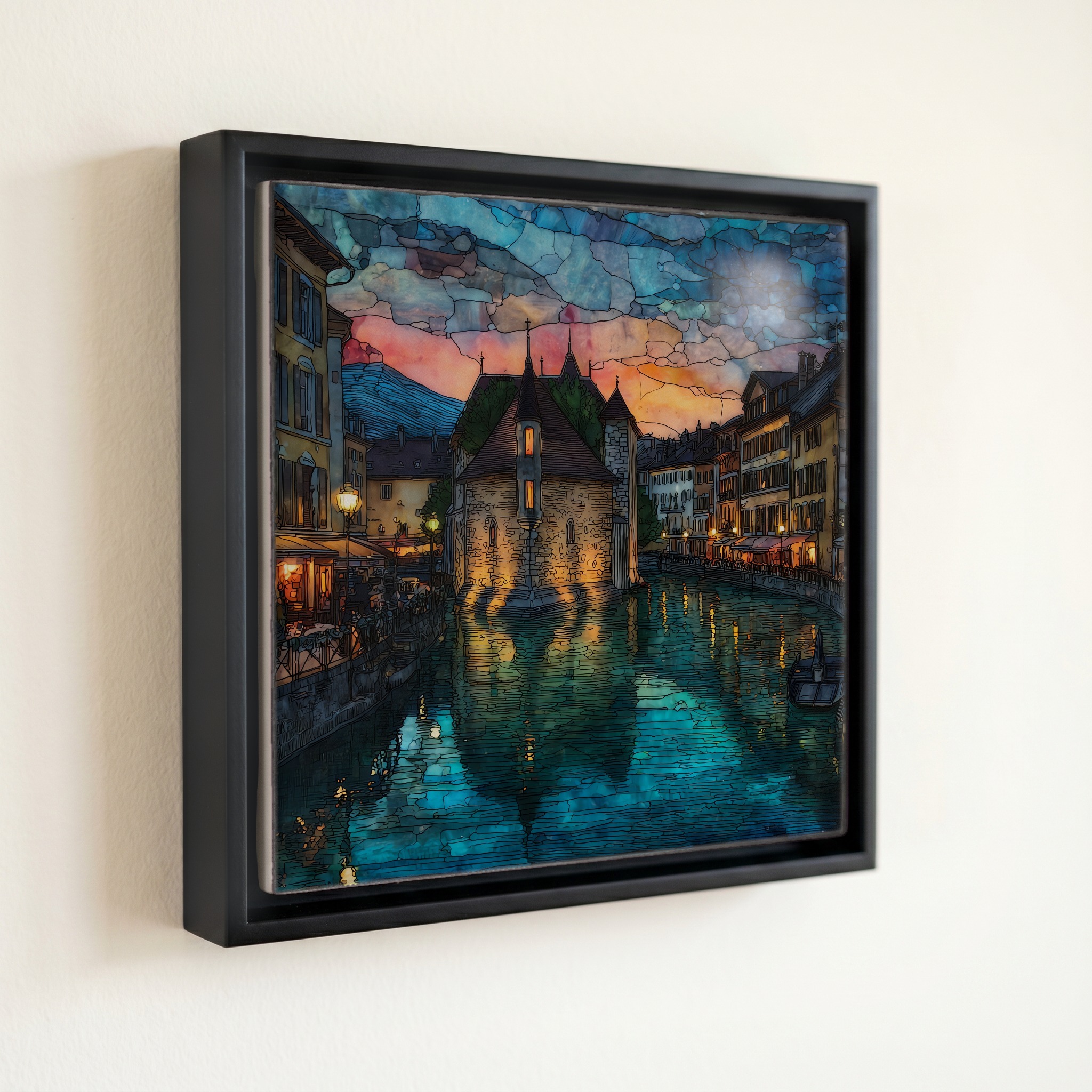
Three or five different vistas, hung together — a chapter of places you've been, or want to go.
The place, in three passes.
Pont des Amours is a small iron footbridge in Annecy, in the Haute-Savoie department of the French Alps, where the Canal du Vassé meets Lake Annecy. It crosses the canal at its mouth, connecting the Champ de Mars on the north bank to the Jardins de l'Europe on the south. Annecy itself sits about 35 kilometres south of Geneva, on the northern shore of the lake. The town is the seat of Haute-Savoie and the historical capital of the Genevois. The bridge is a few minutes' walk from the medieval Palais de l'Île and the old town. The Champ de Mars opens west to a broad lakeside lawn used for festivals, and the Jardins de l'Europe carry shaded paths along the water toward the rowing club.
Lake Annecy is one of the cleanest large lakes in Europe, fed by alpine streams and underwater springs, with a maximum depth of about 82 metres. The canal the bridge crosses, the Canal du Vassé, is a small shallow channel cut through the lake's northern park. From the railing the water reads green over the willow-shadowed edges and turquoise where it opens to the deeper basin. The clean state followed a coordinated regional cleanup begun in the 1960s, when the lakeside communes agreed to share a sewage-treatment ring around the shore. The lake is now a benchmark for European freshwater quality and is open for swimming from designated beaches between June and September.
Access is free and open at all hours. The bridge is reached from the Quai Napoléon III on the north bank or from the Jardins de l'Europe on the south, both a short walk from the train station and the Annecy old town. The bridge is small, wide enough for two people to pass, and gets crowded between roughly eleven and five in summer, especially at weekends, when the lakeside path along the canal is busy with cyclists and families heading to the public beaches. Early mornings before nine, and evenings after seven once the day-trippers have left for Geneva, are the quietest times to see it. The bridge stays open through winter; the lake itself rarely freezes.