Wender·Vista
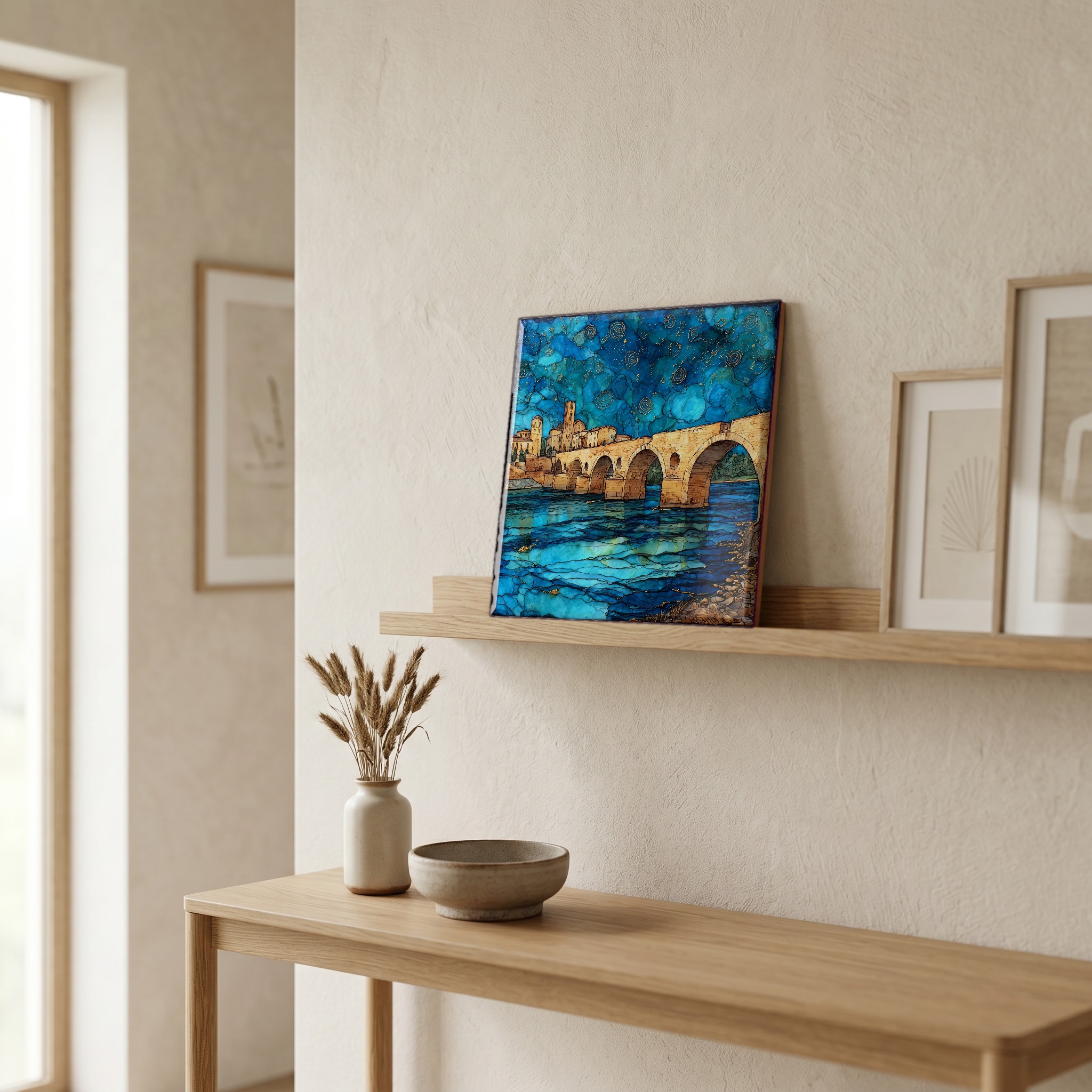
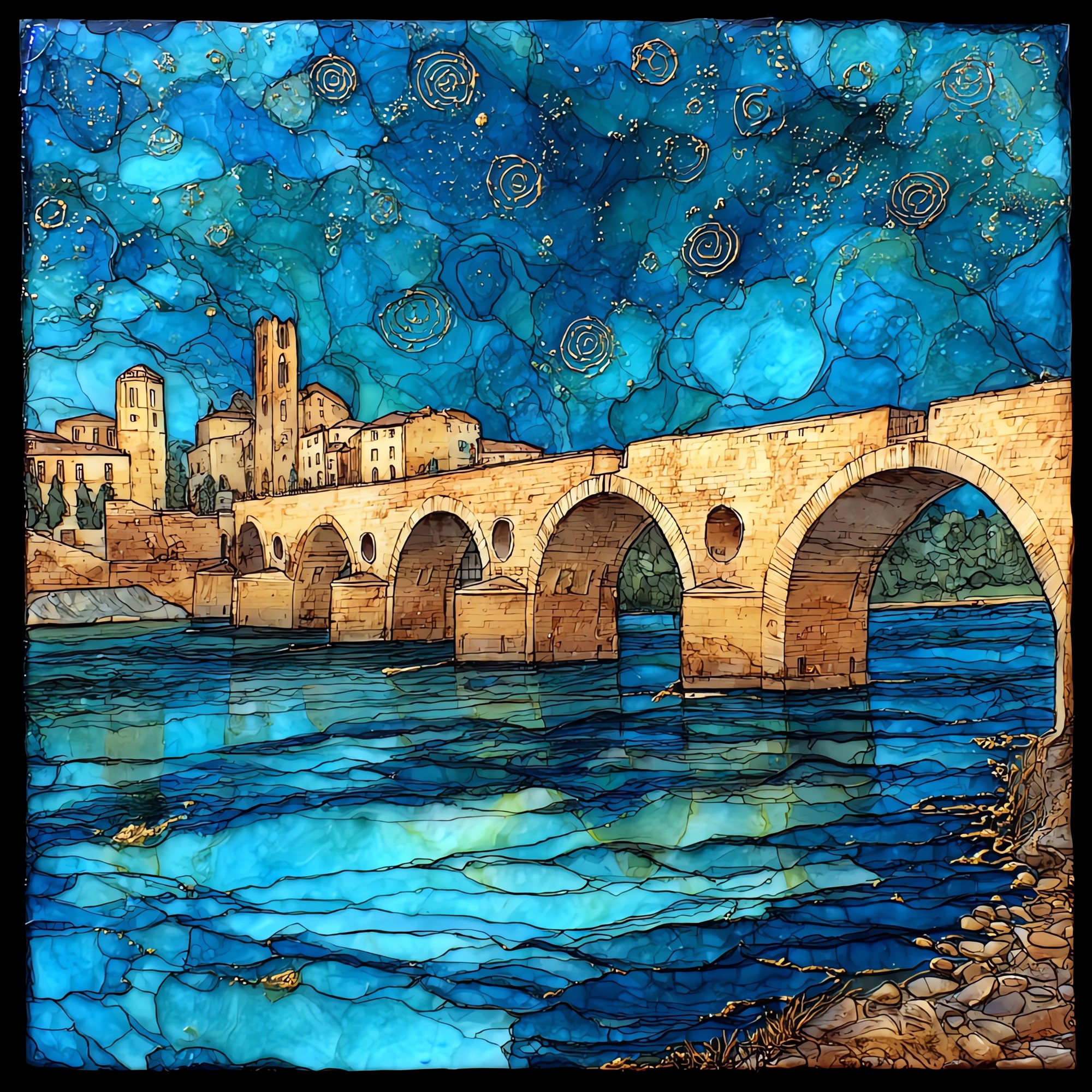
Pont d'Avignon
shown on ceramic, 12-inch tileFrance
in Provence, on the Rhône

Pont d'Avignon

— four arches into the Rhône, then nothing.

Where it lives

Not only on a wall.

A small tile on the nightstand catching the morning. A larger one above the fire. Yours, wherever you spend the slow hours.
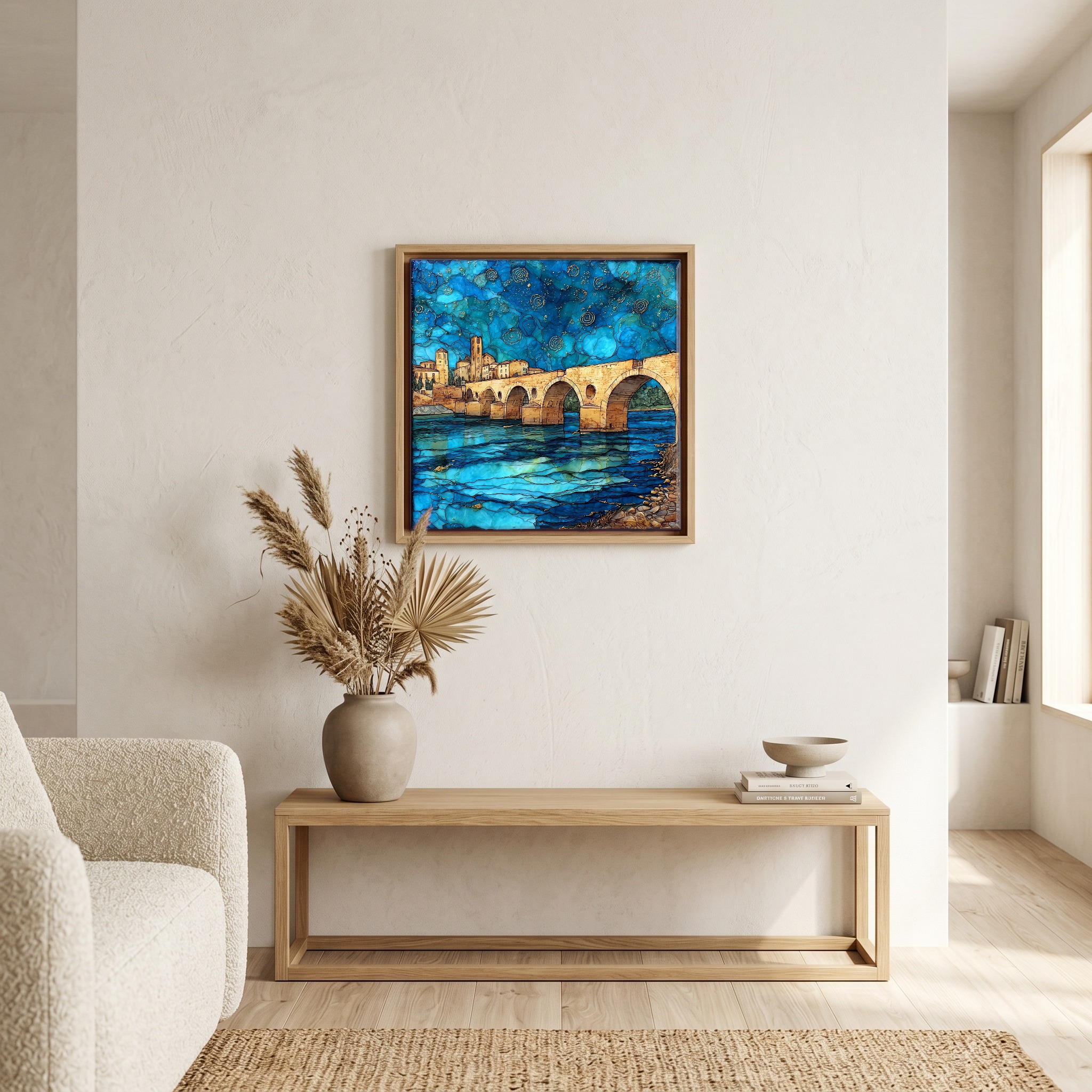
Above the bench, in a warm oak surround.
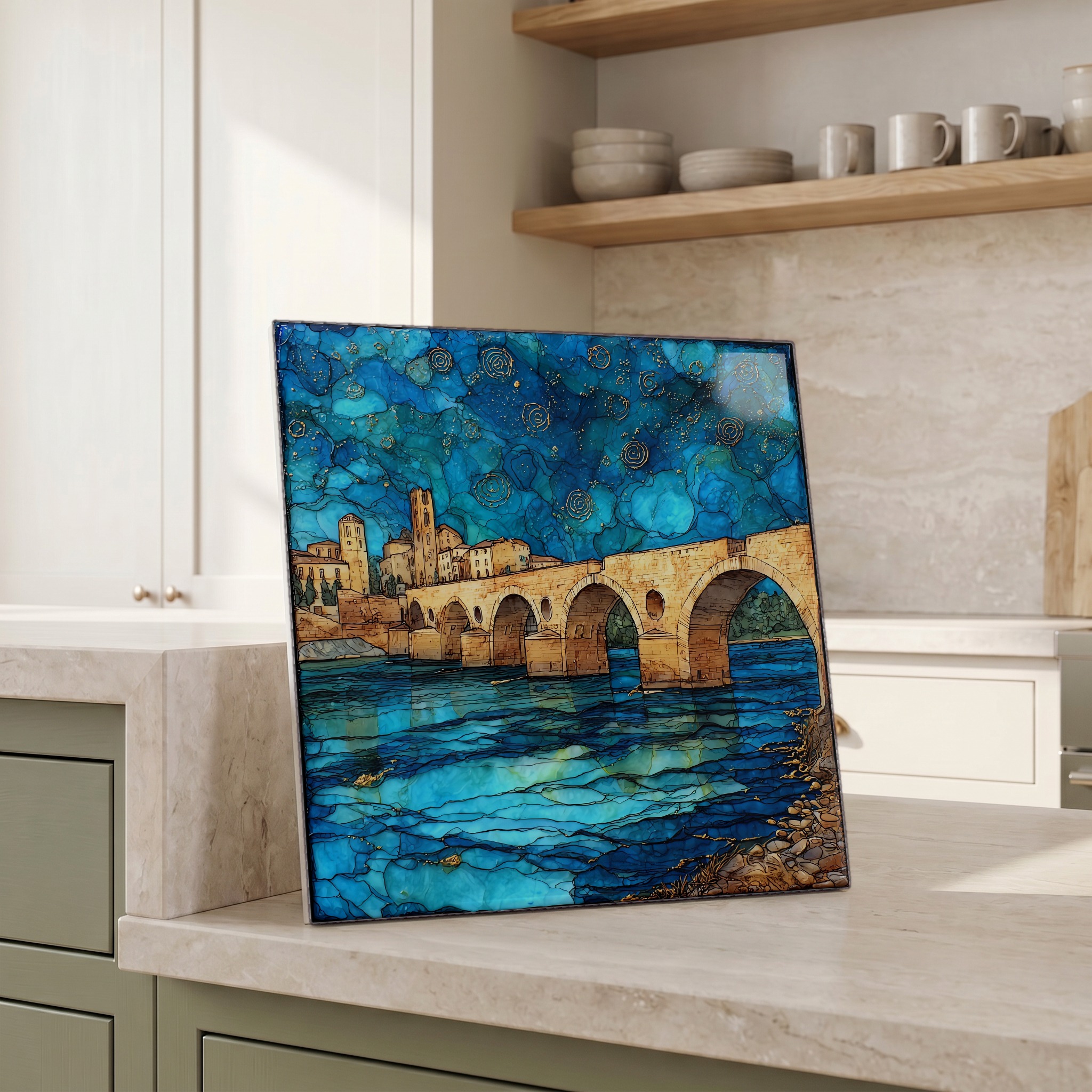
Beside the kettle, propped on the counter.
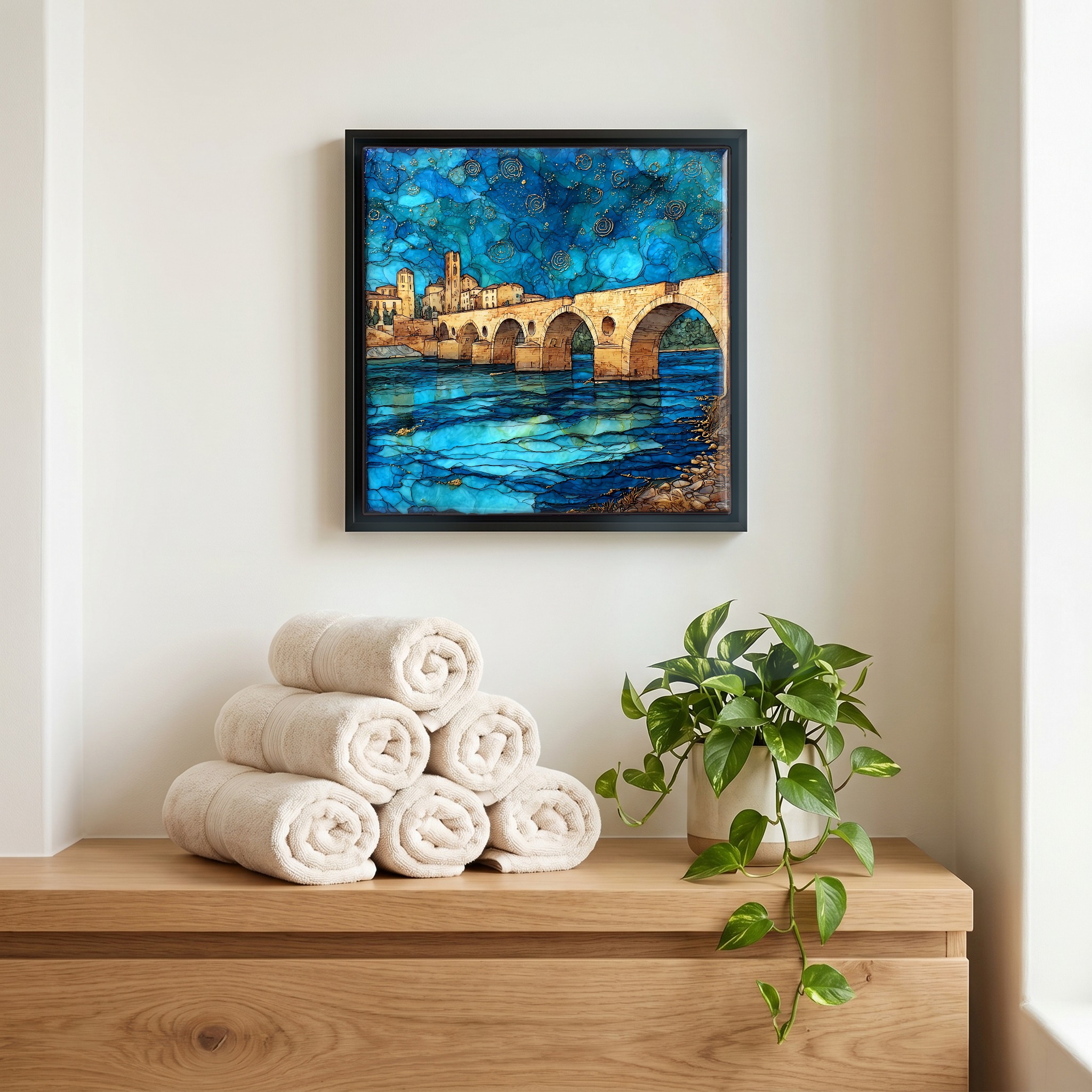
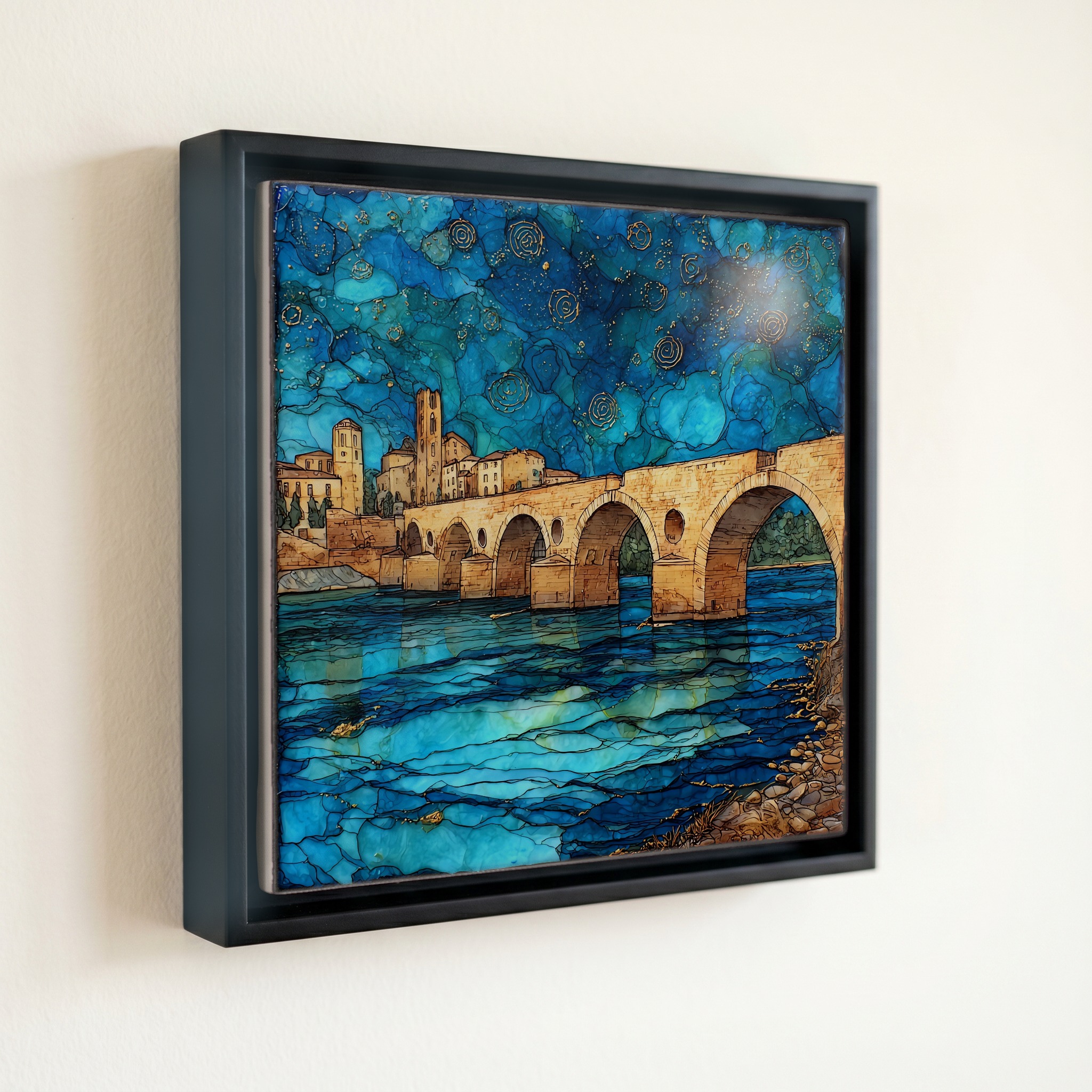
Above the linens, in a slim black surround.
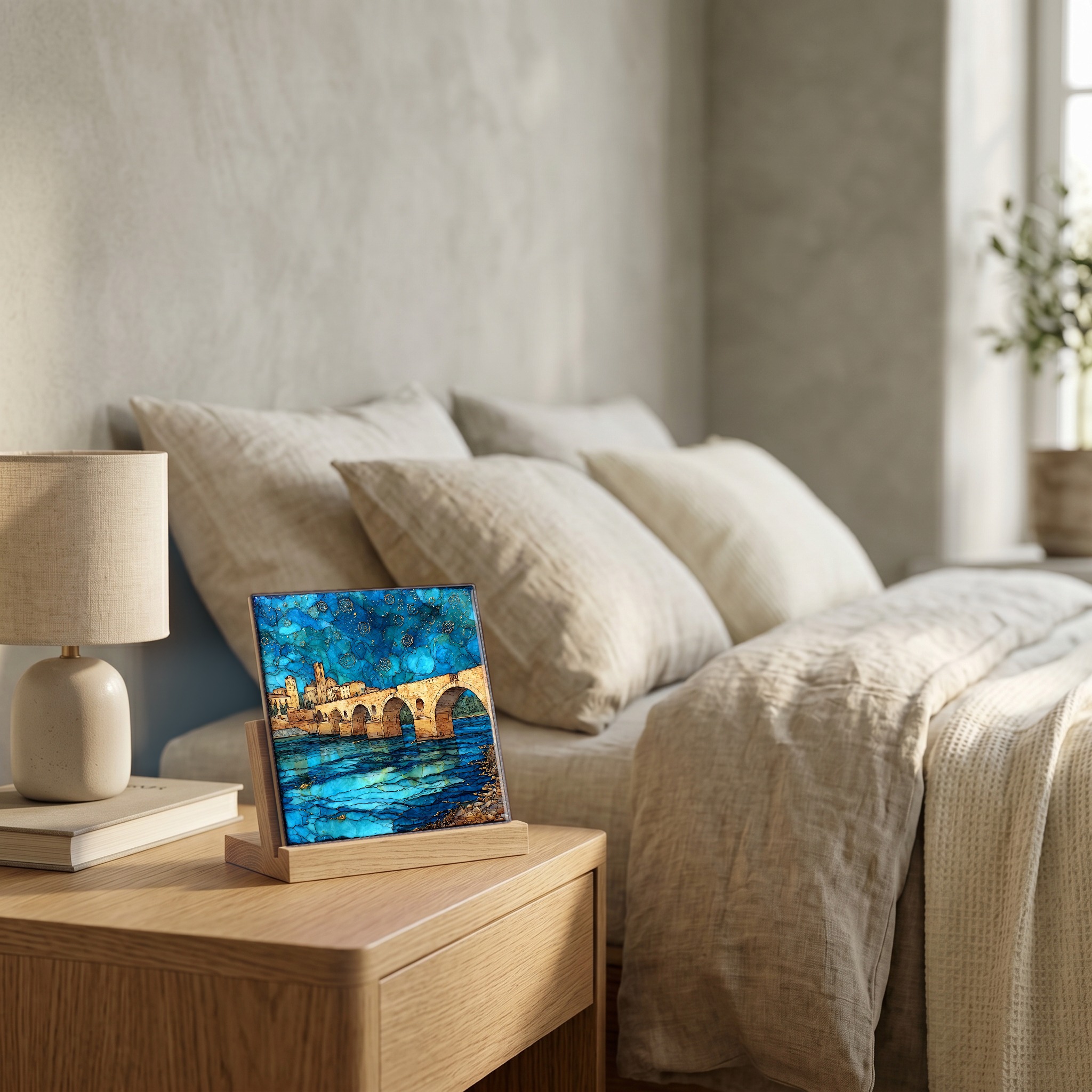
On the nightstand, on a light oak stand.
On a picture ledge, where the light comes in.
a note from the studio

Twenty-two arches once, then a flood in 1668. Now four arches reach from the Avignon bank into the Rhône, and stop. The Chapelle Saint-Nicolas sits on the second pier, named for the patron saint of bargemen who used to work this stretch of river. Children across France still sing Sur le pont d'Avignon. The verses became popular long after the river had taken most of the bridge. Across the water the Palais des Papes holds the bank. The Rhône keeps moving.
from the studio
shown in a slim black floating frame · 6 × 6 in
— bring it home

Pont d'Avignon, on ceramic.

Each tile is finished by hand in our Knoxville studio. Artwork is slowly infused into the ceramic surface under high heat and pressure, and rests beneath a thin glossy finish. The colour lives in the surface, not on top of it.

What kind of piece?
One tile — square or rectangle.
How big?
the popular one — counter, shelf, nightstand
6 × 6 in · 15 cm · 1.6 lb
Surface finish
A clear glossy finish — the artwork reads as if under resin. Ideal for show-pieces and framed wall art.
How it sits
A hidden cleat — sits ¼″ proud of the wall.
$58
Hand-finished and shipped from our studio at the foot of the Smokies. On your wall in about ten days.
size
6 × 6 in
15 cm
weighs
1.6 lb
solid in the hand
surface
ceramic, hand-finished
art rests beneath a thin glossy finish
from
Knoxville, TN
our family studio, at the foot of the Smokies
— start a Coaster Set

Pick any four 4-inch tiles — National Parks you've been to, a Smokies set, the four seasons of one place. $ for a set of , cork-backed, ready to live on the table.
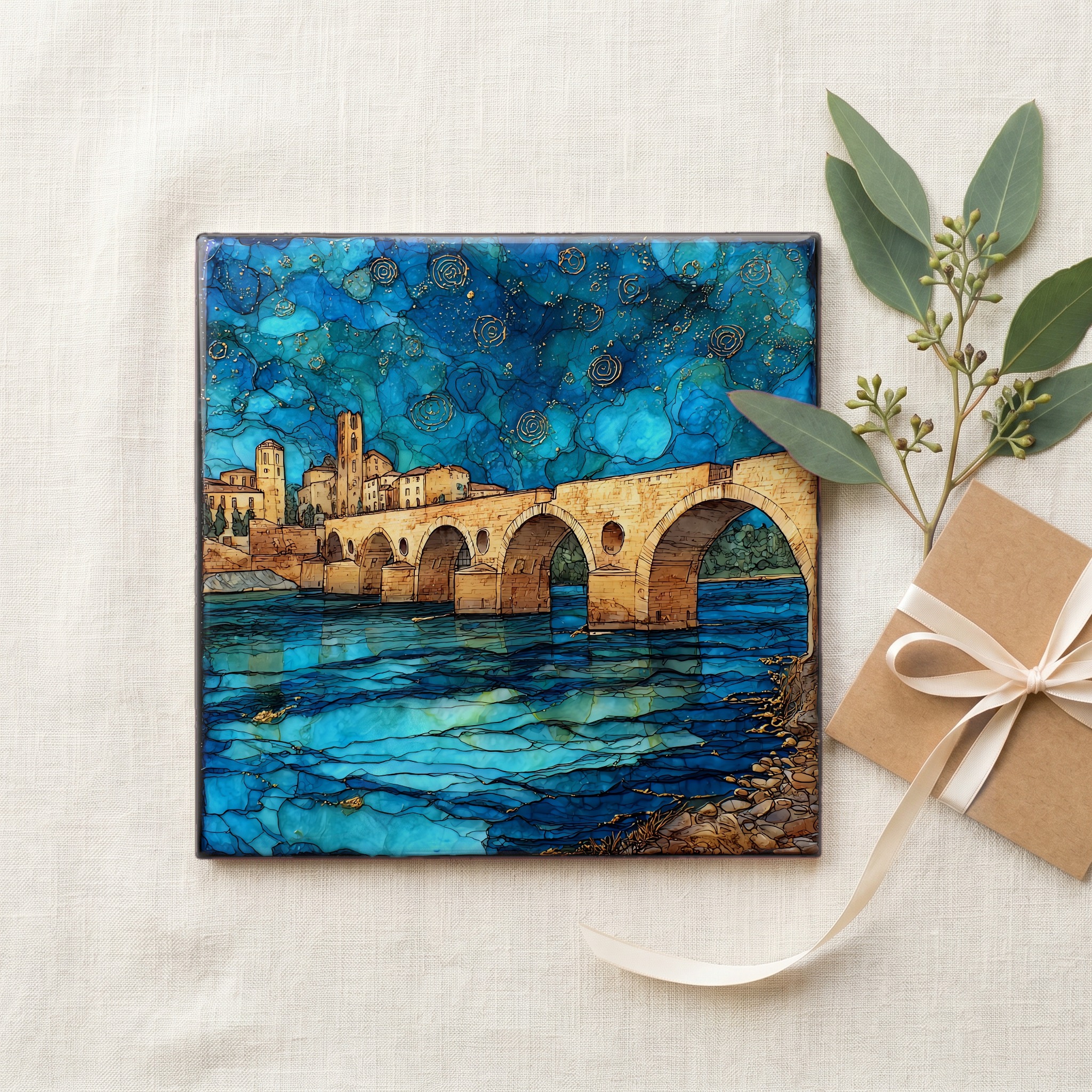
comes gift-ready
comes gift-ready

Each tile ships in a kraft box, tied with cream ribbon, with a handwritten note from the studio if you'd like to add one.
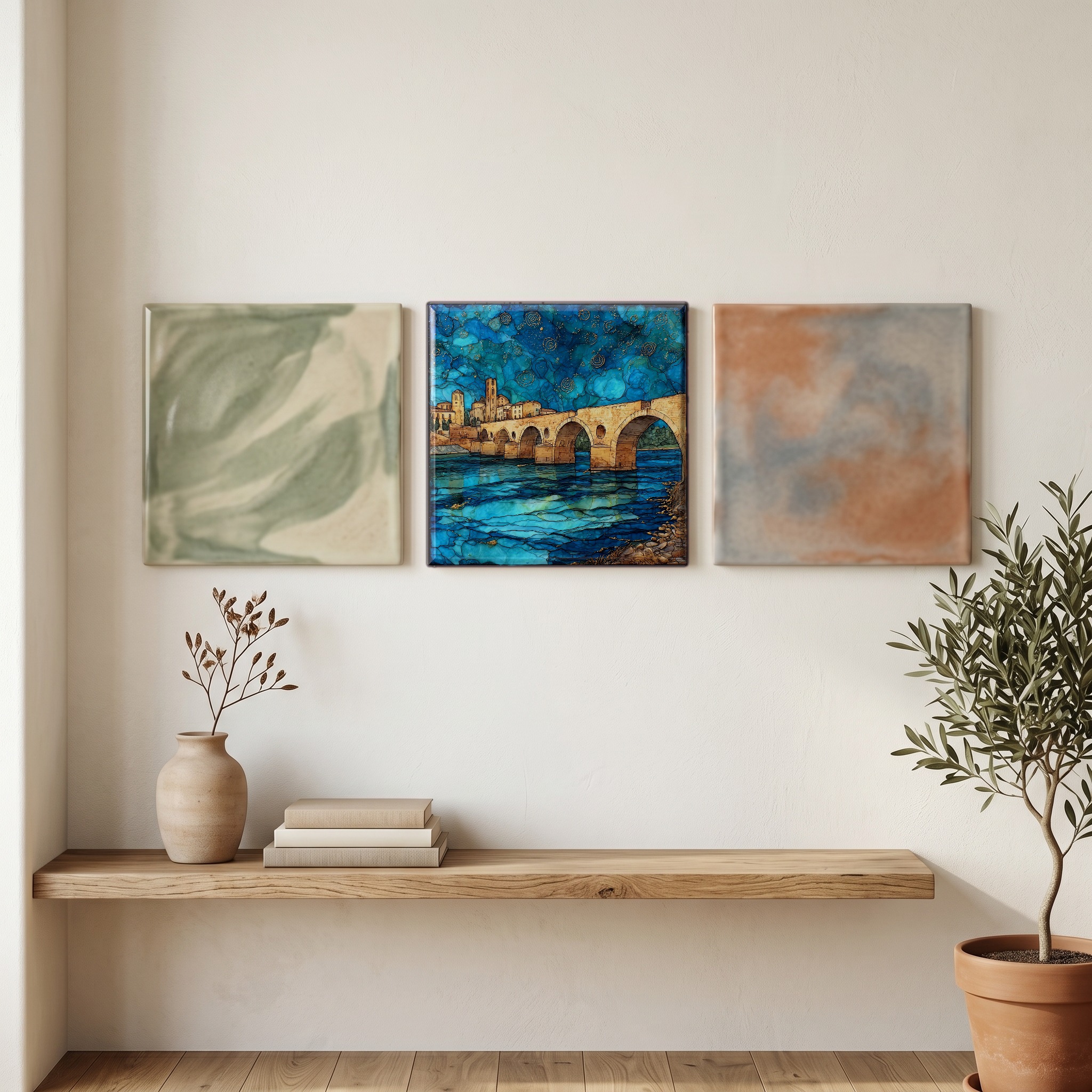
or build a grouping
or build a grouping

Three or five different vistas, hung together — a chapter of places you've been, or want to go.

about Pont d'Avignon

The place, in three passes.

A little of what's known, in case you fall down the rabbit hole — or want to go see it yourself.
the place

Pont Saint-Bénézet stretches partway across the Rhône at Avignon, in the Vaucluse département of Provence-Alpes-Côte d'Azur, in southern France. Built between 1177 and 1185 according to local tradition, the bridge originally carried twenty-two stone arches from the city to the Île de la Barthelasse and the western bank at Villeneuve-lès-Avignon. Repeated floods carried away sections over the following centuries; the great flood of 1668 took most of what remained, and the city stopped rebuilding. Four arches still reach into the river, with the Romanesque Chapelle Saint-Nicolas resting on the second pier. The bridge sits within the historic centre of Avignon, inscribed as a UNESCO World Heritage Site in 1995 alongside the Palais des Papes that holds the riverbank behind it.

the stone

The four surviving arches are built of dressed stone in a slightly elliptical profile that was unusual for twelfth-century European bridge construction. The Chapelle Saint-Nicolas, fitted onto the second pier, has two superimposed sections: a Romanesque lower chapel from the late twelfth century, dedicated to the bridge's legendary builder, and an upper chapel rebuilt in Gothic style in the fifteenth century. Local tradition records that Bénézet, a shepherd boy told in a vision to bridge the Rhône, convinced the city of his calling by lifting a stone too heavy for thirty men. He was canonized after his death in 1184 and is buried in the lower chapel.

the visit

The bridge is open to visitors daily, with combined tickets sold alongside the Palais des Papes a few hundred metres back from the riverbank. The walk onto the structure ends at the fourth arch, where a stone parapet looks downriver toward the Île de la Barthelasse. The chapel can be entered. The Rocher des Doms park sits on a limestone outcrop directly above the city and gives the photograph everyone takes of the four-arch ruin from above. The site is run by Avignon Tourisme and stays open through the winter on shorter hours.

— informed by Avignon Tourisme, Wikipedia
where
France · Avignon, Vaucluse
position
43.9533° N · 4.8047° E
the neighborhood

What's nearby.

A handful of named places within an hour's walk or short drive. Some we've already painted; some we will.
0.3 km SE
Palais des Papes
medieval palace
0.3 km S
Rocher des Doms
limestone hilltop park
0.3 km S
Cathédrale Notre-Dame des Doms
Romanesque cathedral
0.5 km W
Île de la Barthelasse
river island
0.5 km SE
Place de l'Horloge
city square
2 km W
Villeneuve-lès-Avignon
medieval town
N
Pont d'Avignon
Palais des Papes
Rocher des Doms
Cathédrale Notre-Dame des Doms
Île de la Barthelasse
Place de l'Horloge
Villeneuve-lès-Avignon
common questions

What people ask.

A few questions we get about Pont d'Avignon — and about bringing the piece home.
about the place

The bridge originally had twenty-two arches when completed in 1185, but the Rhône damaged it repeatedly over the following centuries. The great flood of 1668 destroyed most of what remained, and Avignon chose not to rebuild. Four arches and the Chapelle Saint-Nicolas survive on the Avignon bank today.

The bridge crosses the Rhône at Avignon, in the Vaucluse département of Provence-Alpes-Côte d'Azur in southern France. The site is part of the Historic Centre of Avignon, a UNESCO World Heritage inscription that also includes the adjacent Palais des Papes and the city's medieval walls.

Local tradition credits a shepherd named Bénézet, who claimed a vision instructing him to bridge the Rhône and reportedly proved his calling by lifting a stone too heavy for thirty men. Construction ran from 1177 to 1185. Bénézet was canonized after his death and is buried in the bridge's lower chapel.

The familiar nursery song describes dancing on the bridge. Many historians believe the original lyric was sous le pont, under the bridge, referring to the riverside meadows on the Île de la Barthelasse where Avignon residents gathered. The modern sur le pont version became popular in the nineteenth century.

Yes. Visitors can walk the surviving span out to the fourth arch, where the path ends at a parapet over the Rhône. The Chapelle Saint-Nicolas can be entered on the second pier. Combined tickets with the Palais des Papes are sold by Avignon Tourisme.

It was inscribed in 1995 as part of the Historic Centre of Avignon: Papal Palace, Episcopal Ensemble and Avignon Bridge. UNESCO recognized the medieval ensemble as an exceptional example of fourteenth-century papal Avignon, when the city held the seat of the Catholic Church.

about the piece in your home

It travels well as a gift for anyone who has spent time in Avignon or along the Rhône. Pont Saint-Bénézet is one of the most recognizable images in southern France, and the song attached to it adds a second layer for anyone raised in a Francophone home. A Small or Medium with a handwritten note carries the gesture.

The piece's leaded blues, ambers, and stone tones sit well in Old World Provençal, French Country, and Library Traditional rooms. It also crosses into Maximalist Eclectic interiors where a single architectural piece anchors a gallery wall. The Glossy finish reads as framed art behind the gloss.

European-traditional, Old World, and the broader Library Maximalist direction now favour single statement pieces with architectural and historical depth over print-shop landscape sets. A medieval-bridge tile reads as a found object rather than a decorative reproduction, which is the register the trend rewards.

Above a sofa, a single Large or a four-tile Mural reads at the right scale. Above a console or a sideboard, a Medium or a Large carries the weight without crowding the wall above it. A nine-tile Mural is the right call for a stairwell wall or a long entryway.

Yes. Order the same image in the Dura Satin or Matte finish for those rooms. Both are scratch-resistant and stand up to humidity. The Glossy finish is meant for framed wall display in a dry room.

A soft microfibre cloth, dry or barely damp with water. No abrasive cleaner, no glass spray. The colour is slowly infused into the ceramic surface under high heat and pressure and lives beneath the finish, so the surface wipes clean without disturbing the image.

Yes. Every piece in the WenderVista atlas is made in our Knoxville studio. The eye is Reid Wender's. He chooses what enters the atlas and how each place is rendered. The work is not licensed from a third party, and no two vistas share the same image.

if this one stayed with you

A few you might also love.

Hand-picked by the eye that found Sorapis. Same air, same kind of quiet.