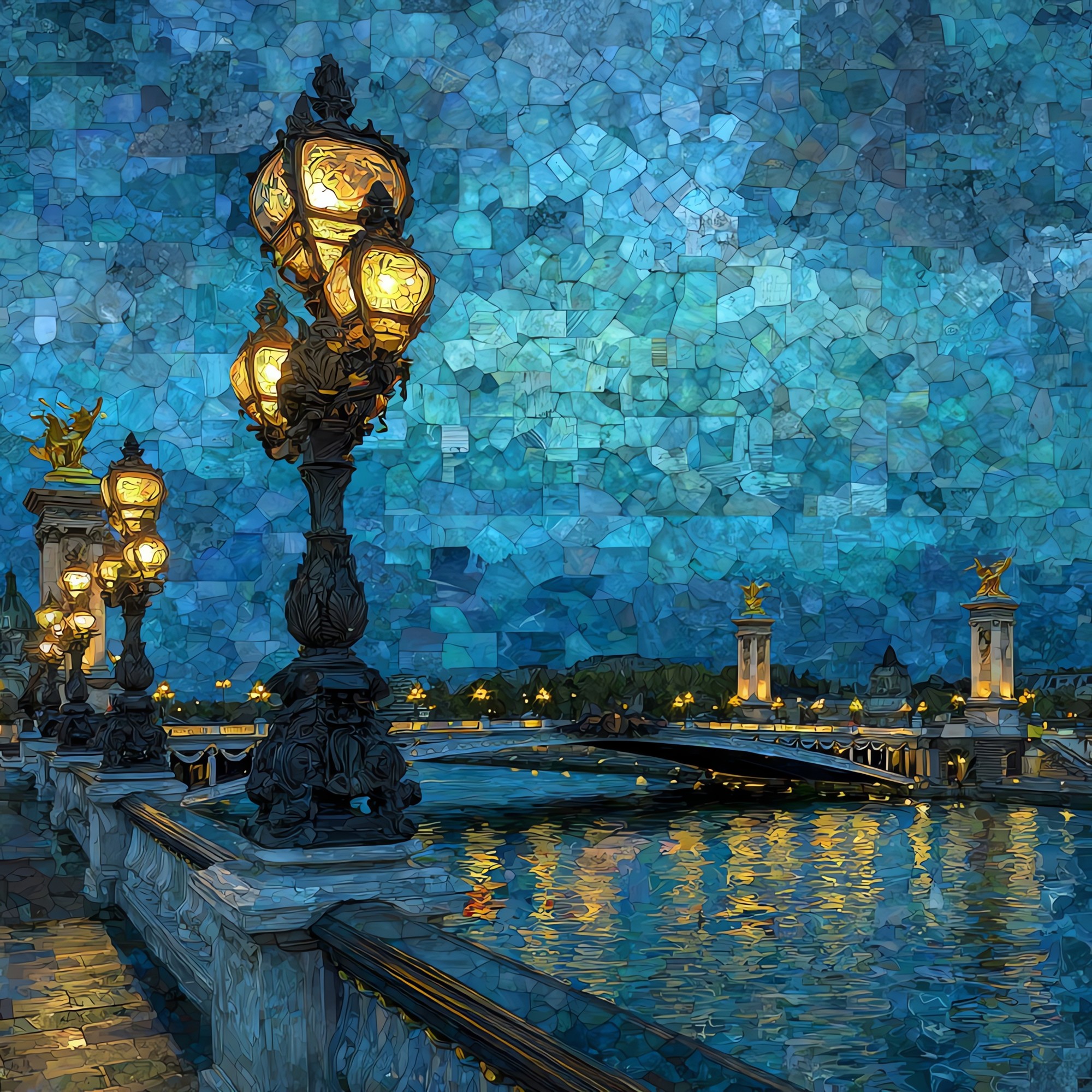
Pont Alexandre III
— gold against the river, just before dark.
Not only on a wall.
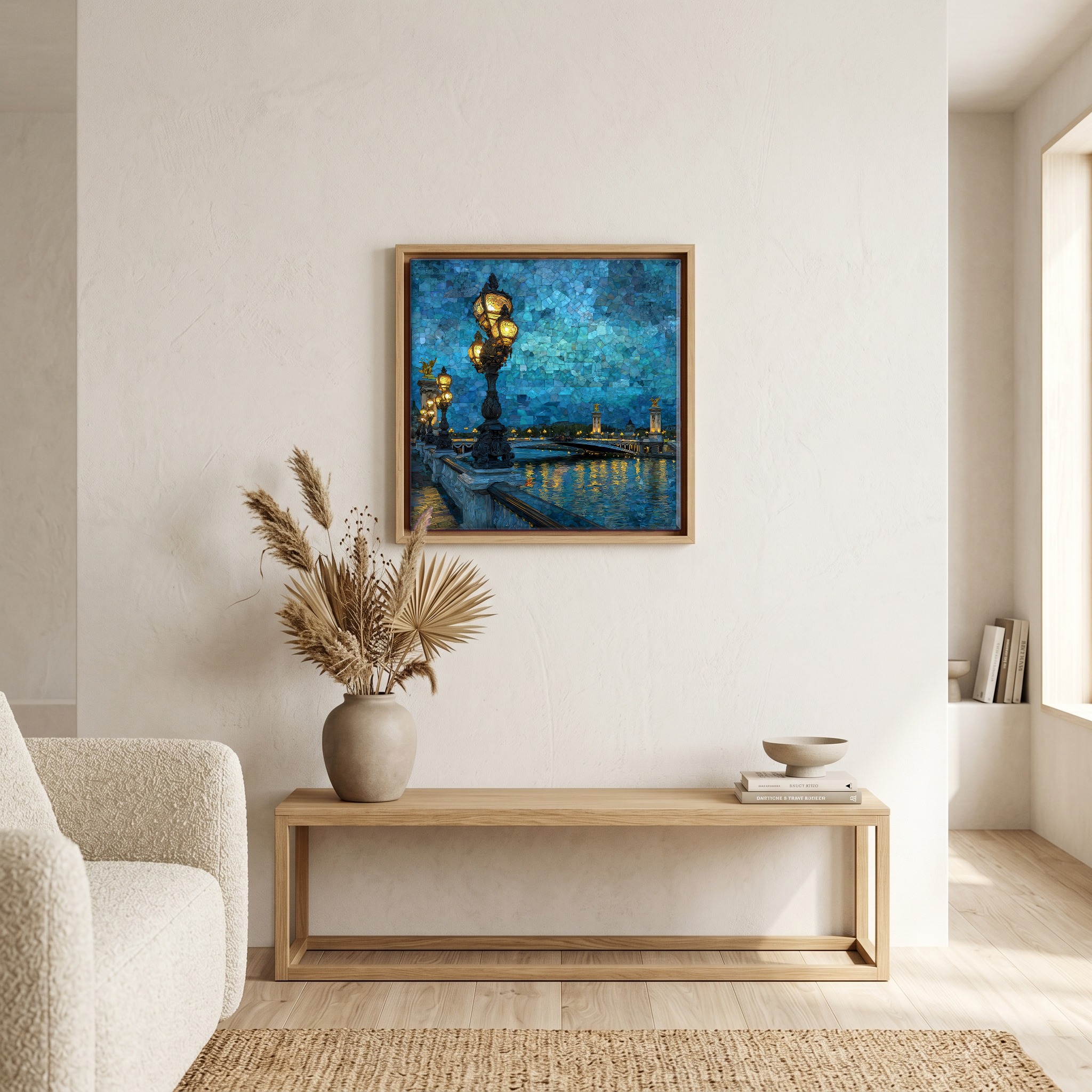
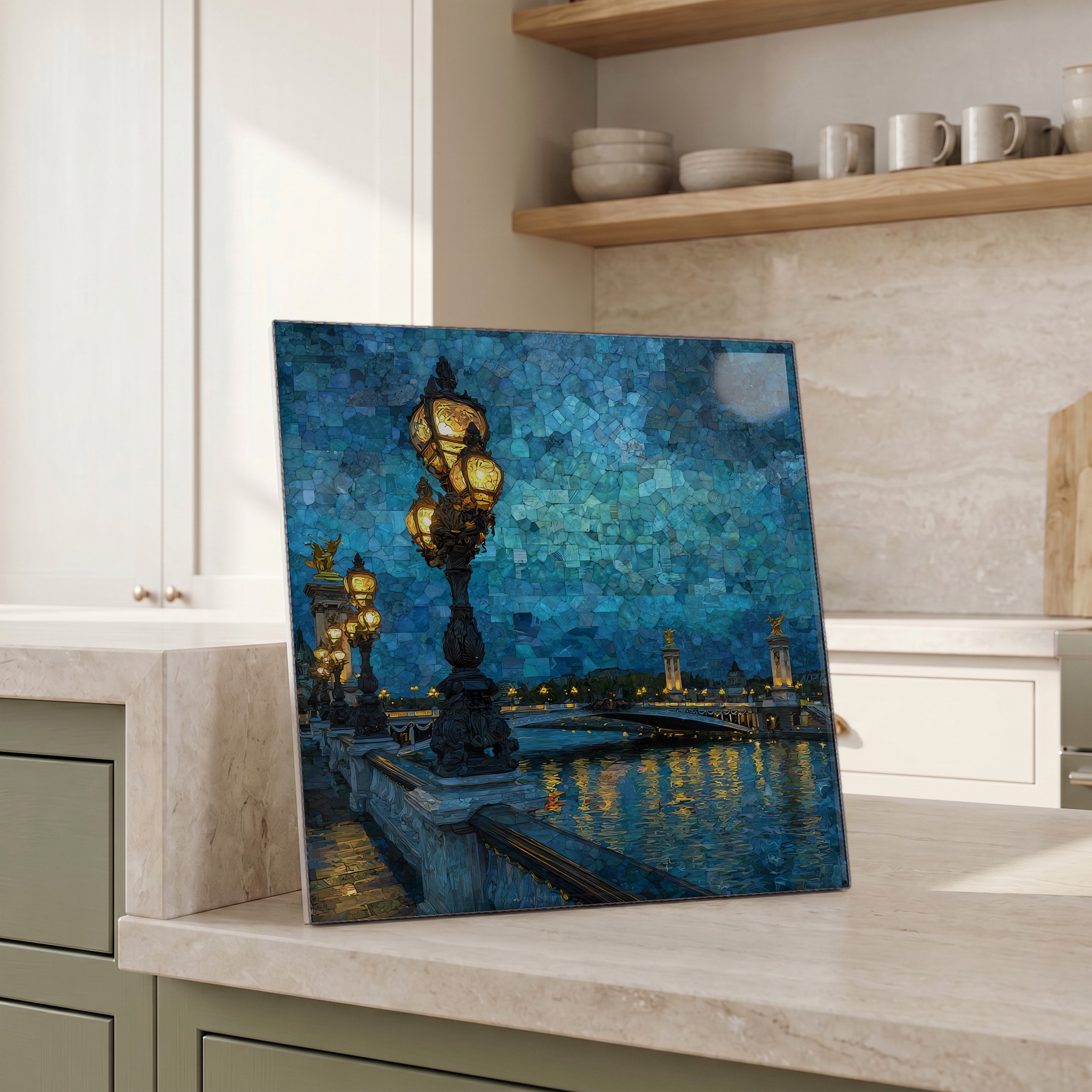
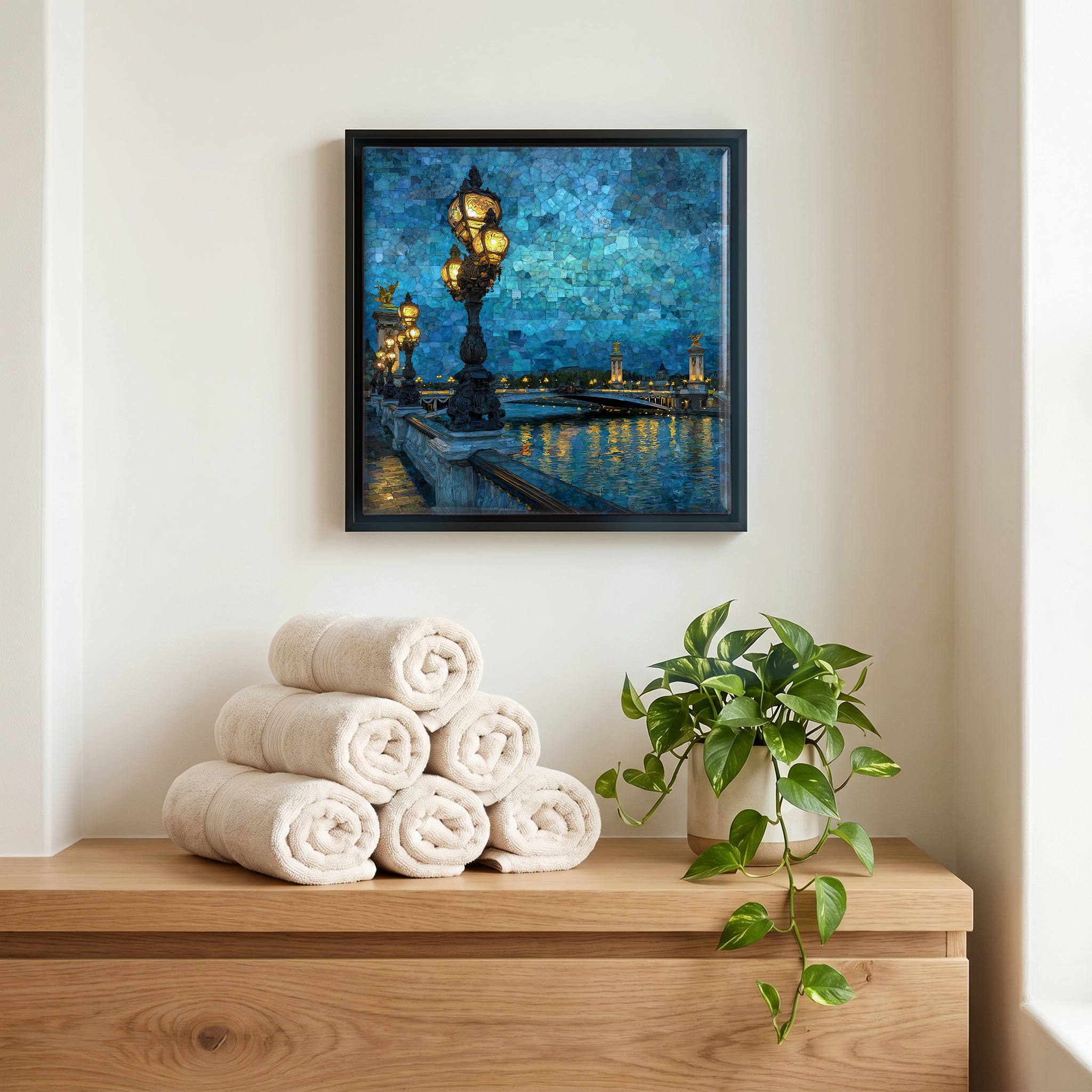
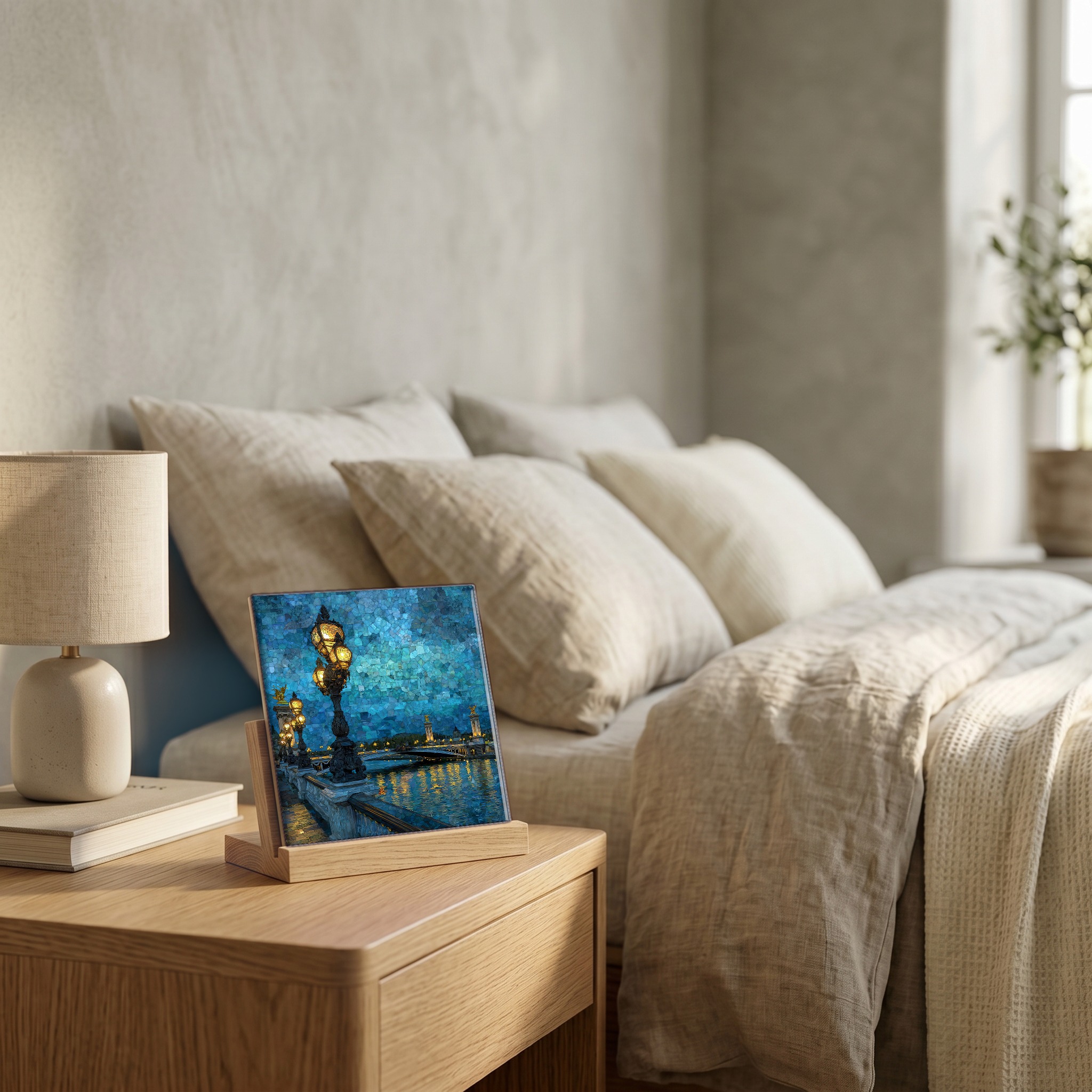
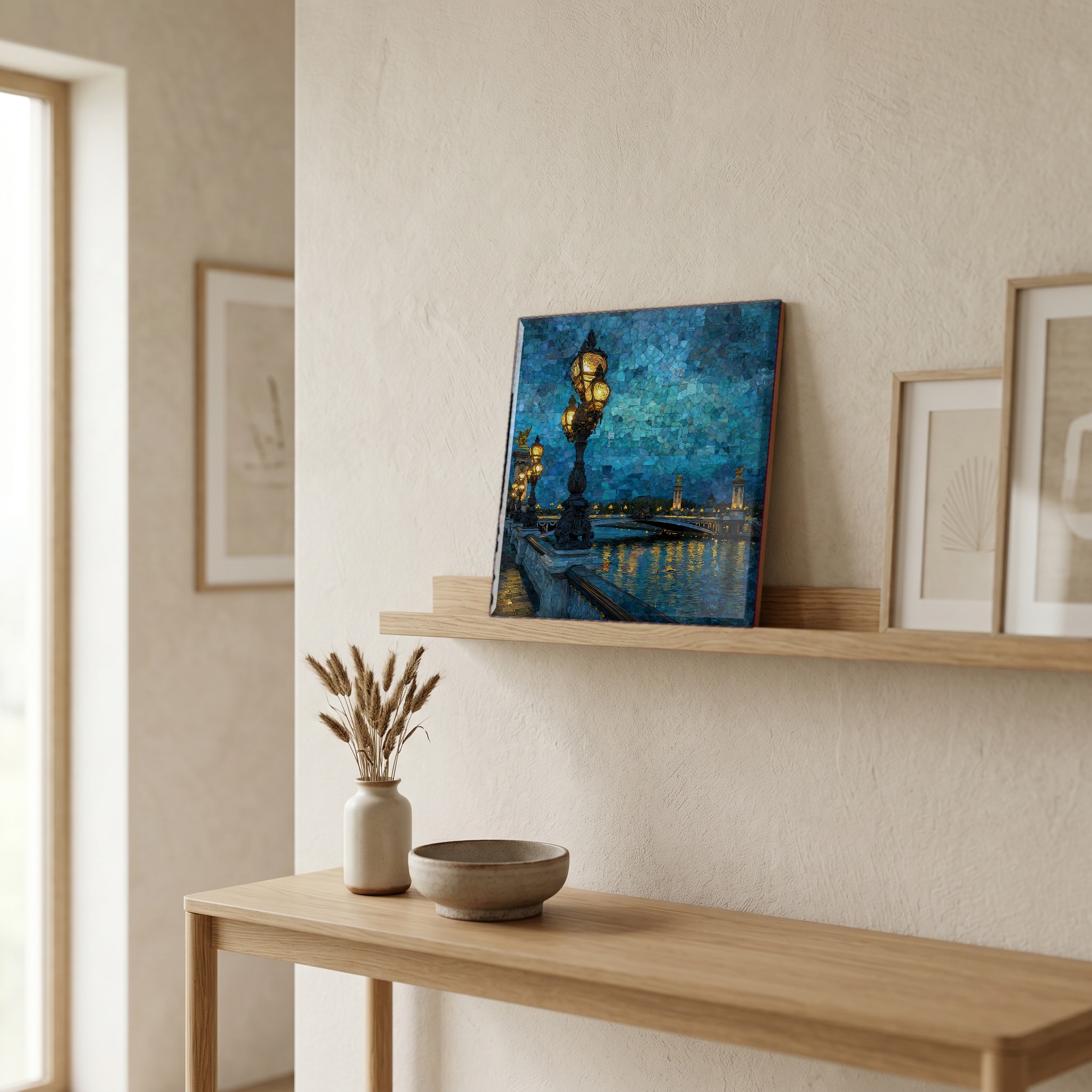
“The most ornate of Paris's bridges, kept low across the Seine on purpose. The single steel arch was held under six metres so it would not break the line of sight between the Invalides and the Champs-Élysées. Built in three and a half years for the 1900 World's Fair, named for a Russian tsar whose son laid the first stone. The gilt-bronze Fames at the four corners catch the last hour of light. People stop on the Esplanade des Invalides just to watch them go.
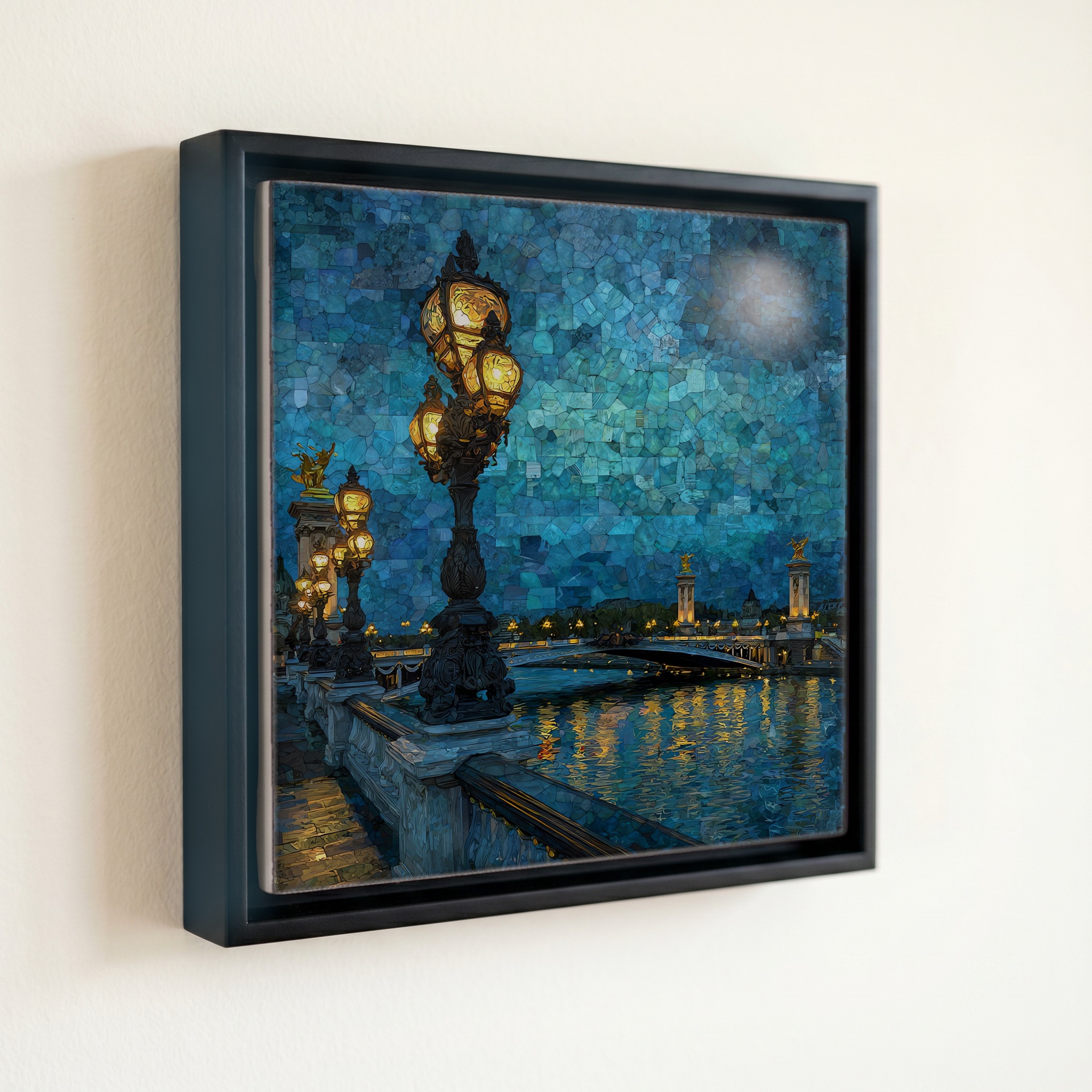
Pont Alexandre III, on ceramic.
Each tile is finished by hand in our Knoxville studio. Artwork is slowly infused into the ceramic surface under high heat and pressure, and rests beneath a thin glossy finish. The colour lives in the surface, not on top of it.
Pick any four 4-inch tiles — National Parks you've been to, a Smokies set, the four seasons of one place. $ for a set of , cork-backed, ready to live on the table.
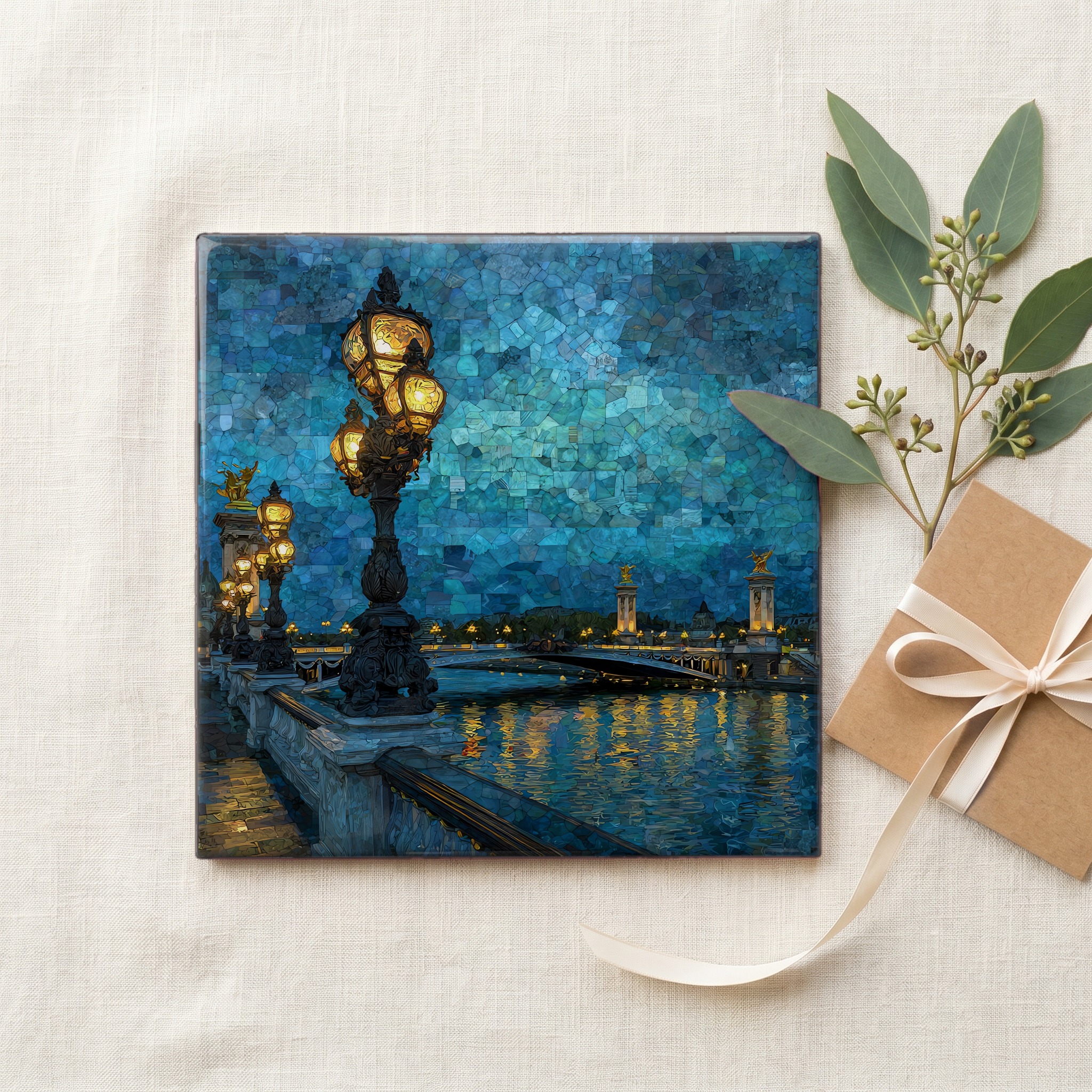
Each tile ships in a kraft box, tied with cream ribbon, with a handwritten note from the studio if you'd like to add one.
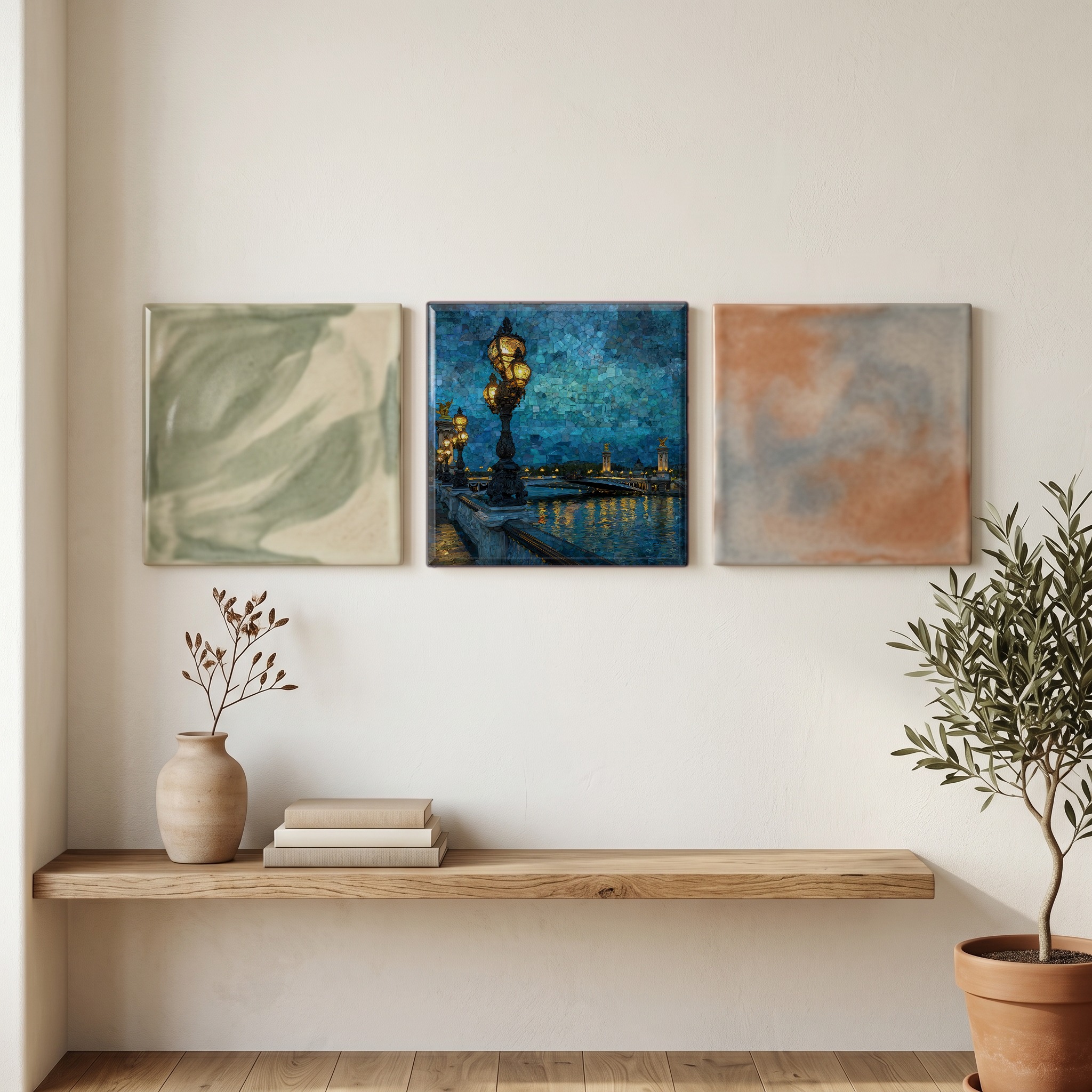
Three or five different vistas, hung together — a chapter of places you've been, or want to go.
The place, in three passes.
Pont Alexandre III spans the Seine between the Esplanade des Invalides on the Left Bank and the Grand and Petit Palais on the Right, joining the 7th and 8th arrondissements of Paris. It opened in April 1900 for the Exposition Universelle after three and a half years of construction by engineers Jean Résal and Amédée Alby. The single steel arch carries the road 160 metres across the river in one unbroken span and was deliberately held to a low rise, barely six metres above the water, so the view between the Champs-Élysées and the gilt dome of the Hôtel des Invalides would stay open. France classed the bridge as a monument historique in 1975.
Four 17-metre socle columns mark the corners of the deck, each topped with a gilt-bronze Renommée: a winged Fame restraining a Pegasus. The work was divided among several sculptors of the Third Republic. At the upstream piers, Georges Récipon's Nymphs of the Seine carry the arms of France; at the downstream piers, his Nymphs of the Neva carry the arms of Imperial Russia. The bridge was named for Tsar Alexander III, whose son Nicholas II laid the first stone in October 1896 to mark the Franco-Russian Alliance. Lions, cherubs, sea creatures, and Art Nouveau lamp standards run the full length of the parapet.
The bridge faces almost due north–south across the Seine, which means in the hour before sunset the gilt-bronze Fames at the four corners light up against a darkening sky. The effect is sharpest in late summer and autumn, when the sun drops behind the seven-arch Pont des Invalides upstream and throws a long band of low light across the deck. The Esplanade des Invalides, the wide gravel approach on the Left Bank laid out by Robert de Cotte in the early eighteenth century, is the standard place to stop and watch the gold catch.