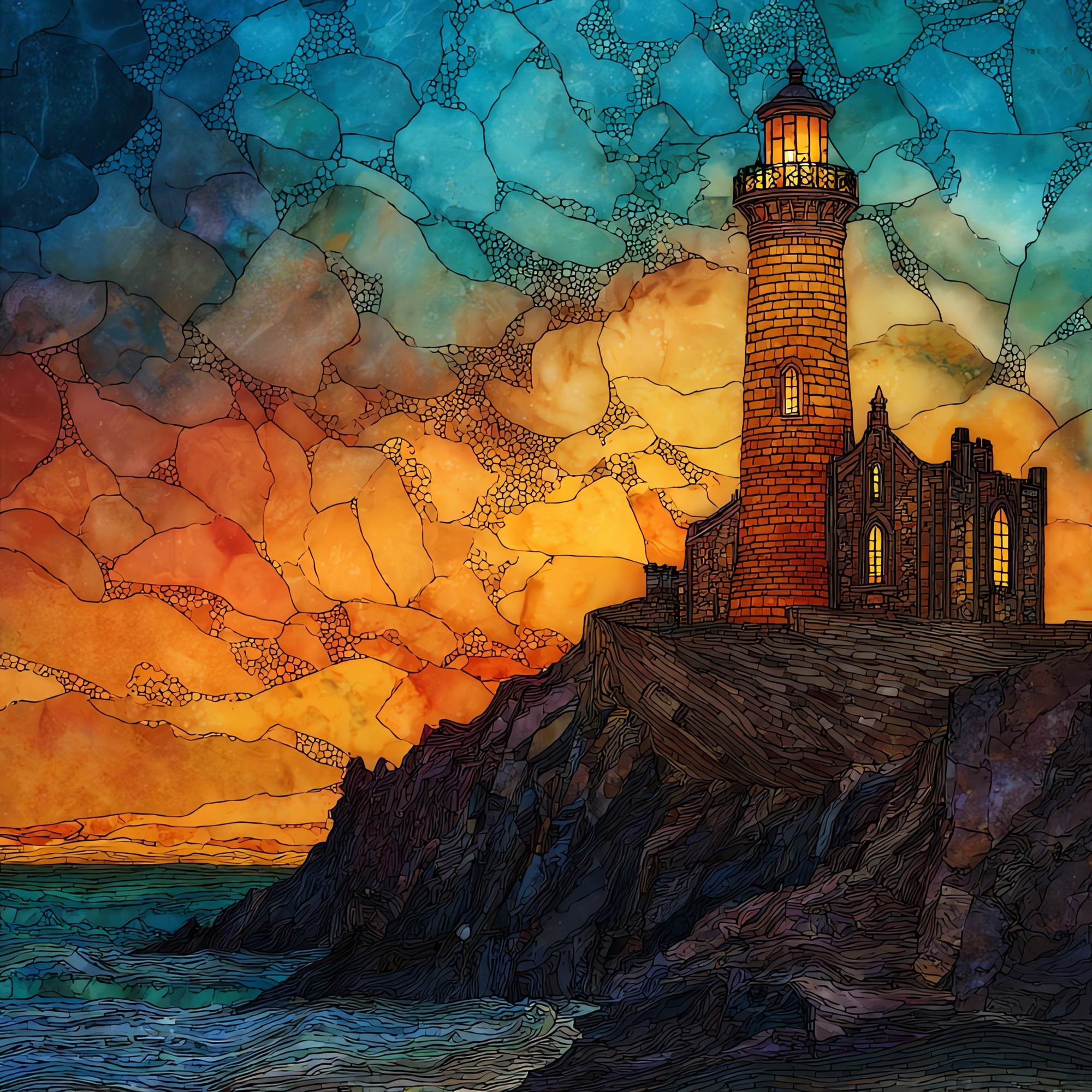
Pointe Saint-Mathieu Lighthouse
— — the same light, in a different stone.
Not only on a wall.
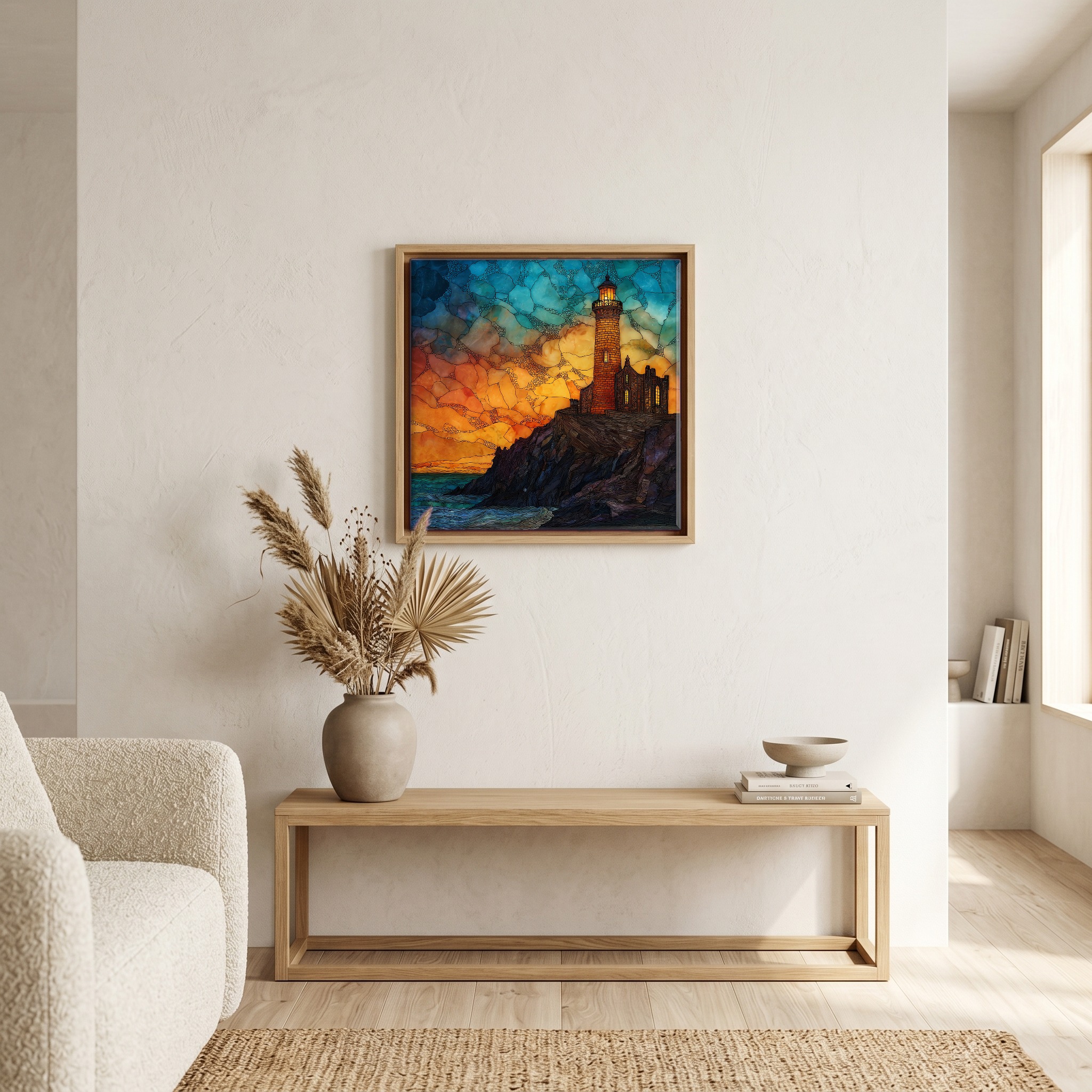
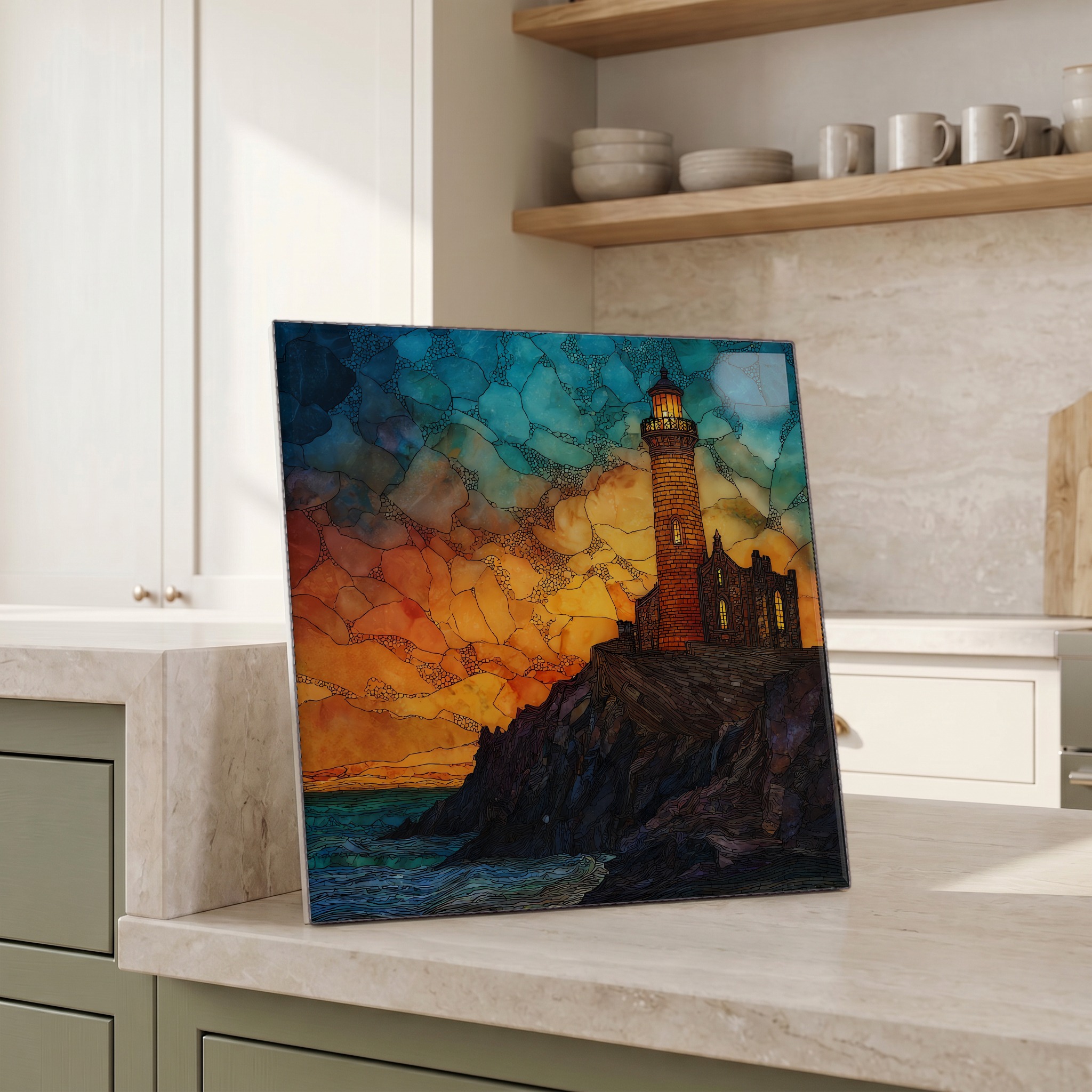
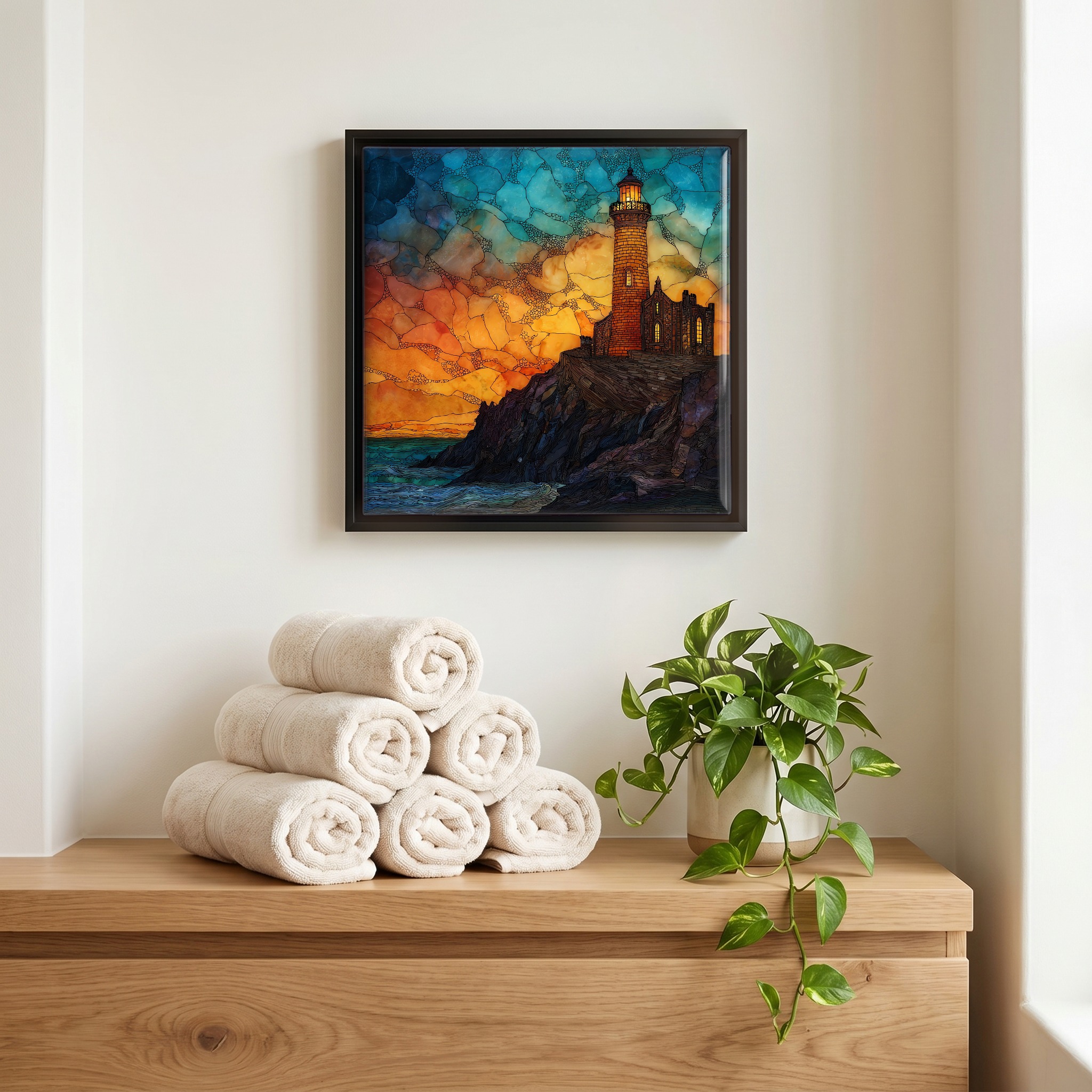
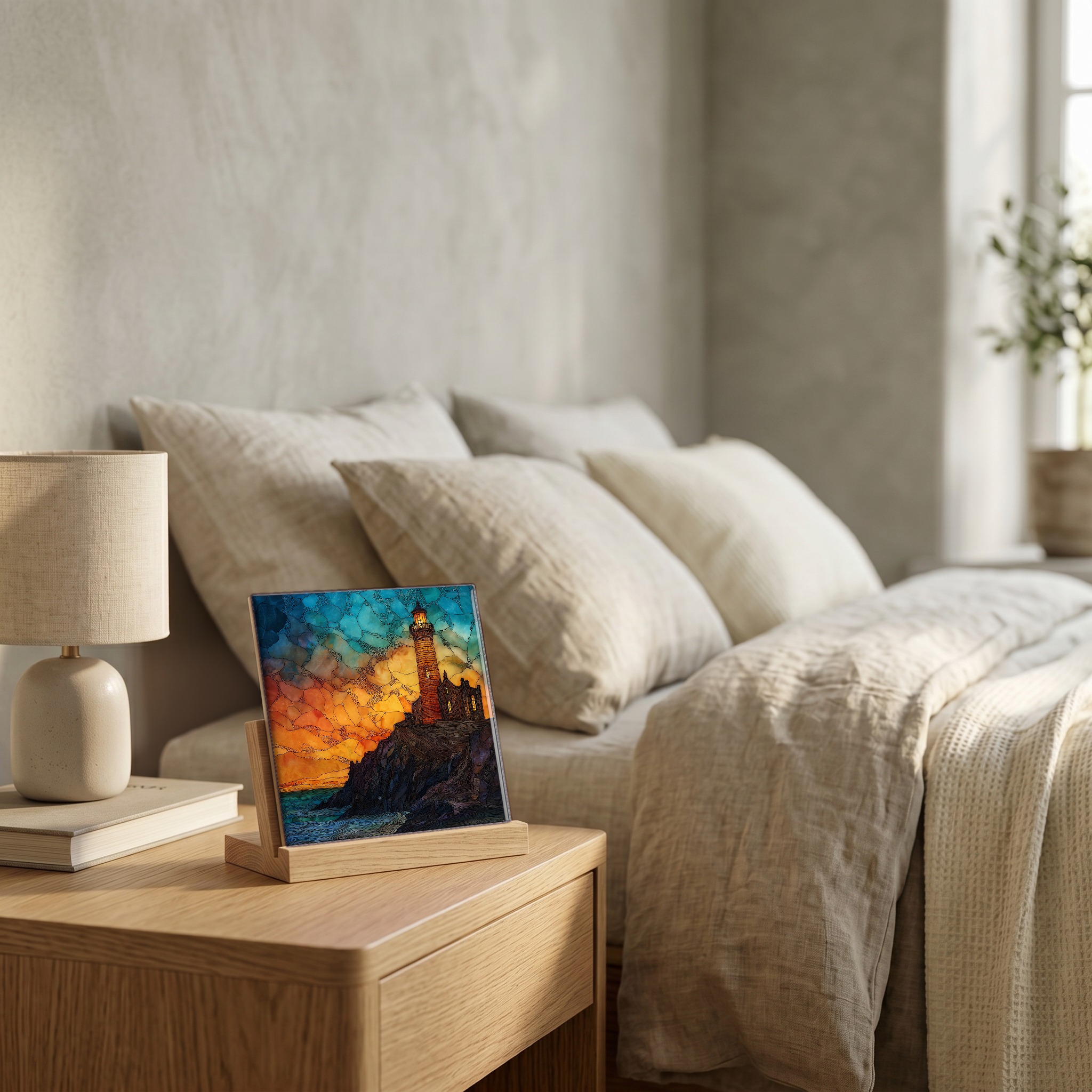
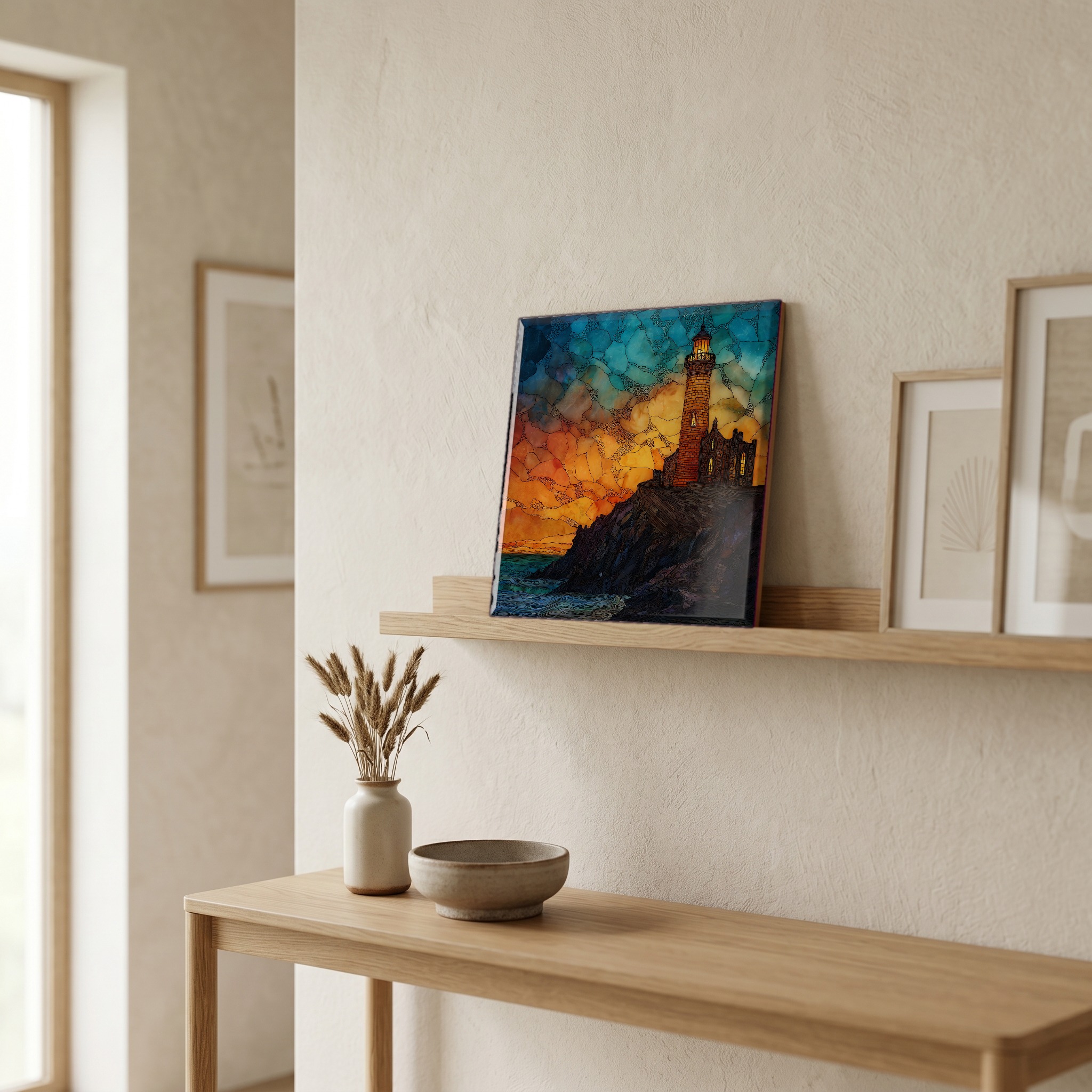
“A small white tower on a cliff at the western edge of Brittany, set among the ruined walls of a 6th-century abbey. From 1692 the monks of Saint-Mathieu kept a lamp lit in the upper window of the abbey, and sailors entering the Goulet de Brest knew the headland by that light. When the old tower failed, the present lighthouse was raised in 1835 to take over the duty. The Atlantic comes in hard here. The granite ruins keep their colour through the rain. A memorial to sailors lost at sea stands a few steps away.
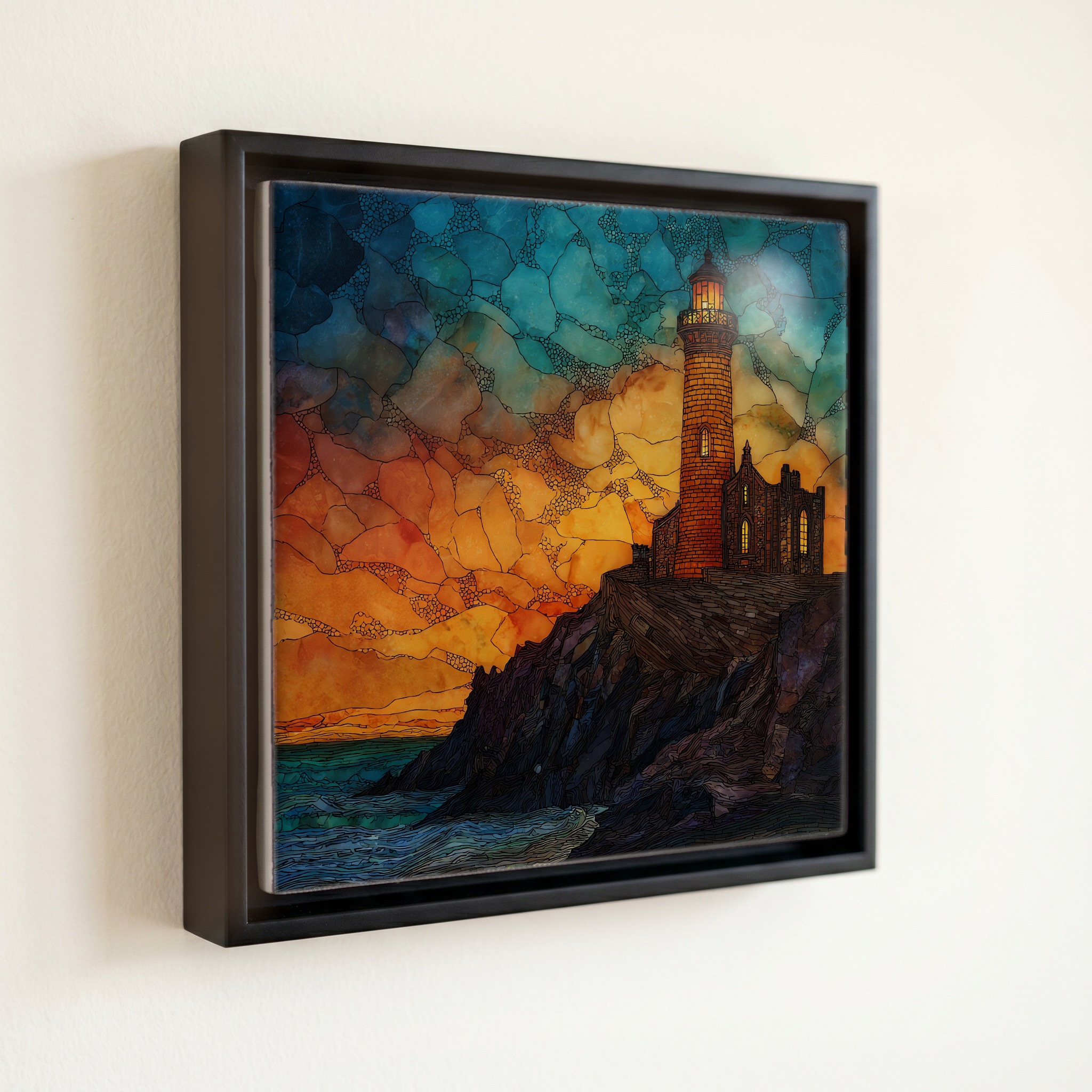
Pointe Saint-Mathieu Lighthouse, on ceramic.
Each tile is finished by hand in our Knoxville studio. Artwork is slowly infused into the ceramic surface under high heat and pressure, and rests beneath a thin glossy finish. The colour lives in the surface, not on top of it.
Pick any four 4-inch tiles — National Parks you've been to, a Smokies set, the four seasons of one place. $ for a set of , cork-backed, ready to live on the table.
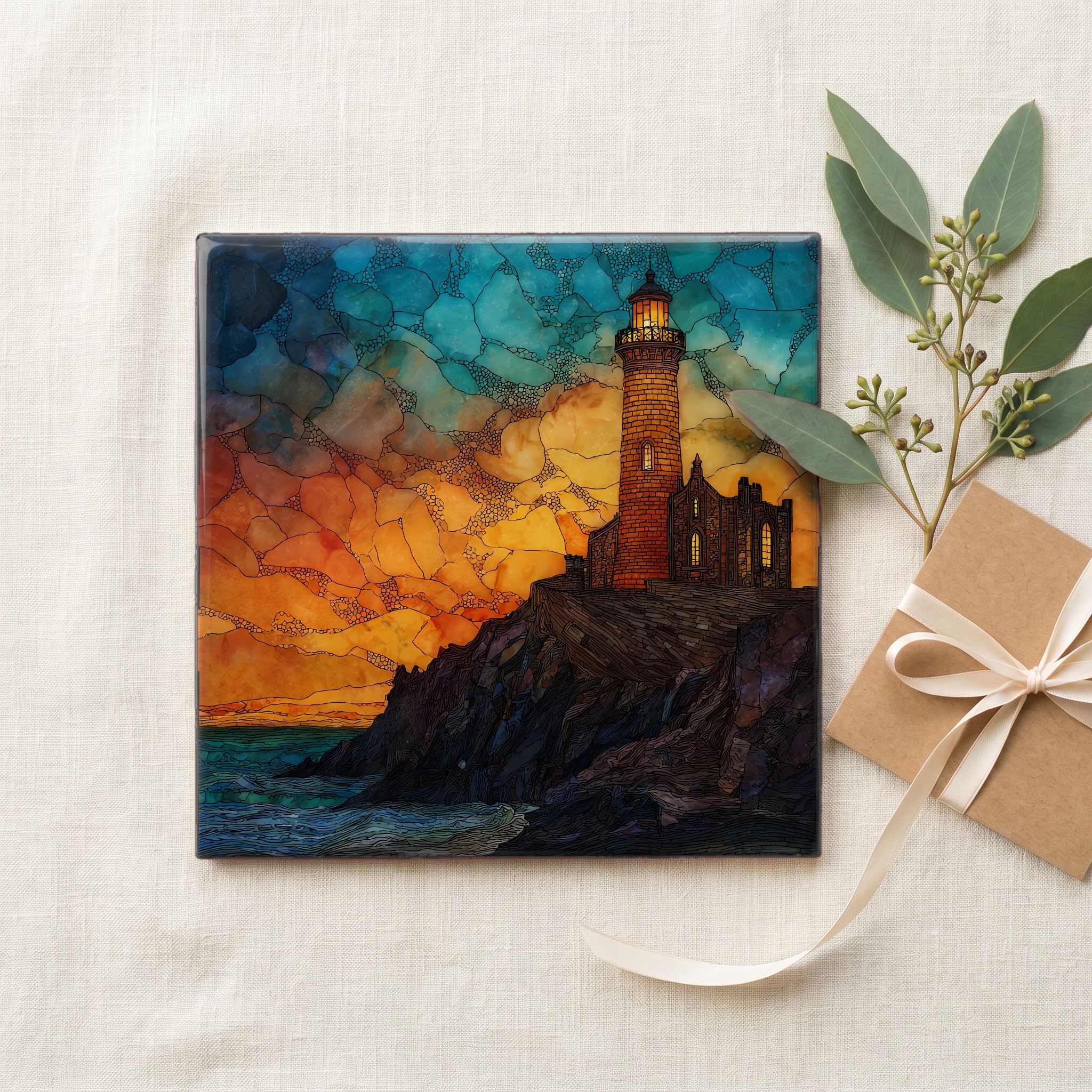
Each tile ships in a kraft box, tied with cream ribbon, with a handwritten note from the studio if you'd like to add one.
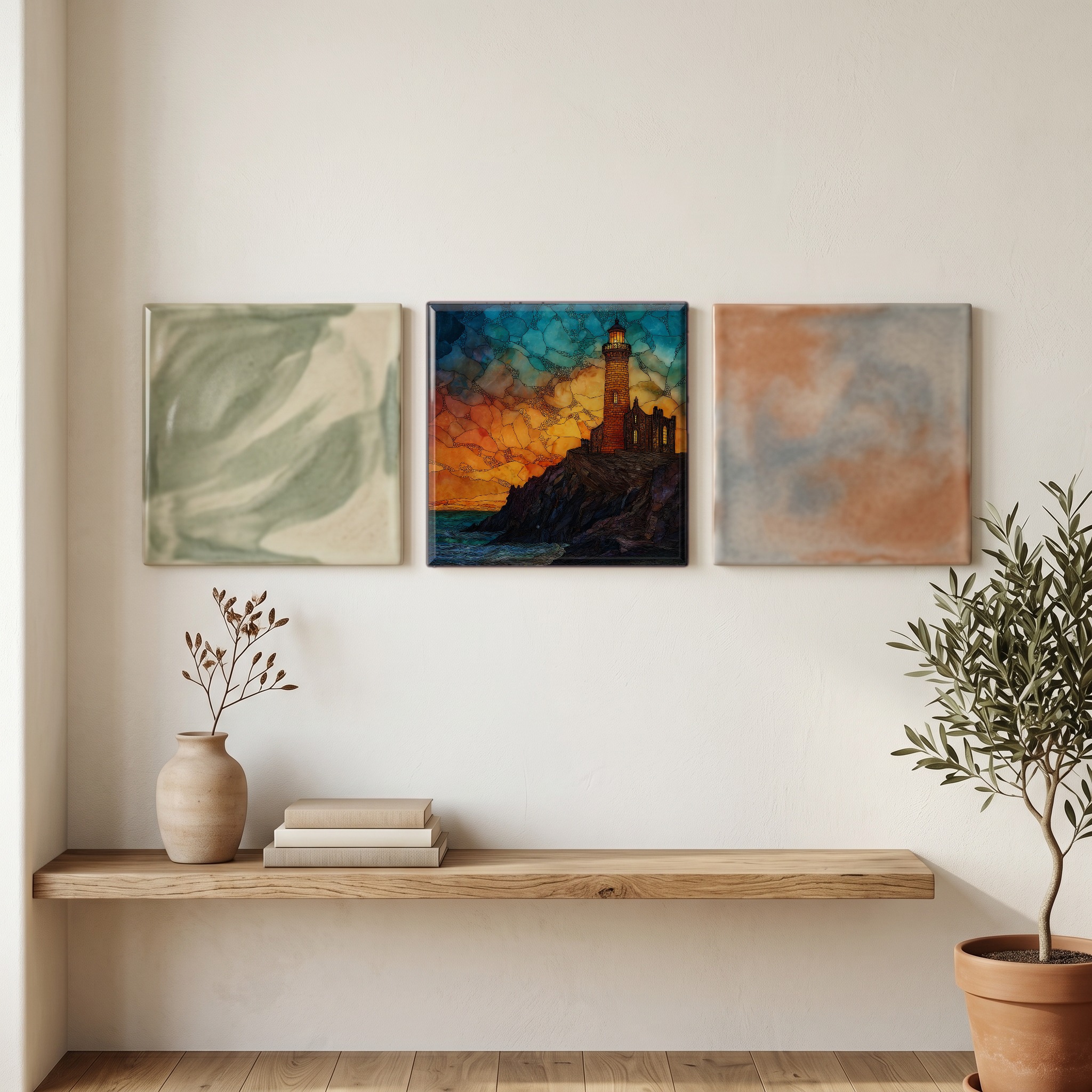
Three or five different vistas, hung together — a chapter of places you've been, or want to go.
The place, in three passes.
Pointe Saint-Mathieu sits at the western end of the Brittany peninsula, in the commune of Plougonvelin in the Finistère department. The headland marks the southern shoulder of the Goulet de Brest, the narrow channel that opens into the harbour and naval roadstead of Brest. The waters off the point form part of the Parc naturel marin d'Iroise, France's first marine nature park, established in 2007. The GR34 coastal trail traces the cliffs in both directions. From Brest the drive is about 25 kilometres west, mostly along the D789. The cliff carries both the lighthouse and the ruined abbey on the same exposed granite shelf, with the open Atlantic on three sides.
The abbey here is older than the lighthouse by more than a thousand years. A monastery was founded on the headland in the 6th century, traditionally credited to a Breton named Tanguy, to house relics said to be those of Saint Matthew the Evangelist. The medieval church that grew on the site through the 13th and 14th centuries left a roofless choir, the arches of the nave, and a Romanesque west façade. The lighthouse, raised in 1835 to replace the failing lantern the monks had kept in the abbey tower since 1692, now stands directly beside these ruins. Its shaft is faced in granite from the Aber Ildut quarry up the coast, a major source of building stone on the Finistère coast.
The lighthouse is the last in a long succession of lights kept on this headland. From 1692 the monks of Saint-Mathieu burned a lantern in the upper window of the abbey tower so that ships entering the Goulet de Brest could find their way past the Chenal du Four, one of the most dangerous stretches of coast in France. When the abbey tower fell into disrepair, the present lighthouse was lit in 1835 to take over the duty. Its white flash repeats every 15 seconds and reaches roughly 29 nautical miles. The light was electrified in 1932, automated in 1996, and the last resident keeper left in 2006. It was listed as a French historic monument in November 2010, and the lantern is still on.