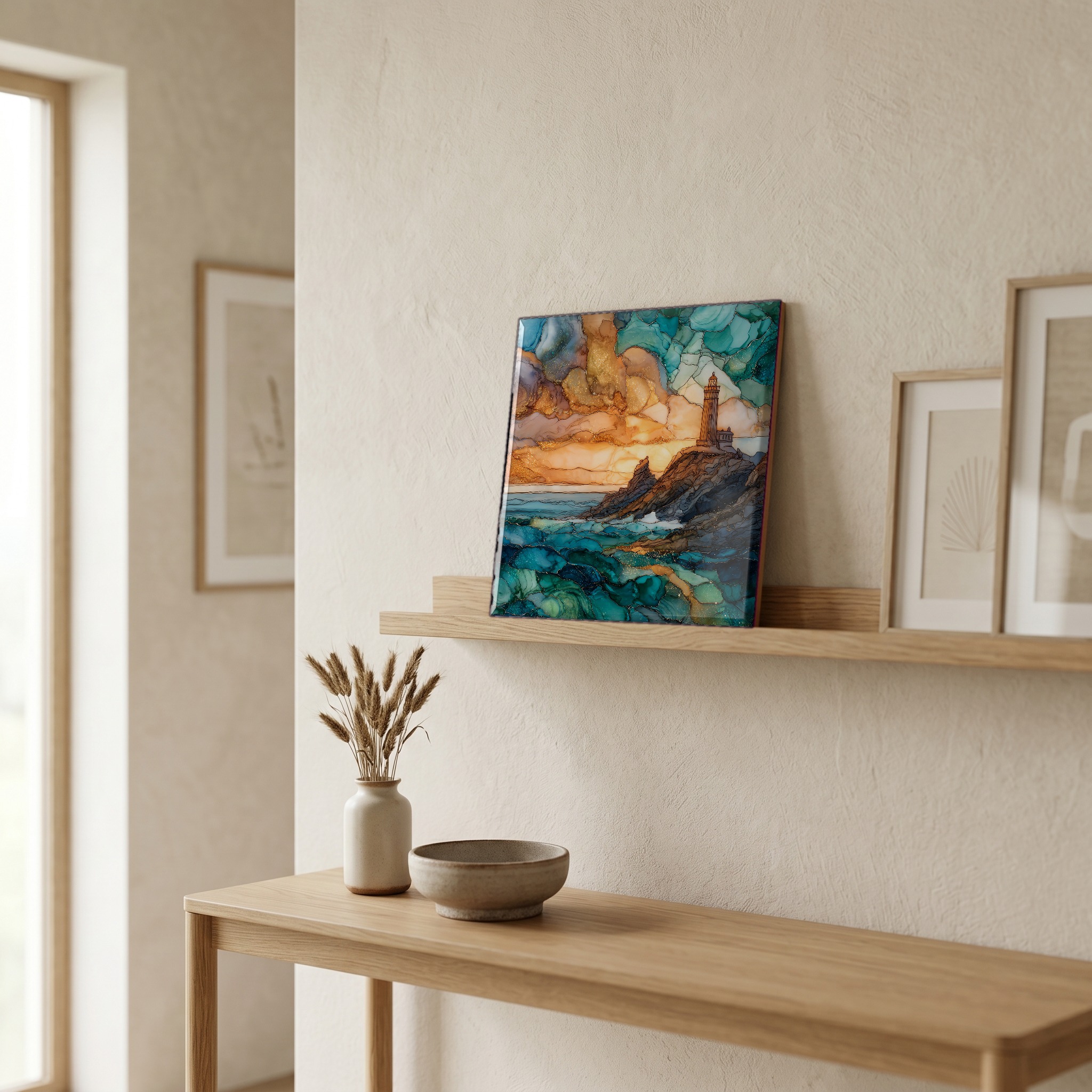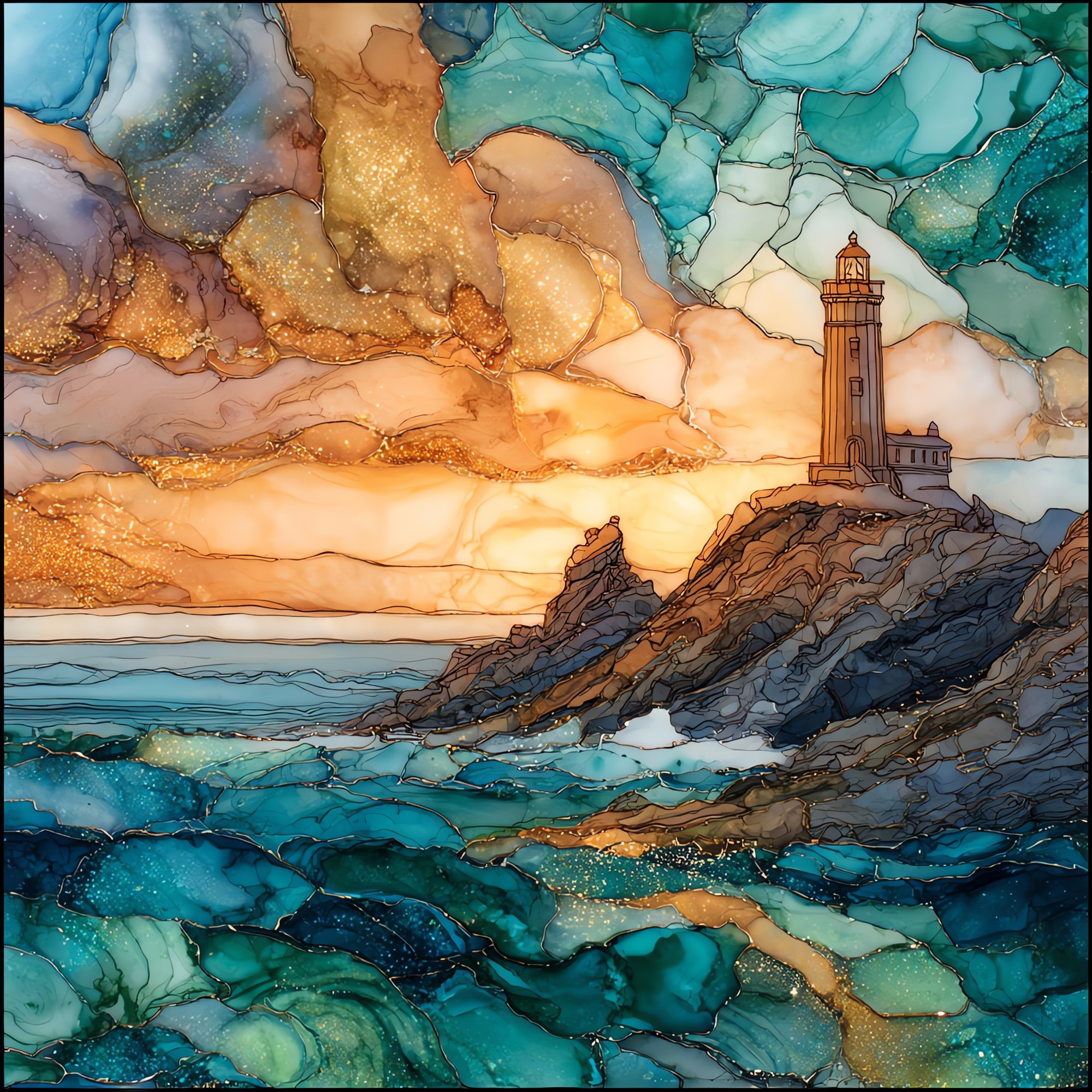
Wender·Vista
Pointe du Raz
shown on ceramic, 12-inch tileFrance
at the western edge of Brittany, above the Raz de Sein

Pointe du Raz

— the granite the Atlantic has been working on.

Where it lives

Not only on a wall.

A small tile on the nightstand catching the morning. A larger one above the fire. Yours, wherever you spend the slow hours.
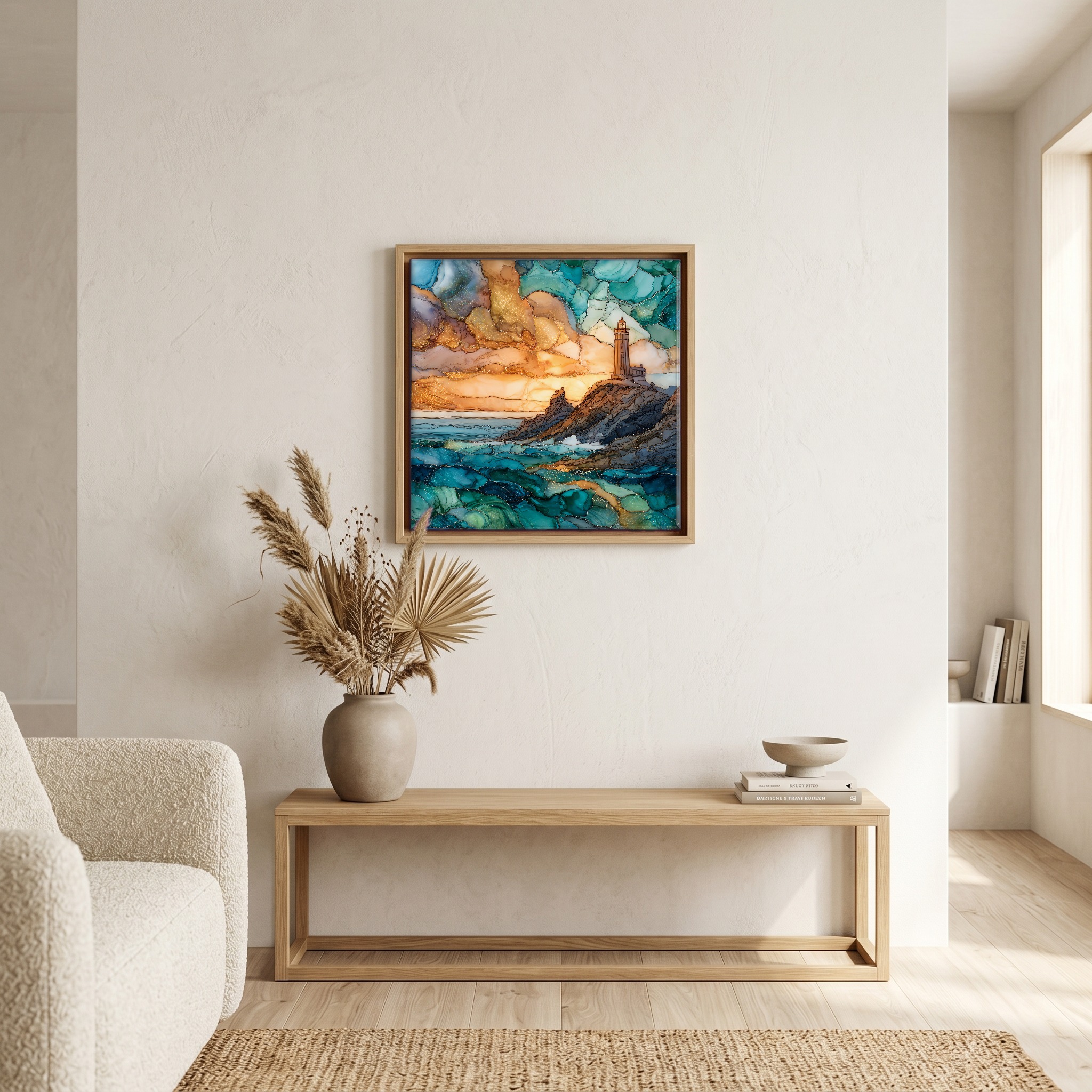
Above the bench, in a warm oak surround.
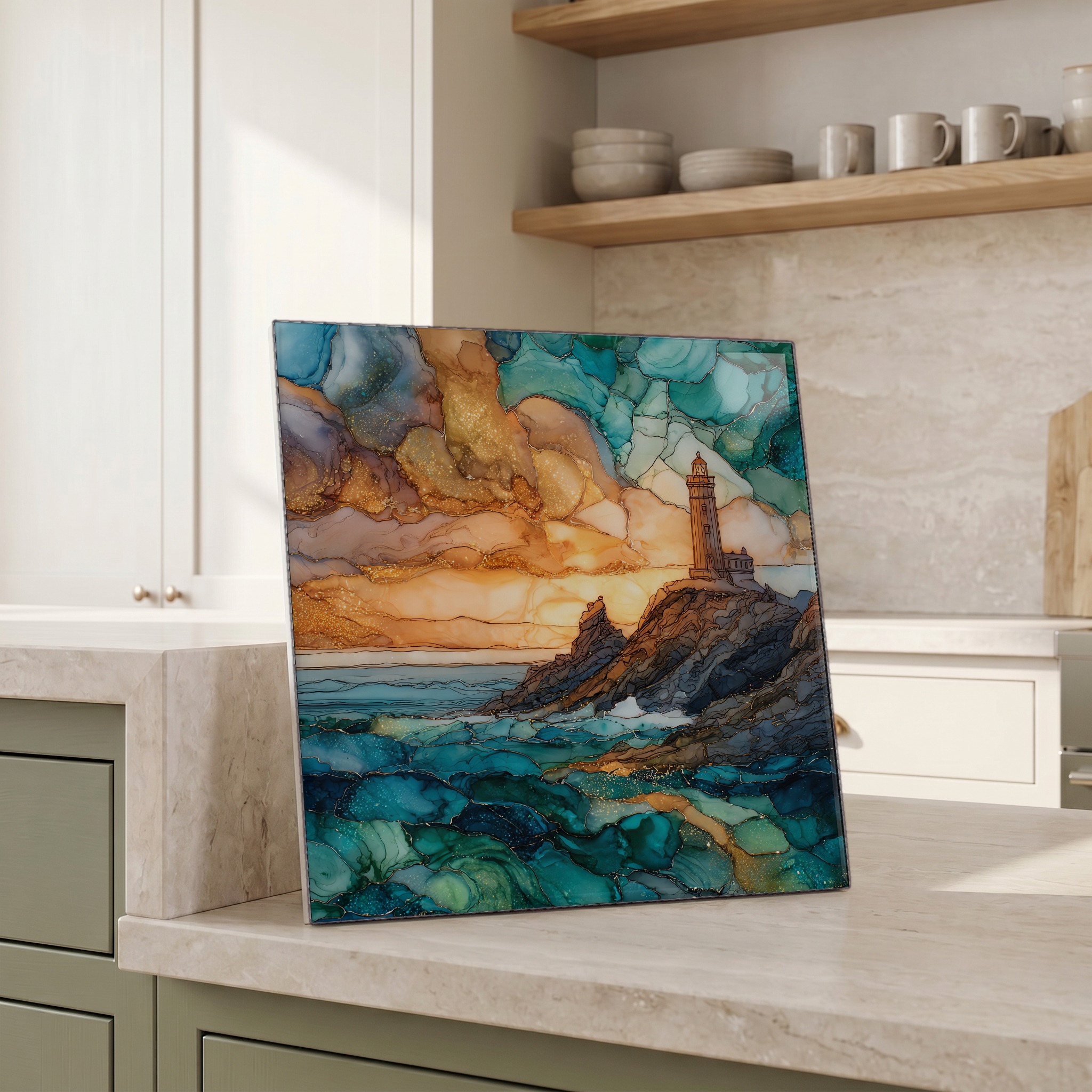
Beside the kettle, propped on the counter.
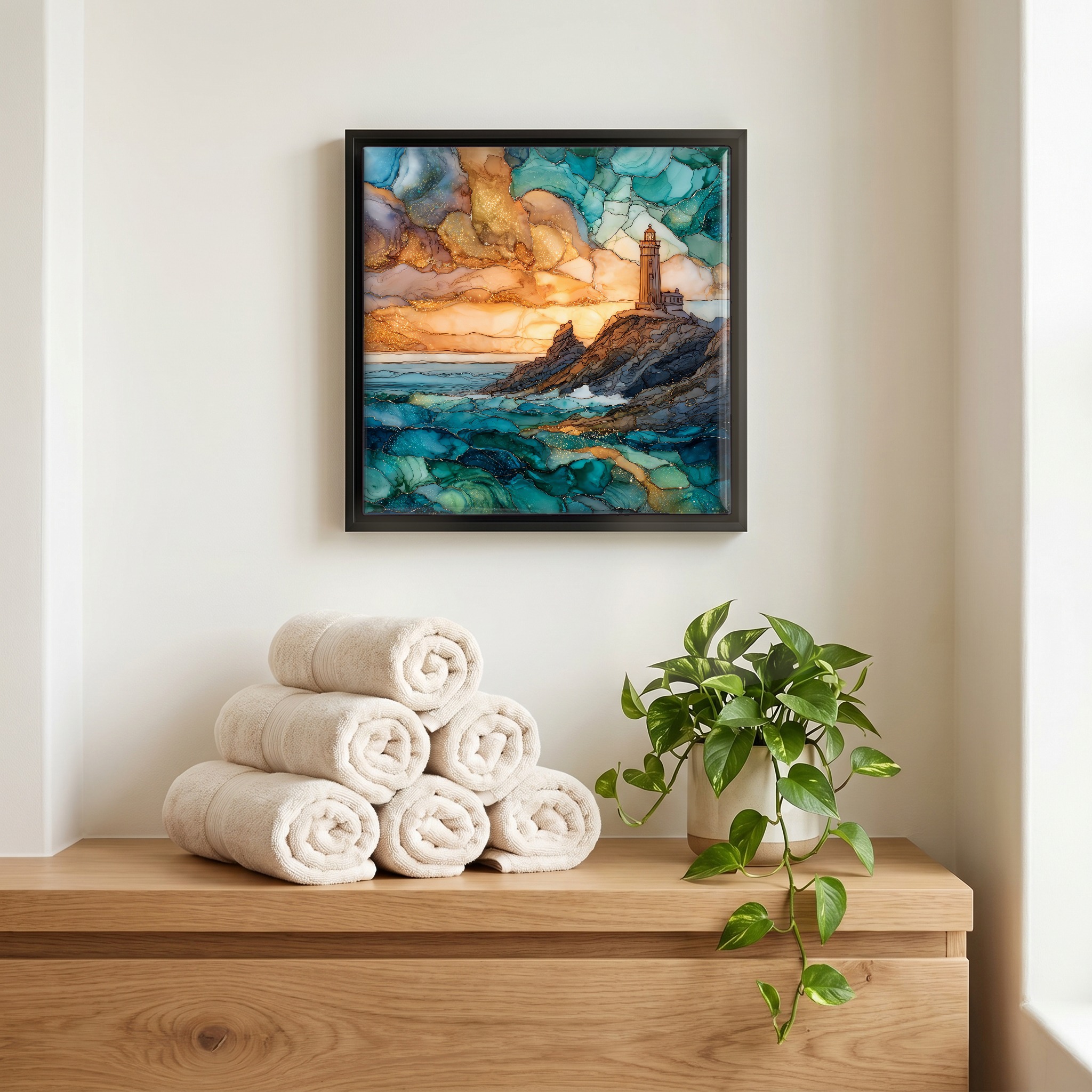
Above the linens, in a slim black surround.
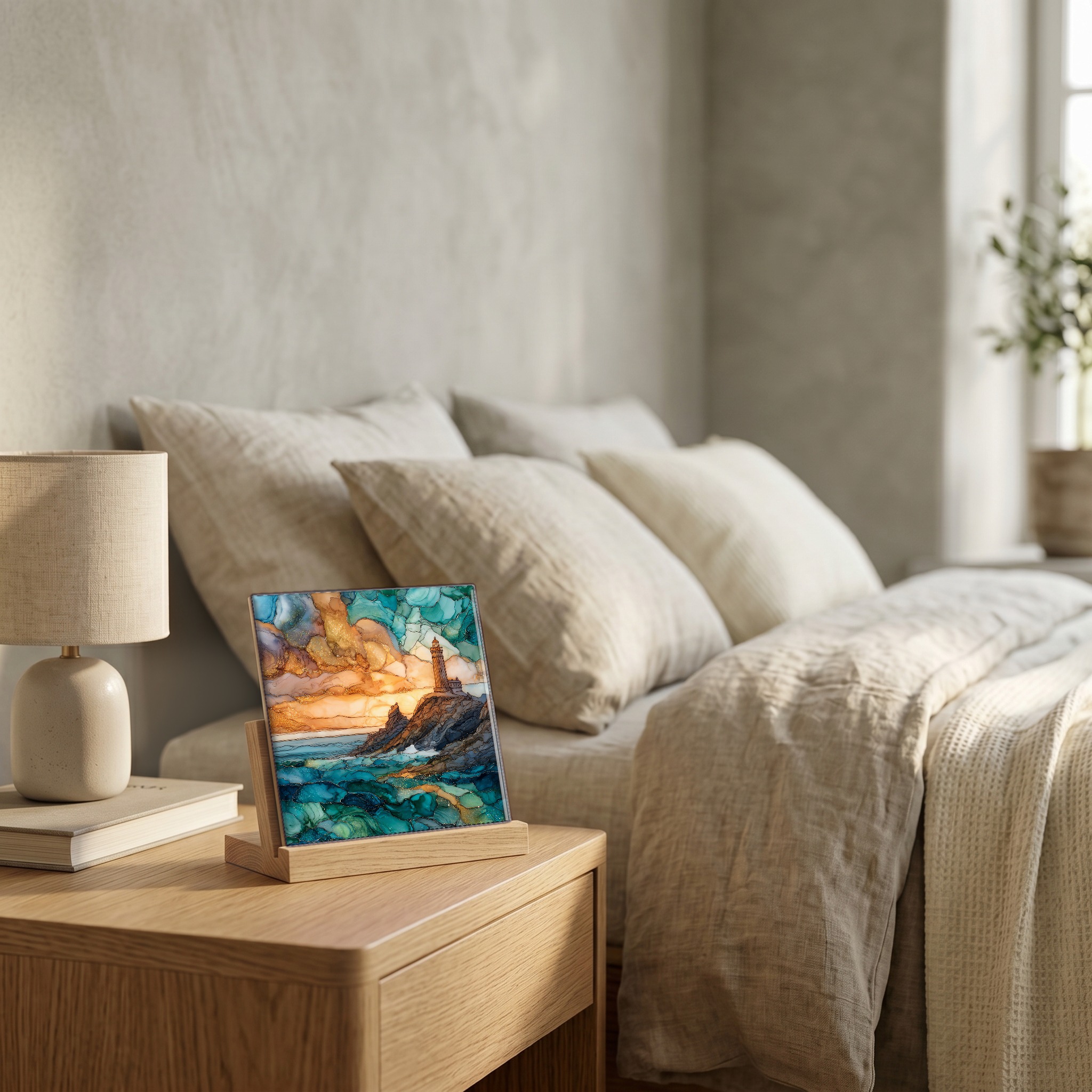
On the nightstand, on a light oak stand.
On a picture ledge, where the light comes in.
a note from the studio

The far western tip of Brittany. Granite cliffs above the Raz de Sein, where the tidal current runs against the wind and the Phare de la Vieille blinks from its rock offshore. The heather and gorse end at the cliff and then there is sea, the same sea all the way to Newfoundland. A small bronze statue, Notre-Dame des Naufragés, watches over the water for the sailors who never came back. People walk out from the visitor car park along paths that were re-laid after the old ones wore through. Even in summer the wind carries something cold off the Atlantic.
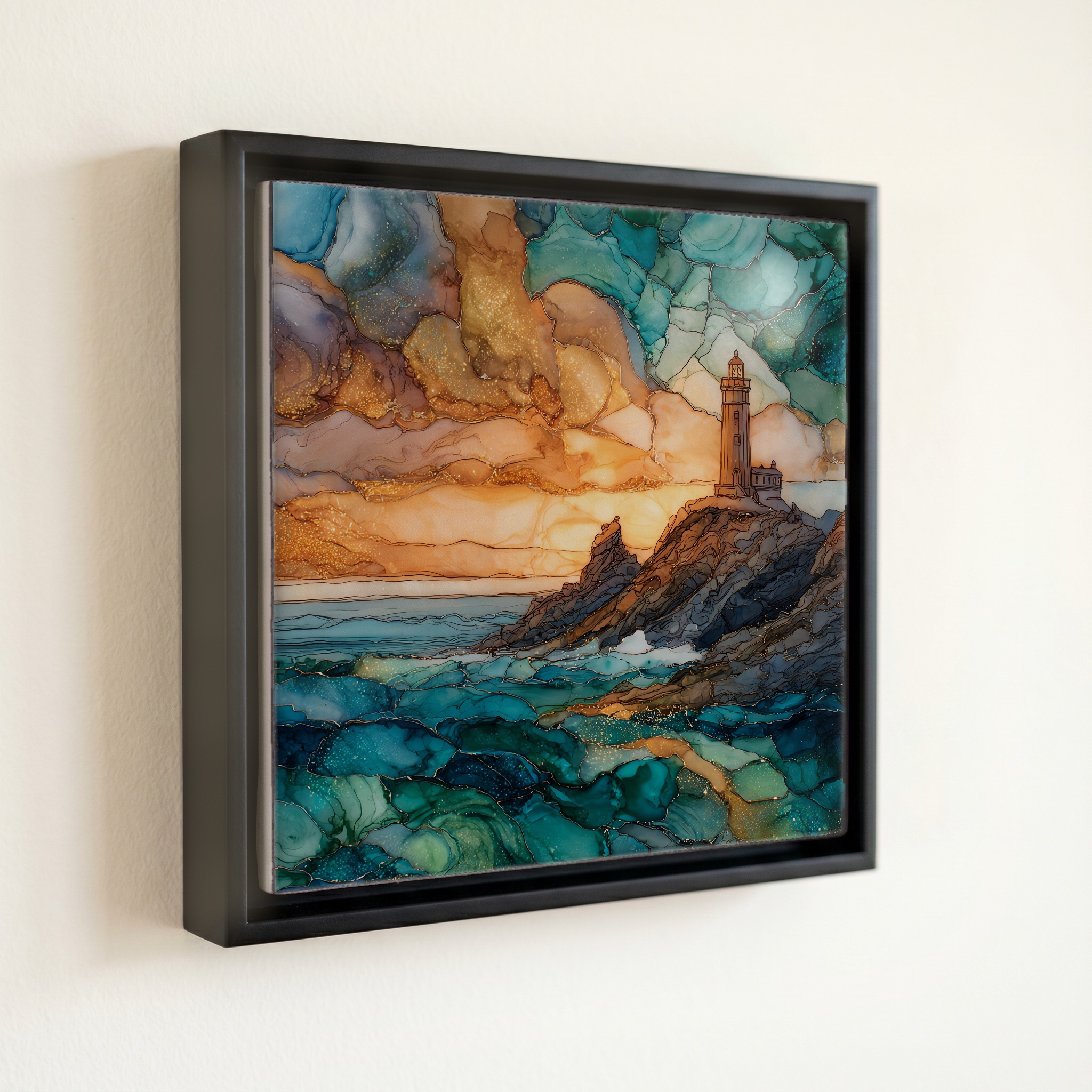
from the studio
shown in a slim black floating frame · 6 × 6 in
— bring it home

Pointe du Raz, on ceramic.

Each tile is finished by hand in our Knoxville studio. Artwork is slowly infused into the ceramic surface under high heat and pressure, and rests beneath a thin glossy finish. The colour lives in the surface, not on top of it.

What kind of piece?
One tile — square or rectangle.
How big?
the popular one — counter, shelf, nightstand
6 × 6 in · 15 cm · 1.6 lb
Surface finish
A clear glossy finish — the artwork reads as if under resin. Ideal for show-pieces and framed wall art.
How it sits
A hidden cleat — sits ¼″ proud of the wall.
$58
Hand-finished and shipped from our studio at the foot of the Smokies. On your wall in about ten days.
size
6 × 6 in
15 cm
weighs
1.6 lb
solid in the hand
surface
ceramic, hand-finished
art rests beneath a thin glossy finish
from
Knoxville, TN
our family studio, at the foot of the Smokies
— start a Coaster Set

Pick any four 4-inch tiles — National Parks you've been to, a Smokies set, the four seasons of one place. $ for a set of , cork-backed, ready to live on the table.
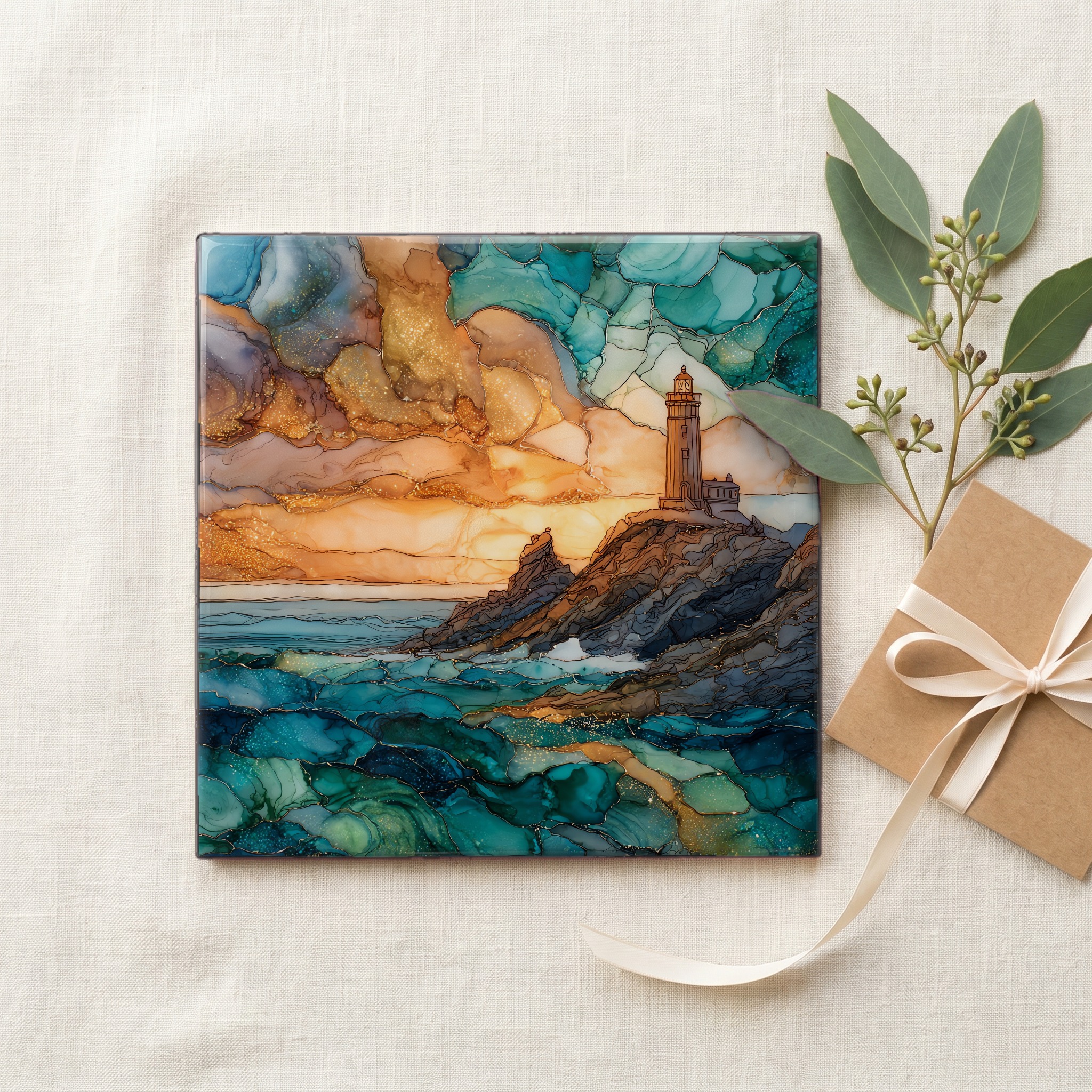
comes gift-ready
comes gift-ready

Each tile ships in a kraft box, tied with cream ribbon, with a handwritten note from the studio if you'd like to add one.
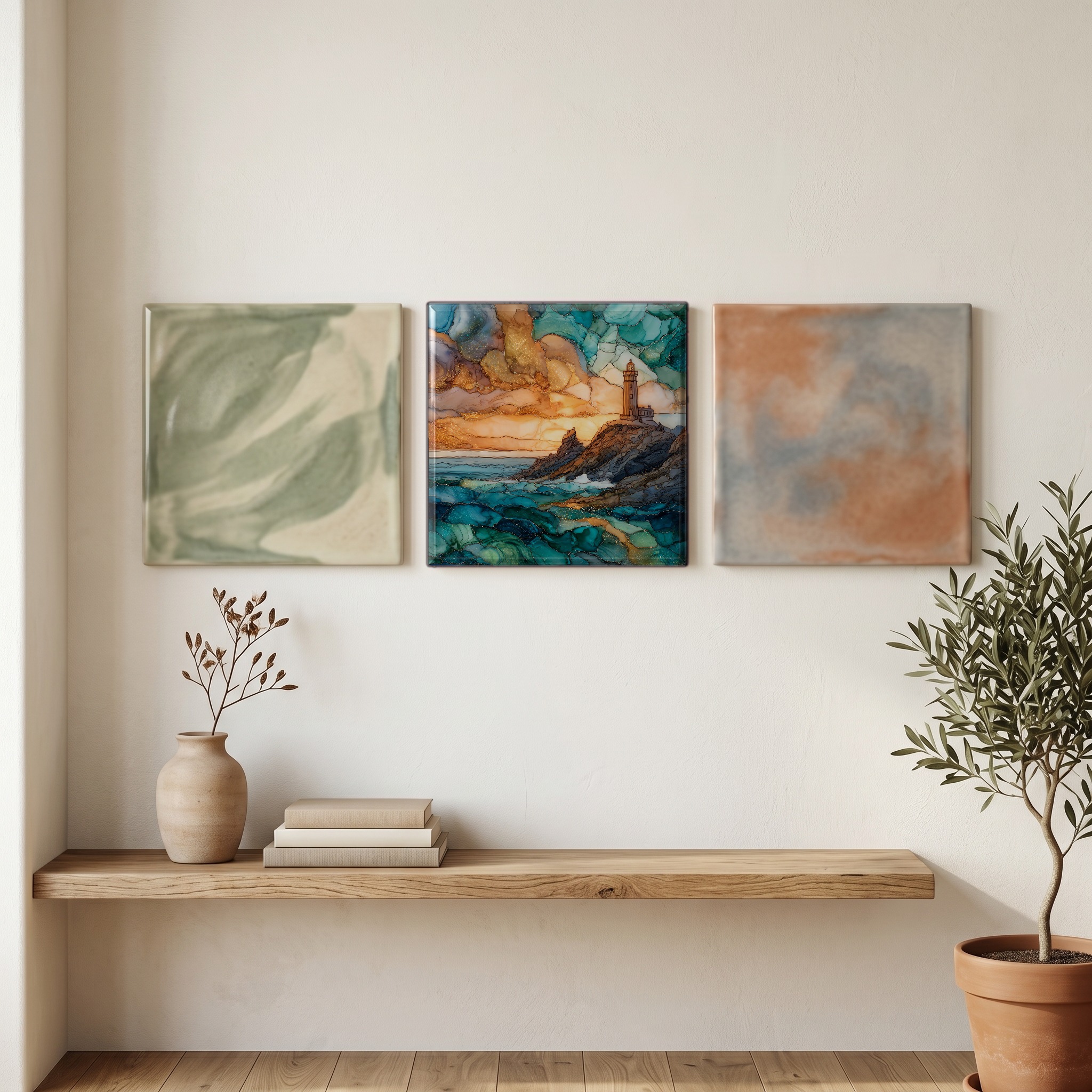
or build a grouping
or build a grouping

Three or five different vistas, hung together — a chapter of places you've been, or want to go.

about Pointe du Raz

The place, in three passes.

A little of what's known, in case you fall down the rabbit hole — or want to go see it yourself.
the place

Pointe du Raz is the headland at the western end of the Cap Sizun peninsula in Finistère, the westernmost department of Brittany. The cliffs rise to about 72 metres above the Atlantic and look out across the Raz de Sein, a narrow tidal strait separating the mainland from the Île de Sein eight kilometres offshore. The point lies within the commune of Plogoff, about 40 kilometres west of Quimper by the D784. It has been classified a Grand Site de France since 2004, recognising the work done since the 1990s to restore the heathland and re-channel visitors after decades of foot traffic had begun to erode the headland.

the water

The Raz de Sein, the channel below the point, is one of the most feared tidal passages on the French Atlantic coast. Spring tides push water through the narrows at up to six knots, and the meeting of wind and current builds steep, breaking seas even on otherwise calm days. The Phare de la Vieille, completed in 1887 on a rock called La Vieille, marks the safe channel, with the smaller Tourelle de la Plate standing further out. The Île de Sein, low and treeless, holds about 200 permanent residents whose highest ground sits only six metres above mean sea level. Sailors have respected this water for centuries.

the visit

Cars park at the Maison du Site, about a kilometre back from the point itself. The walk in is along restored paths that protect the remaining heathland from further erosion. Entry to the point is free; parking carries a fee that funds the upkeep of the site. The visitor pavilion at the car park houses an interpretive exhibition about the geology and the restoration programme. Notre-Dame des Naufragés, a bronze by Cyprian Godebski installed in 1904, stands at the seaward end of the path and faces the strait. The headland is open all year, but Atlantic weather in winter is what it is. Bring a layer the wind cannot cut through.

where
France · Plogoff, Finistère, Brittany
elevation
72 m · 236 ft
position
48.0386° N · 4.7378° W
the neighborhood

What's nearby.

A handful of named places within an hour's walk or short drive. Some we've already painted; some we will.
8 km W
Île de Sein
low Atlantic island
1 km W
Phare de la Vieille
offshore lighthouse
2 km N
Baie des Trépassés
Atlantic beach
5 km N
Pointe du Van
headland
3 km E
Plogoff
Breton village
13 km E
Audierne
fishing port
N
Pointe du Raz
Île de Sein
Phare de la Vieille
Baie des Trépassés
Pointe du Van
Plogoff
Audierne
common questions

What people ask.

A few questions we get about Pointe du Raz — and about bringing the piece home.
about the place

Pointe du Raz is a granite headland at the western end of the Cap Sizun peninsula in Finistère, Brittany, about 40 kilometres west of Quimper. It looks out across the Raz de Sein strait toward the Île de Sein, eight kilometres offshore.

No. The cliffs are among the most westerly in Brittany, but the actual westernmost point of metropolitan France is Pointe de Corsen, about 50 kilometres further north on the same coastline. Pointe du Raz is the more famous of the two, and the more dramatic.

The Raz de Sein is a narrow tidal passage between Pointe du Raz and the Île de Sein. Spring tides drive currents through it at up to six knots, and when wind opposes tide the sea builds short, steep breakers that have wrecked many ships over the centuries.

Notre-Dame des Naufragés, Our Lady of the Shipwrecked, is a bronze sculpture by Cyprian Godebski, installed in 1904. She stands at the seaward end of the headland and faces the strait, commemorating sailors lost in these waters.

Pointe du Raz was awarded Grand Site de France status in 2004, recognising the long restoration project that began in the 1990s. Buildings on the headland itself were removed, the parking was moved back to the Maison du Site, and the heath was replanted.

The headland is open all year. Long evenings between May and September give the easiest weather and the latest light. Winter visits are quieter and more dramatic, but the Atlantic wind on the cliffs is serious; sturdy waterproofs are not optional.

Yes. The Phare de la Vieille, completed in 1887 on a rock just off the headland, is the closest. The smaller Tourelle de la Plate stands further out, and on a clear day the lighthouse on the Île de Sein is visible across the strait.

about the piece in your home

It is a meaningful gift for people with ties to Finistère or the wider Breton coast. Pointe du Raz is one of the places Bretons name when they talk about what makes the region itself. A Medium with a handwritten note from the studio reads well as a returning-home gift.

The palette is wind-bleached granite, deep Atlantic blue, and the muted gold of late-summer gorse. It sits well in Coastal-modern rooms, Wabi-sabi neutrals, and stone-and-linen interiors where the colour comes from the materials rather than the paint.

Coastal-modern has moved away from Cape Cod blue-and-white toward weathered Atlantic palettes of granite, gorse, and sea-fog grey. The Pointe du Raz tile reads in that direction; it suits a 2026 coastal room better than a 1990s one.

Above a standard sofa, a single Large tile or a 4-tile Mural carries the wall. Above a console table, a Medium sits at the right scale. For a feature wall in a larger room, a 9-tile Mural is the right format.

Yes. For wet or splash-prone walls, choose the Dura Satin or Matte finish; both are scratch-resistant and shrug off cleaning. The Glossy finish is intended for dry display, framed pieces, and show-pieces away from direct splash.

A soft microfibre cloth with water is all the tile needs. The colour is slowly infused into the ceramic surface under high heat and pressure and lives beneath a thin protective finish, so household cleaners and abrasive pads are not required and not recommended.

Yes. Wender Studios is a single family studio in Knoxville, Tennessee. The artwork is the eye of Reid Wender, the curator, made in our distinctive stained-glass and alcohol-ink visual language. We do not license third-party imagery.

if this one stayed with you

A few you might also love.

Hand-picked by the eye that found Sorapis. Same air, same kind of quiet.