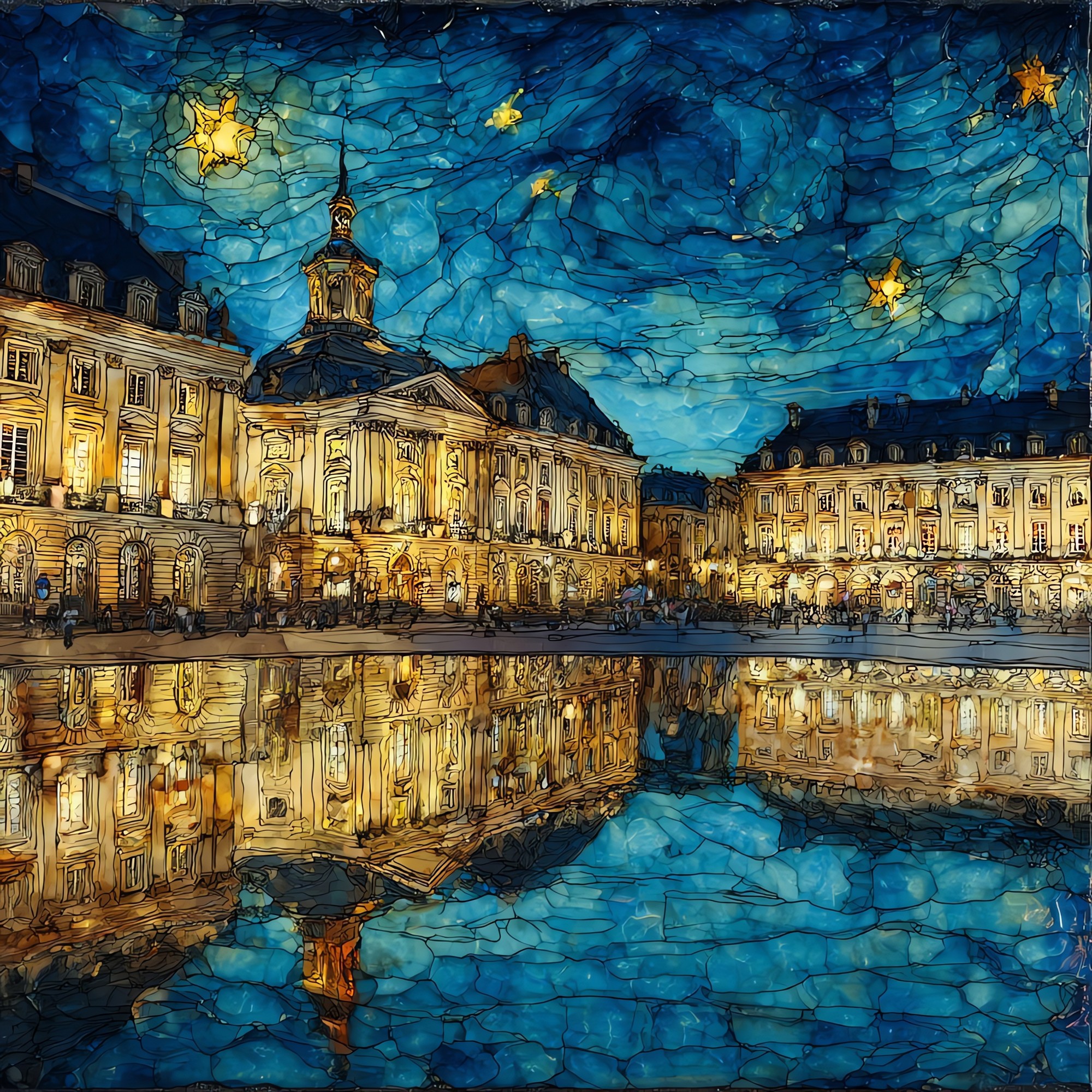
Place de la Bourse
— — a façade the water learns by heart.
Not only on a wall.
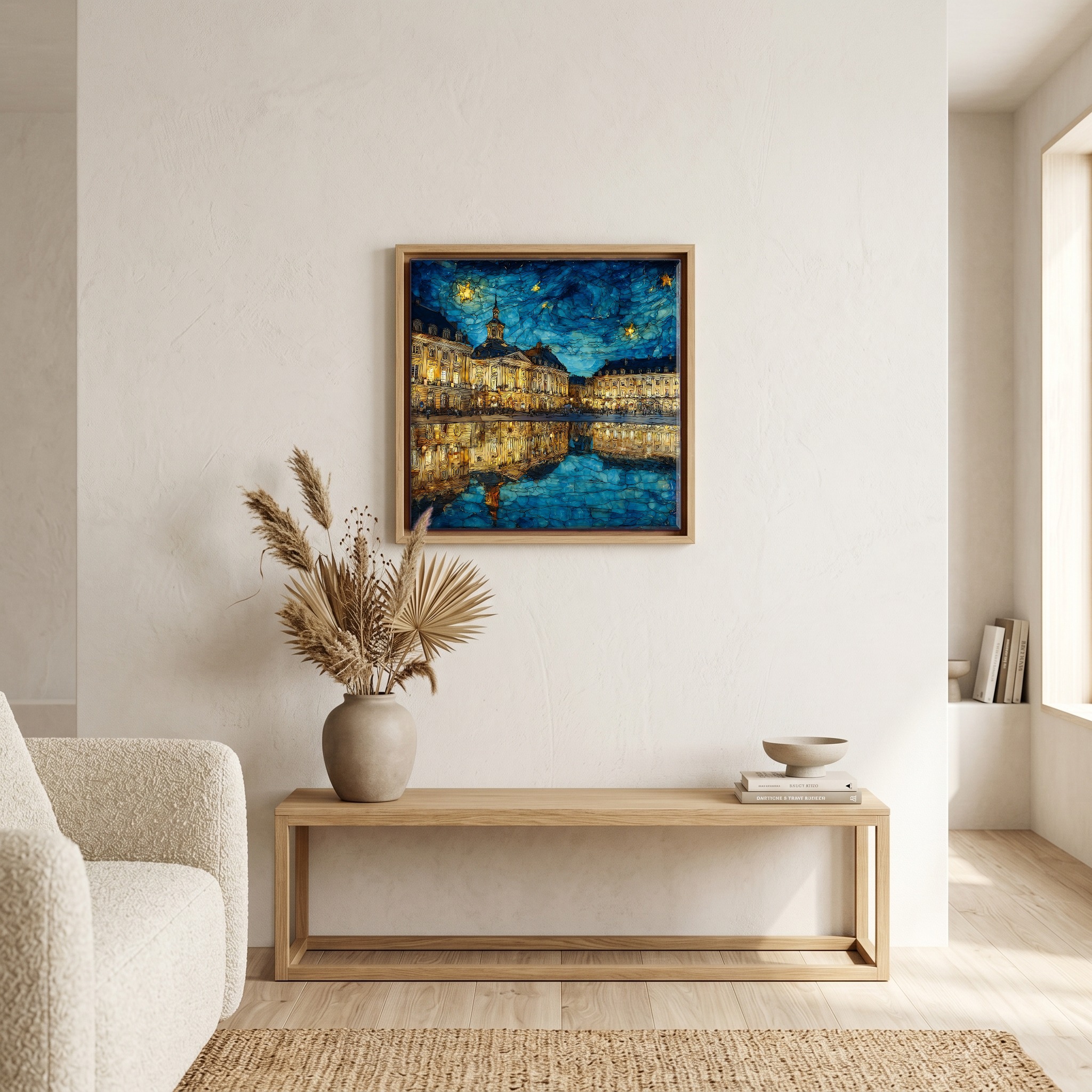
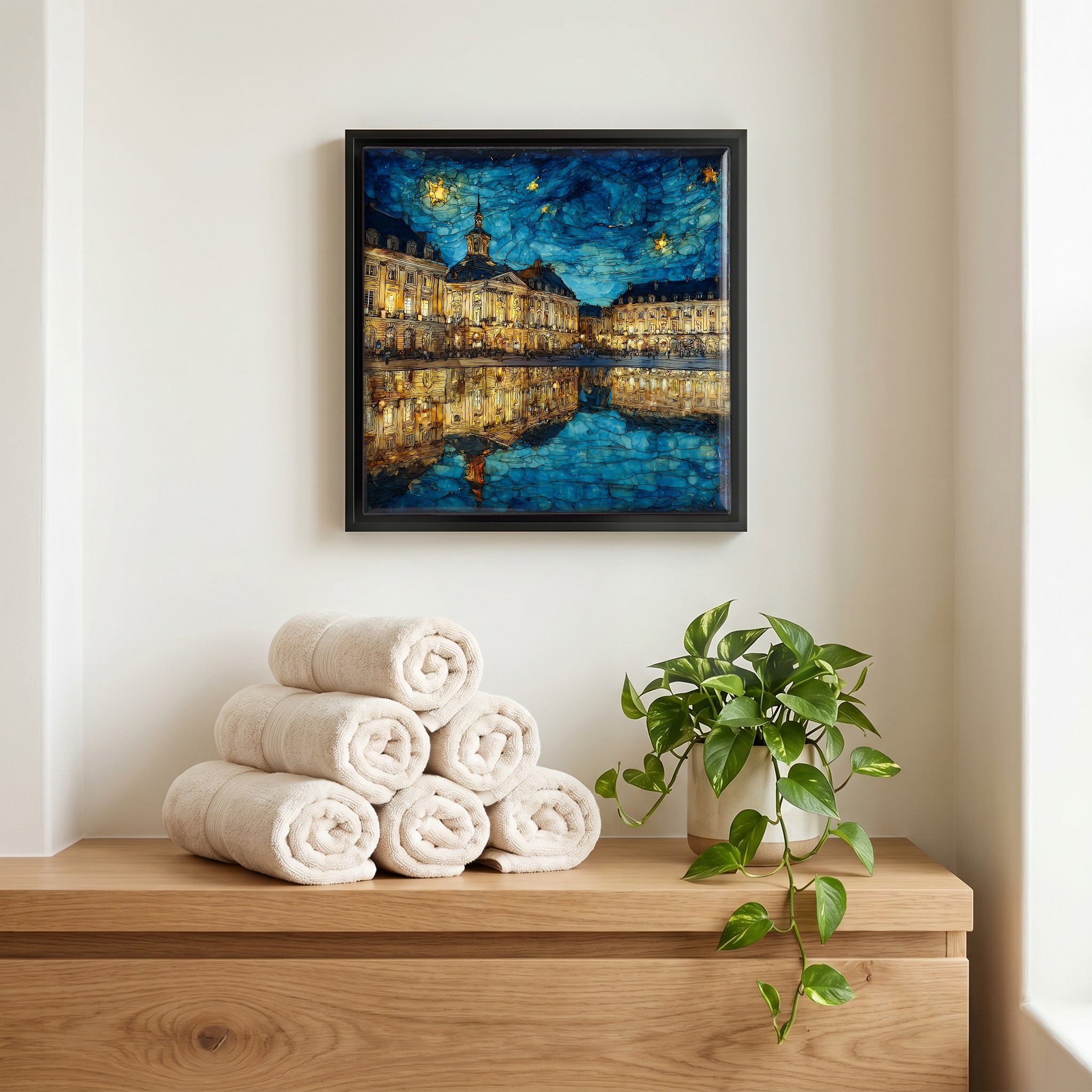
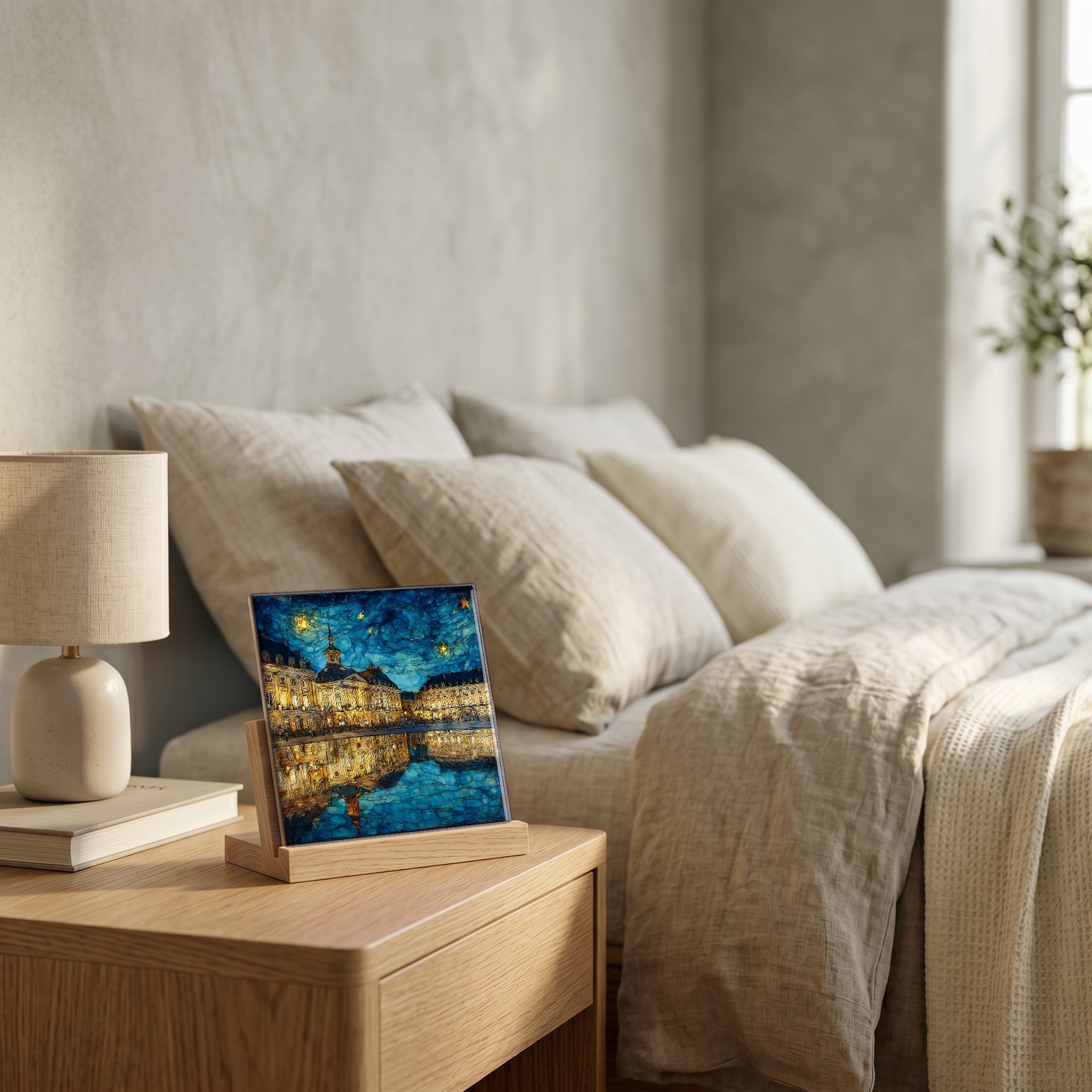
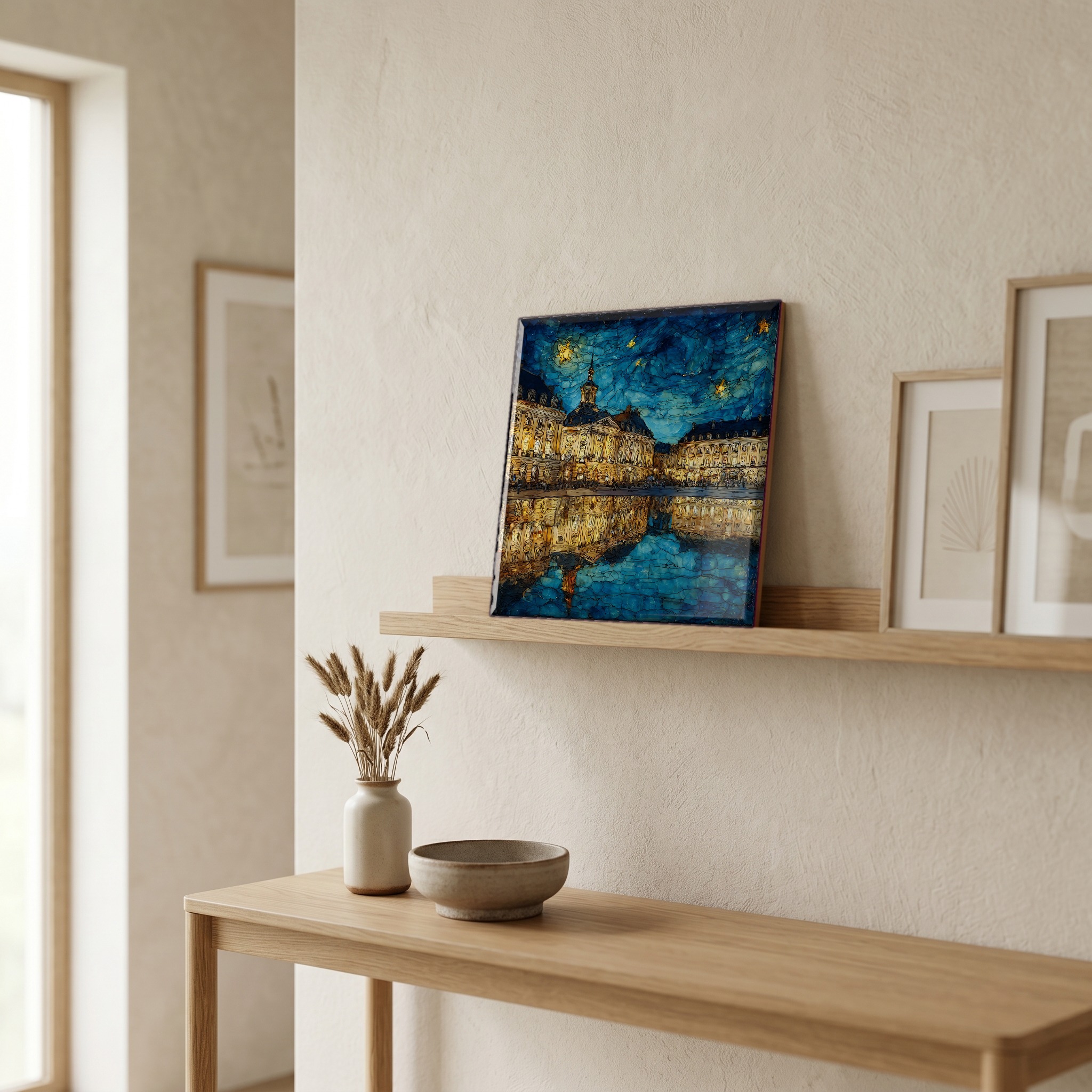
“The eighteenth-century customs house and stock exchange sit shoulder to shoulder along the Garonne, with the river running past where the city wall used to be. In front of the square, a thin sheet of water lies across the granite, only two centimetres deep, and every twenty minutes it turns the whole façade upside down. People stand at the edge with their shoes off. Children walk into the reflection on purpose. The square was finished in 1775; the mirror, completed in 2006, is the youngest thing in the picture.
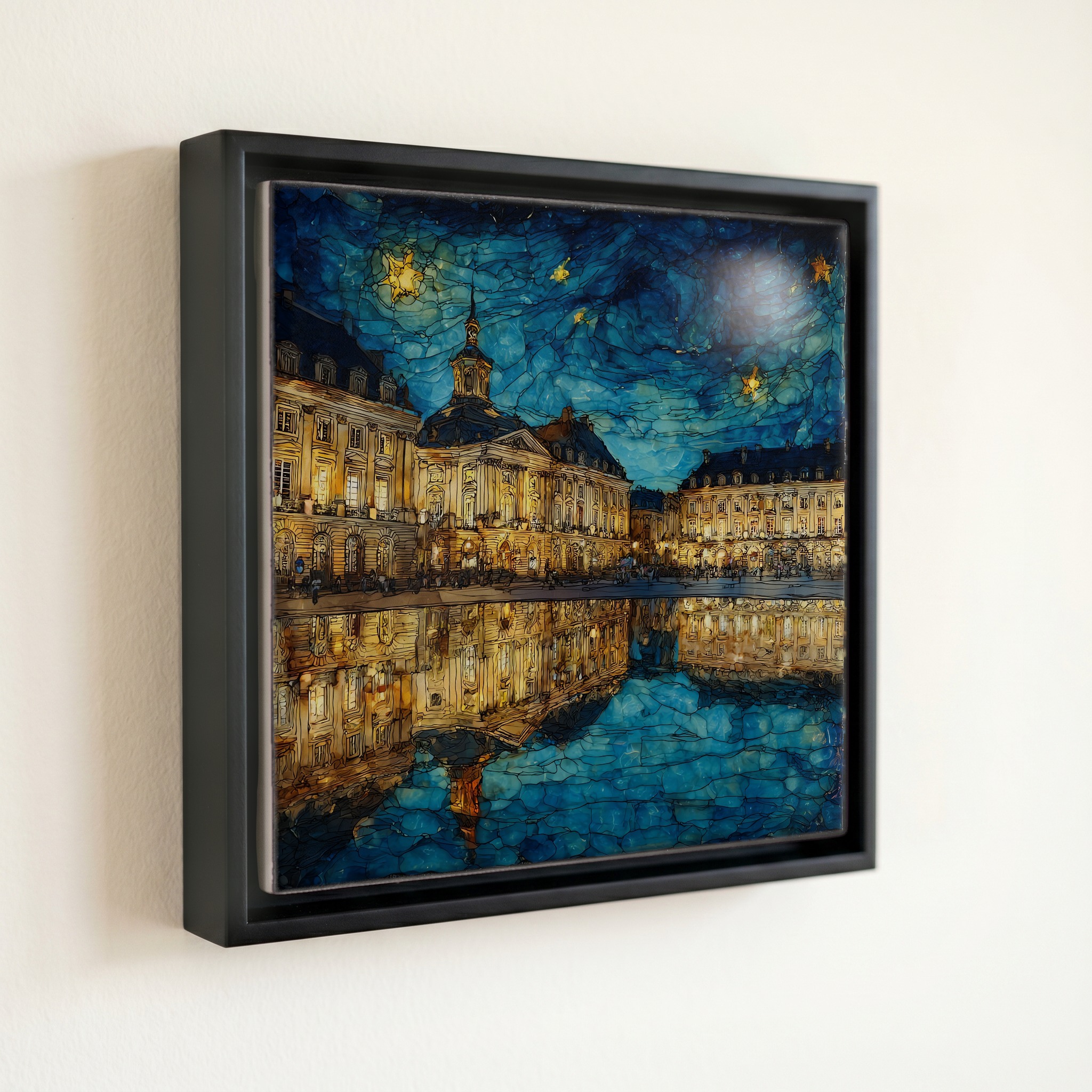
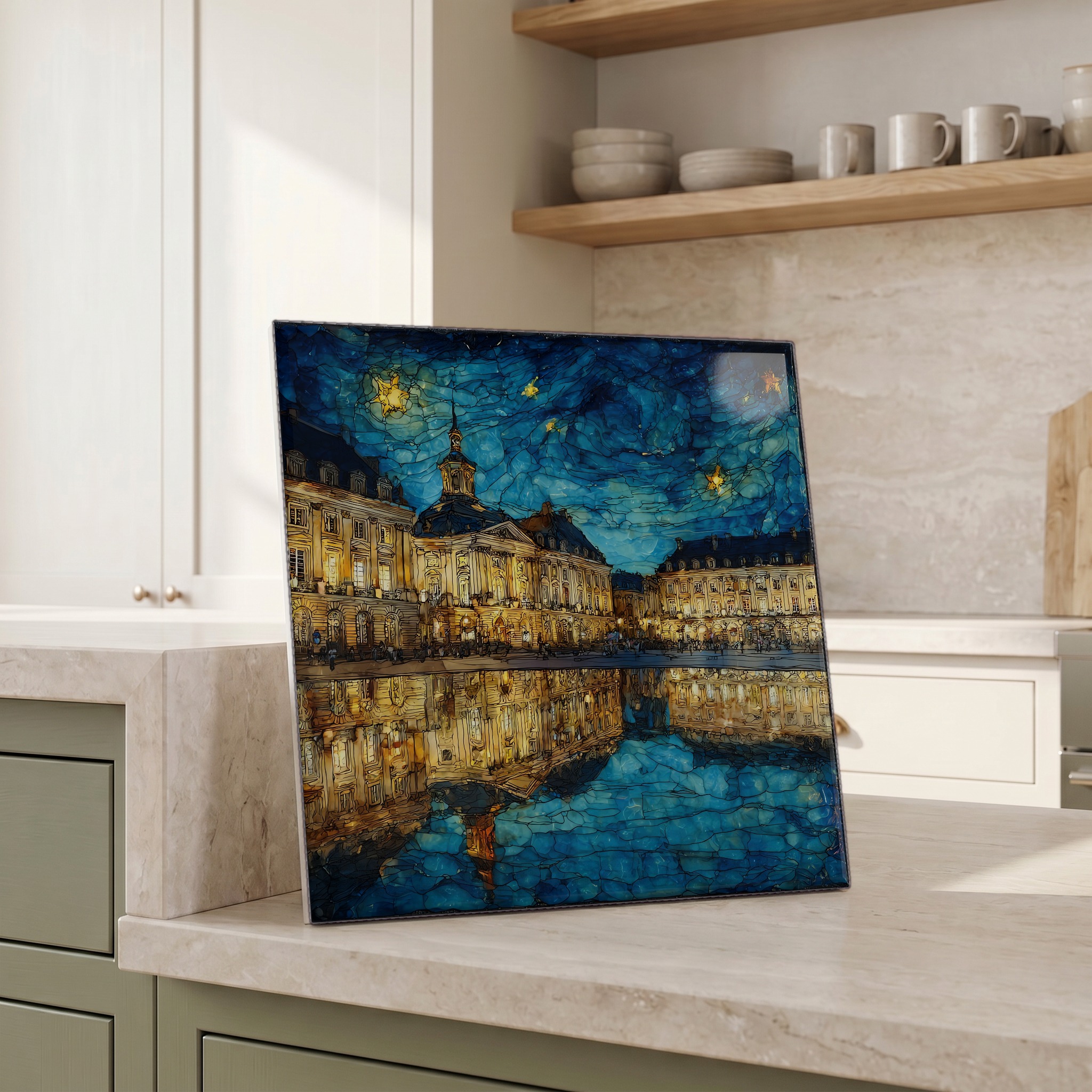
Place de la Bourse, on ceramic.
Each tile is finished by hand in our Knoxville studio. Artwork is slowly infused into the ceramic surface under high heat and pressure, and rests beneath a thin glossy finish. The colour lives in the surface, not on top of it.
Pick any four 4-inch tiles — National Parks you've been to, a Smokies set, the four seasons of one place. $ for a set of , cork-backed, ready to live on the table.
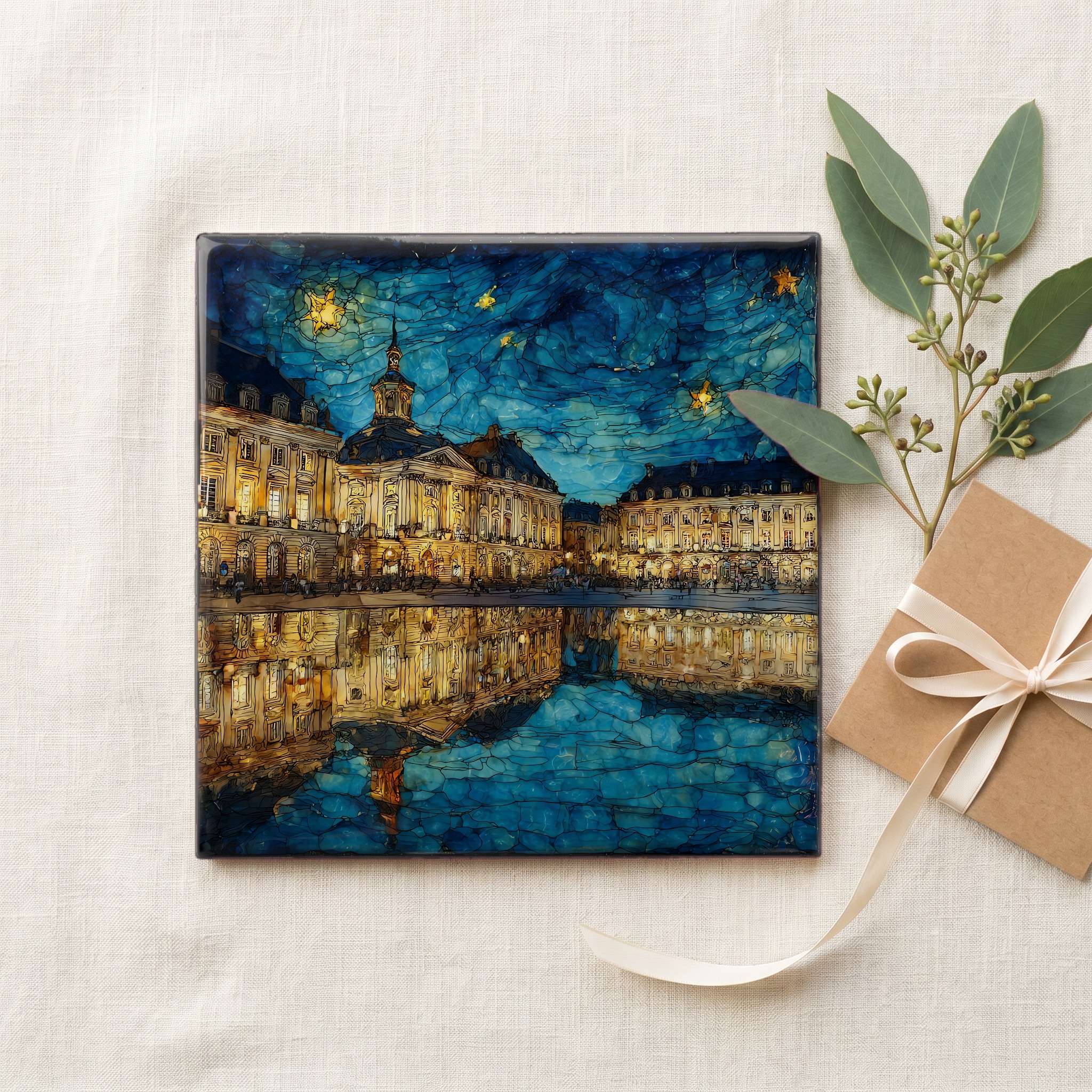
Each tile ships in a kraft box, tied with cream ribbon, with a handwritten note from the studio if you'd like to add one.
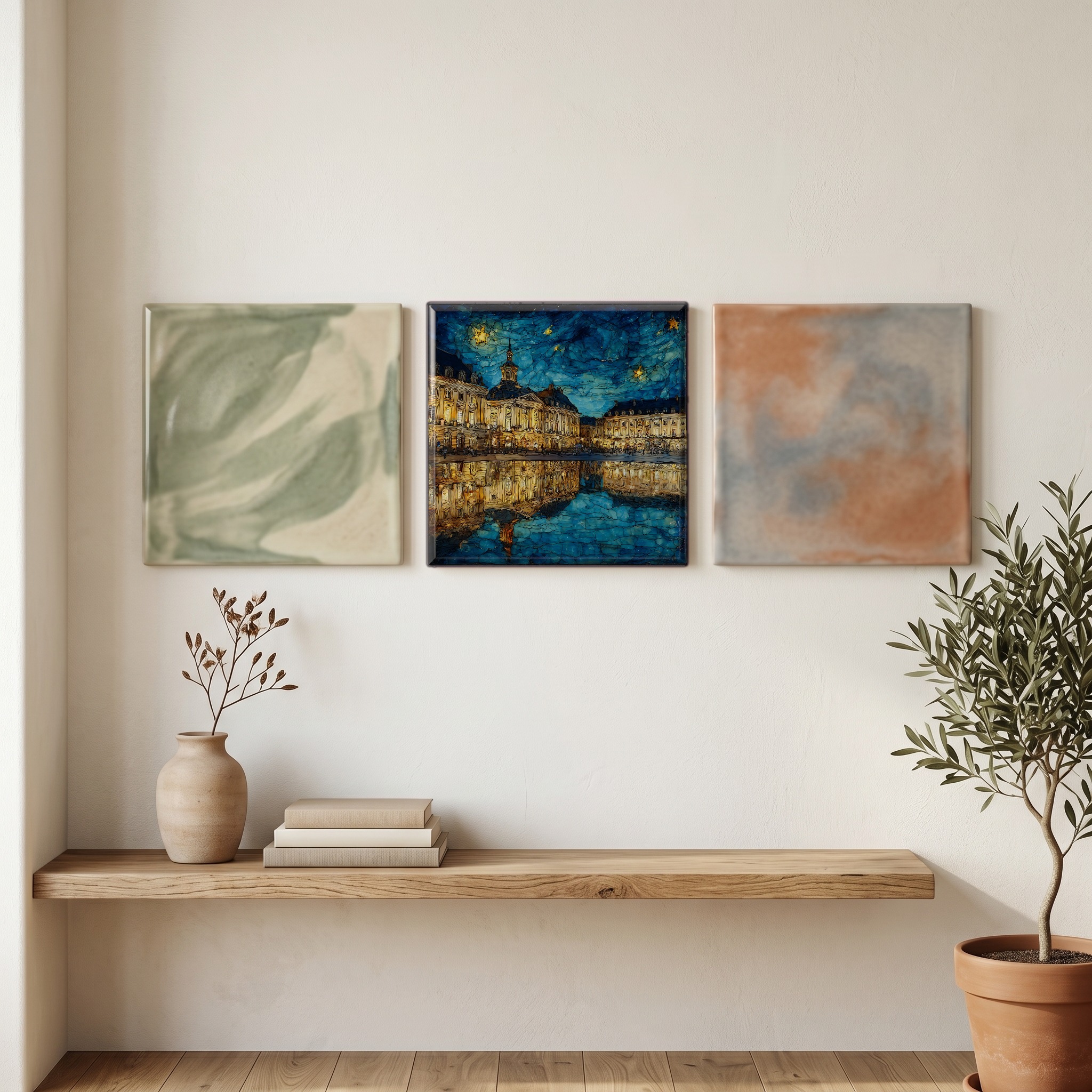
Three or five different vistas, hung together — a chapter of places you've been, or want to go.
The place, in three passes.
Place de la Bourse opens onto the Garonne River in the centre of Bordeaux, the capital of Nouvelle-Aquitaine in southwestern France. The square was built between 1730 and 1775 by the royal architects Jacques Gabriel and his son Ange-Jacques Gabriel, on the site of a section of medieval city wall demolished to give Bordeaux a monumental waterfront. Two long buildings frame it: the Palais de la Bourse (the former stock exchange) on the north side, and the Hôtel des Fermes (now the National Customs Museum) on the south. In 2007 UNESCO inscribed Bordeaux, "Port of the Moon," as a World Heritage Site, citing the square as the centrepiece of the city's classical waterfront. The Fontaine des Trois Grâces stands at its centre.
The two long buildings around the square are textbook eighteenth-century French classicism: pale Bordeaux limestone, mansard roofs, a long horizontal rhythm of pilasters and arched windows. Jacques Gabriel began the project in 1730 under Louis XV; his son Ange-Jacques Gabriel, who later designed the Place de la Concorde in Paris and the Petit Trianon at Versailles, completed it after his father's death. The square was originally called Place Royale and centred on an equestrian statue of Louis XV by Jean-Baptiste Lemoyne, melted down in the Revolution. The Fontaine des Trois Grâces, installed in 1869, replaced it. The stone is the same buff-pale tone that runs across the whole UNESCO quarter, weathered by two and a half centuries on the river.
Across the quay from the buildings, the Miroir d'eau is the largest reflecting pool in the world, a 3,450-square-metre sheet of granite slabs that holds a film of water only about two centimetres deep. The landscape architect Michel Corajoud designed it; it was completed in 2006 and runs through three states on a programmed cycle: a clear reflection of the eighteenth-century façade, a brief drain, then a thigh-high mist that drifts across the square. The Garonne is the river it borrows from, a tidal river running from the Pyrenees to the Gironde estuary. The river curves through the city in a wide crescent, the reason Bordeaux is called "Port of the Moon".