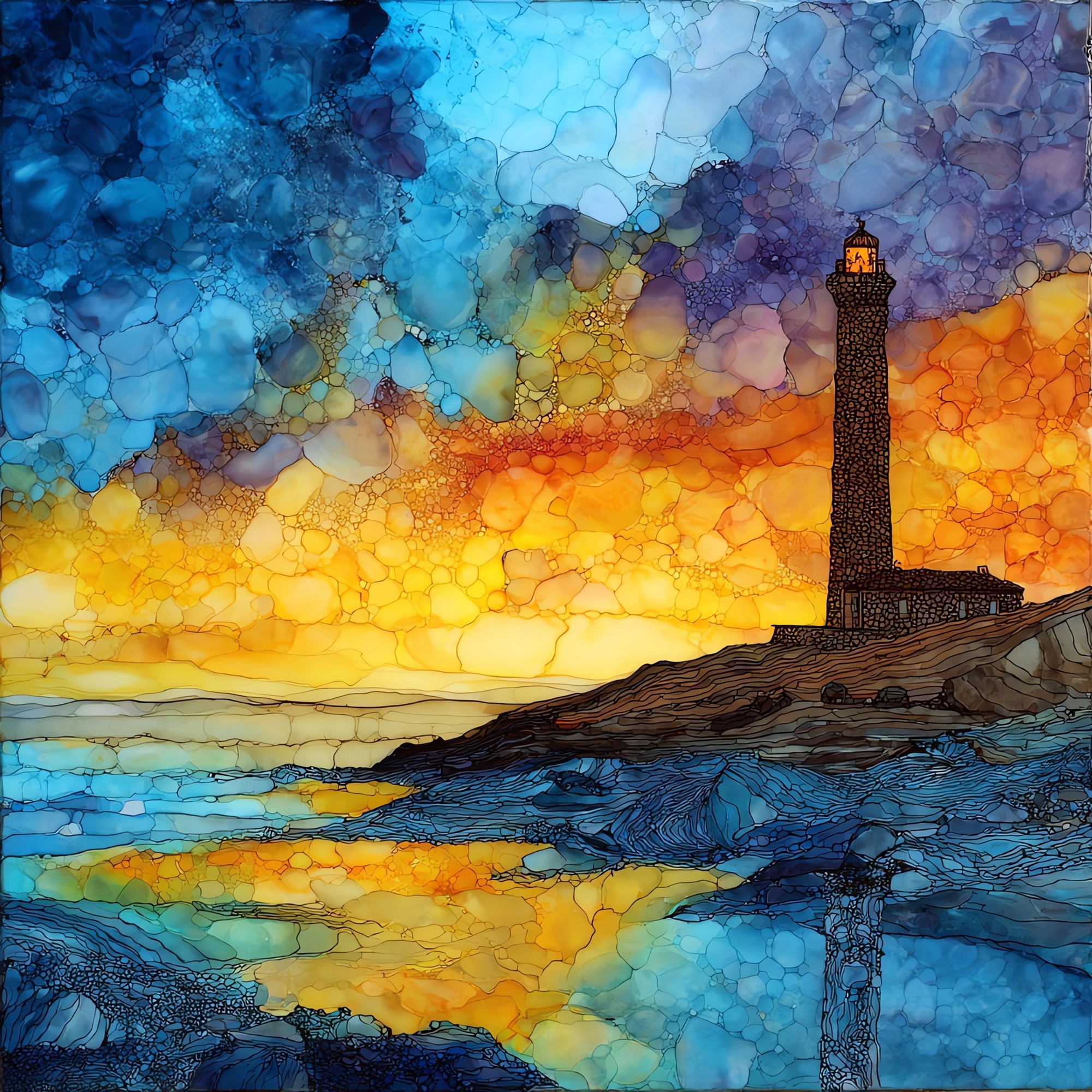
Phare du Creac'h
— — the lamp at the western edge of Europe.
Not only on a wall.
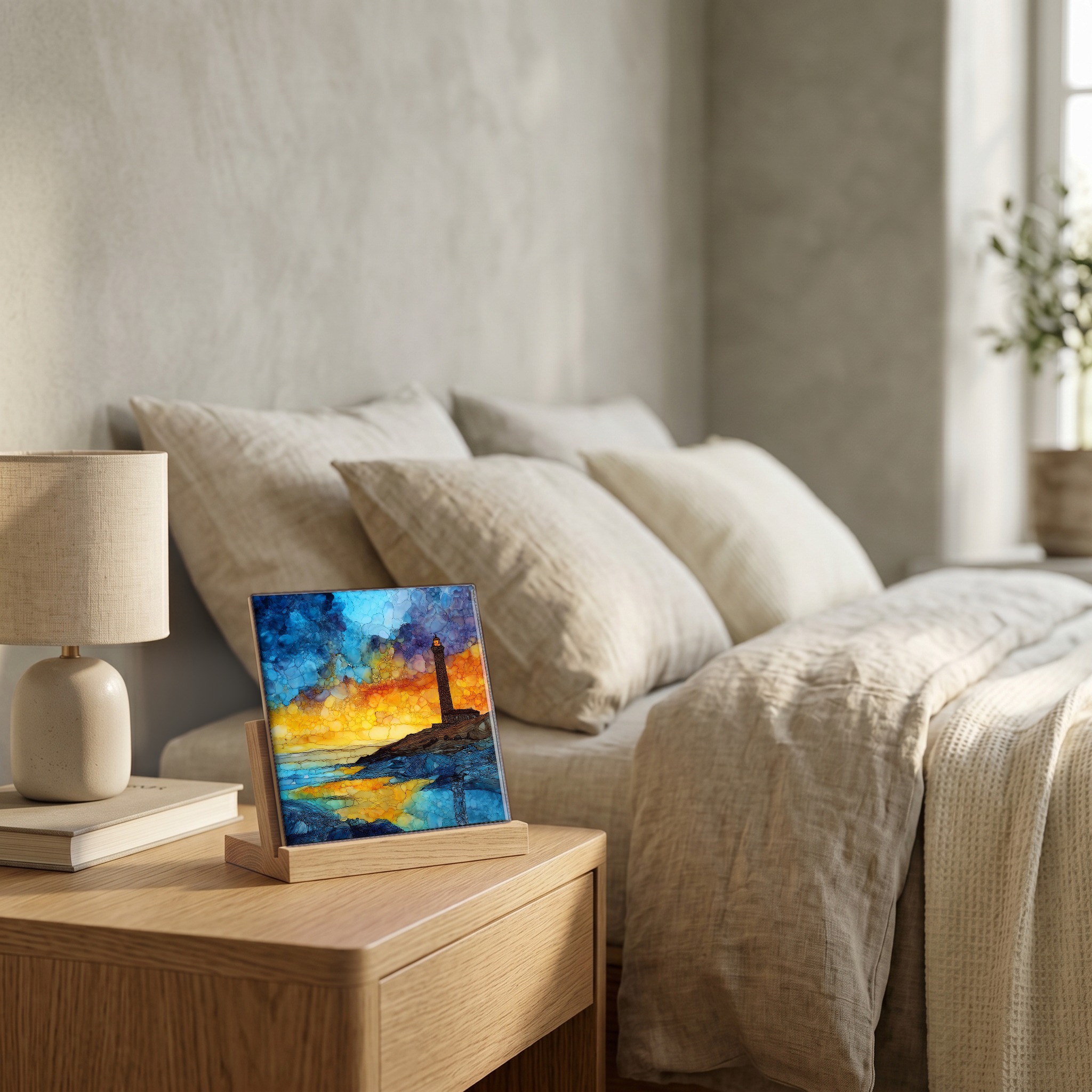
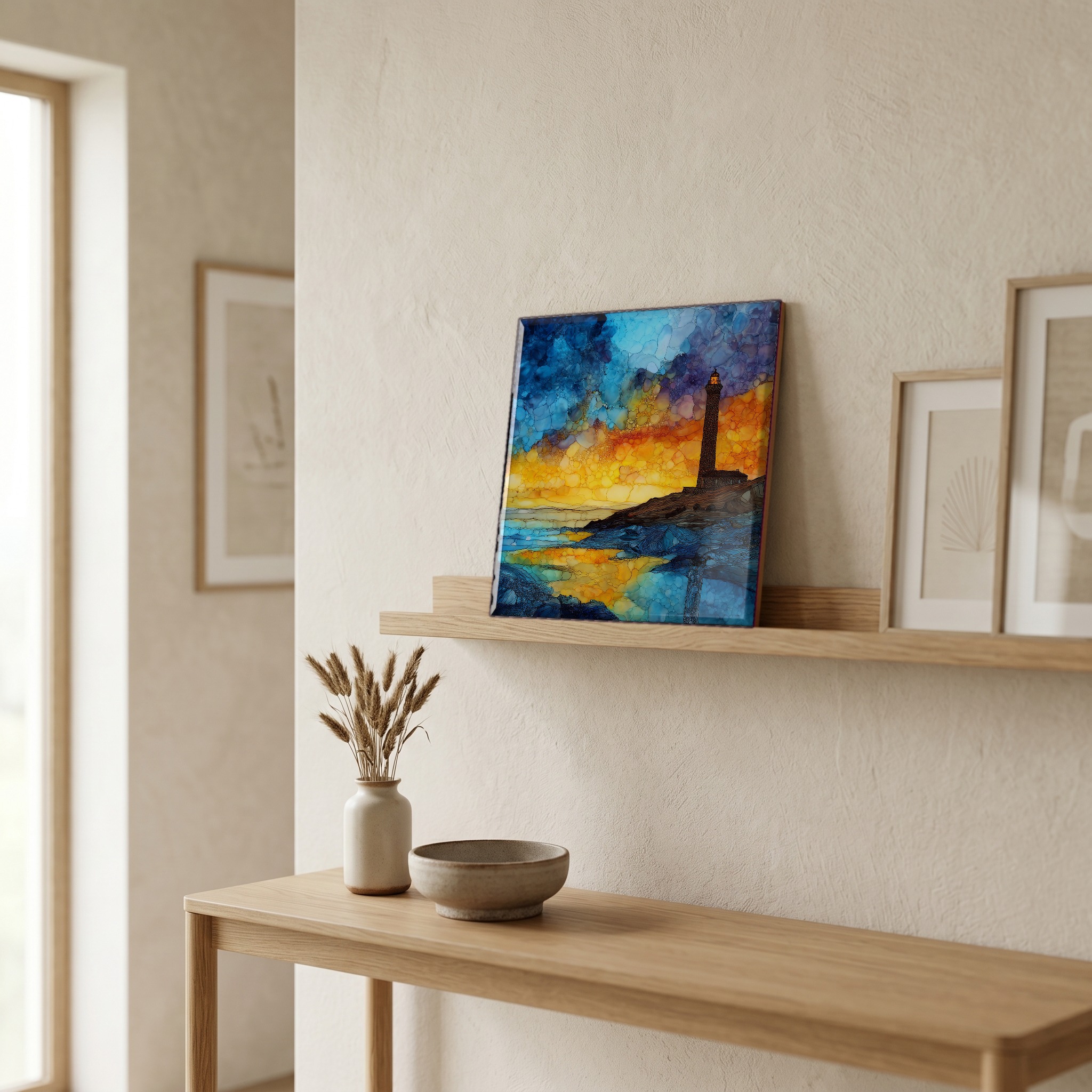
“The far western edge of Ouessant, the last island off Finistère before the open Atlantic. The tower has been striped black and white since 1863. Two white flashes every ten seconds, visible nearly forty nautical miles out. Ships entering the English Channel from the Atlantic turn toward it. The headland is constant wind and short grass. Little stone-walled hamlets sit a kilometer inland, sheep among them, and the foghorn carries across the moor when the weather closes in. Most of the year, the weather is closing in.
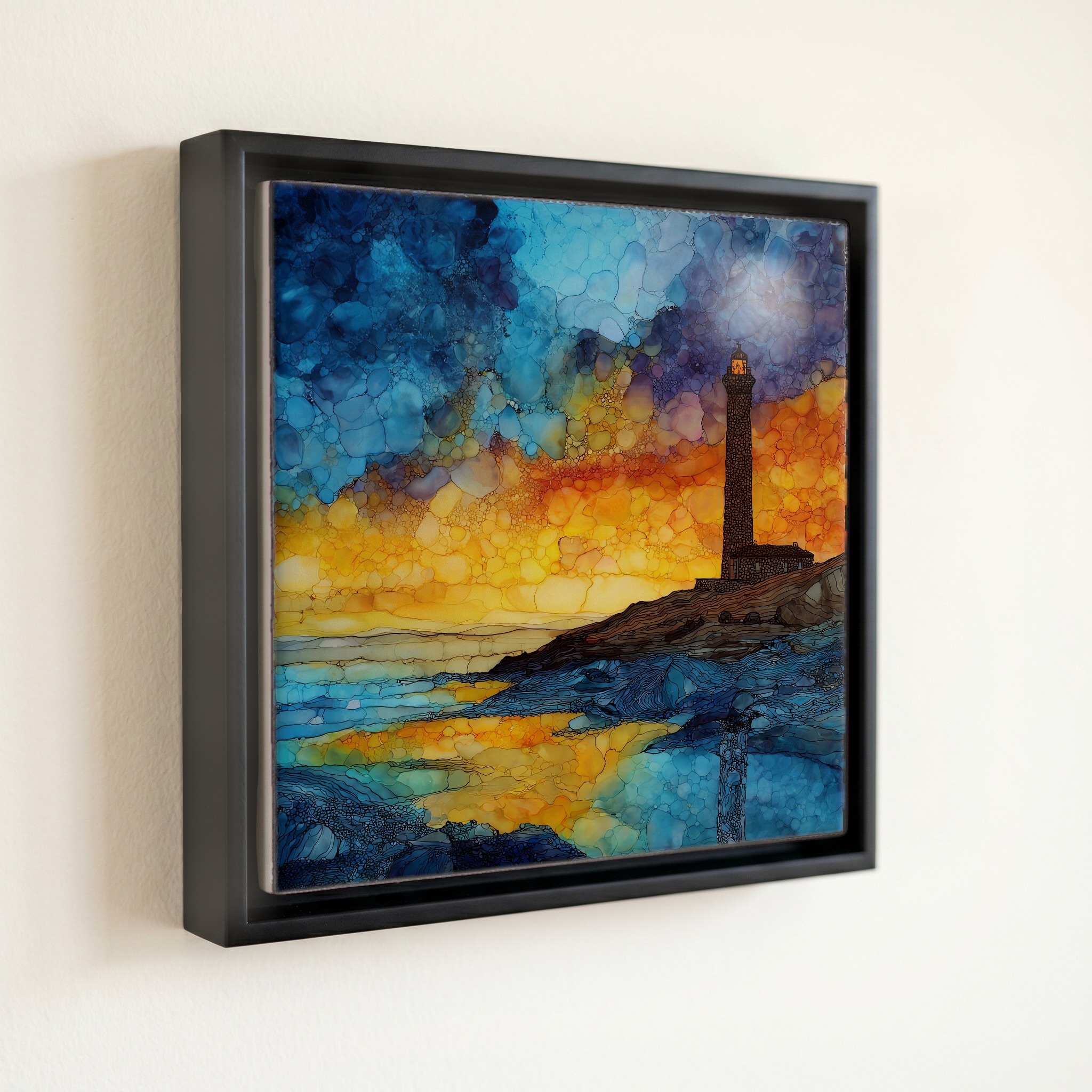
Phare du Creac'h, on ceramic.
Each tile is finished by hand in our Knoxville studio. Artwork is slowly infused into the ceramic surface under high heat and pressure, and rests beneath a thin glossy finish. The colour lives in the surface, not on top of it.
Pick any four 4-inch tiles — National Parks you've been to, a Smokies set, the four seasons of one place. $ for a set of , cork-backed, ready to live on the table.
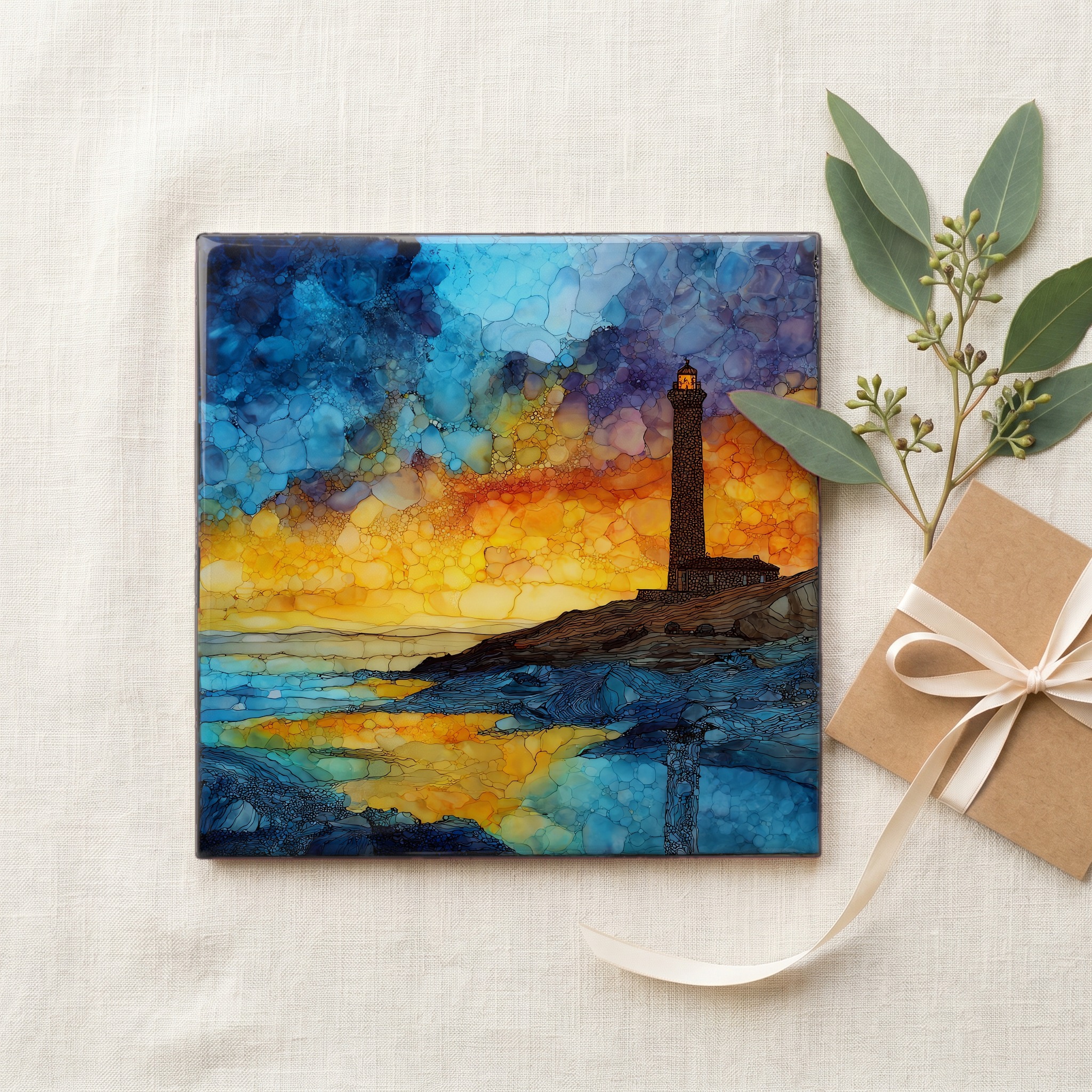
Each tile ships in a kraft box, tied with cream ribbon, with a handwritten note from the studio if you'd like to add one.
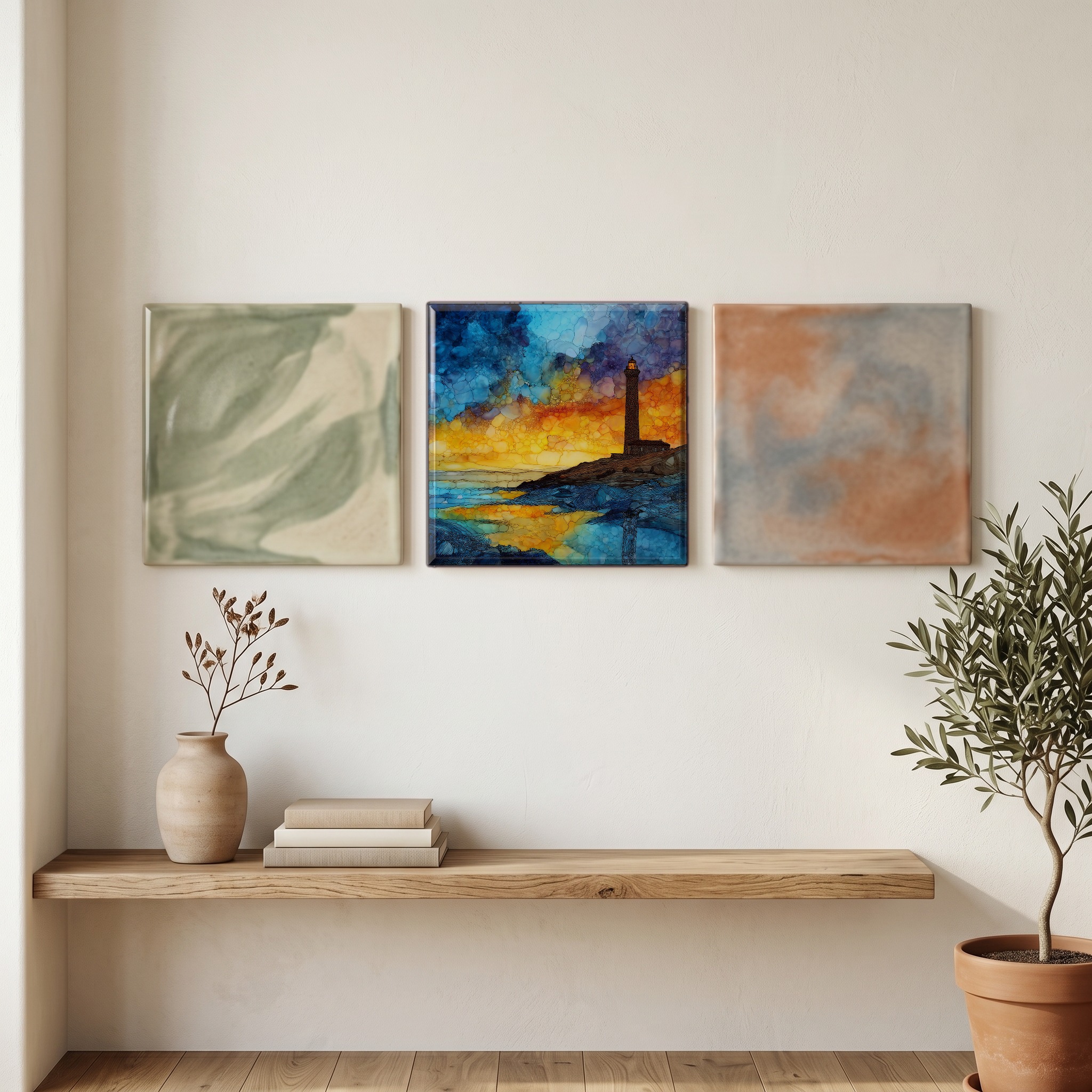
Three or five different vistas, hung together — a chapter of places you've been, or want to go.
The place, in three passes.
Phare du Créac'h stands at the western tip of Île d'Ouessant, the westernmost point of metropolitan France, roughly 20 kilometres off the Finistère coast in Brittany. The island sits inside the Parc naturel régional d'Armorique. Ferries operated by Penn ar Bed run from Le Conquet (about an hour) or from Brest (about two and a half). The tower is 54.85 metres tall, painted in horizontal black and white bands, and rises on a low headland whose Breton name *kreac'h* simply means 'promontory.' Ouessant has been inhabited for centuries, with the village of Lampaul as its small administrative seat, but the wind and the ocean beyond the headland dominate everything on the island.
First lit on 19 December 1863 and listed as a national monument in 2011, Créac'h is widely considered the most powerful lighthouse in Europe. Its first-order Fresnel lens sits 70 metres above the sea and projects a beam to 37.5 nautical miles, the equivalent of about 70 kilometres. The characteristic is two white flashes every ten seconds, unchanged for the better part of two centuries. The lighthouse anchors the Ouessant Traffic Separation Scheme, the *rail d'Ouessant*, through which roughly 120 cargo ships from 89 flag states pass each day. About a fifth of the world's maritime traffic threads the English Channel beyond it, and Créac'h is the first French light those ships see.
Reaching Créac'h requires the ferry. Penn ar Bed runs regular services from Brest and from Le Conquet. The Le Conquet crossing is faster, around an hour; the Brest crossing closer to two and a half. Walks or bicycles cover the rest of the island. The lighthouse base houses the Musée des Phares et Balises, France's national museum of maritime signalling, which is currently closed for renovation with a planned 2027 reopening. The refurbished site will, for the first time, allow visitors to climb the tower itself. Weather on Ouessant is its own subject; Atlantic squalls arrive without much notice, even in summer.