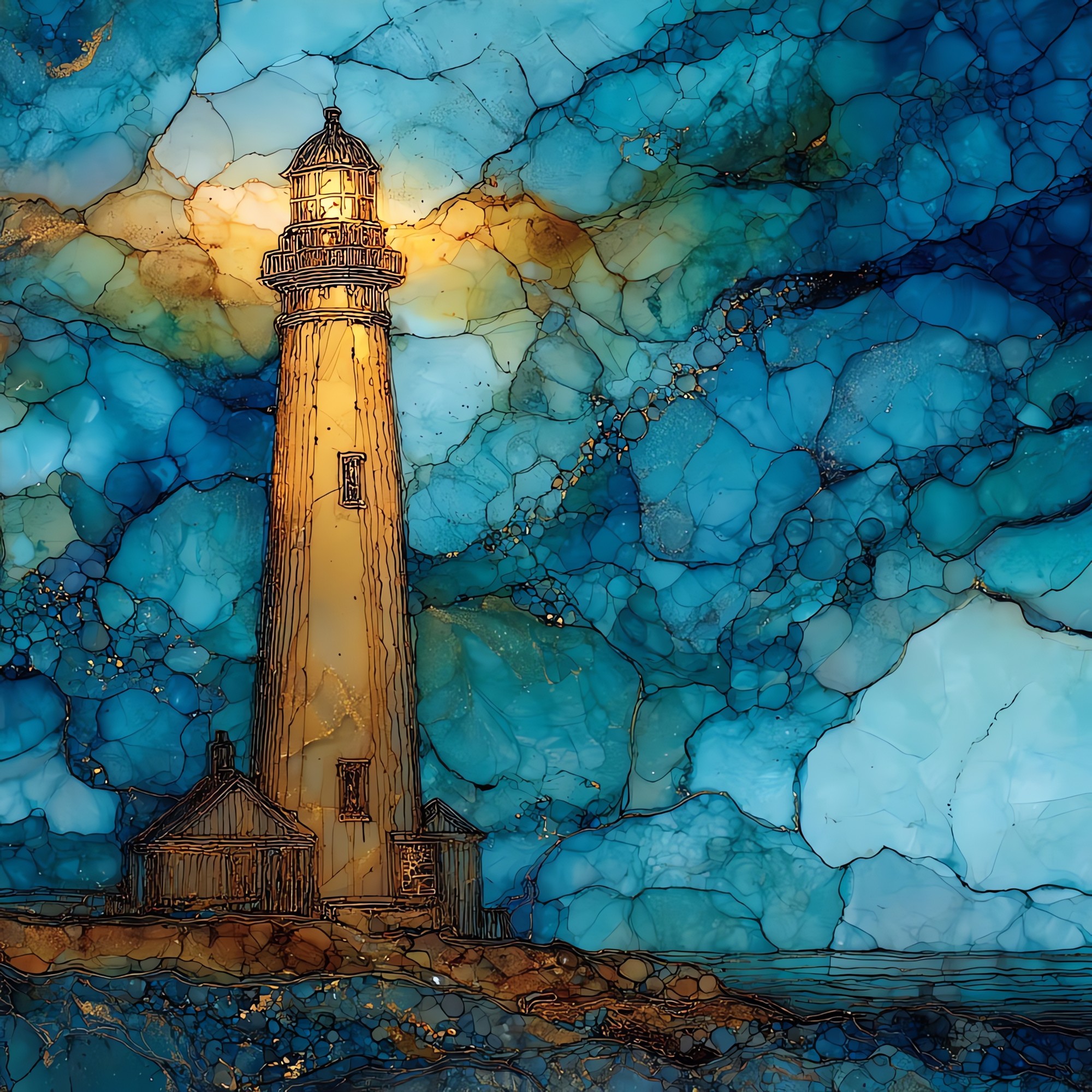
Phare des Baleines
— — a light named for the whales that came ashore.
Not only on a wall.
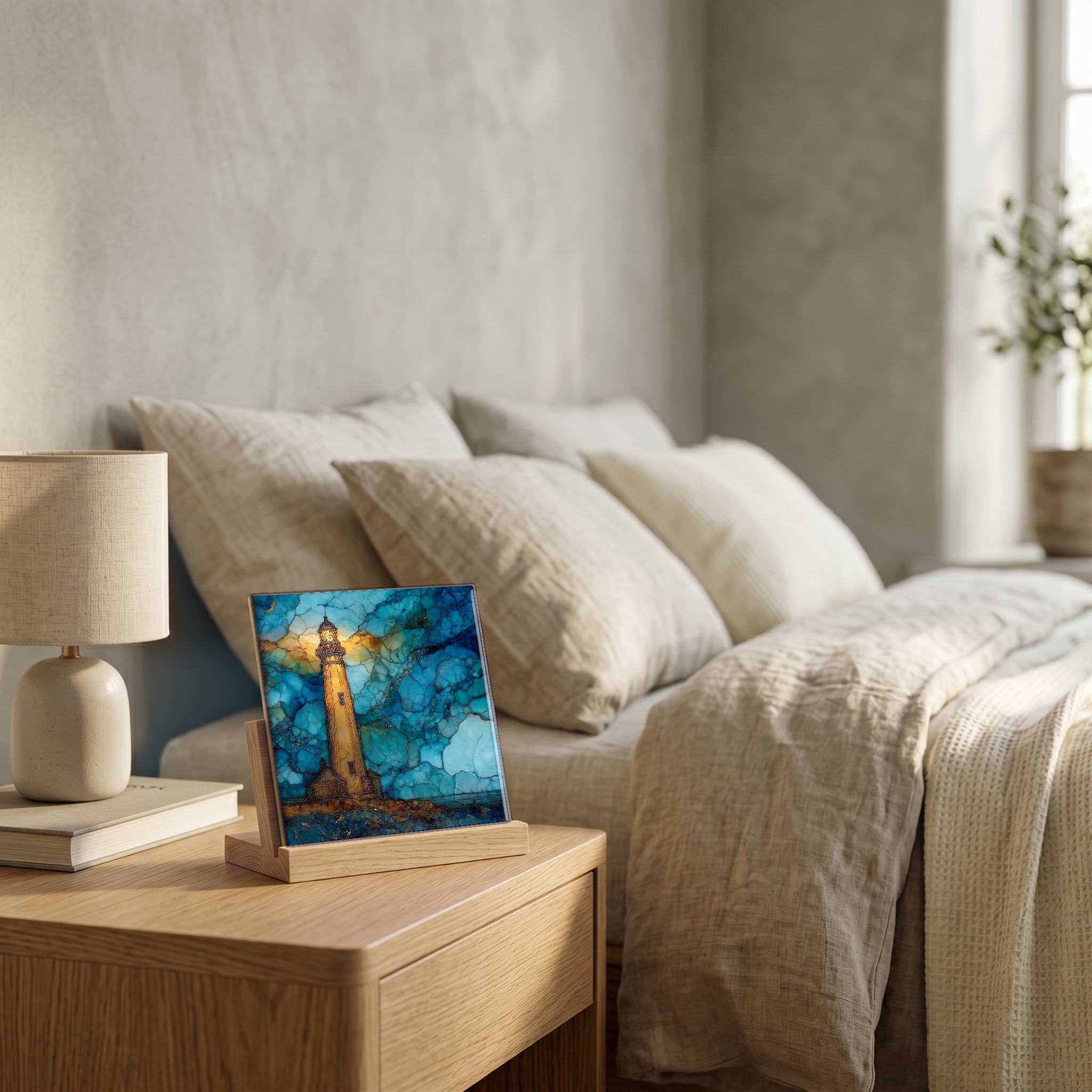
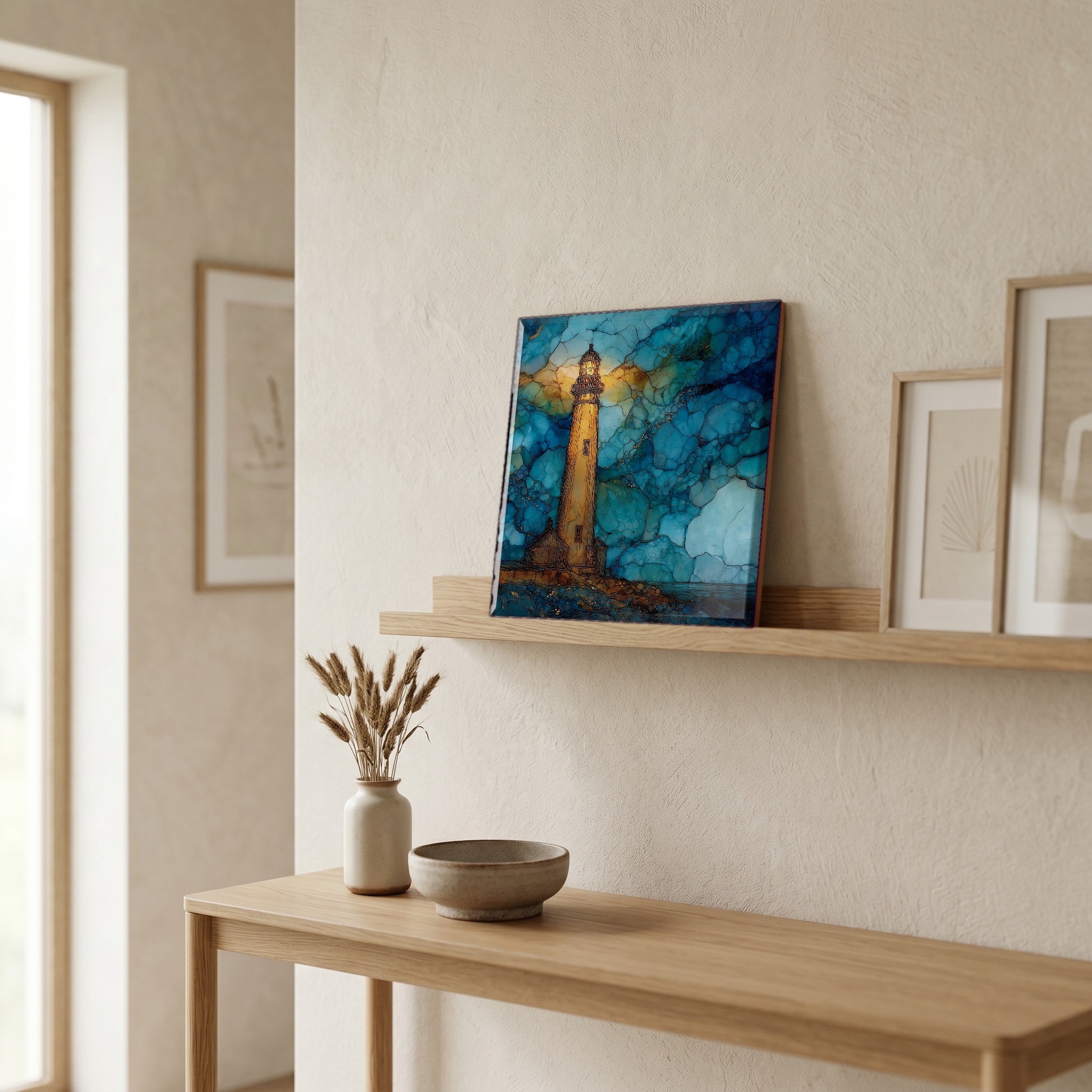
“At the western tip of Île de Ré, on a low sandy point where the swell comes in off the open Atlantic. The white tower rises 57 metres above the dune, the third light kept on this stretch. The first was the Vieille Tour, completed in 1682 under Colbert; the current lighthouse was built in 1854 to a design by Léonce Reynaud. The name comes from whales that used to strand on this coast often enough to give the point its name. Two hundred and fifty-seven cast-iron steps to the lantern. The sea is wider here than the photographs let on.
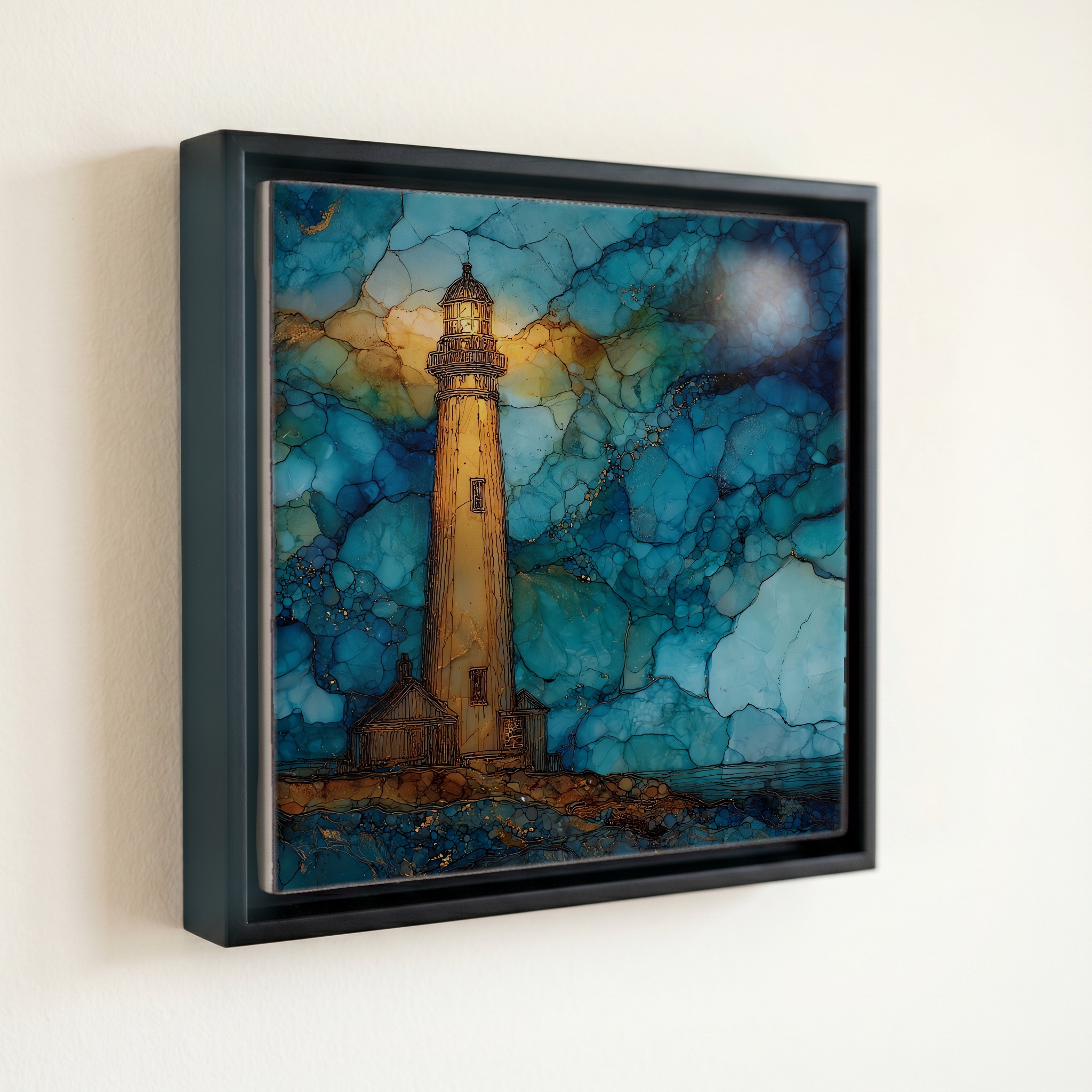
Phare des Baleines, on ceramic.
Each tile is finished by hand in our Knoxville studio. Artwork is slowly infused into the ceramic surface under high heat and pressure, and rests beneath a thin glossy finish. The colour lives in the surface, not on top of it.
Pick any four 4-inch tiles — National Parks you've been to, a Smokies set, the four seasons of one place. $ for a set of , cork-backed, ready to live on the table.
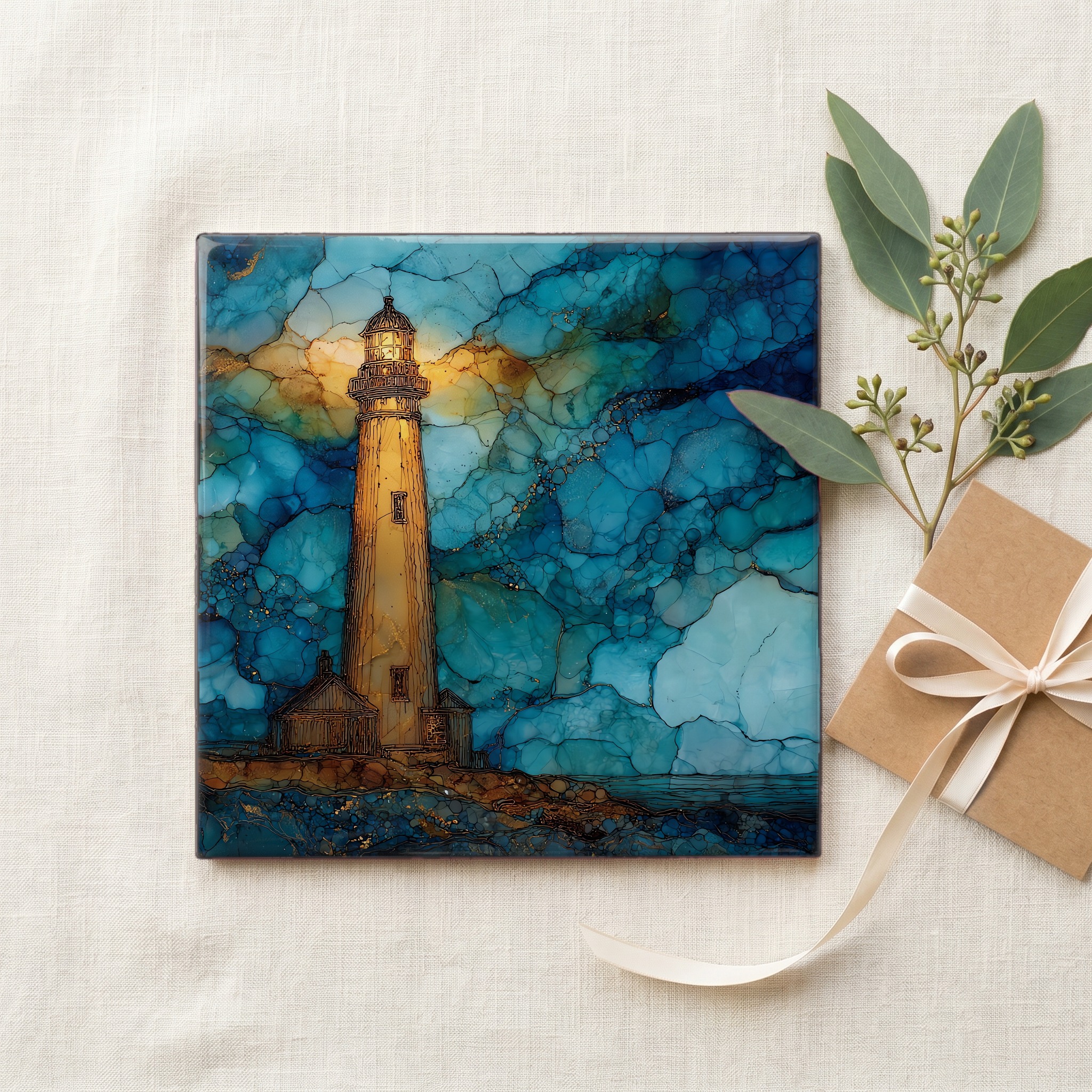
Each tile ships in a kraft box, tied with cream ribbon, with a handwritten note from the studio if you'd like to add one.
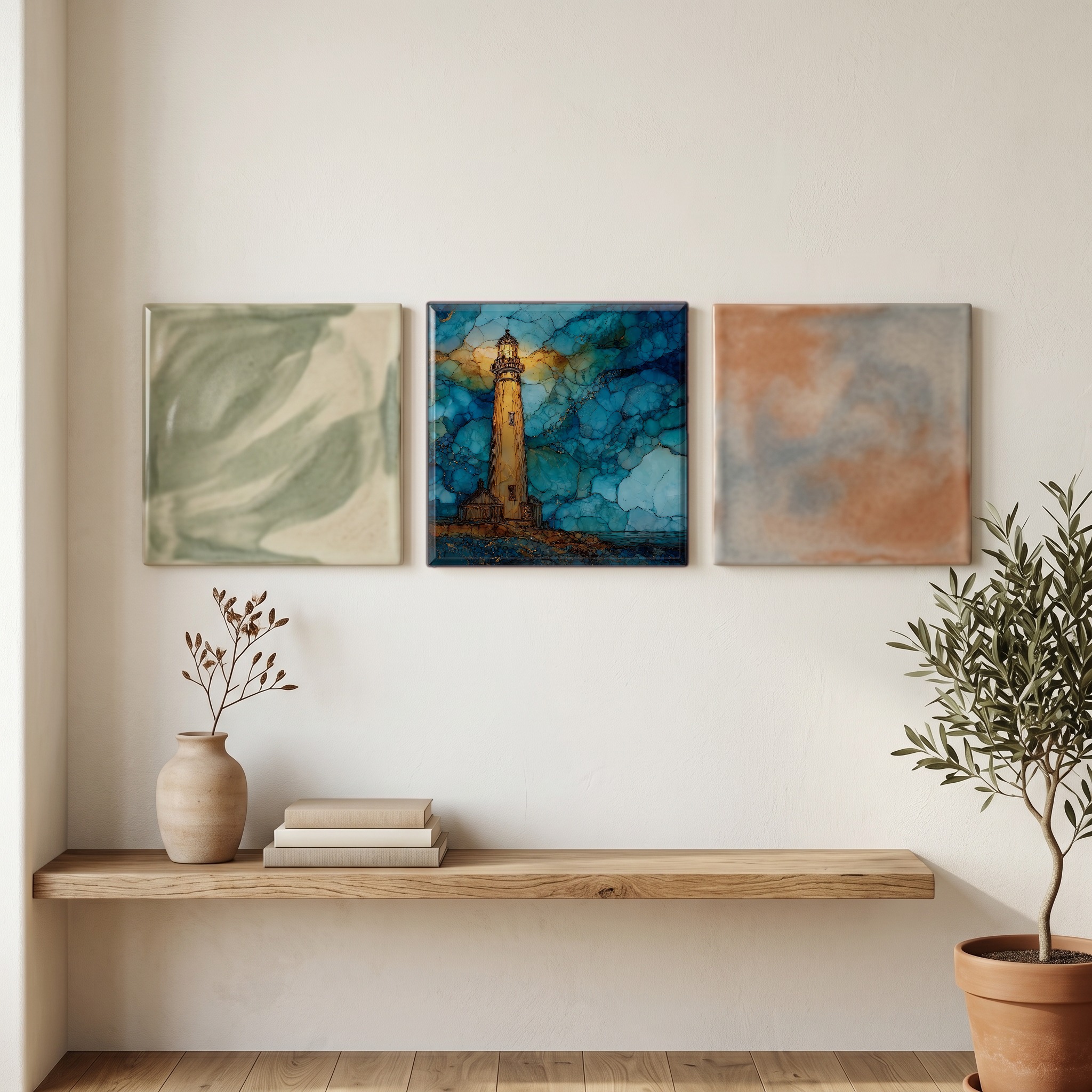
Three or five different vistas, hung together — a chapter of places you've been, or want to go.
The place, in three passes.
Phare des Baleines stands at the western tip of Île de Ré, an island of about 85 square kilometres in the Charente-Maritime department of France's Nouvelle-Aquitaine region. The island is joined to the mainland by the 2.9-kilometre Pont de l'Île de Ré, opened in 1988, which carries the toll road across the Pertuis Breton from La Rochelle. The lighthouse occupies the Pointe des Baleines at the edge of Saint-Clément-des-Baleines, the westernmost commune on the island. From the bridge it is a 35-kilometre drive west along the D735, past the salt marshes and the bell towers of Ars-en-Ré, with the road narrowing as it nears the point.
The current lighthouse was completed in 1854 to a design by the engineer Léonce Reynaud, who directed France's Service des Phares for more than three decades. The white cylindrical tower rises 57 metres above the dune, with 257 cast-iron steps wound around the inside to the lantern room. The original light on this point, the Vieille Tour, was completed in 1682 under the orders of Colbert: a 30-metre stone stub that still stands a short walk from the modern tower. The newer lighthouse was protected as a Monument Historique in 2011 and remains an active aid to navigation, its light visible roughly 50 kilometres out to sea on a clear night.
The lighthouse is open daily from April through September and on weekends and school holidays the rest of the year, with the entry ticket also covering the small museum at the base and access to the Vieille Tour next door. The 257 steps to the lantern are not a stroll; the staircase narrows toward the top and the climb takes most visitors fifteen to twenty minutes round-trip. From the gallery the view runs west across the open Atlantic to the Phare des Baleineaux on its offshore reef, north to the Vendée coast on a clear day, and east along the spine of the island toward La Rochelle. The site is busiest in July and August; September is quieter and the light on the water is better.