Wender·Vista
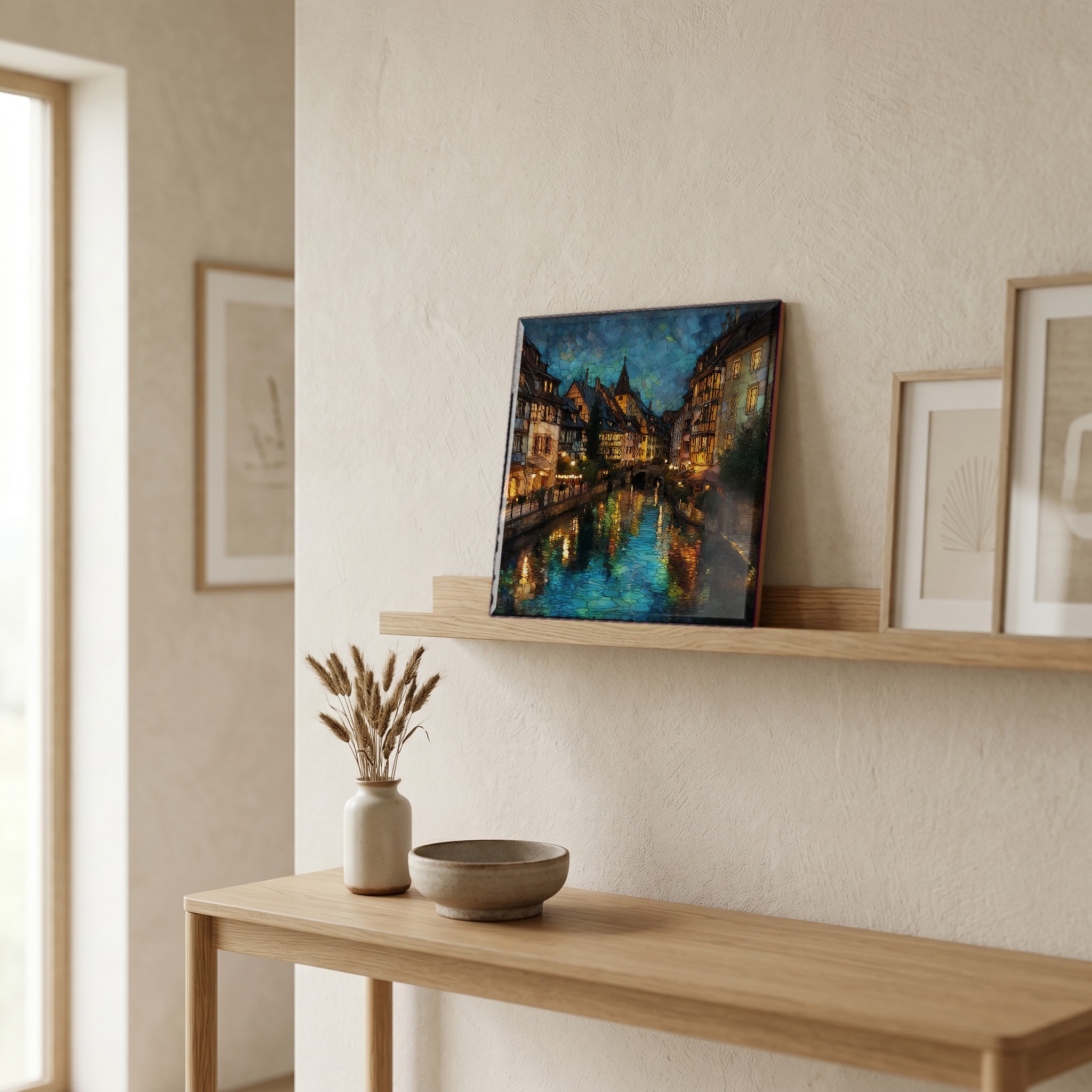
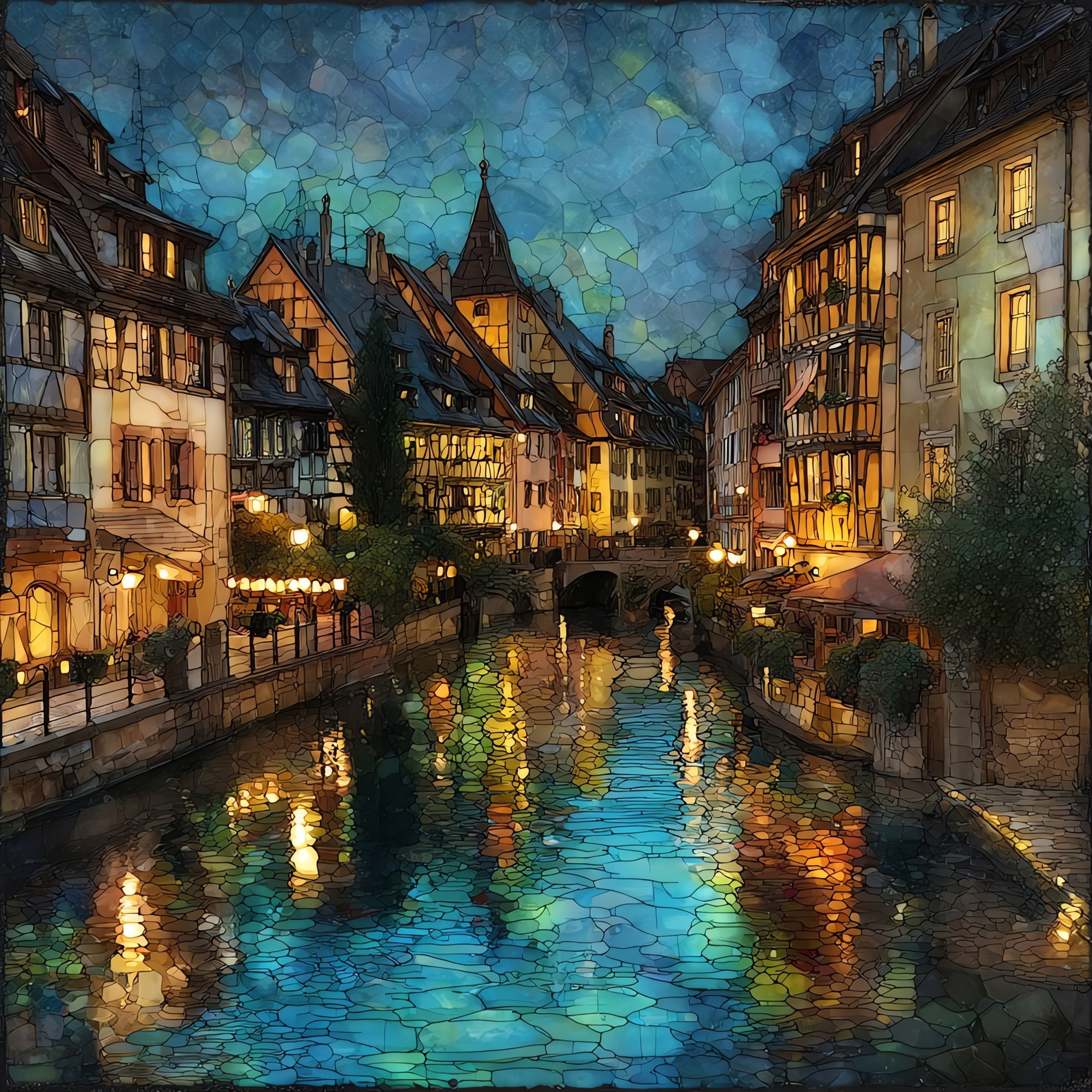
Petite France Strasbourg
shown on ceramic, 12-inch tileFrance
in old Strasbourg, where the Ill divides into four

Petite France Strasbourg

the wood leaning toward its own reflection.

Where it lives

Not only on a wall.

A small tile on the nightstand catching the morning. A larger one above the fire. Yours, wherever you spend the slow hours.
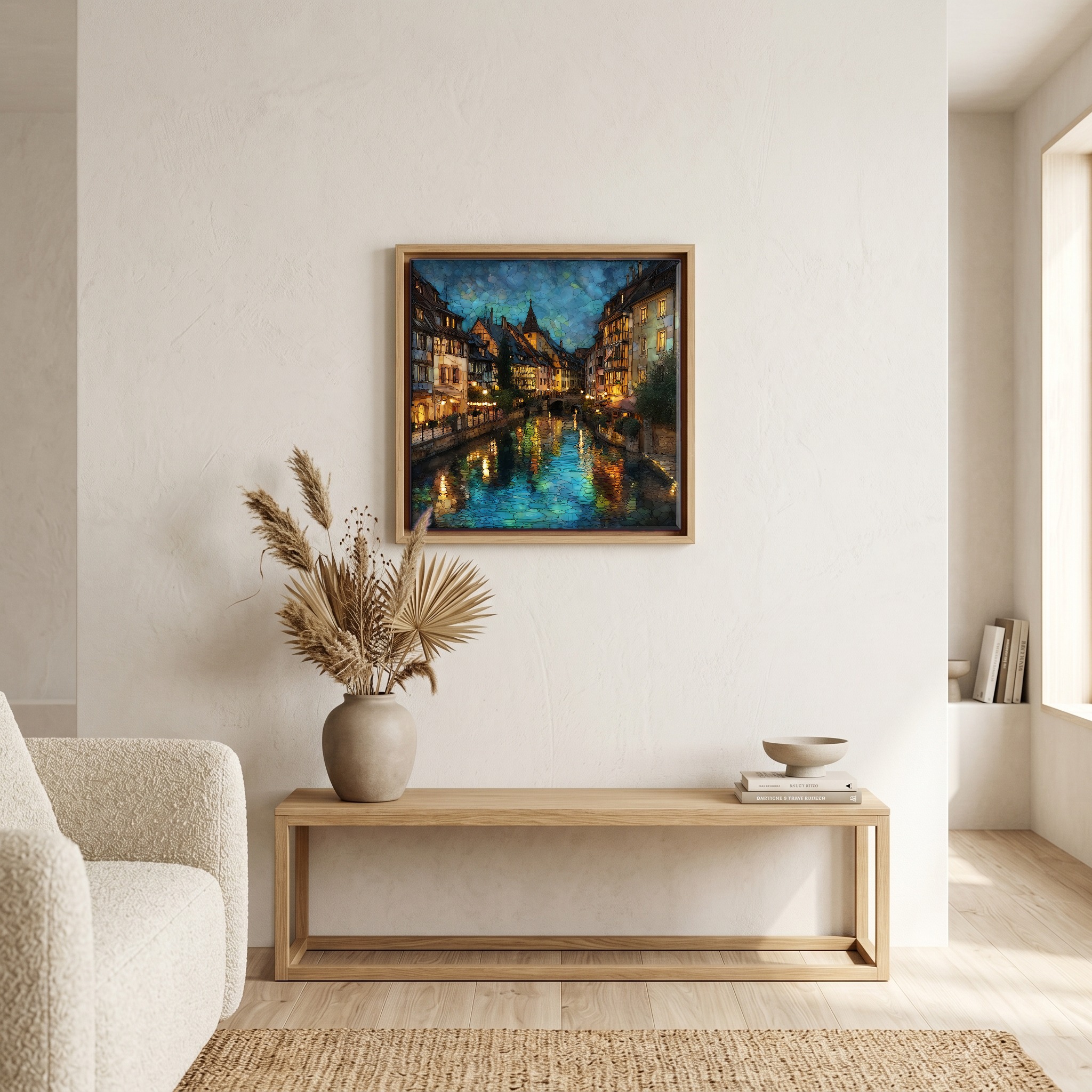
Above the bench, in a warm oak surround.
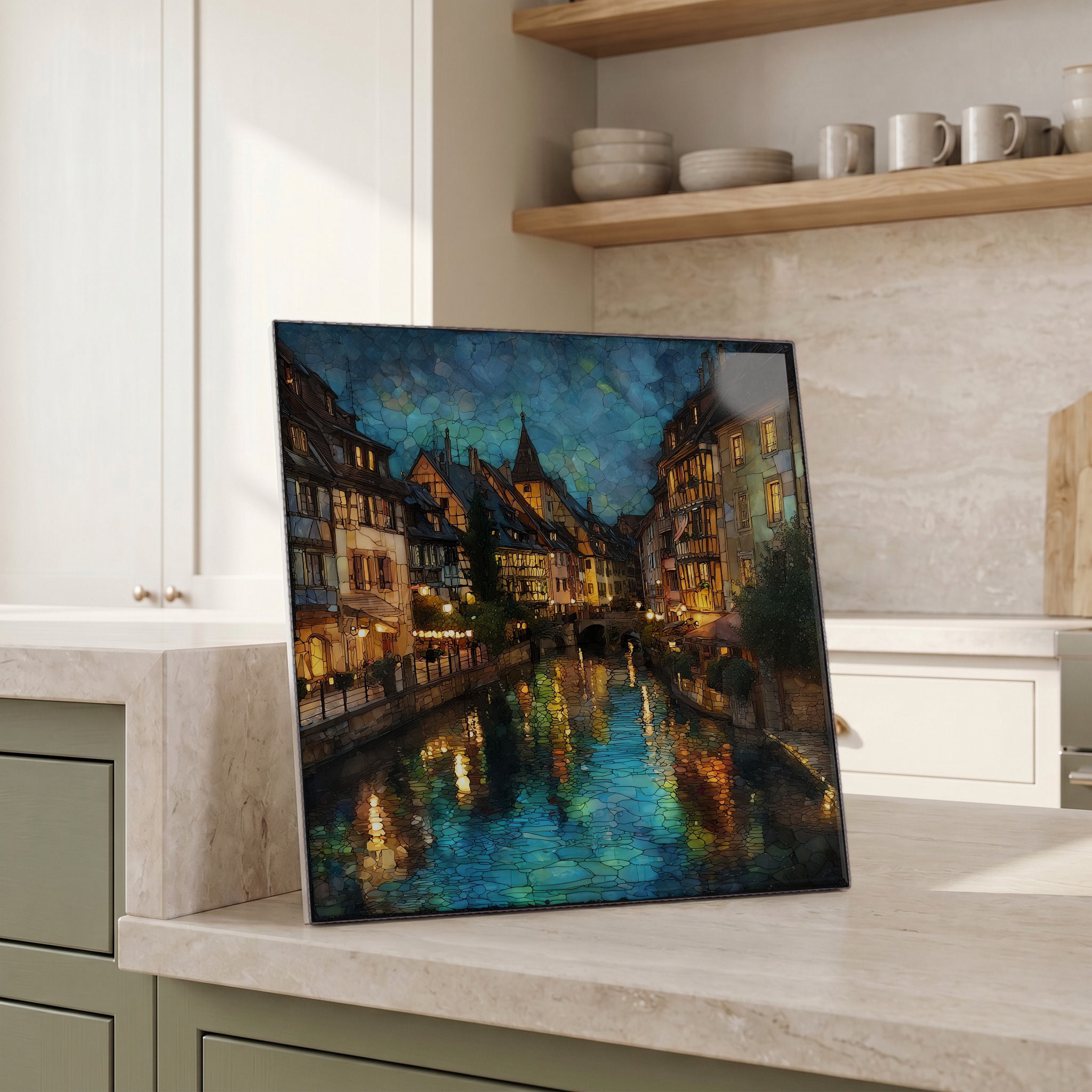
Beside the kettle, propped on the counter.
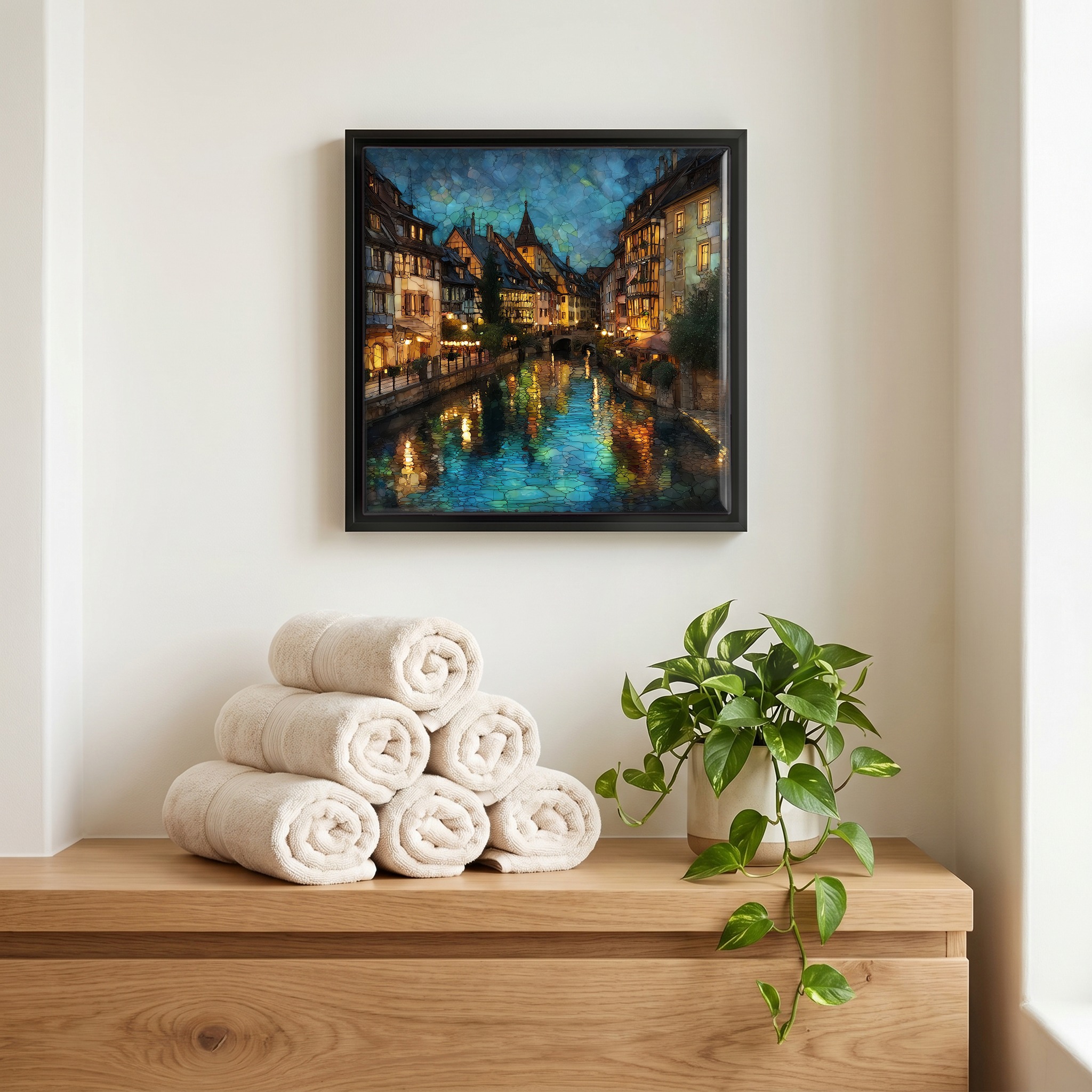
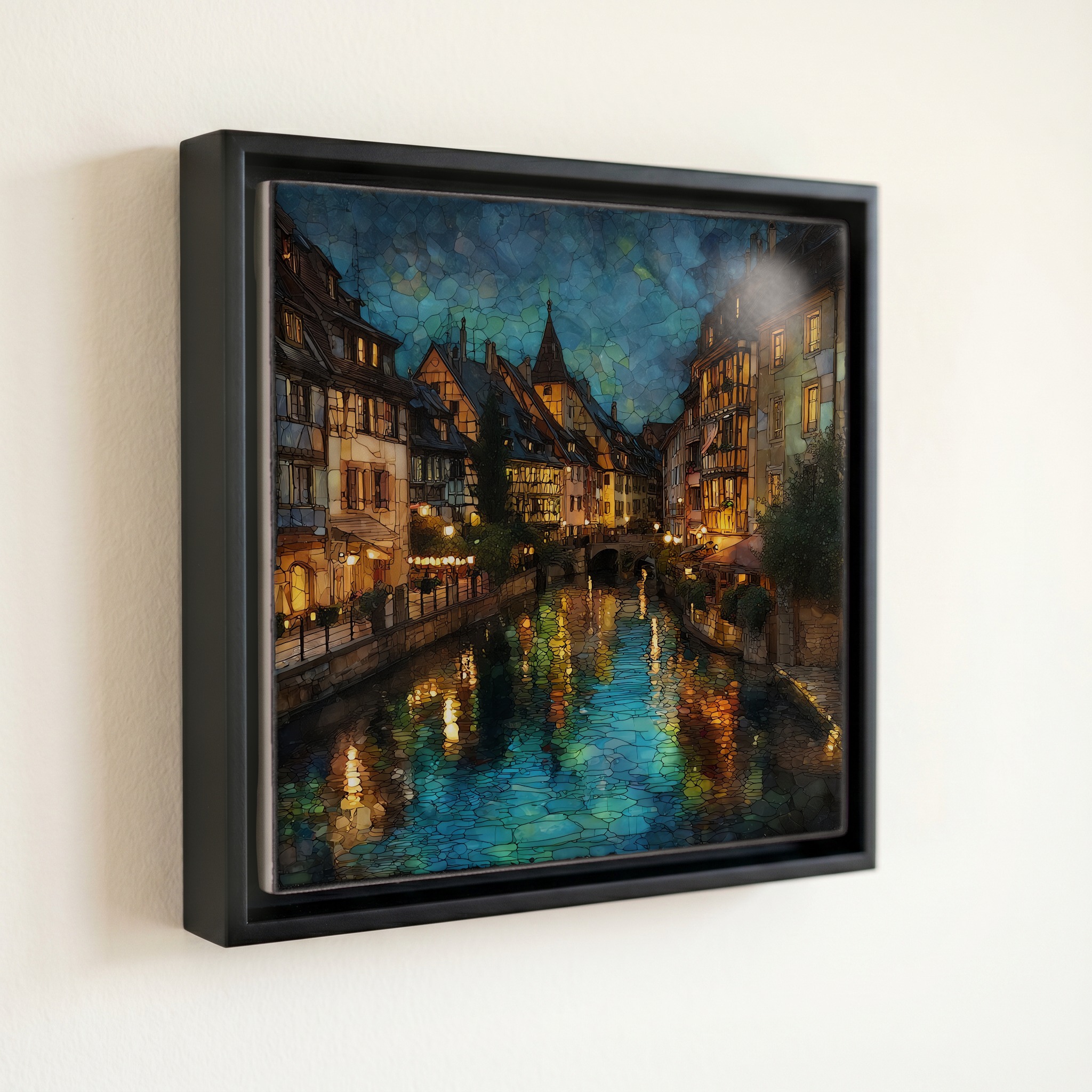
Above the linens, in a slim black surround.
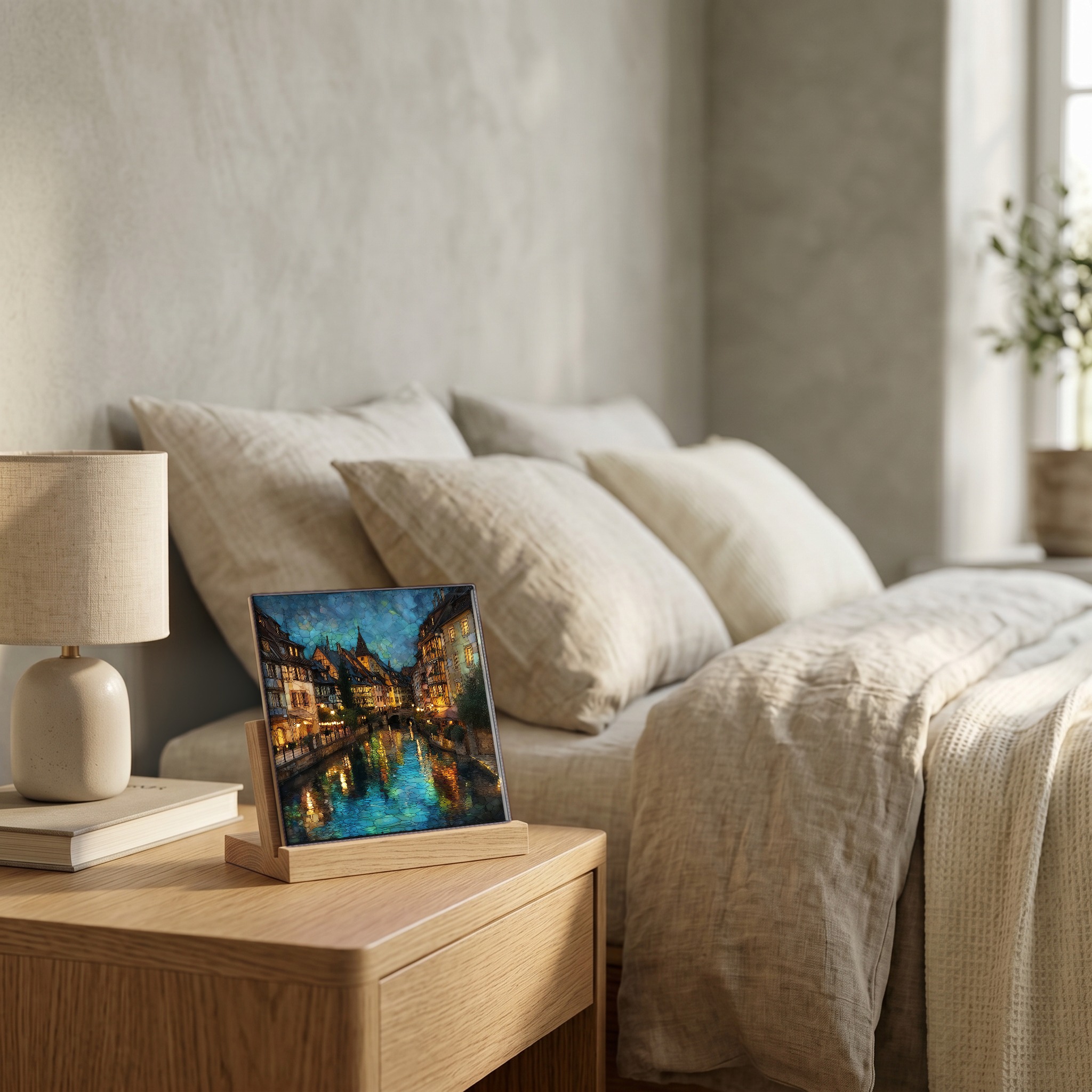
On the nightstand, on a light oak stand.
On a picture ledge, where the light comes in.
a note from the studio

The oldest quarter of Strasbourg, where the river Ill splits into four channels and once ran the mills, the tanneries, and the fishermen's docks. The half-timbered houses date mostly from the sixteenth and seventeenth centuries, dark oak set into pale plaster, with steep roofs sloping toward the water so hides could be hung to dry. The whole Grande Île has been a UNESCO site since 1988. Most afternoons photographers gather on the Maison des Tanneurs footbridge for the same view they have come for since the cameras did. Nobody on the bridge says much.
from the studio
shown in a slim black floating frame · 6 × 6 in
— bring it home

Petite France Strasbourg, on ceramic.

Each tile is finished by hand in our Knoxville studio. Artwork is slowly infused into the ceramic surface under high heat and pressure, and rests beneath a thin glossy finish. The colour lives in the surface, not on top of it.

What kind of piece?
One tile — square or rectangle.
How big?
the popular one — counter, shelf, nightstand
6 × 6 in · 15 cm · 1.6 lb
Surface finish
A clear glossy finish — the artwork reads as if under resin. Ideal for show-pieces and framed wall art.
How it sits
A hidden cleat — sits ¼″ proud of the wall.
$58
Hand-finished and shipped from our studio at the foot of the Smokies. On your wall in about ten days.
size
6 × 6 in
15 cm
weighs
1.6 lb
solid in the hand
surface
ceramic, hand-finished
art rests beneath a thin glossy finish
from
Knoxville, TN
our family studio, at the foot of the Smokies
— start a Coaster Set

Pick any four 4-inch tiles — National Parks you've been to, a Smokies set, the four seasons of one place. $ for a set of , cork-backed, ready to live on the table.
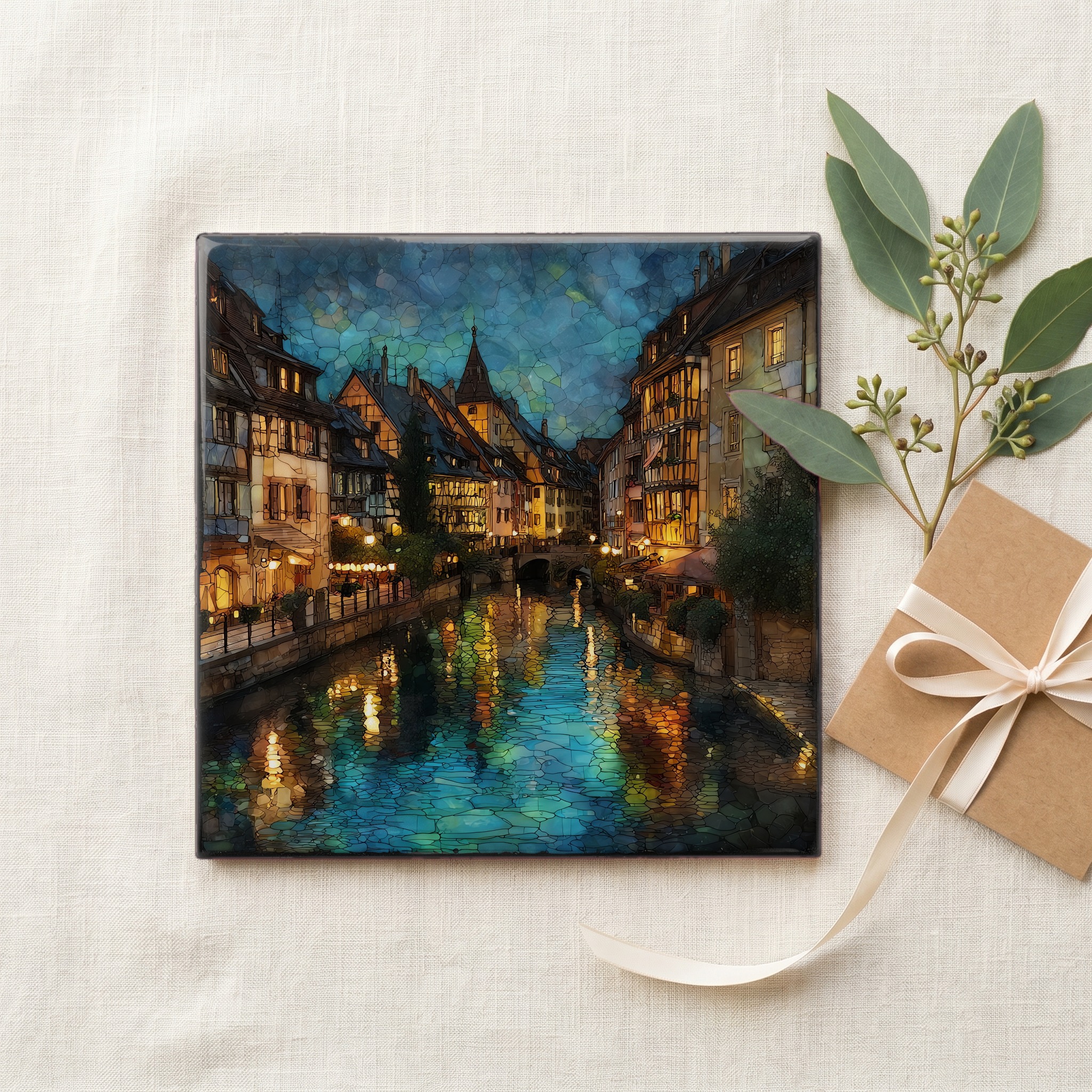
comes gift-ready
comes gift-ready

Each tile ships in a kraft box, tied with cream ribbon, with a handwritten note from the studio if you'd like to add one.
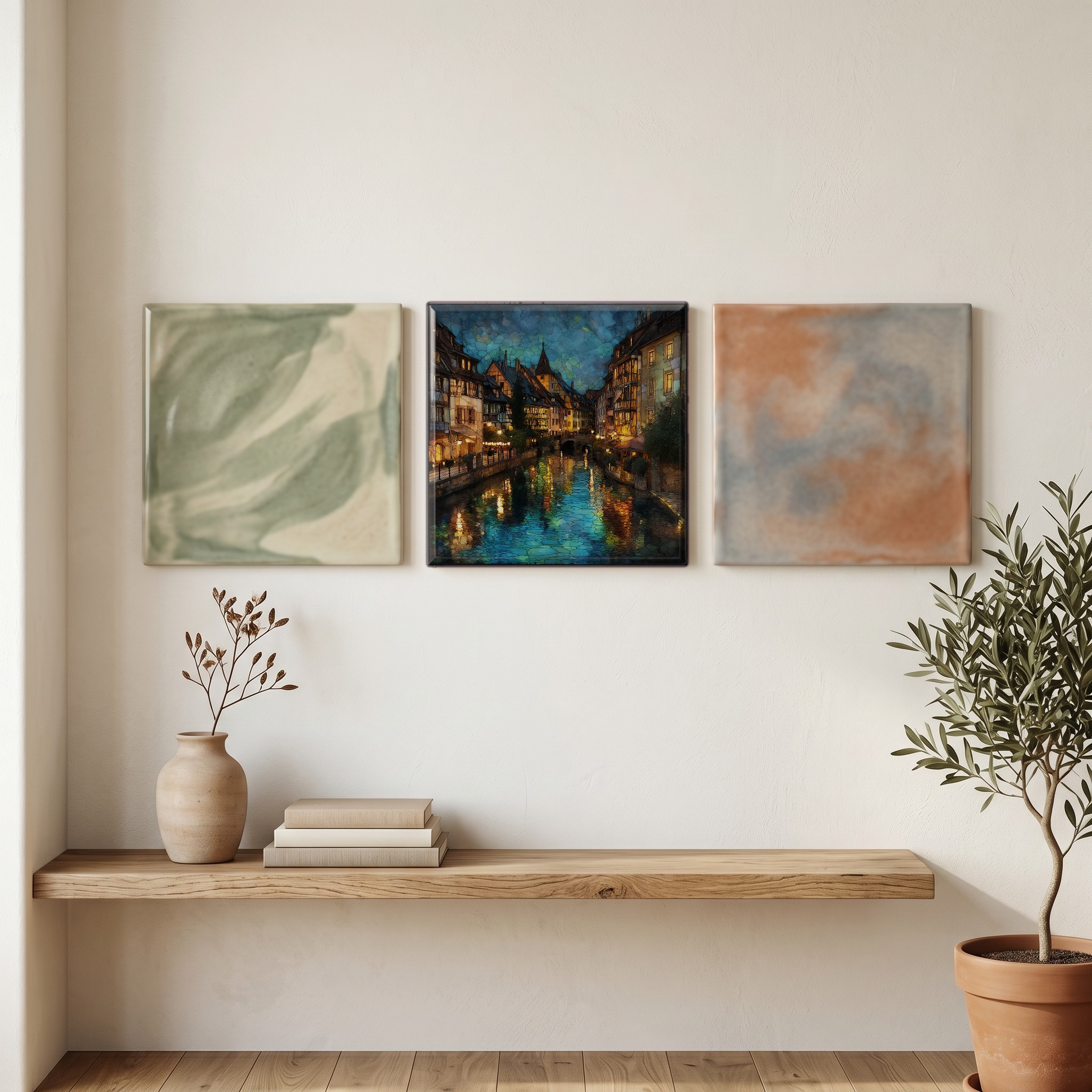
or build a grouping
or build a grouping

Three or five different vistas, hung together — a chapter of places you've been, or want to go.

about Petite France Strasbourg

The place, in three passes.

A little of what's known, in case you fall down the rabbit hole — or want to go see it yourself.
the place

Petite France is the historic tanners', millers', and fishermen's quarter at the western tip of the Grande Île of Strasbourg, in the Bas-Rhin department of north-eastern France. The river Ill, a tributary of the Rhine, divides into four channels here before rejoining downstream of the cathedral; the quarter sits between those channels and is closed off to the west by the Ponts Couverts and the Barrage Vauban. Strasbourg is the historic capital of Alsace and the seat of the European Parliament, with a metropolitan population of roughly 500,000. The Grande Île, including Petite France, was inscribed on the UNESCO World Heritage List in 1988; the inscription was extended in 2017 to take in the German-era Neustadt to the north.

the stone

The half-timbered houses of Petite France date mostly from the sixteenth and seventeenth centuries, when the quarter was home to Strasbourg's tanners, millers, and fishermen. The Maison des Tanneurs, completed in 1572 on the Rue du Bain-aux-Plantes, is the largest and best preserved of them, with a steep three-tier roof that originally served as a drying loft for hides above the workshops on the lower floors. Most of the neighbouring houses share the same vertical proportion: dark oak posts and braces set into pale plaster infill, with a roof pitch deep enough to vent the smell of the tanning pits beneath. The same colombage construction defines Alsatian architecture from Riquewihr to Eguisheim, but Petite France is its largest urban concentration.

the visit

Petite France is open at all hours and charges no admission. The quarter is a 10-minute walk west of Strasbourg Cathedral and easy to reach on foot from the central tram interchange at Homme de Fer. The clearest sightlines on the half-timbered houses are from the footbridge by the Maison des Tanneurs and from the open roof terrace of the Barrage Vauban, both free to the public. The narrow lanes around the Rue du Bain-aux-Plantes are pedestrian-only and busiest between June and September, and again through the Christkindelsmärik, the December Christmas market that draws roughly two million visitors to Strasbourg each year. The shoulder months are quieter, and the blue hour brings out the lit reflections along the canals.

where
France · Strasbourg, Bas-Rhin
elevation
142 m · 466 ft
position
48.5814° N · 7.7404° E
the neighborhood

What's nearby.

A handful of named places within an hour's walk or short drive. Some we've already painted; some we will.
1 km W
Ponts Couverts
medieval bridges
1 km W
Barrage Vauban
17th-century covered weir
1 km E
Strasbourg Cathedral
Gothic cathedral
1 km NE
Place Kléber
civic square
1 km E
Maison Kammerzell
Renaissance merchant house
1 km E
Palais Rohan
18th-century episcopal palace
N
Petite France Strasbourg
Ponts Couverts
Barrage Vauban
Strasbourg Cathedral
Place Kléber
Maison Kammerzell
Palais Rohan
common questions

What people ask.

A few questions we get about Petite France Strasbourg — and about bringing the piece home.
about the place

Petite France is the western quarter of the Grande Île of Strasbourg, in the Bas-Rhin department of north-eastern France. It sits along several channels of the river Ill, about a 10-minute walk west of Strasbourg Cathedral, within the historic city centre that UNESCO inscribed in 1988.

The name dates to the late fifteenth century, when the city opened a hospice here for patients with syphilis, then known in Strasbourg as le mal français. The hospital became the maison des vérolés, and the surrounding lanes took the name Petite France from it. The quarter's present character has nothing to do with the original.

The half-timber along Petite France's canals dates mostly from the sixteenth and seventeenth centuries, raised on older stone ground floors. The Maison des Tanneurs, completed in 1572, is the oldest and most prominent of the surviving houses, and most of its neighbours share the same steep multi-tier roof originally used as drying lofts for hides.

The Ponts Couverts are three bridges crossing the channels of the Ill at the western edge of Petite France, with three surviving watchtowers from the medieval city wall. The bridges were originally roofed, hence the name, though the roofs were removed in the eighteenth century. The Barrage Vauban stands just upstream.

The Barrage Vauban, a covered weir designed to flood the southern approaches to the city in time of siege, was built between 1686 and 1700 by the engineer Jacques Tarade from plans by Sébastien Le Prestre de Vauban. Its roof now serves as a public viewing terrace looking back over Petite France and the Ponts Couverts.

Petite France is open at all hours and charges no admission. The quarter is most crowded between June and September and through the four weeks of the Christkindelsmärik, the Strasbourg Christmas market in December. The shoulder months are quieter, and the blue hour brings out the lit reflections along the canals.

Yes. The whole of the Grande Île, including Petite France, was inscribed on the UNESCO World Heritage List in 1988, the first French city centre to receive the protection in its entirety. The inscription was extended in 2017 to take in the German-era Neustadt to the north.

about the piece in your home

It has been a meaningful gift for many of our customers with ties to the city or the wider region. Petite France is one of the most recognised images of Alsace, familiar to anyone who grew up there or studied at the university. A Keepsake or Small with a handwritten note from the studio carries well in a card.

The palette runs dark oak, ivory plaster, and slow grey-green canal water, anchored by deep wood. It sits well in European-traditional rooms, warm-Maximalist spaces with old leather and brass, and Tudor or Alsatian Farmhouse interiors. The half-timber motif also reads naturally next to natural oak shelves, stone, and old paper.

European Cottage has been one of the more durable interior trends of recent years, drawing on French, Belgian, and Alsatian sources for its mix of timber, stone, and quiet colour. The Petite France piece belongs to the same family of references and reads as both authentically rooted and current.

Above a standard three-seat sofa or a long console, the single Large reads with presence on its own. A four-tile Mural fills a wider wall behind a sectional or above a sideboard. A nine-tile Mural is the largest option and is most often used in entryways, stairwell landings, and dining rooms.

Yes, in the Dura Satin or Matte finish. Both are scratch-resistant and built for splash zones. The Glossy finish is intended for framed wall display and is not the right pick for a backsplash or a shower. The colour lives inside the ceramic surface itself in all three finishes.

A soft microfibre cloth and warm water. For stubborn marks in a kitchen or bathroom install, a non-abrasive household cleaner is fine. Avoid scouring pads, bleach, and strong solvents. The colour is held inside the ceramic surface, not painted on top, so day-to-day cleaning does not lift it.

Yes. Every WenderVista piece is original Wender Studios work, made in our family studio in Knoxville, Tennessee, and not licensed in or out. The Petite France composition was selected by Reid Wender personally as part of the European chapter of the WenderVista atlas.

if this one stayed with you

A few you might also love.

Hand-picked by the eye that found Sorapis. Same air, same kind of quiet.