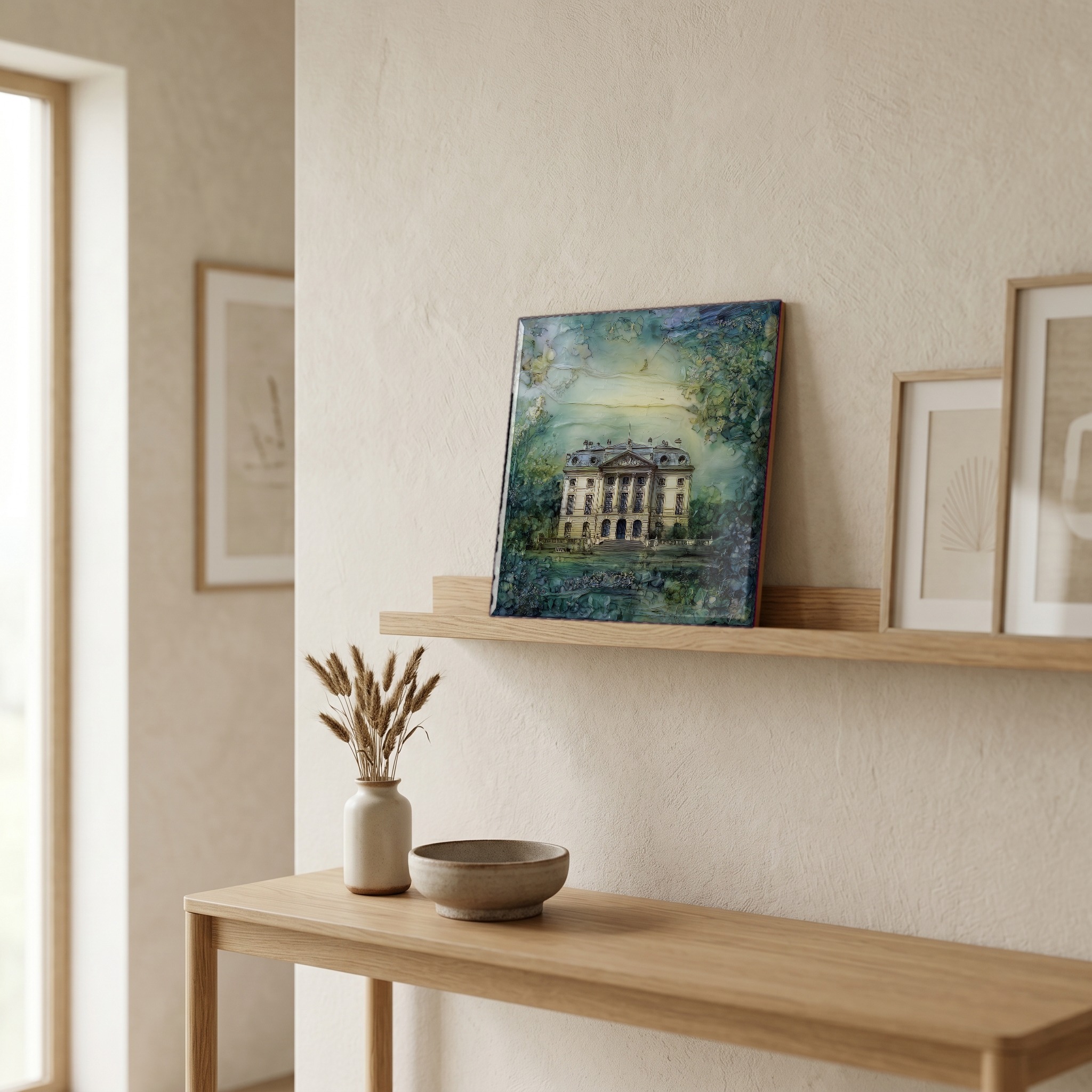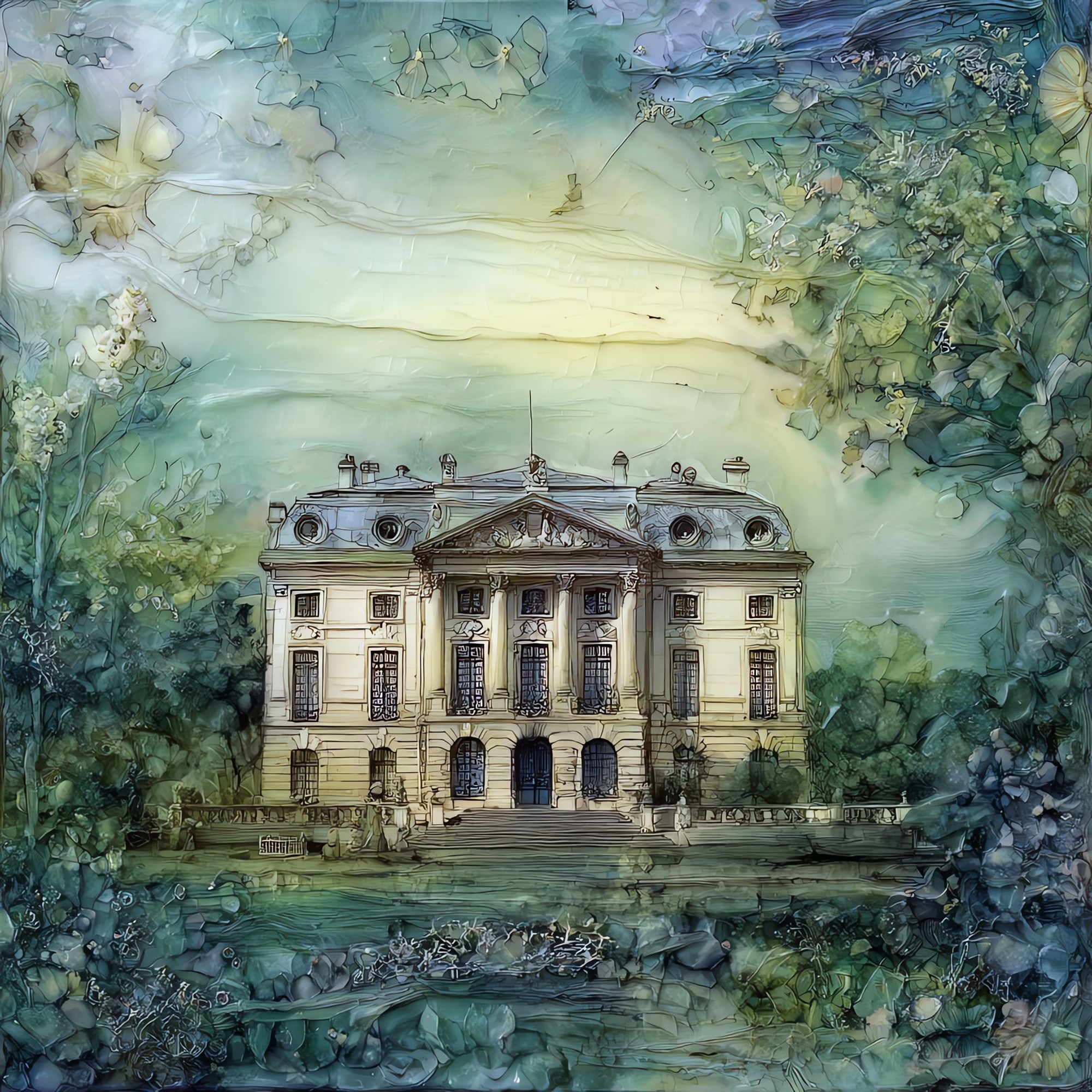
Wender·Vista
Petit Trianon
shown on ceramic, 12-inch tileFrance
on the grounds of Versailles, west of Paris

Petit Trianon

a door the queen closed behind her.

Where it lives

Not only on a wall.

A small tile on the nightstand catching the morning. A larger one above the fire. Yours, wherever you spend the slow hours.
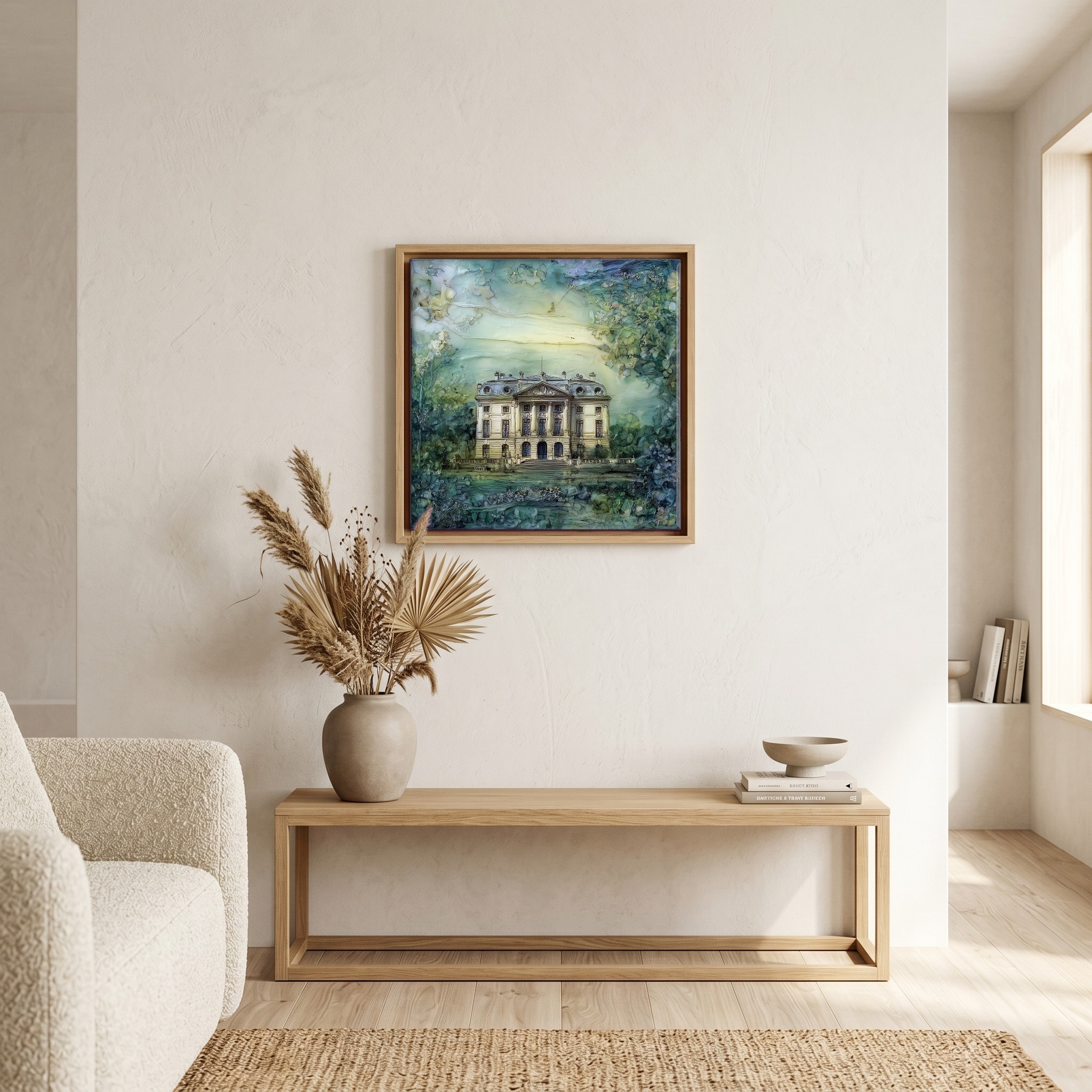
Above the bench, in a warm oak surround.
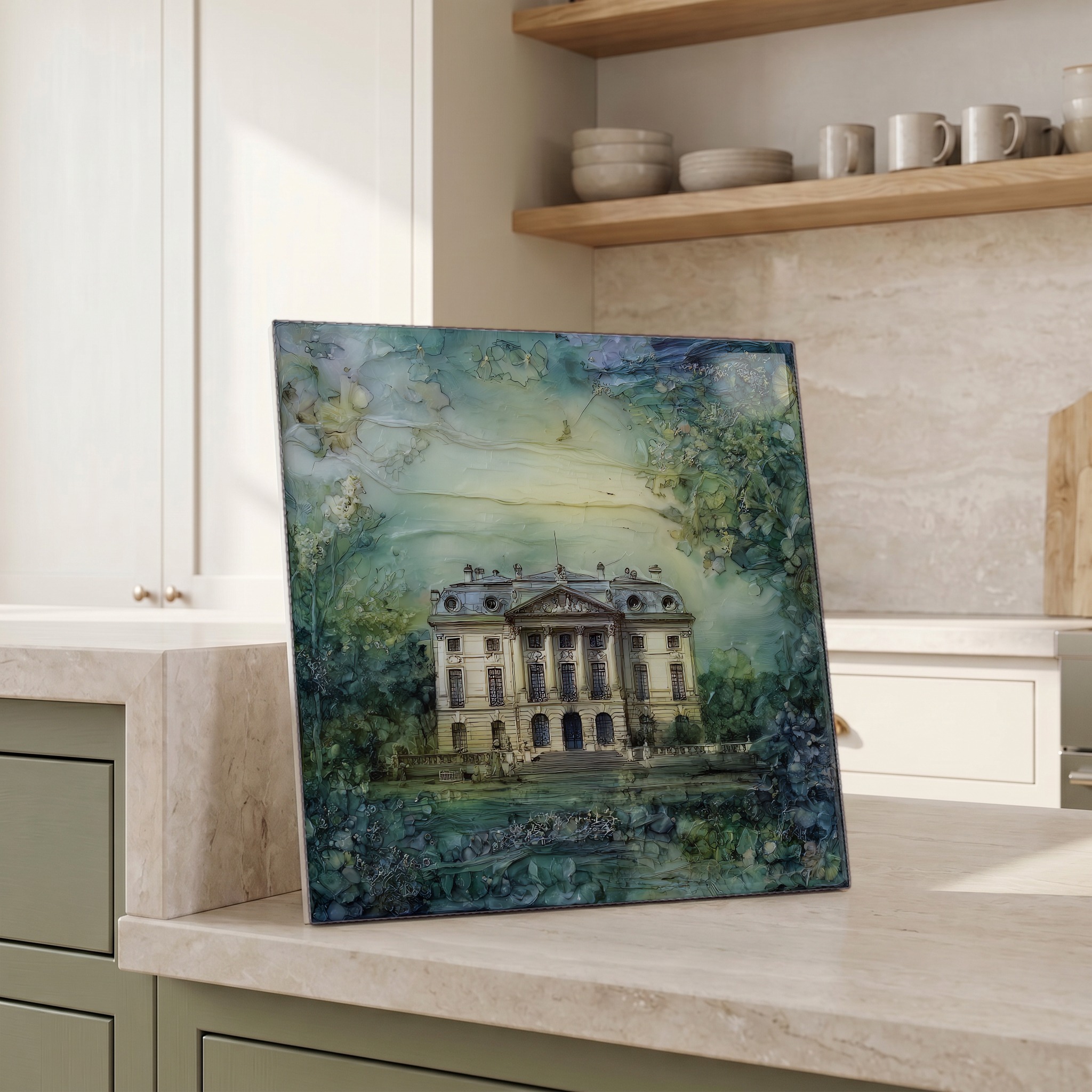
Beside the kettle, propped on the counter.
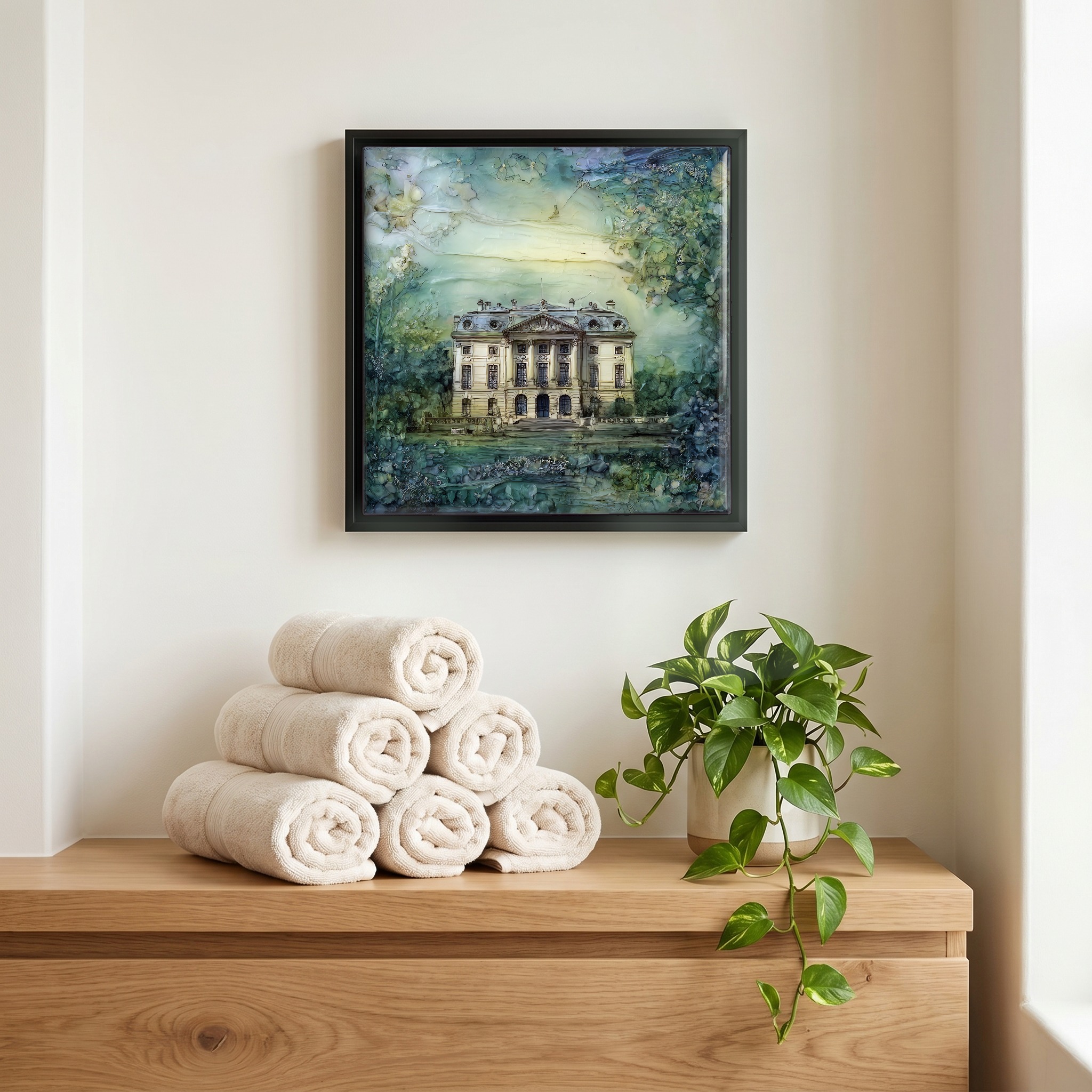
Above the linens, in a slim black surround.
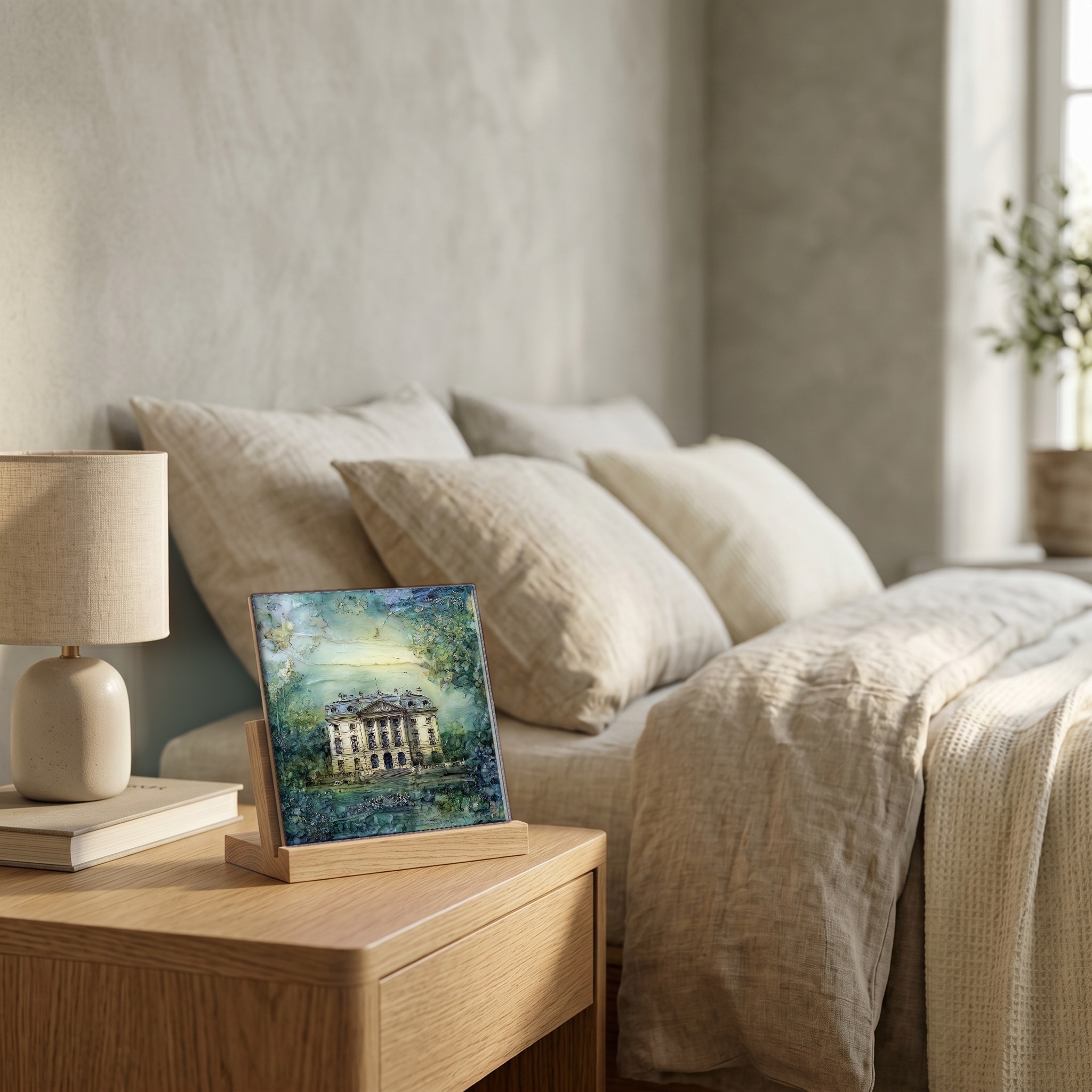
On the nightstand, on a light oak stand.
On a picture ledge, where the light comes in.
a note from the studio

A square neoclassical pavilion on the grounds of Versailles, given to Marie Antoinette in 1774 and kept by her as a private retreat. Louis XV had it built for Madame de Pompadour, who died before it opened. The four facades look toward four different gardens: one formal, one English, one botanical, one the small village she added later. The queen forbade court etiquette inside. A footman who entered without being called could be sent away. It is small for a royal house, and quiet, and that was the point.
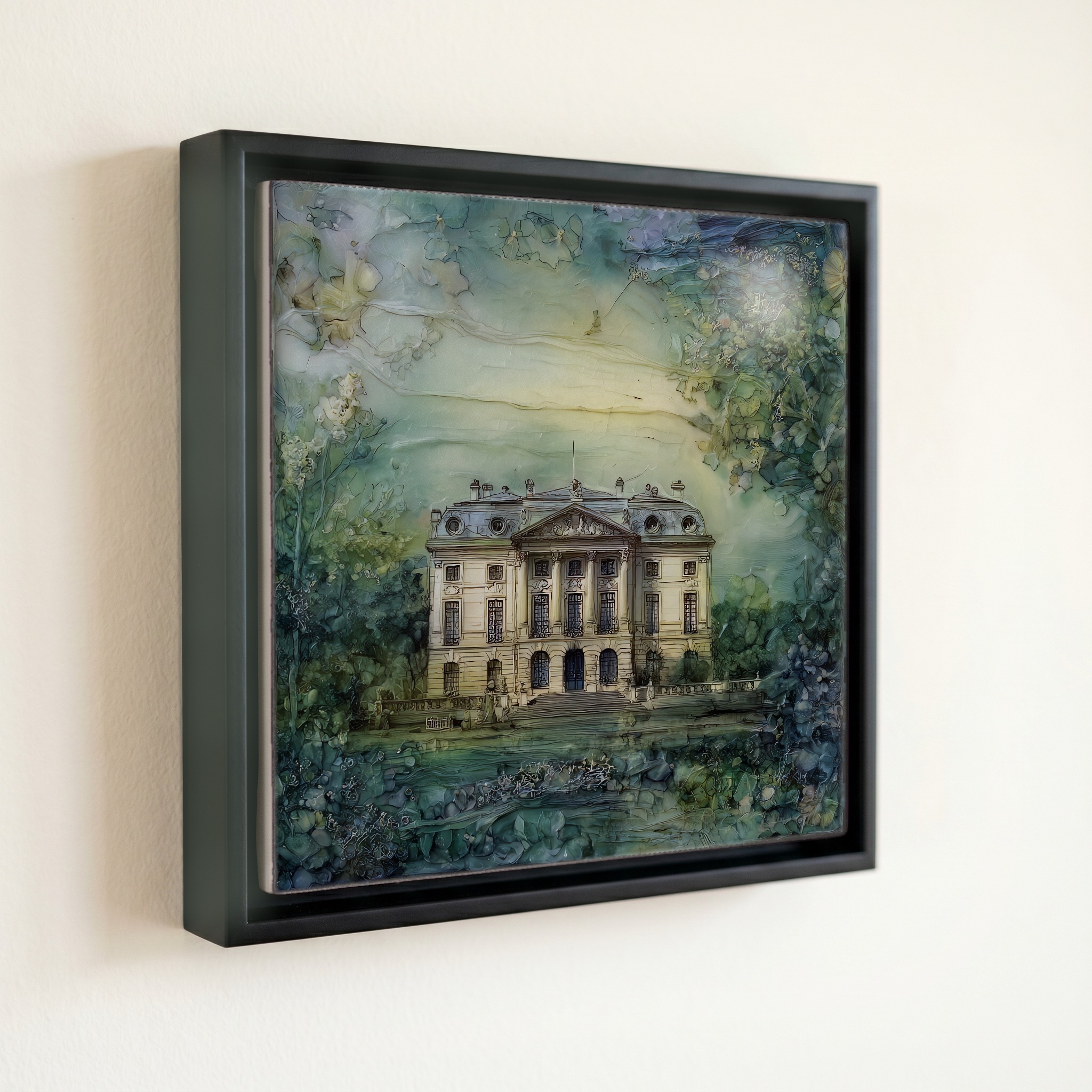
from the studio
shown in a slim black floating frame · 6 × 6 in
— bring it home

Petit Trianon, on ceramic.

Each tile is finished by hand in our Knoxville studio. Artwork is slowly infused into the ceramic surface under high heat and pressure, and rests beneath a thin glossy finish. The colour lives in the surface, not on top of it.

What kind of piece?
One tile — square or rectangle.
How big?
the popular one — counter, shelf, nightstand
6 × 6 in · 15 cm · 1.6 lb
Surface finish
A clear glossy finish — the artwork reads as if under resin. Ideal for show-pieces and framed wall art.
How it sits
A hidden cleat — sits ¼″ proud of the wall.
$58
Hand-finished and shipped from our studio at the foot of the Smokies. On your wall in about ten days.
size
6 × 6 in
15 cm
weighs
1.6 lb
solid in the hand
surface
ceramic, hand-finished
art rests beneath a thin glossy finish
from
Knoxville, TN
our family studio, at the foot of the Smokies
— start a Coaster Set

Pick any four 4-inch tiles — National Parks you've been to, a Smokies set, the four seasons of one place. $ for a set of , cork-backed, ready to live on the table.
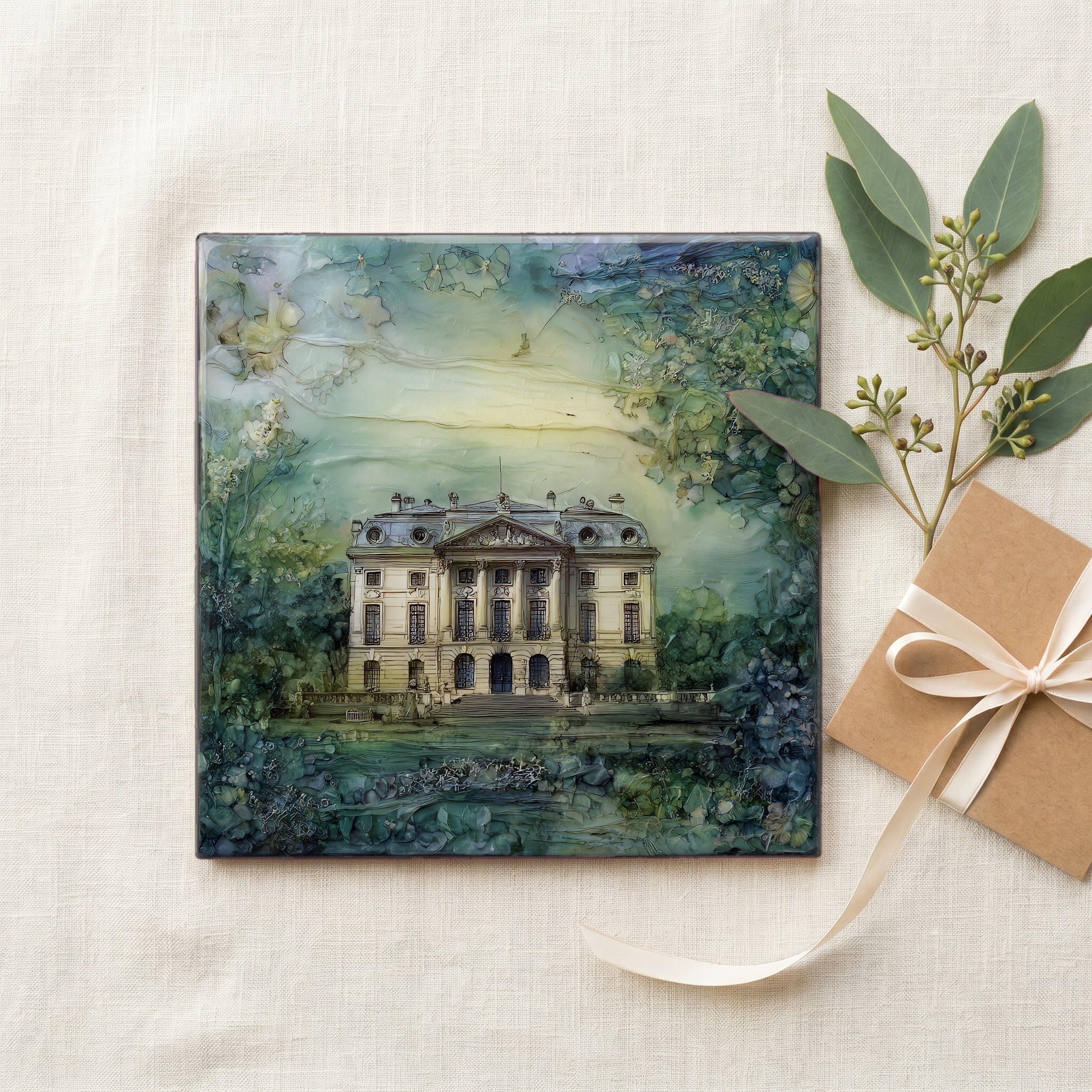
comes gift-ready
comes gift-ready

Each tile ships in a kraft box, tied with cream ribbon, with a handwritten note from the studio if you'd like to add one.
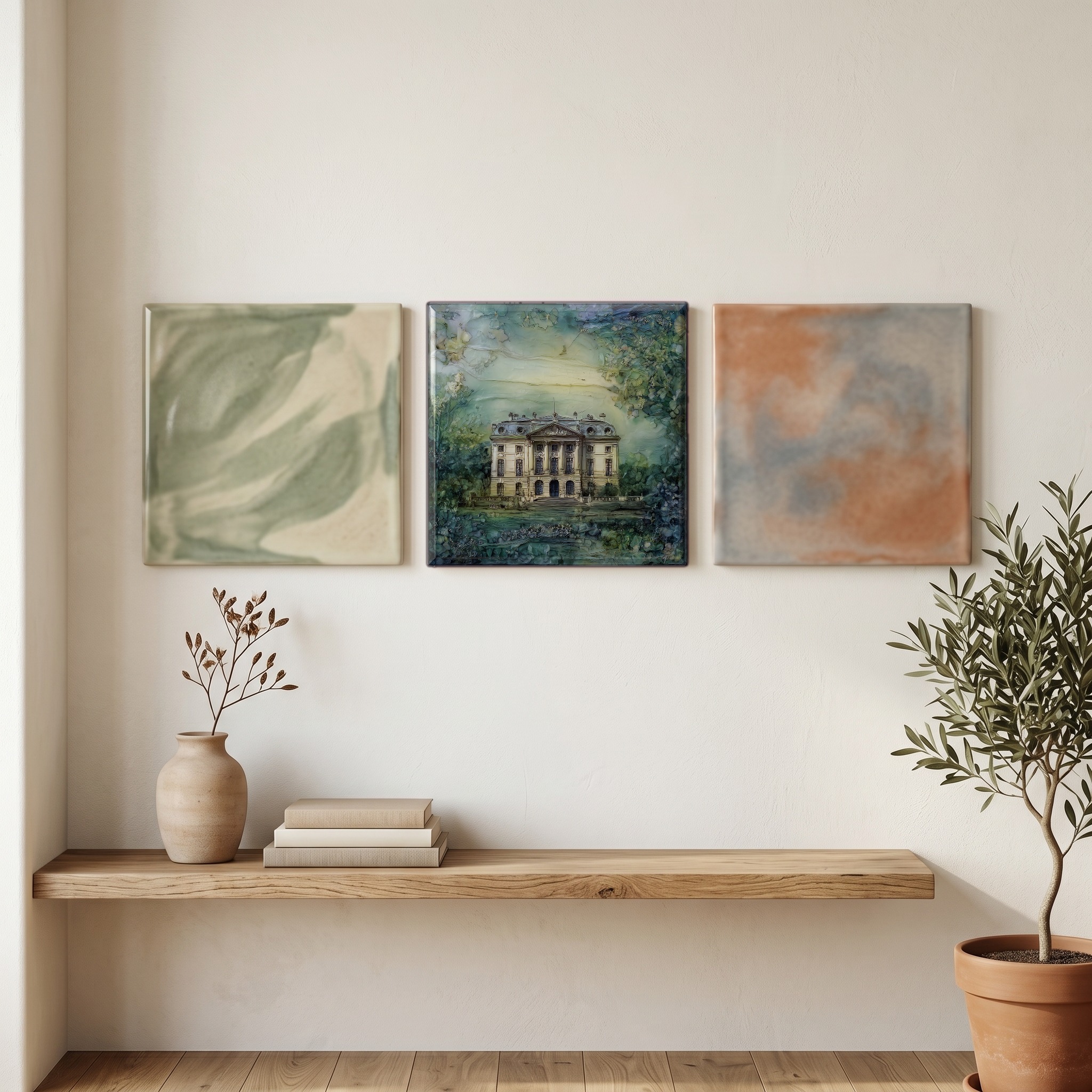
or build a grouping
or build a grouping

Three or five different vistas, hung together — a chapter of places you've been, or want to go.

about Petit Trianon

The place, in three passes.

A little of what's known, in case you fall down the rabbit hole — or want to go see it yourself.
the place

The Petit Trianon stands at the western end of the gardens of the Palace of Versailles, in the commune of Versailles, about 20 kilometres west of Paris, in the Yvelines department of Île-de-France. The pavilion sits within the Domaine de Marie-Antoinette, the section of the Versailles estate set apart for the queen's private use. The Palace and Park of Versailles, including the Trianon estate, were inscribed as a UNESCO World Heritage Site in 1979. Access is by foot or shuttle from the main palace through the gardens, or by a separate entrance from the Trianon car park north of the estate.

the stone

Designed by Ange-Jacques Gabriel and built between 1762 and 1768, the Petit Trianon is widely cited as the first major neoclassical building in France. Louis XV commissioned it for Madame de Pompadour, who died in 1764 before it was finished. Each of the four facades faces a different garden and uses a different order of pilasters, yet the whole reads as a single severe cube. Gabriel was also the architect of the Place de la Concorde and the École Militaire in Paris. The pavilion's restraint, after decades of late Rococo, marks the moment French royal taste turned. The pale Saint-Leu limestone has weathered for more than two and a half centuries.

the visit

The Petit Trianon is open to the public as part of the Château de Versailles, typically Tuesday through Sunday from noon, closed on Mondays. Entry is included with the Versailles Passport ticket, which also covers the Grand Trianon, the Hameau de la Reine, and the gardens. A separate Estate of Trianon ticket admits the Trianon palaces and the queen's hamlet without the main château. From central Paris, the RER C train reaches Versailles-Château-Rive-Gauche in about 35 minutes; from there the Trianon estate is roughly a kilometre walk through the gardens. The hamlet Marie Antoinette built nearby, finished in 1786, remains one of the most-visited features of the estate after the main palace.

where
France · Versailles, Yvelines
within
Château de Versailles
position
48.8156° N · 2.1096° E
the neighborhood

What's nearby.

A handful of named places within an hour's walk or short drive. Some we've already painted; some we will.
0.3 km W
Grand Trianon
royal palace
0.4 km NE
Hameau de la Reine
rustic hamlet
1.5 km SE
Palace of Versailles
royal palace
1 km S
Gardens of Versailles
formal gardens
N
Petit Trianon
Grand Trianon
Hameau de la Reine
Palace of Versailles
Gardens of Versailles
common questions

What people ask.

A few questions we get about Petit Trianon — and about bringing the piece home.
about the place

The Petit Trianon stands on the grounds of the Palace of Versailles, about 20 kilometres west of Paris in the Yvelines department of Île-de-France. It sits within the Domaine de Marie-Antoinette, the section of the estate set apart for the queen's private use.

Ange-Jacques Gabriel designed the Petit Trianon and built it between 1762 and 1768 for Louis XV. Gabriel was also the architect of the Place de la Concorde and the École Militaire in Paris. The pavilion is widely cited as the first major neoclassical building in France.

Louis XVI gave the Petit Trianon to Marie Antoinette in 1774, soon after he became king. She used it as a private retreat from court life at the main palace and forbade court etiquette within its walls. Visitors entered only by her personal invitation.

The Hameau de la Reine, finished in 1786, is the rustic mock-village Marie Antoinette commissioned a short walk from the Petit Trianon. It includes a working farm, a mill, and a dairy, arranged around an artificial lake. It remains one of the most visited parts of the Versailles estate.

Yes. The Palace and Park of Versailles, including the Trianon estate, were inscribed as a UNESCO World Heritage Site in 1979 (reference number 83). The Petit Trianon is one of the listed components, alongside the main château and the Grand Trianon.

The Petit Trianon is typically open Tuesday through Sunday from noon, closed on Mondays. Entry is included with the Versailles Passport ticket or the dedicated Estate of Trianon ticket, which also covers the Grand Trianon and the Hameau de la Reine.

The Petit Trianon is neoclassical, designed as a single severe cube with four different facades, each facing a different garden. It marks the moment French royal taste turned from late Rococo ornament toward the restraint of classical antiquity.

about the piece in your home

The Petit Trianon is the place most closely tied to Marie Antoinette's private life, and a tile of it carries that association directly. For a serious reader of the period, the Medium or Large reads well above a writing desk. A Coaster Set works as a quieter, more personal gift.

The restrained palette and architectural subject sit comfortably in French Country, Traditional, and Neoclassical-leaning Modern interiors. The stained-glass treatment also reads well against Maximalist colour walls, where the pale stone of the pavilion carries the eye through the surrounding pattern.

The piece fits the Coquette and Quiet Luxury directions, which both pull from 18th-century French interiors, as well as the broader return to neoclassical detail in entryways and powder rooms. It also reads at home in a Grandmillennial setting.

Above a standard sofa or console, a single Large tile reads at the right scale. For a longer wall or a more architectural statement, the 4-tile Mural carries the proportions of the pavilion better. A 9-tile Mural suits a stair landing or a long entry hall.

Yes, with the Dura Satin or Matte finish, both of which are scratch-resistant and made for vertical installation in wet rooms. The Glossy finish is reserved for framed wall display and is not recommended for backsplashes or shower walls.

A soft microfibre cloth and water. The colour is slowly infused into the ceramic surface under high heat and pressure, beneath a thin glossy finish, so the image cannot be scratched off or rubbed away in normal household cleaning.

Yes. Every piece in the WenderVista atlas is created in-house at the studio in Knoxville, Tennessee, under Reid Wender's direction. The work is not licensed, not stock, and not sold to other shops.

if this one stayed with you

A few you might also love.

Hand-picked by the eye that found Sorapis. Same air, same kind of quiet.