Wender·Vista
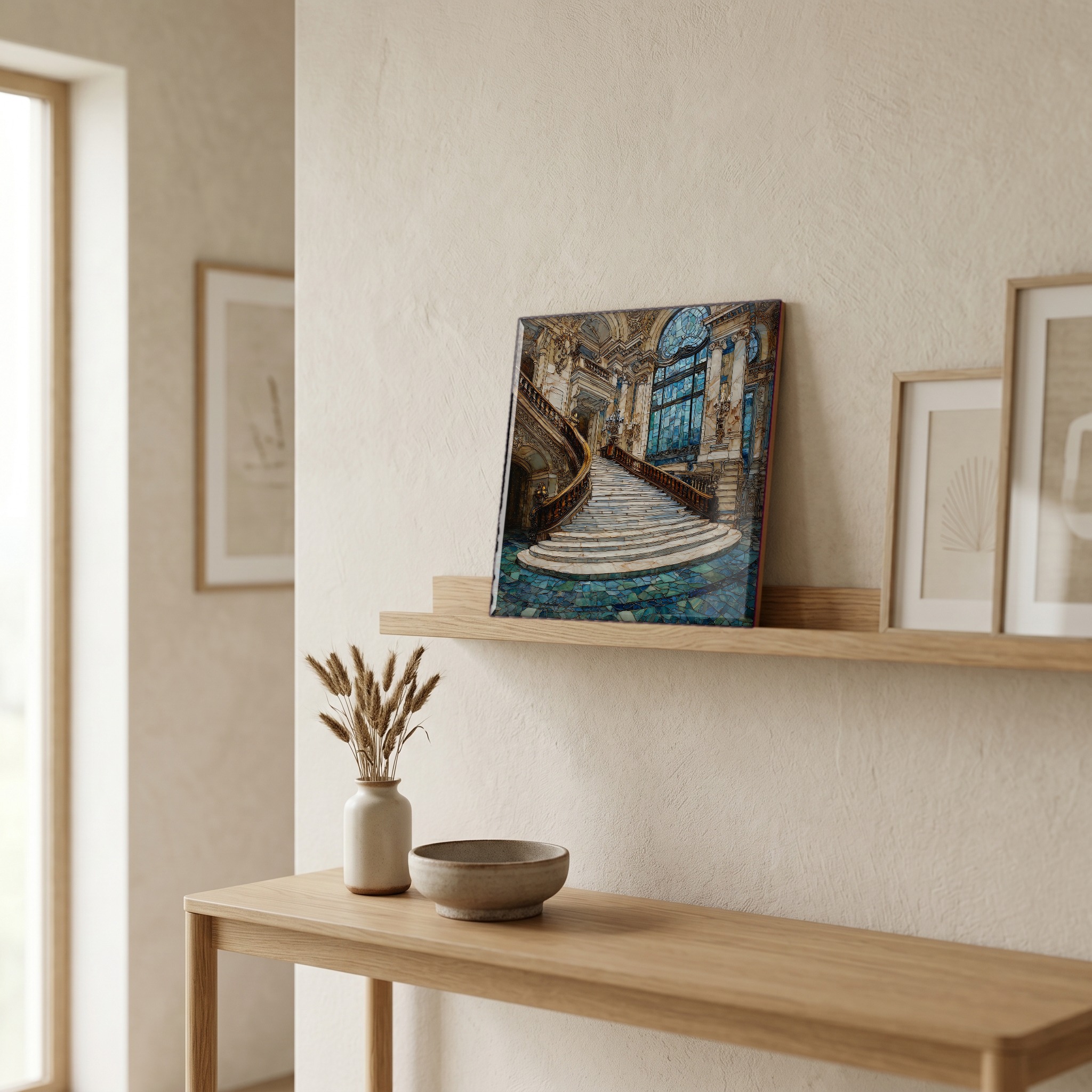
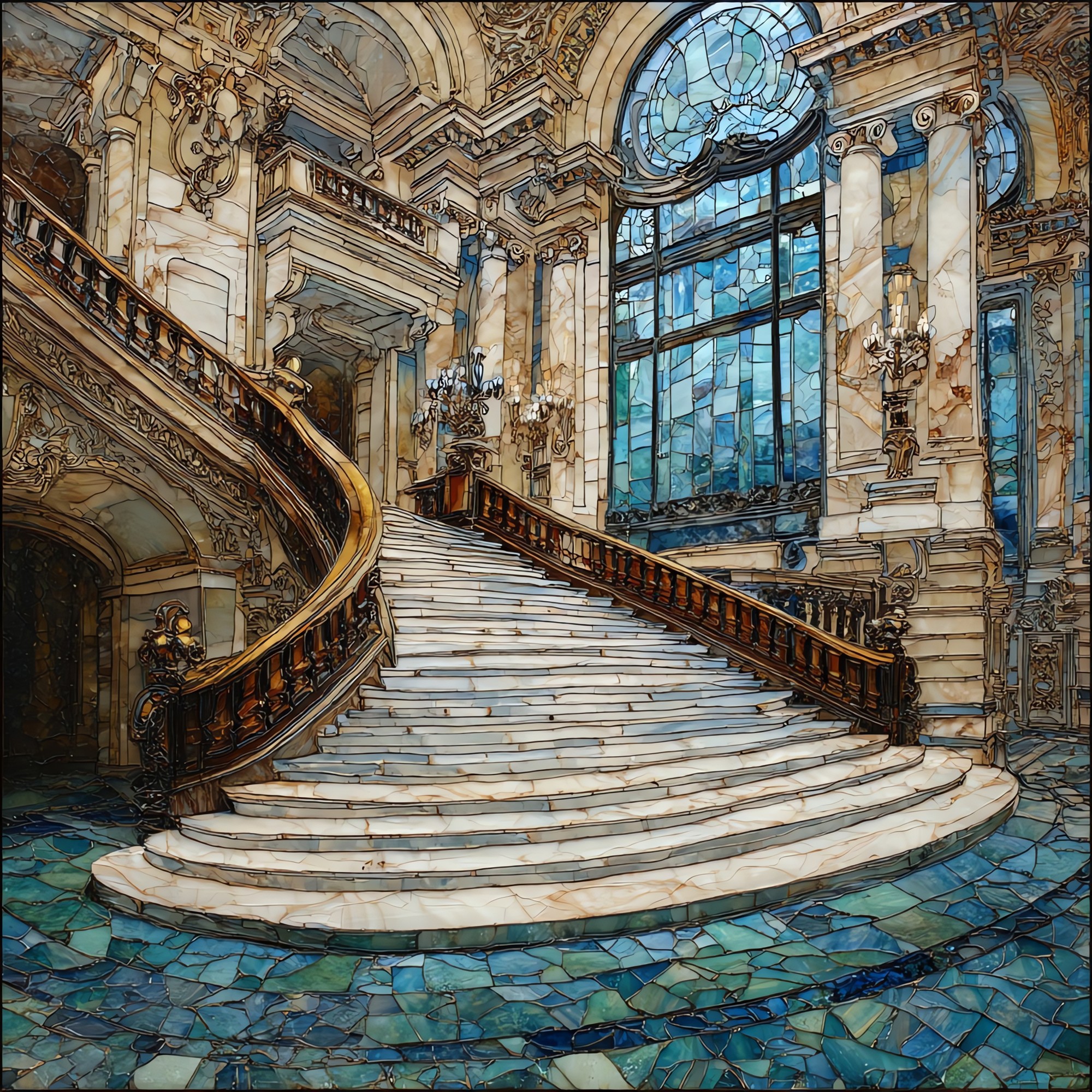
Palais Garnier Grand Staircase
shown on ceramic, 12-inch tileFrance
on the Place de l'Opéra, in central Paris

Palais Garnier Grand Staircase

a staircase built to be a room.

Where it lives

Not only on a wall.

A small tile on the nightstand catching the morning. A larger one above the fire. Yours, wherever you spend the slow hours.
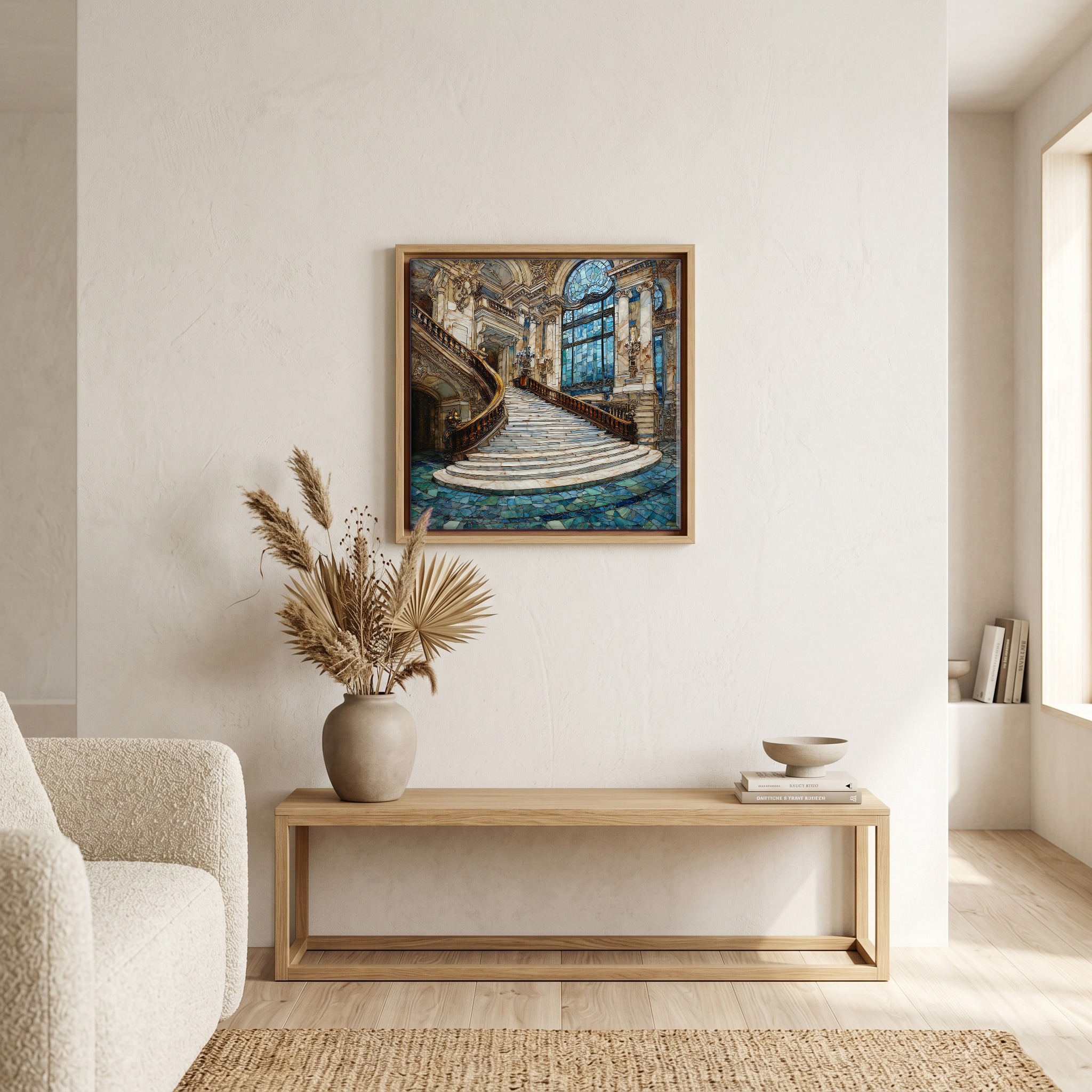
Above the bench, in a warm oak surround.
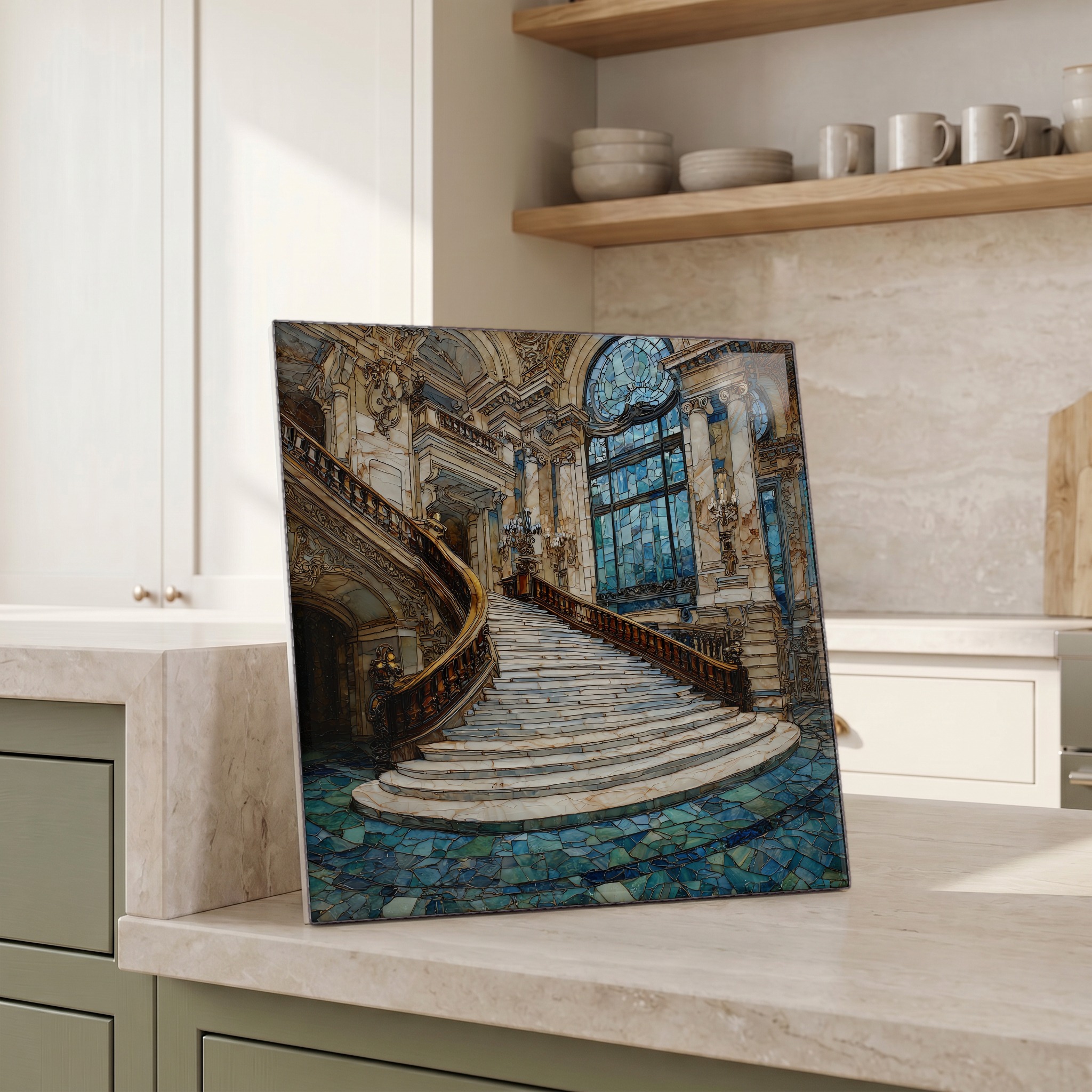
Beside the kettle, propped on the counter.
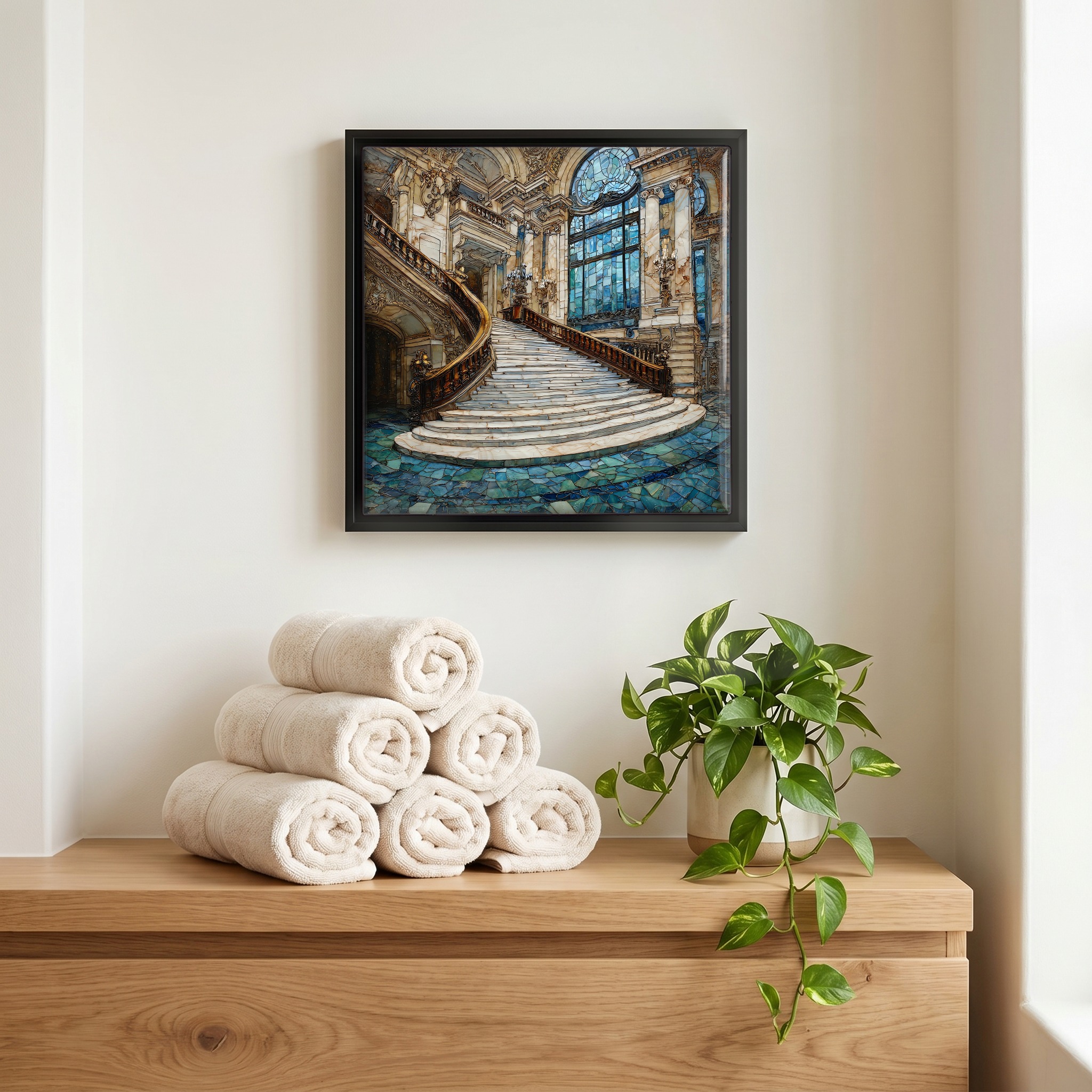
Above the linens, in a slim black surround.
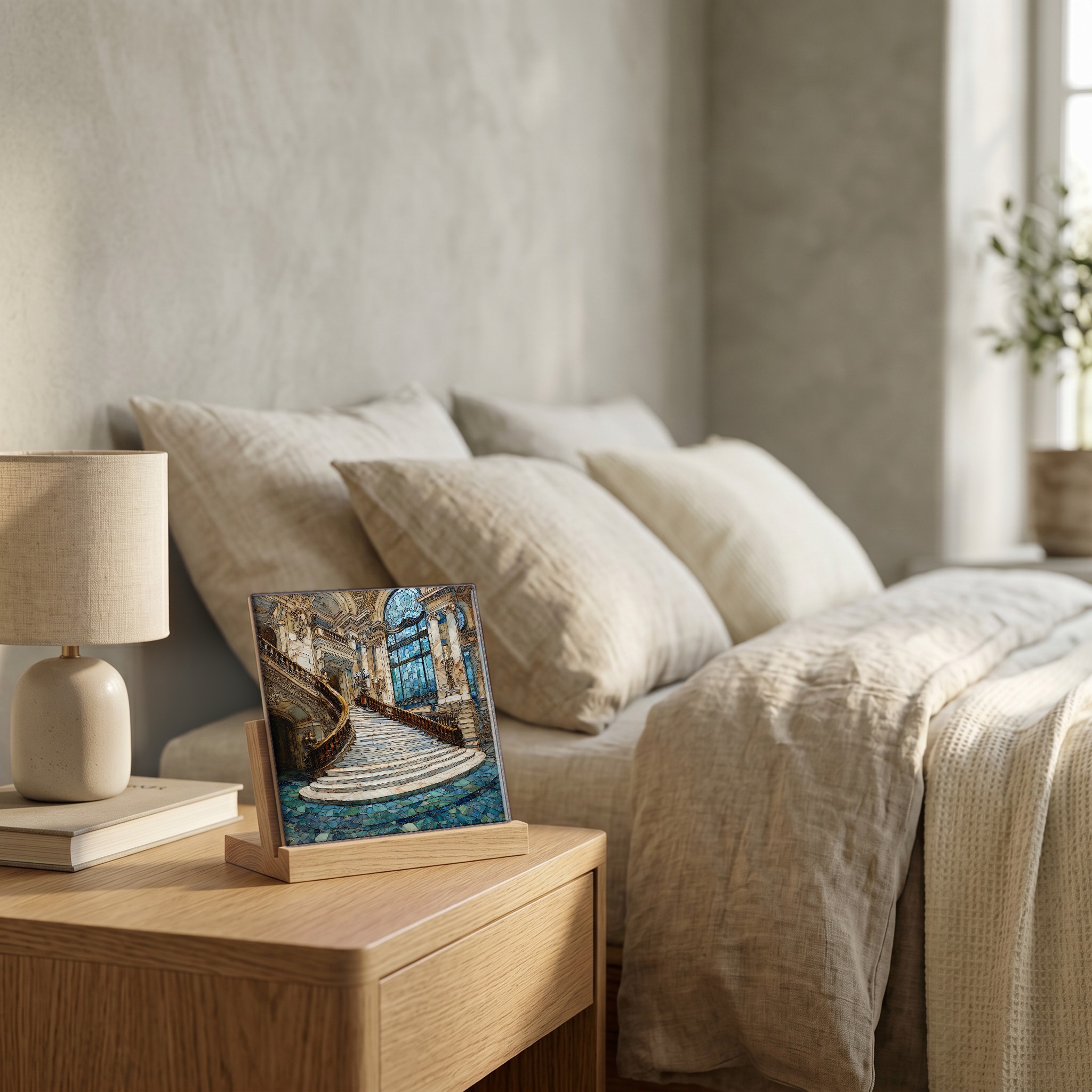
On the nightstand, on a light oak stand.
On a picture ledge, where the light comes in.
a note from the studio

Charles Garnier's idea was that the climb mattered as much as the opera. The Grand Escalier rises thirty metres under a painted dome, double-sweep in white Italian marble with green and red balustrades, designed so the audience could watch the audience. Bronze candelabra at the foot, four ceiling panels by Isidore Pils overhead, every balcony a viewing gallery for the people coming up. Half the room is staircase and half the room is theatre about staircases. The Paris Opera still holds galas here. Most visitors stop at the first landing and look up before they remember to keep climbing.
from the studio
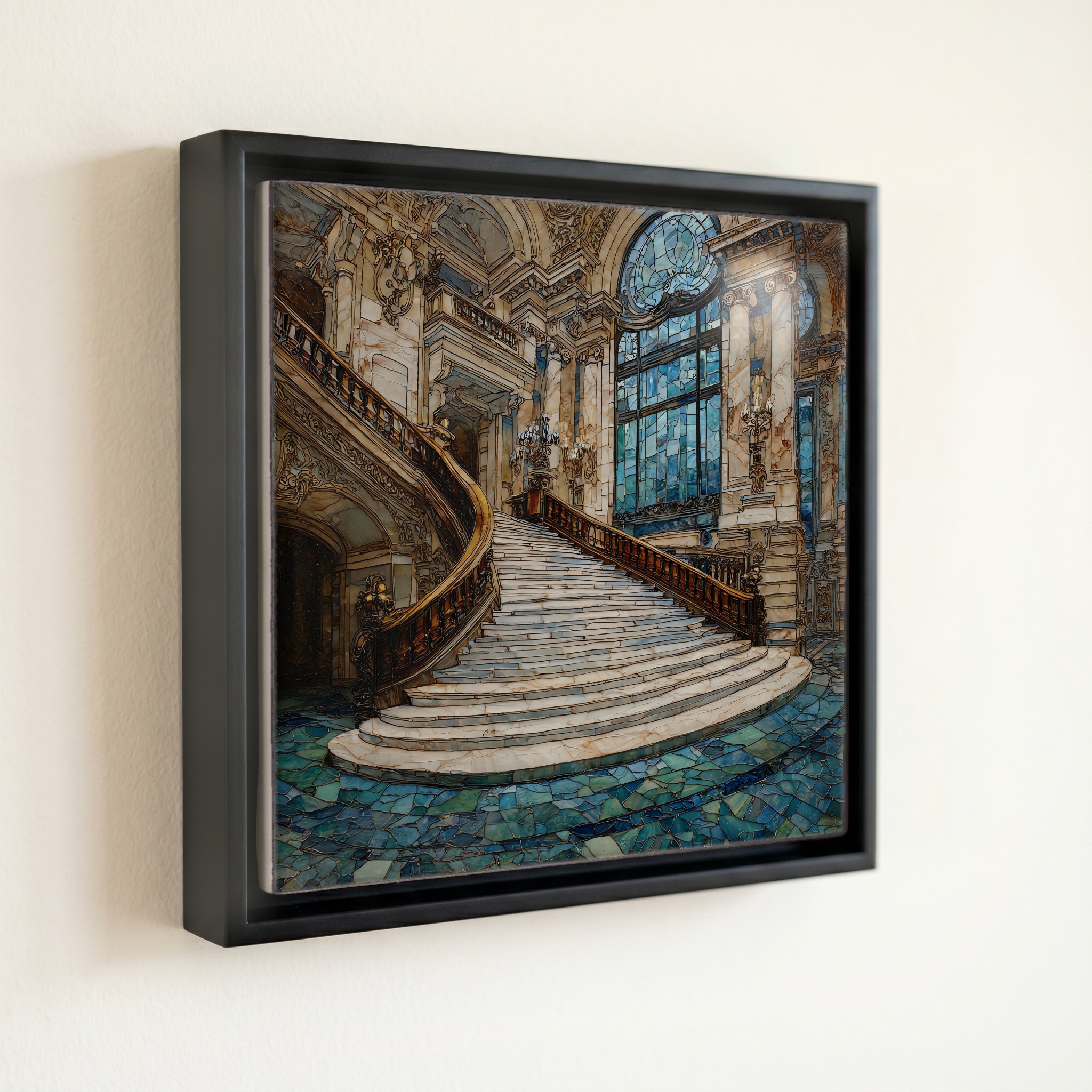
shown in a slim black floating frame · 6 × 6 in
— bring it home

Palais Garnier Grand Staircase, on ceramic.

Each tile is finished by hand in our Knoxville studio. Artwork is slowly infused into the ceramic surface under high heat and pressure, and rests beneath a thin glossy finish. The colour lives in the surface, not on top of it.

What kind of piece?
One tile — square or rectangle.
How big?
the popular one — counter, shelf, nightstand
6 × 6 in · 15 cm · 1.6 lb
Surface finish
A clear glossy finish — the artwork reads as if under resin. Ideal for show-pieces and framed wall art.
How it sits
A hidden cleat — sits ¼″ proud of the wall.
$58
Hand-finished and shipped from our studio at the foot of the Smokies. On your wall in about ten days.
size
6 × 6 in
15 cm
weighs
1.6 lb
solid in the hand
surface
ceramic, hand-finished
art rests beneath a thin glossy finish
from
Knoxville, TN
our family studio, at the foot of the Smokies
— start a Coaster Set

Pick any four 4-inch tiles — National Parks you've been to, a Smokies set, the four seasons of one place. $ for a set of , cork-backed, ready to live on the table.
comes gift-ready
comes gift-ready

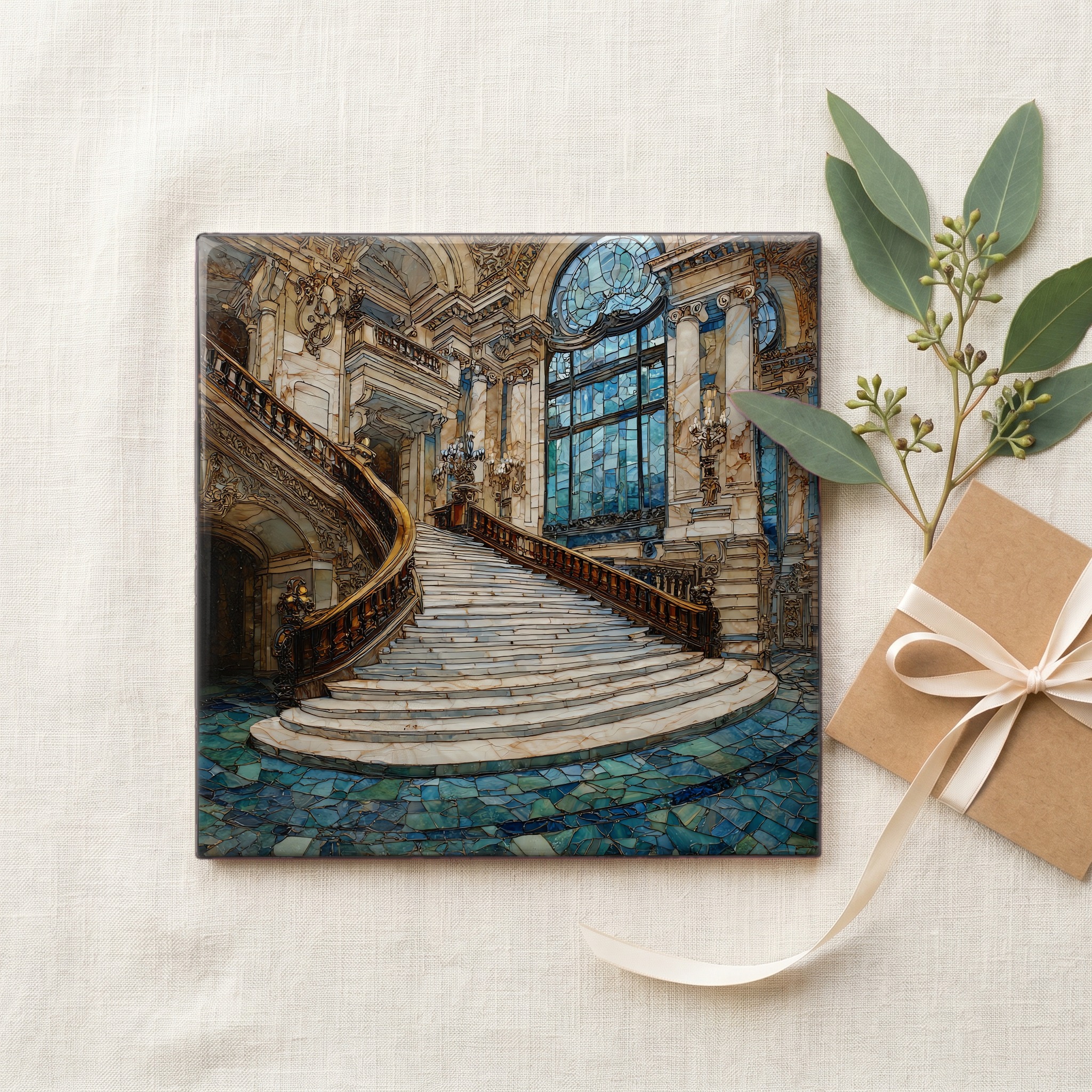
Each tile ships in a kraft box, tied with cream ribbon, with a handwritten note from the studio if you'd like to add one.
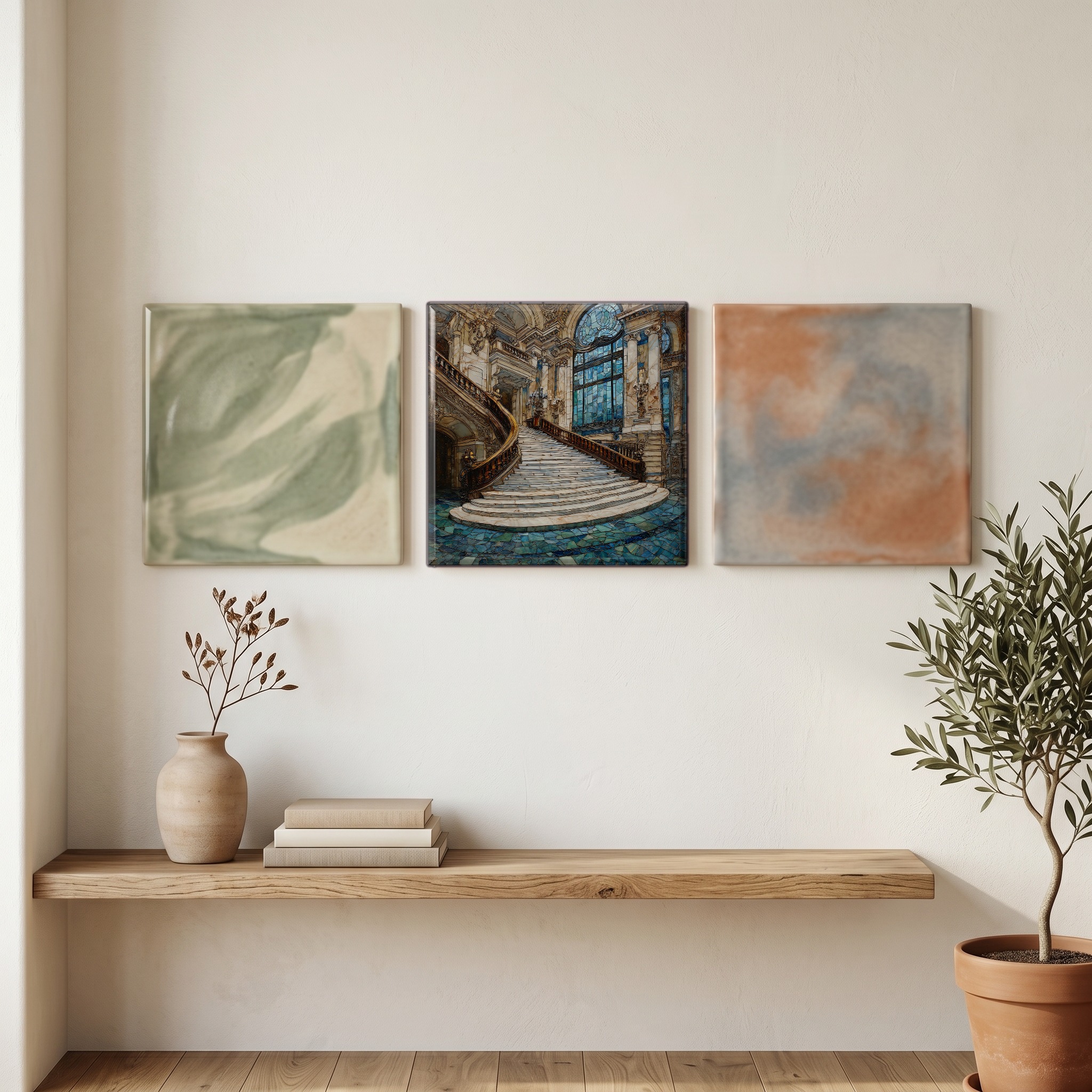
or build a grouping
or build a grouping

Three or five different vistas, hung together — a chapter of places you've been, or want to go.

about Palais Garnier Grand Staircase

The place, in three passes.

A little of what's known, in case you fall down the rabbit hole — or want to go see it yourself.
the place

Charles Garnier won the 1861 competition to design a new opera house for Napoleon III as part of Baron Haussmann's reshaping of Paris, and the Palais Garnier opened on the Place de l'Opéra in the 9th arrondissement on 5 January 1875. The Grand Staircase is the building's central interior: a thirty-metre-high hall of white Italian marble with balustrades in coloured marbles, rising in a double-sweep from the entry vestibule to the foyer levels above. Four allegorical ceiling panels by Isidore Pils cover the dome. The building is today the home of the Paris Opera Ballet and one of two houses of the Opéra National de Paris, the second being the larger Opéra Bastille across the city.

the stone

Garnier specified marbles from across Europe for the Palais Garnier, and the Grand Staircase is where the showiest of them meet. The treads are white Italian Carrara; the balustrades carry the rose-and-russet veining of Sarrancolin marble from the French Pyrenees, the same stone that lines the Hall of Mirrors at Versailles. Green and dark red marbles fill the lower walls and the base of the balustrade. The stone budget was famously the line item that broke the original construction budget, delaying the opera's opening by a full decade. Every upward glance is, in part, at money.

the light

The dome above the staircase rises thirty metres and is painted across four panels by Isidore Pils, with Apollo and Minerva and an allegory of the City of Paris receiving the plan of the new opera house. Bronze candelabra at the foot of the perron carry torch-light in cupped hands; the original gaslight has been replaced by electric flame-bulbs that still pulse and warm the marble. At a gala the room glows the colour of brandy. At a Tuesday morning visit the same room reads cool and grey-pink, with only the painted ceiling holding the warmth.

where
France · Paris, Île-de-France
position
48.8720° N · 2.3317° E
the neighborhood

What's nearby.

A handful of named places within an hour's walk or short drive. Some we've already painted; some we will.
1 km S
Place Vendôme
square
at the lake
Galeries Lafayette Haussmann
department store
1 km S
Tuileries Garden
garden
1 km S
Louvre Museum
museum
2 km S
Sainte-Chapelle
Gothic chapel
2 km SE
Notre-Dame de Paris
Gothic cathedral
2 km N
Sacré-Cœur
basilica
2 km W
Arc de Triomphe
monument
N
Palais Garnier Grand Staircase
Place Vendôme
Galeries Lafayette Haussmann
Tuileries Garden
Louvre Museum
Sainte-Chapelle
Notre-Dame de Paris
Sacré-Cœur
common questions

What people ask.

A few questions we get about Palais Garnier Grand Staircase — and about bringing the piece home.
about the place

The staircase is the central hall of the Palais Garnier, the opera house on Place de l'Opéra in the 9th arrondissement of Paris. It rises directly from the entrance vestibule, before the auditorium itself. The closest Métro stop is Opéra, on lines 3, 7, and 8.

Charles Garnier won the 1861 competition to design a new opera house for Napoleon III, at the age of thirty-five. Construction took fourteen years, partly because the Franco-Prussian War and the Paris Commune interrupted the work, and the building opened on 5 January 1875.

The staircase combines several marbles: white Italian Carrara for the treads, rose-and-russet Sarrancolin from the French Pyrenees for the balustrade, and green and red marbles for the lower walls and balustrade base. Garnier's stone selections famously broke the original construction budget.

Garnier designed the Grand Escalier as a room of its own, half-stairs and half-theatre, so the audience could watch the audience arrive. The thirty-metre-high dome above the staircase is decorated with four allegorical ceiling panels by the French painter Isidore Pils.

Yes. The Palais Garnier offers self-guided daytime visits most days from roughly 10:00 to 17:00 (15:00 on matinée days); guided tours in English run on certain afternoons. Performance evenings close the building to daytime visitors. Tickets are sold at the door and through operadeparis.fr.

Gaston Leroux's 1910 novel set its phantom in the Palais Garnier's basement levels, drawing on real features of the building including the underground reservoir below the auditorium, which firefighters still use to train. The staircase appears in nearly every screen adaptation of the story.

The Palais Garnier is one of the two homes of the Opéra National de Paris and the principal home of the Paris Opera Ballet. The second house, the larger Opéra Bastille, opened in 1989. Programming alternates between the two buildings throughout the season.

about the piece in your home

It's been a fitting gift for many of our customers with ties to Paris or to classical performance. The Grand Staircase is the part of the Palais Garnier that ballet dancers, opera-goers, and Paris regulars all share a memory of. A Small or Medium with a handwritten note from the studio carries well.

The Voynich palette pulls the marble's red-and-gold veining into something jewel-toned, so the tile sits well with Maximalist, Art Deco-revival, and Old Hollywood interiors. It also holds its own as a single rich accent in a Minimalist or Japandi space where the wall is otherwise quiet.

Yes. Both styles lean on ornate marble, deep jewel tones, and architectural drama, and the Grand Staircase carries all three. The Medium or Large reads as a single small painting on a deep-toned wall; the Mural turns one wall into the room itself.

For above a sofa or a wide console, the Large (single tile) is the simplest answer; a 4-tile or 9-tile Mural fills the wall with the full sweep of the staircase. Most reading rooms and entryways read best at the 4-tile Mural.

Yes, in the Dura Satin or Matte finish. The colour is slowly infused into the ceramic surface under high heat and pressure, so steam and splashes do not lift it. Use the Dura Satin for a soft sheen, the Matte for no sheen at all.

A microfibre cloth and water. No solvents, no household cleaners, no abrasive pads. The colour lives in the surface, so a wipe-down is all it takes to bring it back.

Yes. Every WenderVista piece is painted in our own visual language by Reid Wender and produced in our studio in Knoxville, Tennessee. We do not license third-party art and we do not sell prints of work we do not own.

if this one stayed with you

A few you might also love.

Hand-picked by the eye that found Sorapis. Same air, same kind of quiet.