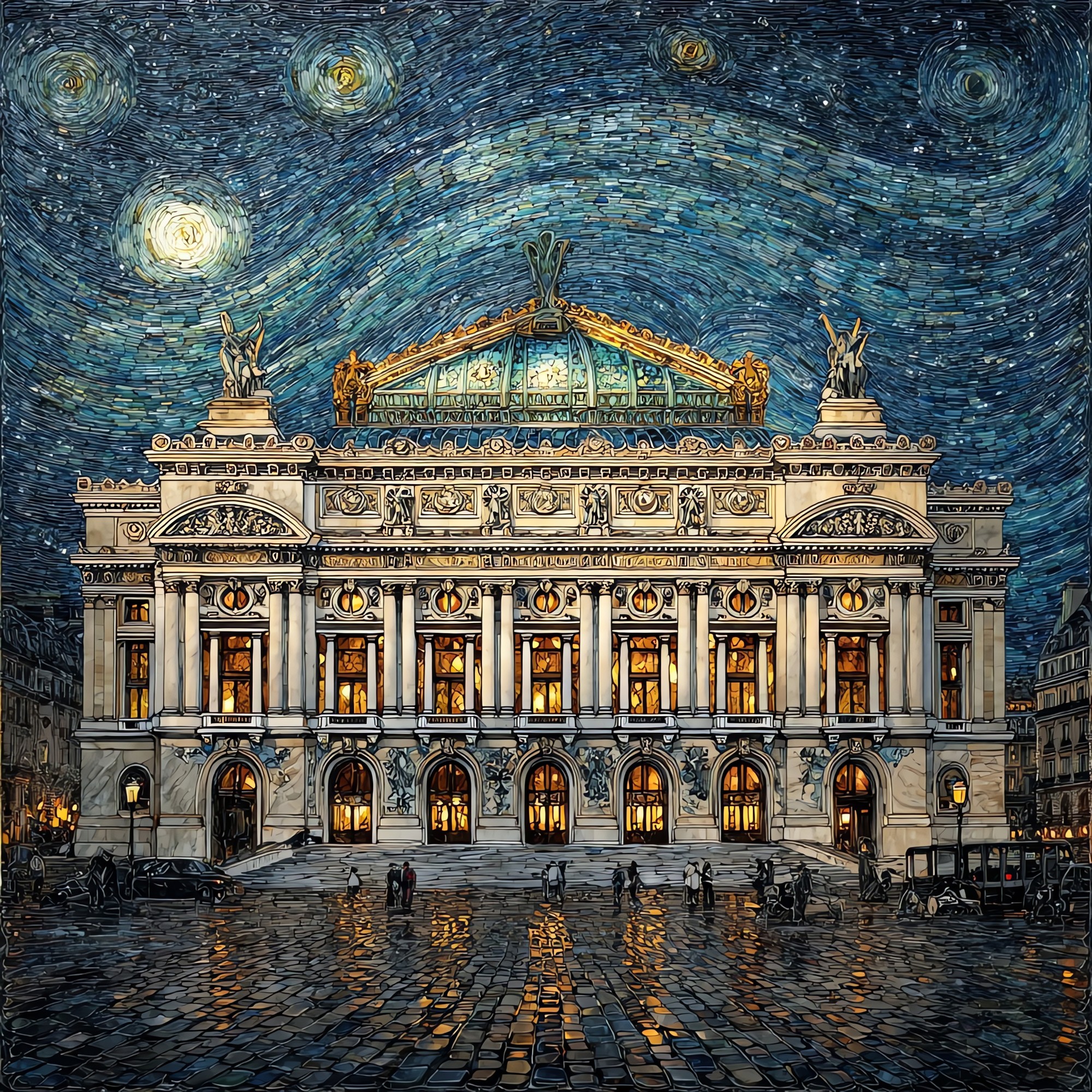
Palais Garnier Facade
— the gold of Apollo, just before the curtain.
Not only on a wall.
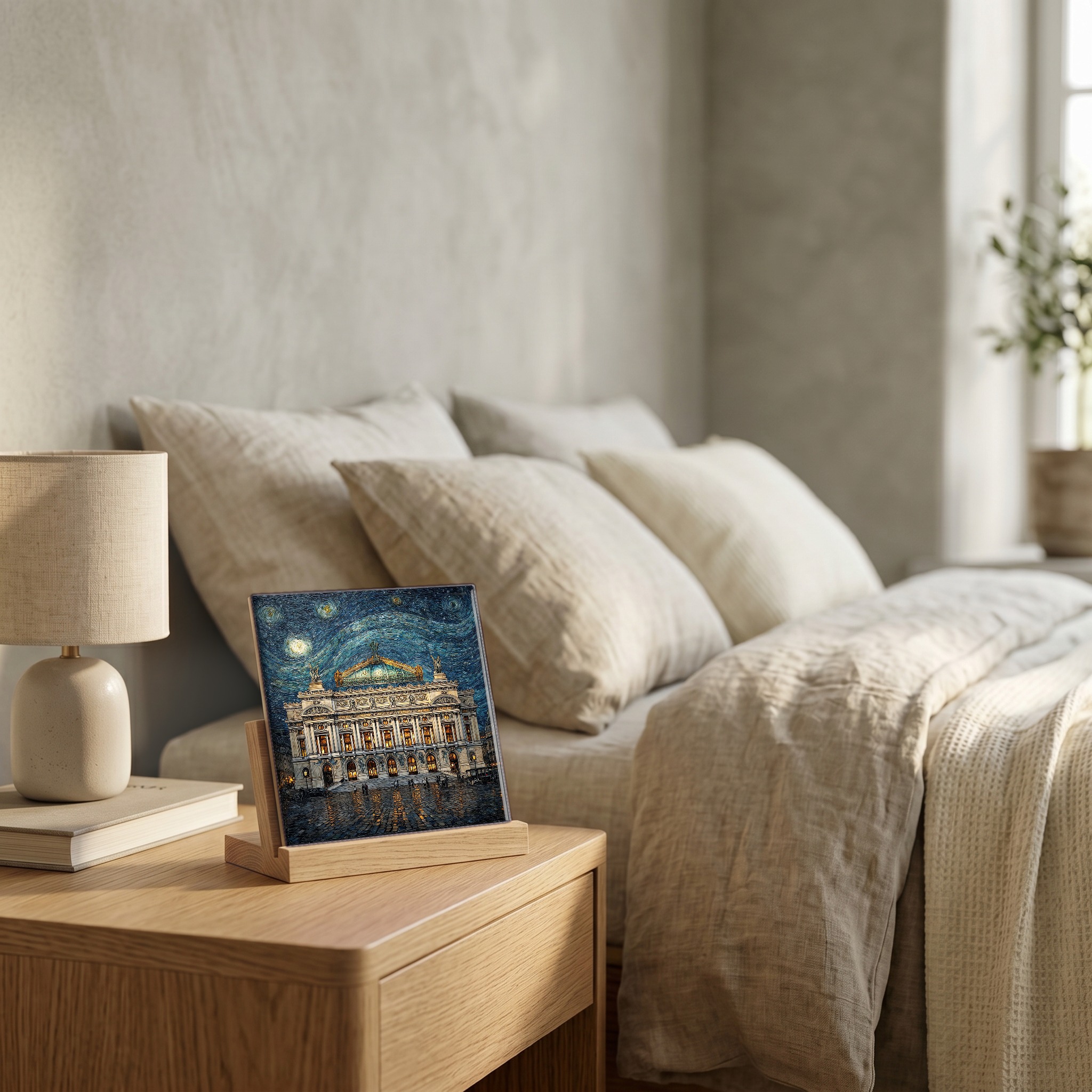
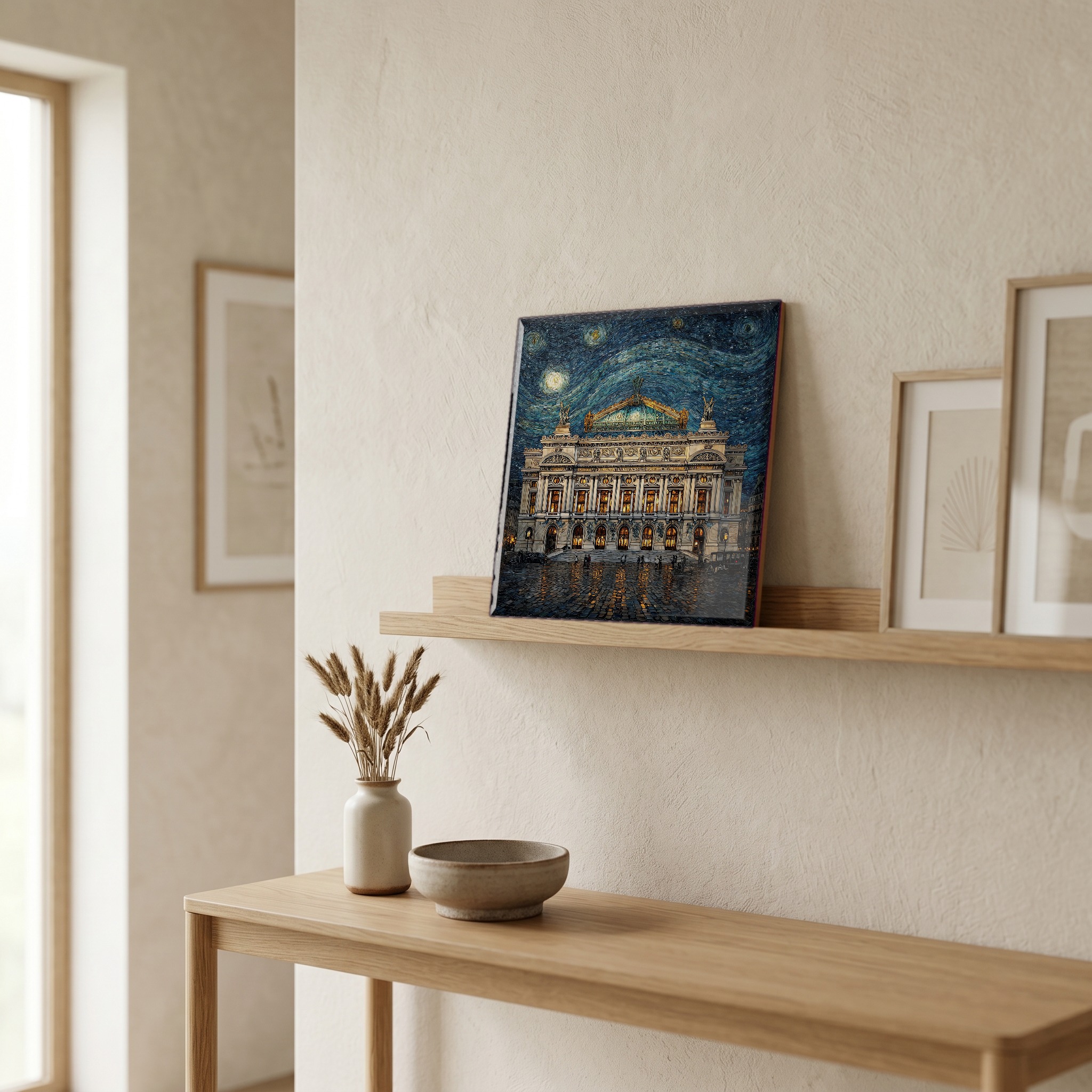
“Charles Garnier won the design competition in 1861. The facade took fourteen years to finish. Seven bays of polychrome marbles. Sculptural groups along the lower colonnade. Gilded bronze busts of composers above the loggia: Rossini, Beethoven, Mozart, Auber. Apollo at the apex, lifting his lyre over the Boulevard des Capucines. The Carpeaux La Danse on the right is a copy. The original was taken inside in 1964 and now lives at the Musée d'Orsay. The marble reads differently when it rains. The boulevard fills early on premiere nights.
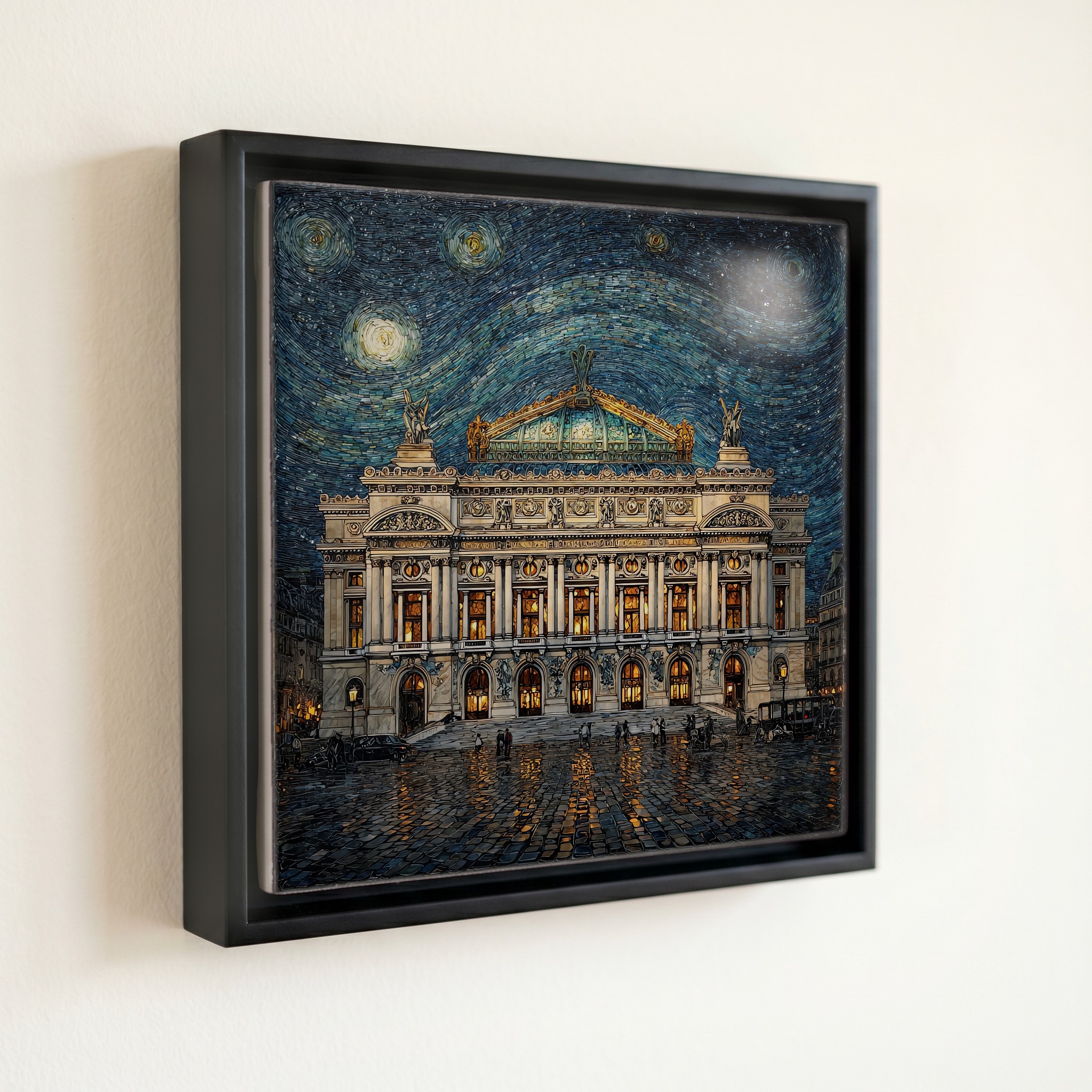
Palais Garnier Facade, on ceramic.
Each tile is finished by hand in our Knoxville studio. Artwork is slowly infused into the ceramic surface under high heat and pressure, and rests beneath a thin glossy finish. The colour lives in the surface, not on top of it.
Pick any four 4-inch tiles — National Parks you've been to, a Smokies set, the four seasons of one place. $ for a set of , cork-backed, ready to live on the table.
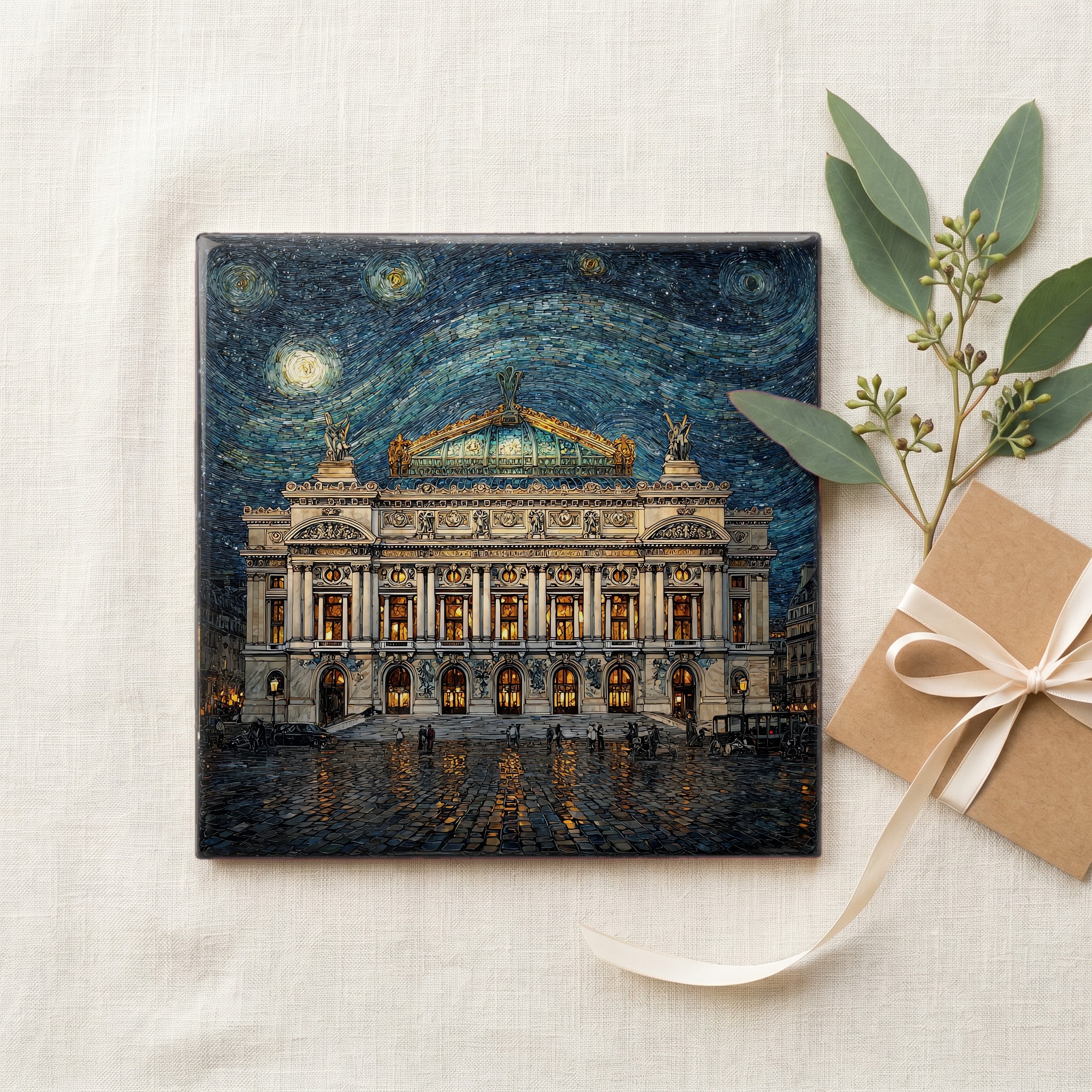
Each tile ships in a kraft box, tied with cream ribbon, with a handwritten note from the studio if you'd like to add one.
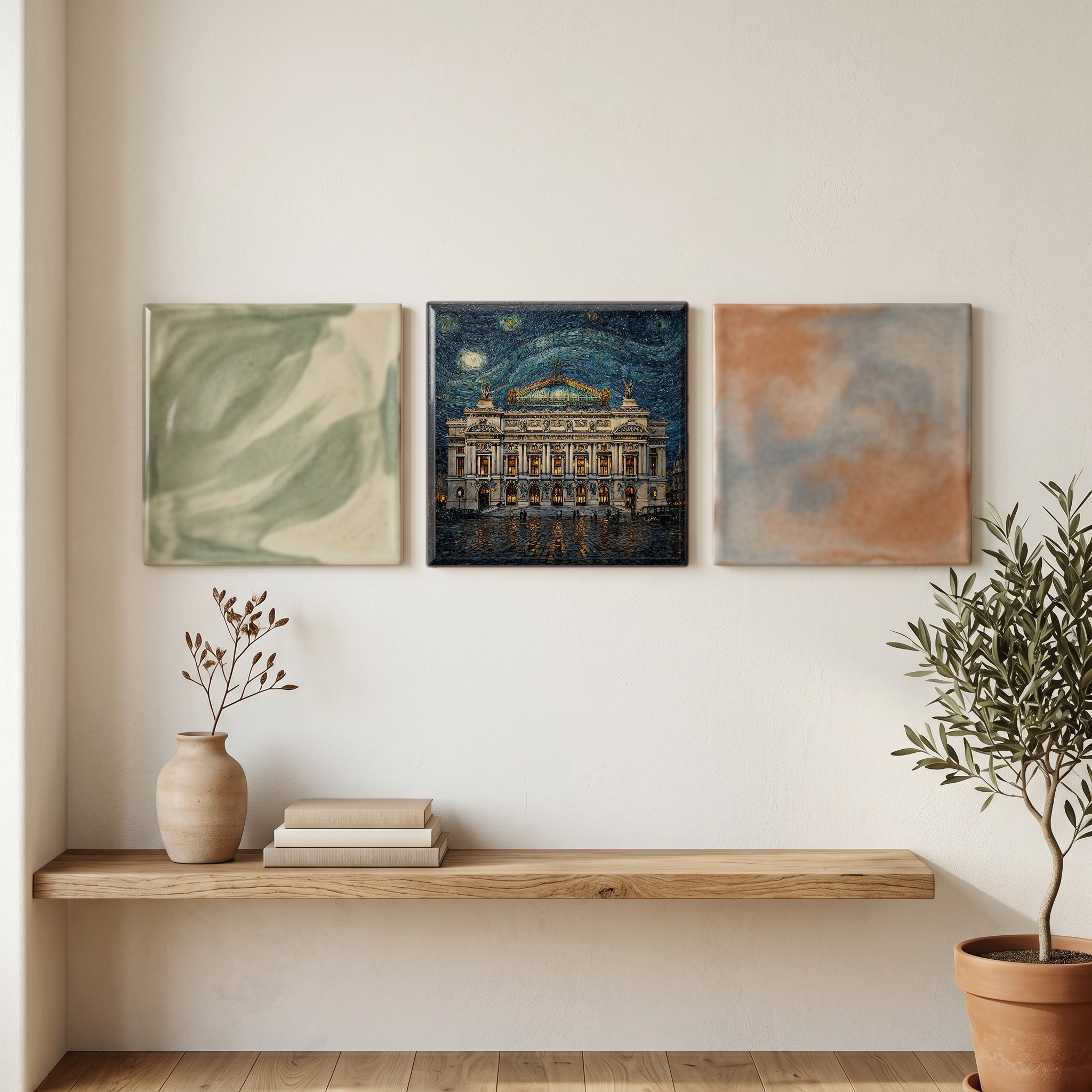
Three or five different vistas, hung together — a chapter of places you've been, or want to go.
The place, in three passes.
The Palais Garnier sits at the Place de l'Opéra in the 9th arrondissement of Paris, at the head of the Avenue de l'Opéra that Haussmann cut through the city to give the new opera house its approach. Charles Garnier won the design competition in 1861, beating 170 other entries. Construction ran fourteen years, interrupted by the Franco-Prussian War and the Paris Commune, and the building opened on 5 January 1875 under the Third Republic. The auditorium seats 1,979. The Palais Garnier remains one of two homes of the Opéra national de Paris; the other is the Opéra Bastille, which opened in 1989.
The facade is built from polychrome marbles quarried across Europe: green from Sweden, red from Norway, blue and pink from French and Italian sources, set into a Beaux-Arts elevation Garnier himself called the Napoléon III style. The lower colonnade carries four sculptural groups. One of them, La Danse by Jean-Baptiste Carpeaux from 1869, caused a public scandal at unveiling and was later moved indoors. The copy now in place was carved by Paul Belmondo in 1964. Above the loggia run gilded bronze busts of Rossini, Beethoven, Mozart, Halévy, Auber and Meyerbeer. Aimé Millet's gilded Apollo crowns the apex, his lyre held above the boulevard.
The Palais Garnier is open to visitors most days of the year, generally 10:00 to 17:00, with longer hours in summer. Tickets sold by the Opéra national de Paris admit visitors to the Grand Escalier, the Grand Foyer, and the auditorium when no rehearsal is in progress. The auditorium ceiling, painted by Marc Chagall in 1964, sits above the original Lenepveu canvas and remains in place. Métro Opéra serves lines 3, 7 and 8 and exits at Place de l'Opéra, directly in front of the facade. Performances run through a roughly nine-month opera and ballet season.