Wender·Vista
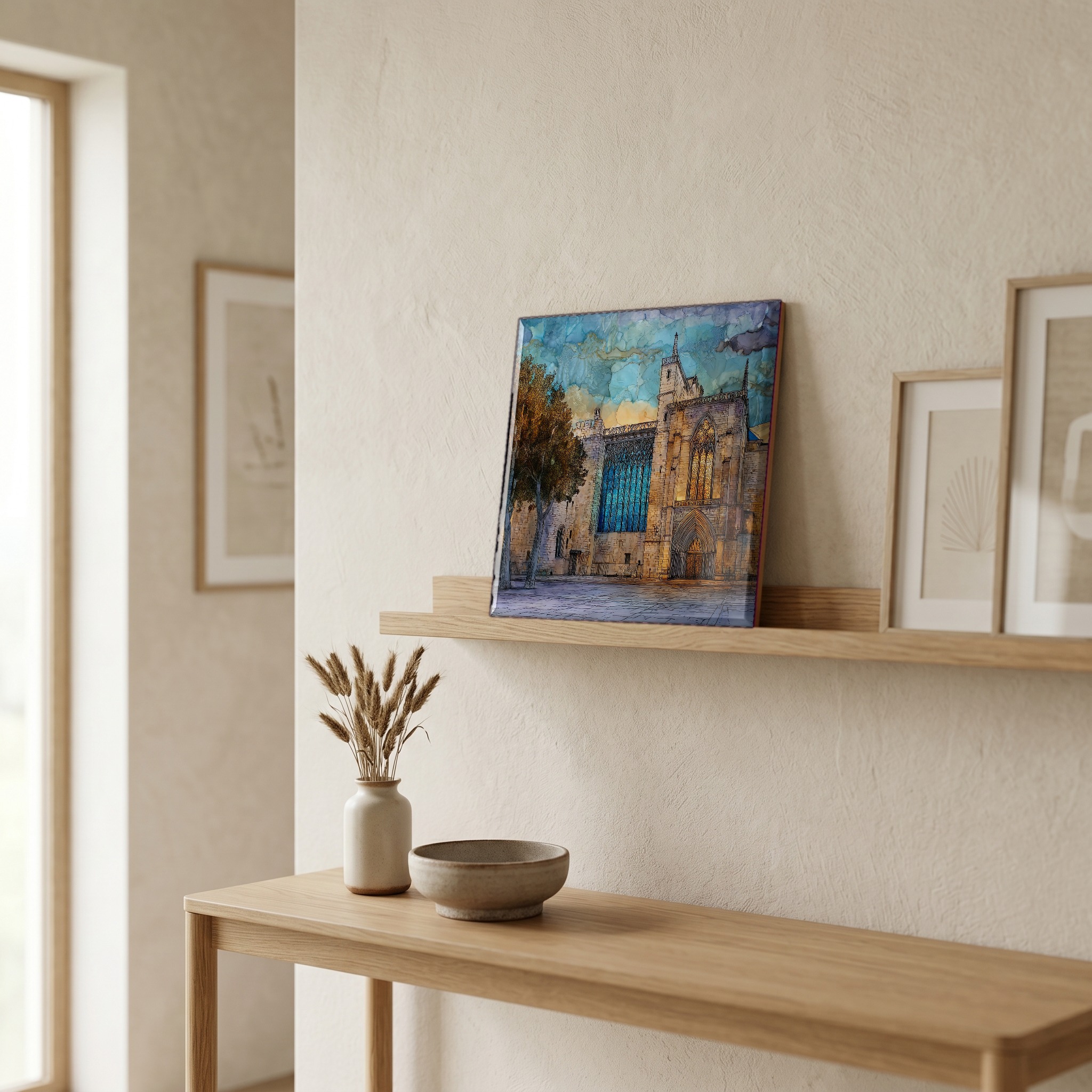
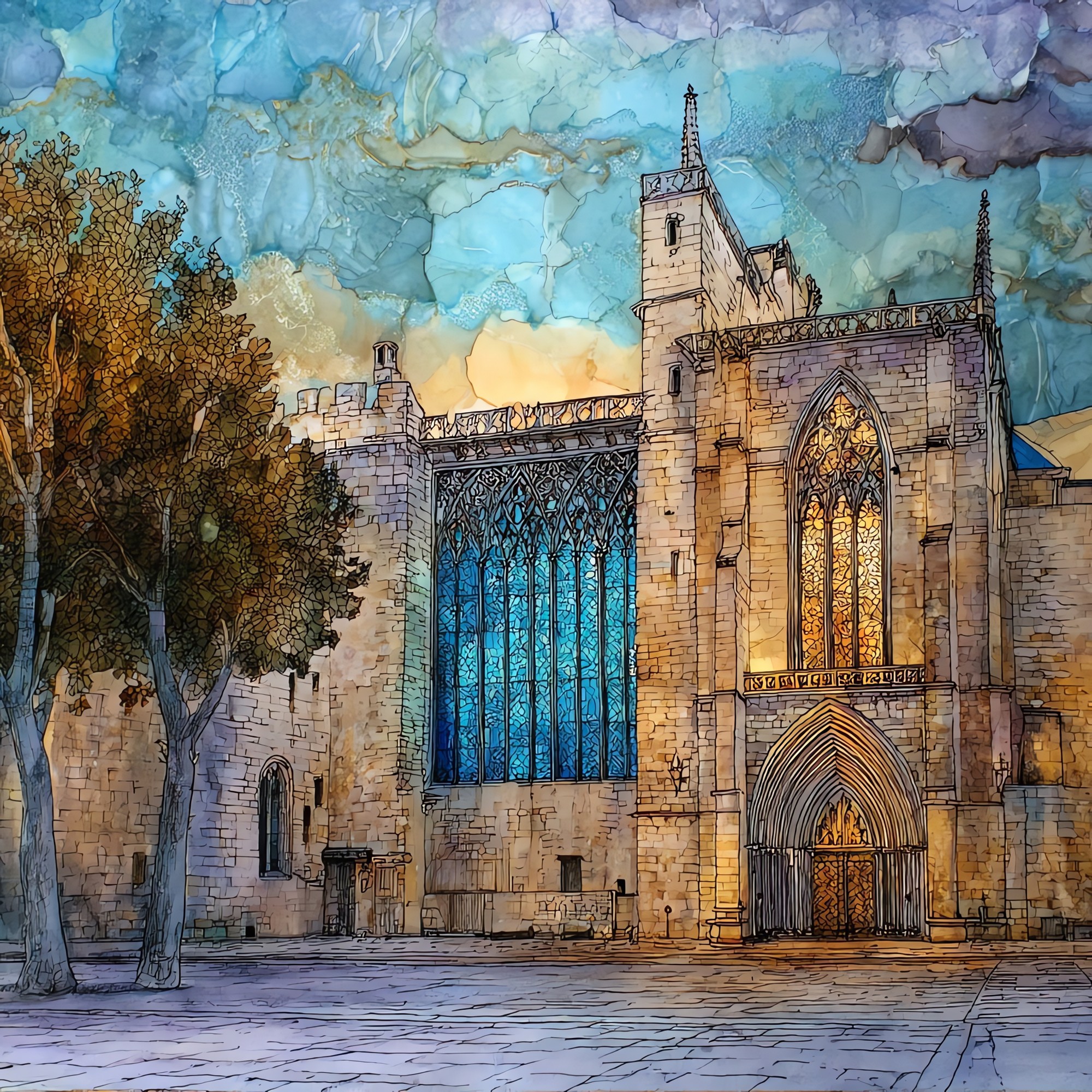
Palais des Papes
shown on ceramic, 12-inch tileFrance
in old Avignon, above the Rhône

Palais des Papes

— a fortress with a court inside.

Where it lives

Not only on a wall.

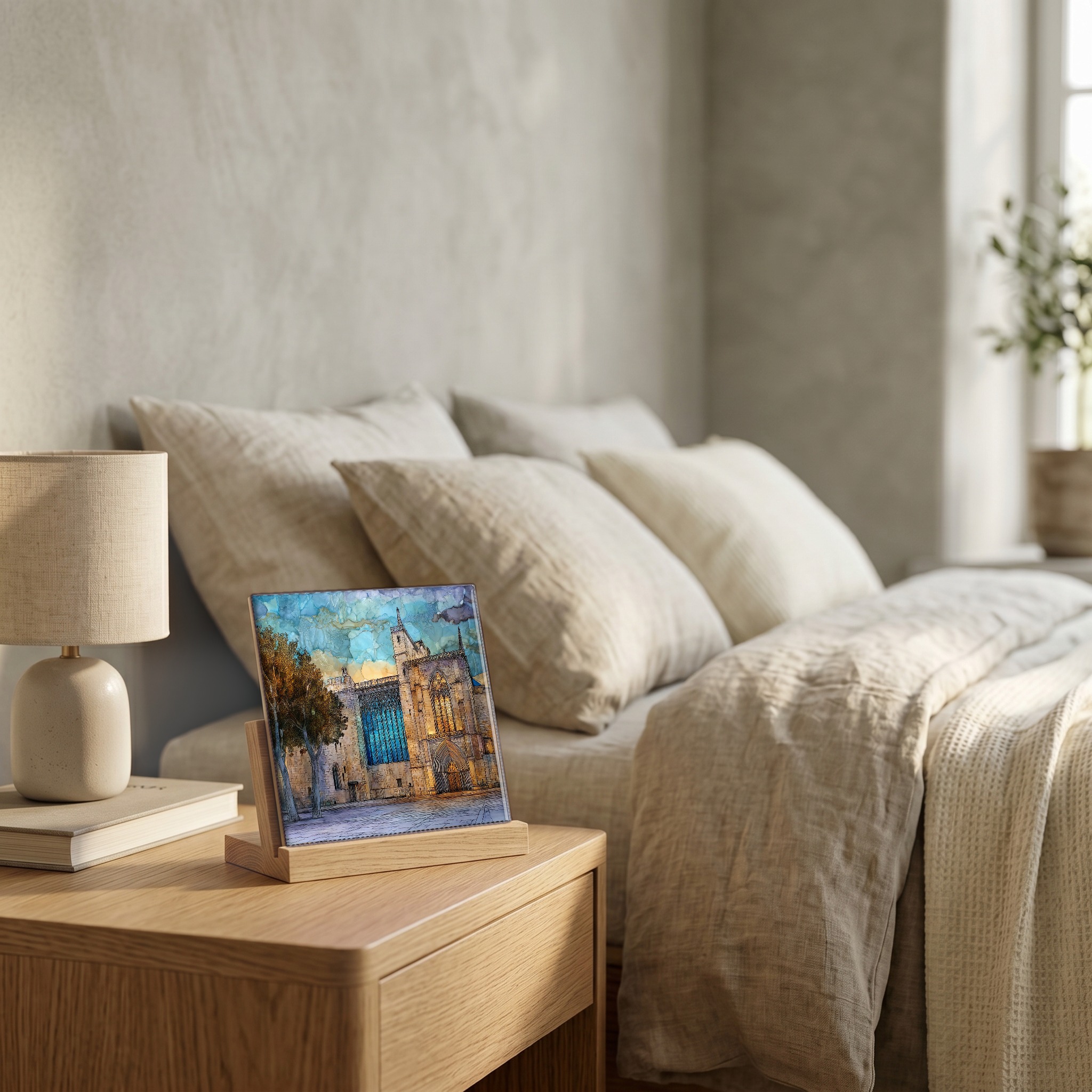
A small tile on the nightstand catching the morning. A larger one above the fire. Yours, wherever you spend the slow hours.
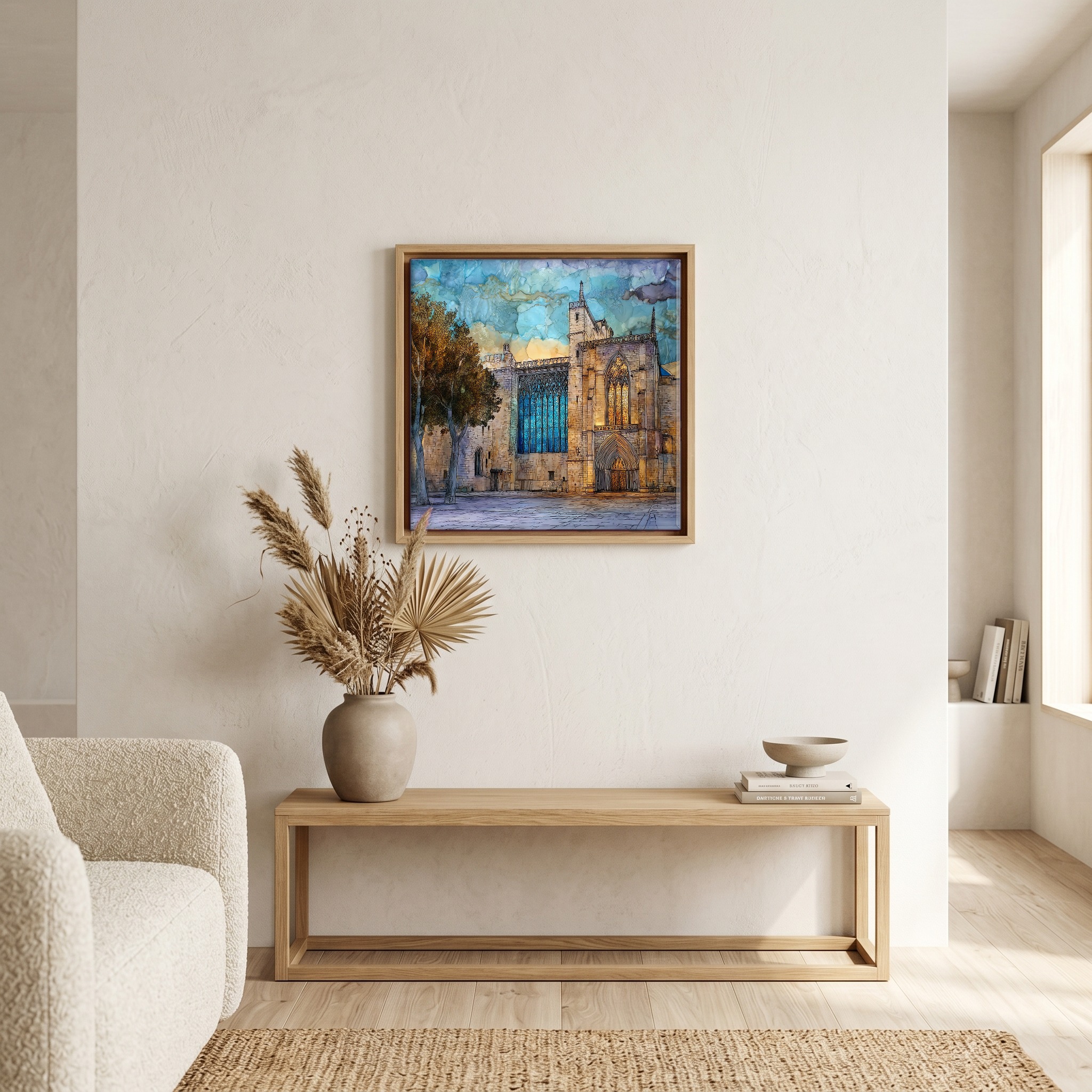
Above the bench, in a warm oak surround.
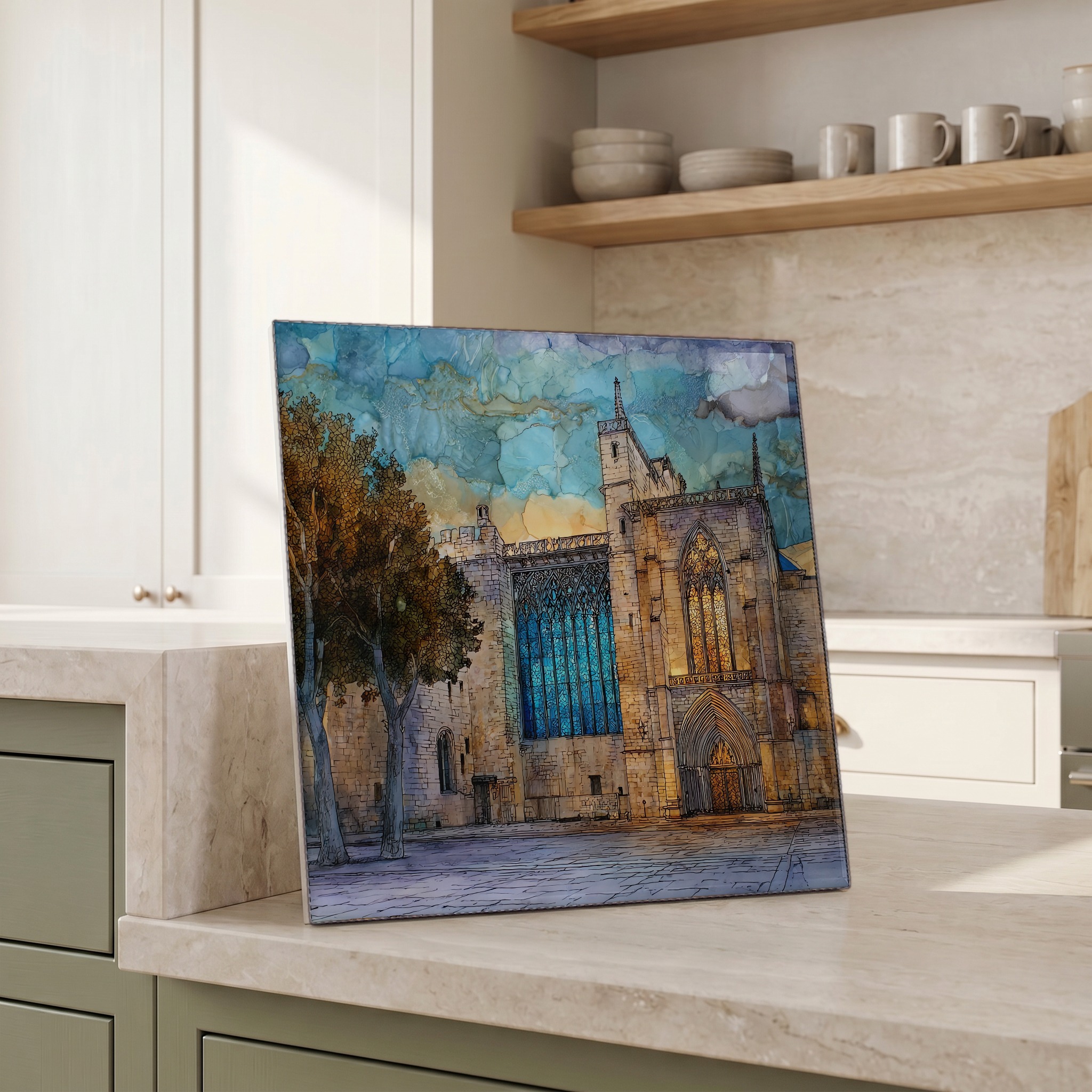
Beside the kettle, propped on the counter.
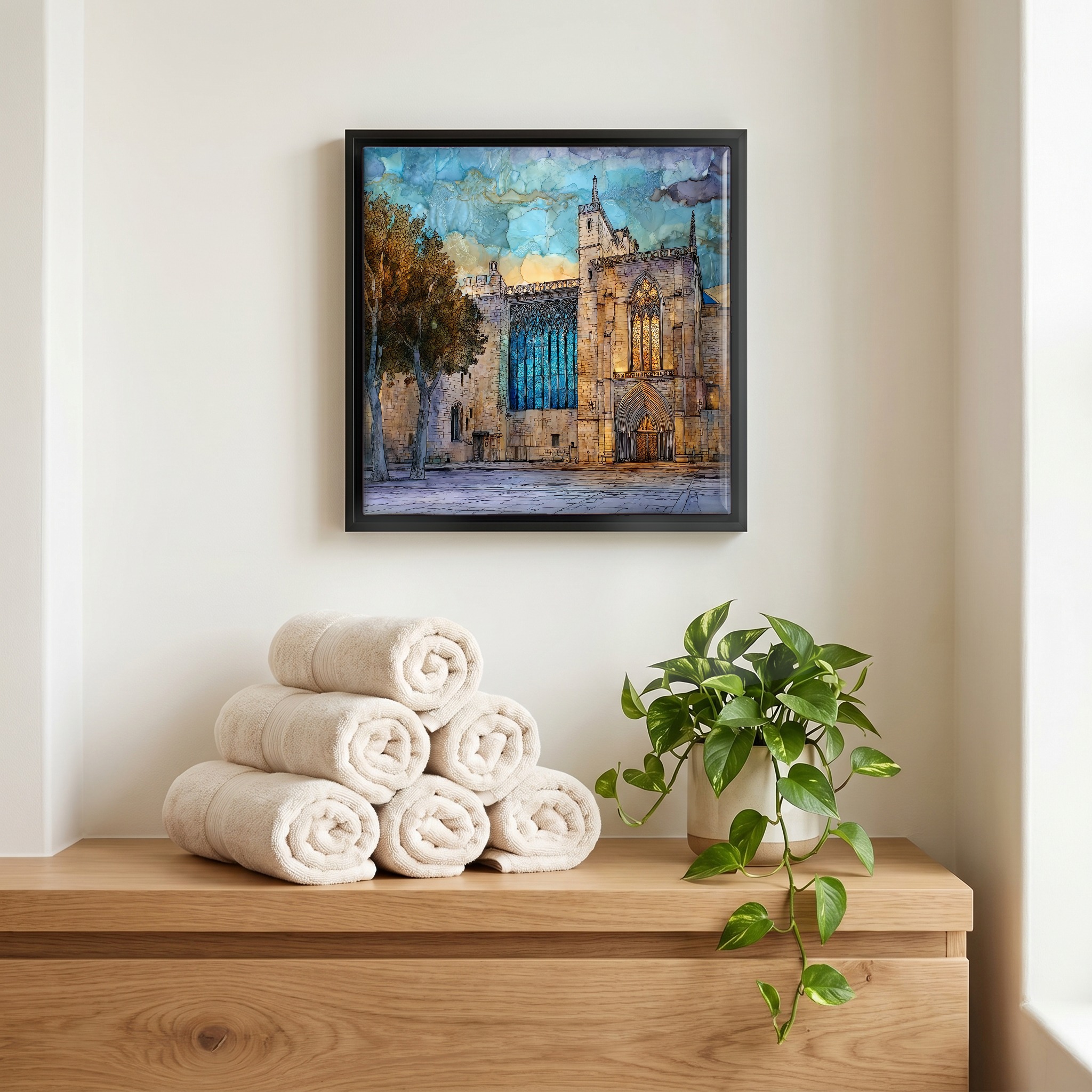
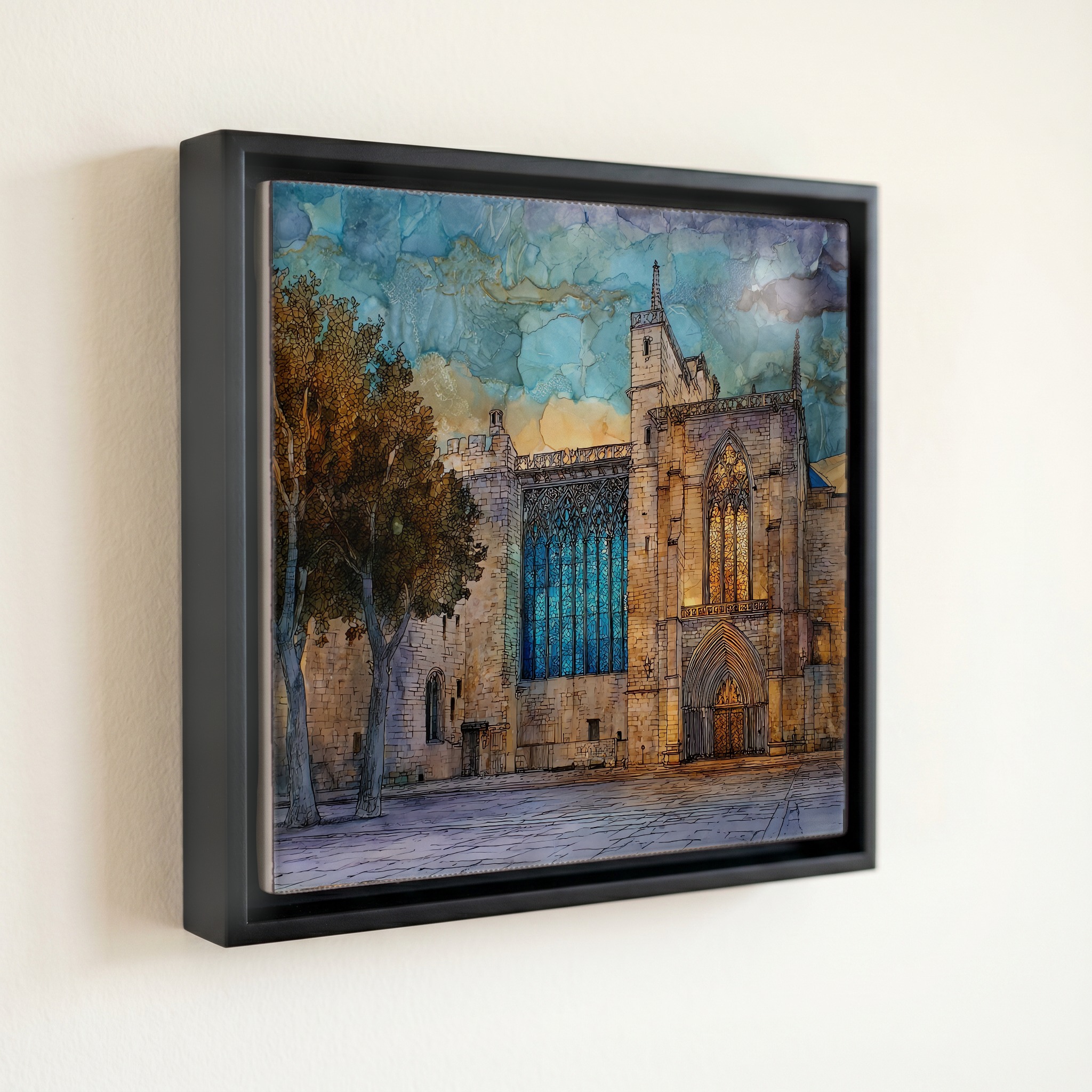
Above the linens, in a slim black surround.
On the nightstand, on a light oak stand.
On a picture ledge, where the light comes in.
a note from the studio

The largest Gothic palace in Europe sits on a rock above the Rhône. Seven popes ruled from Avignon in the fourteenth century, after the papal court moved from Rome and stayed for nearly seventy years. The limestone catches the afternoon light and holds it. Every July the Festival d'Avignon opens with a play in the Cour d'Honneur, the same courtyard Clement VI received cardinals in. People come for the festival and stay for the palace, or arrive for the palace and find themselves at the theatre.
from the studio
shown in a slim black floating frame · 6 × 6 in
— bring it home

Palais des Papes, on ceramic.

Each tile is finished by hand in our Knoxville studio. Artwork is slowly infused into the ceramic surface under high heat and pressure, and rests beneath a thin glossy finish. The colour lives in the surface, not on top of it.

What kind of piece?
One tile — square or rectangle.
How big?
the popular one — counter, shelf, nightstand
6 × 6 in · 15 cm · 1.6 lb
Surface finish
A clear glossy finish — the artwork reads as if under resin. Ideal for show-pieces and framed wall art.
How it sits
A hidden cleat — sits ¼″ proud of the wall.
$58
Hand-finished and shipped from our studio at the foot of the Smokies. On your wall in about ten days.
size
6 × 6 in
15 cm
weighs
1.6 lb
solid in the hand
surface
ceramic, hand-finished
art rests beneath a thin glossy finish
from
Knoxville, TN
our family studio, at the foot of the Smokies
— start a Coaster Set

Pick any four 4-inch tiles — National Parks you've been to, a Smokies set, the four seasons of one place. $ for a set of , cork-backed, ready to live on the table.
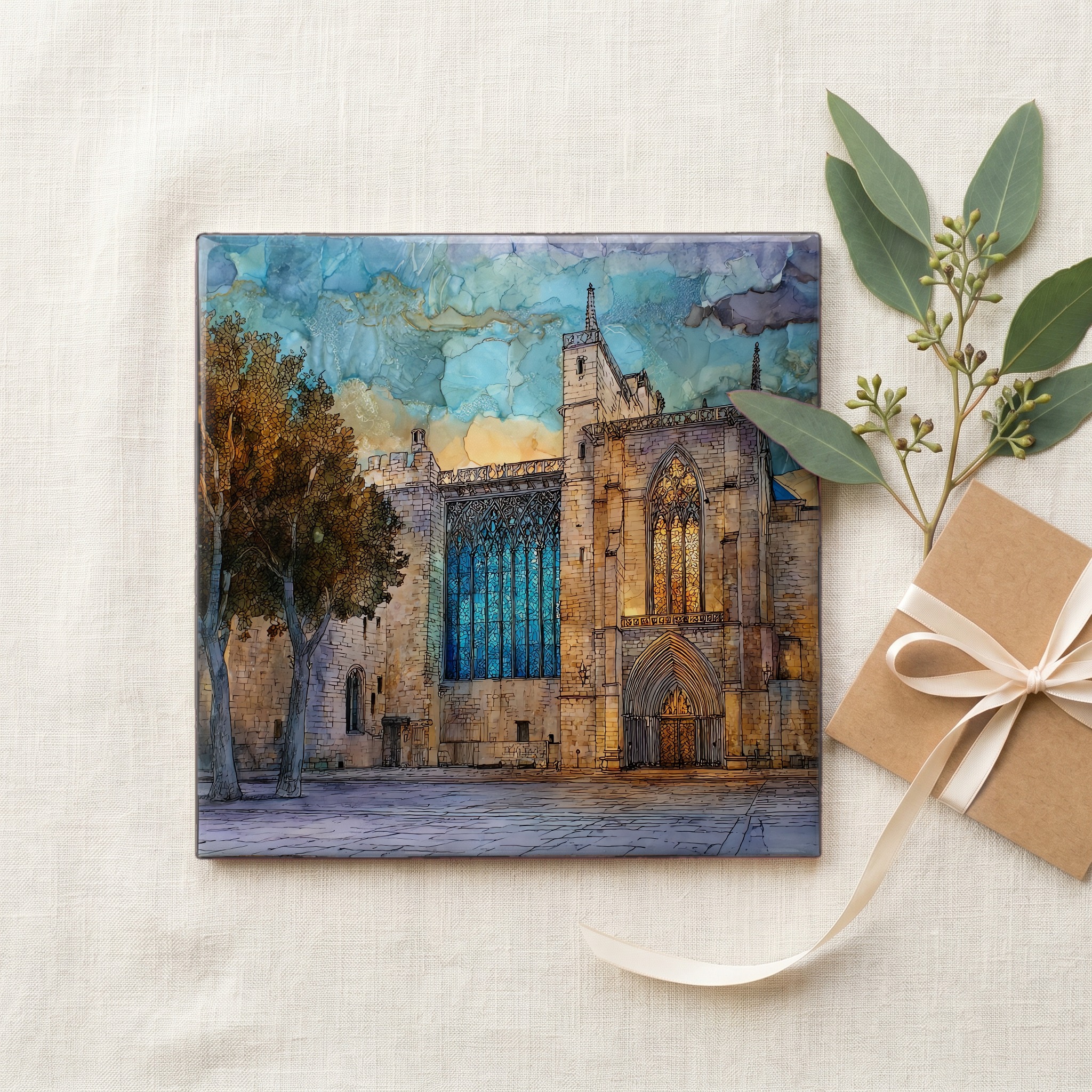
comes gift-ready
comes gift-ready

Each tile ships in a kraft box, tied with cream ribbon, with a handwritten note from the studio if you'd like to add one.
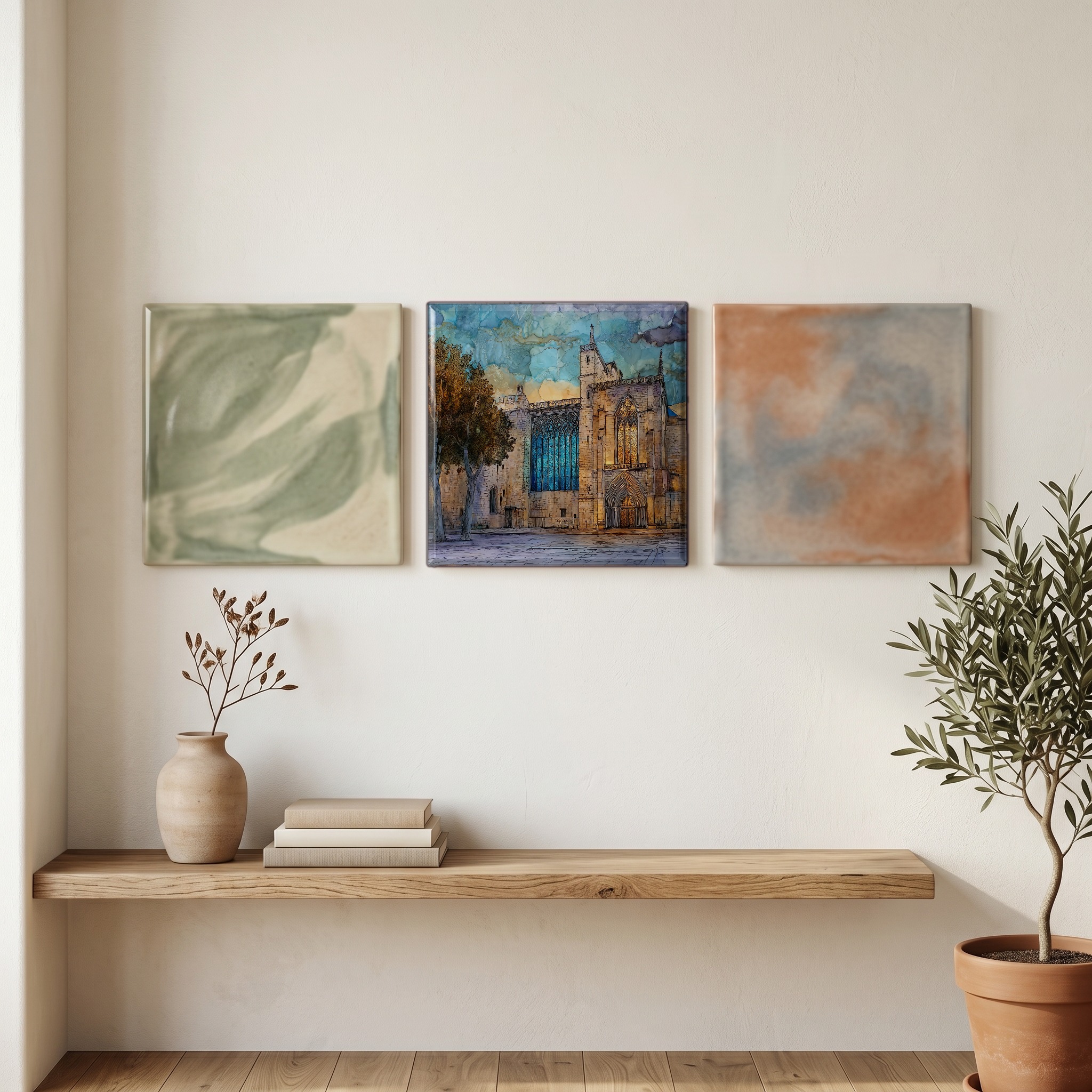
or build a grouping
or build a grouping

Three or five different vistas, hung together — a chapter of places you've been, or want to go.

about Palais des Papes

The place, in three passes.

A little of what's known, in case you fall down the rabbit hole — or want to go see it yourself.
the place

The Palais des Papes stands on the Rocher des Doms in Avignon, a rocky outcrop above the Rhône in southern France. The palace covers roughly 15,000 square metres, which makes it one of the largest Gothic buildings in Europe. It was built in two main phases: the Palais Vieux begun by Pope Benedict XII in 1335, and the Palais Neuf by Clement VI from 1342. Seven popes ruled from Avignon between 1309 and 1377, the period historians call the Avignon Papacy. UNESCO listed the historic centre of Avignon, including the palace and the Pont Saint-Bénézet, as a World Heritage Site in 1995. The TGV from Paris reaches Avignon in about two hours and forty minutes.

— informed by Wikipedia, UNESCO
the stone

The palace is built of pale local limestone, with walls several metres thick at the base. The Palais Vieux, built under Benedict XII, has the austere lines of a Cistercian abbey. Benedict had been a monk of that order. Clement VI's Palais Neuf added a different register: a vaulted Grande Audience, the Chapelle Clémentine, and frescoes by Matteo Giovannetti in the Chambre du Cerf showing hunting and fishing scenes. The fortress aspect was not for show. The fourteenth century brought plague, mercenary companies, and an increasingly bitter dispute over where the papacy belonged. The palace was built to hold all of it.

— informed by Wikipedia, Matteo Giovannetti
the year

Every July since 1947, the Festival d'Avignon turns the Cour d'Honneur into the largest open-air theatre in France. Jean Vilar founded it that summer with a performance of Shakespeare's Richard II for a few hundred people. The festival now runs about three weeks, draws more than 100,000 spectators, and spreads across dozens of stages in the city, with the Cour d'Honneur of the palace at its centre. Avignon's summer is hot and dry; the mistral wind blows down the Rhône valley most days and keeps the night air moving. Visit the palace in May or September and you will have it largely to yourself; visit in July and you will share it with the festival.

— informed by Wikipedia
where
France · Avignon, Vaucluse
position
43.9508° N · 4.8075° E
the neighborhood

What's nearby.

A handful of named places within an hour's walk or short drive. Some we've already painted; some we will.
0.1 km N
Cathédrale Notre-Dame des Doms
Romanesque cathedral
0.2 km N
Petit Palais
medieval art museum
0.2 km N
Rocher des Doms
hilltop park
0.3 km W
Pont Saint-Bénézet
medieval bridge
2 km W
Villeneuve-lès-Avignon
fortified town across the Rhône
25 km W
Pont du Gard
Roman aqueduct
N
Palais des Papes
Cathédrale Notre-Dame des Doms
Petit Palais
Rocher des Doms
Pont Saint-Bénézet
Villeneuve-lès-Avignon
Pont du Gard
common questions

What people ask.

A few questions we get about Palais des Papes — and about bringing the piece home.
about the place

The Palais des Papes sits on the Rocher des Doms in Avignon, southern France, above the Rhône river in the Vaucluse department of Provence-Alpes-Côte d'Azur. The TGV from Paris reaches Avignon in about two hours and forty minutes.

Pope Clement V moved the papal court from Rome to Avignon in 1309 to escape factional violence in Italy and to be closer to the French king. Seven popes ruled from Avignon until Gregory XI returned to Rome in 1377.

The palace covers roughly 15,000 square metres of floor space, making it the largest Gothic palace in Europe. It was built in two phases: the Palais Vieux begun in 1335 and the Palais Neuf begun in 1342.

Yes. UNESCO inscribed the historic centre of Avignon as a World Heritage Site in 1995. The inscription covers the Palais des Papes, the Episcopal Ensemble, the city ramparts, and the Pont Saint-Bénézet (the bridge of the famous song).

The Festival d'Avignon is an annual theatre festival founded by Jean Vilar in 1947. It runs for about three weeks every July, with its main stage in the palace's Cour d'Honneur. The companion Off festival adds hundreds of independent productions across the city.

Yes. The palace operates as a museum open to the public, with about twenty rooms accessible including the Pope's chamber and the Chambre du Cerf with its fourteenth-century hunting frescoes. A self-guided Histopad tablet reconstructs the rooms in augmented reality.

The Pont Saint-Bénézet, popularly the Pont d'Avignon, is a twelfth-century bridge across the Rhône just outside the palace walls. Four of its original twenty-two arches survive. The medieval French children's song Sur le pont d'Avignon made it famous.

about the piece in your home

It's a meaningful gift for travellers with ties to Avignon or to the south of France more broadly. The palace is the largest medieval monument in Provence and one of the defining sights of the Rhône valley. A Small or Medium with a handwritten studio note carries well as a wedding or retirement gift.

The honey-gold limestone and deep stained-glass blues sit well with French country, warm Mediterranean, and traditional European interiors. The brushwork also reads at home in jewel-tone maximalist rooms and rooms anchored by dark wood, where the palette has somewhere to land.

Provence and the south of France have been steady in shelter publications for years, and the Avignon papacy story has resurfaced in recent historical fiction and television. The piece suits the current taste for art tied to specific places rather than generic landscapes.

A single Large reads well above a console or a narrow sofa. Over a full-length sofa, a four-tile Mural fills the wall with more presence. For a feature wall above a fireplace or a long banquette, the nine-tile Mural is the architectural choice.

Yes. Order the Dura Satin or Matte finish for any vertical surface that takes moisture or splash: bathroom walls, shower surrounds, kitchen backsplashes. The Glossy finish is reserved for show-pieces and framed wall art away from steam.

A soft microfibre cloth and warm water is all the tile needs. The colour is slowly infused into the ceramic surface under high heat and pressure, so the surface is not painted-on and will not chip with ordinary cleaning. Avoid abrasive scrub pads on the Glossy finish.

Yes. Every WenderVista piece is original to the studio. The atlas is curated by Reid Wender from a single studio in Knoxville, Tennessee. No licensing, no stock imagery, no syndication. Each place is painted once for this catalog.

if this one stayed with you

A few you might also love.

Hand-picked by the eye that found Sorapis. Same air, same kind of quiet.