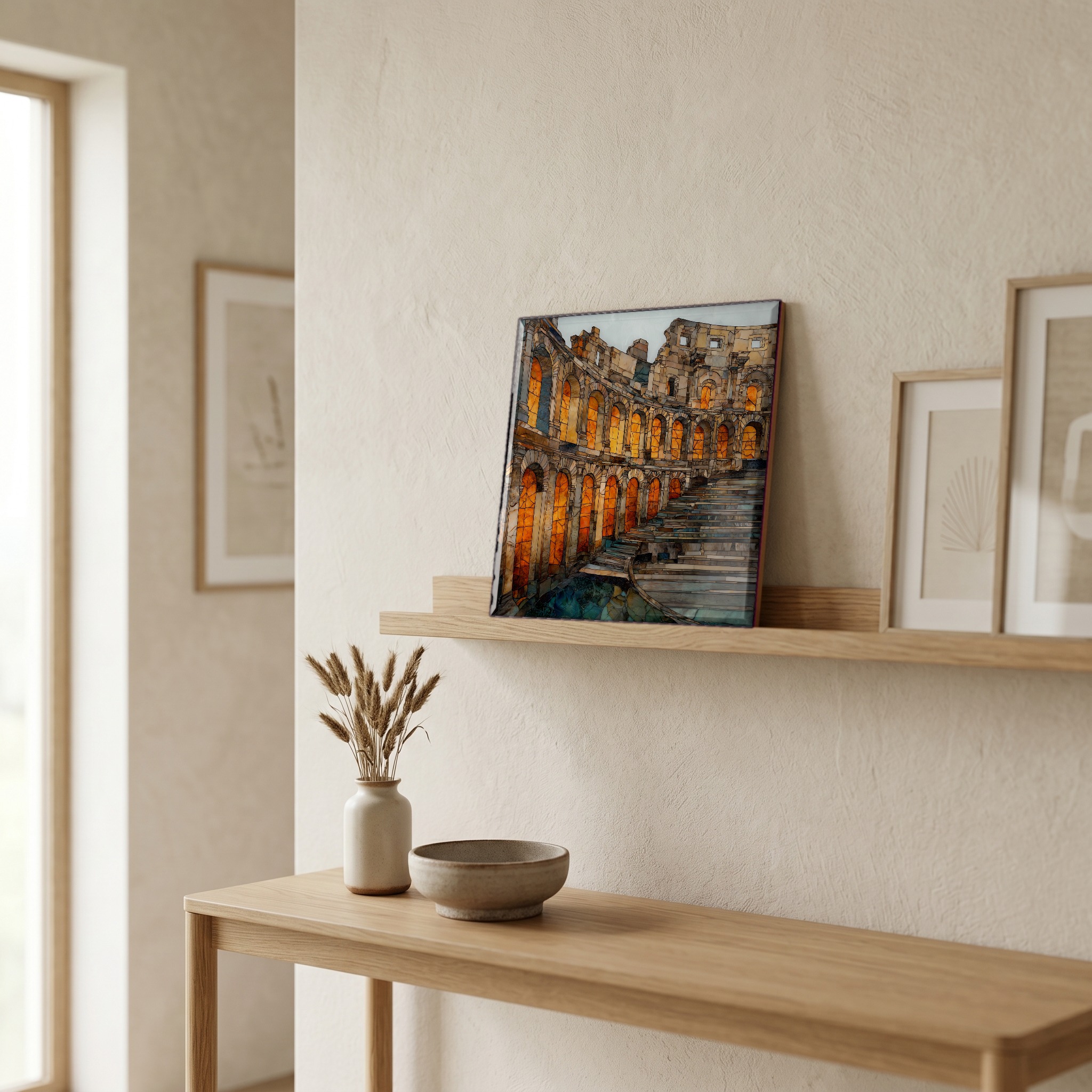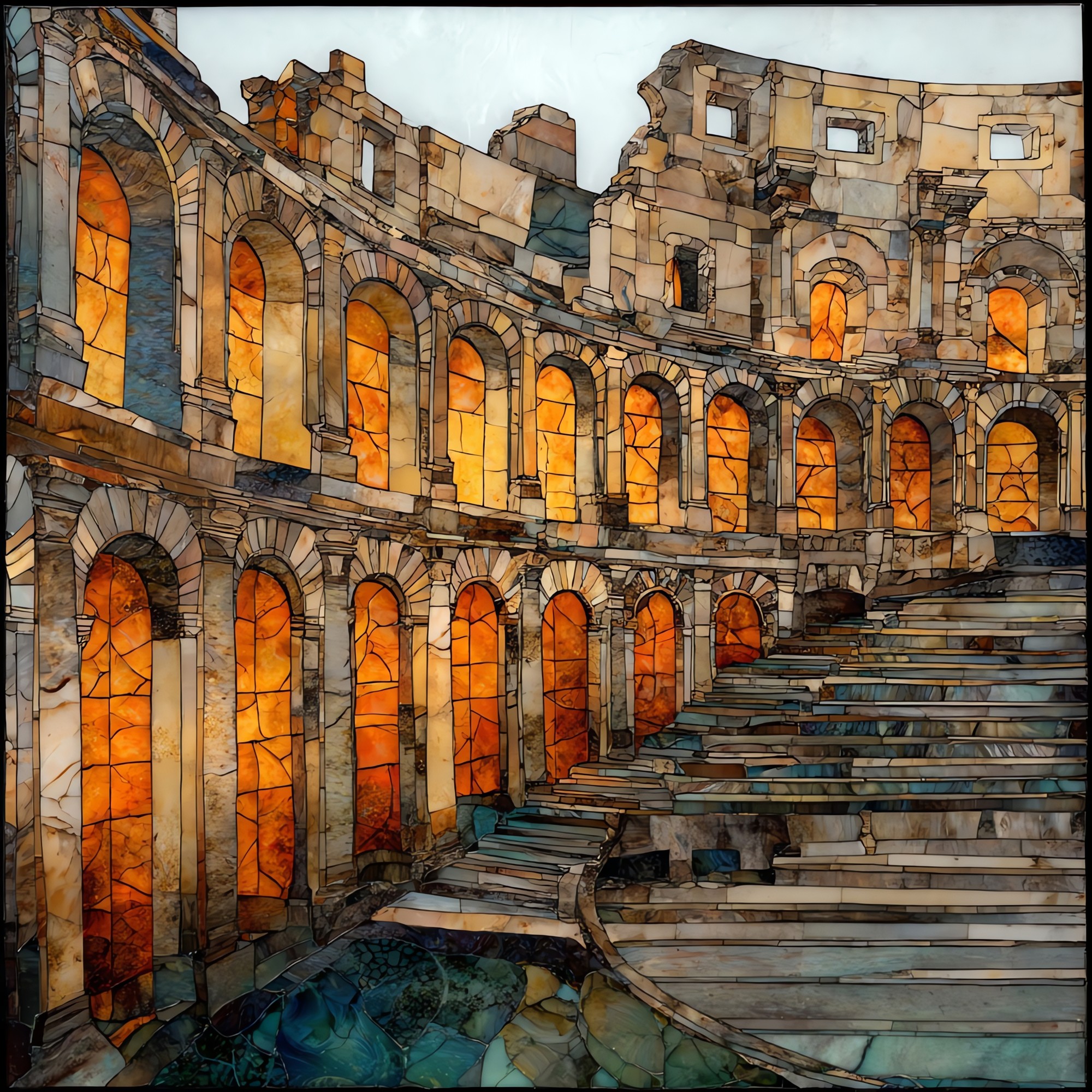
Wender·Vista
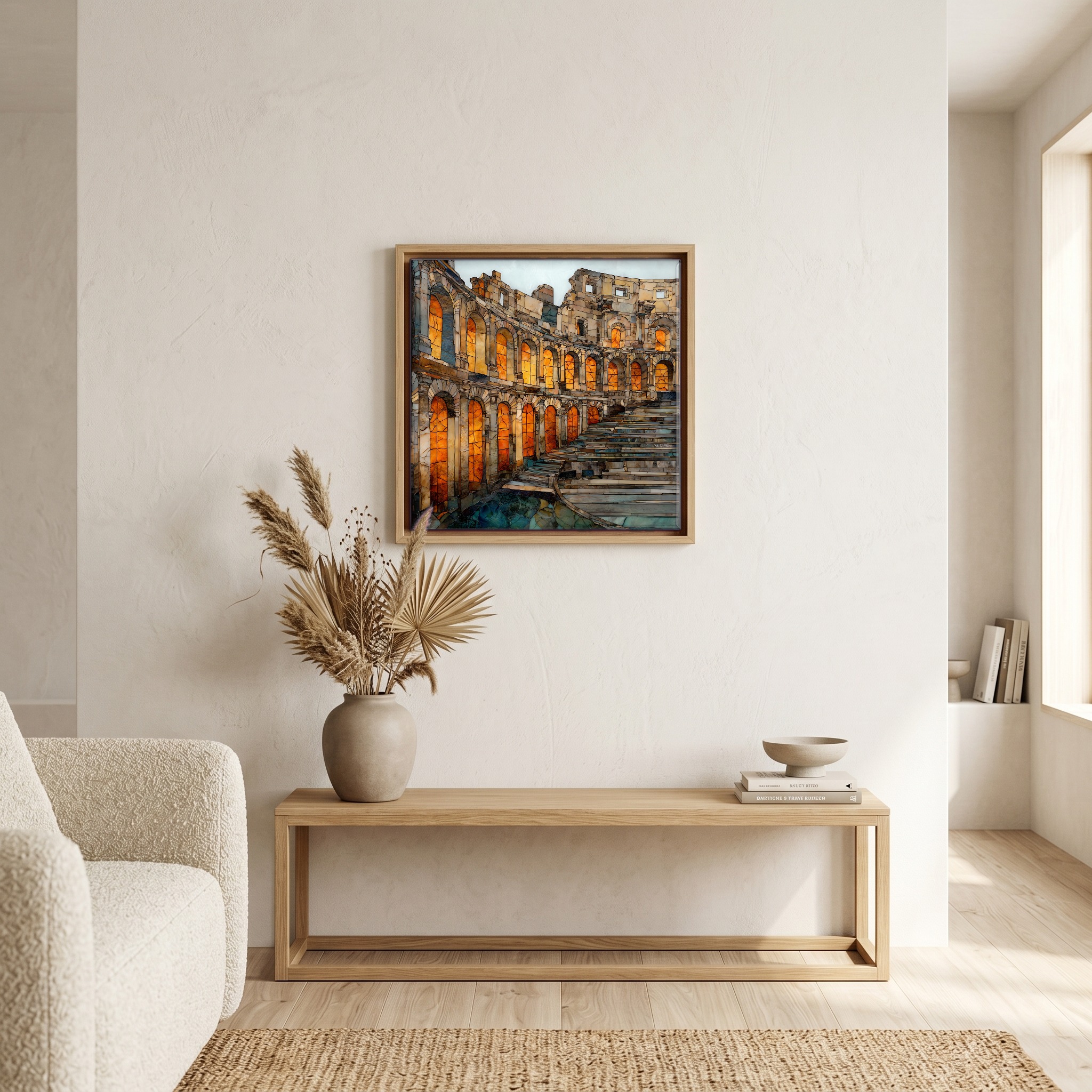
Orange Roman Theatre
shown on ceramic, 12-inch tileFrance
in the Rhône valley, north of Avignon

Orange Roman Theatre

— the wall the centuries forgot to bring down.

Where it lives

Not only on a wall.

A small tile on the nightstand catching the morning. A larger one above the fire. Yours, wherever you spend the slow hours.
Above the bench, in a warm oak surround.
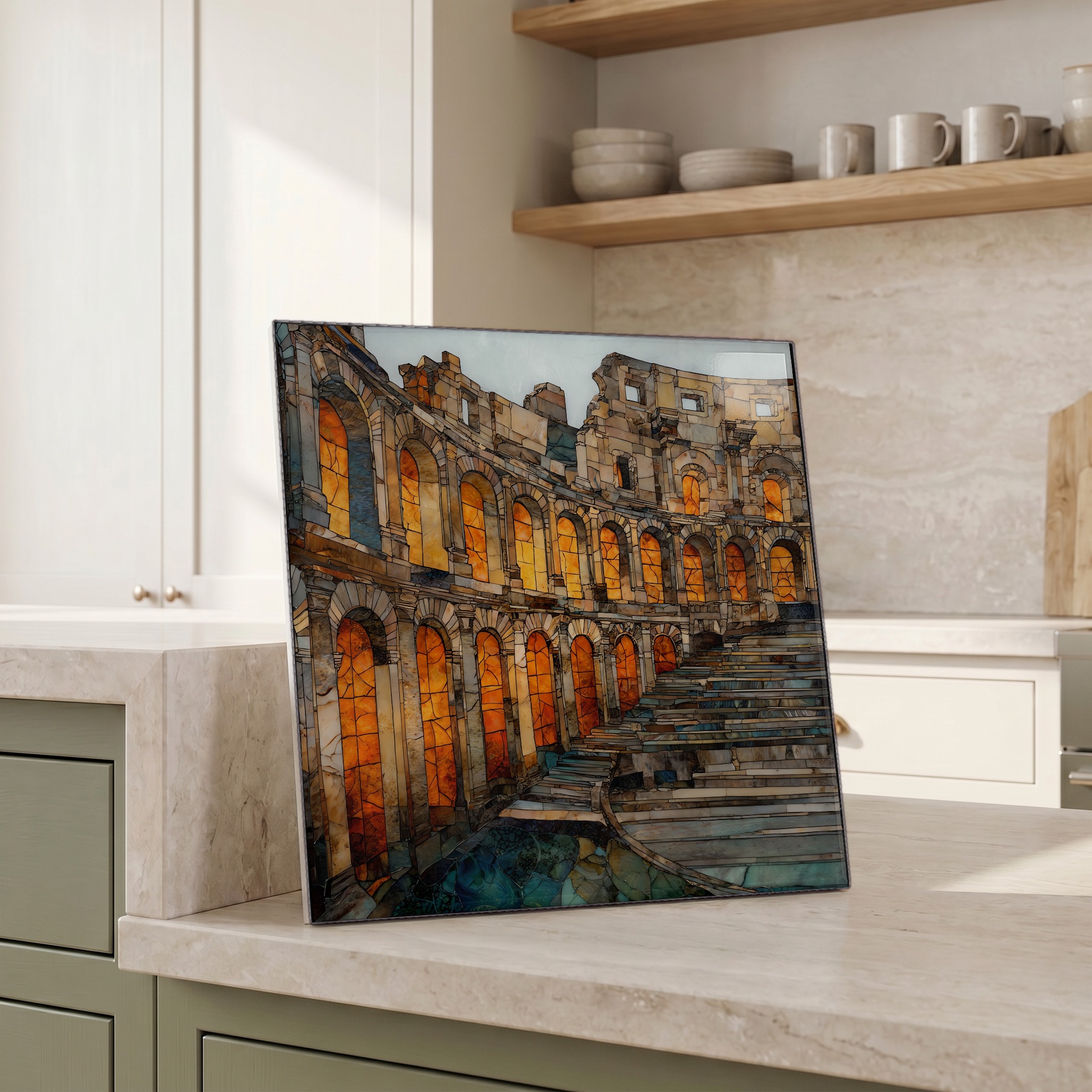
Beside the kettle, propped on the counter.
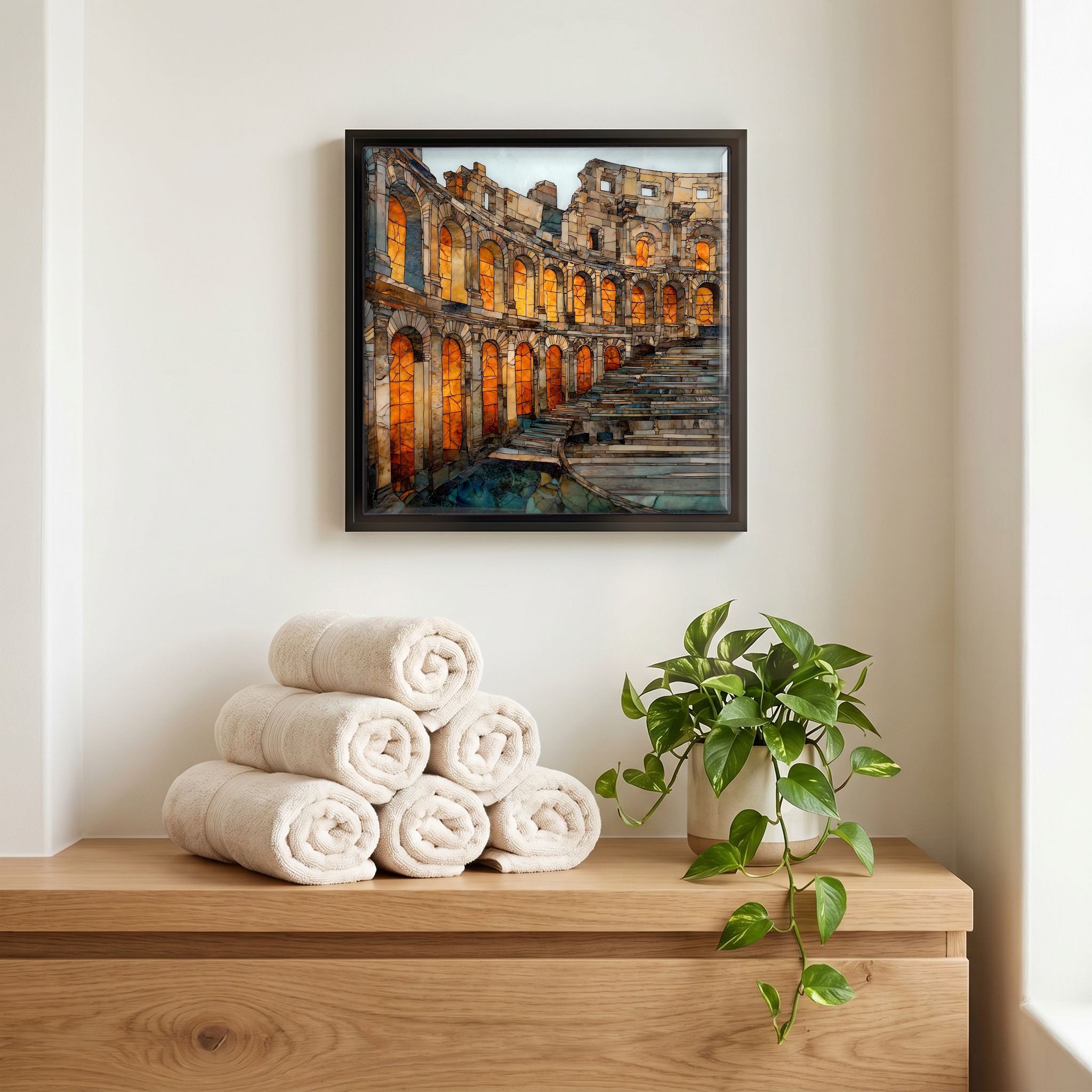
Above the linens, in a slim black surround.
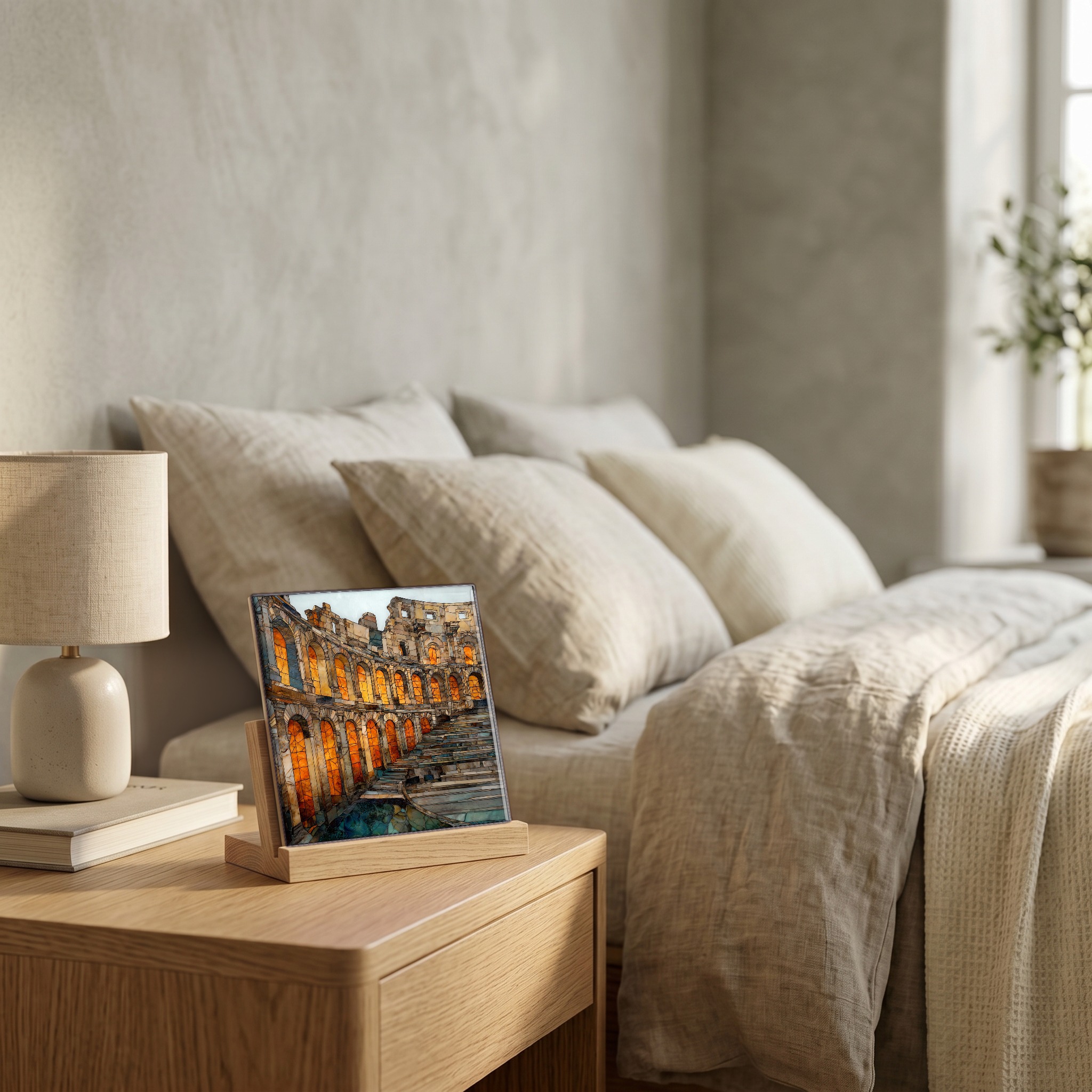
On the nightstand, on a light oak stand.
On a picture ledge, where the light comes in.
a note from the studio

The best-preserved Roman theatre in Europe, holding its place in the small Provençal town that grew up around it. The back wall, three storeys of honey-coloured limestone a hundred metres across, is the only one in the Roman world to have survived nearly whole. Louis XIV is said to have called it the finest wall in his kingdom. Every summer the Chorégies d'Orange still fills the stone tiers, voices carrying the way they did when the theatre was new. Most afternoons it sits empty, the light moving across the wall as it has for two thousand years.
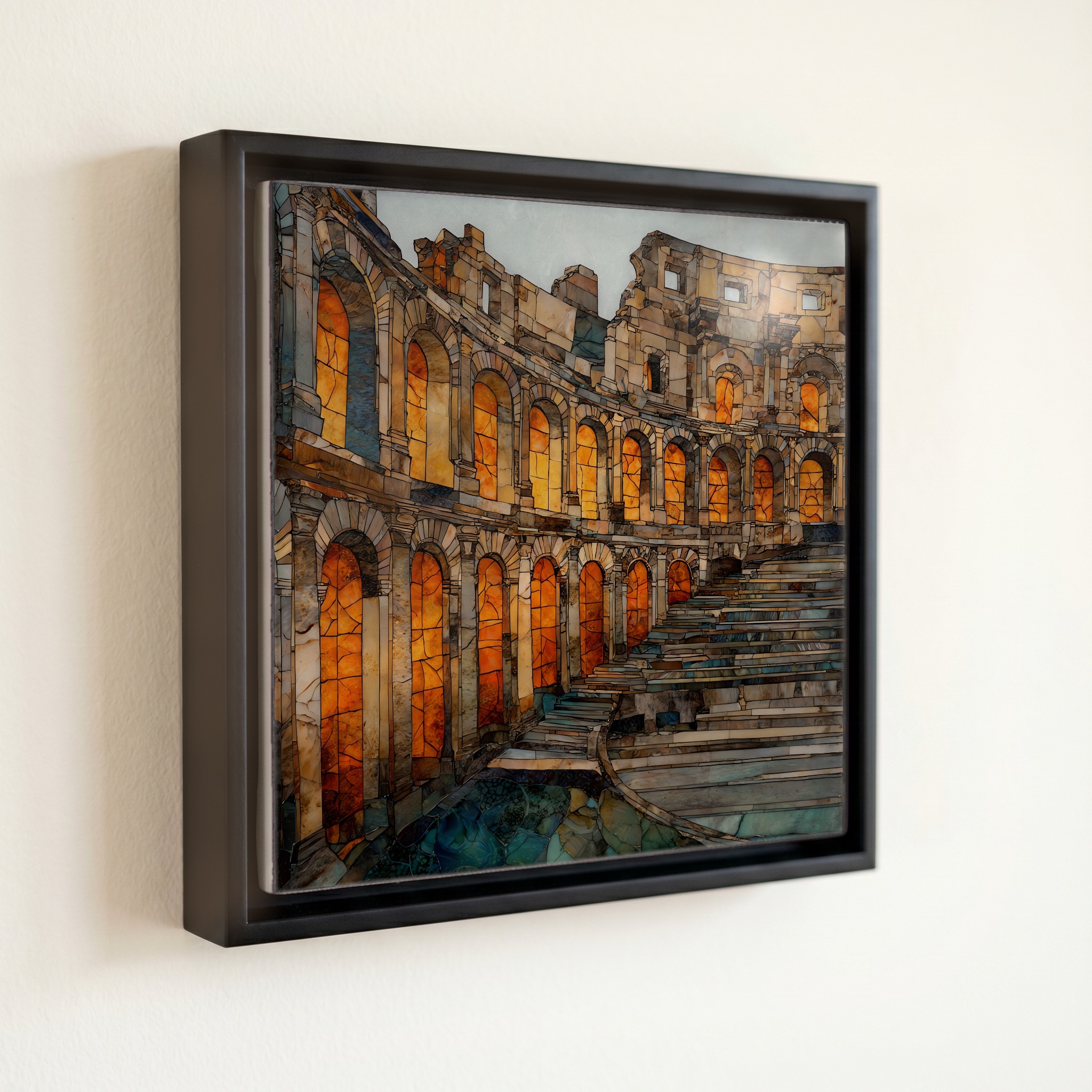
from the studio
shown in a slim black floating frame · 6 × 6 in
— bring it home

Orange Roman Theatre, on ceramic.

Each tile is finished by hand in our Knoxville studio. Artwork is slowly infused into the ceramic surface under high heat and pressure, and rests beneath a thin glossy finish. The colour lives in the surface, not on top of it.

What kind of piece?
One tile — square or rectangle.
How big?
the popular one — counter, shelf, nightstand
6 × 6 in · 15 cm · 1.6 lb
Surface finish
A clear glossy finish — the artwork reads as if under resin. Ideal for show-pieces and framed wall art.
How it sits
A hidden cleat — sits ¼″ proud of the wall.
$58
Hand-finished and shipped from our studio at the foot of the Smokies. On your wall in about ten days.
size
6 × 6 in
15 cm
weighs
1.6 lb
solid in the hand
surface
ceramic, hand-finished
art rests beneath a thin glossy finish
from
Knoxville, TN
our family studio, at the foot of the Smokies
— start a Coaster Set

Pick any four 4-inch tiles — National Parks you've been to, a Smokies set, the four seasons of one place. $ for a set of , cork-backed, ready to live on the table.
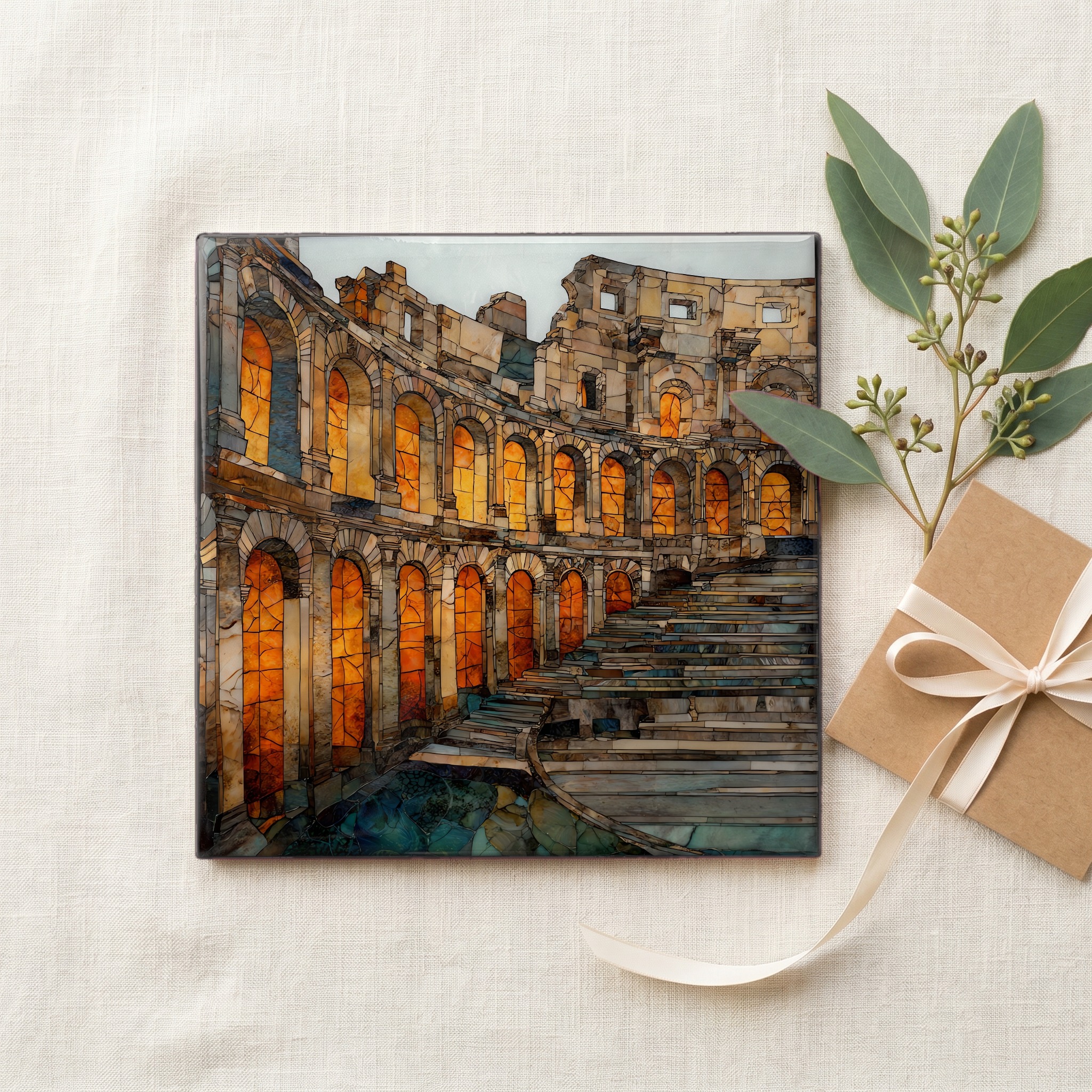
comes gift-ready
comes gift-ready

Each tile ships in a kraft box, tied with cream ribbon, with a handwritten note from the studio if you'd like to add one.
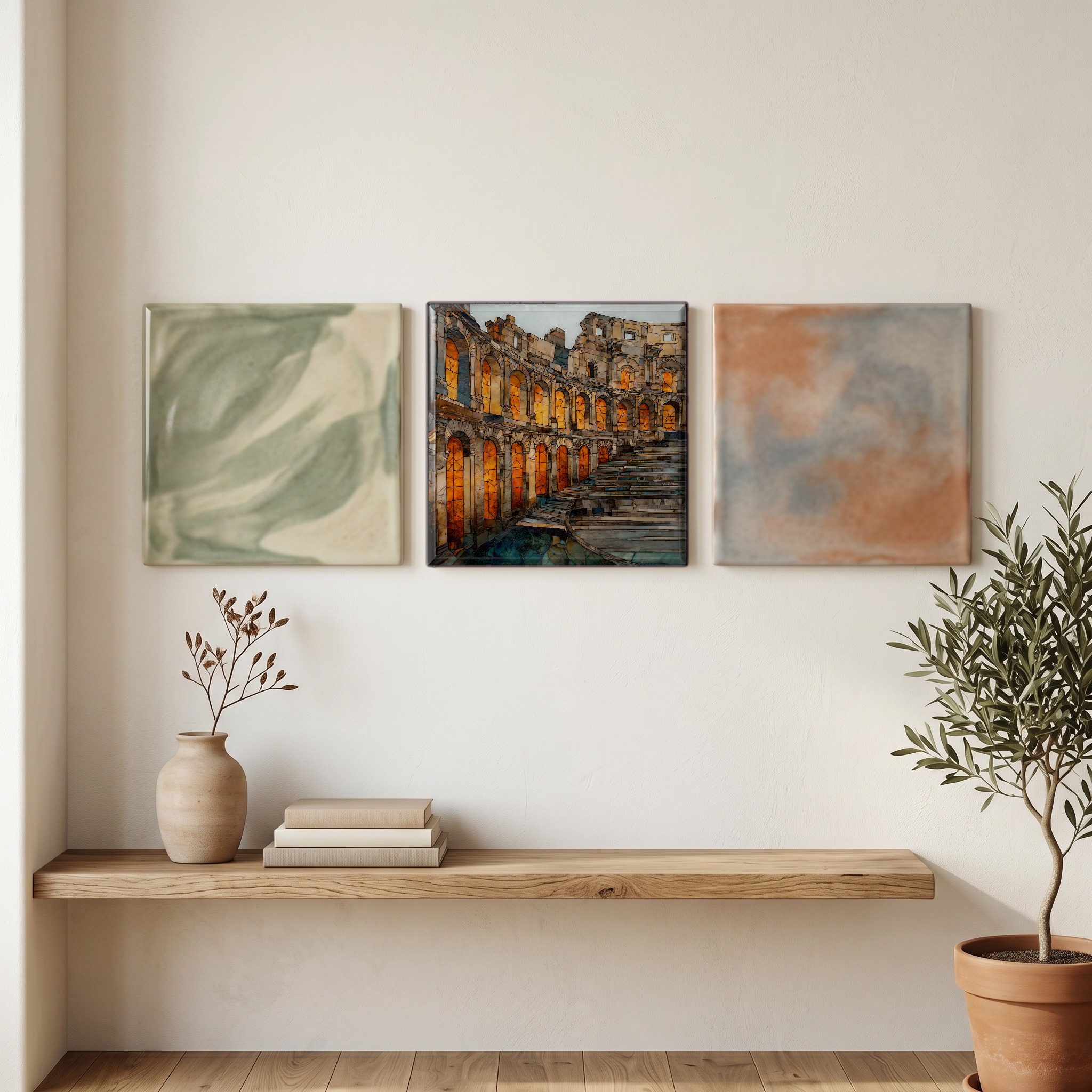
or build a grouping
or build a grouping

Three or five different vistas, hung together — a chapter of places you've been, or want to go.

about Orange Roman Theatre

The place, in three passes.

A little of what's known, in case you fall down the rabbit hole — or want to go see it yourself.
the place

The Théâtre antique d'Orange stands at the edge of Orange (population around 29,000) in the Vaucluse department of Provence, about 30 km north of Avignon. Built into the western slope of Saint-Eutrope hill in the early decades of the 1st century, under the reign of Augustus, it served the Roman colony of Arausio, founded in 35 BC for veterans of the Second Legion. The theatre and the nearby Triumphal Arch of Orange were jointly inscribed as a UNESCO World Heritage Site in 1981. Trains from Avignon TGV reach Orange in roughly fifteen minutes, with the theatre a short walk from the station through the older centre of town.

the stone

The scaenae frons, the great back wall behind the stage, measures 103 metres wide and 37 metres high, the only such Roman stage wall in the Western world to survive nearly intact. Three storeys of local limestone, weathered to a soft honey colour, once held marble columns, niches, and statues across its face. In the central niche stands a 3.5-metre statue of Augustus, reassembled from ancient fragments and placed in position in the 20th century. Louis XIV, after a visit in 1660, is said to have called it 'la plus belle muraille de mon royaume', the finest wall in his kingdom. The marble and stucco cladding are long gone; the bones are extraordinary.

the year

The antique theatre has hosted opera and music for more than 150 years, with the modern Chorégies d'Orange festival tracing its origins to performances first staged here in the late 19th century. Reorganised in 1971 with a strictly operatic programme, it now draws audiences of around 8,000 to the stone tiers each July, a scale not far from the crowd Augustus's architects designed for. The acoustic survives because the back wall does; sound returns from it the way it did when the theatre was new. Outside the festival the site is open most days, with an audio guide. The town quiets in winter; the months around the festival are when the place is most fully alive.

where
France · Orange, Vaucluse
position
44.1361° N · 4.8083° E
the neighborhood

What's nearby.

A handful of named places within an hour's walk or short drive. Some we've already painted; some we will.
1 km N
Triumphal Arch of Orange
Roman triumphal arch
10 km S
Châteauneuf-du-Pape
wine village
10 km N
Mornas
medieval cliff fortress
15 km SE
Beaumes-de-Venise
wine village
17 km SE
Gigondas
wine village
N
Orange Roman Theatre
Triumphal Arch of Orange
Châteauneuf-du-Pape
Mornas
Beaumes-de-Venise
Gigondas
common questions

What people ask.

A few questions we get about Orange Roman Theatre — and about bringing the piece home.
about the place

In the town of Orange in the Vaucluse department of Provence, southern France, about 30 km north of Avignon. The theatre is built into the slope of Saint-Eutrope hill, a short walk from Orange's train station, near the older centre of town.

It is the only Roman theatre stage wall in the Western world to survive almost intact. Measuring 103 metres wide and 37 metres high, it preserves the architecture the rest of the empire lost. Louis XIV, visiting in 1660, called it the finest wall in his kingdom.

In the early decades of the 1st century, during the reign of the Roman emperor Augustus. It served the colony of Arausio, founded in 35 BC for veterans of the Second Legion. Orange has been continuously inhabited since.

Yes. The Chorégies d'Orange opera festival has used the original Roman stage for more than 150 years and is one of the oldest in France. Each July, audiences of around 8,000 fill the stone tiers for opera and orchestral programmes.

Because the back wall still stands. The scaenae frons reflects sound back into the auditorium the way the Roman architects designed, carrying a performer's voice from the stage to the rear of the seating tiers without modern amplification. Few ancient theatres still do this.

Yes, since 1981. UNESCO inscribed the Théâtre antique d'Orange together with the nearby Triumphal Arch of Orange, citing the theatre as one of the most authentic and complete in the Roman world. The two monuments lie about 500 metres apart.

Roman engineers built the cavea to hold roughly 9,000 spectators, drawn from the colony of Arausio and the surrounding region. The seating tiers were carved into the hillside of Saint-Eutrope, a construction method that helped preserve the structure through two thousand years.

about the piece in your home

It has been a meaningful gift for many customers connected to Provence and the Vaucluse. The Roman Theatre is one of the recognisable landmarks of Orange, familiar to anyone who has spent time in the region or attended a Chorégies summer. A Small or Medium with a handwritten note from the studio carries well.

The piece reads as warm honey limestone against deep blue and oxblood, which sits well in Mediterranean-modern, Provençal-traditional, and Jewel-tone Maximalist rooms. It pairs with linen, terracotta, and natural oak, and holds its own beside other Roman or Italianate prints.

Yes. Sun-warmed stone, ochre and honey palettes, and Roman or Provençal references are central to the Mediterranean-modern look that has been moving through interior design since the early 2020s. A Medium or Large above a console reads as collected, not catalog.

Above a standard three-seat sofa, a Large or a 4-tile Mural reads in scale. Above a long console, a 9-tile Mural carries the architecture of the back wall well. Above a chair or a small console, a Medium is enough.

Yes, with the Dura Satin or Matte finish. Both are scratch-resistant and handle splash, steam, and daily cleaning. The Glossy finish is intended for framed wall art rather than wet rooms.

A soft microfibre cloth and water. The colour is slowly infused into the ceramic surface under high heat and pressure, beneath a thin glossy finish, so the image cannot be wiped or scratched off the way a printed surface can.

Yes. Every WenderVista piece is created in the studio's own visual language, painted and hand-finished in Knoxville, Tennessee. The Orange Roman Theatre piece is not licensed from any third party and is not sold under any other brand.

if this one stayed with you

A few you might also love.

Hand-picked by the eye that found Sorapis. Same air, same kind of quiet.