Wender·Vista
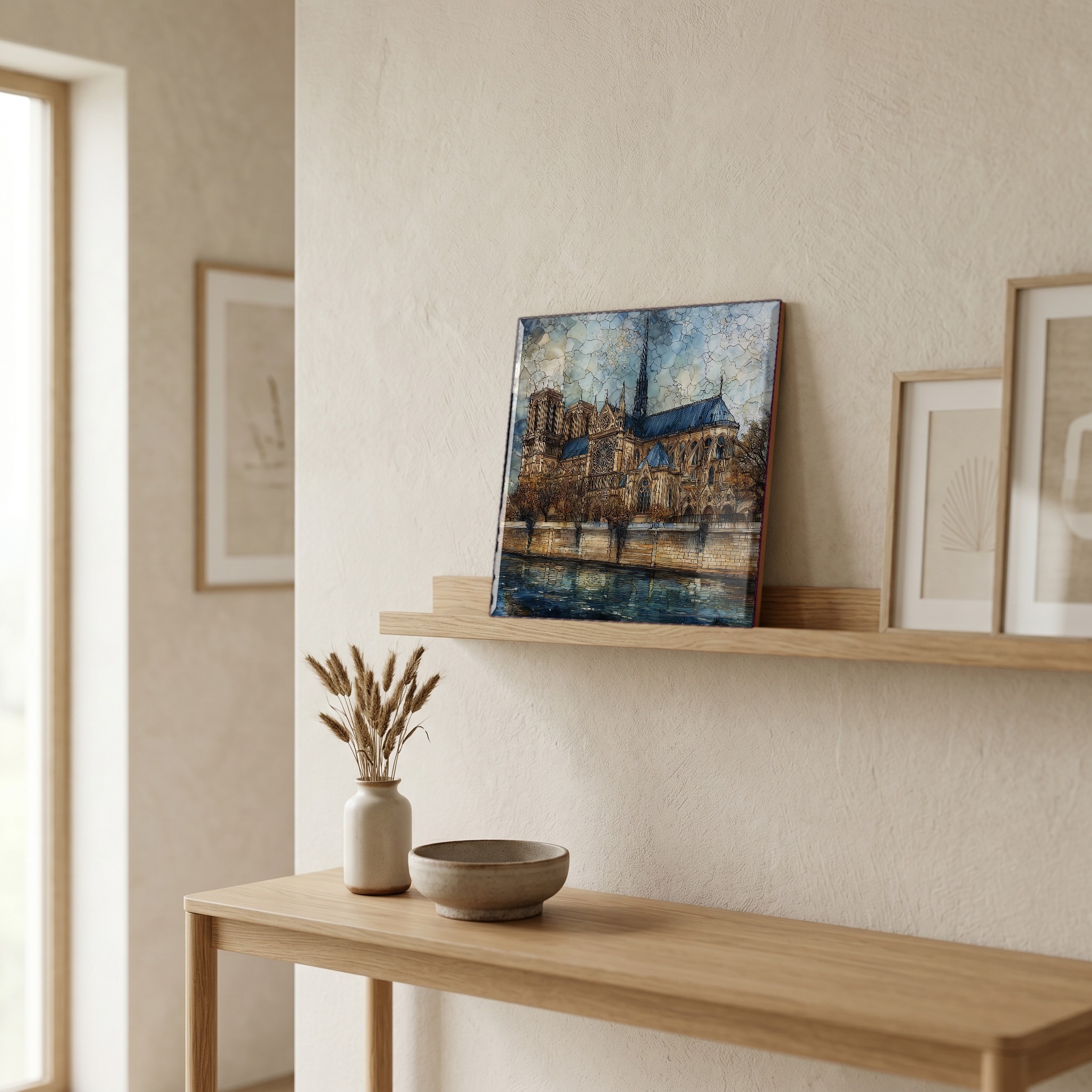
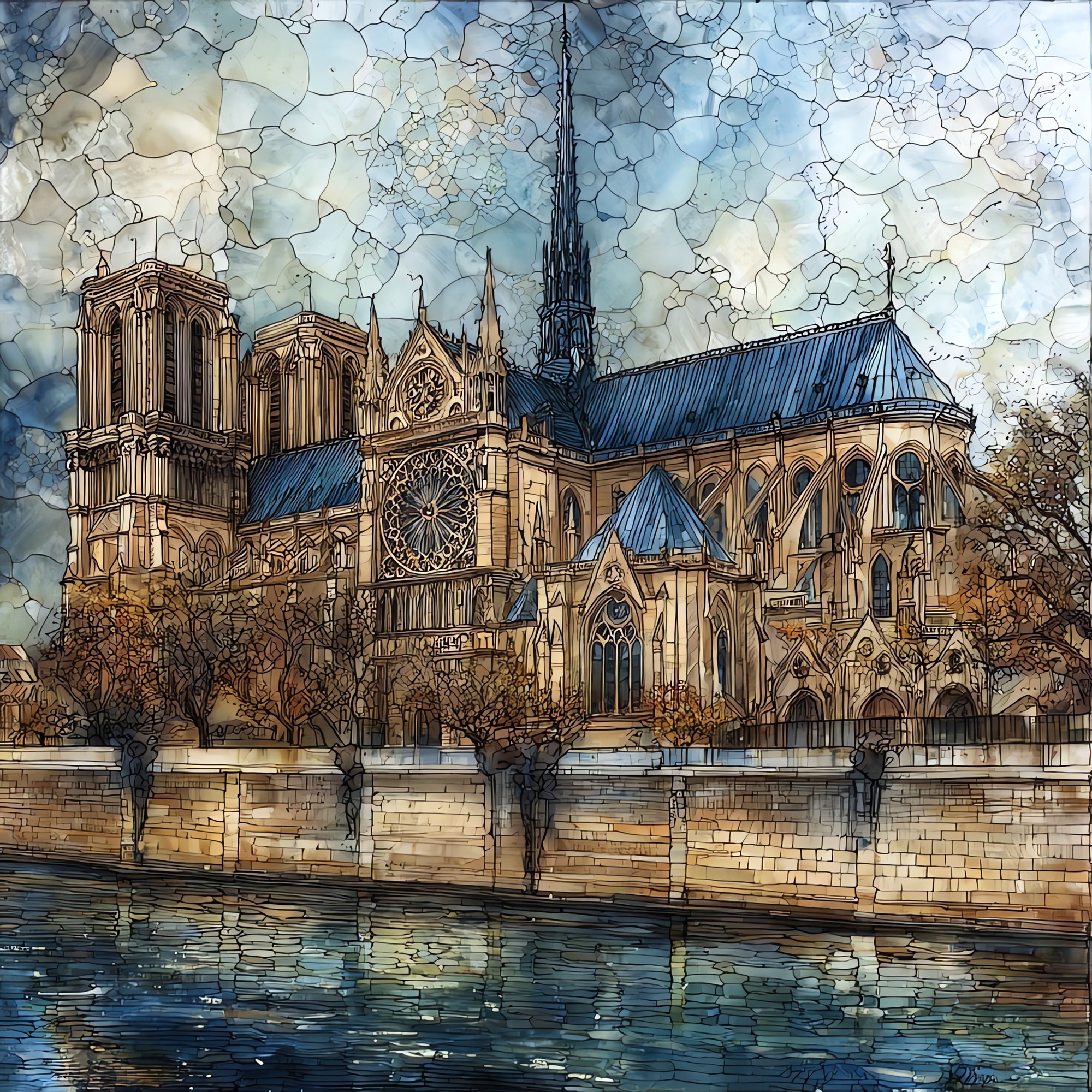
Notre-Dame de Paris
shown on ceramic, 12-inch tileFrance
on the Île de la Cité, in the Seine

Notre-Dame de Paris

stone built to carry the colour.

Where it lives

Not only on a wall.

A small tile on the nightstand catching the morning. A larger one above the fire. Yours, wherever you spend the slow hours.
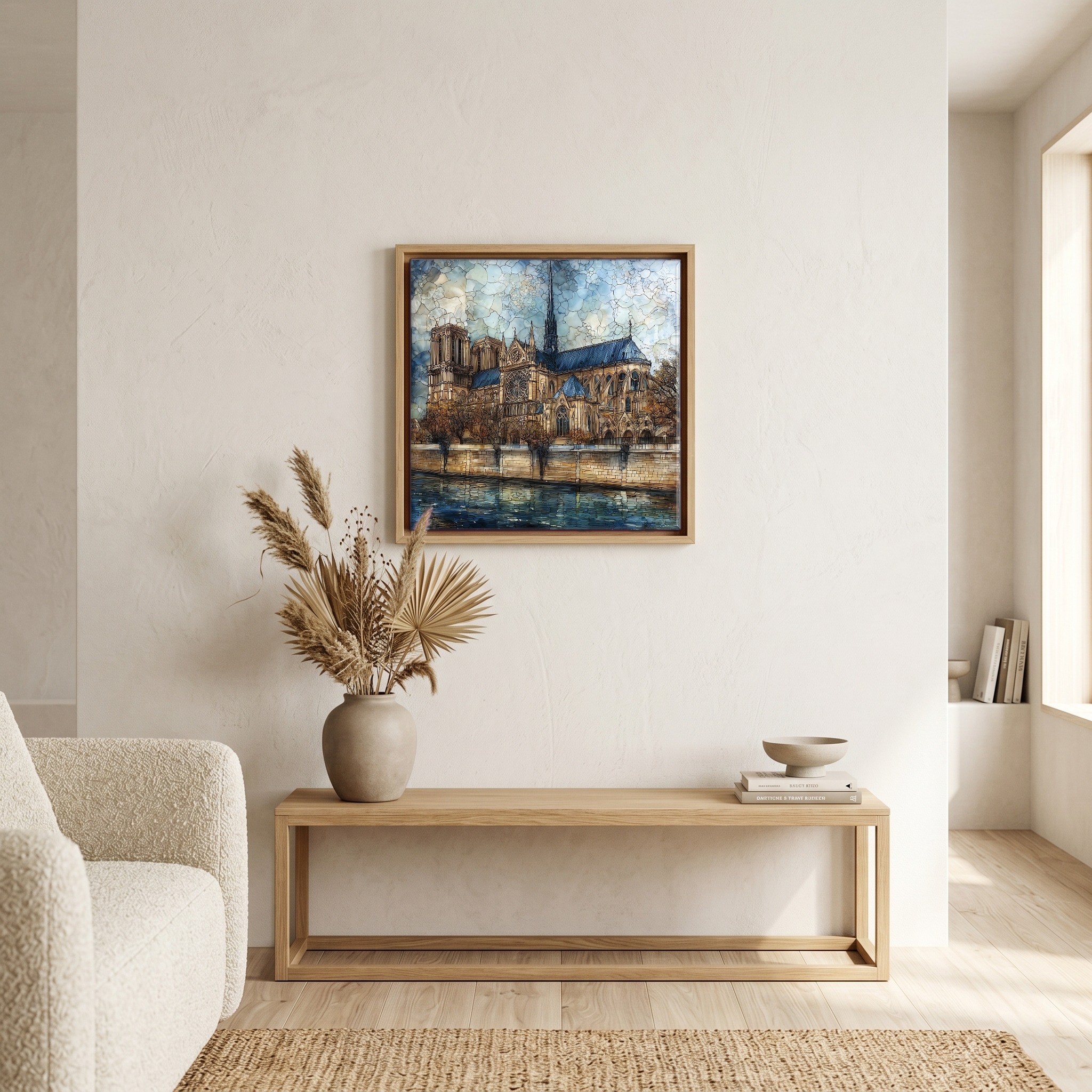
Above the bench, in a warm oak surround.
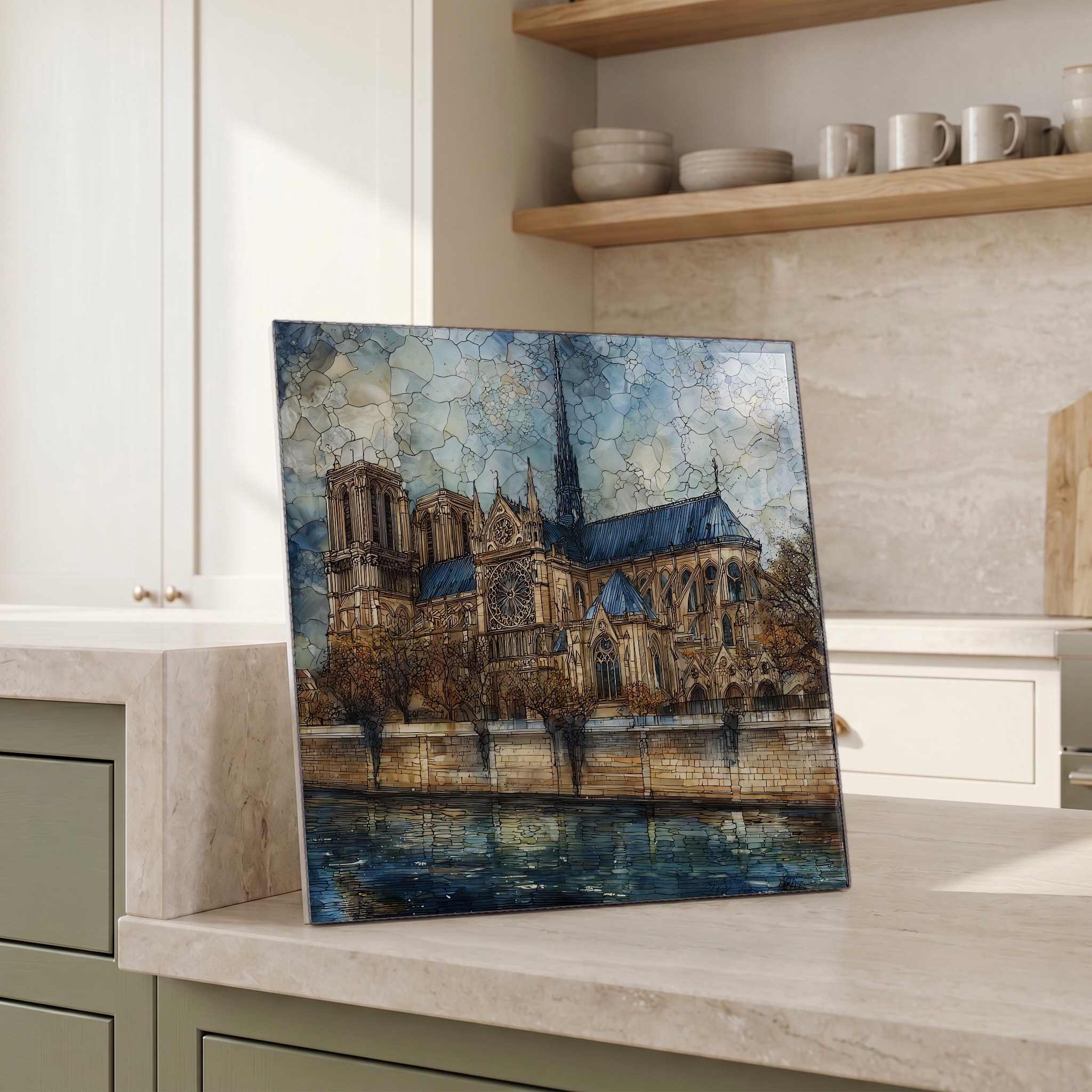
Beside the kettle, propped on the counter.
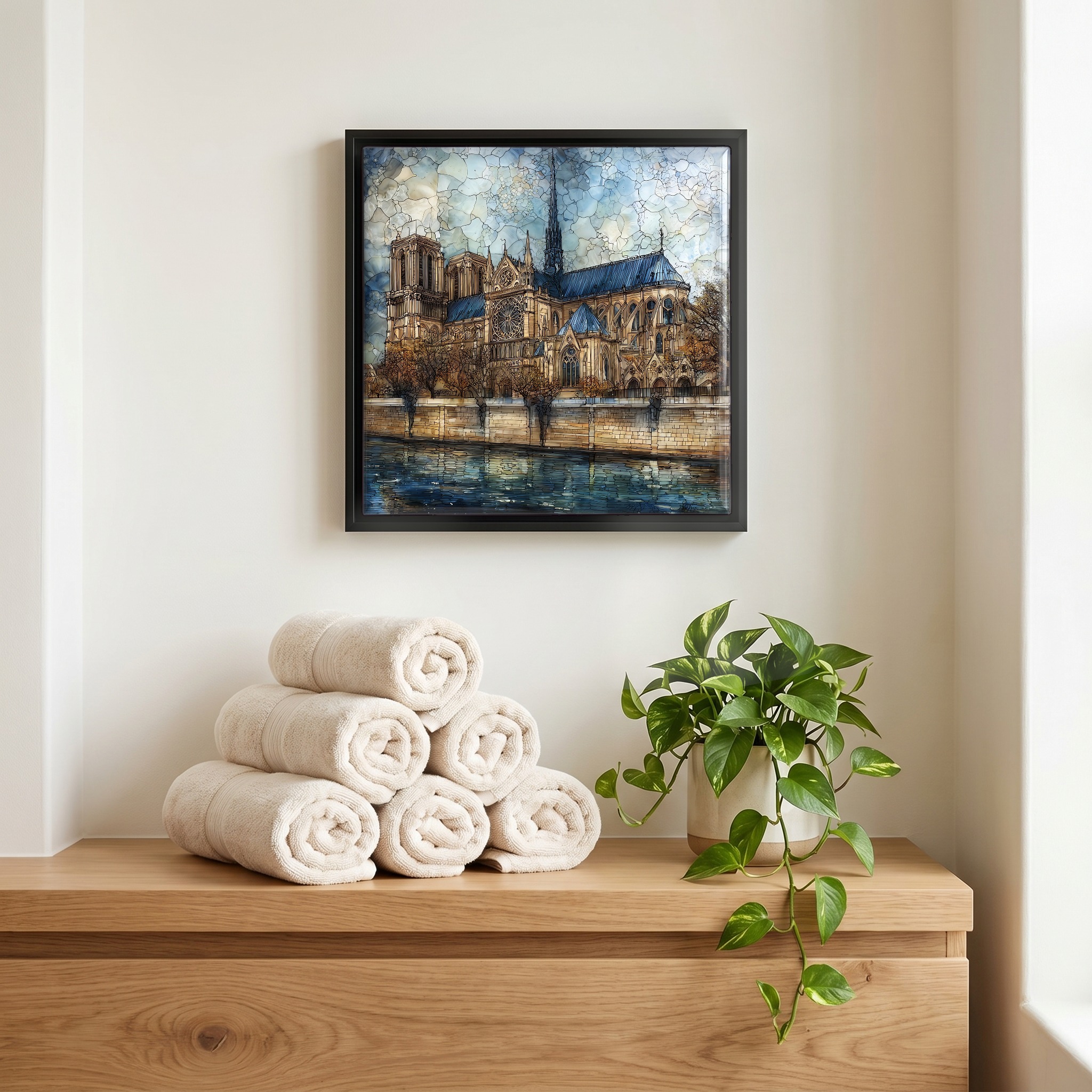
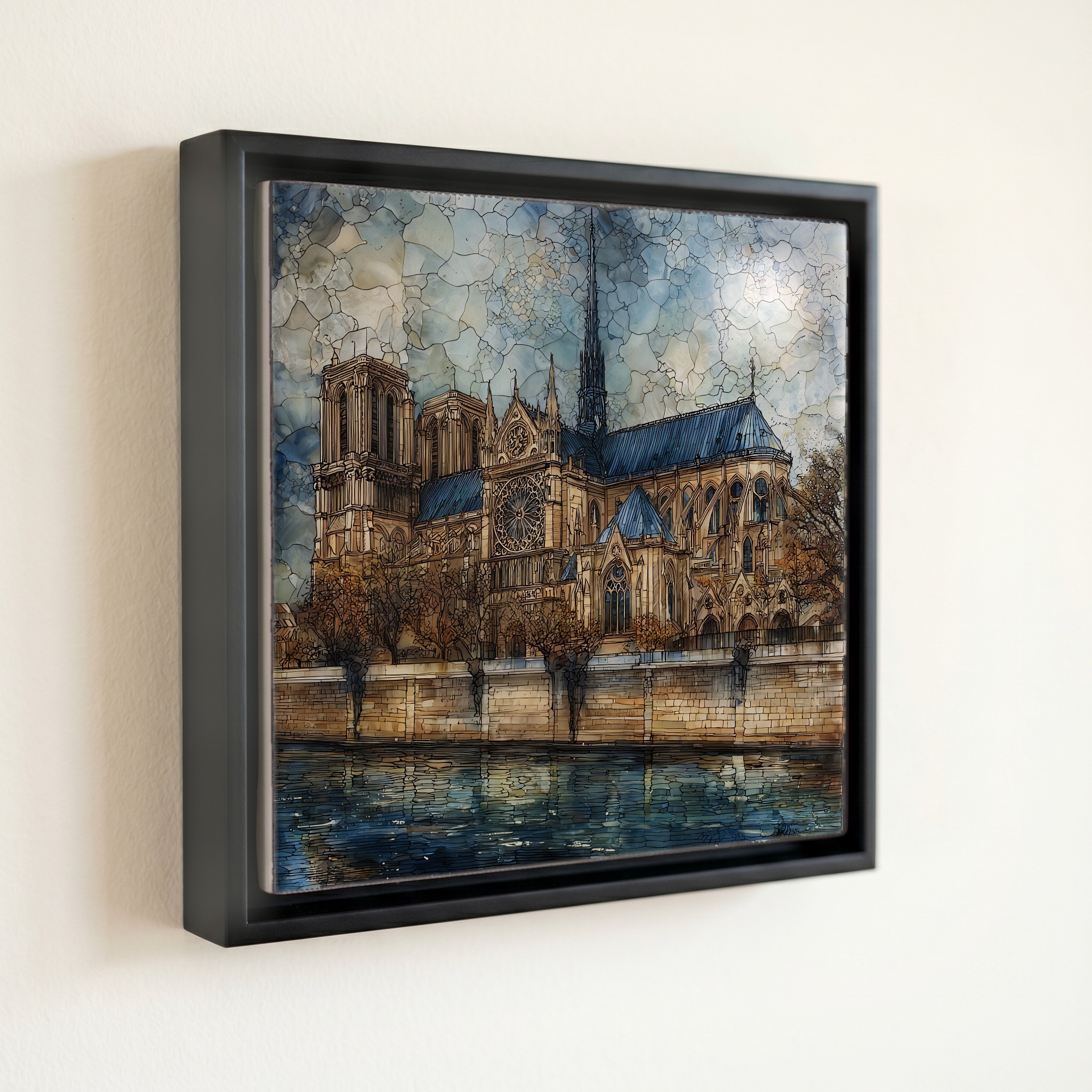
Above the linens, in a slim black surround.
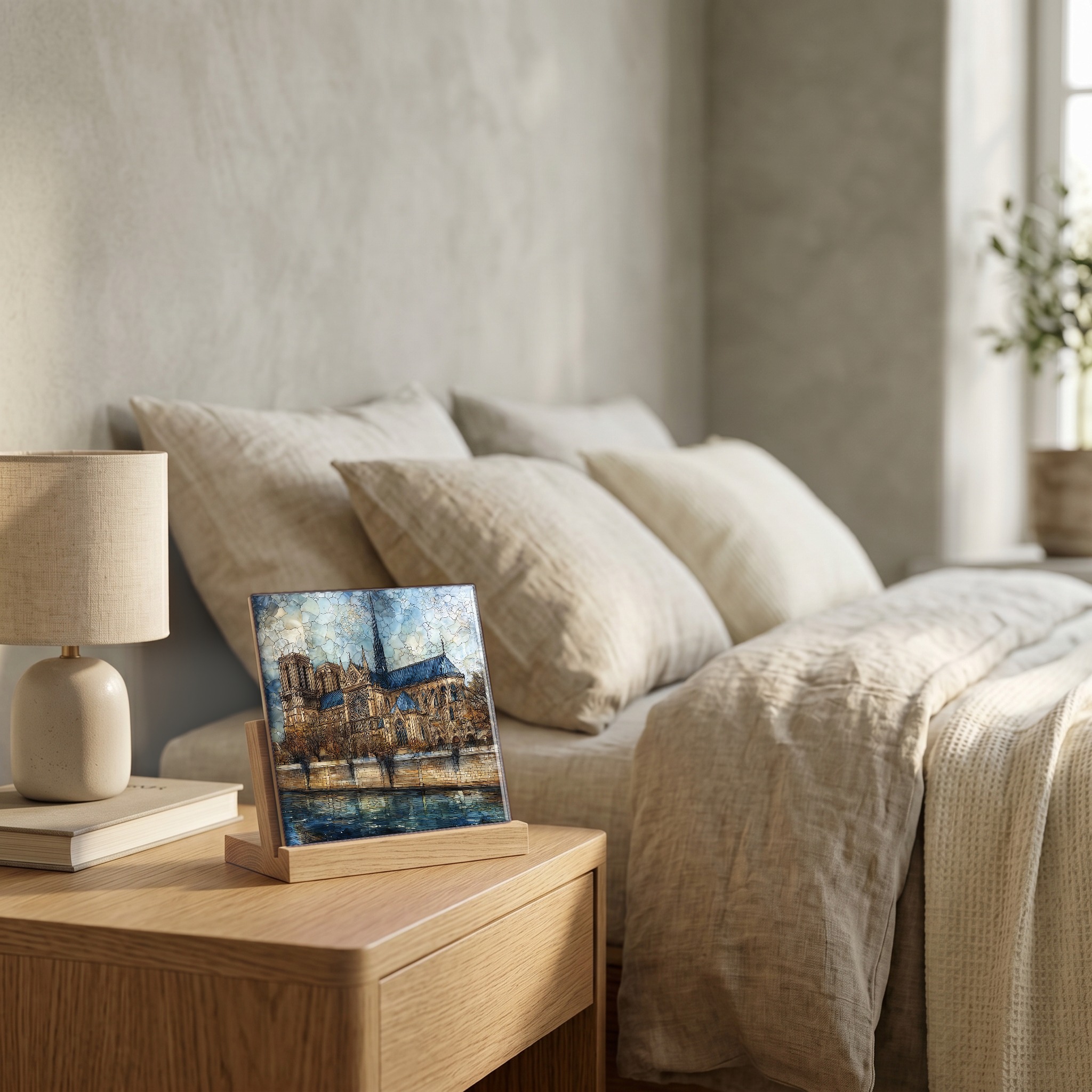
On the nightstand, on a light oak stand.
On a picture ledge, where the light comes in.
a note from the studio

The cathedral on the Île de la Cité, where the Seine forks around an old island and the city was born. The flying buttresses do the surprising work. Thin stone ribs that hold the walls back so the windows can fill with colour. The south rose has done that for almost eight centuries. After the fire of 2019, the cathedral reopened in December 2024 with a new oak roof and a re-cast spire. The same bells. People come early to be alone with it.
from the studio
shown in a slim black floating frame · 6 × 6 in
— bring it home

Notre-Dame de Paris, on ceramic.

Each tile is finished by hand in our Knoxville studio. Artwork is slowly infused into the ceramic surface under high heat and pressure, and rests beneath a thin glossy finish. The colour lives in the surface, not on top of it.

What kind of piece?
One tile — square or rectangle.
How big?
the popular one — counter, shelf, nightstand
6 × 6 in · 15 cm · 1.6 lb
Surface finish
A clear glossy finish — the artwork reads as if under resin. Ideal for show-pieces and framed wall art.
How it sits
A hidden cleat — sits ¼″ proud of the wall.
$58
Hand-finished and shipped from our studio at the foot of the Smokies. On your wall in about ten days.
size
6 × 6 in
15 cm
weighs
1.6 lb
solid in the hand
surface
ceramic, hand-finished
art rests beneath a thin glossy finish
from
Knoxville, TN
our family studio, at the foot of the Smokies
— start a Coaster Set

Pick any four 4-inch tiles — National Parks you've been to, a Smokies set, the four seasons of one place. $ for a set of , cork-backed, ready to live on the table.
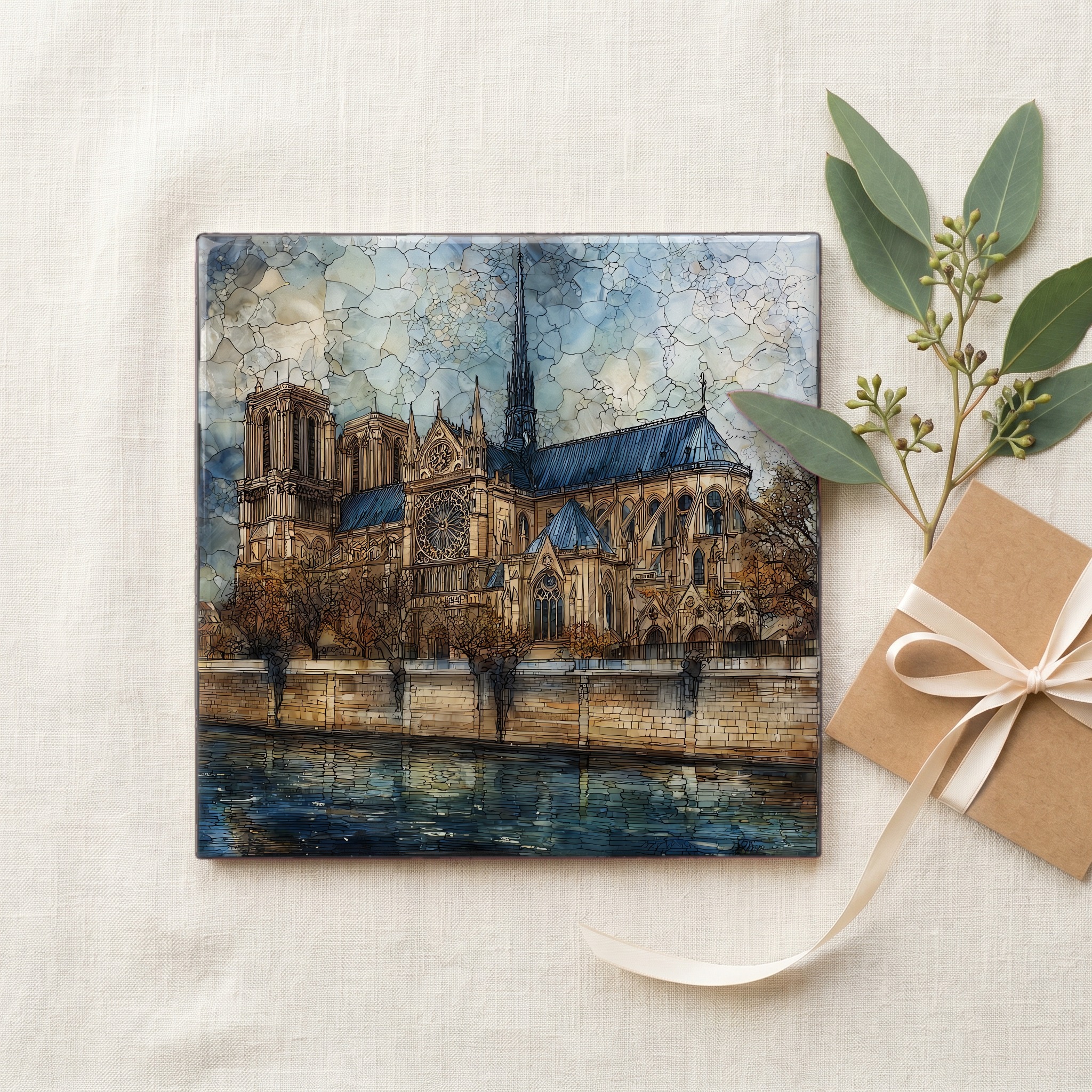
comes gift-ready
comes gift-ready

Each tile ships in a kraft box, tied with cream ribbon, with a handwritten note from the studio if you'd like to add one.
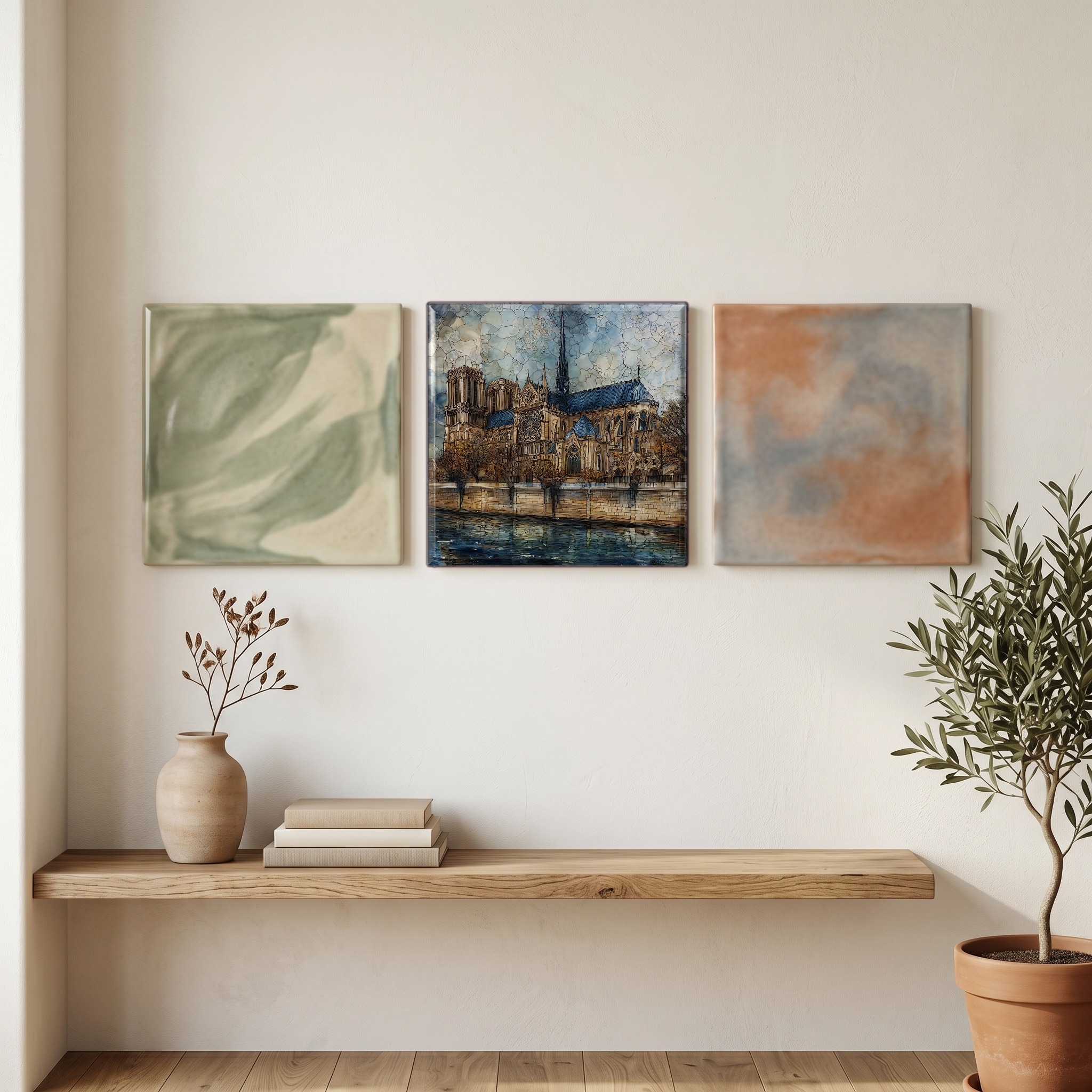
or build a grouping
or build a grouping

Three or five different vistas, hung together — a chapter of places you've been, or want to go.

about Notre-Dame de Paris

The place, in three passes.

A little of what's known, in case you fall down the rabbit hole — or want to go see it yourself.
the place

Notre-Dame de Paris stands on the Île de la Cité, the small island in the Seine where Roman, medieval, and modern Paris all began. Construction began in 1163 under Bishop Maurice de Sully and continued for almost two centuries, with the west façade largely complete by 1250 and modifications carried into the fourteenth century. The cathedral is 128 metres long and the twin western towers rise 69 metres above the parvis. It belongs to the Archdiocese of Paris and is also a property of the French state. After the April 2019 fire destroyed the spire and most of the roof, the cathedral reopened to worship and visitors on 7 December 2024.

the stone

The flying buttresses around the apse and nave are among the earliest used on a great cathedral. They carry the outward thrust of the high stone vaults to massive piers set away from the wall, which lets the walls themselves stay thin and the windows grow large. Much of what visitors see was reshaped during the long restoration led by Eugène Viollet-le-Duc between 1844 and 1864, including the cast-lead spire that fell in 2019. Philippe Villeneuve, the chief architect of historic monuments, directed the post-fire rebuild and returned the spire to its Viollet-le-Duc silhouette in oak and lead.

the light

Three rose windows give Notre-Dame its inner colour. The north rose, completed around 1250, is the largest and best-preserved of the medieval windows; most of its thirteenth-century glass is original. The south rose, the same diameter at roughly 13 metres, was rebuilt by Viollet-le-Duc in the 1860s after centuries of damage. The west rose, set above the main portal, lights the nave at the end of the afternoon. The 2019 fire spared all three windows. The post-fire cleaning of the interior limestone, ordered as part of the rebuild, brightened the cathedral noticeably; visitors who knew it before describe the stone as paler now than at any point in living memory.

where
France · Paris, Île-de-France
position
48.8530° N · 2.3499° E
the neighborhood

What's nearby.

A handful of named places within an hour's walk or short drive. Some we've already painted; some we will.
at the lake
Sainte-Chapelle
Gothic royal chapel
at the lake
Île Saint-Louis
residential Seine island
1 km W
Conciergerie
medieval royal palace
1 km W
Pont Neuf
sixteenth-century stone bridge
1 km NW
Louvre
art museum and former royal palace
N
Notre-Dame de Paris
Sainte-Chapelle
Île Saint-Louis
Conciergerie
Pont Neuf
Louvre
common questions

What people ask.

A few questions we get about Notre-Dame de Paris — and about bringing the piece home.
about the place

Notre-Dame stands on the Île de la Cité, the small island in the Seine at the centre of Paris, in the 4th arrondissement. The cathedral faces the parvis, a public square that sits over the archaeological crypt of ancient Lutetia. The closest Metro stations are Cité, Saint-Michel, and Hôtel de Ville.

Construction began in 1163 under Bishop Maurice de Sully. The west façade was largely complete by 1250 and the cathedral continued to be modified through the fourteenth century. Major nineteenth-century restoration led by Eugène Viollet-le-Duc reshaped much of what visitors see today.

Flying buttresses transfer the outward push of a high stone vault to a massive pier set away from the wall, which frees the wall to be thinner and the windows to be larger. Notre-Dame's buttresses, added in the late twelfth and thirteenth centuries, are among the earliest used at this scale on a French cathedral.

The April 2019 fire destroyed the cathedral's nineteenth-century spire and most of the timber roof, but the stone vaults, the twin towers, and the three rose windows survived. After a five-year rebuild led by chief architect Philippe Villeneuve, the cathedral reopened to worship and visitors on 7 December 2024.

Entry to the cathedral itself is free, in keeping with French law for active places of worship. Since the reopening, timed reservations have been introduced to manage crowds. The separate climb to the towers and the visit to the archaeological crypt under the parvis each carry their own ticket.

Victor Hugo's 1831 novel Notre-Dame de Paris, known in English as The Hunchback of Notre-Dame, drew public attention to the then-neglected cathedral and helped trigger the nineteenth-century restoration. The novel is set largely inside and around the building during the late fifteenth century.

about the piece in your home

It's a meaningful gift for people who hold Paris close. Notre-Dame is one of the most loved buildings in France and one of the few places that reads as the city itself. A Medium or a Large in a glossy finish carries the rose-window colours well; a Coaster Set works for a smaller gesture.

The deep jewel tones of the stained-glass treatment and the warm stone hold up well in Maximalist interiors, Old-World Romantic rooms, and rooms built around antique wood. The piece also reads strongly against deep navy, oxblood, or forest-green walls, where the rose-window reds carry the eye across the room.

Yes. The return to Old-World Romantic interiors, cathedral-influenced palettes, and dark-academia rooms has brought stained-glass colour back into the home. The Notre-Dame piece sits in that current naturally and reads as heirloom rather than as a trend purchase.

Above a standard sofa, a single Large reads well and a 4-tile Mural fills the wall with more presence. For a long console or buffet, a 9-tile Mural carries the architecture at near-fresco scale. Above a narrow console, a Medium is the comfortable size.

Yes. The Dura Satin and Matte finishes are scratch-resistant and rated for wet rooms, kitchens, backsplashes, and shower walls. The colour is infused into the ceramic surface, so steam and frequent cleaning will not lift it.

A soft microfibre cloth and water is all the tile needs. For kitchen or bathroom installations, the same cloth with a small amount of pH-neutral cleaner handles grease or hard-water marks. No special ceramic sealers are required; the colour lives in the surface.

Yes. Every WenderVista piece is the work of Reid Wender, the studio's curator and eye. The tiles are hand-finished in Knoxville, Tennessee, the colour slowly infused into the ceramic surface under high heat and pressure. No licensing or stock imagery is used.

if this one stayed with you

A few you might also love.

Hand-picked by the eye that found Sorapis. Same air, same kind of quiet.