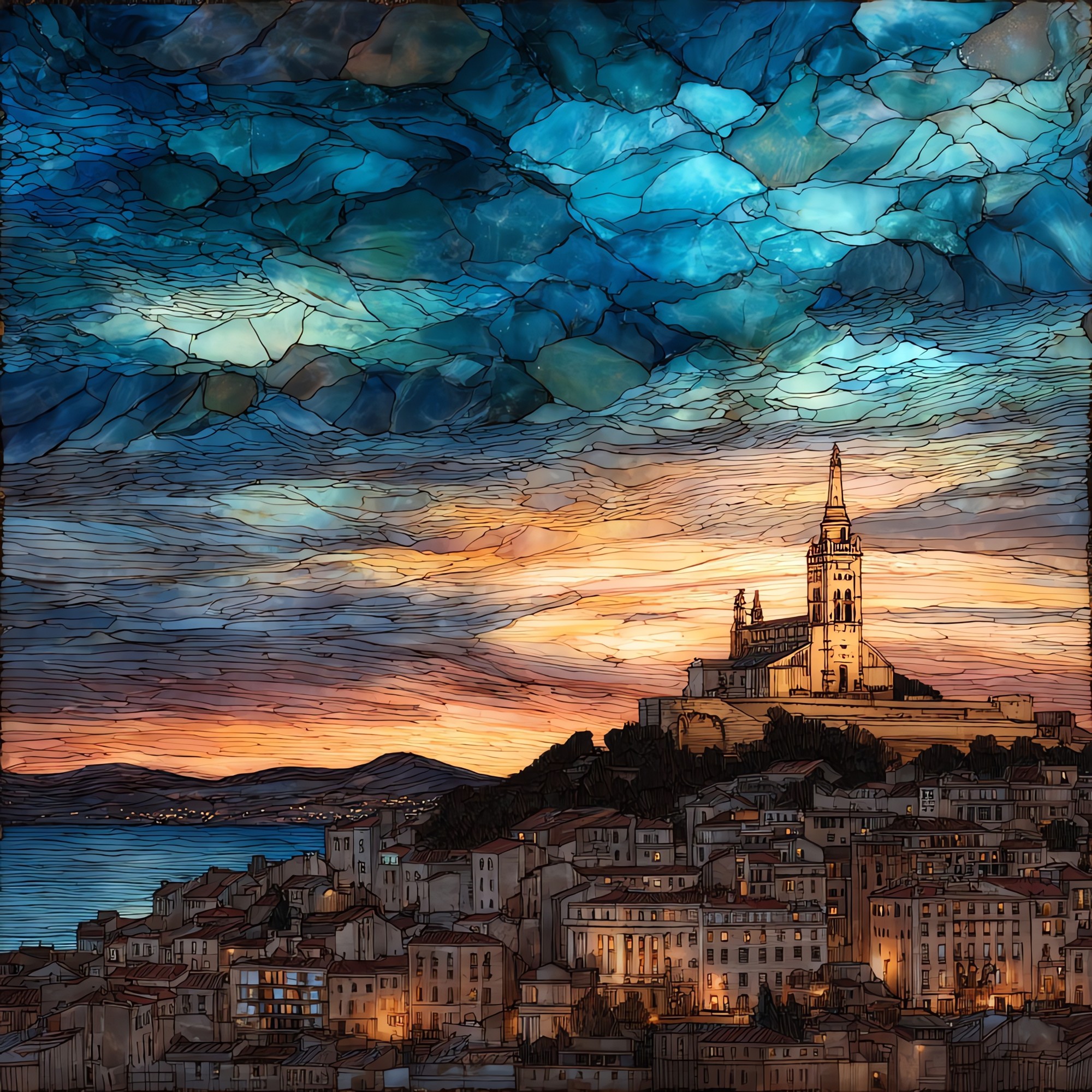
Notre-Dame de la Garde
— the gold that watches for the boats coming home.
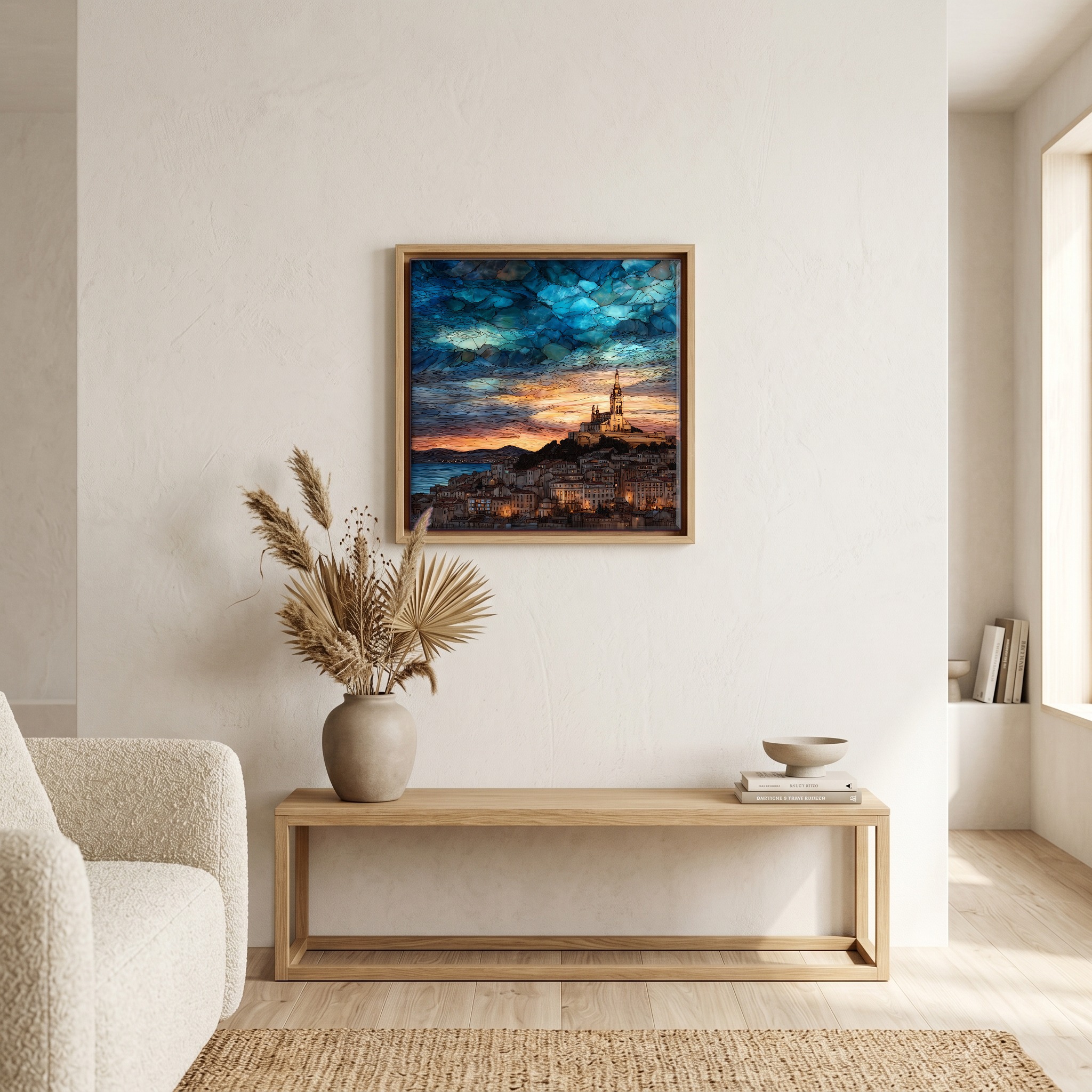
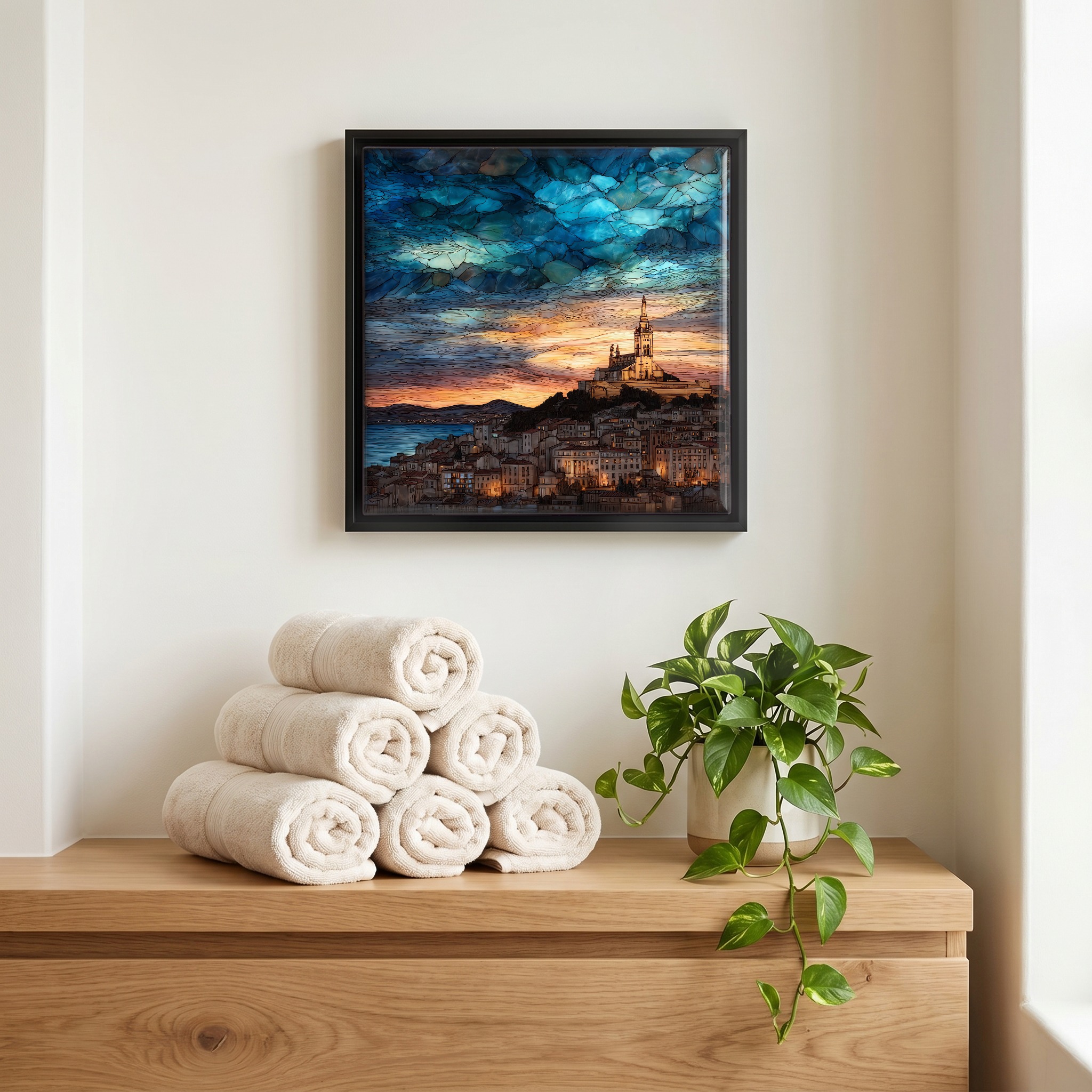
Not only on a wall.
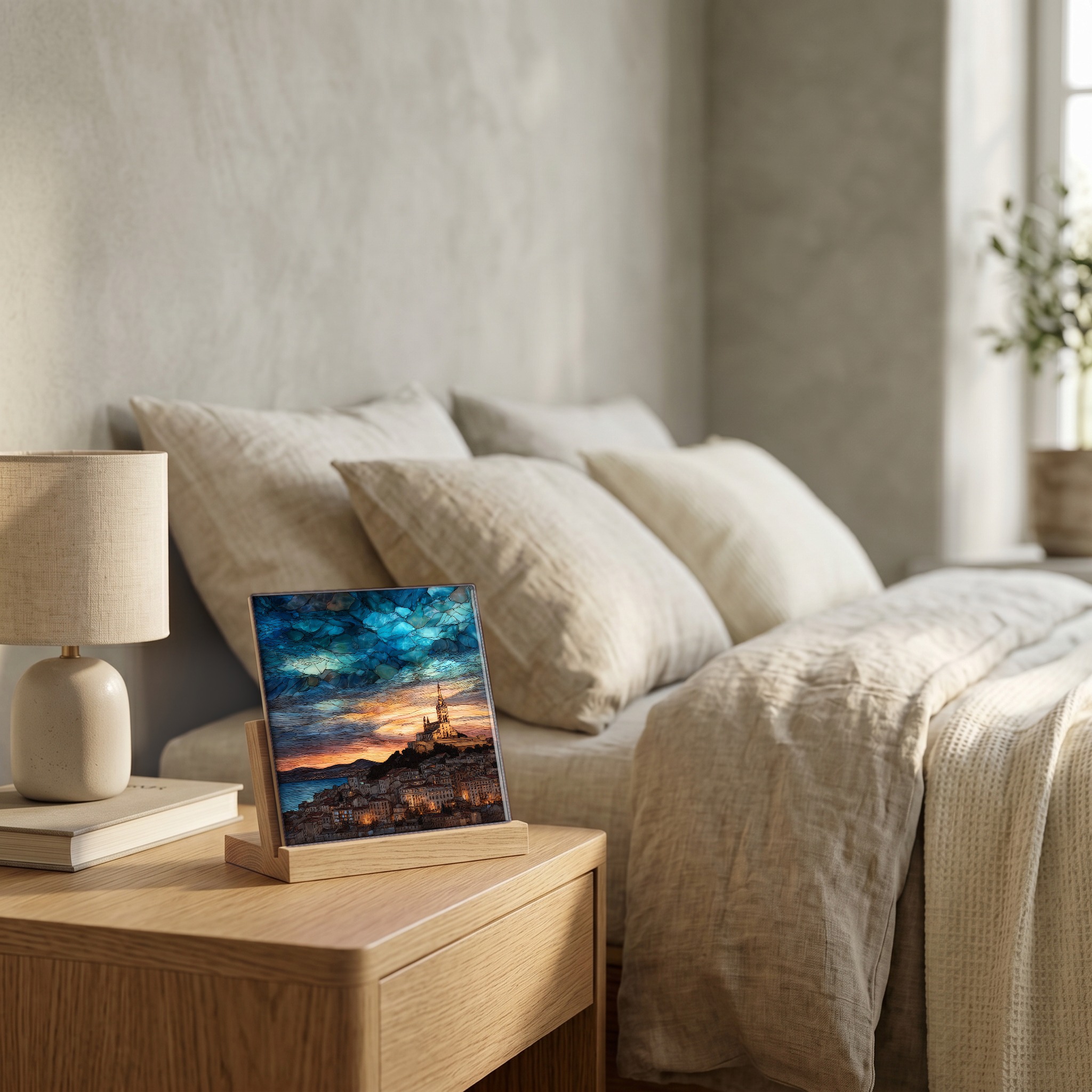
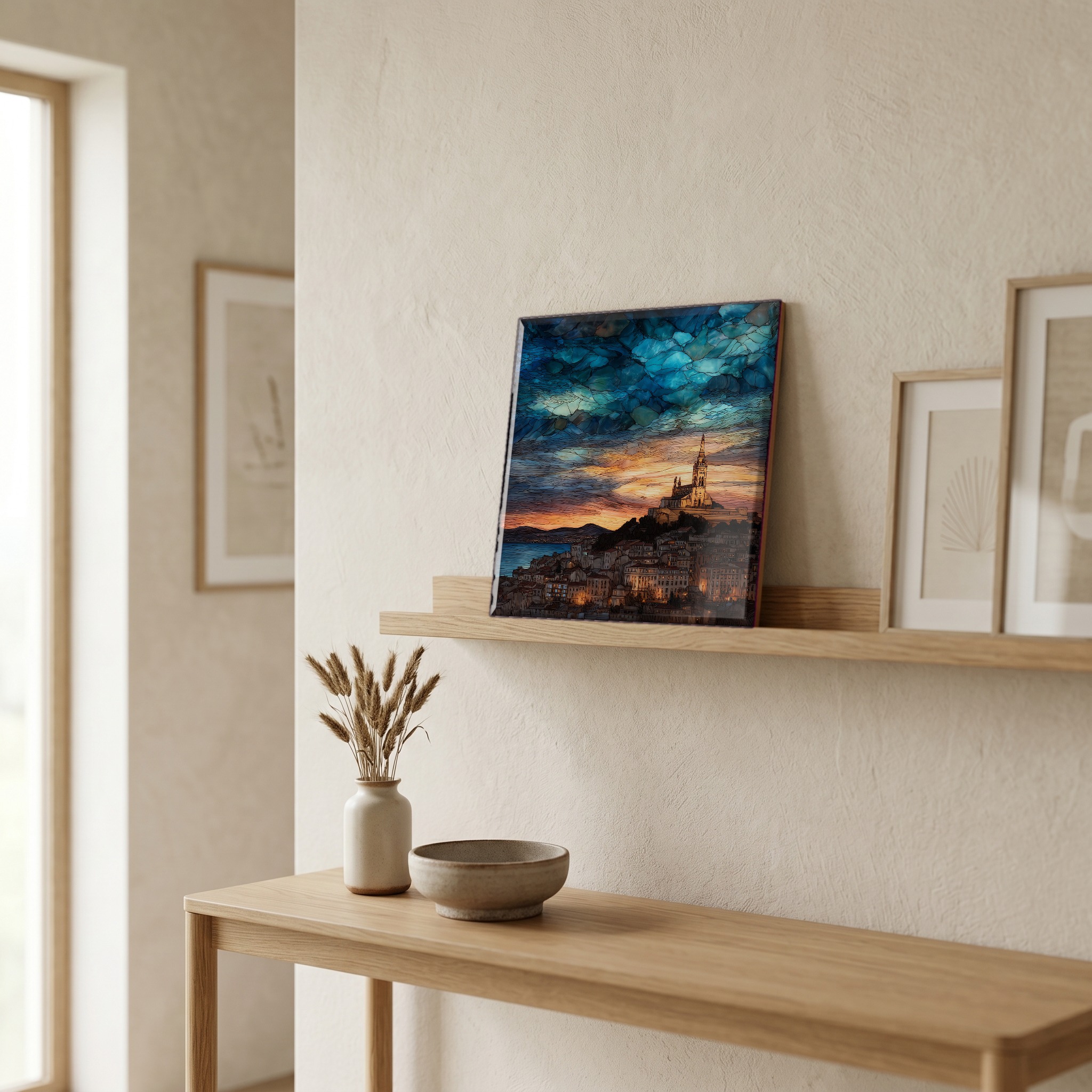
“The basilica sits on Marseille's highest hill, 154 metres of limestone above the city, with a gilded Madonna another forty metres above that. La Bonne Mère, locals call her. She watches the harbour. Sailors hung model boats from the ceiling for two centuries as thanks for coming home. The walls are striped white and green, after the Florentine cathedrals. At evening, the statue catches the last of the sun and holds it for a few minutes after the city has gone blue.
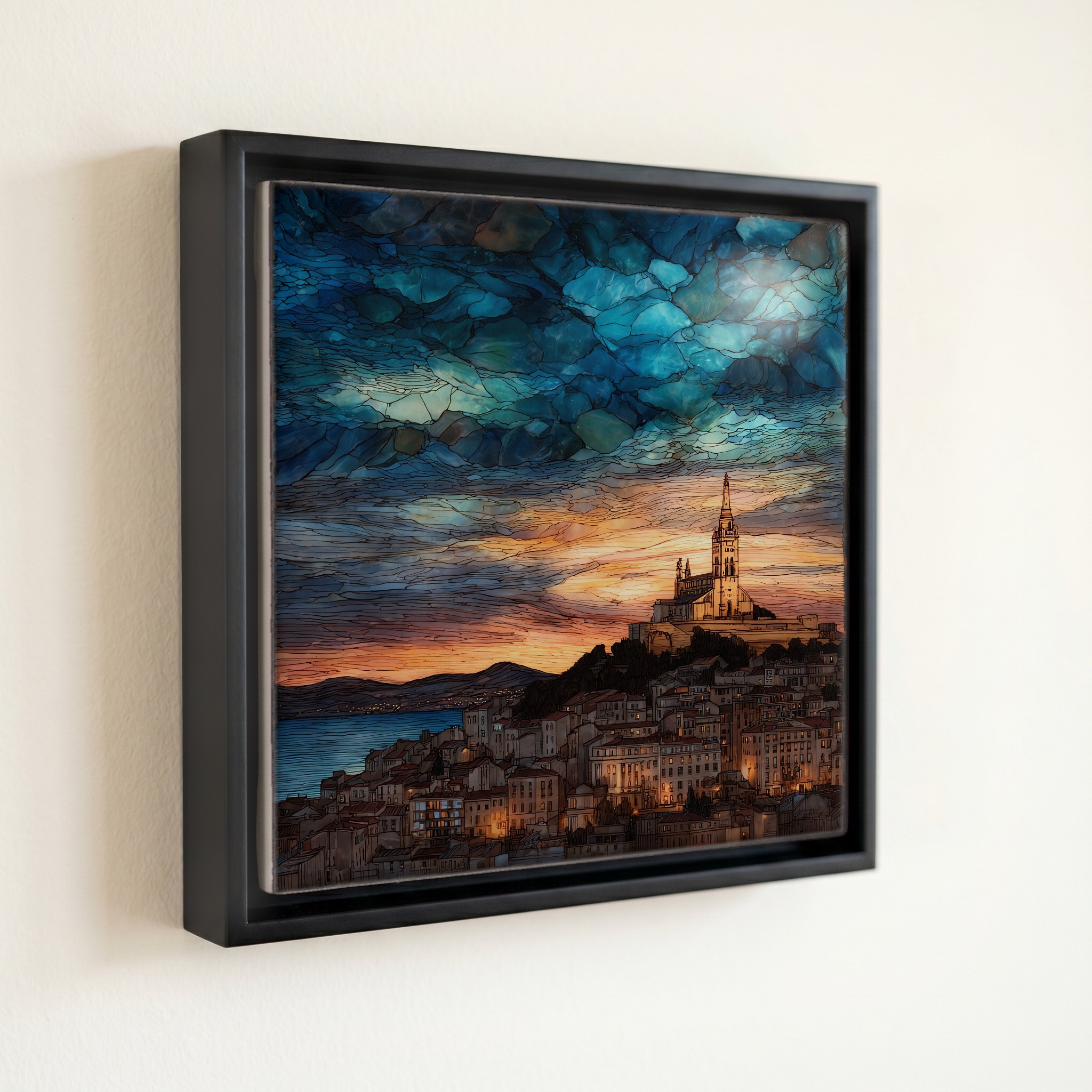
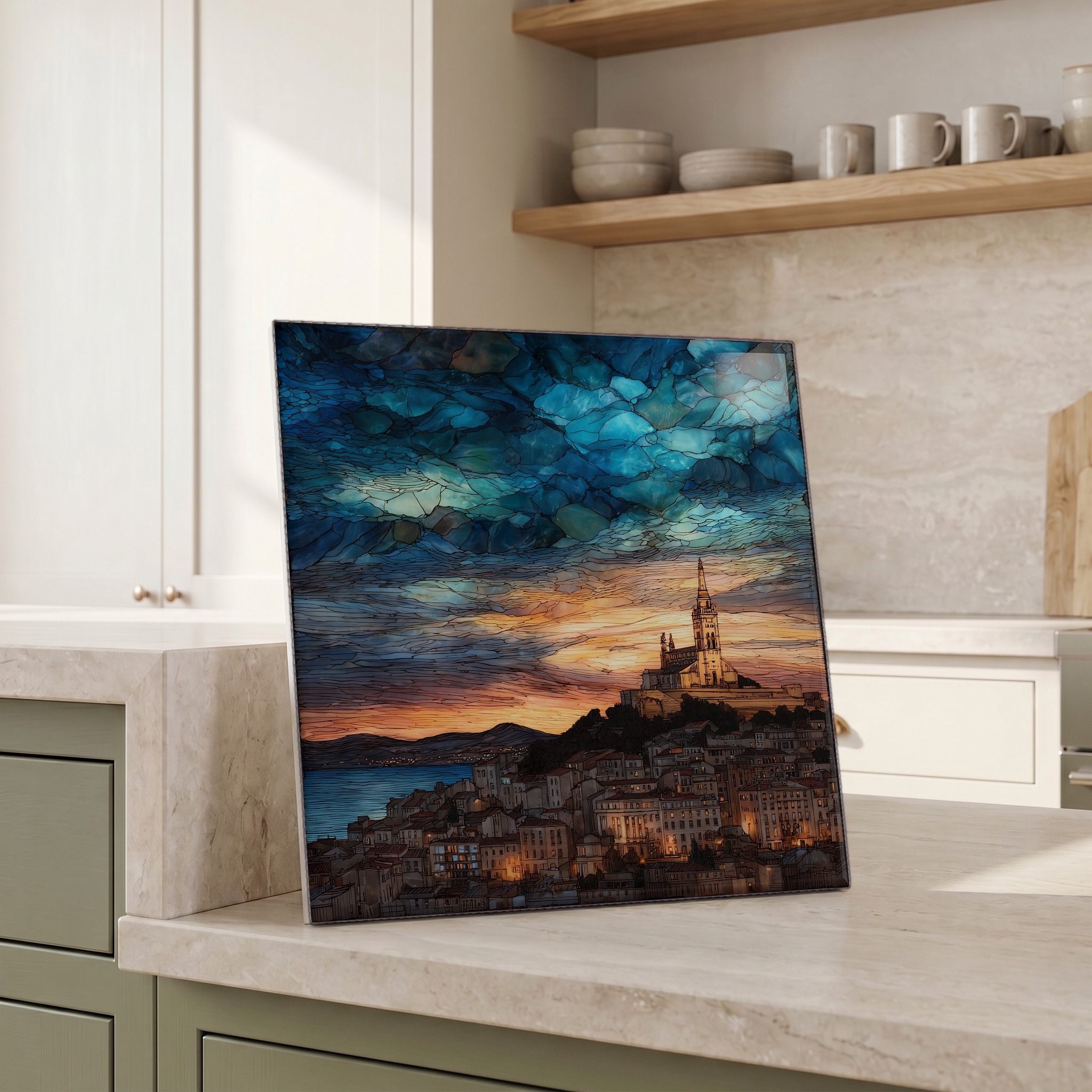
Notre-Dame de la Garde, on ceramic.
Each tile is finished by hand in our Knoxville studio. Artwork is slowly infused into the ceramic surface under high heat and pressure, and rests beneath a thin glossy finish. The colour lives in the surface, not on top of it.
Pick any four 4-inch tiles — National Parks you've been to, a Smokies set, the four seasons of one place. $ for a set of , cork-backed, ready to live on the table.
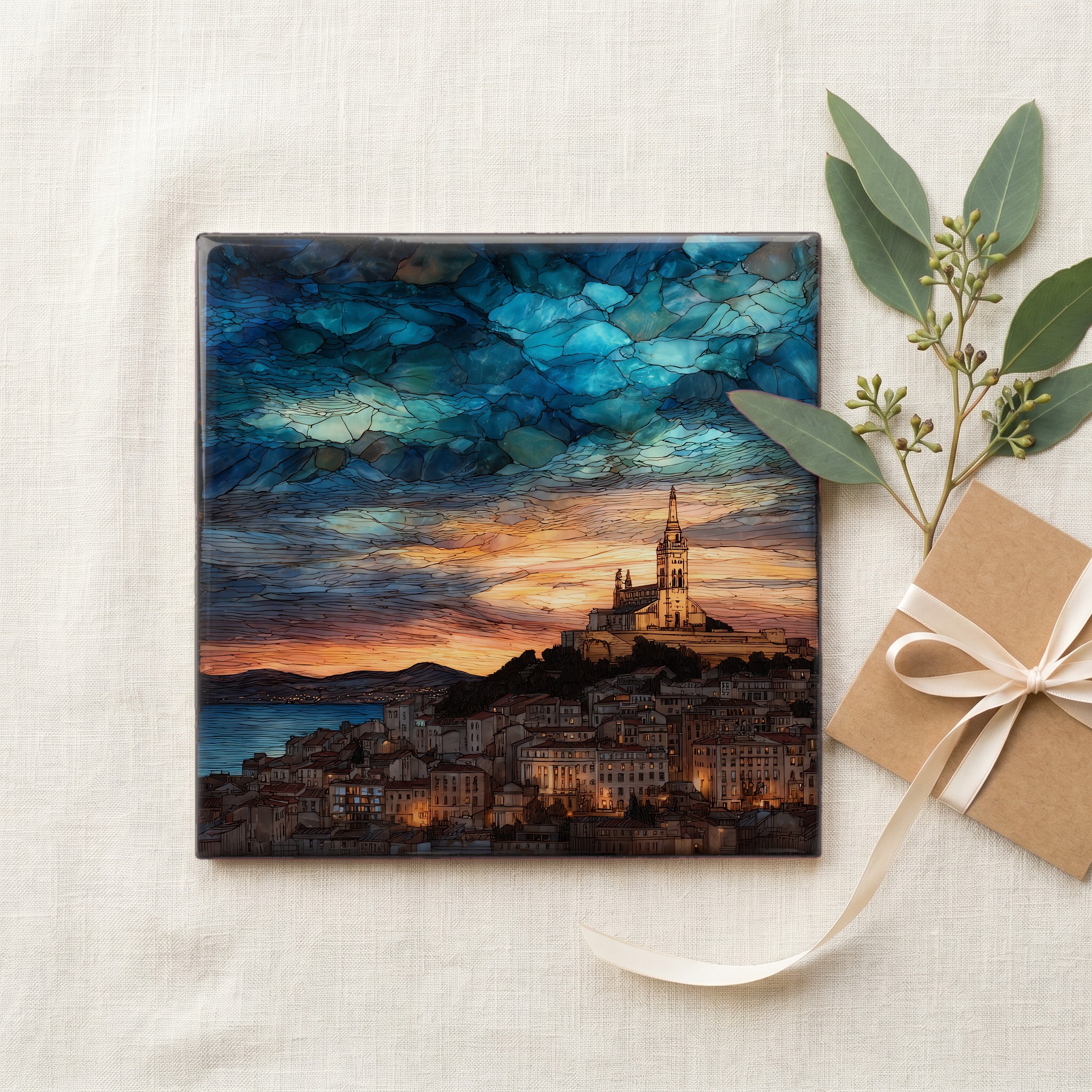
Each tile ships in a kraft box, tied with cream ribbon, with a handwritten note from the studio if you'd like to add one.
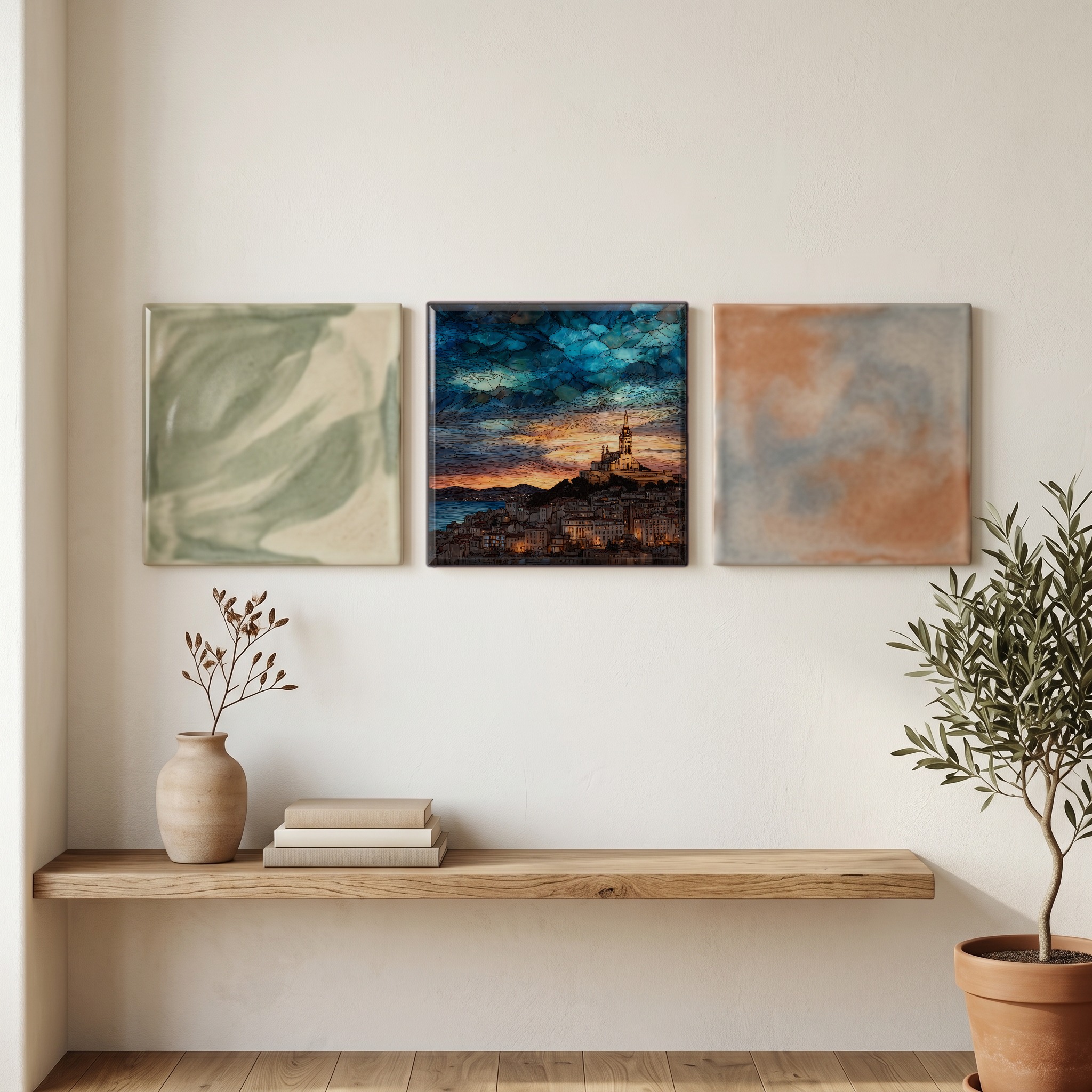
Three or five different vistas, hung together — a chapter of places you've been, or want to go.
The place, in three passes.
Notre-Dame de la Garde stands on La Garde hill in southern Marseille, the highest natural point in the city at 154 metres above sea level. The basilica was built between 1853 and 1864 to designs by Henri-Jacques Espérandieu, on the foundations of a 16th-century fort raised by François I in 1524, which itself replaced a 13th-century pilgrim chapel from 1214. The hill sits about 1.5 km south of the Vieux-Port; visitors reach it on foot from the Bompard or Endoume quarters, by bus line 60 from the Old Port, or by the seasonal petit train. The parvis looks north over the harbour, west to the Frioul archipelago and the Château d'If, and south along the coast toward the Calanques.
The exterior alternates courses of white Calissane limestone and dark green Florentine-style stone, a striped pattern Espérandieu borrowed from the cathedrals of Pisa and Florence. The crypt and lower basilica are Romanesque; the upper church is Neo-Byzantine, with a square bell tower forty-one metres high. At the summit stands a gilded copper statue of the Madonna and Child by Eugène-Louis Lequesne, completed in 1870, 11.2 metres tall and re-gilded most recently in 1989. Inside, more than 1,200 square metres of mosaic cover the vaults: gold-ground tesserae set against marine blues, the work of the Mauméjean workshop. Model ships hang from the ceiling, left by sailors as thanks.
Entry is free and the basilica is open daily, roughly seven in the morning to seven in the evening, with shorter winter hours. About two million people climb the hill each year, which makes it one of the most-visited religious sites in France. The view is widest after the mistral has scrubbed the air clean: on those days the Frioul islands sit sharp against the water and the white limestone of the city reads almost blue in shadow. The light is best in the last hour before sunset, when the gilded Madonna catches the sun and the basilica's striped walls throw long bands across the parvis. Photography inside is permitted; mass is celebrated several times a week.