
Normandy American Cemetery
— — the white the bluff has held since June.
Not only on a wall.
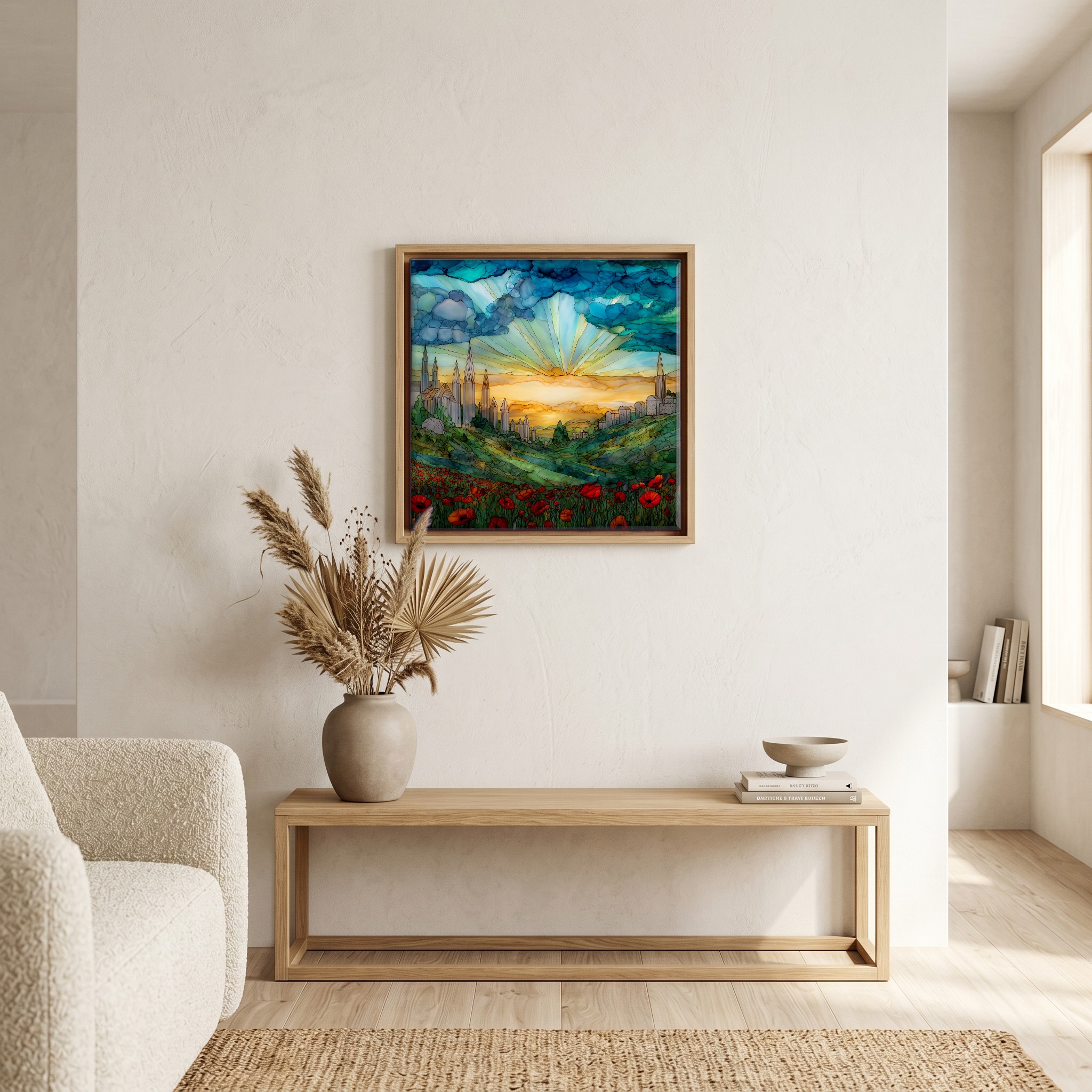
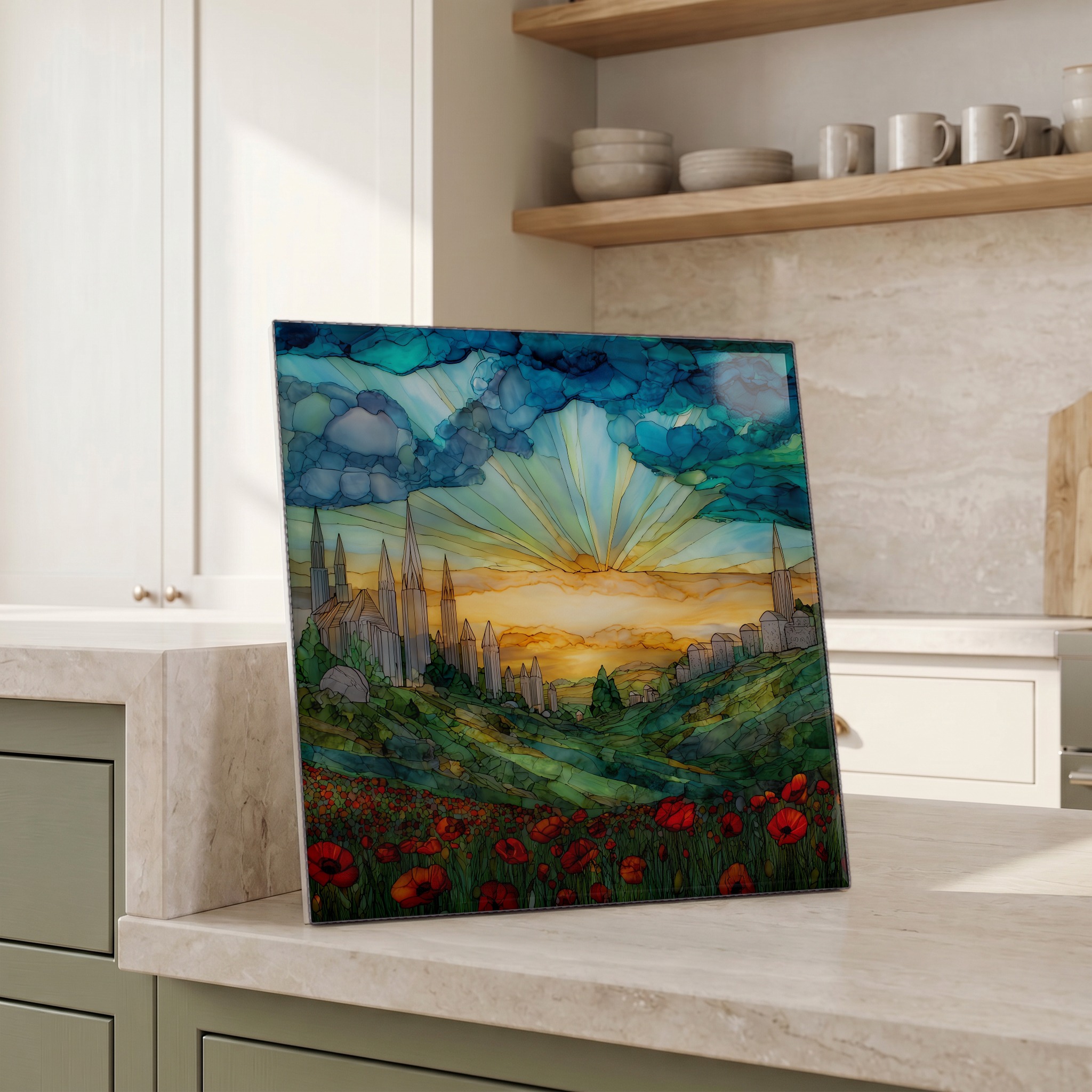


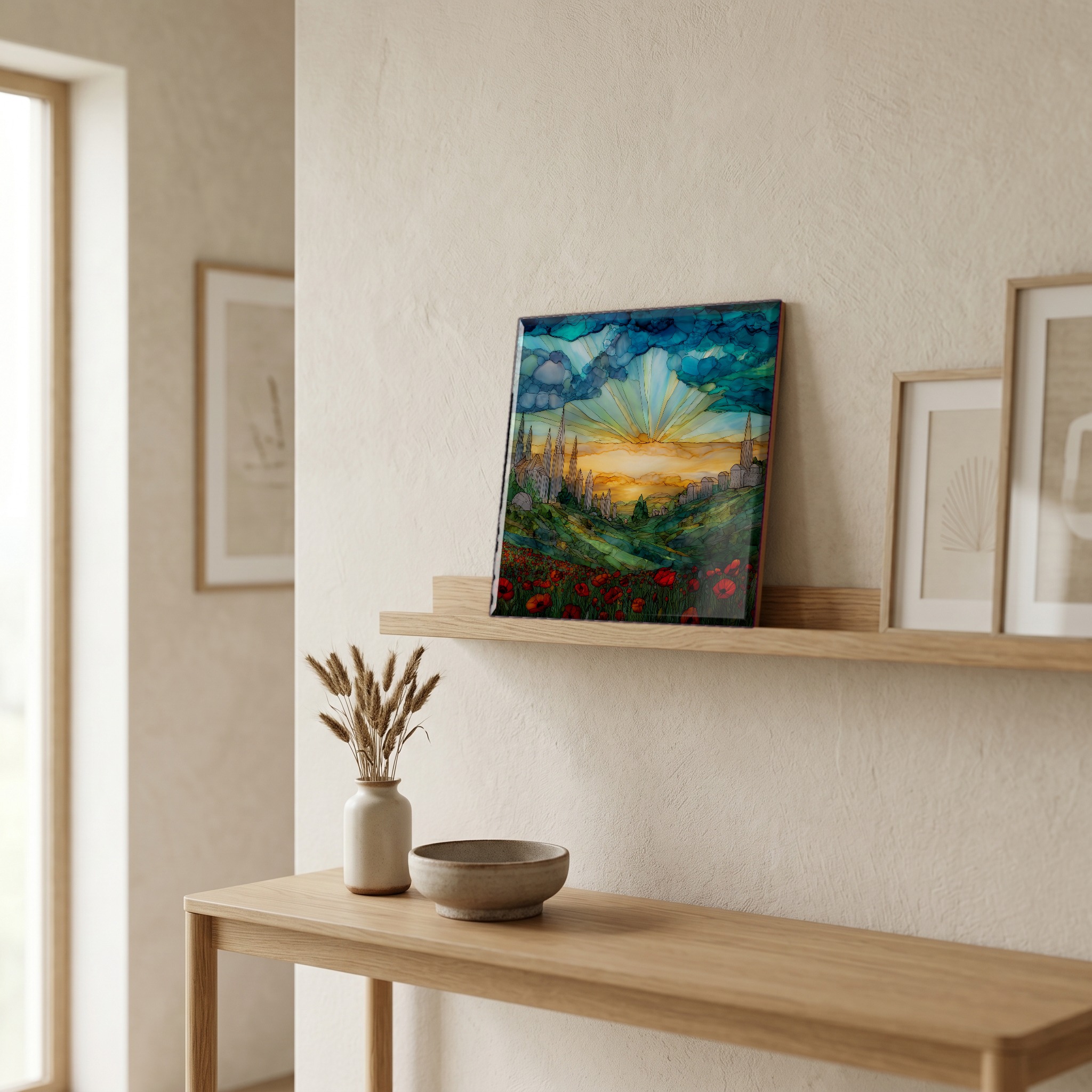
“A bluff above Omaha Beach, where the Atlantic comes in long and the wind never quite settles. Rows of white marble, nine thousand three hundred eighty-eight of them, set facing west, toward home. The land was granted by France to the United States in perpetuity, free of any charge, and has been kept that way ever since. The chapel sits at the centre of the lawn. The Walls of the Missing hold the names of those whose bodies were never returned. People come, walk slowly, and don't say very much. The sea is right below.
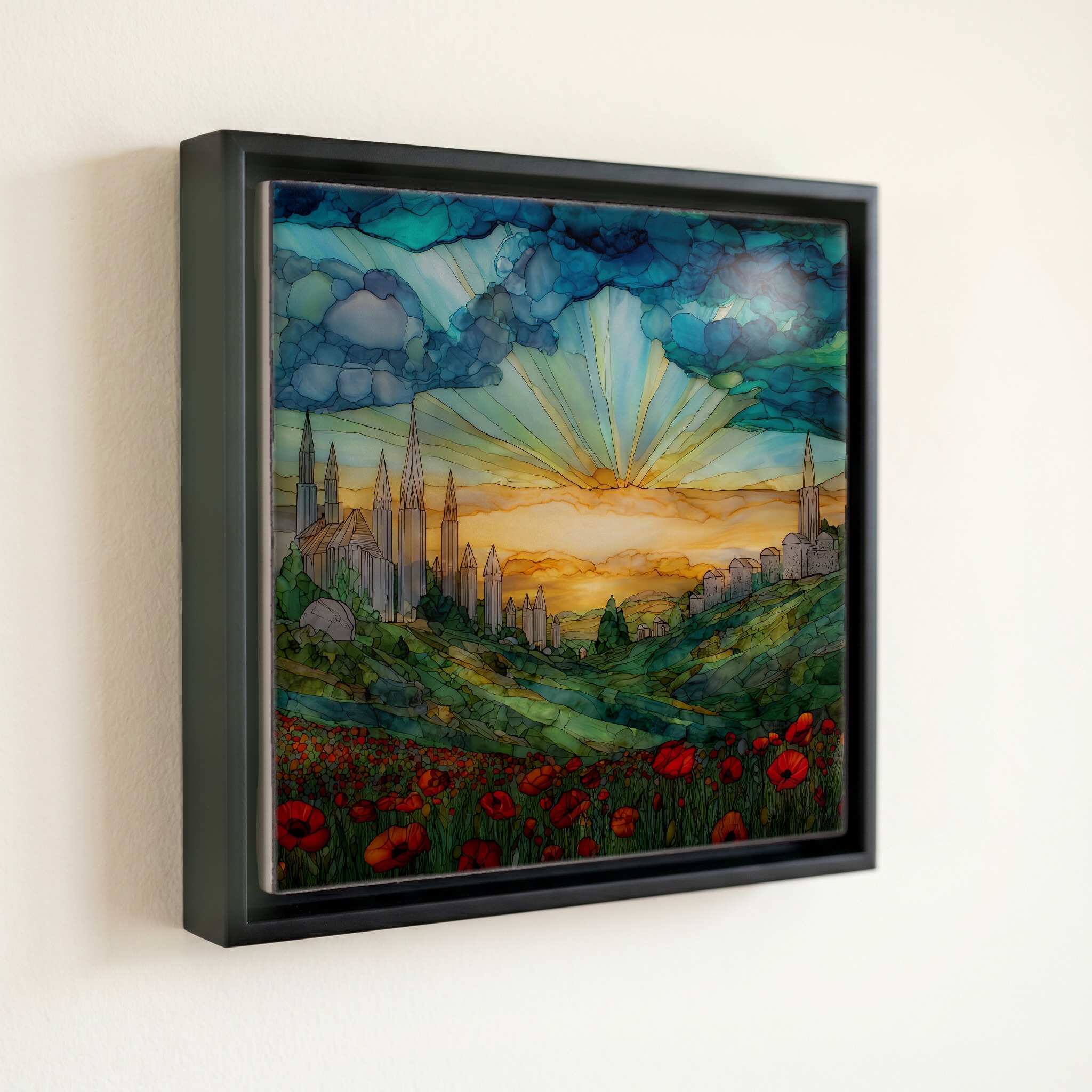
Normandy American Cemetery, on ceramic.
Each tile is finished by hand in our Knoxville studio. Artwork is slowly infused into the ceramic surface under high heat and pressure, and rests beneath a thin glossy finish. The colour lives in the surface, not on top of it.
Pick any four 4-inch tiles — National Parks you've been to, a Smokies set, the four seasons of one place. $ for a set of , cork-backed, ready to live on the table.

Each tile ships in a kraft box, tied with cream ribbon, with a handwritten note from the studio if you'd like to add one.
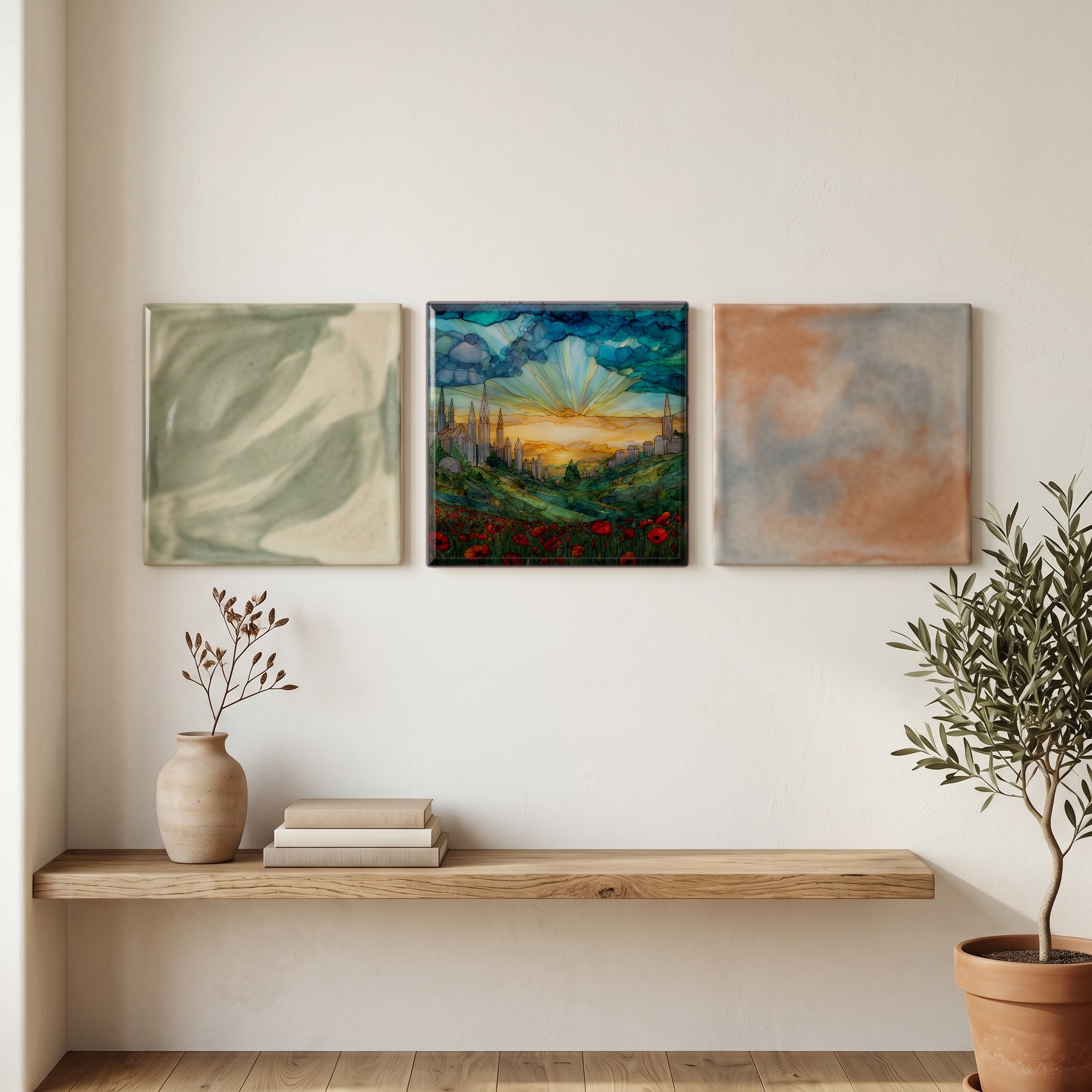
Three or five different vistas, hung together — a chapter of places you've been, or want to go.
The place, in three passes.
The cemetery sits on the bluff above Omaha Beach, just east of the village of Colleville-sur-Mer in the Calvados department of Normandy. The site covers 172.5 acres on land granted in perpetuity to the United States by the French Republic, and is administered by the American Battle Monuments Commission. It lies about 170 miles west of Paris and 15 miles northwest of Bayeux, reached by the N13 and a short run of country road. From the cliff edge a stair drops to the sand below, where the U.S. 1st and 29th Infantry Divisions landed at dawn on June 6, 1944.
The crosses and Stars of David stand in lines so regular that the eye reaches the back of the field without finding an edge. There are 9,388 of them in white Lasa marble, and every row is laid out so that the graves face west, toward the United States. The reflecting pool runs the length of the lawn, and the chapel sits at the centre. The bronze figure at the eastern end, The Spirit of American Youth Rising from the Waves by Donald De Lue, stands above the Garden of the Missing, whose walls hold 1,557 names of those whose bodies were never recovered. Even on a full afternoon the field stays quiet.
The cemetery is open daily from 9 a.m. to 6 p.m. between April 15 and September 15, and from 9 a.m. to 5 p.m. the rest of the year; closed only on December 25 and January 1. Admission is free. The visitor center, opened in 2007 by President George W. Bush and President Jacques Chirac, runs about an hour at a careful pace and orients the field with names, photographs, and the chronology of June 6 through August. Most visitors arrive from Bayeux by car or by a tour out of Paris; a flag-lowering ceremony is held each afternoon at closing. Bring something against the wind. The bluff is bare.