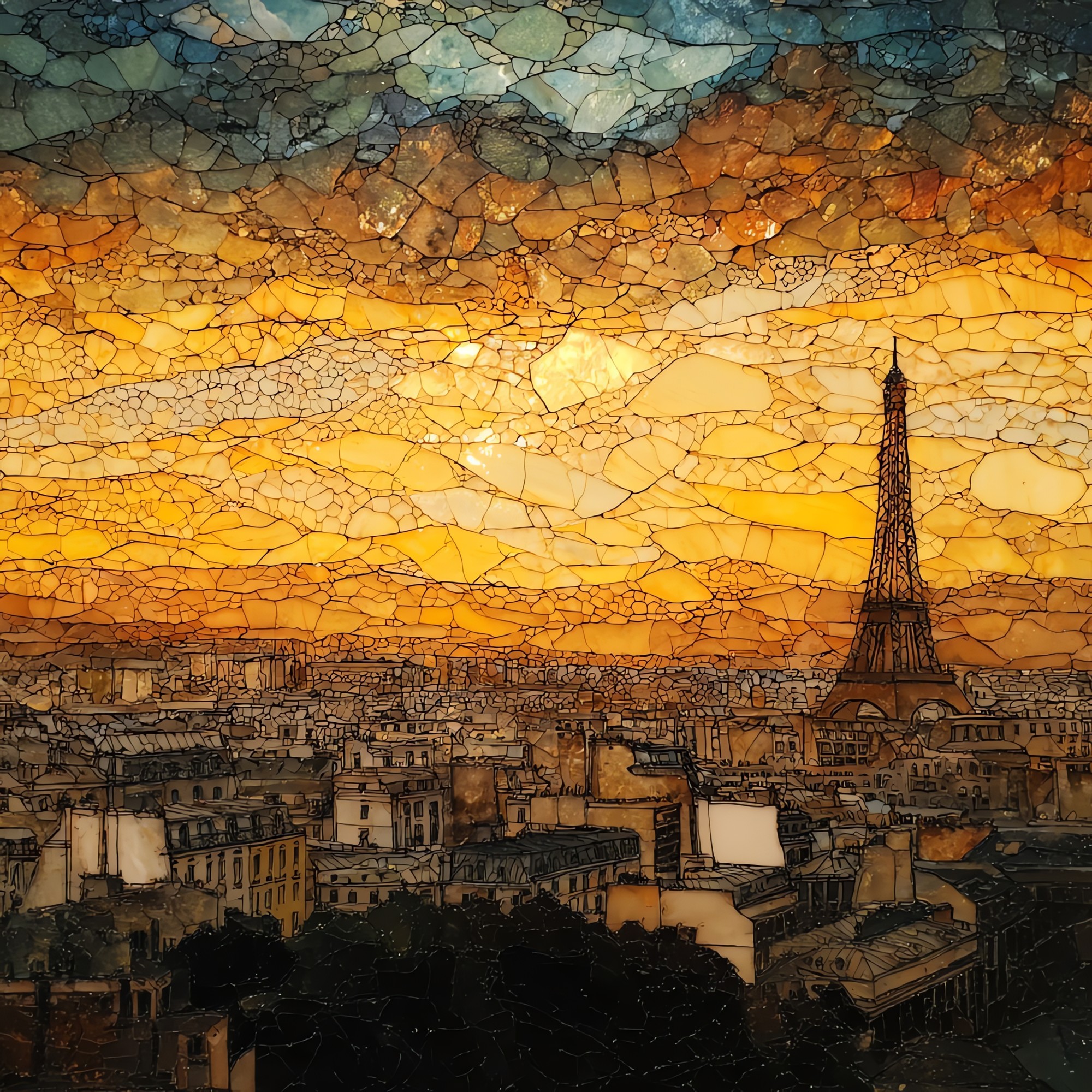
Montparnasse Tower View
— the city flat as a folded map.
Not only on a wall.
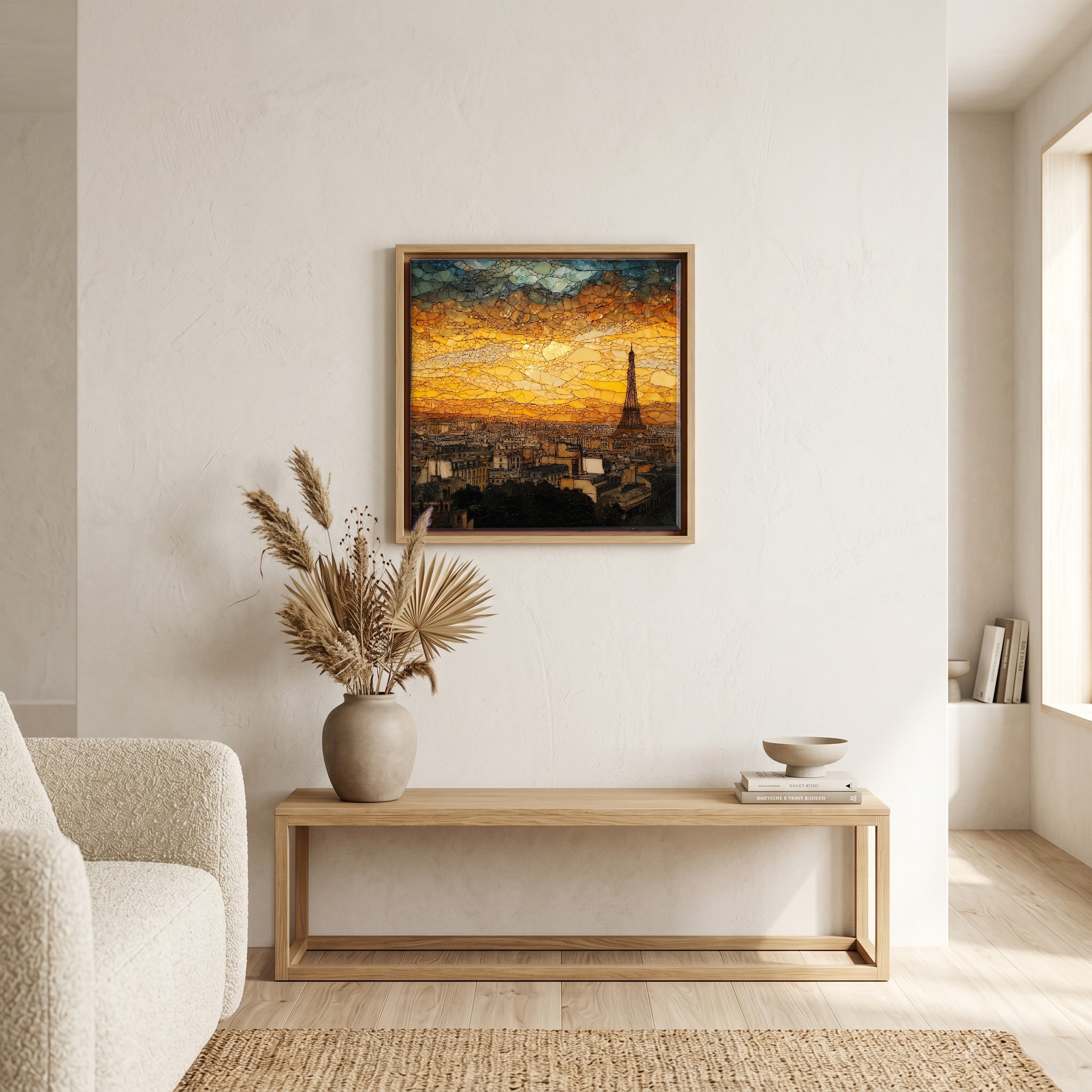
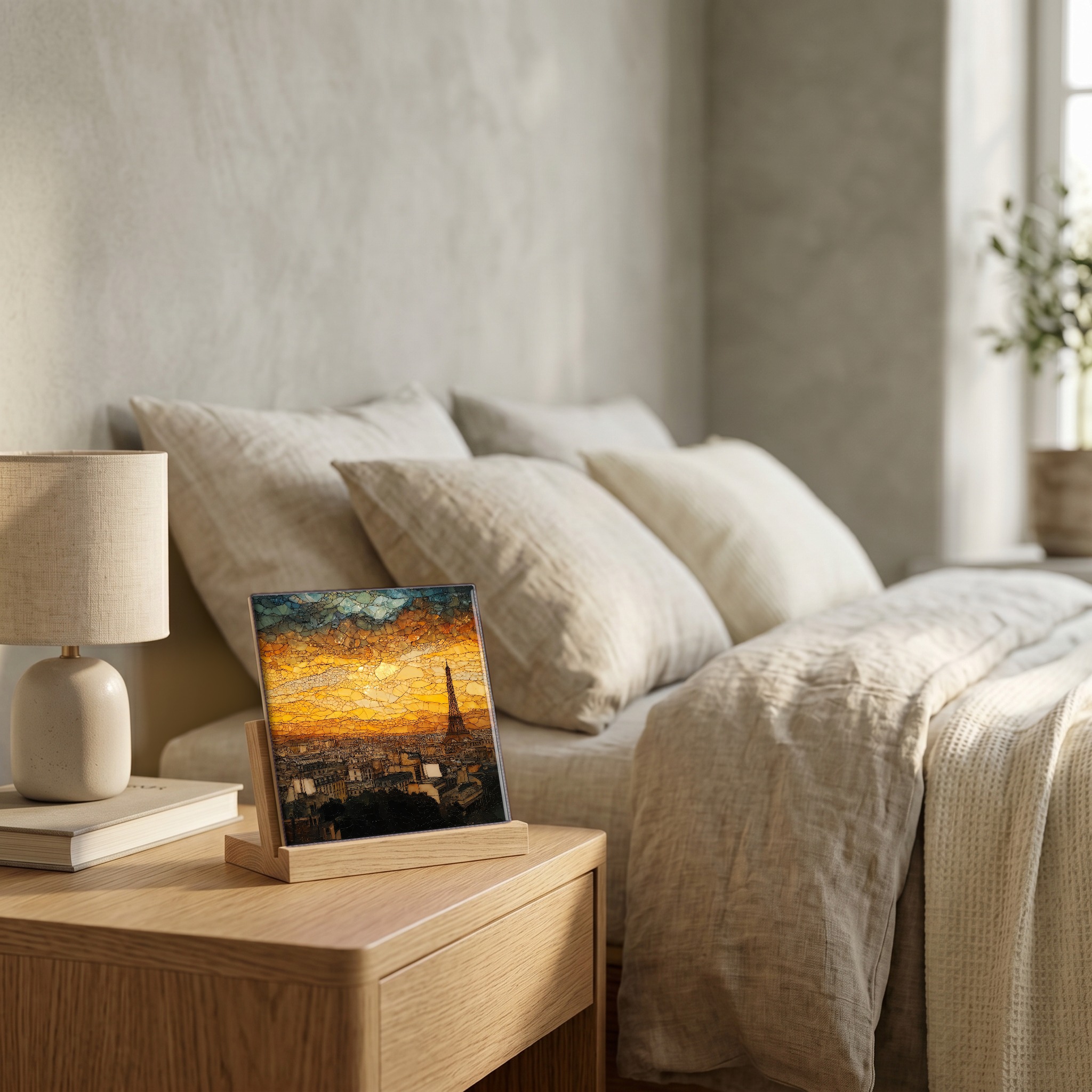
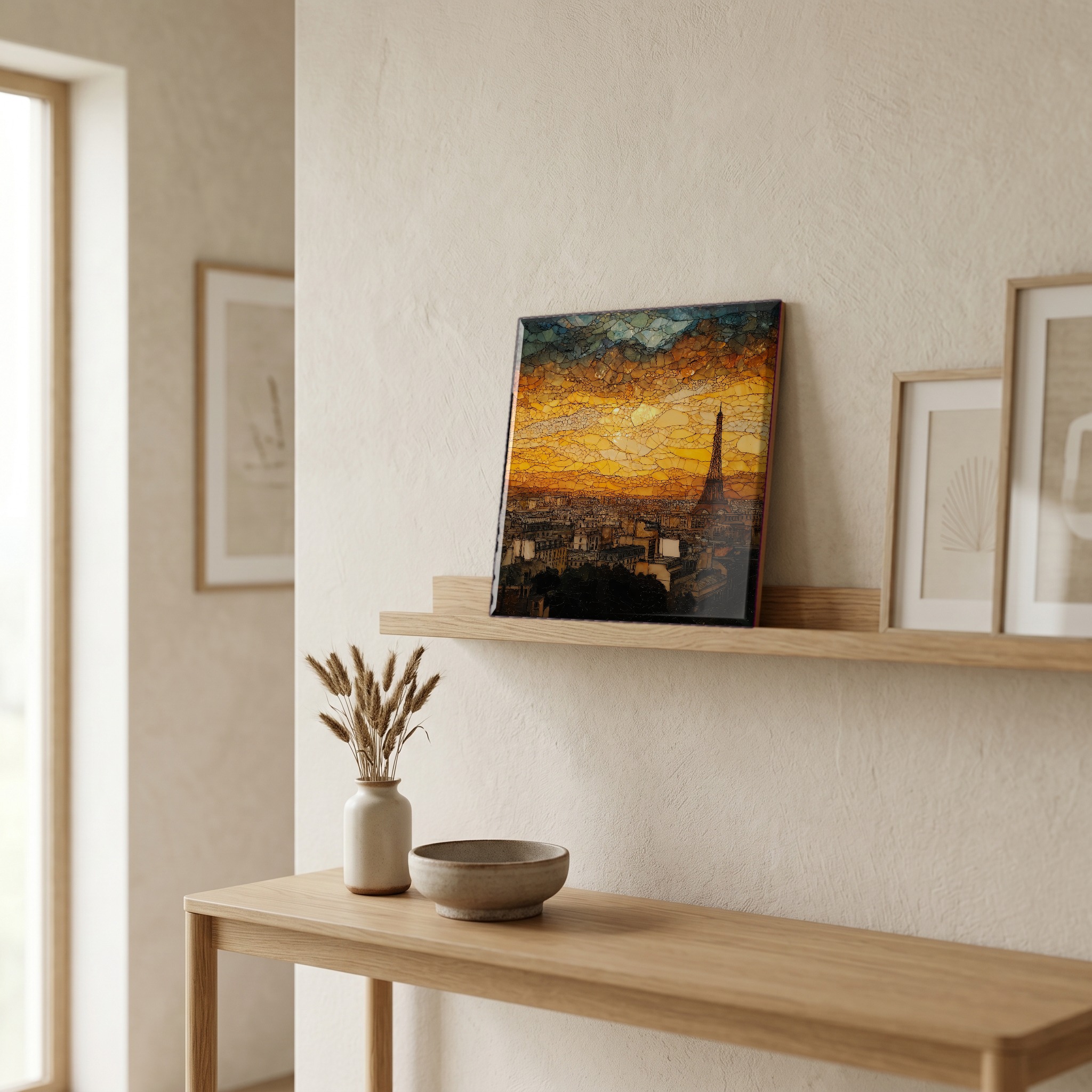
“Two hundred and ten metres of dark glass on the Left Bank, opened in 1973 and still the only place in Paris where the whole city flattens beneath you. The enclosed 56th floor sits below an open terrace three storeys higher. From up there the Eiffel Tower looks small. There is an old joke that the best view in Paris is from this tower, because it is the one view that doesn't have to look at it. The Right Bank rolls north toward Sacré-Cœur. The Seine bends out of sight near the Île de la Cité.
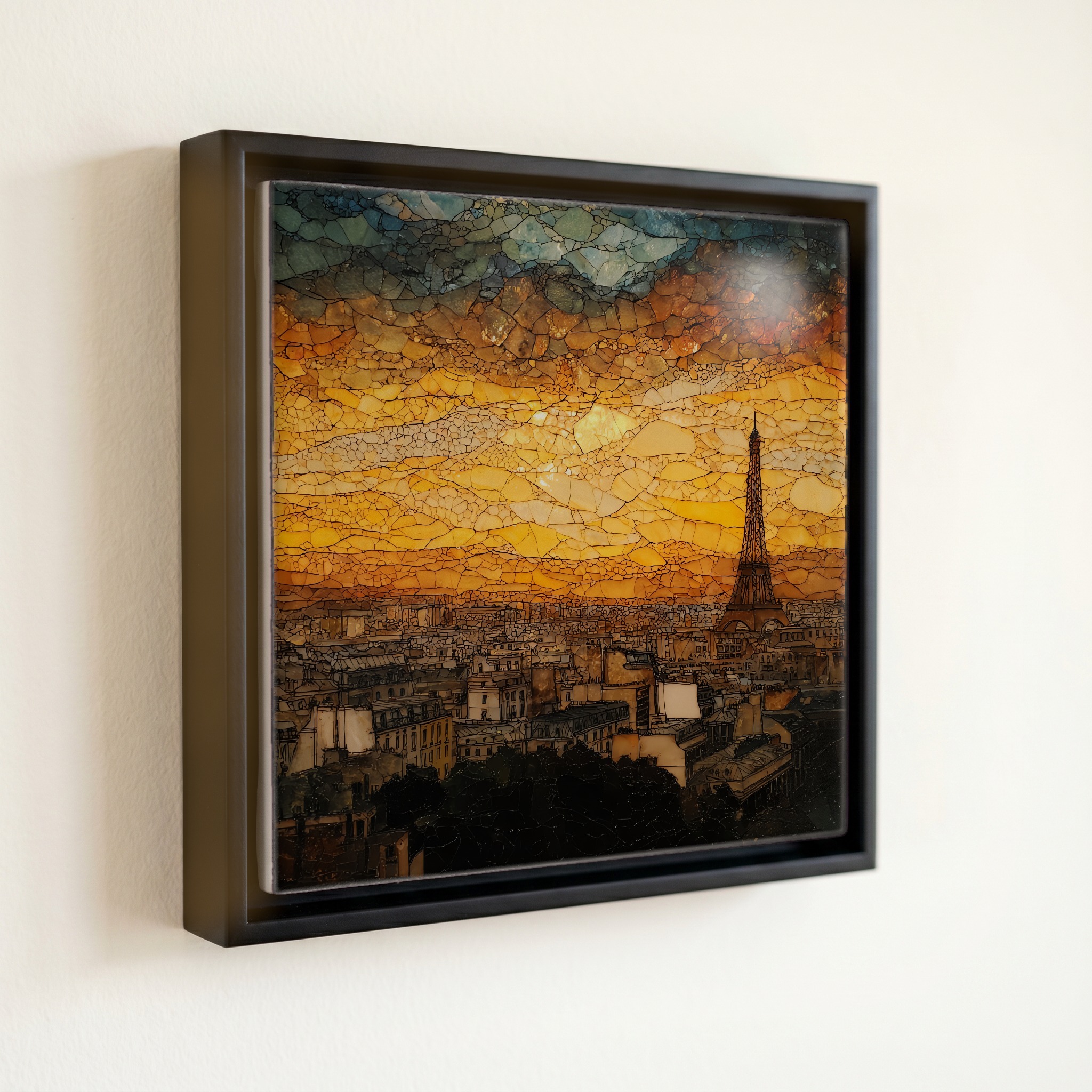
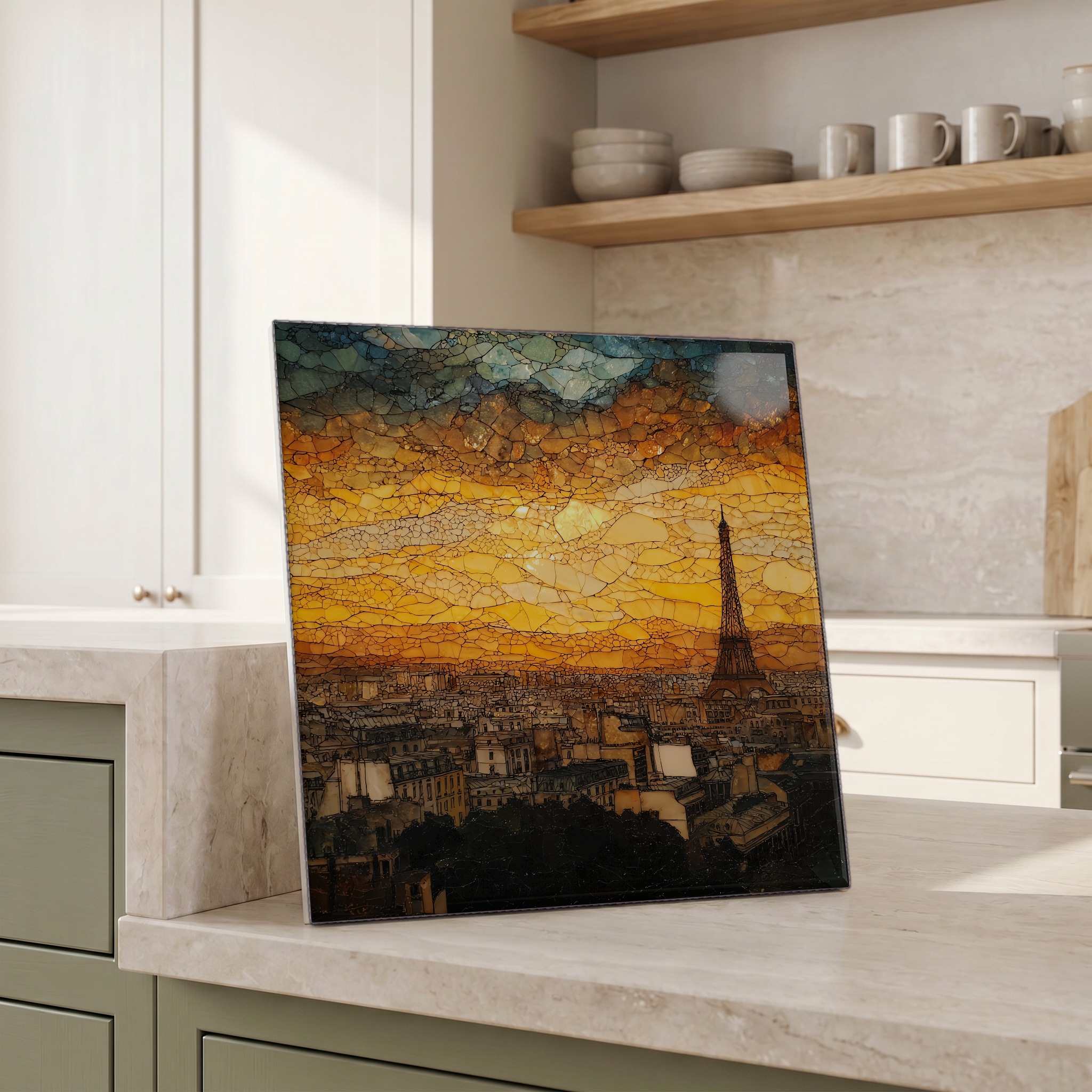
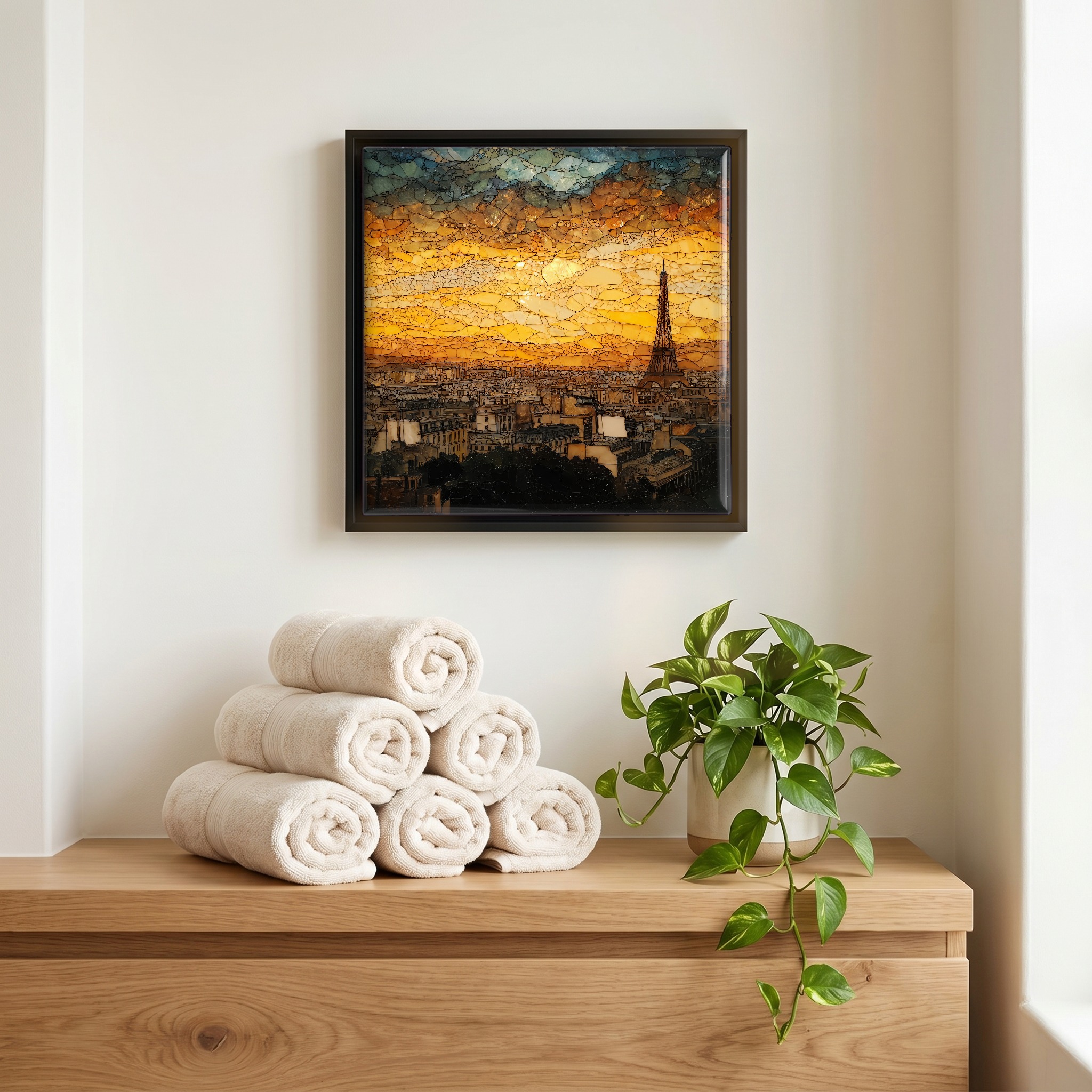
Montparnasse Tower View, on ceramic.
Each tile is finished by hand in our Knoxville studio. Artwork is slowly infused into the ceramic surface under high heat and pressure, and rests beneath a thin glossy finish. The colour lives in the surface, not on top of it.
Pick any four 4-inch tiles — National Parks you've been to, a Smokies set, the four seasons of one place. $ for a set of , cork-backed, ready to live on the table.
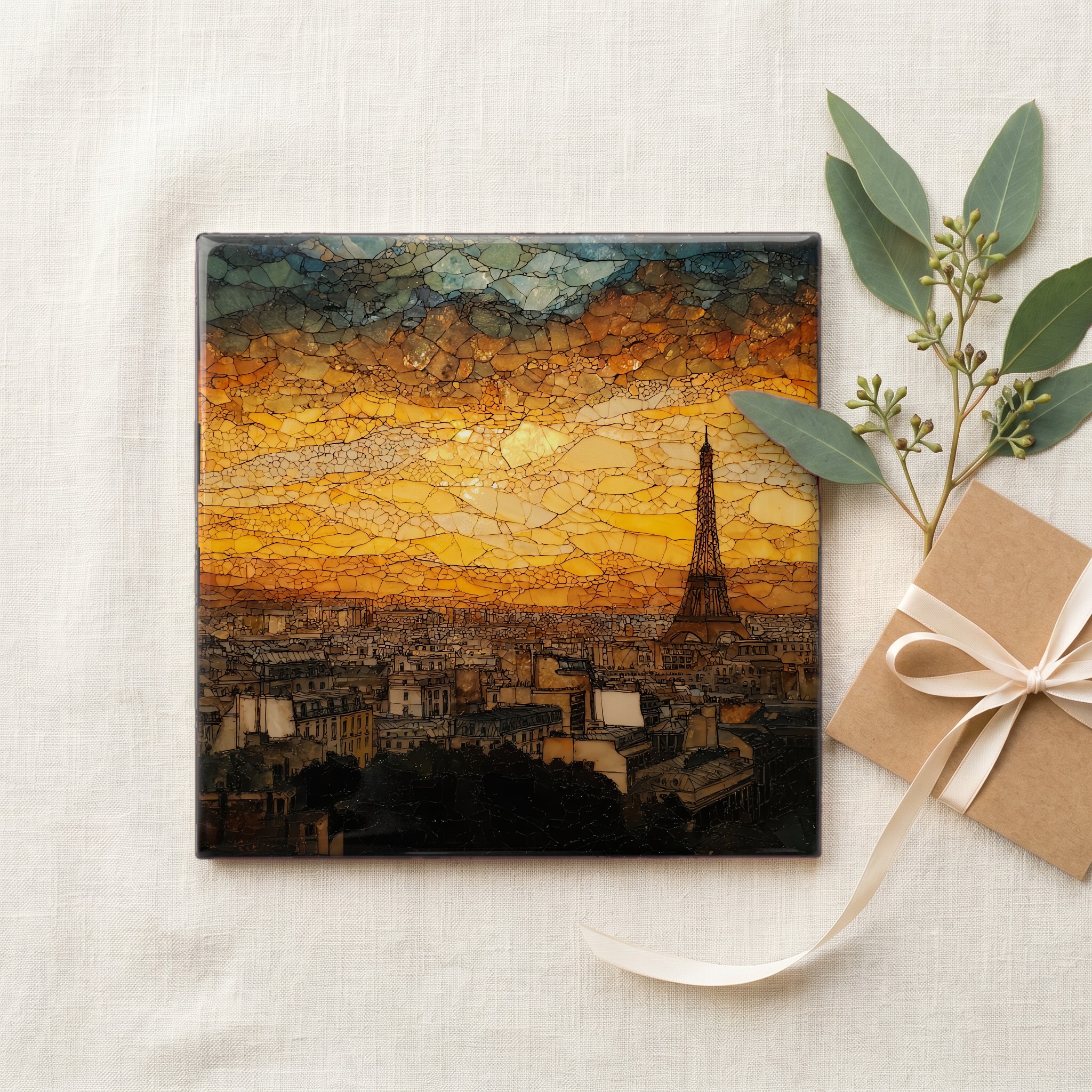
Each tile ships in a kraft box, tied with cream ribbon, with a handwritten note from the studio if you'd like to add one.
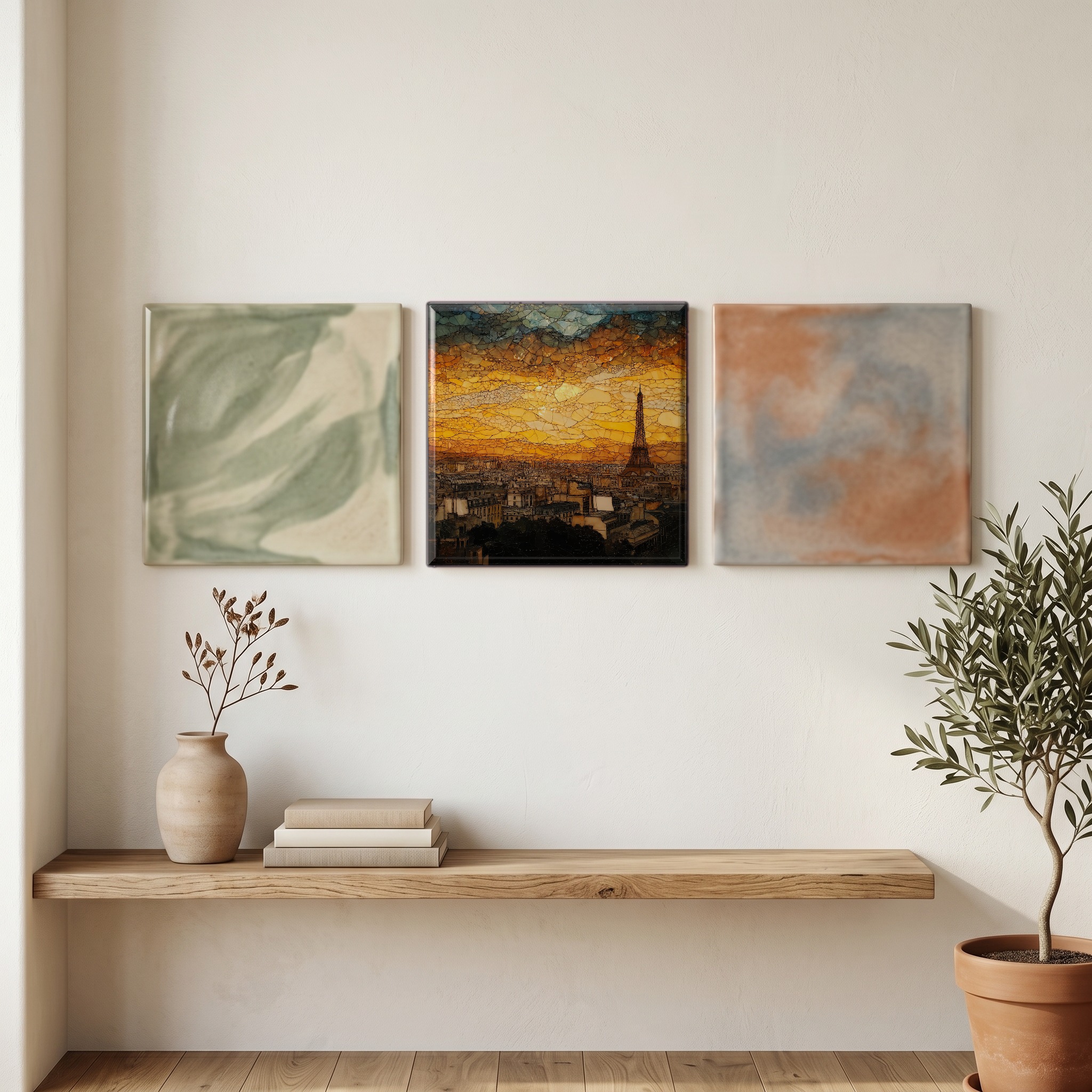
Three or five different vistas, hung together — a chapter of places you've been, or want to go.
The place, in three passes.
Tour Montparnasse is a 210-metre office tower at 33 Avenue du Maine, on the south edge of the Montparnasse neighbourhood where the 14th and 15th arrondissements meet. Designed by Eugène Beaudouin, Urbain Cassan, and Louis Hoym de Marien and topped out in 1973, it held the title of tallest building in France until 2011, when Tour First in La Défense surpassed it. Public access runs from the ground-floor lobby to the 56th-floor observatory and the open-air terrace on the 59th. The visitor lift climbs the 56 floors in roughly thirty-eight seconds. The tower has been part of the Paris skyline for over half a century, sitting two kilometres south of the Seine and roughly three from the Eiffel Tower.
The rooftop is the only point in central Paris where the whole city flattens beneath you. Two kilometres to the west the Eiffel Tower rises across the Seine. To the north Sacré-Cœur crowns the hill of Montmartre; the Arc de Triomphe anchors the western avenues; the glass cluster of La Défense sits some eight kilometres further out. The Île de la Cité bends the river east. Photographers favour the half hour after sunset, when the Champ-de-Mars lights come on and the Eiffel begins its hourly sparkling sequence. Winter gives the cleanest horizons; summer haze softens the far edges. Cloud sometimes hides La Défense entirely while the Right Bank still reads sharp.
Tickets are sold online and at the ground-floor entrance, with admission to both the enclosed 56th-floor observatory and the open-air 59th-floor terrace. Standard adult entry runs around twenty euros, with reduced rates for students and those under 18 (check the official site for current pricing). The 56th floor holds a café and rotating exhibitions; the rooftop terrace is open to the weather and can close in high wind. The visitor lift climbs in roughly thirty-eight seconds, often cited as one of the fastest in Europe. Hours run from late morning into the evening every day, with extended summer windows. The building, which broke ground in 1969 and was completed in 1973, has been in a long renovation phase since the late 2010s.