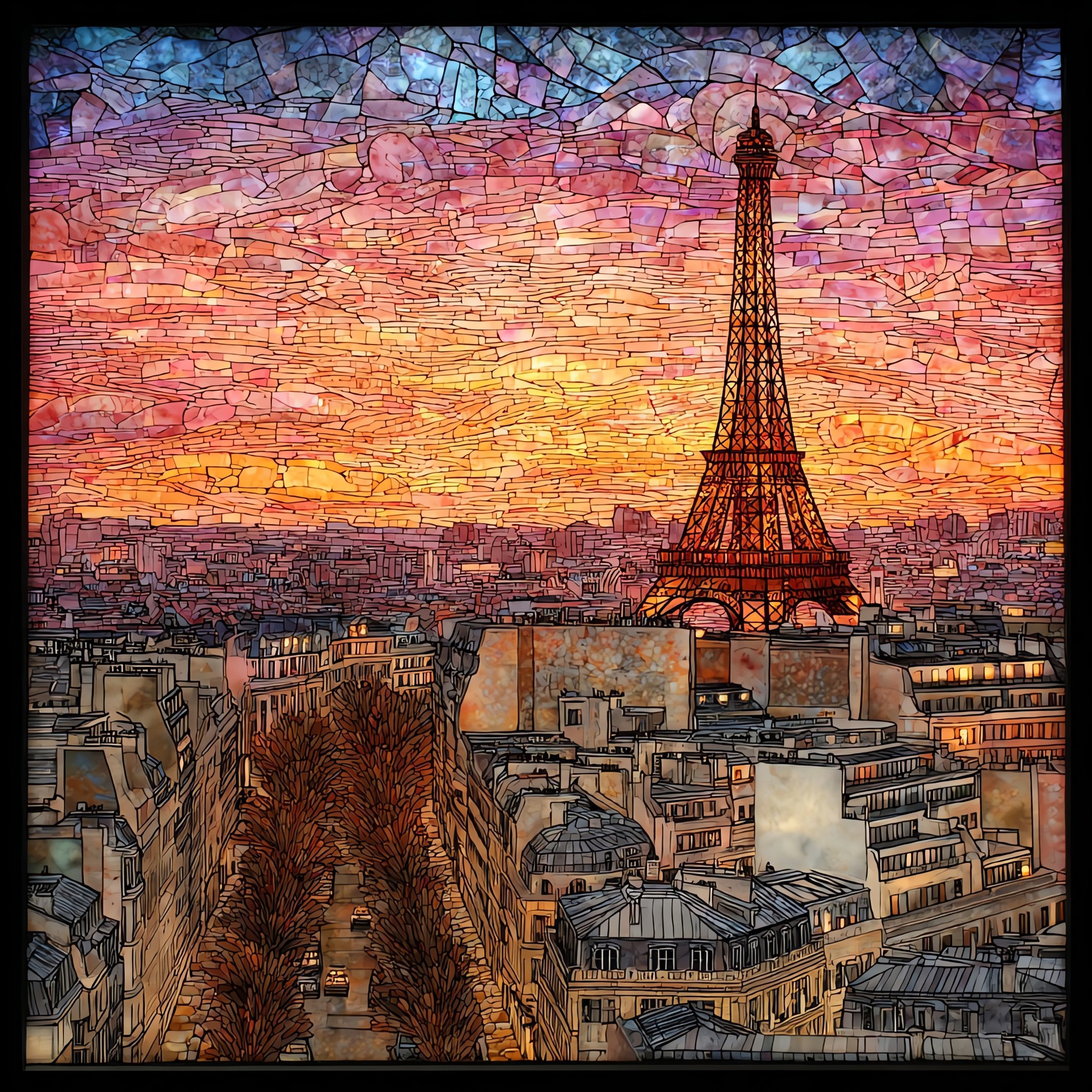
Montparnasse Tower View of Paris
— — the half-hour the limestone turns gold.
Not only on a wall.
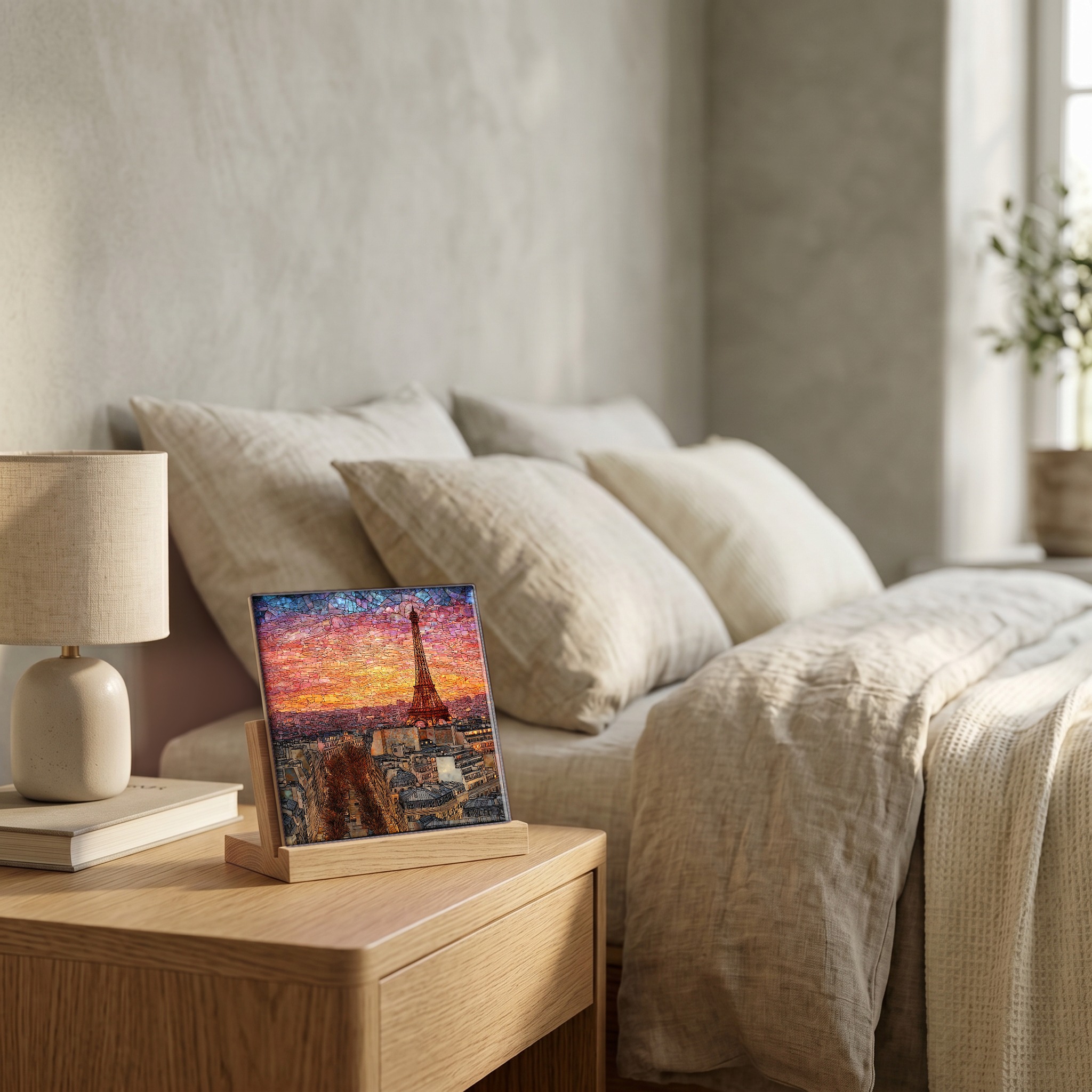
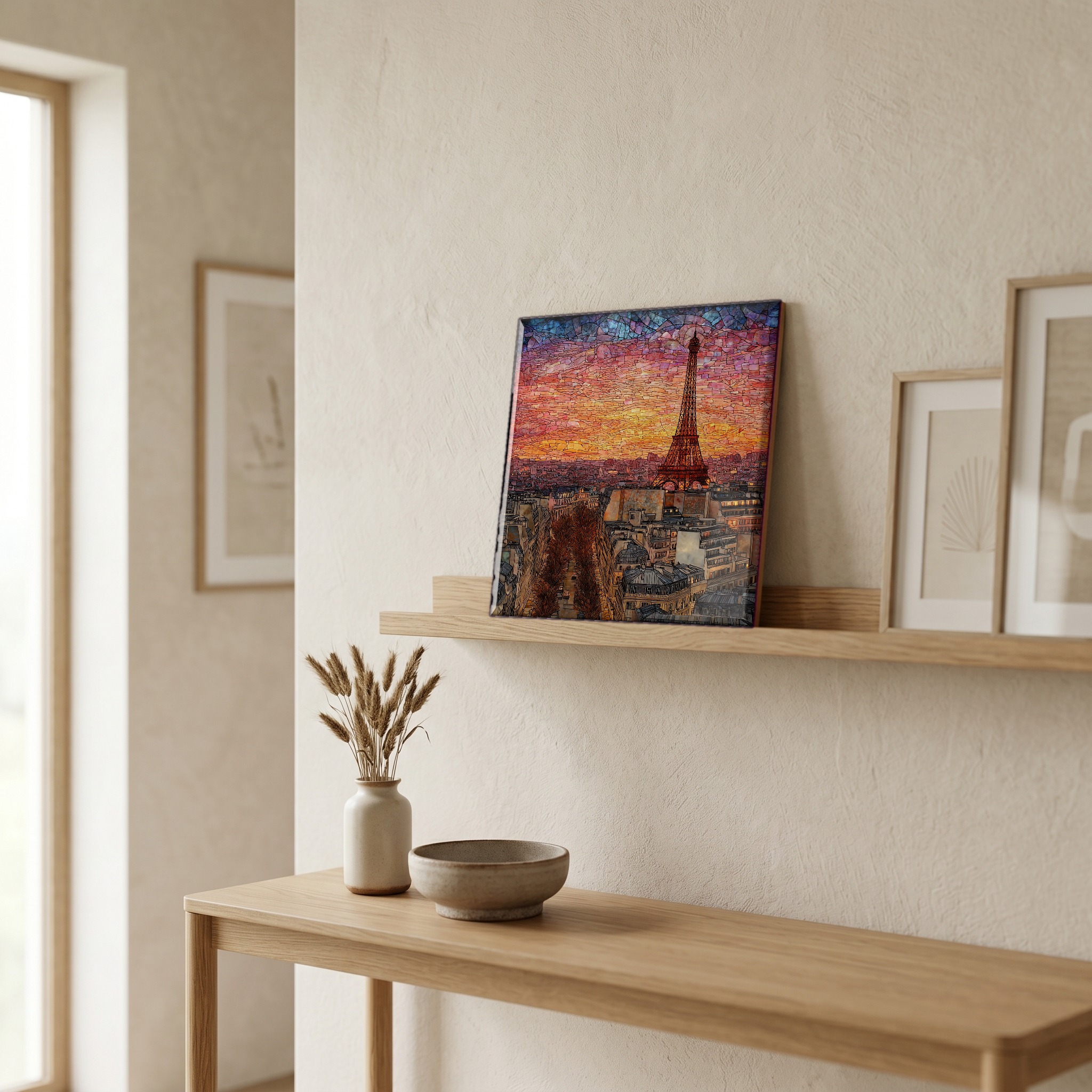
“The rooftop terrace of a 1973 skyscraper on the Left Bank, 210 metres up. Tour Montparnasse rises above the old city — its construction so unsettled Parisians that the height law passed four years later capped the rest of central Paris at thirty-seven metres. From the open-air deck the Eiffel Tower stands across the river, Les Invalides catches the late light, and Sacré-Cœur is a small white hat on its hill. Locals like to say this is the best view in Paris because it is the only one that doesn't include the tower itself. The lift takes thirty-eight seconds.
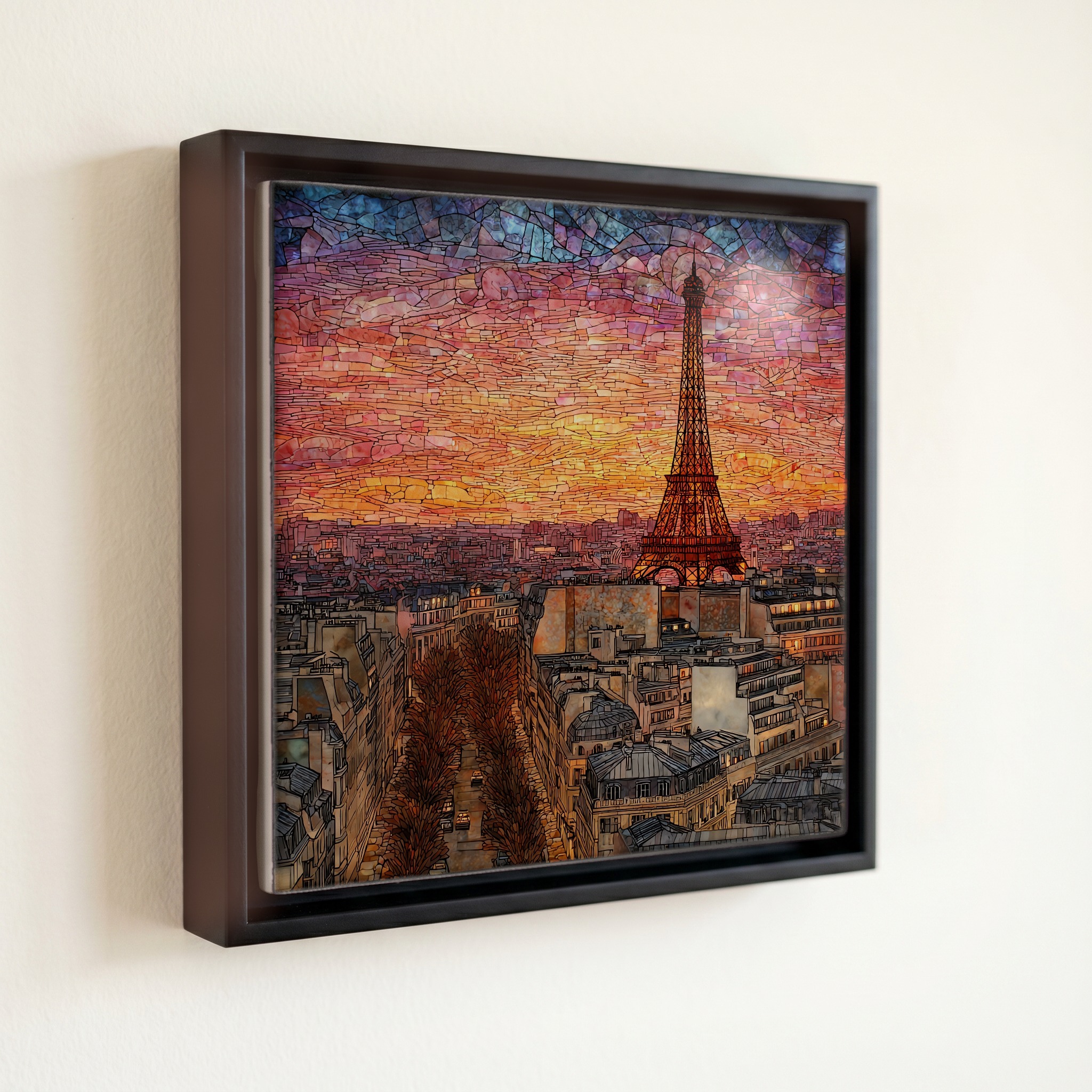
Montparnasse Tower View of Paris, on ceramic.
Each tile is finished by hand in our Knoxville studio. Artwork is slowly infused into the ceramic surface under high heat and pressure, and rests beneath a thin glossy finish. The colour lives in the surface, not on top of it.
Pick any four 4-inch tiles — National Parks you've been to, a Smokies set, the four seasons of one place. $ for a set of , cork-backed, ready to live on the table.
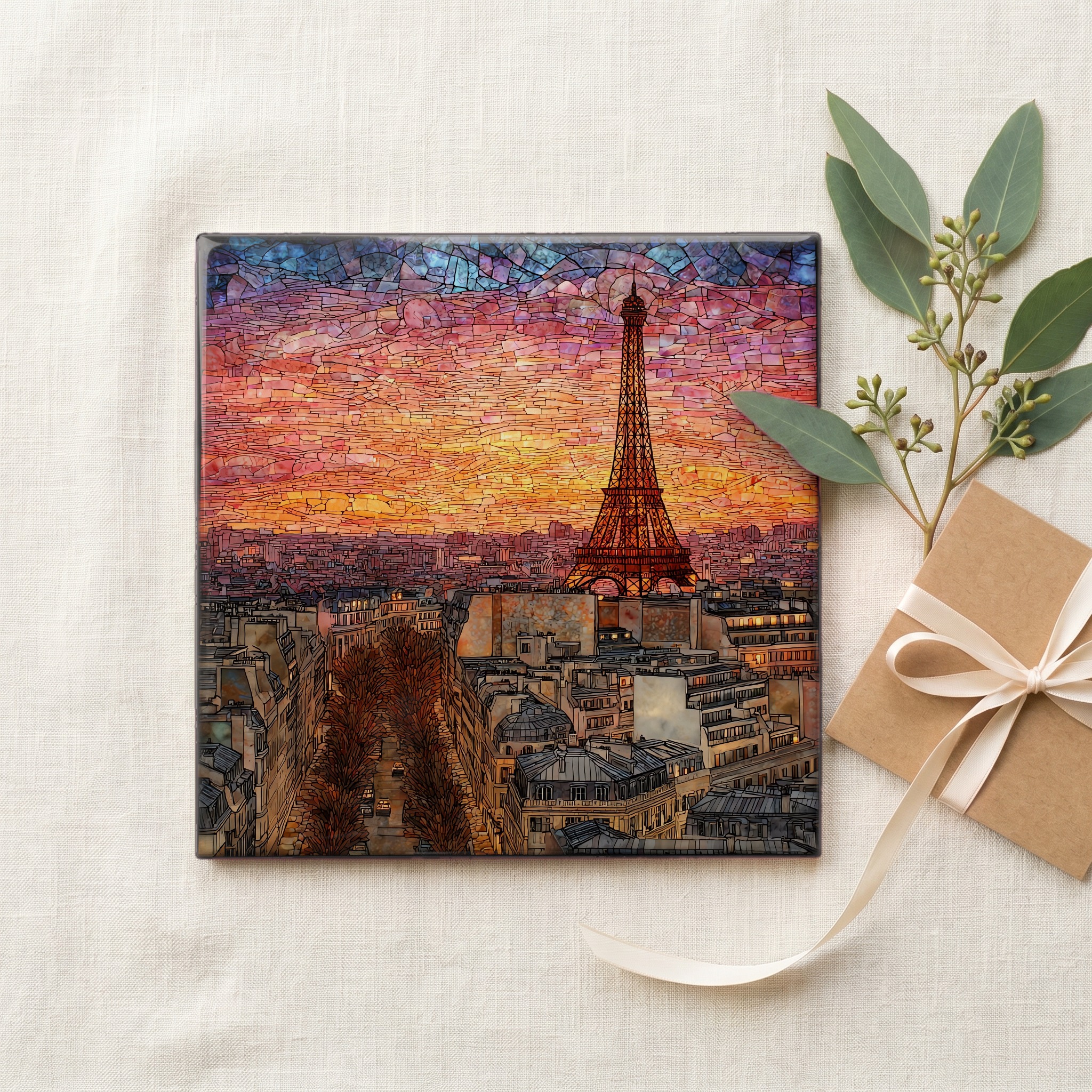
Each tile ships in a kraft box, tied with cream ribbon, with a handwritten note from the studio if you'd like to add one.
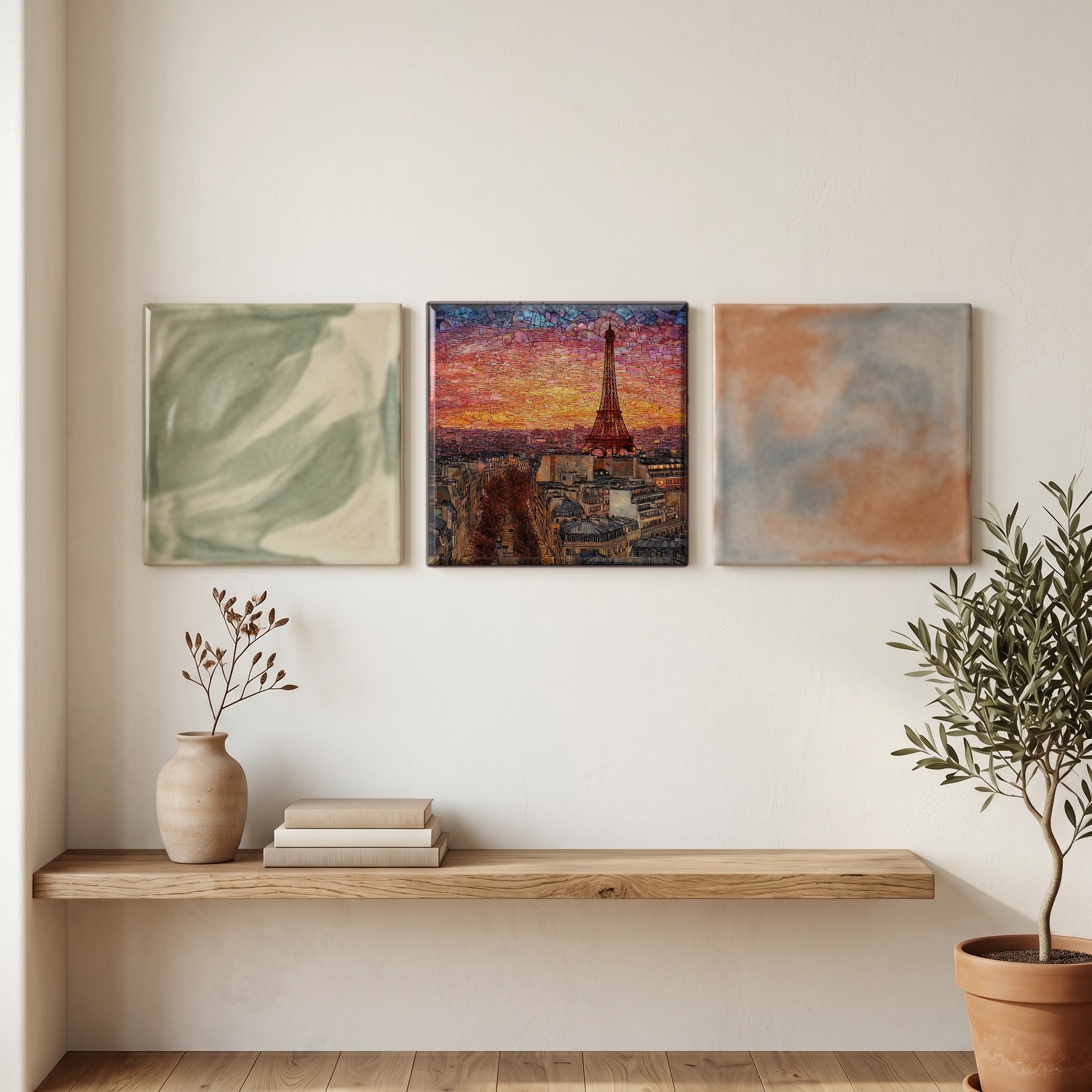
Three or five different vistas, hung together — a chapter of places you've been, or want to go.
The place, in three passes.
Tour Montparnasse stands at 33 Avenue du Maine in the 15th arrondissement of Paris, on the Left Bank of the Seine, directly above the Montparnasse–Bienvenüe Métro and rail station. The building rises 210 metres across fifty-nine storeys and was, on its 1973 completion, the tallest skyscraper in France. The summit holds a covered observation level on the 56th floor and an open-air terrace on the roof above. From the deck the panorama takes in the Eiffel Tower roughly two kilometres to the north-west, the dome of Les Invalides, the Panthéon, Notre-Dame de Paris on the Île de la Cité, and Sacré-Cœur on the hill of Montmartre.
The tower was built between 1969 and 1973 to designs by architects Eugène Beaudouin, Urbain Cassan, Louis Hoym de Marien and Jean Saubot, on the cleared footprint of the old Gare Montparnasse. Its arrival was unpopular almost immediately: a 210-metre dark slab inserted into a city of six-storey limestone meant that the continuous Paris skyline was broken for the first time. In 1977 the city tightened its planning rules, capping new central-Paris construction at 37 metres, a limit that effectively prevented another building like Montparnasse from being raised inside the old core. The high-rise cluster at La Défense, west of the centre, sits outside that historic core.
The observation deck occupies the 56th floor of the building, with an open-air terrace on the roof above at 210 metres. The ascent is by a single high-speed lift that reaches the upper levels in roughly thirty-eight seconds. The deck is open daily; most visitors come for the half-hour before and after sunset, when the city's limestone catches a low gold light. After dark the Eiffel Tower sparkles for five minutes on each hour. Tickets are timed and best booked in advance, particularly in summer. The terrace at the top offers an unobstructed 360-degree view of central Paris and, on a clear day, well beyond it.