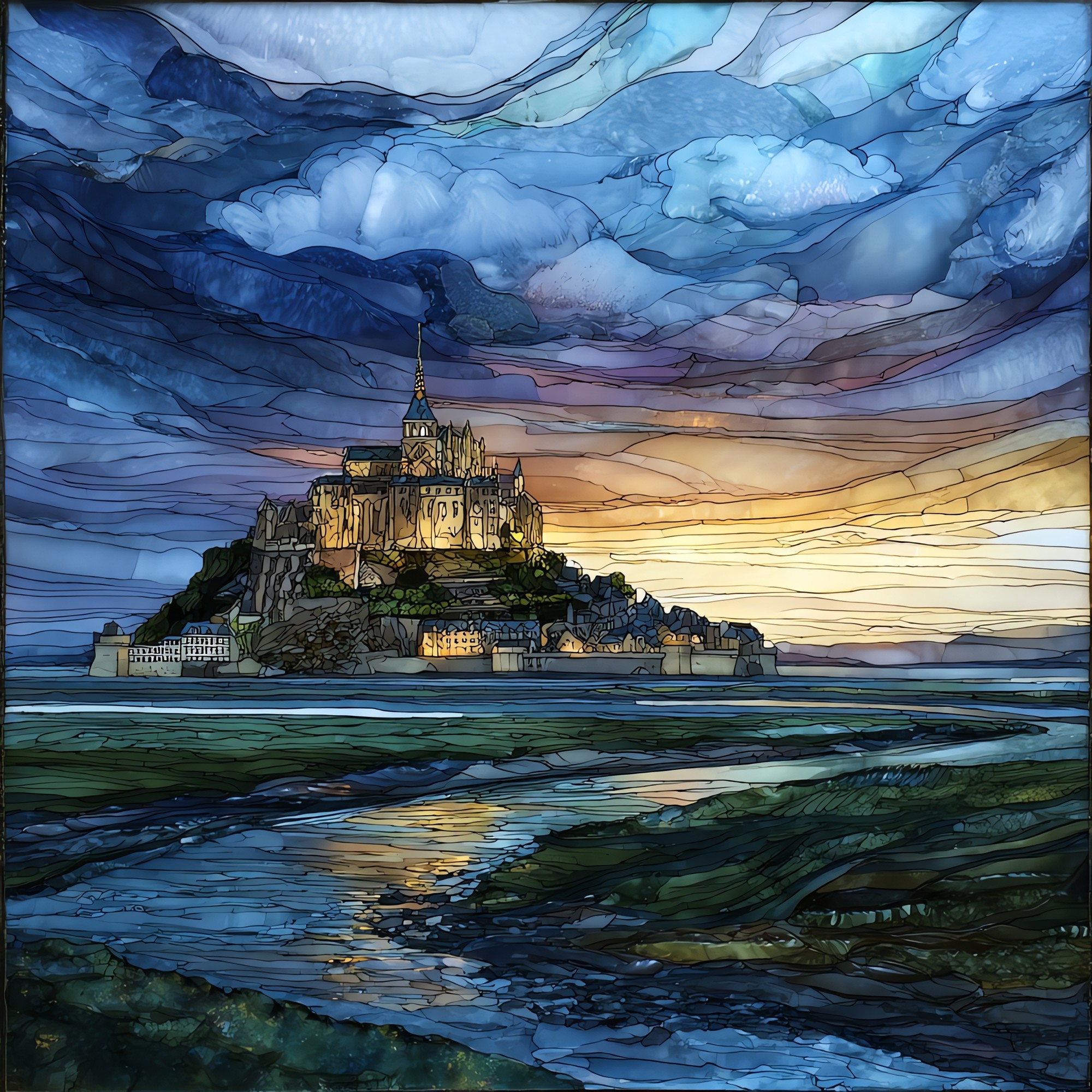
Mont-Saint-Michel Bay
— the hour the water gives back the island.
Not only on a wall.
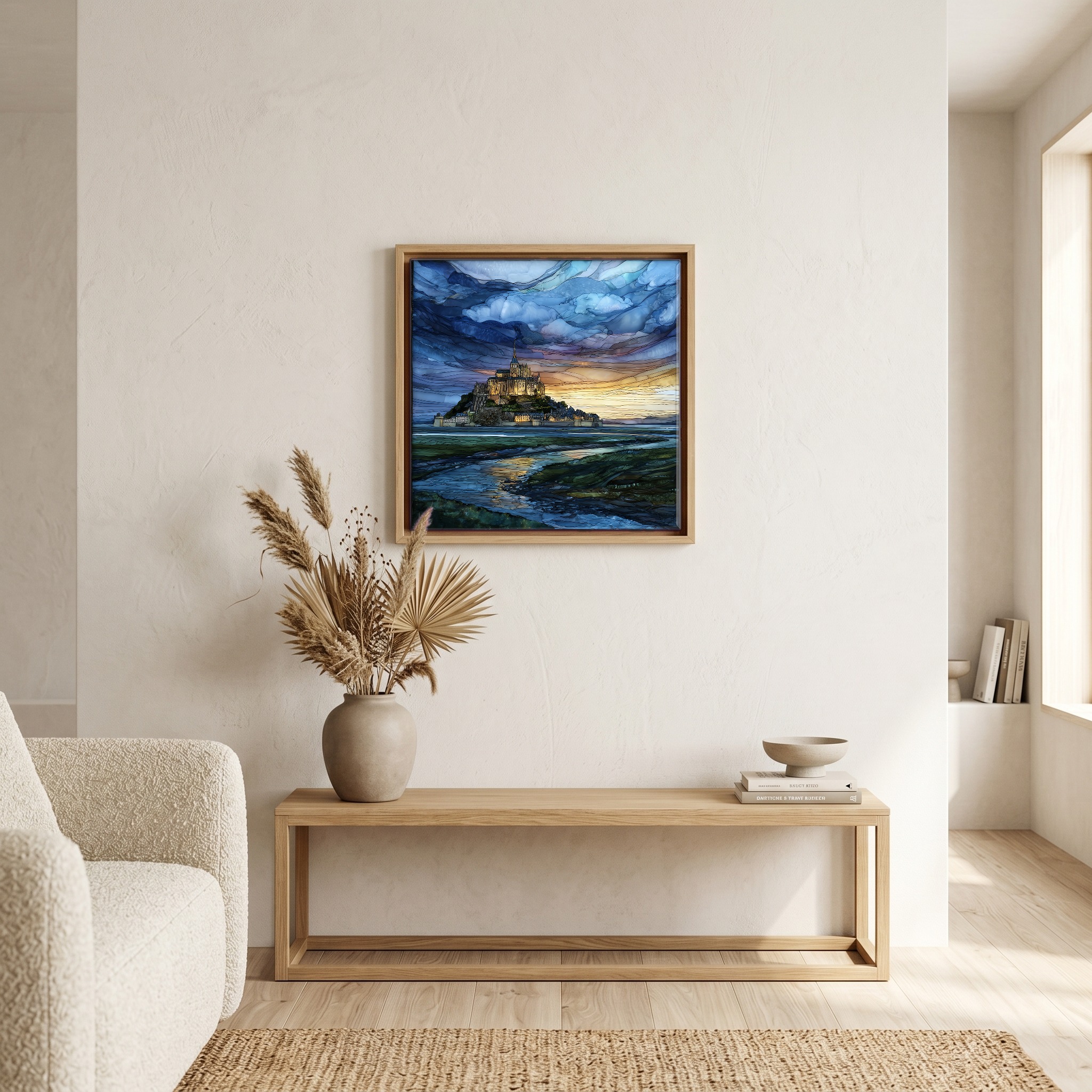
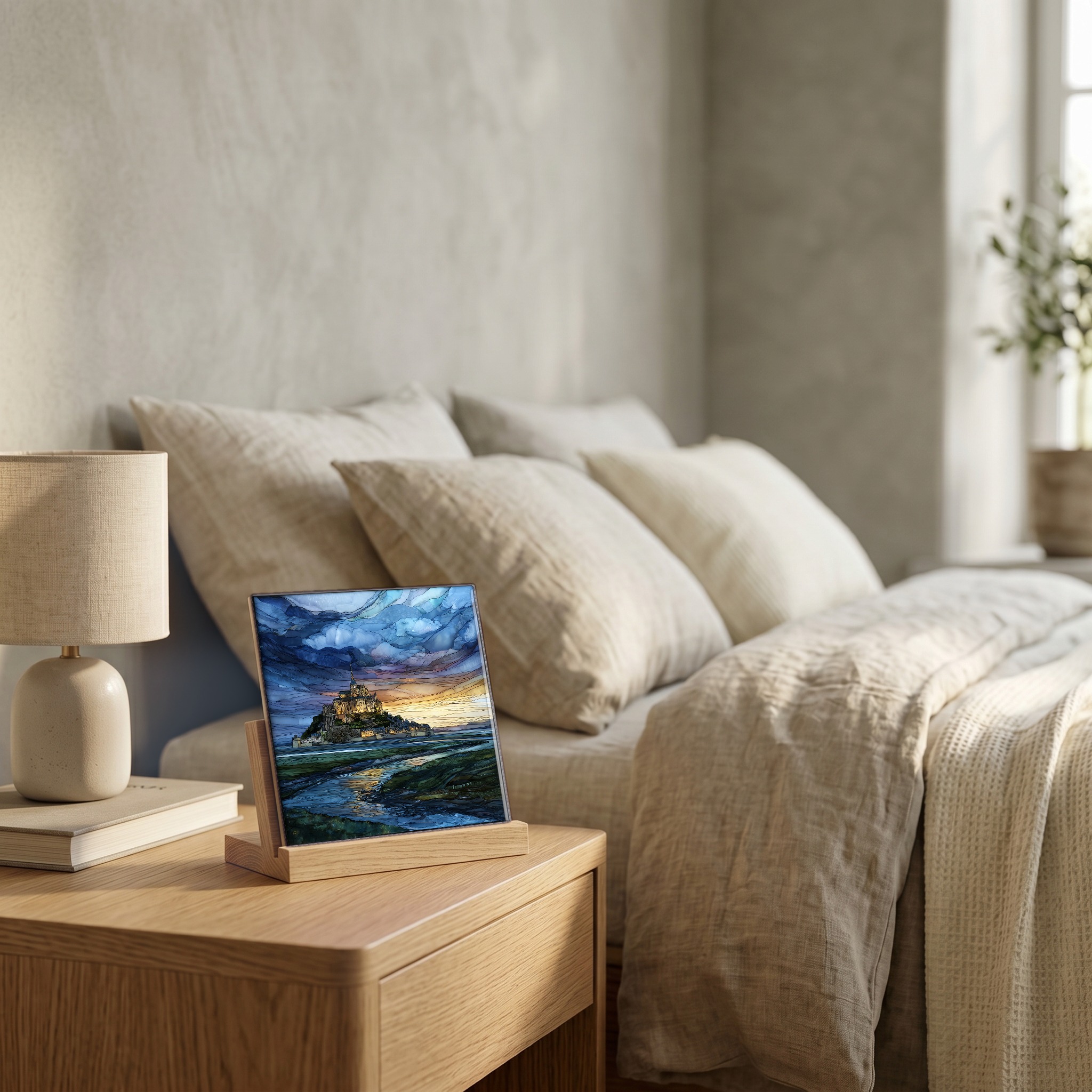
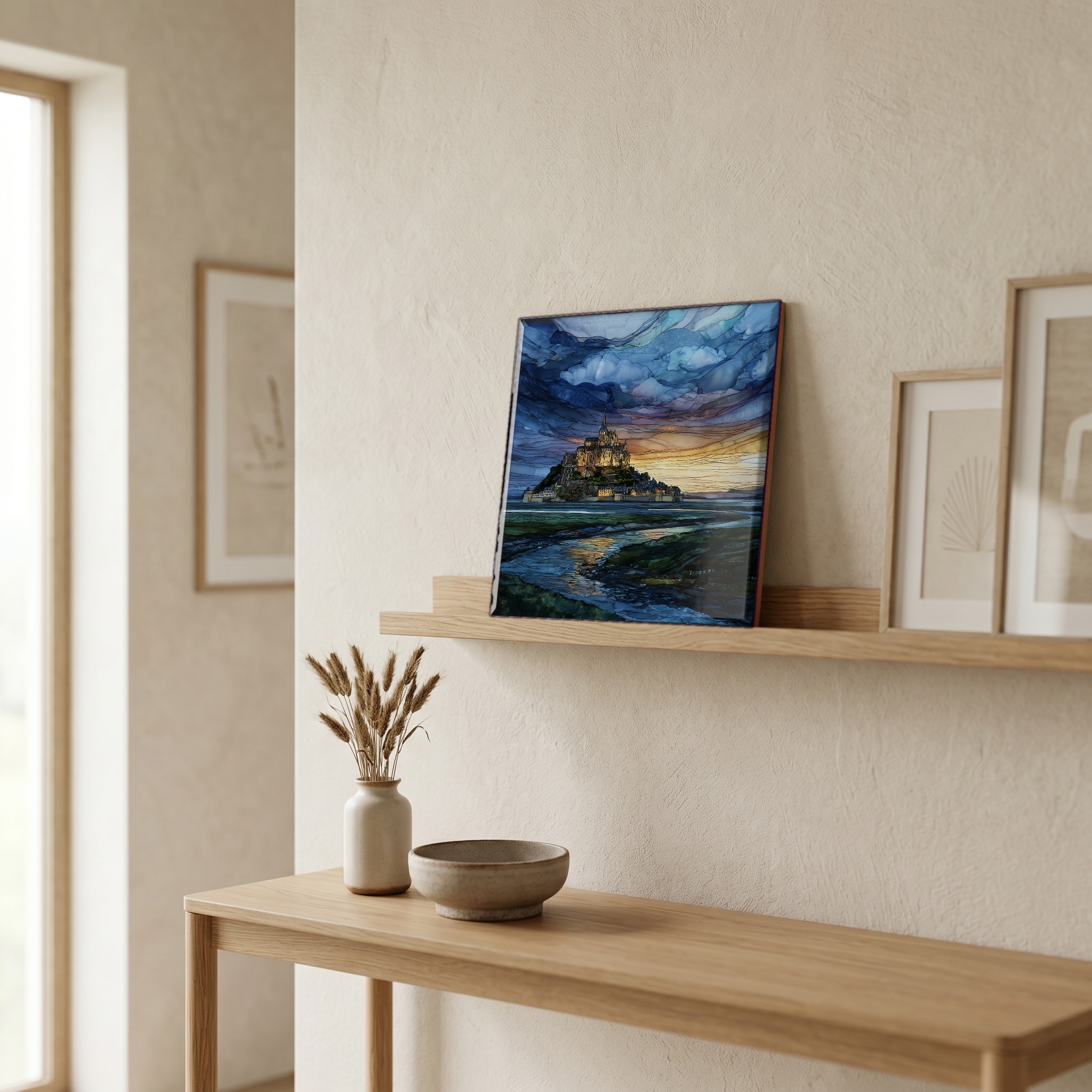
“A granite outcrop rising from tidal flats on the Normandy-Brittany border, the abbey at the summit, the spire fitted with a gilded Michael that has read the wind since 1897. The bay carries some of the largest tides in continental Europe, close to fifteen vertical metres at the spring equinox, water that crosses the sand at walking pace and turns the Mont back into an island. From the new footbridge at low tide the silt holds the light like beaten pewter. Sheep graze the pré-salé marshes at the edge. Most coaches arrive by mid-morning. The hour worth coming for is earlier than that.
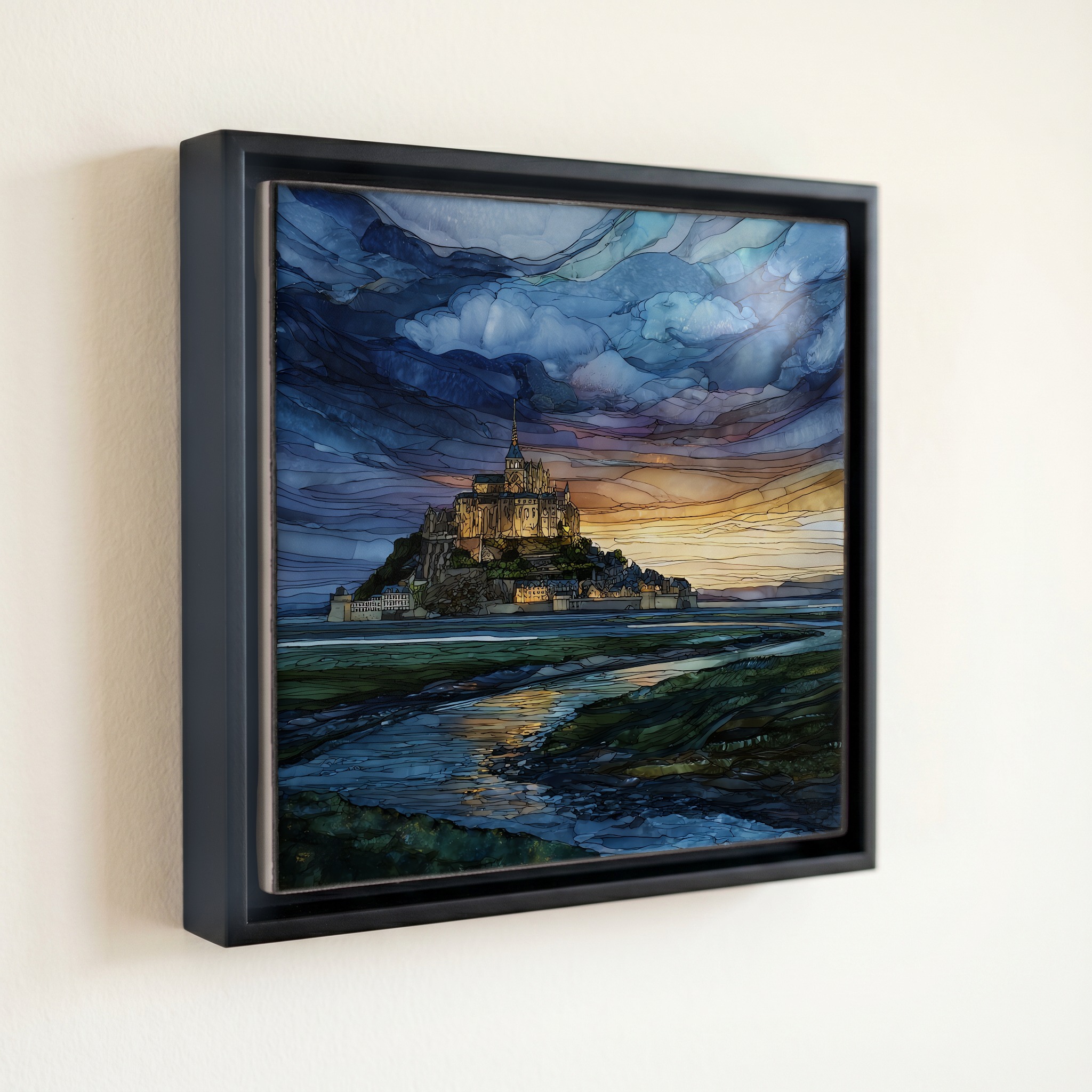
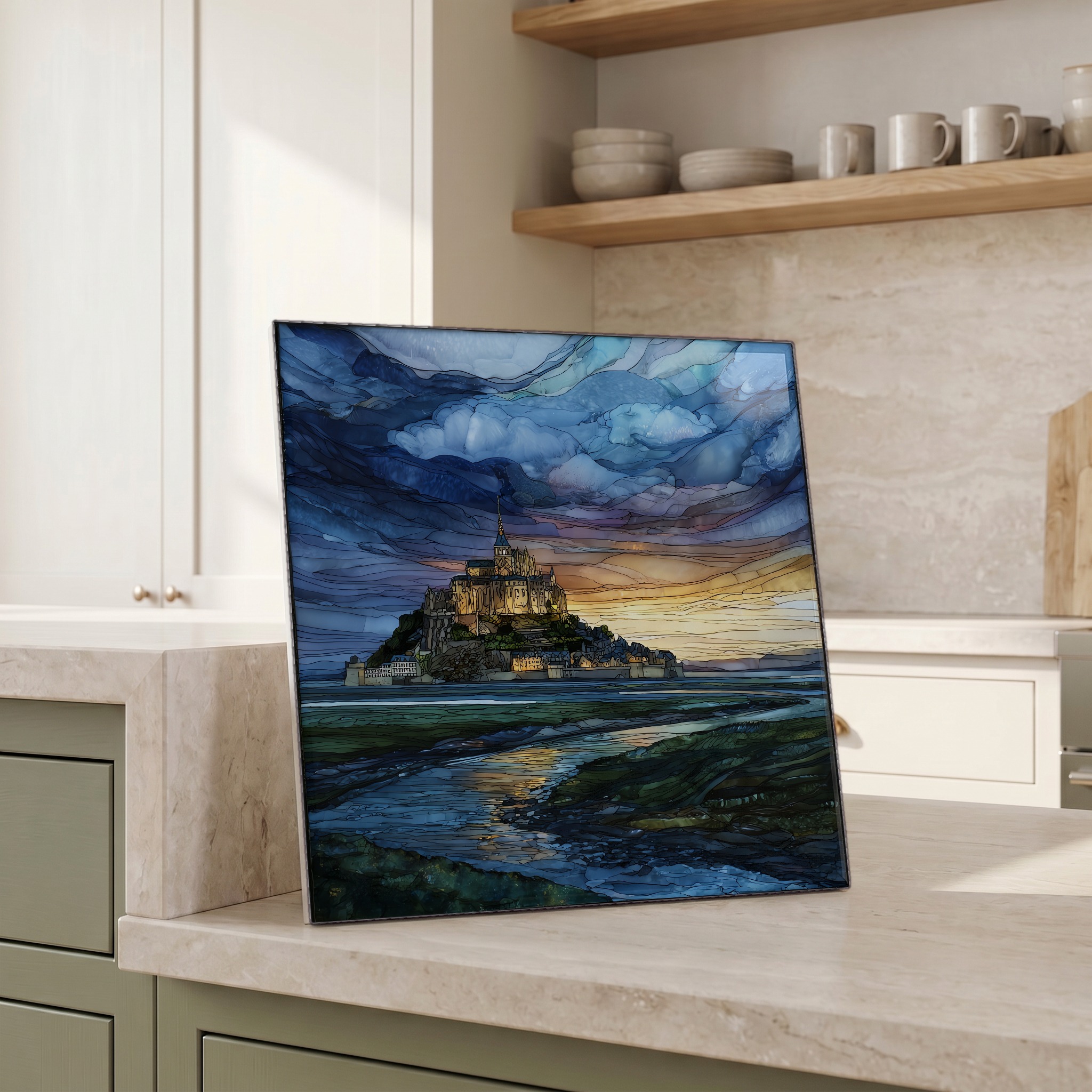
Mont-Saint-Michel Bay, on ceramic.
Each tile is finished by hand in our Knoxville studio. Artwork is slowly infused into the ceramic surface under high heat and pressure, and rests beneath a thin glossy finish. The colour lives in the surface, not on top of it.
Pick any four 4-inch tiles — National Parks you've been to, a Smokies set, the four seasons of one place. $ for a set of , cork-backed, ready to live on the table.
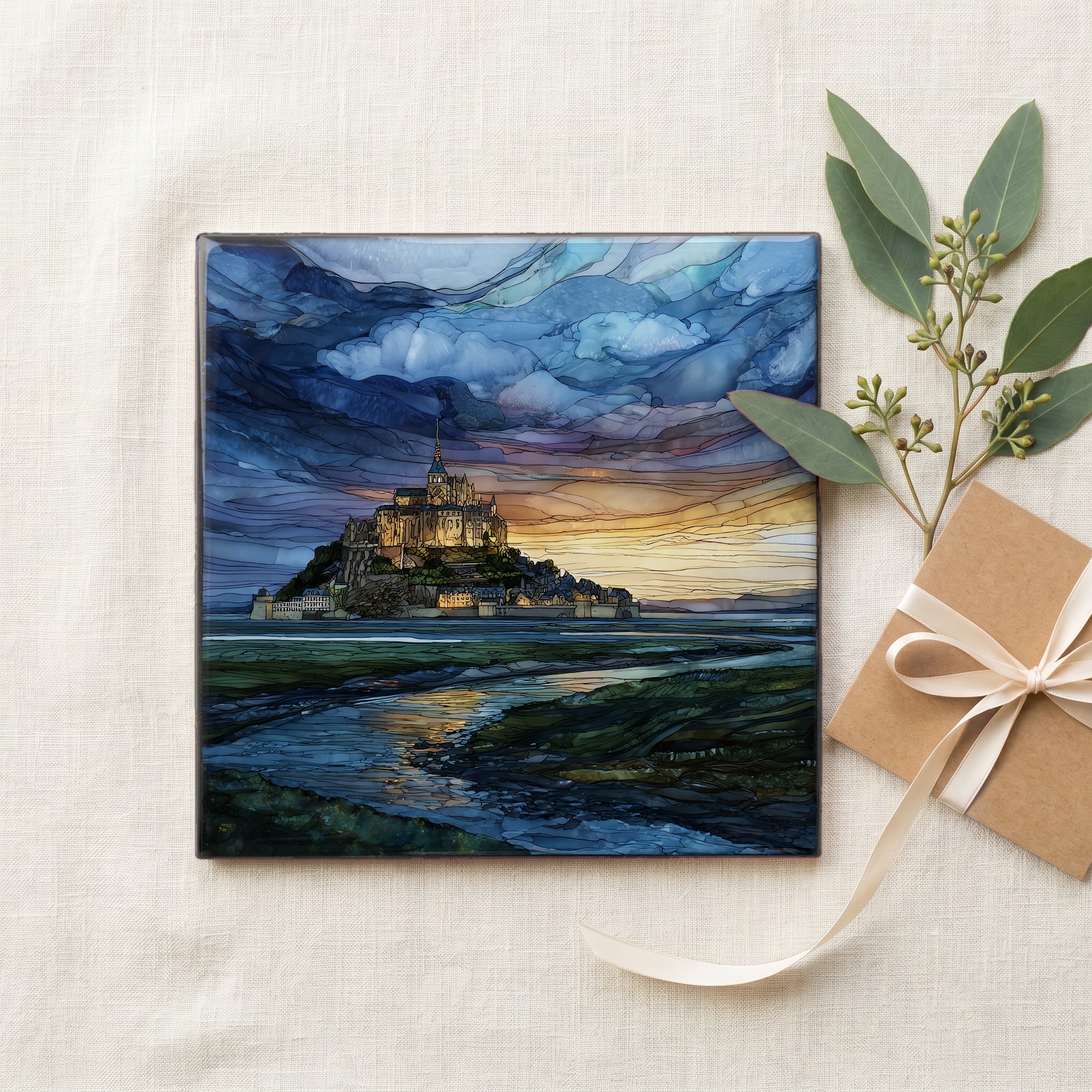
Each tile ships in a kraft box, tied with cream ribbon, with a handwritten note from the studio if you'd like to add one.
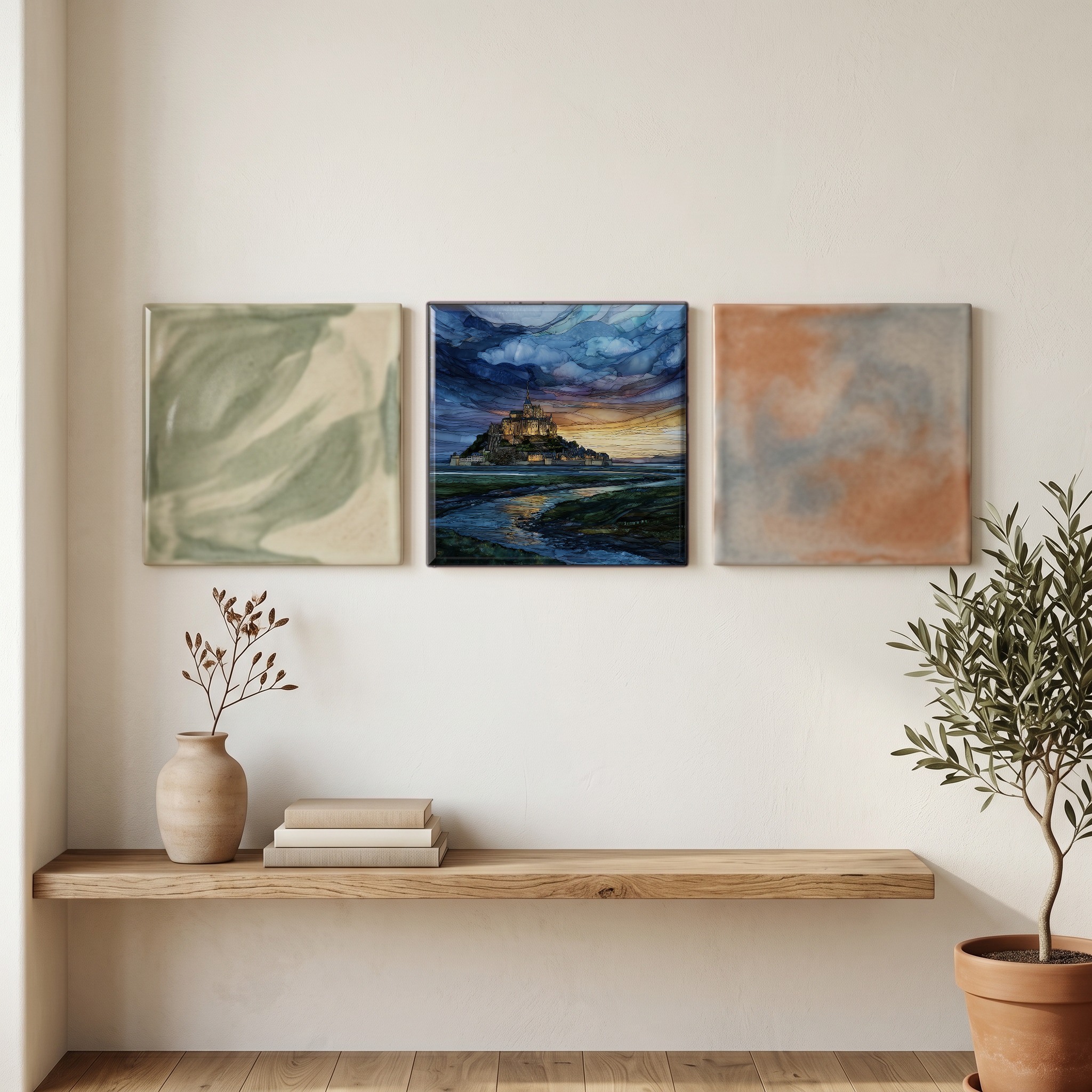
Three or five different vistas, hung together — a chapter of places you've been, or want to go.
The place, in three passes.
The bay sits on the border between Normandy and Brittany, on the western coast of France's Manche department, where the Couesnon River and two smaller rivers empty into the English Channel across some 500 square kilometres of tidal sand. The granite islet of Mont-Saint-Michel rises about a kilometre offshore: seventeen storeys of medieval abbey on a rock a little under seven hectares at its base. Pontorson is the nearest railway station, ten kilometres south; from there a shuttle bus runs to the visitor centre on the mainland. The bay and the Mont were inscribed together on UNESCO's World Heritage list in 1979.
The bay's tides are among the largest in Europe, with vertical ranges that reach about fourteen metres at the spring equinox, when the sun, moon, and earth align. At low tide the sea pulls back as much as fifteen kilometres from the Mont, exposing kilometres of grey-silver sand. When it returns, the front of the water moves at roughly a brisk walking pace, faster across the shallow channels than across the open flats. The fine silt suspended in the returning water is what gives the bay at the change of tide its beaten-pewter sheen. Pilgrims have crossed the flats on foot since the early Middle Ages, and licensed guides still lead the walk today.
The Mont is reached from the mainland by a 760-metre footbridge that opened in 2014, replacing an older causeway that had been silting the bay. Cars park at the visitor centre roughly three kilometres back; a free shuttle runs continuously, and the walk takes about half an hour at a steady pace. Entry to the abbey itself costs around eleven euros; the village and ramparts are free. The fullest experience falls on the days of grande marée, the spring tides above coefficient 110, when the rising sea encircles the Mont and the bridge briefly disappears under water. Tide tables are published a year out by the French naval hydrographic service.