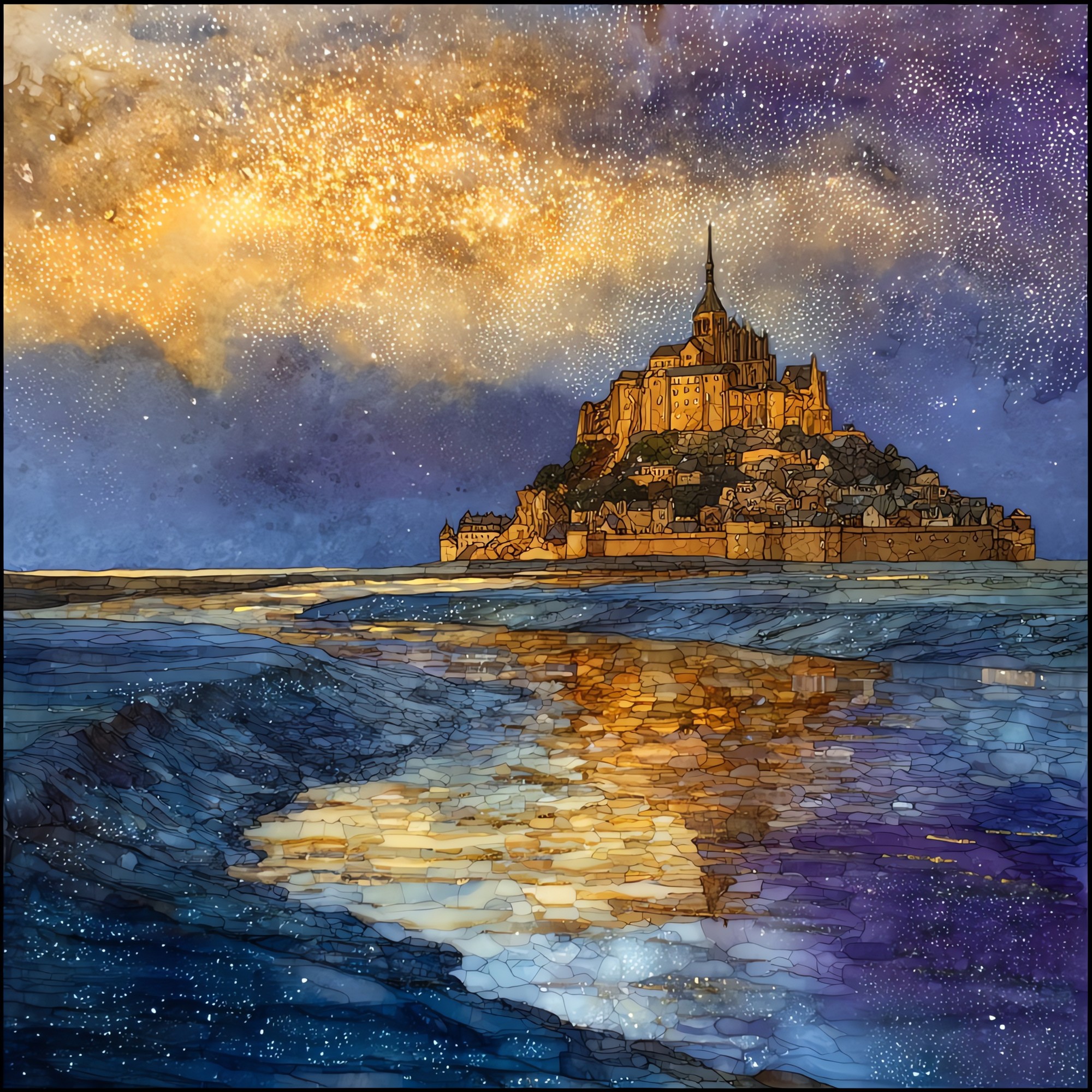
Mont-Saint-Michel
— the abbey that becomes an island twice a day.
Not only on a wall.
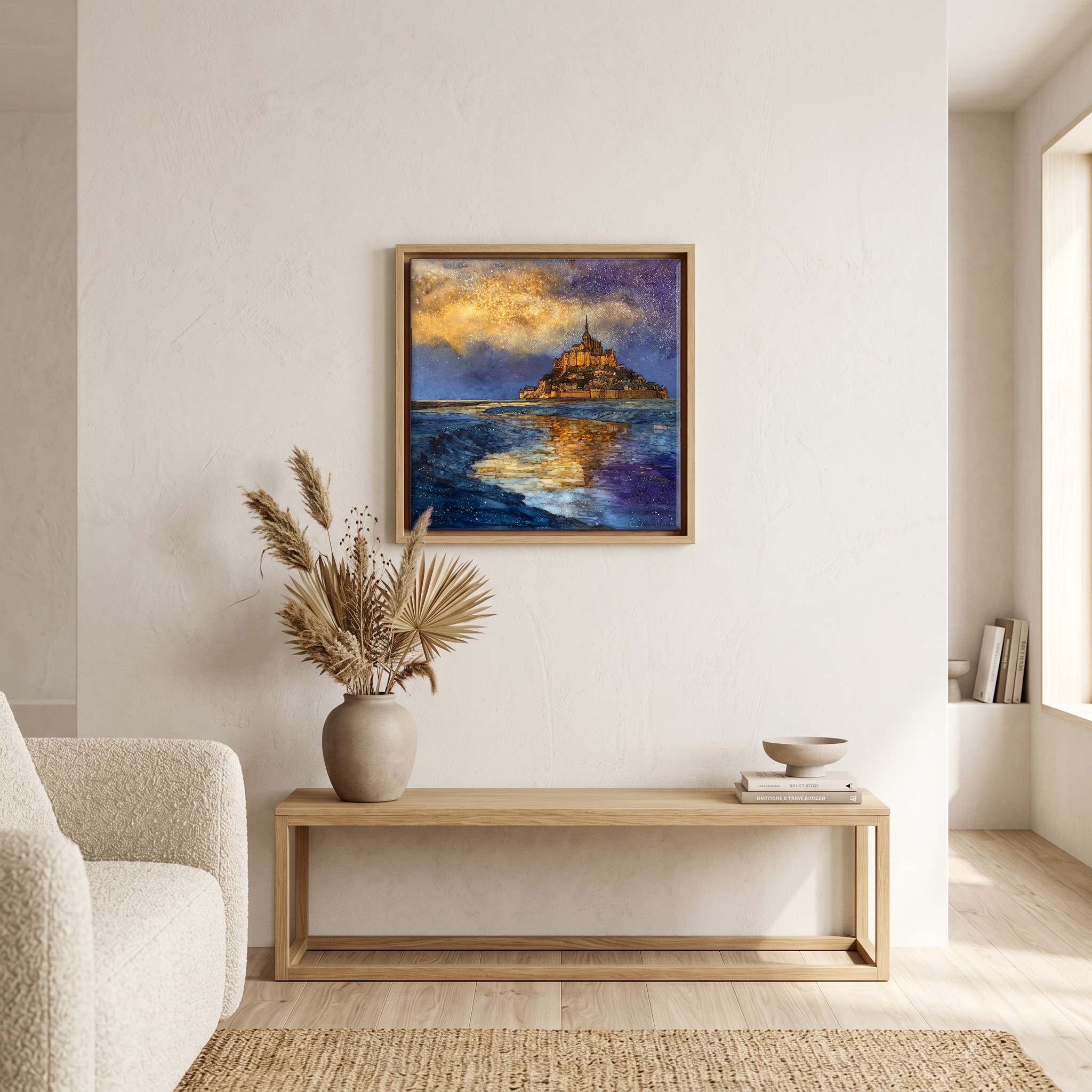
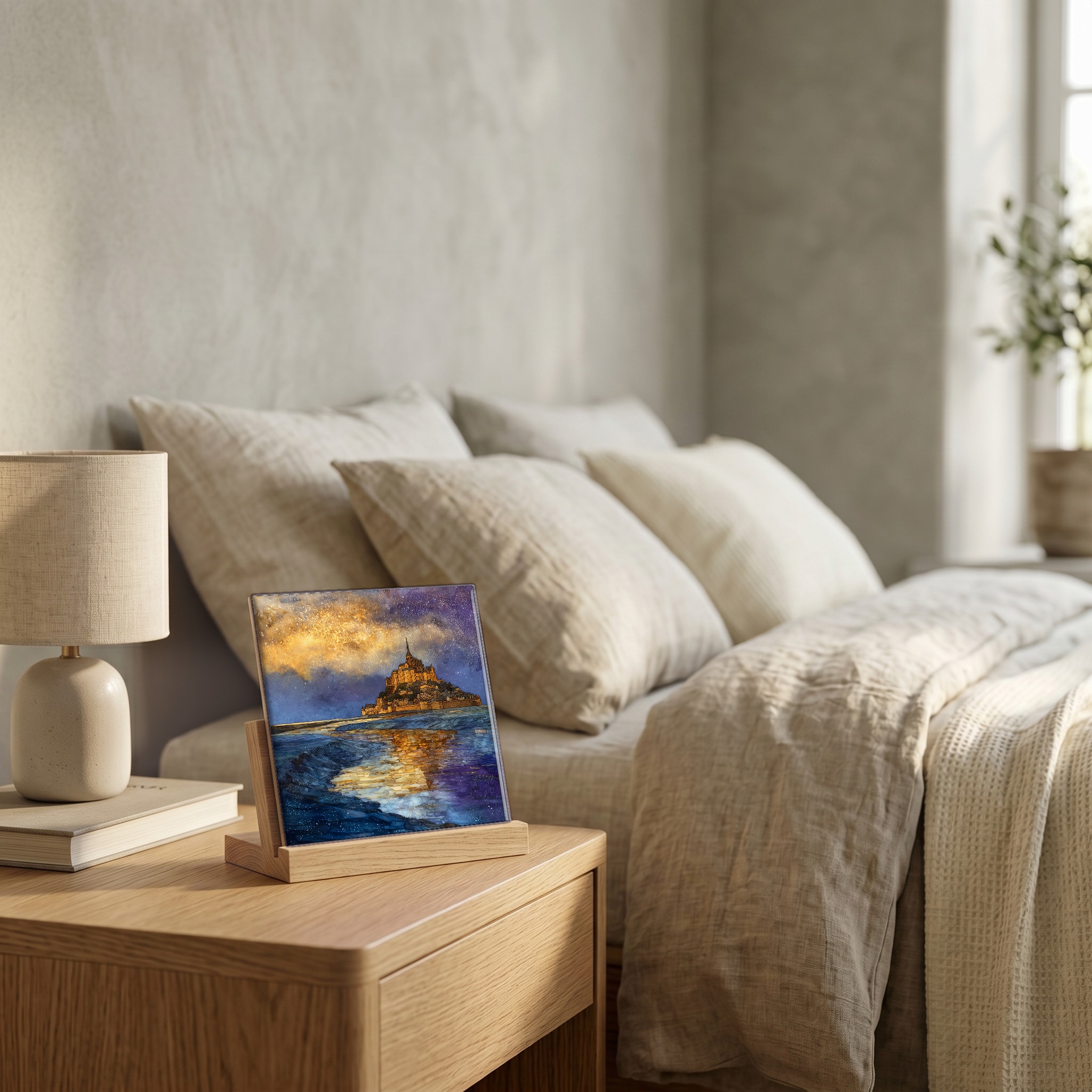
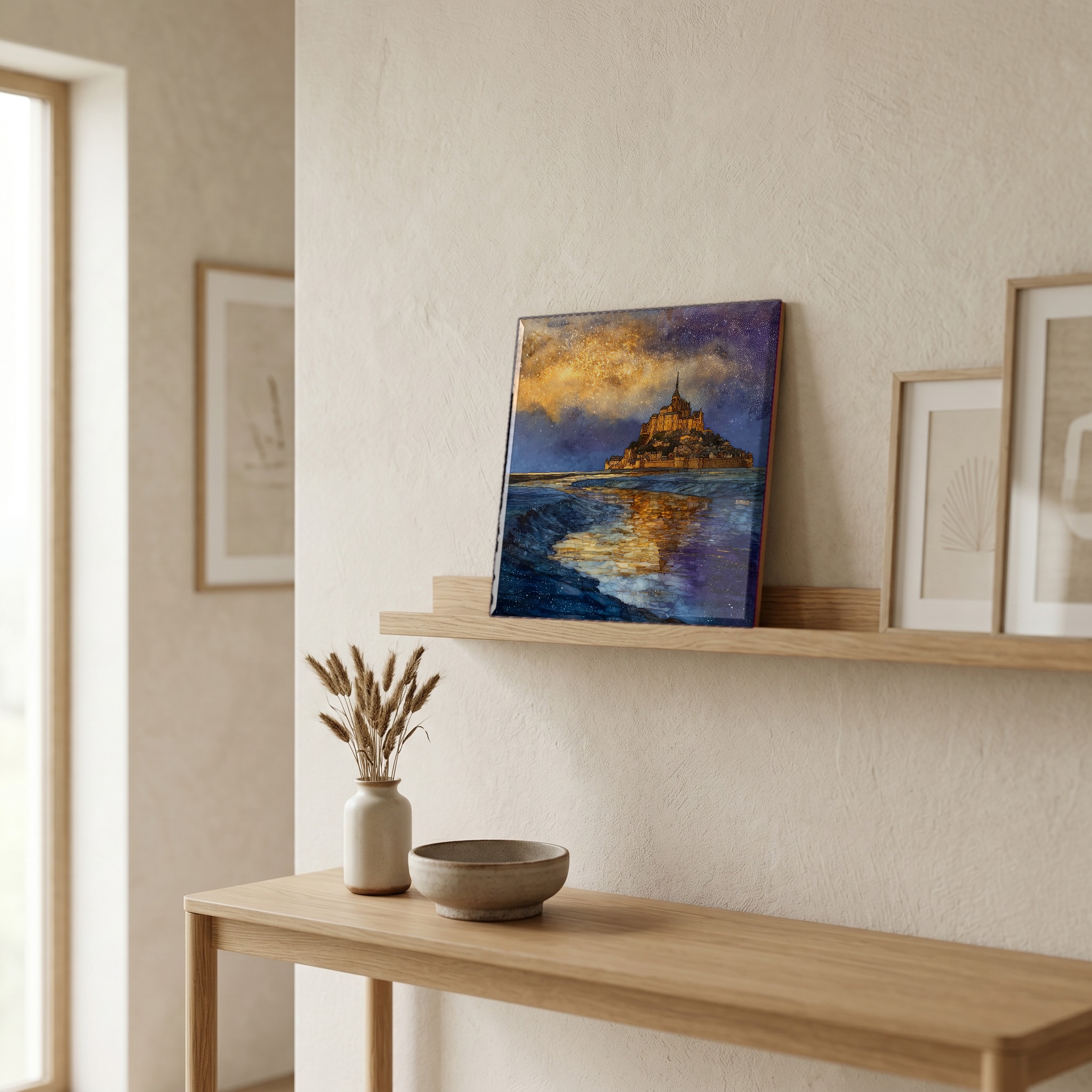
“A granite tower rising from a tidal bay off the Normandy coast. Twice a day the sea drains away, and a wet causeway of sand surrounds the island; twice a day it comes back, at the pace of a brisk walk. The abbey on top has been there since the eighth century. The village beneath it, since not long after. The single street climbs in a spiral, past stone houses and the bakery, all the way up to the cloister. From across the bay at evening, when the spire catches the last light, you can see why pilgrims walked weeks to get here.
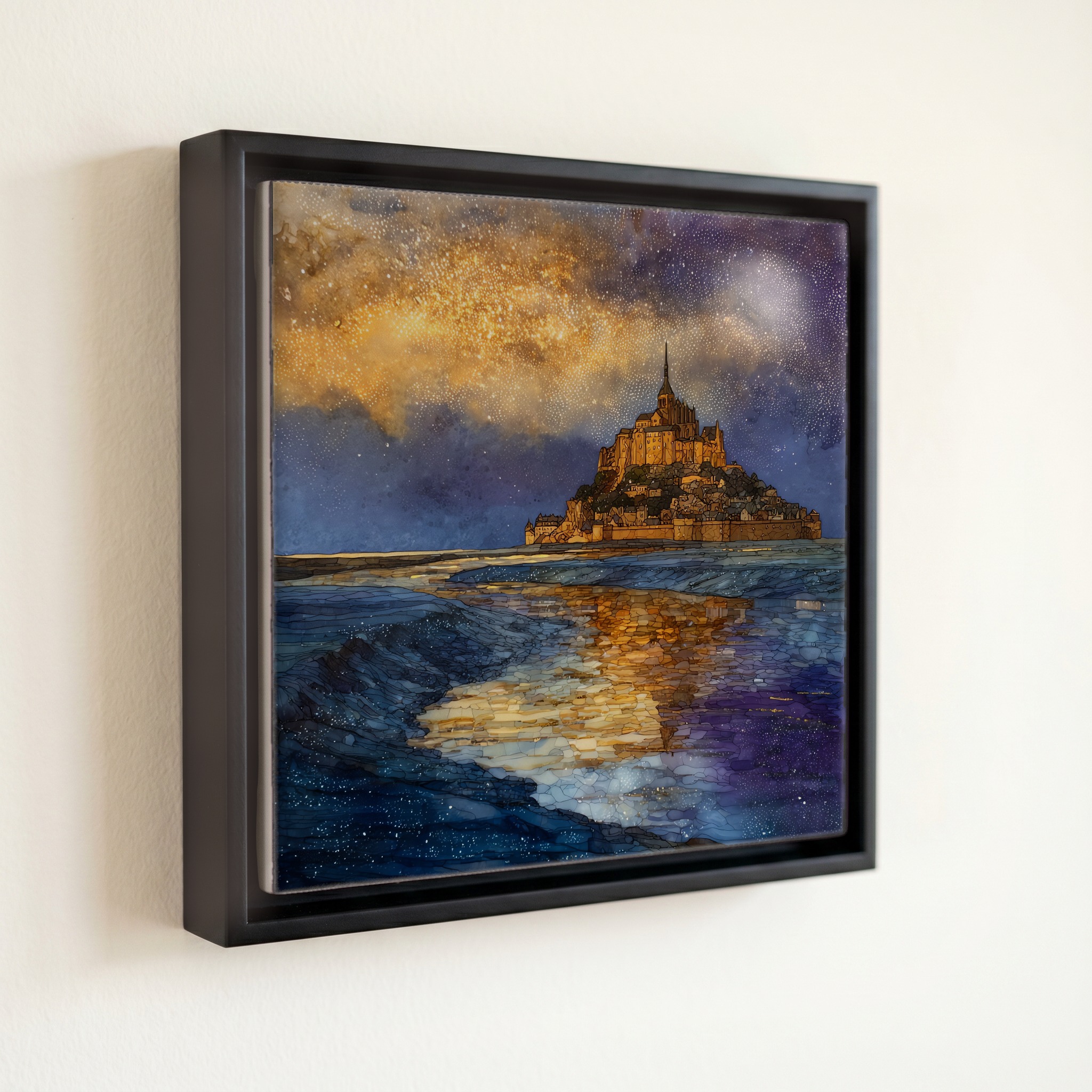
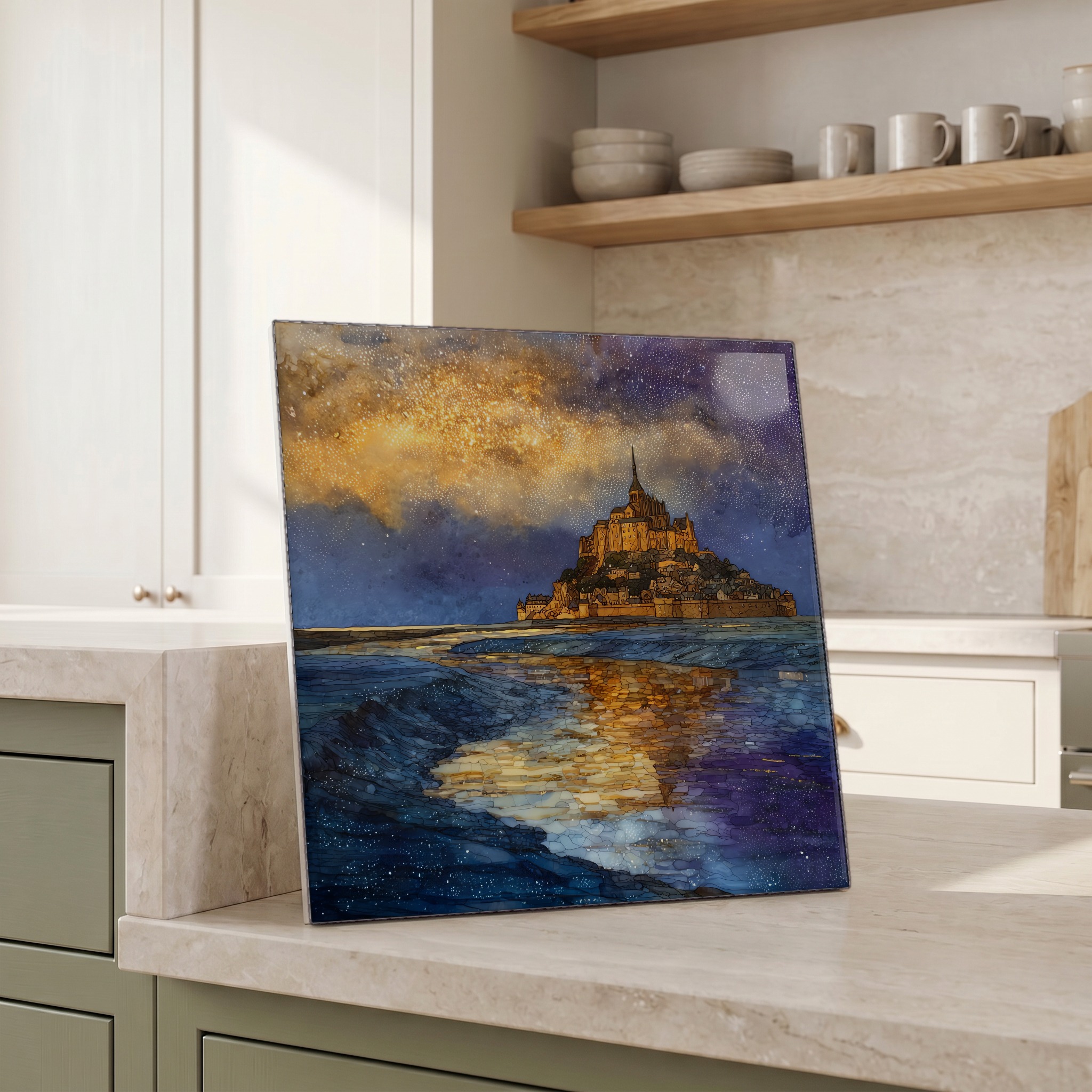
Mont-Saint-Michel, on ceramic.
Each tile is finished by hand in our Knoxville studio. Artwork is slowly infused into the ceramic surface under high heat and pressure, and rests beneath a thin glossy finish. The colour lives in the surface, not on top of it.
Pick any four 4-inch tiles — National Parks you've been to, a Smokies set, the four seasons of one place. $ for a set of , cork-backed, ready to live on the table.
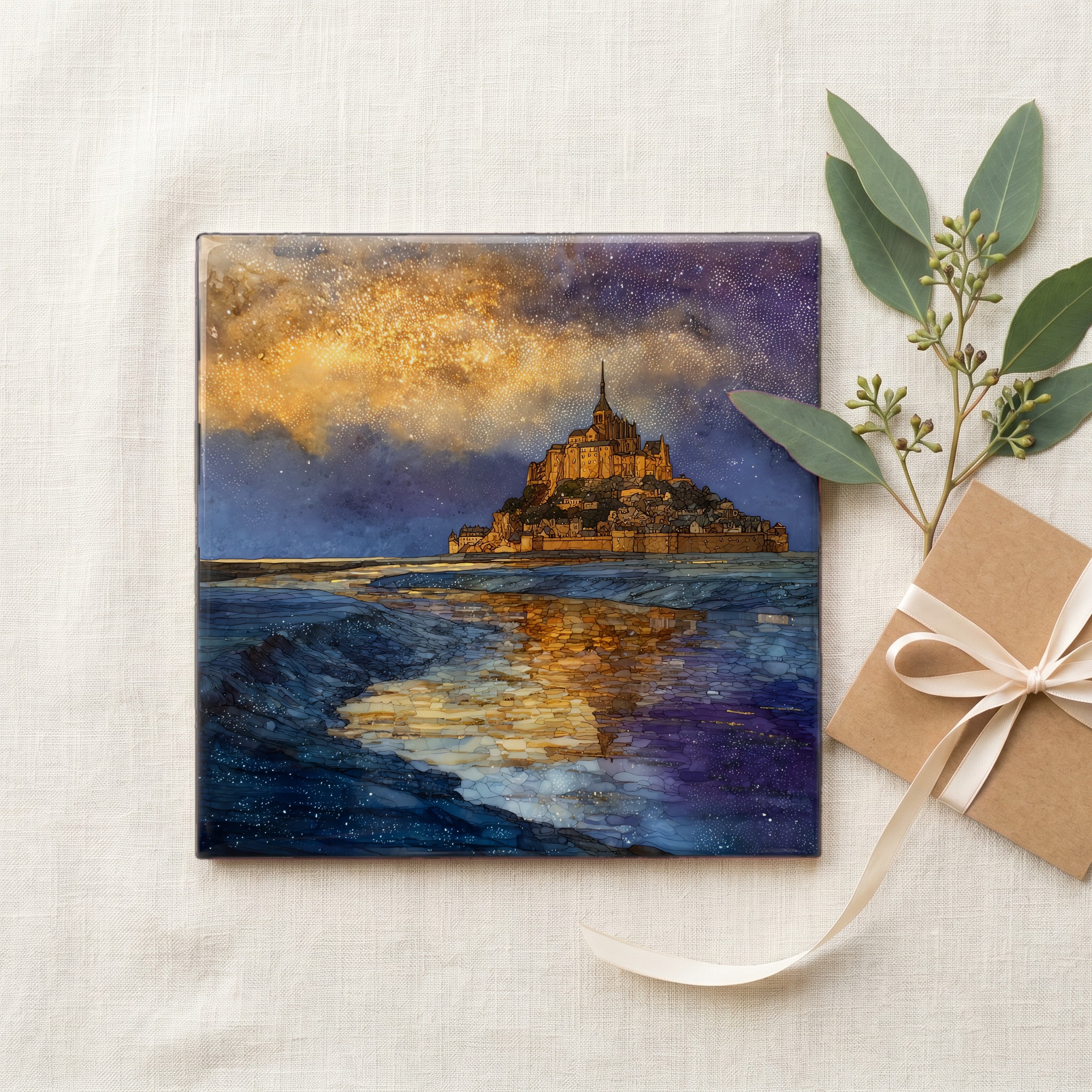
Each tile ships in a kraft box, tied with cream ribbon, with a handwritten note from the studio if you'd like to add one.
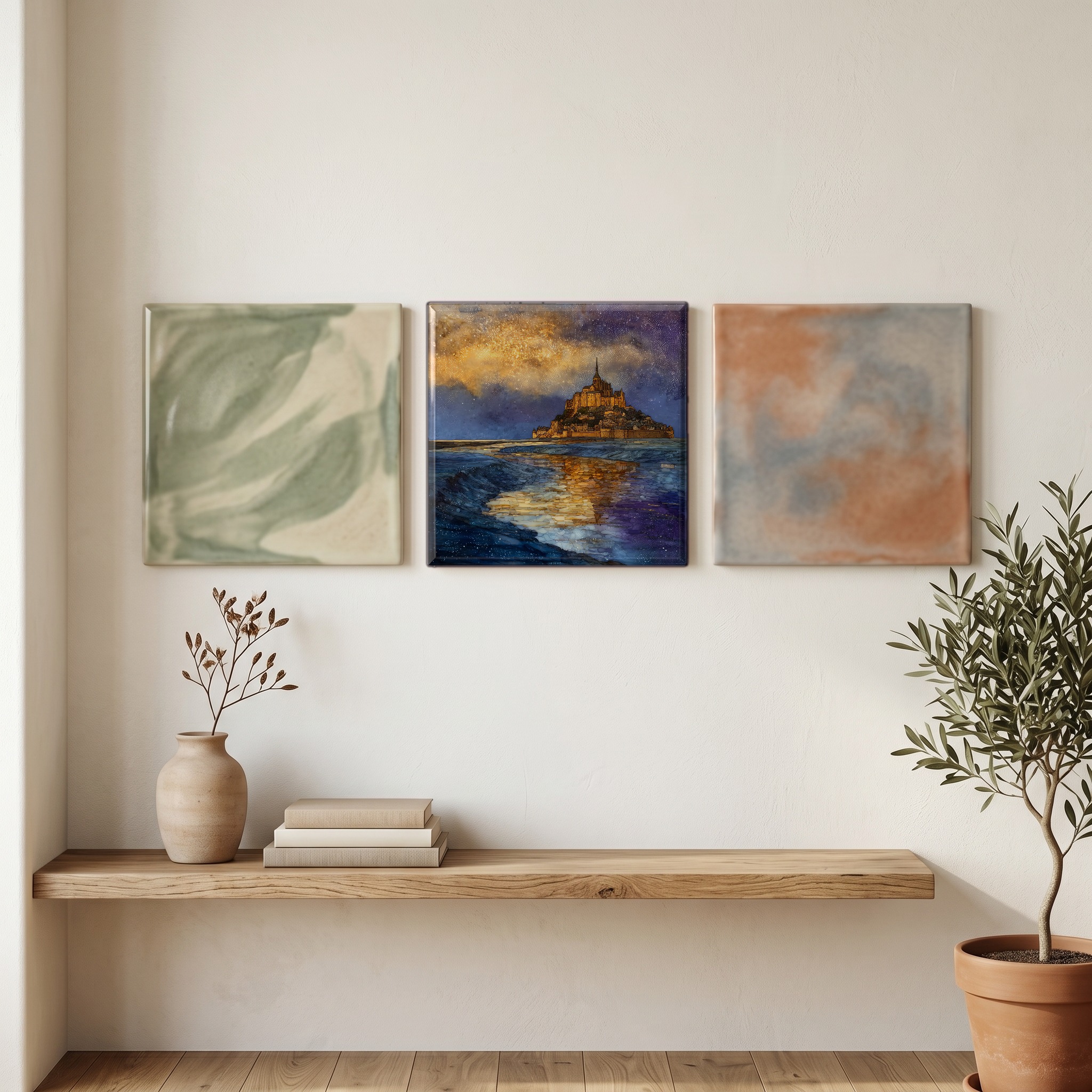
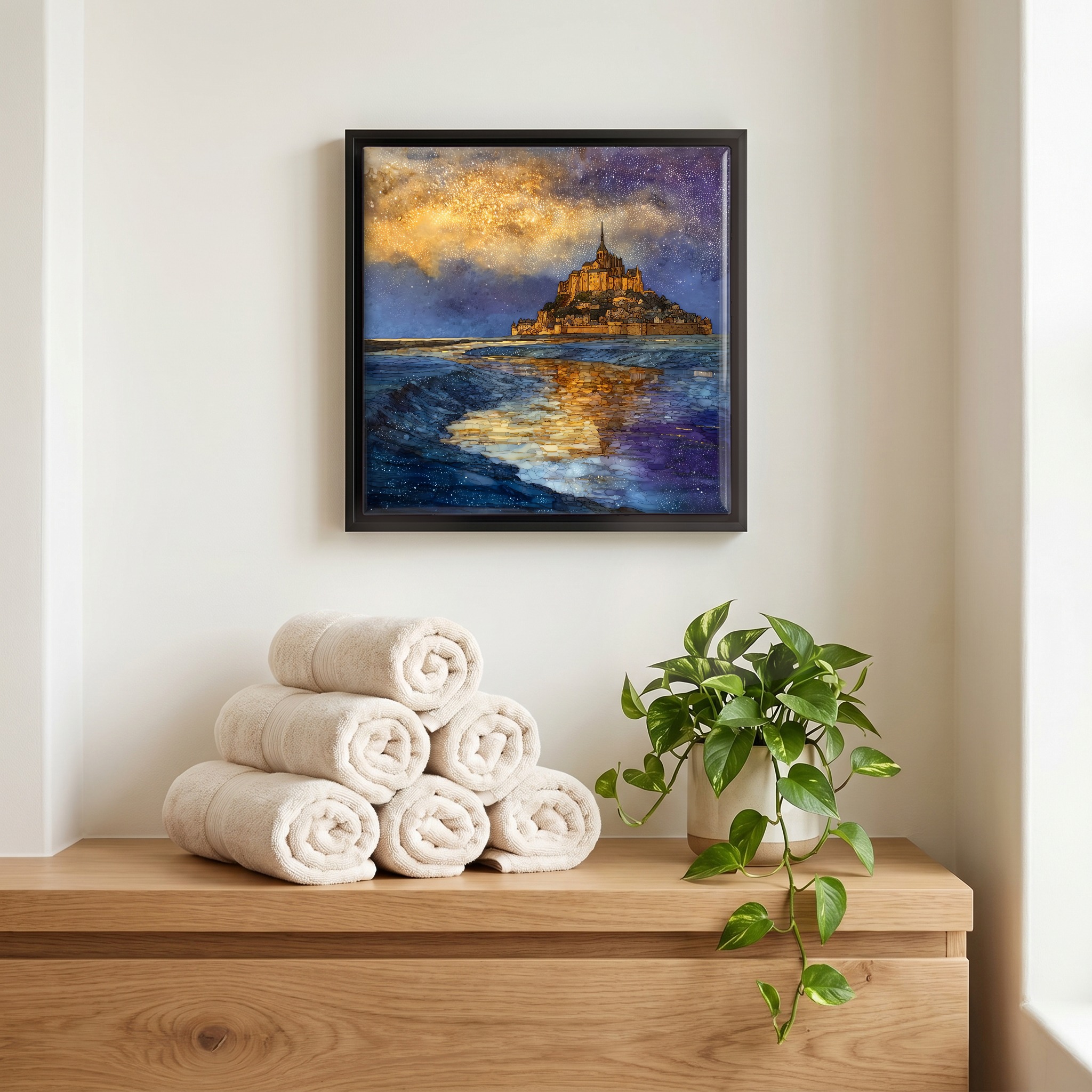
Three or five different vistas, hung together — a chapter of places you've been, or want to go.
The place, in three passes.
Mont-Saint-Michel sits in a tidal bay off the coast of Normandy, France, about 1 kilometre from the mainland at the mouth of the Couesnon River. The granite islet rises about 80 metres above the bay at its natural summit; the abbey above brings the whole structure higher still, with the gilded statue of Saint Michael atop the spire visible from a long way across the flats. The commune covers just under 4 square kilometres and has a permanent population of around thirty. A road bridge designed by Dietmar Feichtinger replaced the old causeway in 2014, restoring the natural flow of the bay's water around the rock. The Mont and its bay have been inscribed on the UNESCO World Heritage list since 1979.
The abbey on the summit is a layered work of Romanesque and Gothic construction, begun in 1023 under Abbot Hildebert II on the foundations of an older pre-Romanesque sanctuary said to date from 708, when the Archangel Michael was reported in a vision to Bishop Aubert of Avranches. The north flank holds the section called La Merveille, added in the early thirteenth century: a three-storey Gothic complex of refectory, scriptorium, and cloister built directly against the granite. Below the abbey, a single Grande Rue spirals up through the medieval village, lined with houses of grey schist and the same Chausey granite quarried from islands a few kilometres offshore. The whole rock is, in effect, a building.
Roughly 2.5 to 3 million visitors come each year, making the Mont among the most visited sites in France outside Paris. The abbey opens daily, with shorter winter hours and last admission an hour before closing; an adult ticket runs about 13 euros as of early 2025. Most visitors arrive by the shuttle bus that crosses the new bridge from the mainland tourist area, included with the parking fee; some walk the bridge on foot, which takes roughly 35 minutes. The bay's tidal range is the largest in continental Europe, reaching as much as 14 metres on the highest spring tides, and during those tides the Mont briefly becomes a true island again. Guided crossings of the bay's quicksand flats run from Genêts and Bec d'Andaine.