Wender·Vista
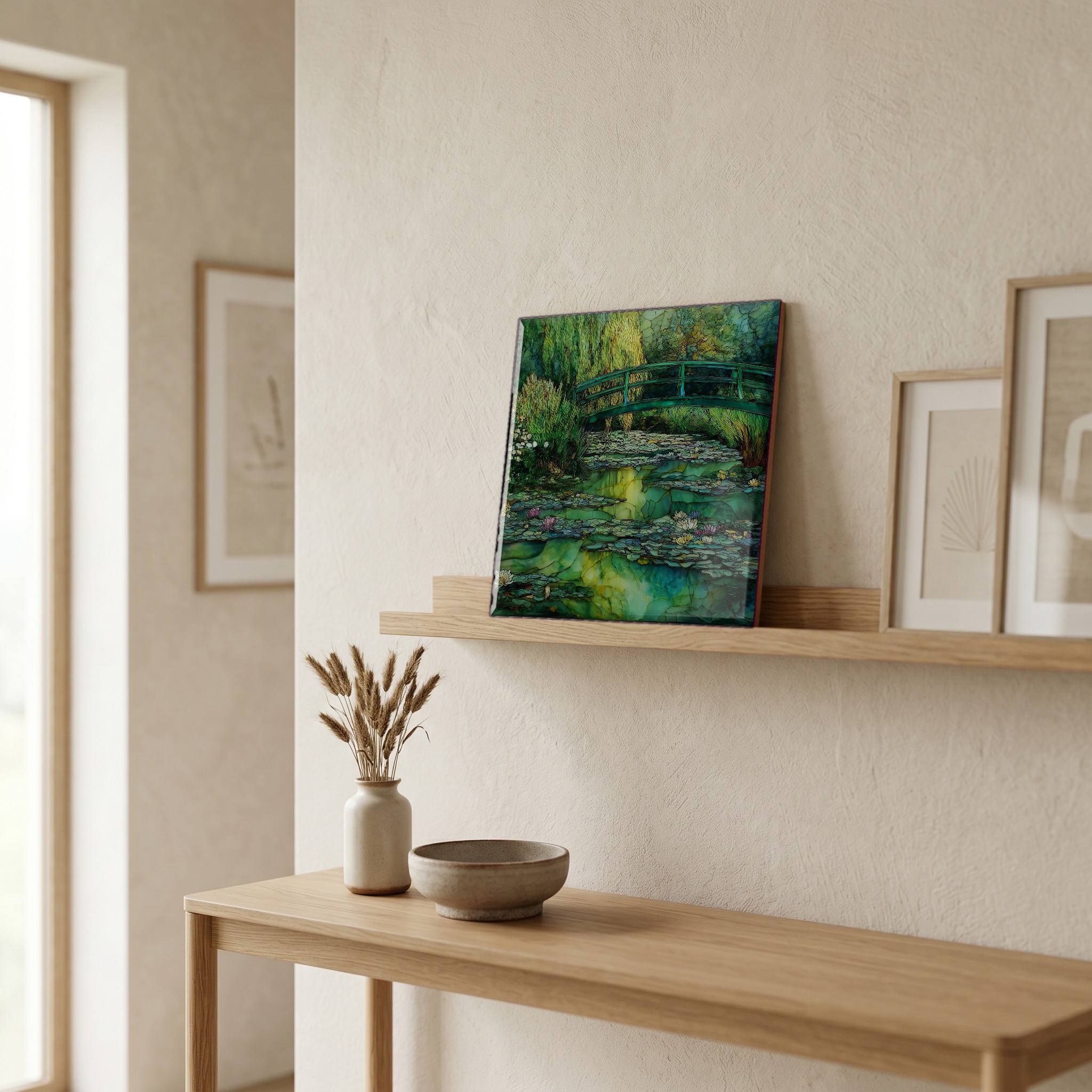
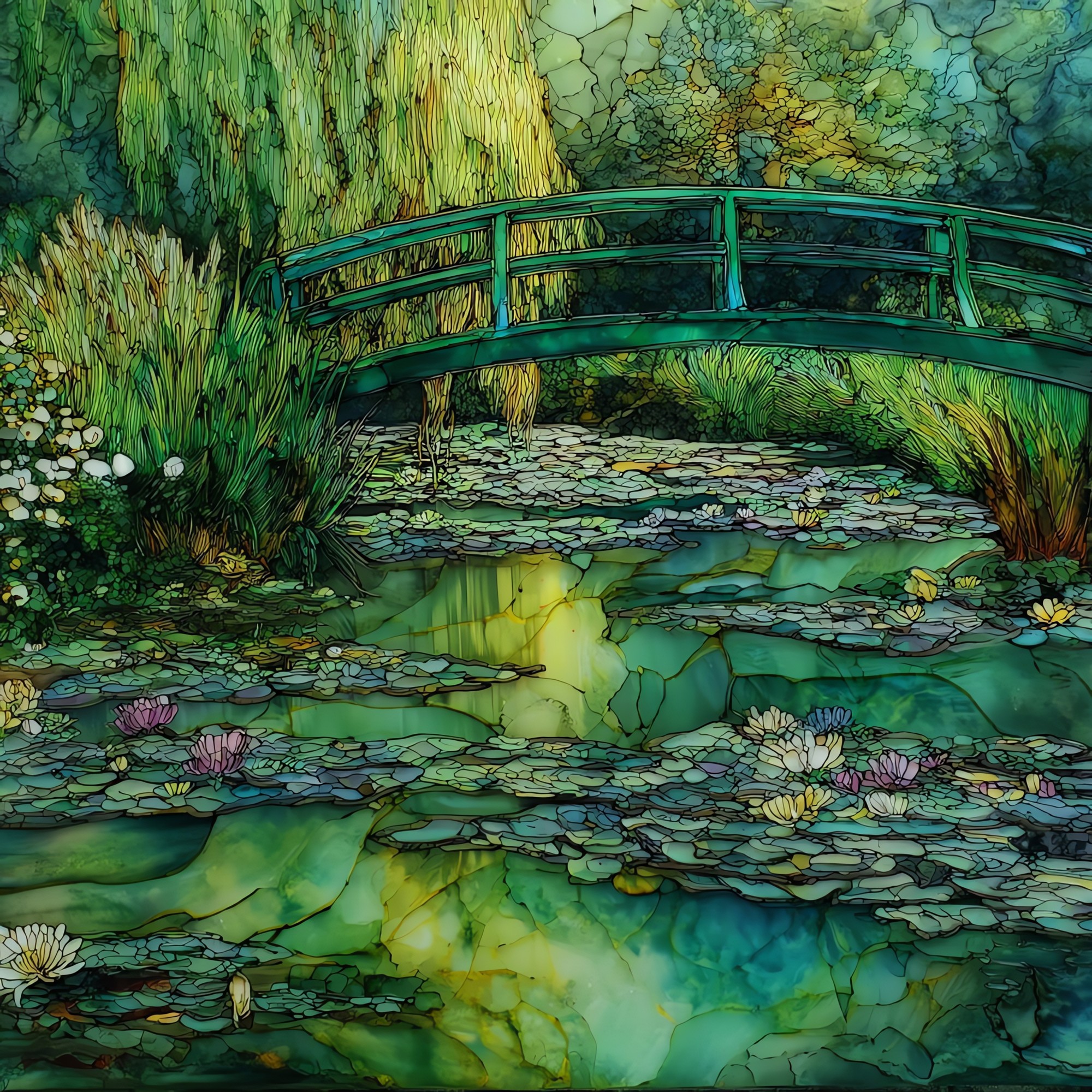
Monet's Water Lily Pond
shown on ceramic, 12-inch tileFrance
in Normandy, an hour northwest of Paris

Monet's Water Lily Pond

still water under a green wooden bridge.

Where it lives

Not only on a wall.

A small tile on the nightstand catching the morning. A larger one above the fire. Yours, wherever you spend the slow hours.
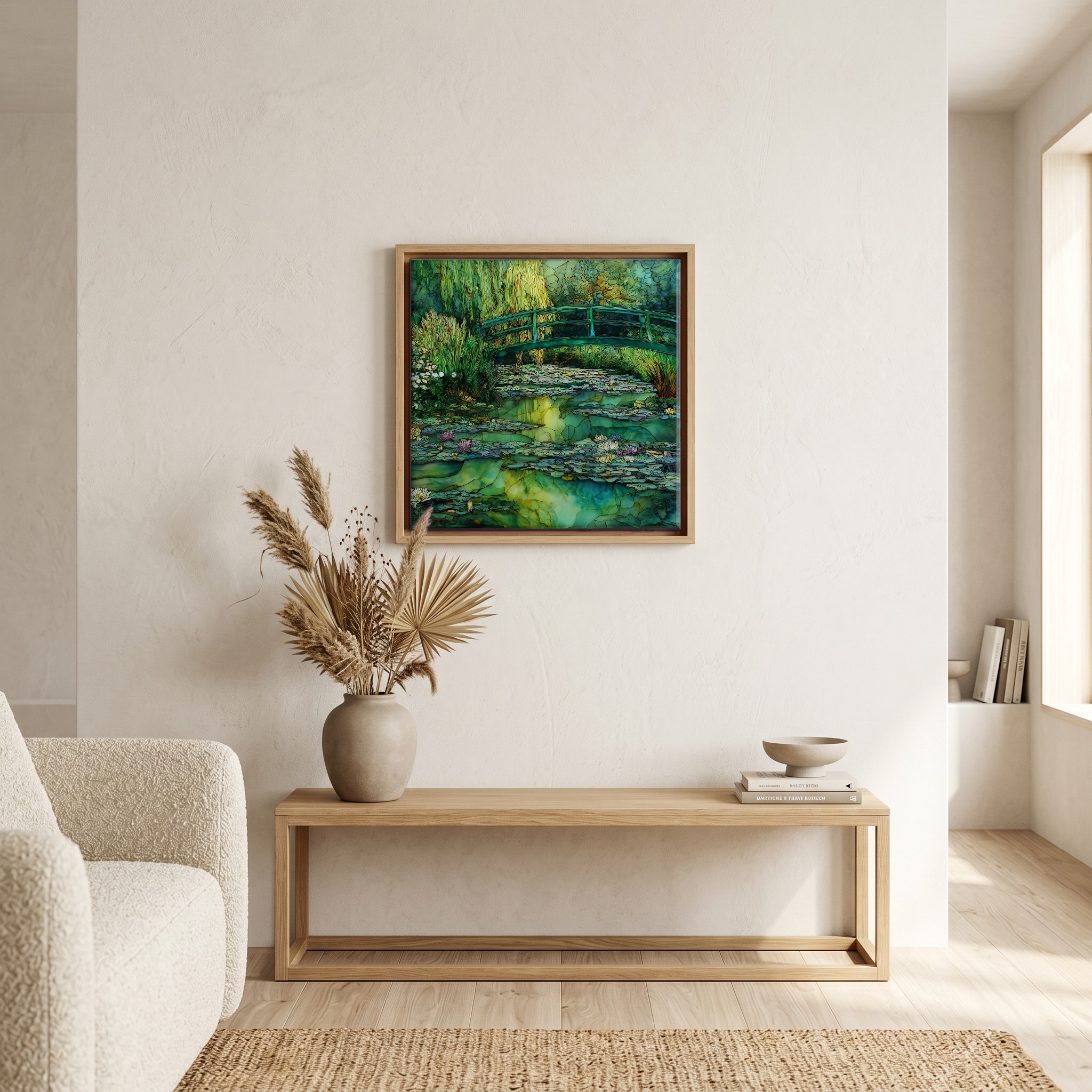
Above the bench, in a warm oak surround.
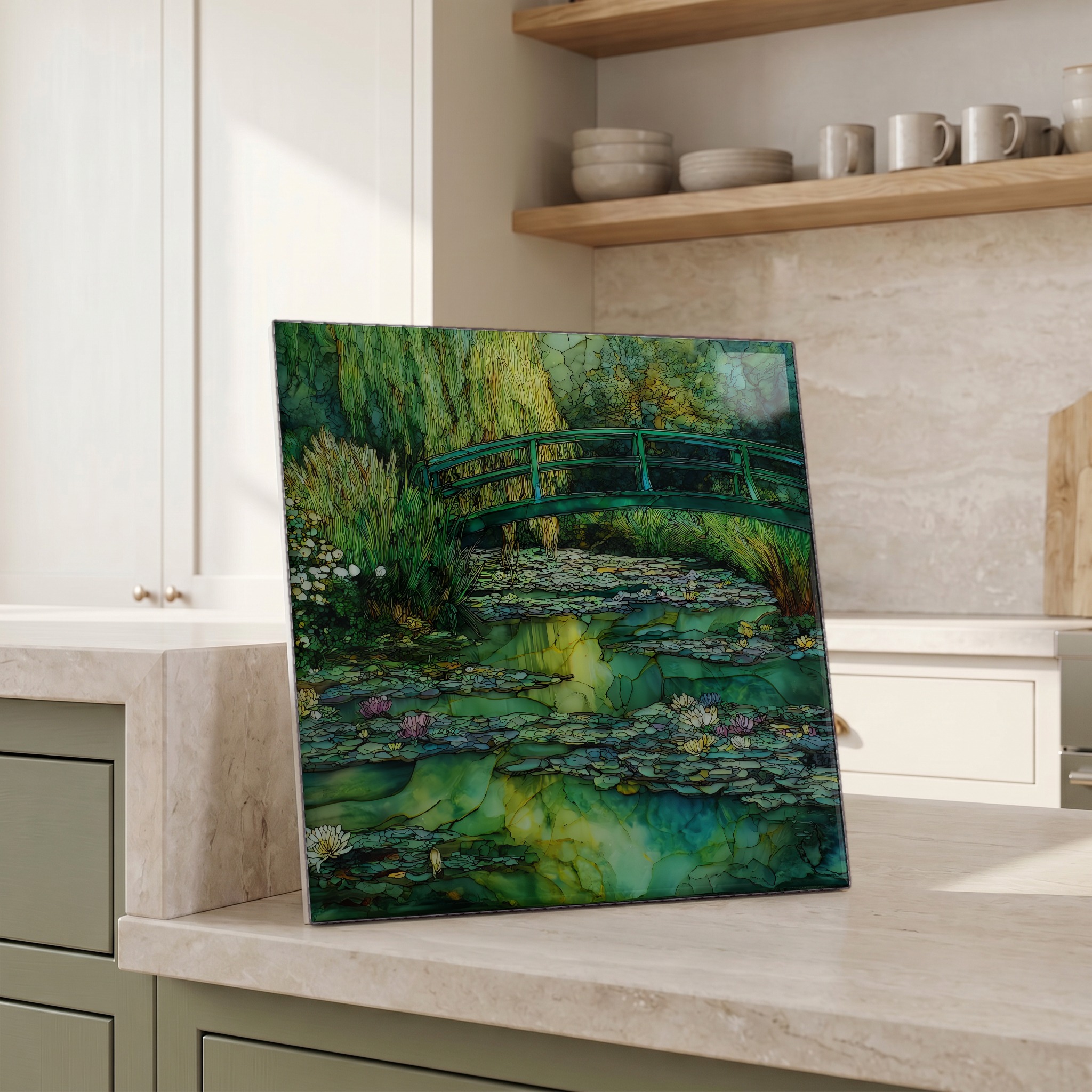
Beside the kettle, propped on the counter.
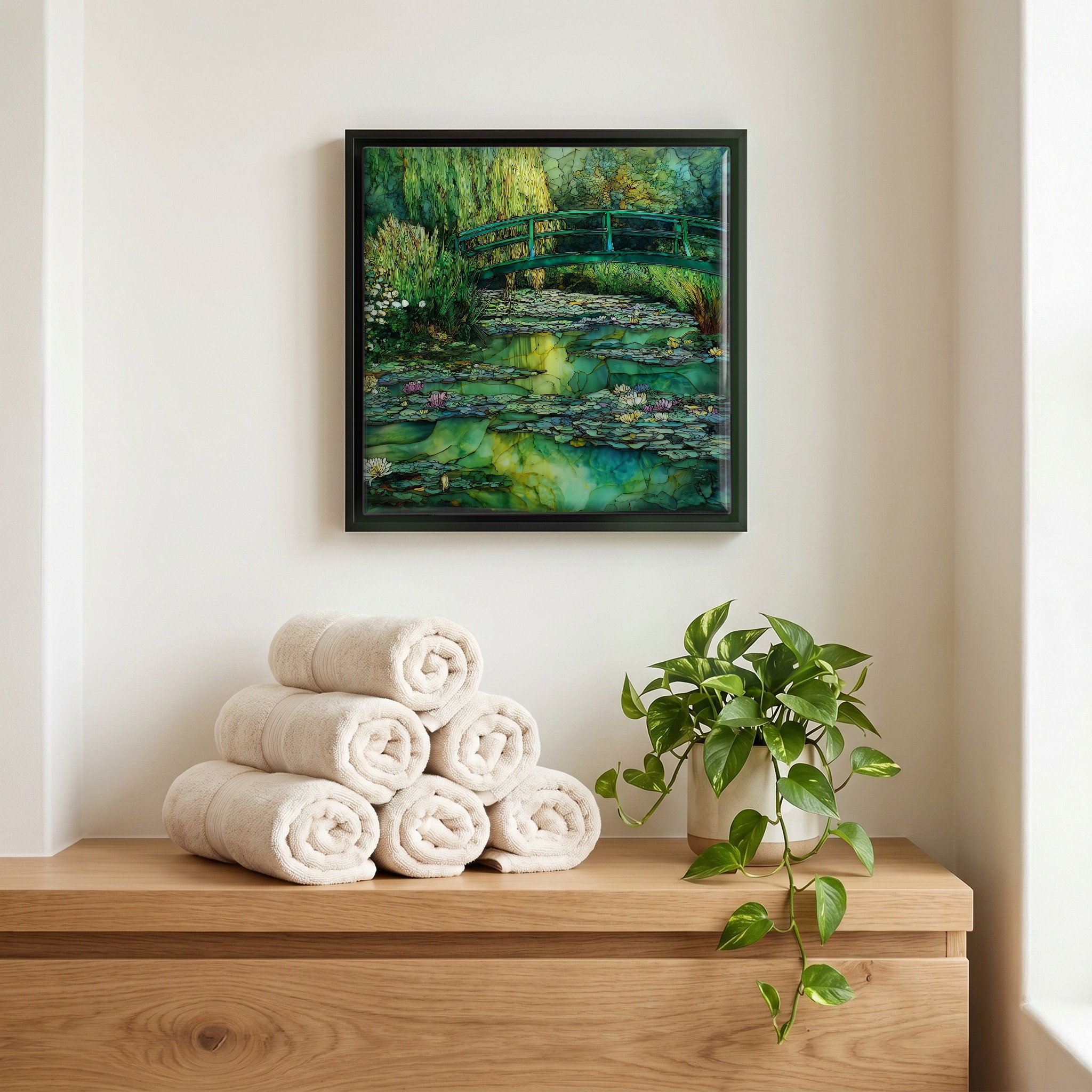
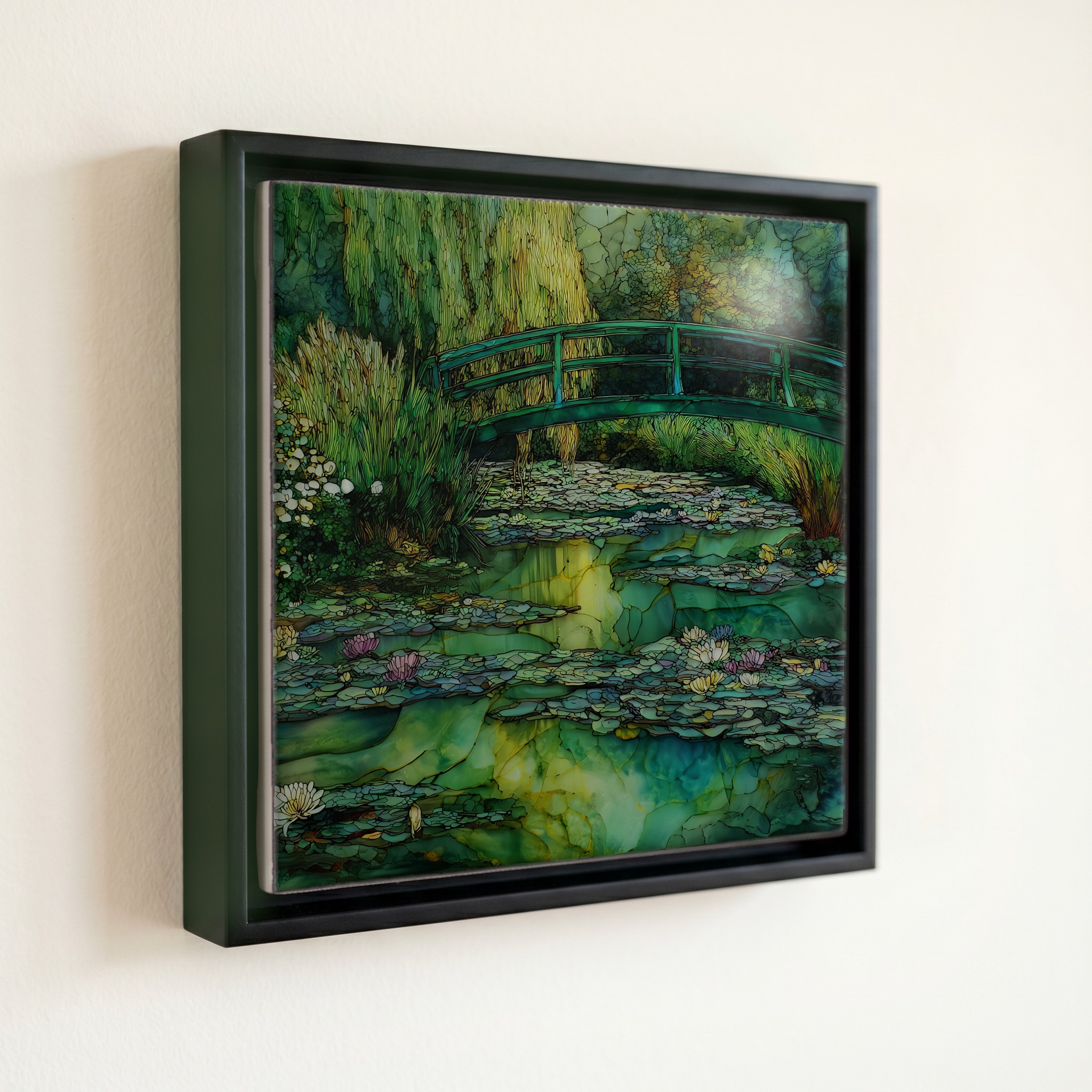
Above the linens, in a slim black surround.
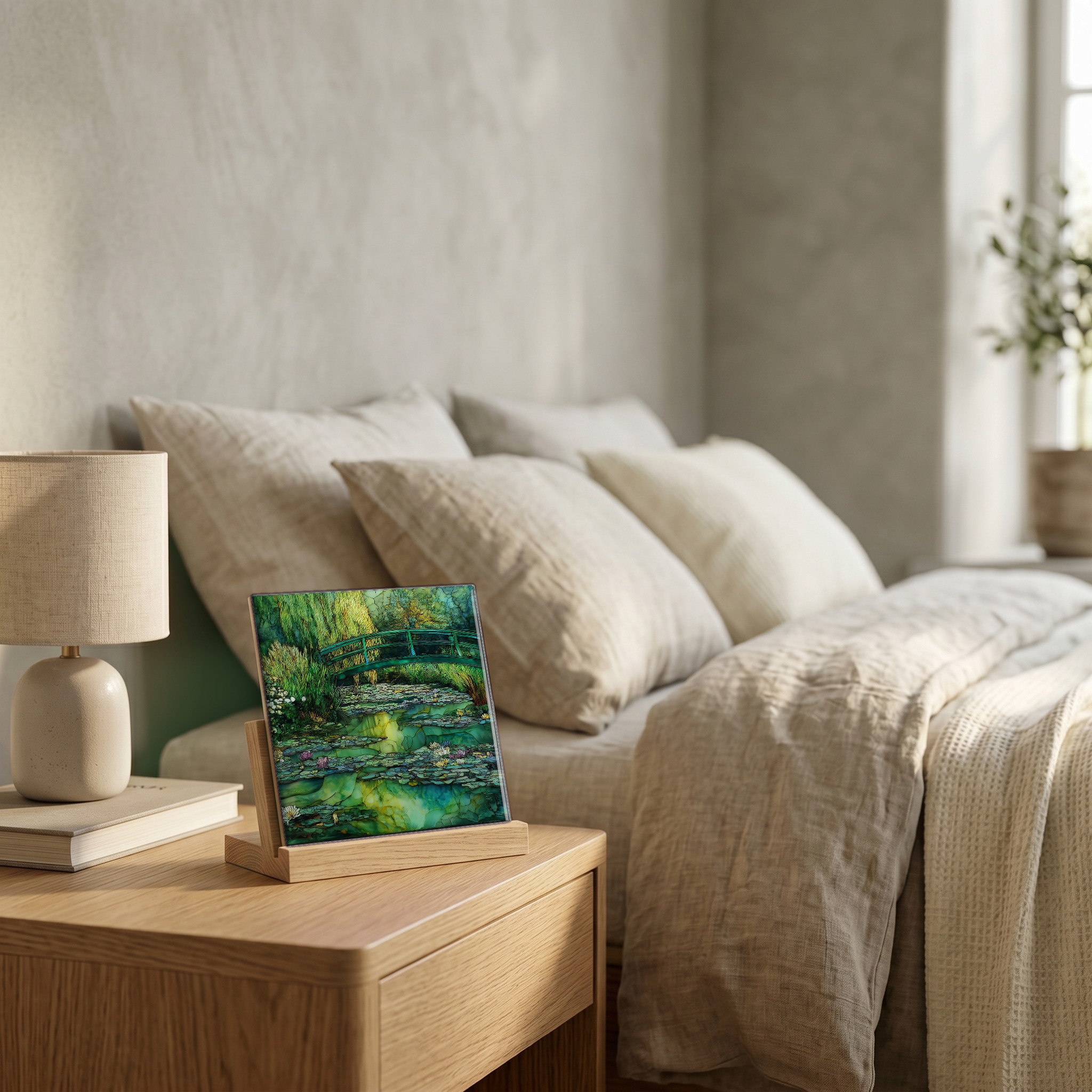
On the nightstand, on a light oak stand.
On a picture ledge, where the light comes in.
a note from the studio

A small pond in the village of Giverny, about an hour northwest of Paris. Monet bought the meadow in 1893, diverted a tributary of the Epte through it, planted willows and bamboo, and ran a green Japanese bridge over the water. He painted the pond for the last thirty years of his life. About two hundred and fifty canvases. The water lilies open in summer, the wisteria on the bridge in May. The garden closes for winter. Most people come early. The coaches arrive at ten.
from the studio
shown in a slim black floating frame · 6 × 6 in
— bring it home

Monet's Water Lily Pond, on ceramic.

Each tile is finished by hand in our Knoxville studio. Artwork is slowly infused into the ceramic surface under high heat and pressure, and rests beneath a thin glossy finish. The colour lives in the surface, not on top of it.

What kind of piece?
One tile — square or rectangle.
How big?
the popular one — counter, shelf, nightstand
6 × 6 in · 15 cm · 1.6 lb
Surface finish
A clear glossy finish — the artwork reads as if under resin. Ideal for show-pieces and framed wall art.
How it sits
A hidden cleat — sits ¼″ proud of the wall.
$58
Hand-finished and shipped from our studio at the foot of the Smokies. On your wall in about ten days.
size
6 × 6 in
15 cm
weighs
1.6 lb
solid in the hand
surface
ceramic, hand-finished
art rests beneath a thin glossy finish
from
Knoxville, TN
our family studio, at the foot of the Smokies
— start a Coaster Set

Pick any four 4-inch tiles — National Parks you've been to, a Smokies set, the four seasons of one place. $ for a set of , cork-backed, ready to live on the table.
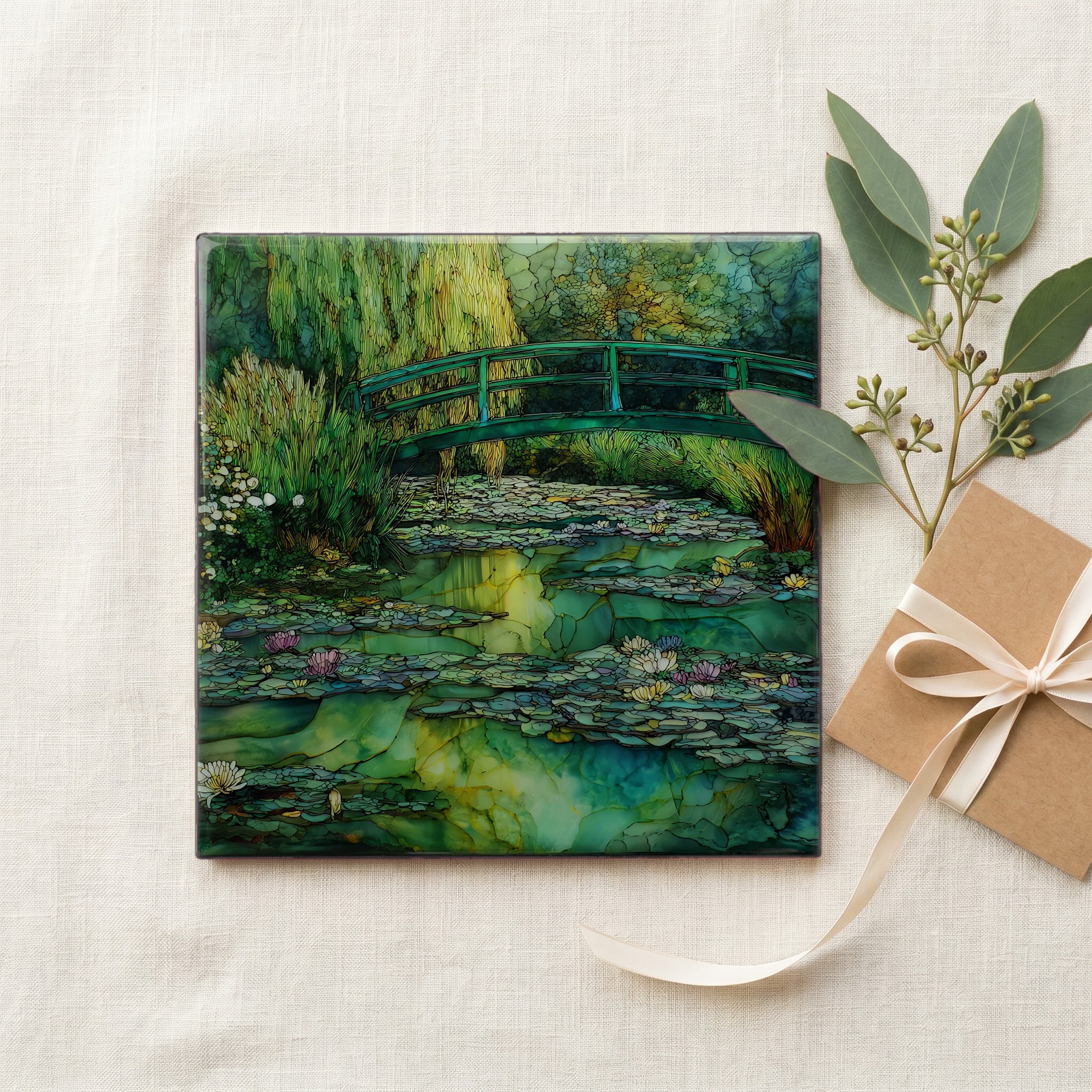
comes gift-ready
comes gift-ready

Each tile ships in a kraft box, tied with cream ribbon, with a handwritten note from the studio if you'd like to add one.
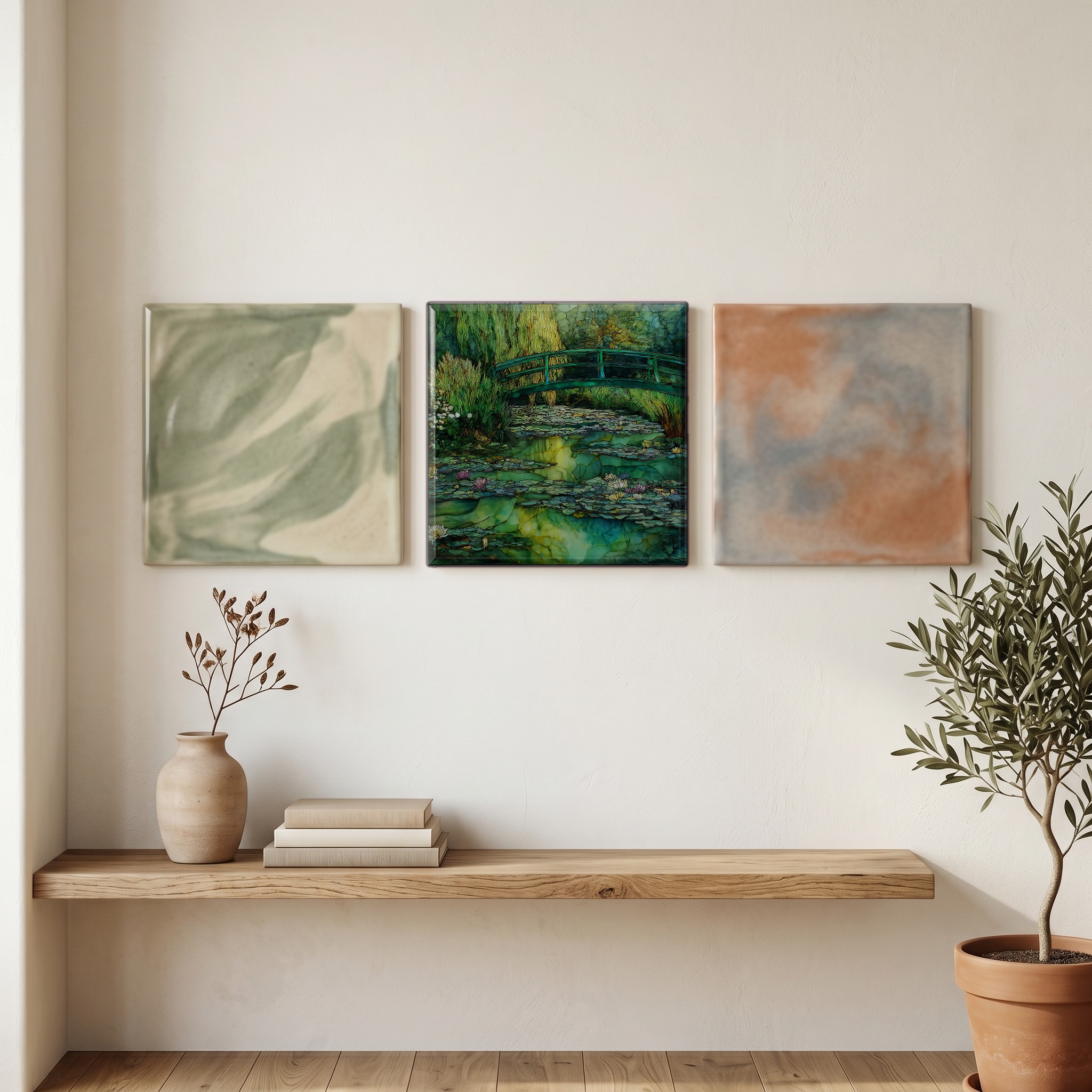
or build a grouping
or build a grouping

Three or five different vistas, hung together — a chapter of places you've been, or want to go.

about Monet's Water Lily Pond

The place, in three passes.

A little of what's known, in case you fall down the rabbit hole — or want to go see it yourself.
the place

In the village of Giverny in the Eure department of Normandy, about eighty kilometres northwest of Paris. Claude Monet rented a house here in 1883 and bought it in 1890; in 1893 he bought the meadow across the lane and converted it into the water garden, diverting a small arm of the Epte called the Ru to fill it. The house and gardens passed to his son Michel and fell into disrepair after his death in 1966; Gerald van der Kemp directed a full restoration in the 1970s, and the property has been open to the public since 1980 under the Fondation Claude Monet.

the water

The pond is fed by a diverted arm of the Epte river called the Ru. Monet planted weeping willows along the banks, bamboo at the far end, and irises along the path; he set water lilies on the surface and built a green wooden footbridge over the water in 1895, modelled on Japanese garden prints he collected. He painted the pond for the last thirty years of his life. Roughly two hundred and fifty canvases of water lilies survive, including the vast Grandes Décorations now installed in two oval rooms at the Musée de l'Orangerie in Paris. The wisteria on the bridge was added later and blooms in May.

the season

The Fondation Claude Monet opens the house and gardens from the start of April through the first of November; the property closes for winter. Tulips and wisteria peak in late April and May. Water lilies open from June through September. The rose-clad arches over the long central path of the Clos Normand bloom from June into autumn. The gardens see more than half a million visitors a year. The first hour after opening is the quietest, and timed online entry has reduced midday queues.

where
France · Giverny, Eure, Normandy
position
49.0760° N · 1.5340° E
the neighborhood

What's nearby.

A handful of named places within an hour's walk or short drive. Some we've already painted; some we will.
5 km SW
Vernon
river town
15 km S
Vétheuil
Seine village
25 km N
Les Andelys
Seine fortress town
0.3 km W
Musée des impressionnismes Giverny
art museum
N
Monet's Water Lily Pond
Vernon
Vétheuil
Les Andelys
Musée des impressionnismes Giverny
common questions

What people ask.

A few questions we get about Monet's Water Lily Pond — and about bringing the piece home.
about the place

The pond is in the village of Giverny in Normandy, about eighty kilometres northwest of Paris, in the Eure department. It sits across a small lane from the house Claude Monet bought in 1890 and is now part of the property managed by the Fondation Claude Monet.

Monet bought the meadow across the lane from his house in 1893 and obtained permission to divert a small branch of the Epte called the Ru to fill it. He directed the planting and the Japanese-style footbridge personally and continued to expand the pond into the early 1900s.

Roughly two hundred and fifty canvases of water lilies survive, painted from about 1896 until his death in 1926. The largest are the Grandes Décorations, eight panels totalling almost a hundred metres in length, installed in two oval rooms at the Musée de l'Orangerie in Paris.

The lilies open from June through September, with the heaviest bloom in July and August. The wisteria on the Japanese bridge peaks in May; tulips and irises bloom in late April. The garden closes from November through March.

The simplest route is the SNCF train from Paris Saint-Lazare to Vernon-Giverny, about forty-five minutes, then a shuttle bus, taxi, or rental bike for the remaining seven kilometres to the gardens. By car, the drive is about an hour and a half on the A13.

The current bridge is a faithful reconstruction. The original wooden footbridge, built in 1895, decayed in the decades after Monet's death; it was rebuilt during the restoration directed by Gerald van der Kemp in the late 1970s. The wisteria climbing it now dates from the same restoration.

The Clos Normand, the flower garden in front of the house, was the original plot Monet bought in 1890. The water garden was added in 1893 across a lane and a railway line; the two are connected today by a tunnel under the road so visitors no longer cross the traffic.

about the piece in your home

It has been a meaningful gift for our customers with ties to French Impressionism, to gardening, or to time spent in Normandy. Monet painted this pond for the last thirty years of his life, and the gardens have drawn painters and gardeners ever since. A Small or Medium with a handwritten note from the studio carries well.

The blues, greens, and pearl whites of the surface sit easily in French Country, Maximalist Garden, and quiet Japandi rooms. The piece holds its own against floral wallpaper and grounds a softer all-white wall. It pairs with brass, oak, and aged ceramic.

The tile sits at the centre of both. Cottagecore wants painted florals with a long history; Garden Maximalism wants colour layered with texture. The stained-glass colour and oil-painting texture of the piece deliver both in one surface, hung on the wall or set on a stand.

A single Large reads well above a console or a reading chair. Above a sofa, the four-tile Mural carries the proportion; over a wider sofa or a fireplace, the nine-tile Mural is the one to choose.

Yes. Order in the Dura Satin finish for a soft sheen with scratch resistance, or in Matte for no sheen at all. Both stand up to heat, steam, and daily wipe-downs. The Glossy finish is reserved for framed wall art and show-pieces.

A microfibre cloth and clean water. Nothing else is needed and nothing abrasive should be used. The colour lives in the surface and will not fade or scratch under normal handling.

Yes. Every WenderVista piece is finished in-house in our studio at the foot of the Smoky Mountains in Knoxville, Tennessee. We do not license imagery and we do not print other artists' work. Reid Wender is the curator and the eye behind the atlas.

if this one stayed with you

A few you might also love.

Hand-picked by the eye that found Sorapis. Same air, same kind of quiet.