Wender·Vista
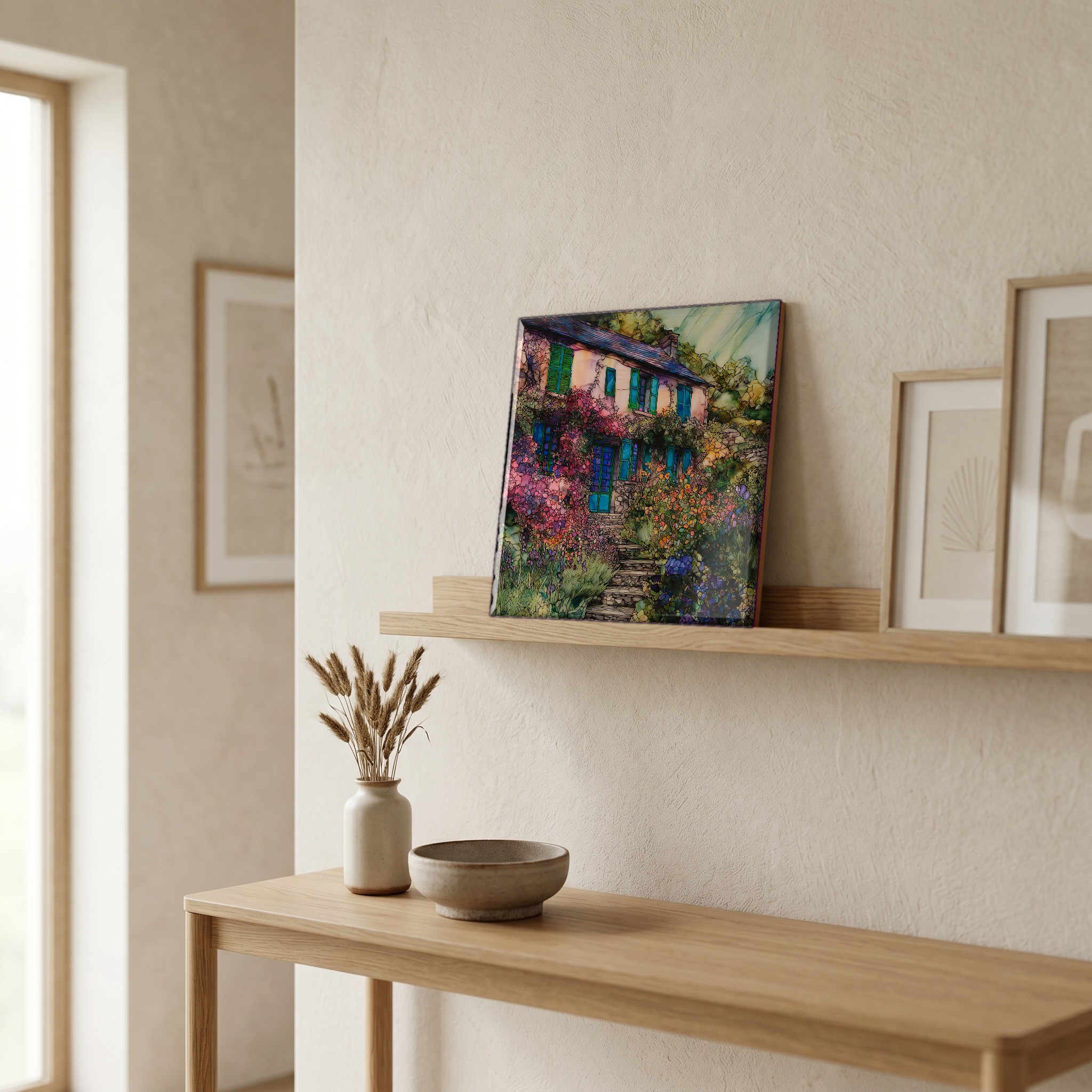
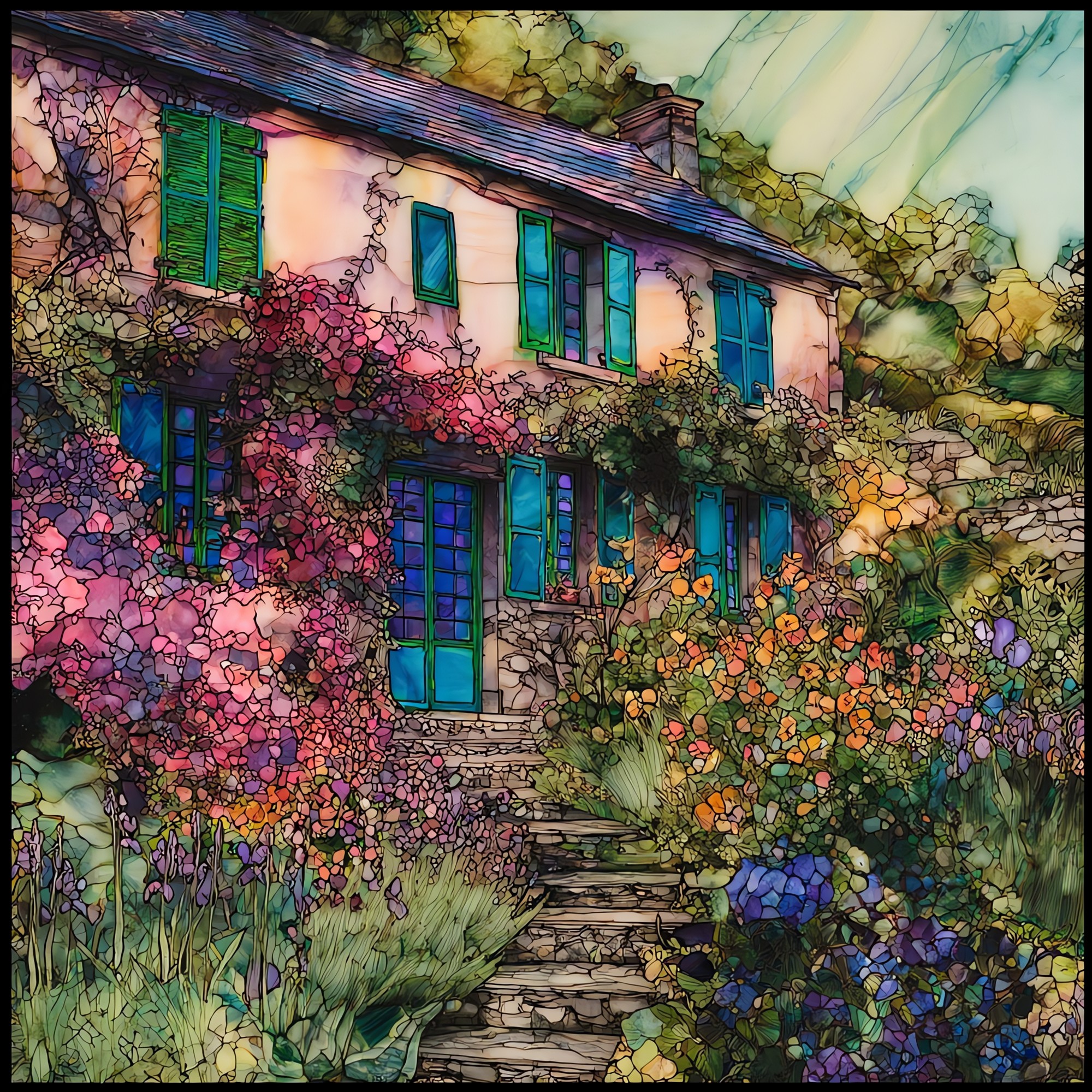
Monet's Pink House Giverny
shown on ceramic, 12-inch tileFrance
in a Norman village west of Paris, where the Epte meets the Seine

Monet's Pink House Giverny

the pink the painter kept for himself.

Where it lives

Not only on a wall.

A small tile on the nightstand catching the morning. A larger one above the fire. Yours, wherever you spend the slow hours.
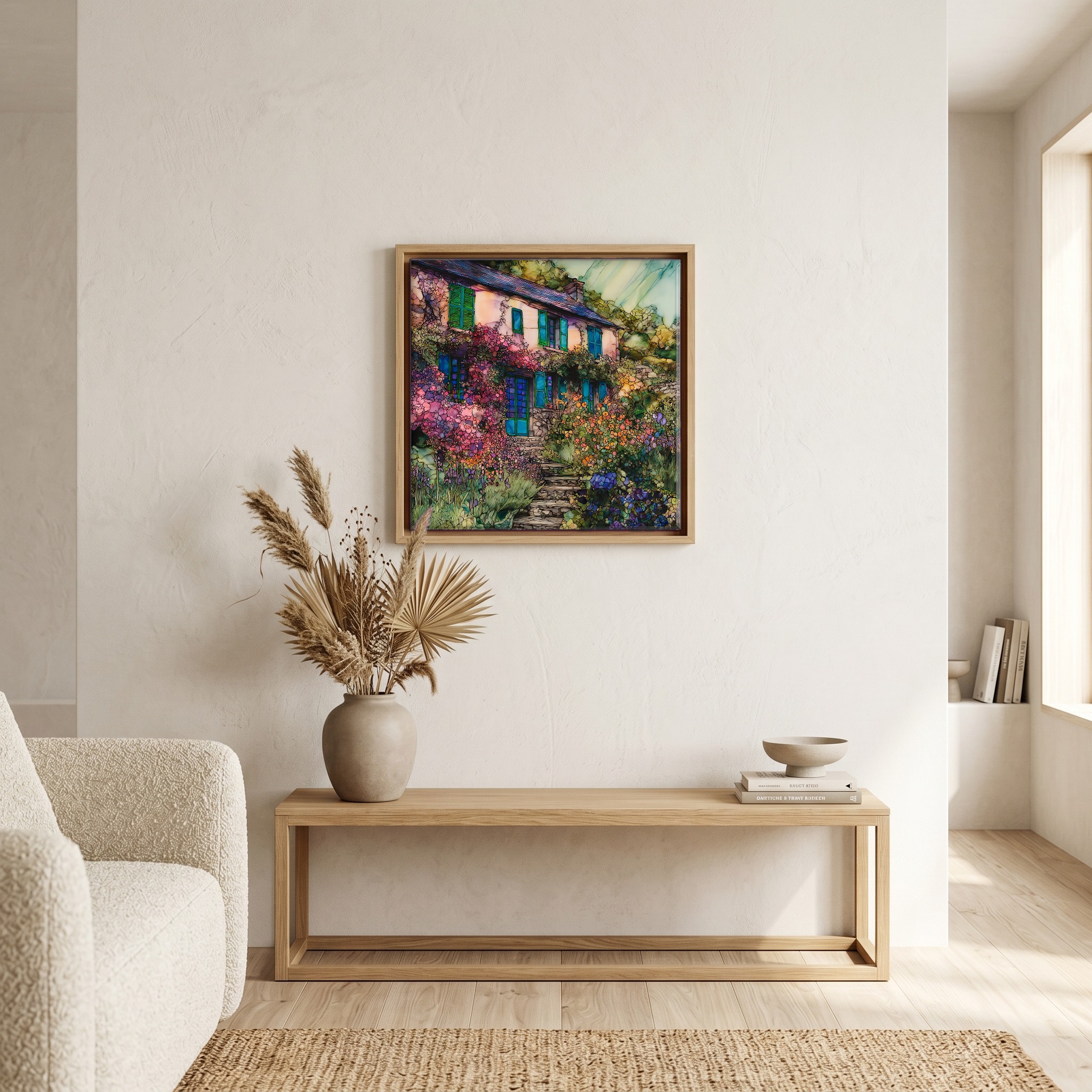
Above the bench, in a warm oak surround.
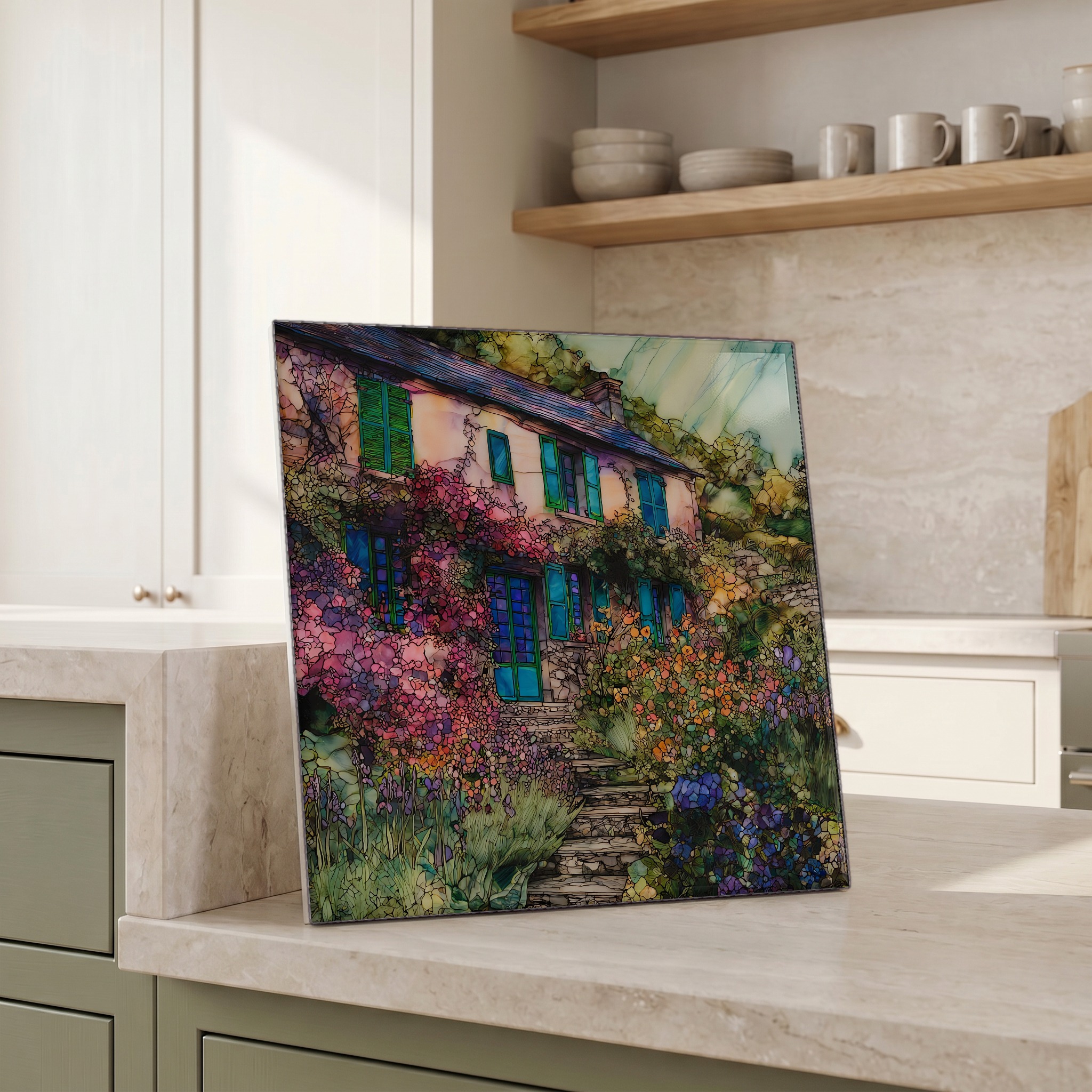
Beside the kettle, propped on the counter.
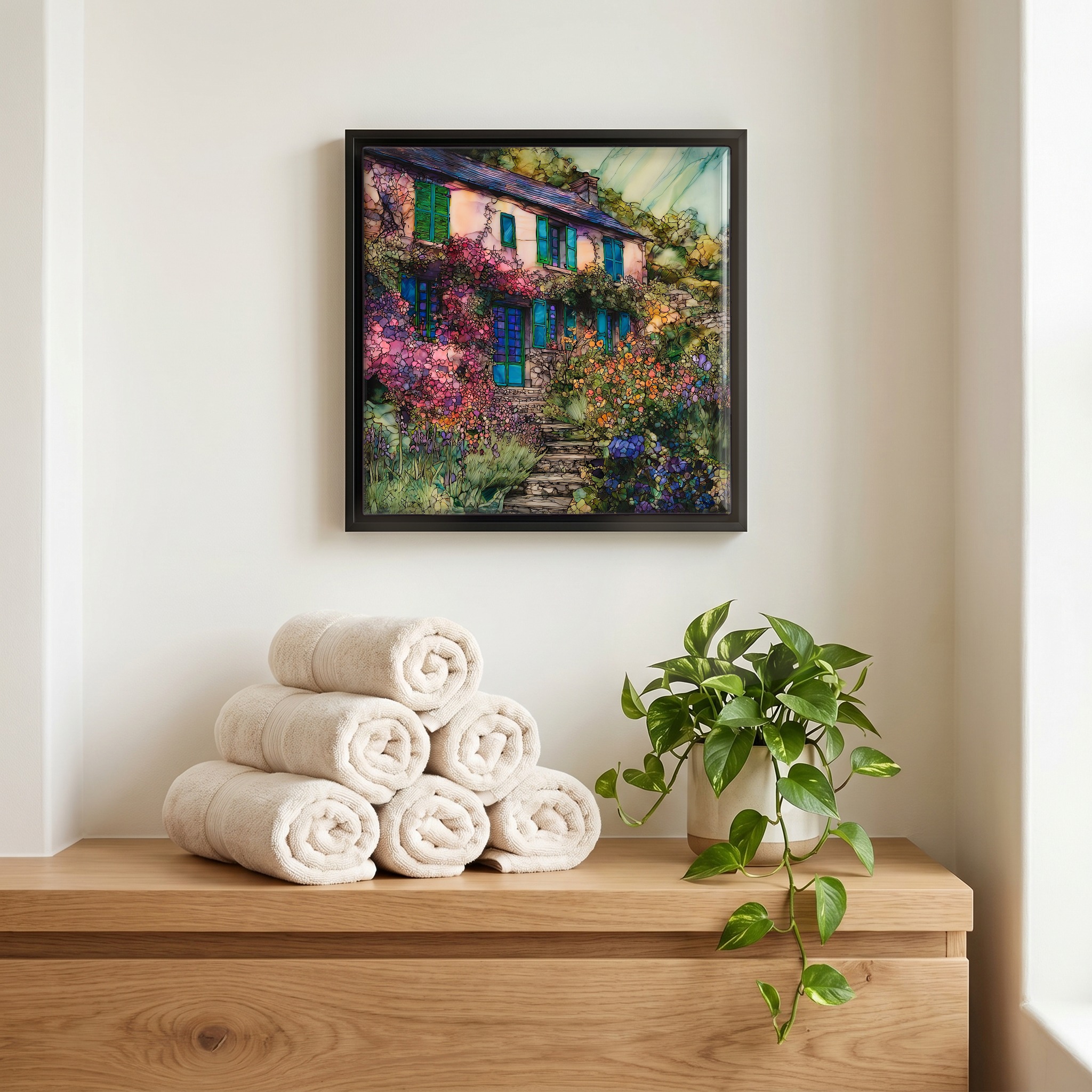
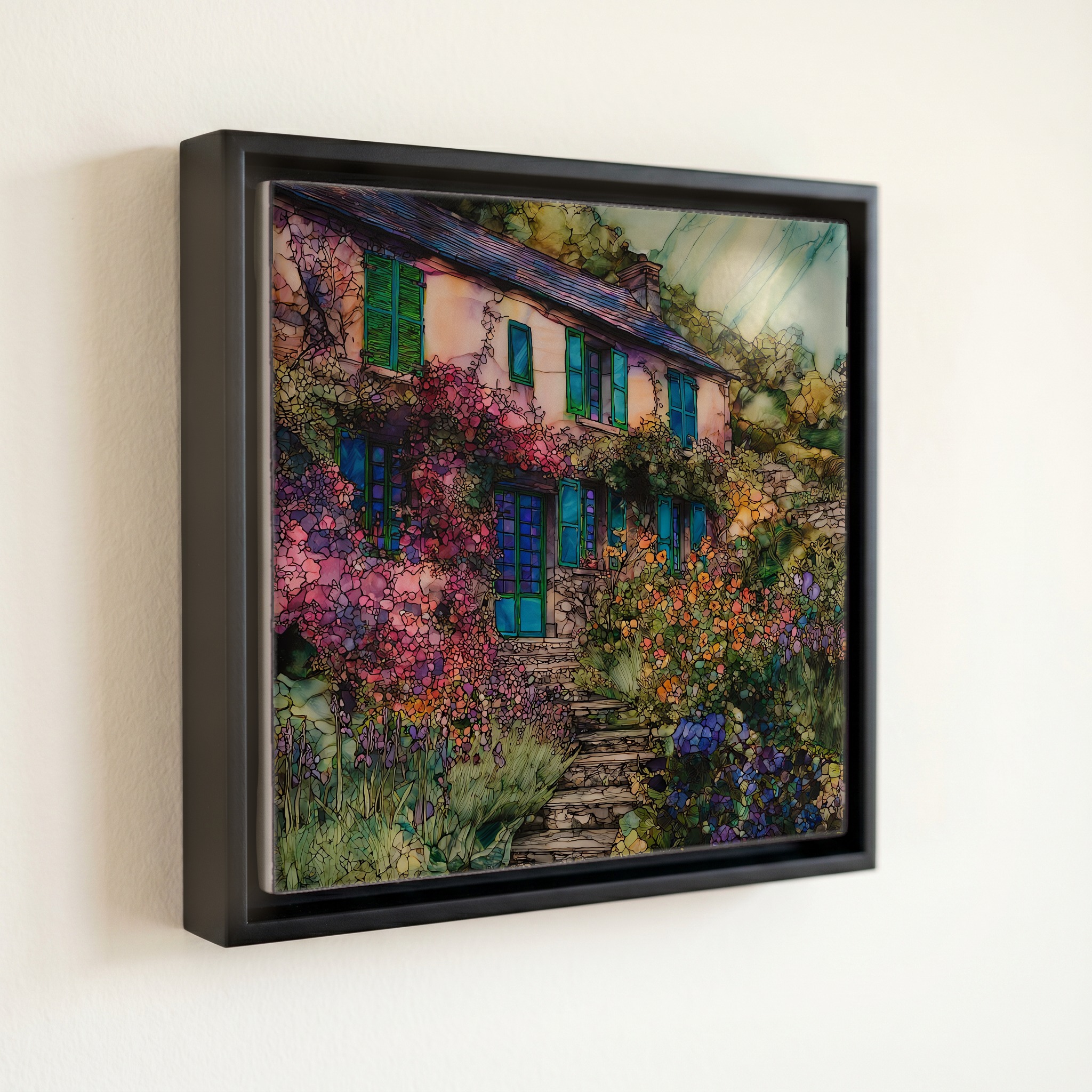
Above the linens, in a slim black surround.
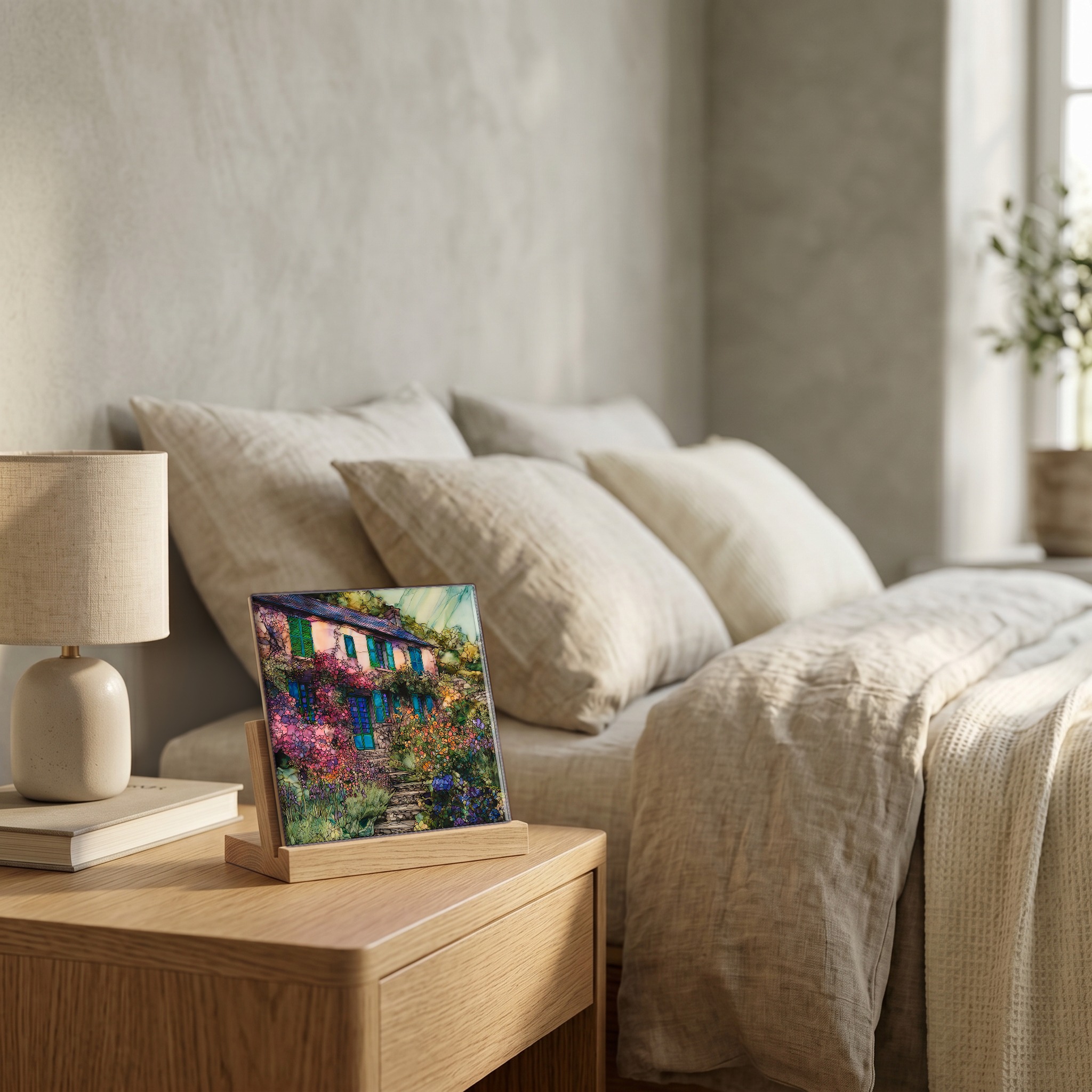
On the nightstand, on a light oak stand.
On a picture ledge, where the light comes in.
a note from the studio

The house Claude Monet bought in 1890, after renting it for seven years. He chose the colour himself. A soft rose pink for the walls, a bright green for the shutters that runs through the garden's benches and the Japanese bridge in the water garden. He lived here for forty-three years and died in the upstairs bedroom in 1926. The property went quiet for half a century before the Fondation Monet restored it and reopened the gardens to visitors in 1980. The gardens get most of the postcards. The house is the thing he came home to.
from the studio
shown in a slim black floating frame · 6 × 6 in
— bring it home

Monet's Pink House Giverny, on ceramic.

Each tile is finished by hand in our Knoxville studio. Artwork is slowly infused into the ceramic surface under high heat and pressure, and rests beneath a thin glossy finish. The colour lives in the surface, not on top of it.

What kind of piece?
One tile — square or rectangle.
How big?
the popular one — counter, shelf, nightstand
6 × 6 in · 15 cm · 1.6 lb
Surface finish
A clear glossy finish — the artwork reads as if under resin. Ideal for show-pieces and framed wall art.
How it sits
A hidden cleat — sits ¼″ proud of the wall.
$58
Hand-finished and shipped from our studio at the foot of the Smokies. On your wall in about ten days.
size
6 × 6 in
15 cm
weighs
1.6 lb
solid in the hand
surface
ceramic, hand-finished
art rests beneath a thin glossy finish
from
Knoxville, TN
our family studio, at the foot of the Smokies
— start a Coaster Set

Pick any four 4-inch tiles — National Parks you've been to, a Smokies set, the four seasons of one place. $ for a set of , cork-backed, ready to live on the table.
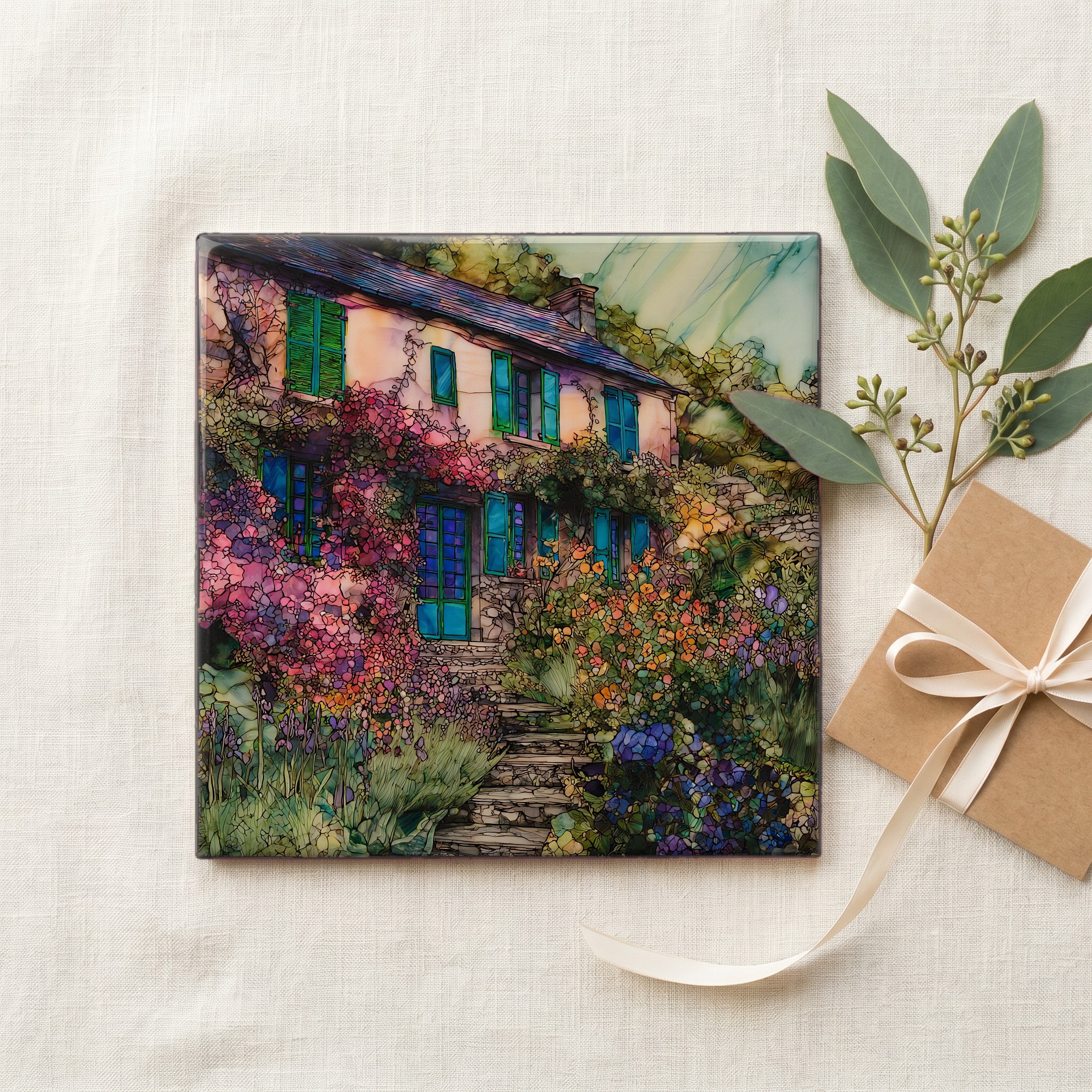
comes gift-ready
comes gift-ready

Each tile ships in a kraft box, tied with cream ribbon, with a handwritten note from the studio if you'd like to add one.
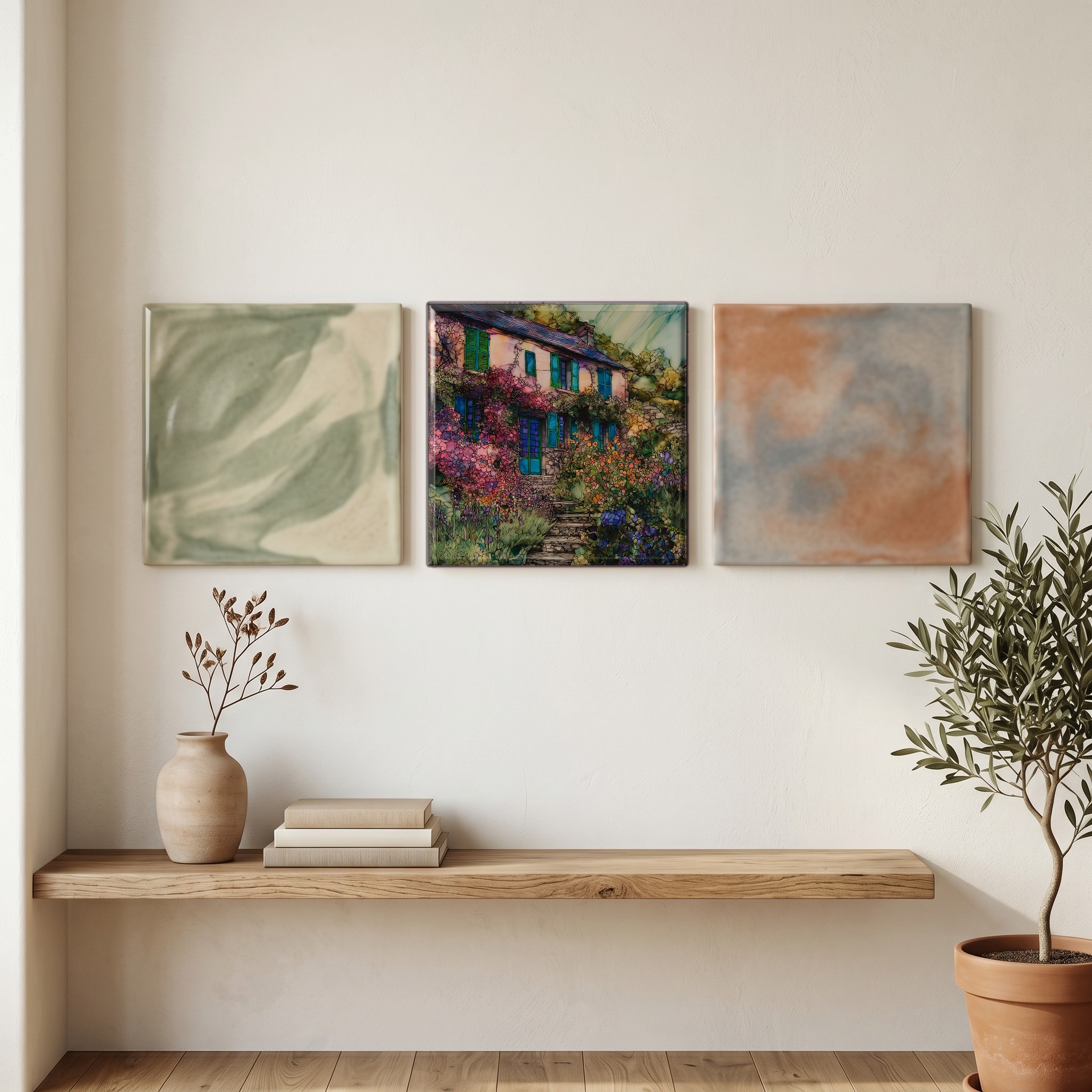
or build a grouping
or build a grouping

Three or five different vistas, hung together — a chapter of places you've been, or want to go.

about Monet's Pink House Giverny

The place, in three passes.

A little of what's known, in case you fall down the rabbit hole — or want to go see it yourself.
the place

Giverny is a commune in the Eure department of Normandy, about 80 kilometres west of Paris on the right bank of the Seine where the river meets the Epte. Claude Monet rented the property in 1883 and bought it in 1890, expanding it over four decades into two distinct gardens: the flower beds of the Clos Normand in front of the house, and the water garden across the road, fed by an arm of the Epte that Monet diverted with permission from the local council. The Fondation Claude Monet operates the property today, which reopened to the public in 1980 after a long restoration led by Gérald Van der Kemp. Vernon, the closest market town with a rail link to Paris Saint-Lazare, sits about five kilometres west.

the colour

The pink walls and bright green woodwork are Claude Monet's own colour choices. After buying the property in 1890, he had the limestone façade painted a soft rose and extended the same green across the shutters, the front door, the trellis on the porch, the benches in the garden, the Japanese footbridge that crosses the water lily pond, and the planks of the small boat he kept on the pond. Inside, the colour scheme continues: a kitchen tiled in blue and white, a dining room in saturated yellow, a sitting room hung floor to ceiling with the Japanese woodblock prints he had been collecting since the 1870s. The house reads as one of his palettes arranged around the rooms he actually lived in.

the season

The gardens open on the first day of April and close at the start of November, mirroring the bloom calendar Claude Monet designed so something is in flower from spring through autumn. Tulips and forget-me-nots carry April. May brings the iris beds and the wisteria over the Japanese bridge. June and July are the peak weeks for the water lilies on the pond and the roses on the Grande Allée trellis. By August the dahlias and sunflowers dominate the Clos Normand. The house and gardens close to visitors in winter for cleaning, replanting, and the slow rebuilding of the displays: about five months of work to prepare for the next April opening.

where
France · Giverny, Eure, Normandy
the neighborhood

What's nearby.

A handful of named places within an hour's walk or short drive. Some we've already painted; some we will.
1 km W
Musée des Impressionnismes Giverny
art museum
1 km E
Église Sainte-Radegonde de Giverny
parish church
5 km W
Vernon
market town
5 km W
Le Vieux Moulin de Vernon
old timbered mill
65 km NW
Rouen Cathedral
gothic cathedral
130 km NW
Étretat Aiguille Needle Arch
chalk sea cliffs
N
Monet's Pink House Giverny
Musée des Impressionnismes Giverny
Église Sainte-Radegonde de Giverny
Vernon
Le Vieux Moulin de Vernon
Rouen Cathedral
Étretat Aiguille Needle Arch
common questions

What people ask.

A few questions we get about Monet's Pink House Giverny — and about bringing the piece home.
about the place

Monet's house sits in the village of Giverny, in the Eure department of Normandy, about 80 kilometres west of Paris on the right bank of the Seine. The nearest town with a rail link is Vernon, about five kilometres west; the Vernon-Giverny train from Paris Saint-Lazare takes roughly 45 minutes.

Claude Monet chose the rose pink himself after buying the property in 1890. He extended a single bright green across the shutters, the front door, the garden benches, and the Japanese footbridge in the water garden. The house is one of his own palettes lived in.

Claude Monet rented the property from 1883 and bought it in 1890, living there for the rest of his life. He died in the upstairs bedroom on 5 December 1926, having spent his last forty-three years working on the gardens and the long water lily series.

The Fondation Claude Monet opens the house and gardens from around 1 April to 1 November each year. The site closes in winter for cleaning, replanting, and rebuilding the displays. Tickets for high-season visits are sold in timed slots and are usually best booked online in advance.

Monet kept two gardens. The Clos Normand sits in front of the house and holds the flower beds, the seasonal borders, and the Grande Allée trellis. The water garden is across the road, fed by an arm of the Epte that Monet diverted, and holds the water lily pond and the Japanese footbridge.

The restoration of the 1970s was led by Gérald Van der Kemp, the curator who had earlier overseen Versailles, with major American funding raised through the Versailles Foundation. The Fondation Claude Monet reopened the property to the public in 1980, more than fifty years after Monet's death.

about the piece in your home

It has been a meaningful gift for our customers with a deep affection for Monet, for painting students, and for anyone who has walked the gardens at Giverny. A Medium reads well on a study or studio wall, a Small fits a bedside or office shelf, and a Coaster with a handwritten note from the studio carries the same intent in smaller form.

The pink house is the detail most visitors remember after the lilies. Coasters travel lightly through the post, a Small holds a hallway shelf, and the Medium works in a study or office where a Giverny memory can sit at eye level all year, not only in May and June.

The rose pink and saturated green carry well in three settings: French country interiors that already lean botanical, Maximalist rooms built around colour, and Garden-Modern or Cottagecore spaces that mix botanical art with simple wood and linen. The piece anchors a wall rather than blending into it.

Yes. The renewed interest in painterly garden art, in heritage botanical illustration, and in Bridgerton-era florals places this firmly inside the current Garden-Modern moment. The colour story also reads as a slightly more grown-up register of Cottagecore.

Over a console or sideboard, a single Large centres the wall. For a full-length sofa or a wider statement wall, the four-tile Mural reads at scale, and the nine-tile Mural anchors a dining or sitting room. A Medium suits a narrow entry or a bedroom wall.

Yes. For bathrooms, kitchens, showers, and backsplashes, choose the Dura Satin or Matte finish. Both are scratch-resistant and built for vertical installation in damp rooms. The Glossy finish is best kept to framed pieces in dry wall settings.

Yes. Every WenderVista piece is original to the studio, curated by Reid Wender, and produced in-house in Knoxville, Tennessee. We do not license other artists' work or sell open-edition reproductions of museum paintings.

if this one stayed with you

A few you might also love.

Hand-picked by the eye that found Sorapis. Same air, same kind of quiet.