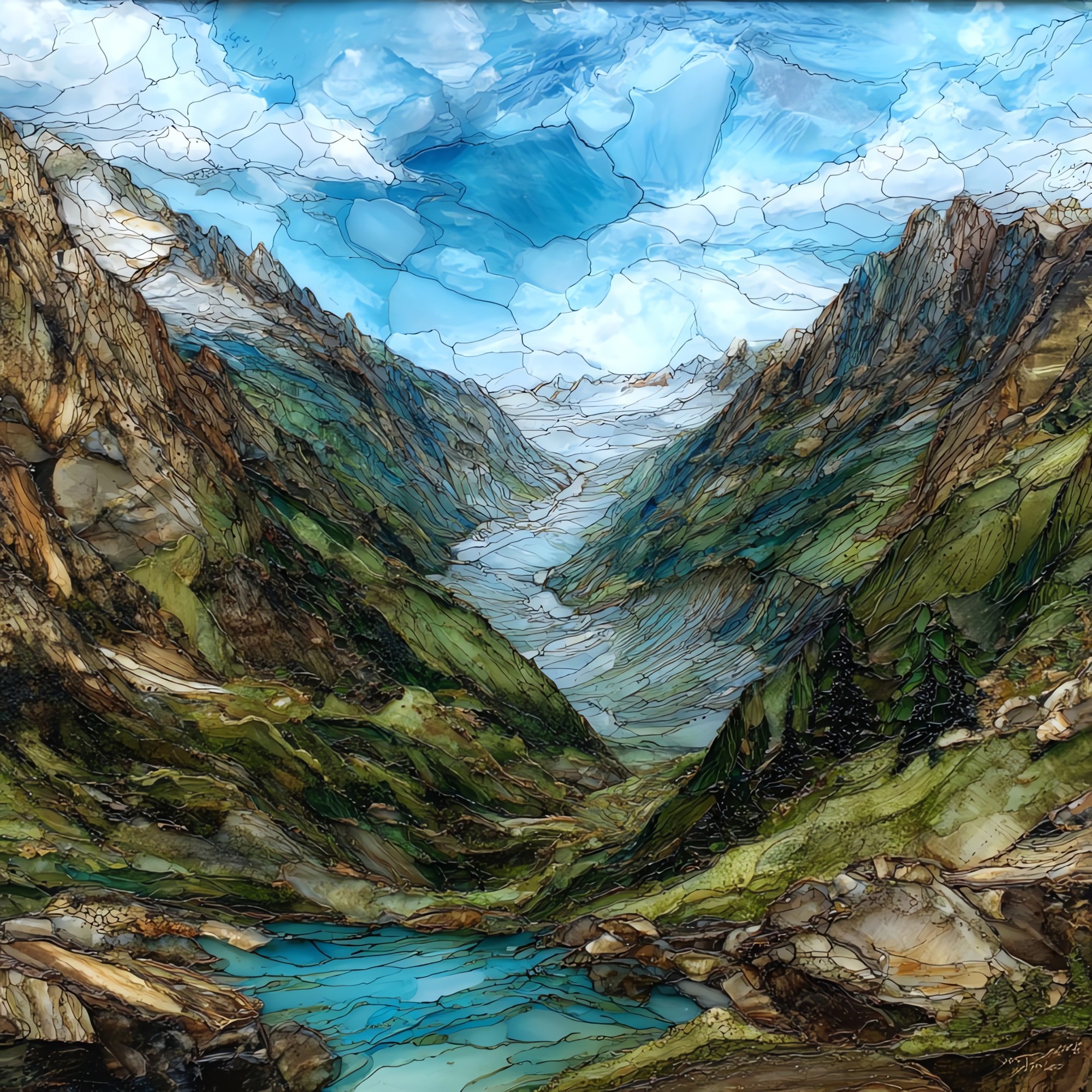
Mer de Glace
— — winter, on its way down.
Not only on a wall.
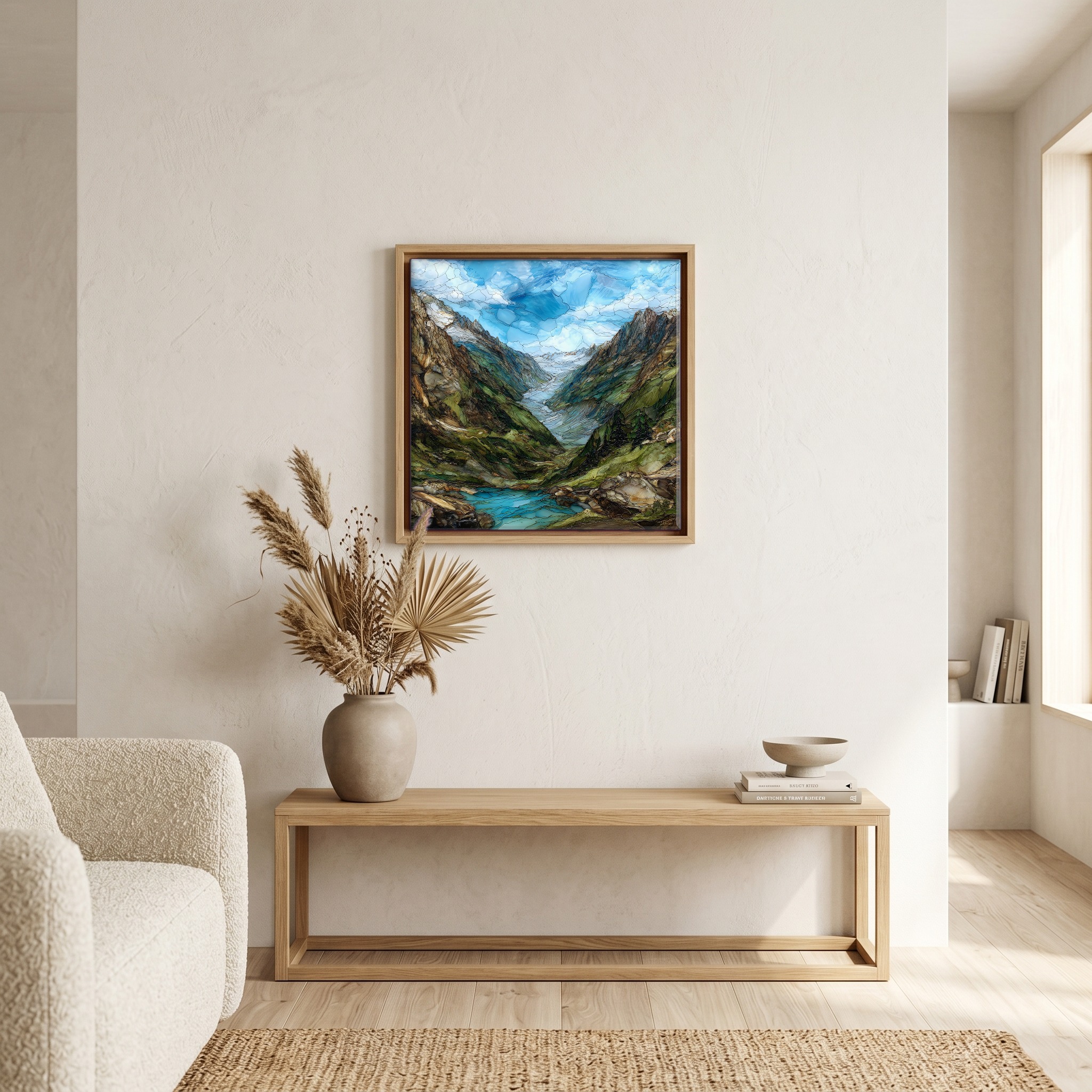
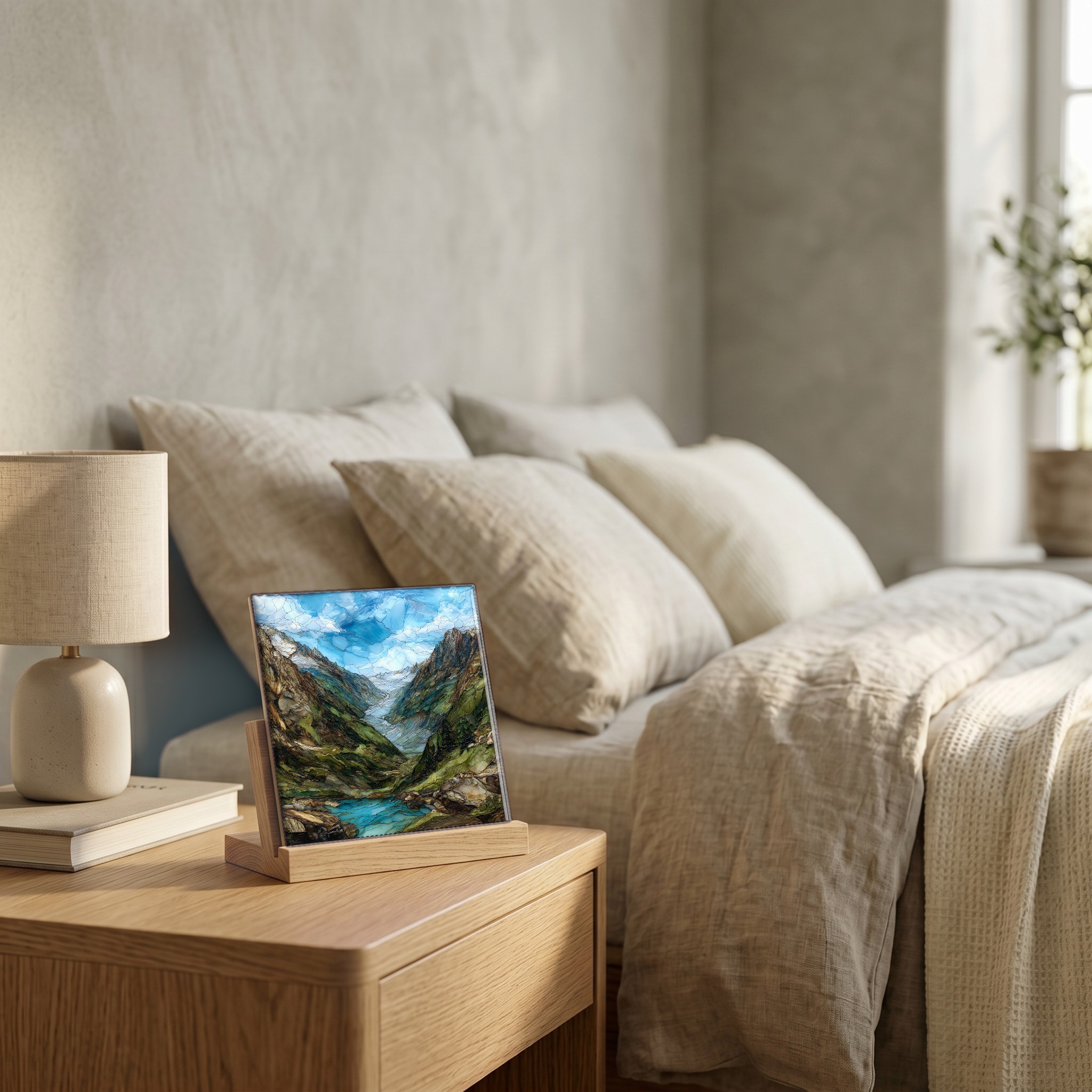
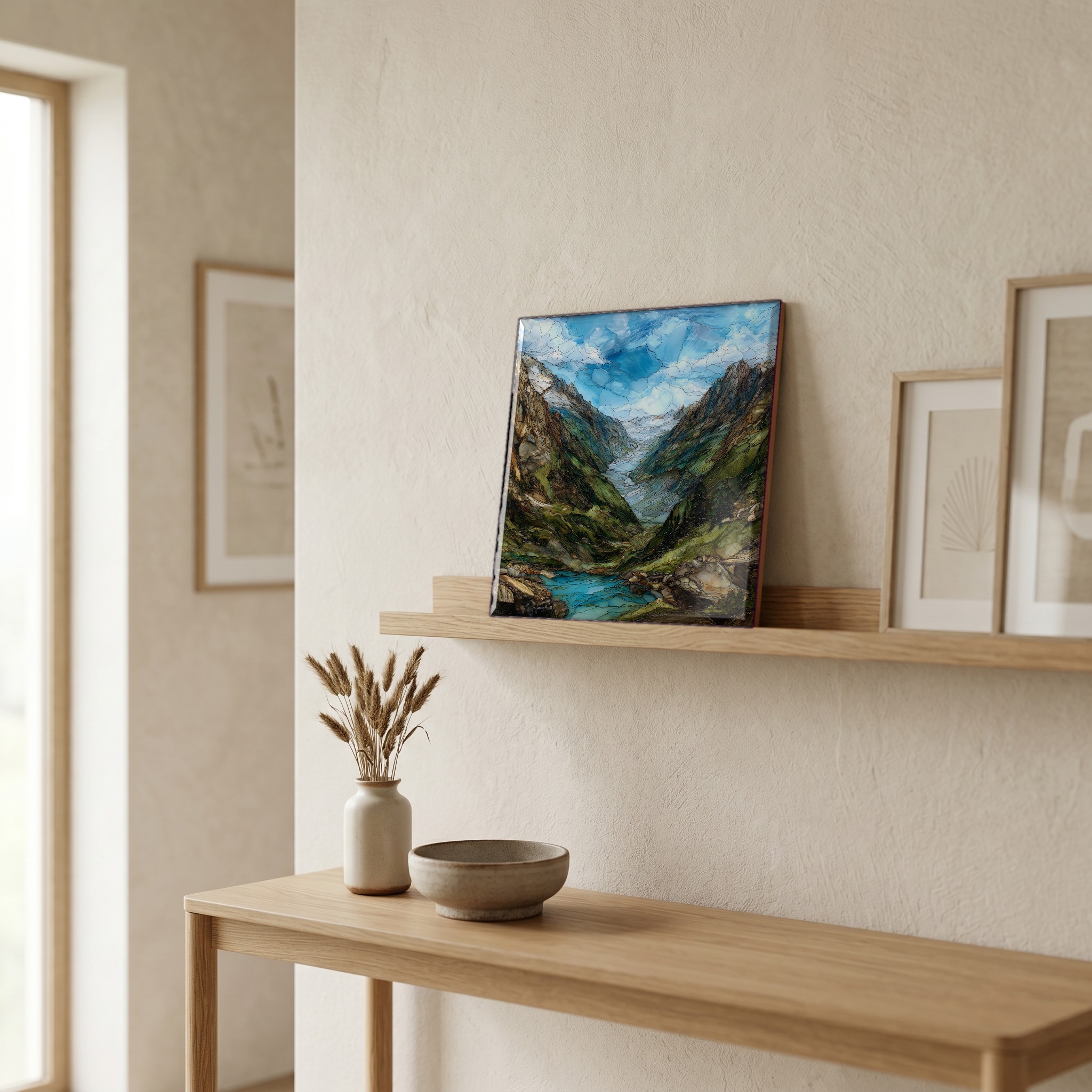
“The Mer de Glace is the largest glacier in France. From Montenvers, the small mountain hotel reached by the red rack railway out of Chamonix, the ice spreads below in a long grey-white river that moves about a centimetre an hour. The blue lives inside it, in the walls of the cave carved fresh each season near the glacier's tongue. Each year the stairs down to the ice get longer; the glacier has retreated more than two kilometres in a hundred years. People still come, in every season. Almost nobody talks on the platform at first.
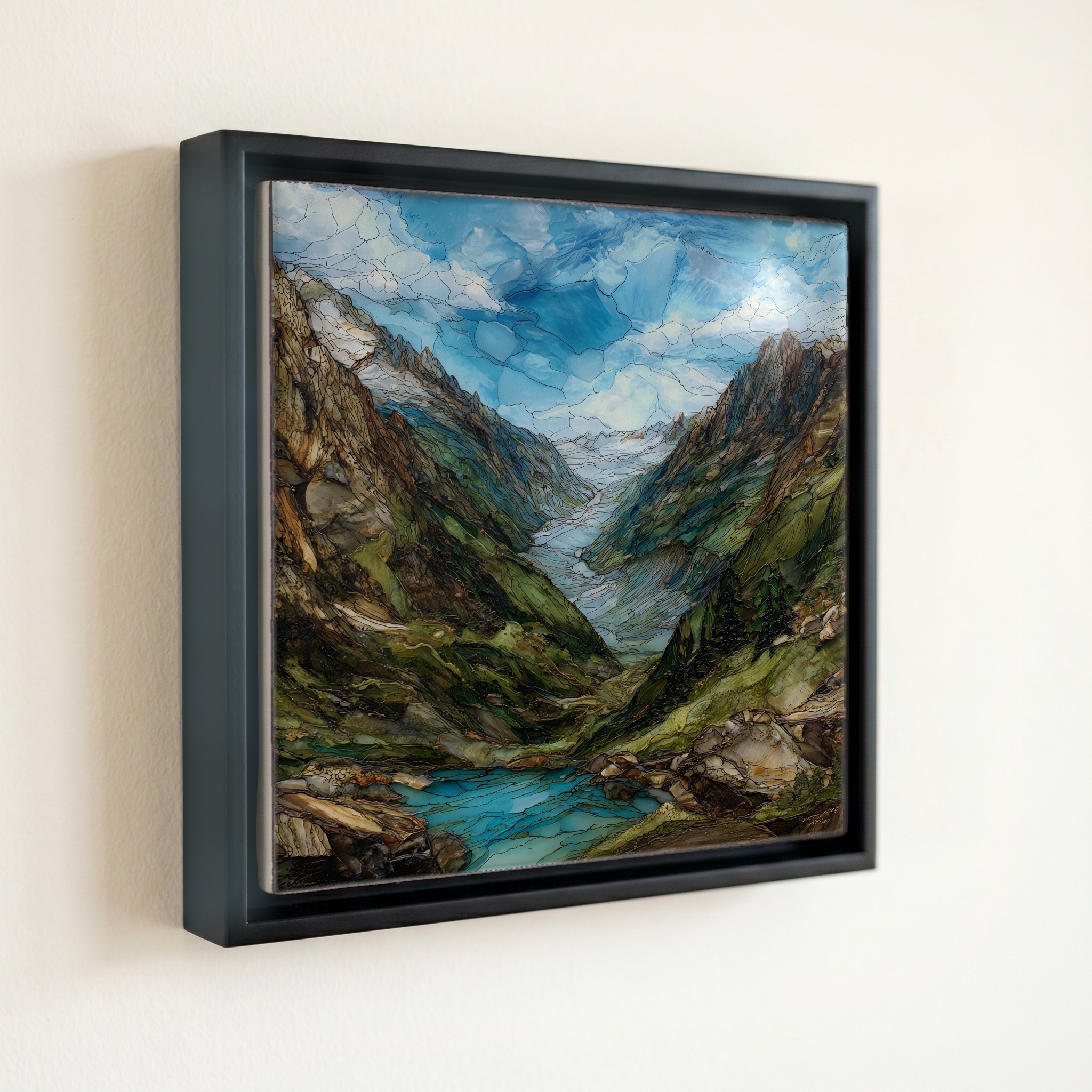
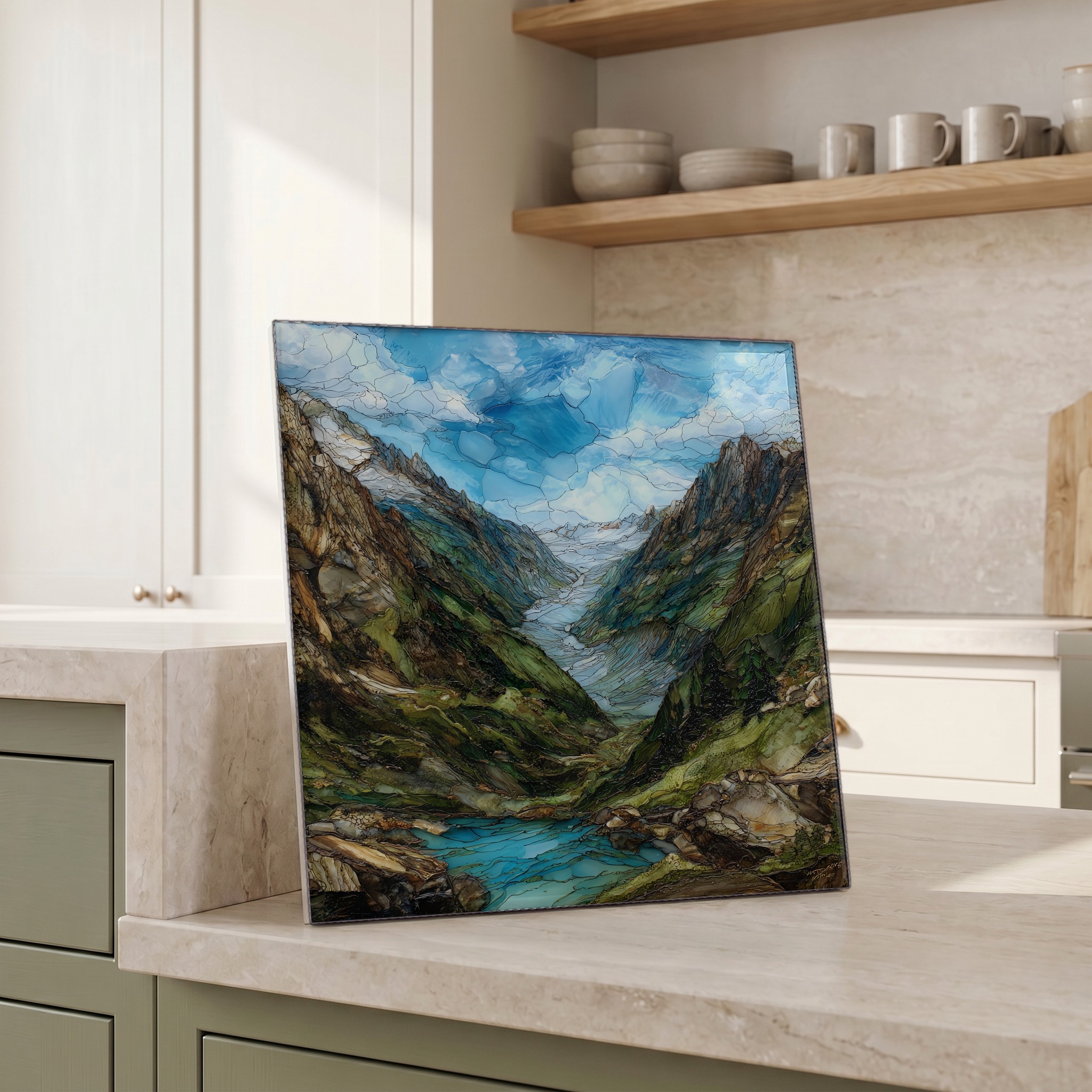
Mer de Glace, on ceramic.
Each tile is finished by hand in our Knoxville studio. Artwork is slowly infused into the ceramic surface under high heat and pressure, and rests beneath a thin glossy finish. The colour lives in the surface, not on top of it.
Pick any four 4-inch tiles — National Parks you've been to, a Smokies set, the four seasons of one place. $ for a set of , cork-backed, ready to live on the table.
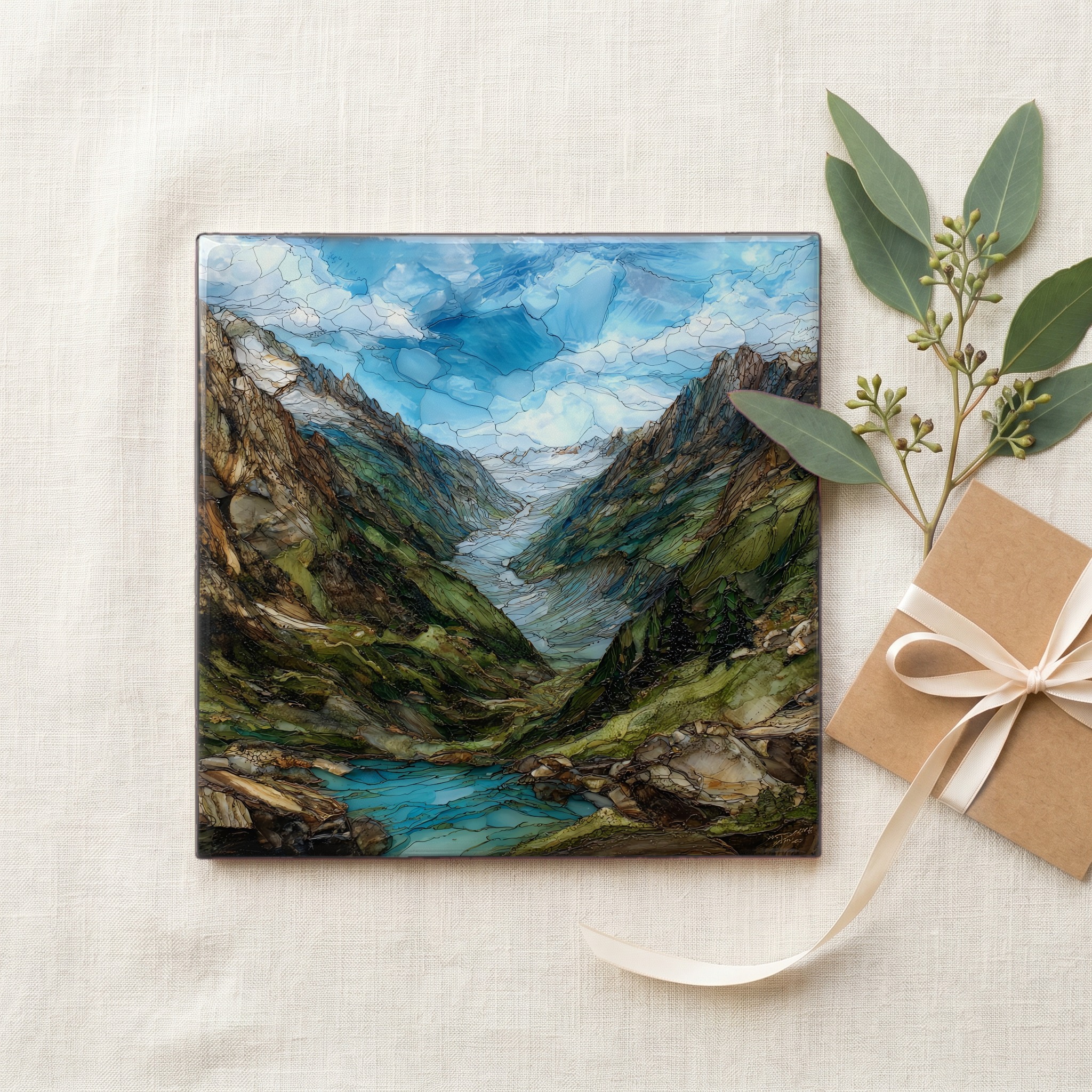
Each tile ships in a kraft box, tied with cream ribbon, with a handwritten note from the studio if you'd like to add one.
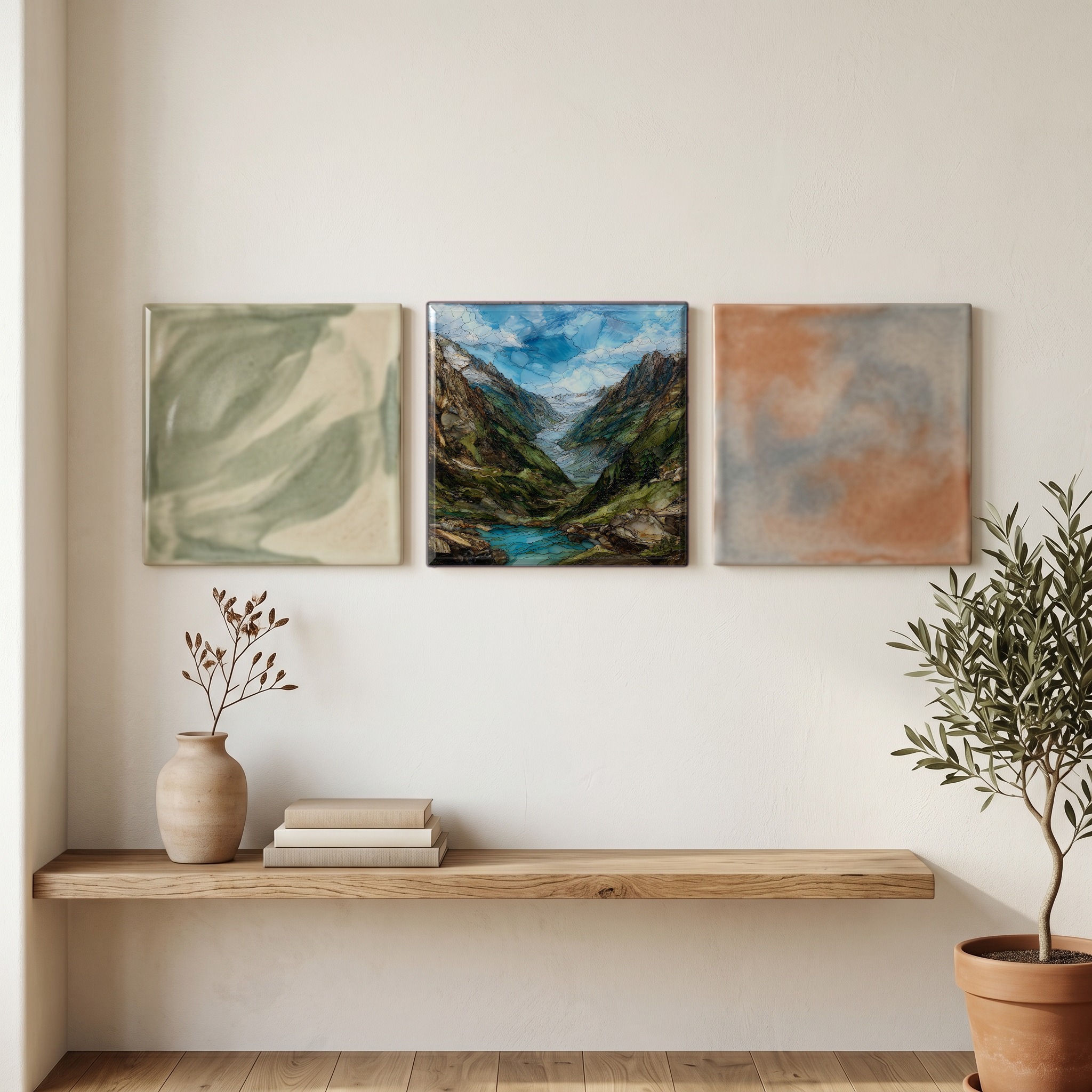
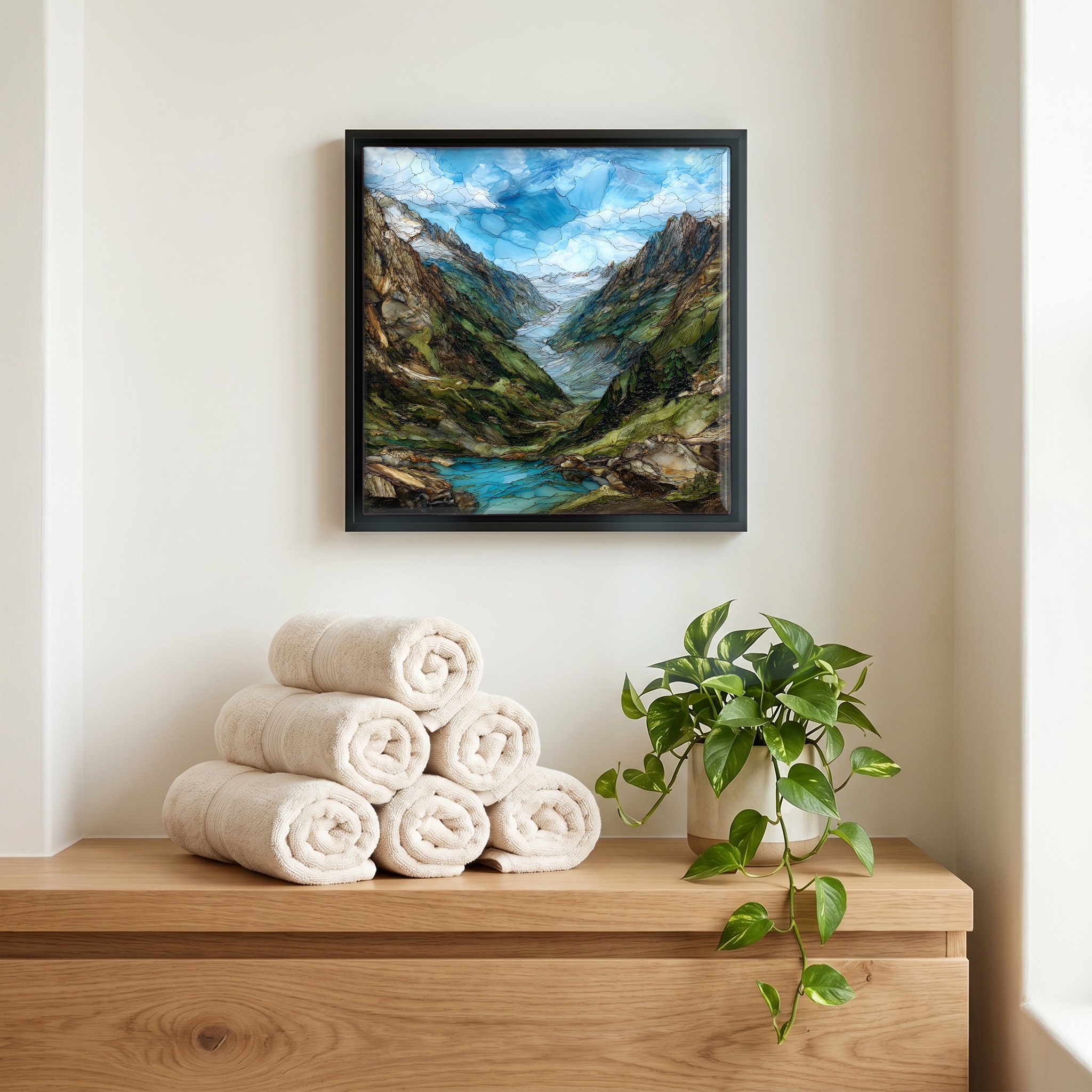
Three or five different vistas, hung together — a chapter of places you've been, or want to go.
The place, in three passes.
The Mer de Glace is the largest glacier in France, flowing roughly seven kilometres down the northern slopes of the Mont Blanc massif in Haute-Savoie. The ice is fed by the confluence of two upper glaciers, the Glacier du Tacul and the Glacier de Leschaux, beneath the granite spires of the Aiguilles. Visitors reach the observation platform at Montenvers, 1,913 metres above sea level, by the red rack-and-pinion railway built in 1908 from the centre of Chamonix-Mont-Blanc. A short walk and a steep staircase lead down to a fresh ice cave carved each spring at the glacier's tongue. The Mer de Glace lies within the Natura 2000 site of the Mont Blanc massif.
The deep blue inside a glacier is not pigment but light, filtered through ice that has been compressed for over a century until almost every air bubble has been squeezed out. The remaining dense ice absorbs the long red wavelengths and scatters the short blues, the same physics that colours the open ocean. At the Mer de Glace, the colour reads most strongly inside the seasonal ice cave near the tongue, carved fresh each spring by the Compagnie du Mont-Blanc, the operator that has run the Montenvers railway since 1908. From the outside the ice is a flat grey-white, dusted with rock flour from the moraine; from inside, the walls hold a slow electric blue.
The Mer de Glace has lost roughly two kilometres of length and more than 100 metres of thickness over the past century, one of the most documented retreats in alpine glaciology. The railway terminus at Montenvers opened in 1908 looking down onto ice; today the platform looks down a long staircase that gets rebuilt and extended almost every season as the surface drops away. The Grand Hôtel du Montenvers, opened in 1880, still stands at the railhead; the view from its terrace has changed more in two generations than in the previous five hundred years. Repeat photography from the same vantage shows the loss most plainly.