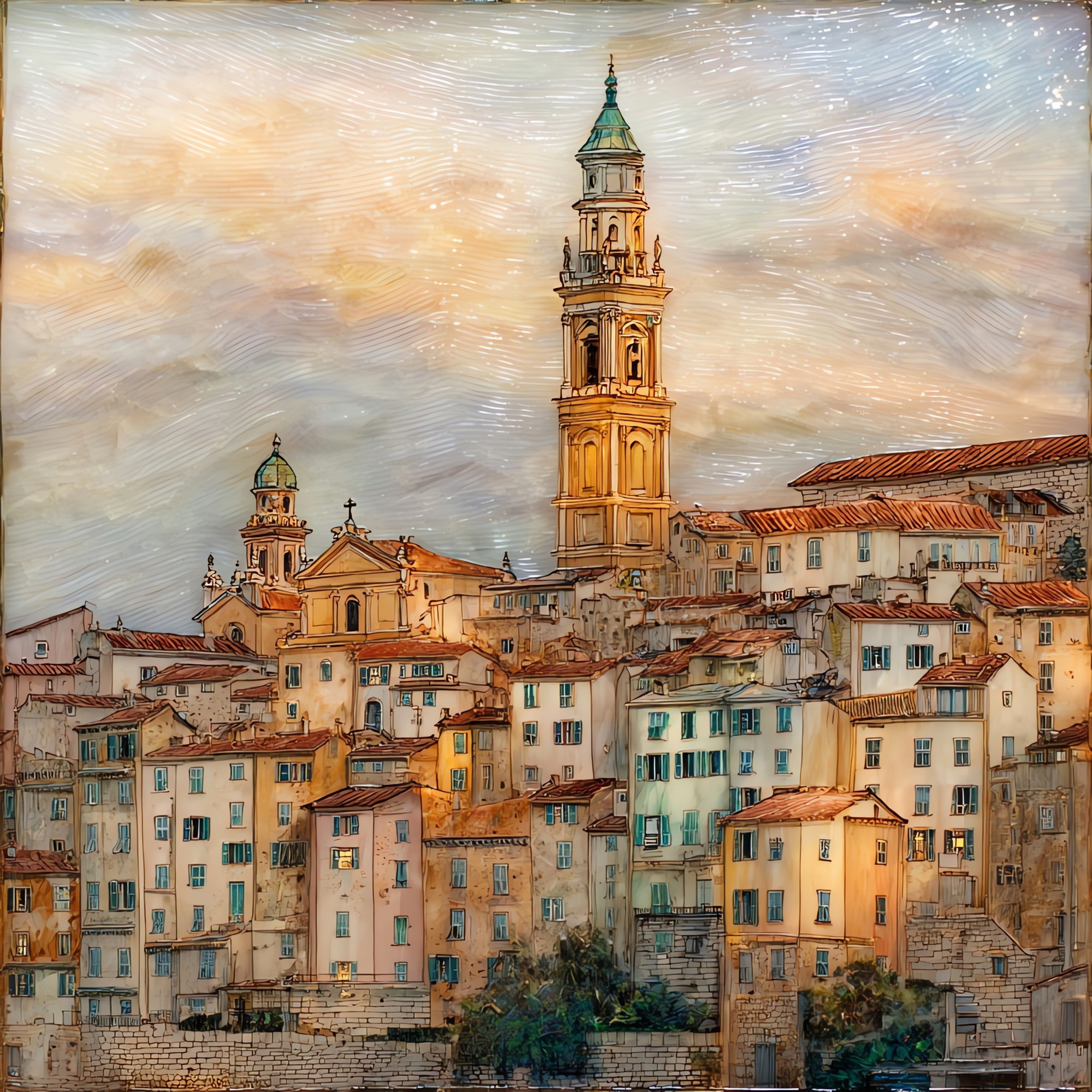
Menton Pastel Facades
— — the colour Liguria left behind.
Not only on a wall.
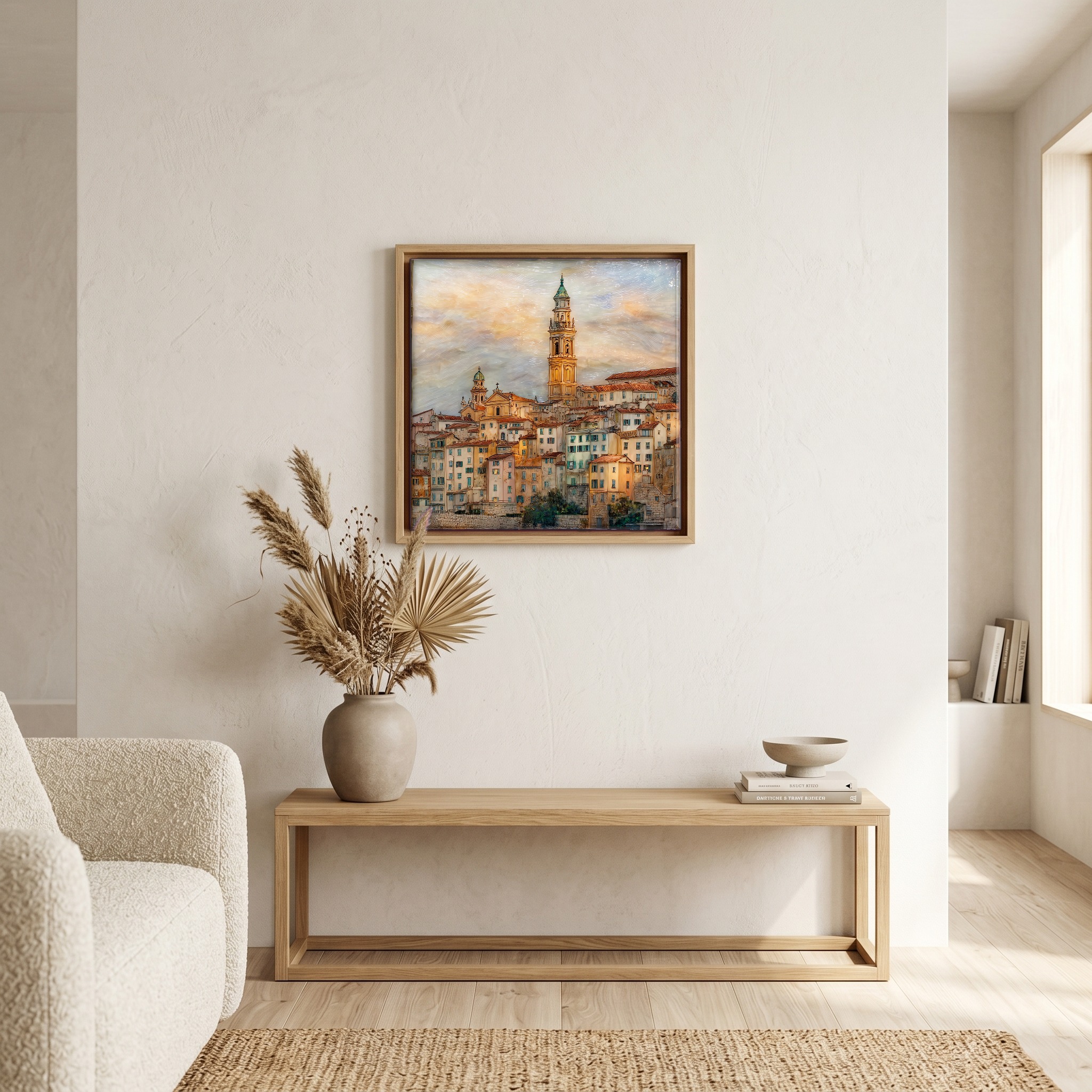
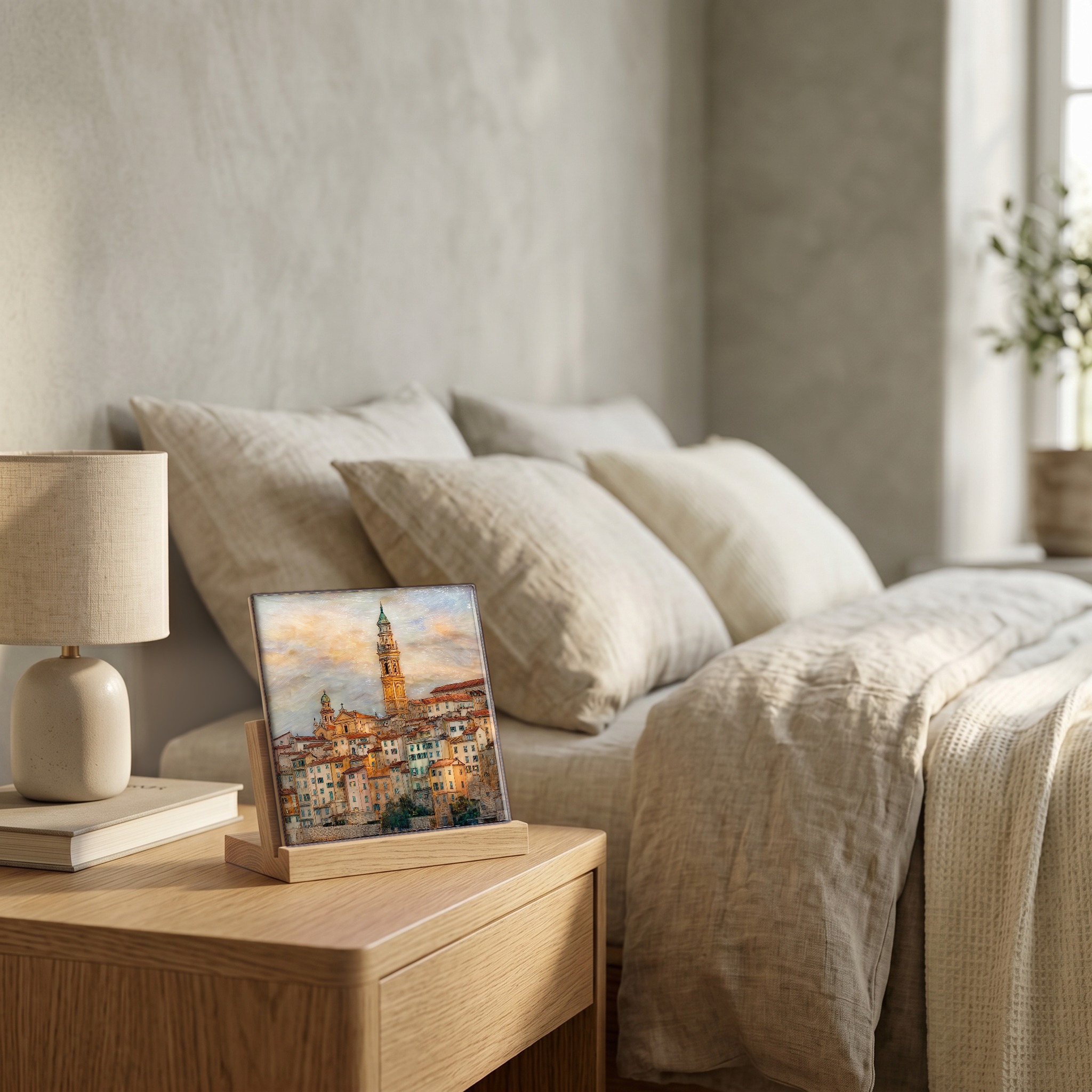
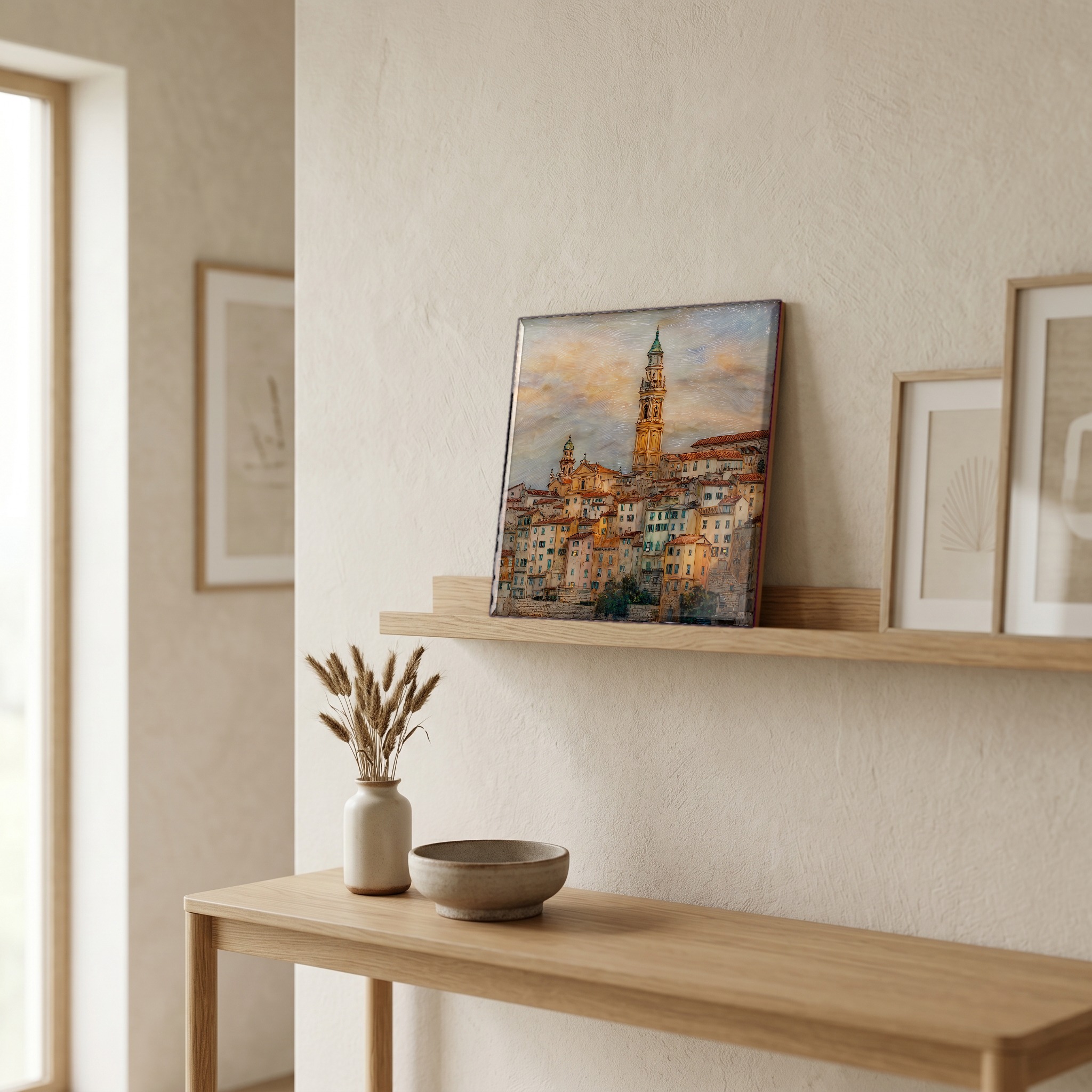
“Where the French Riviera ends and Italy begins. The old town climbs the hill in ochre and rose and pale lemon — Italianate facades stacked tight against narrow streets, the colour washed by Ligurian light. The Basilique Saint-Michel sits at the top of a wide flight of pebble-mosaic steps. Menton has more than 300 days of sun a year, the warmest microclimate on the French coast. Most travellers pass through on the train to Ventimiglia. The ones who stop walk up to the cemetery above the cathedral and look back down at the colour.
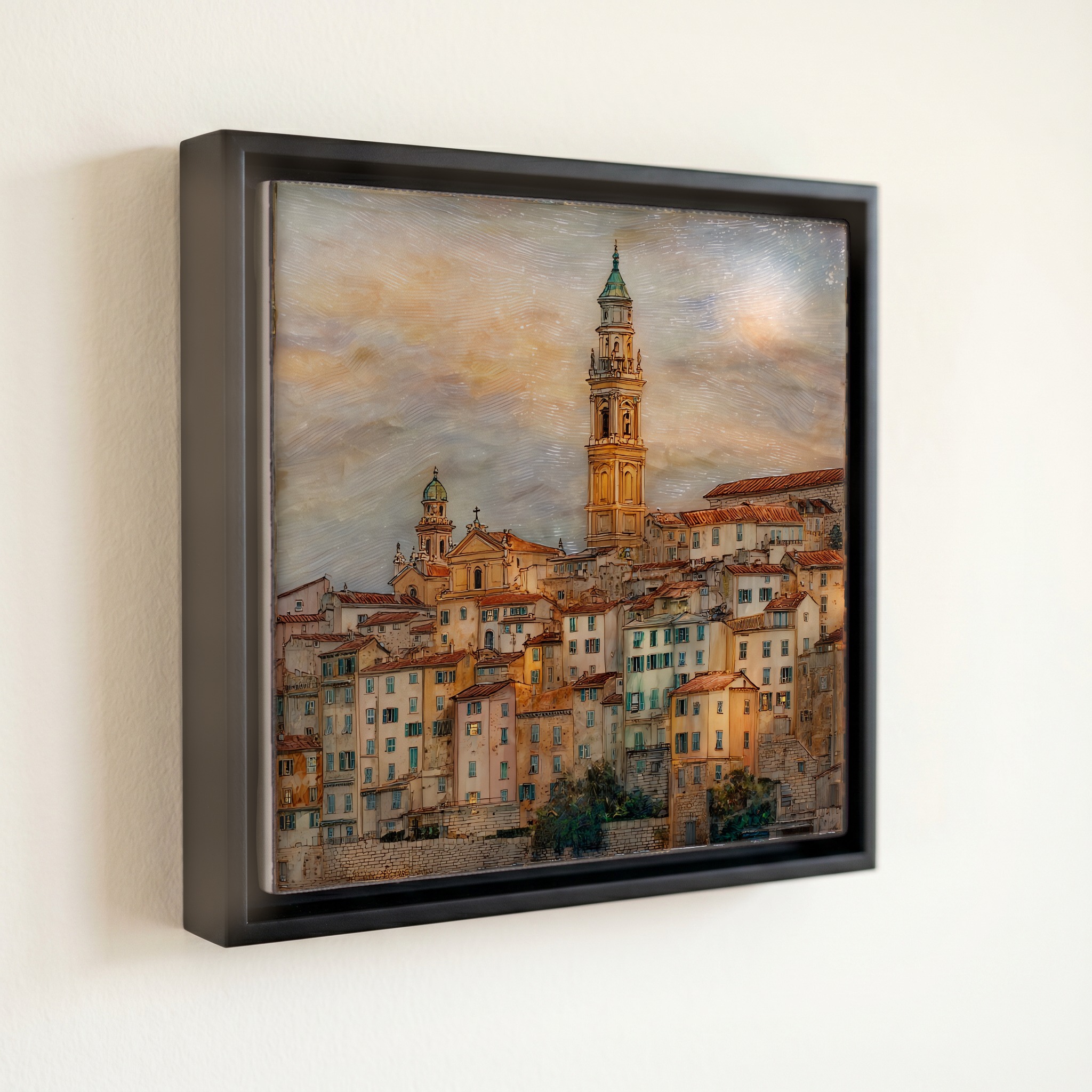
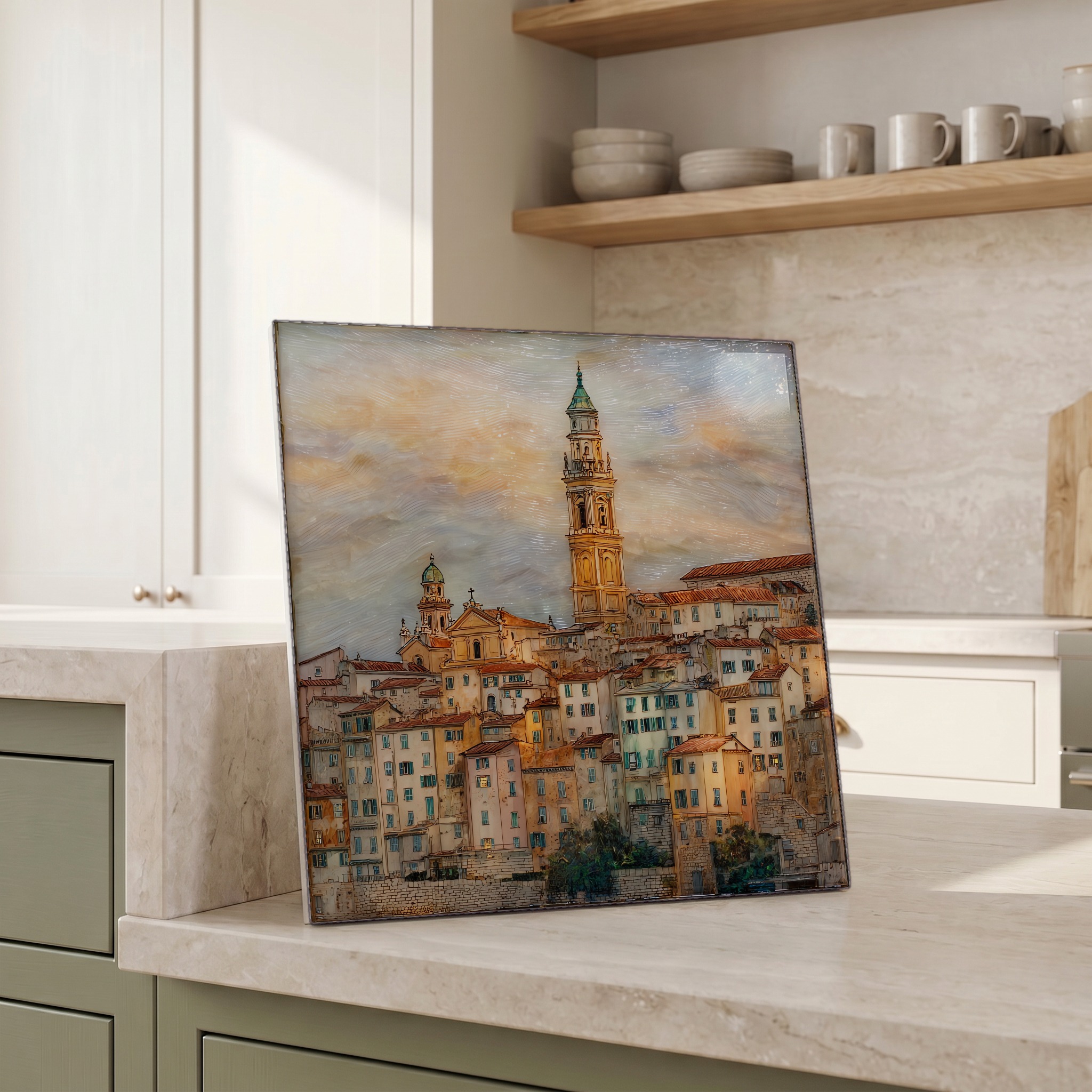
Menton Pastel Facades, on ceramic.
Each tile is finished by hand in our Knoxville studio. Artwork is slowly infused into the ceramic surface under high heat and pressure, and rests beneath a thin glossy finish. The colour lives in the surface, not on top of it.
Pick any four 4-inch tiles — National Parks you've been to, a Smokies set, the four seasons of one place. $ for a set of , cork-backed, ready to live on the table.
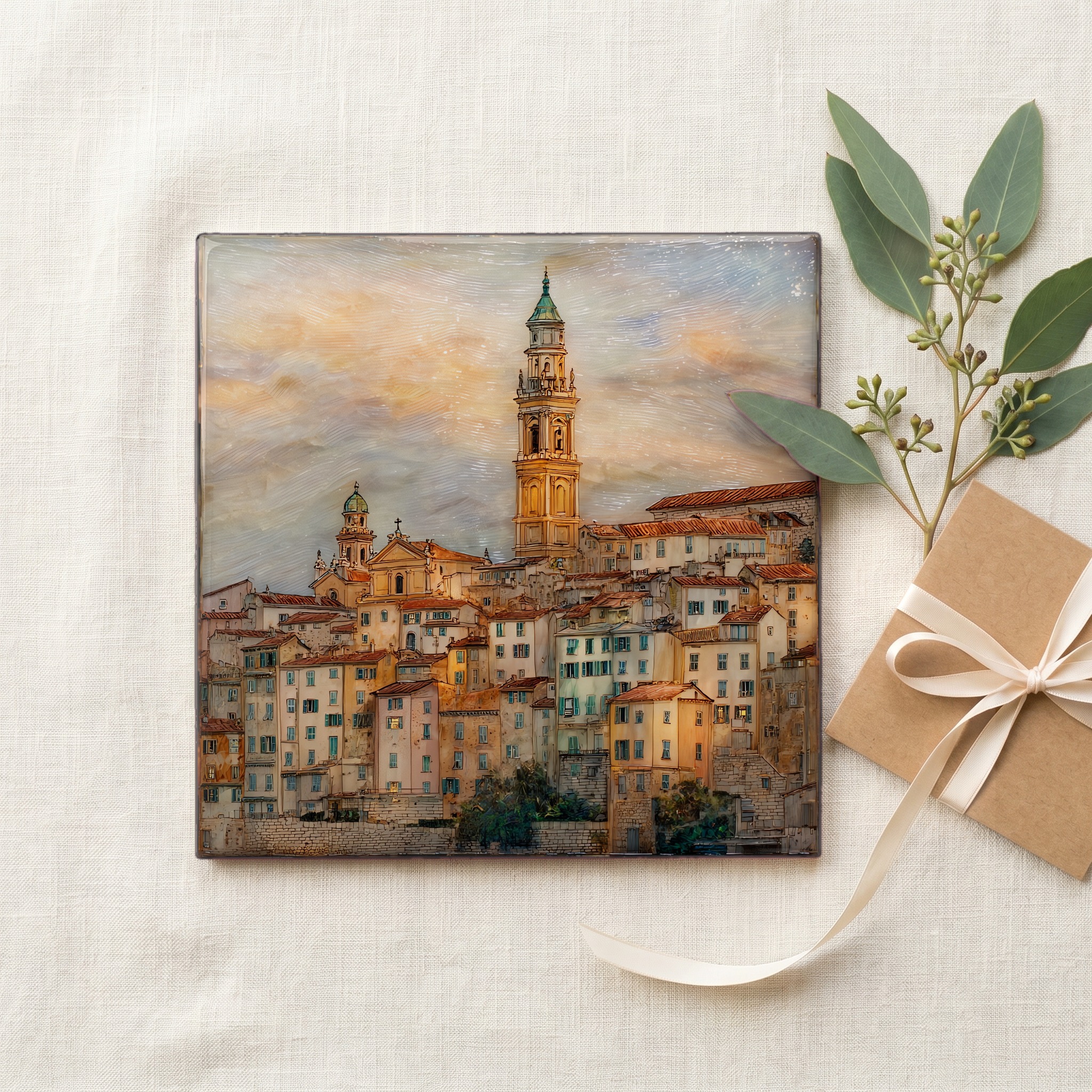
Each tile ships in a kraft box, tied with cream ribbon, with a handwritten note from the studio if you'd like to add one.
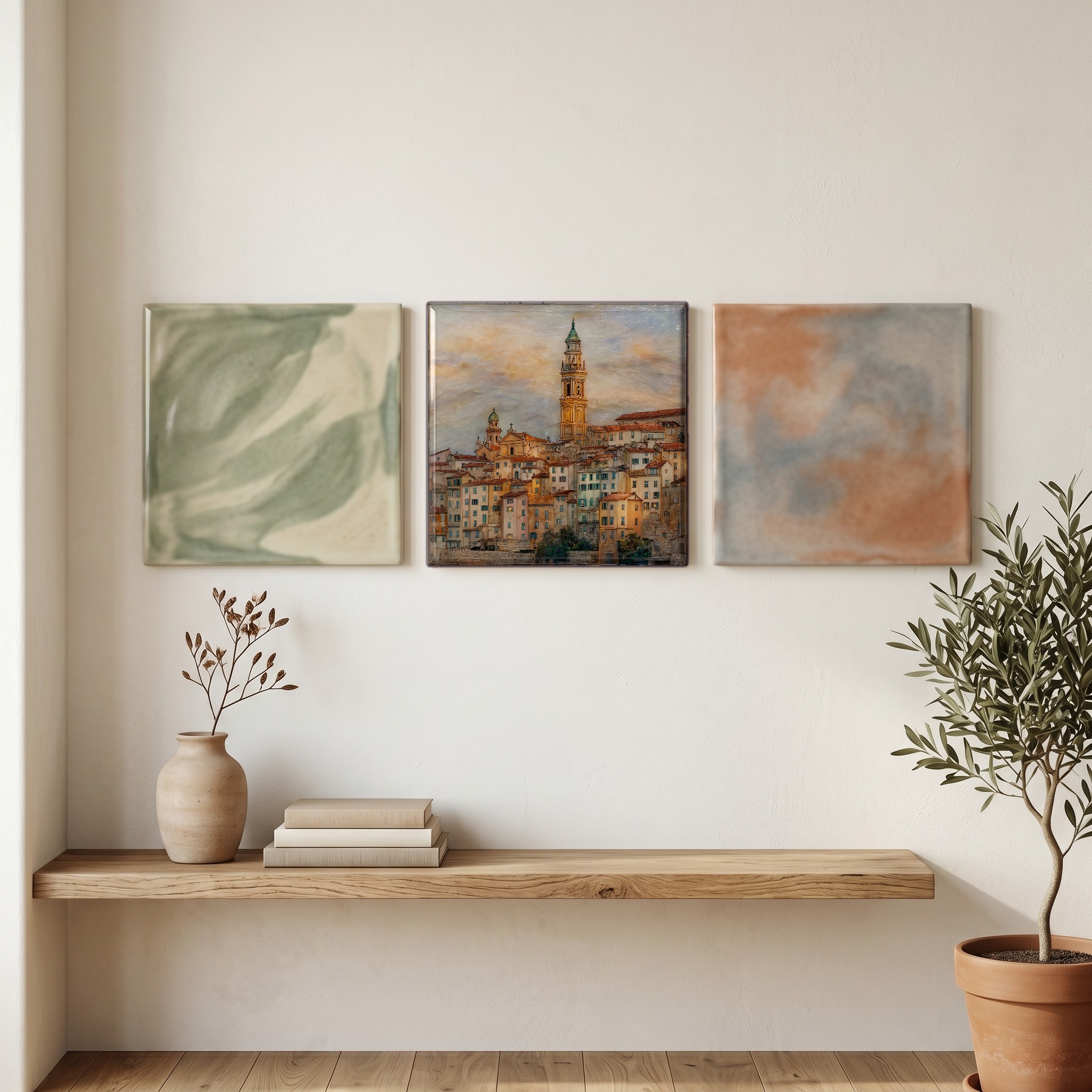
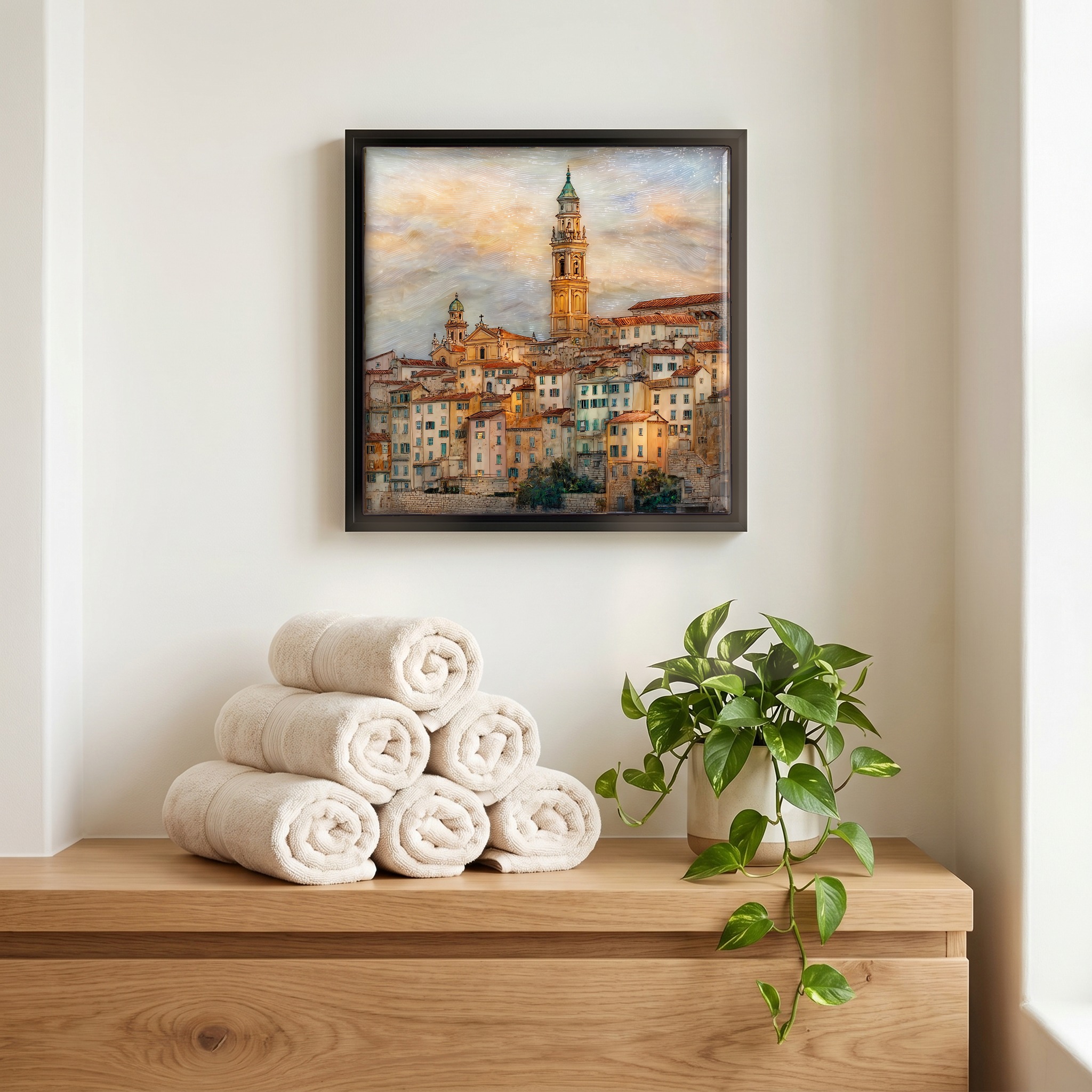
Three or five different vistas, hung together — a chapter of places you've been, or want to go.
The place, in three passes.
Menton sits on the Mediterranean coast at the easternmost edge of France, a kilometre from the Italian border in the department of Alpes-Maritimes. The commune has roughly 28,000 residents and is part of the Provence-Alpes-Côte d'Azur region. The town belonged to the Princes of Monaco for five centuries before breaking away in 1848 and voting, with the rest of the County of Nice, to join France in 1860. The old town climbs a low hill above the harbour, anchored at the summit by the Basilique Saint-Michel-Archange, a Baroque church built in the 17th century. Trains on the Marseille-Ventimiglia line stop at Menton-Garavan and Menton stations; from Nice the drive along the Moyenne Corniche takes about 40 minutes.
The pastel palette of Menton's old town is Ligurian rather than Provençal. Until 1860 the town looked east toward Genoa and the rest of the Ligurian coast, and its painted facades in ochre, terracotta, peach, pale yellow and soft pink sit in the same colour family as Bordighera and the Cinque Terre. The buildings are stacked tight on the hillside above the Vieux Port, painted in warm tones that read against the sea's blue. Above them rises the Basilique Saint-Michel-Archange, completed in the late 17th century in the Genoese Baroque style. Seen from Quai Napoléon III on the harbour, the old town reads as a single rising surface of warm earth-colour, the way Portofino and Vernazza do on a smaller scale.
Menton is on the Marseille-Ventimiglia rail line, with stops at Menton and Menton-Garavan; the journey from Nice takes about 35 minutes. The old town is walkable in an afternoon. The climb from the harbour up to the Cimetière du Vieux Château, passing the Basilique Saint-Michel-Archange on the way, runs along narrow alleys and pebble-mosaic steps. The Fête du Citron has run every February since 1934, filling the town for two weeks with parades and floats built entirely from local lemons and oranges. Outside the festival the town is quieter than Nice or Monaco; the high season runs June through September. The Basilique is open daily and free to enter, though it closes during services.