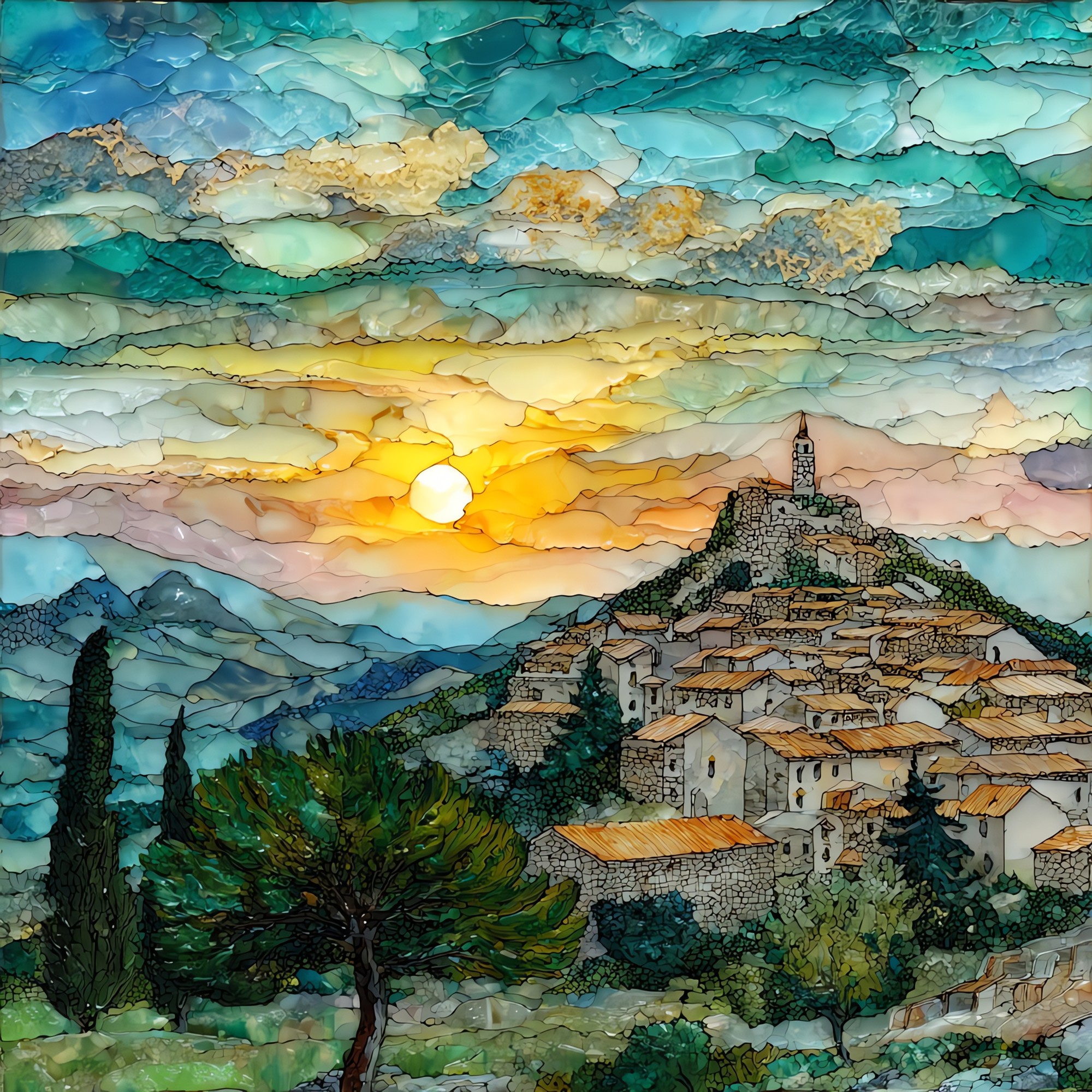
Menerbes Ridge Village
— — the village the ridge slowly became.
Not only on a wall.
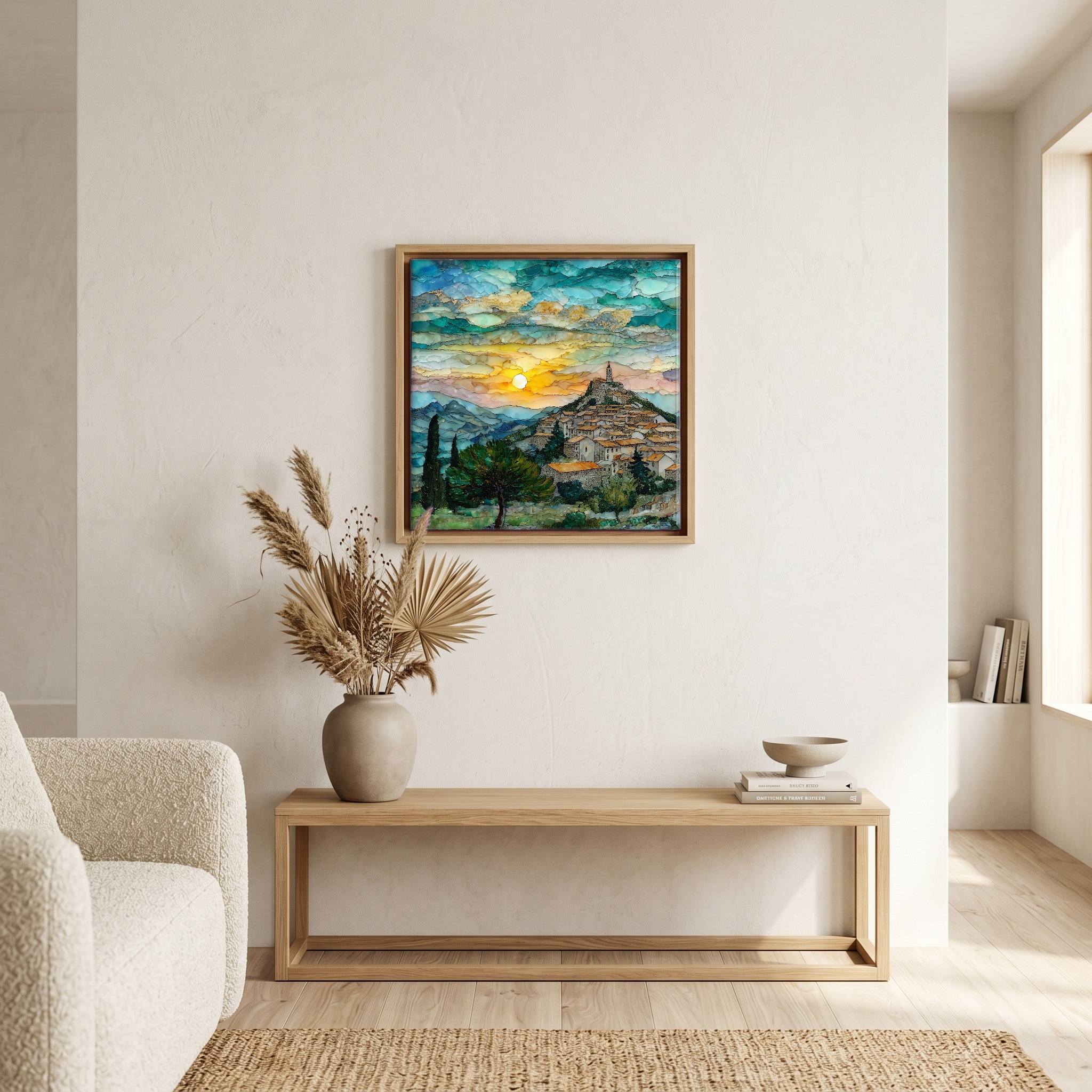
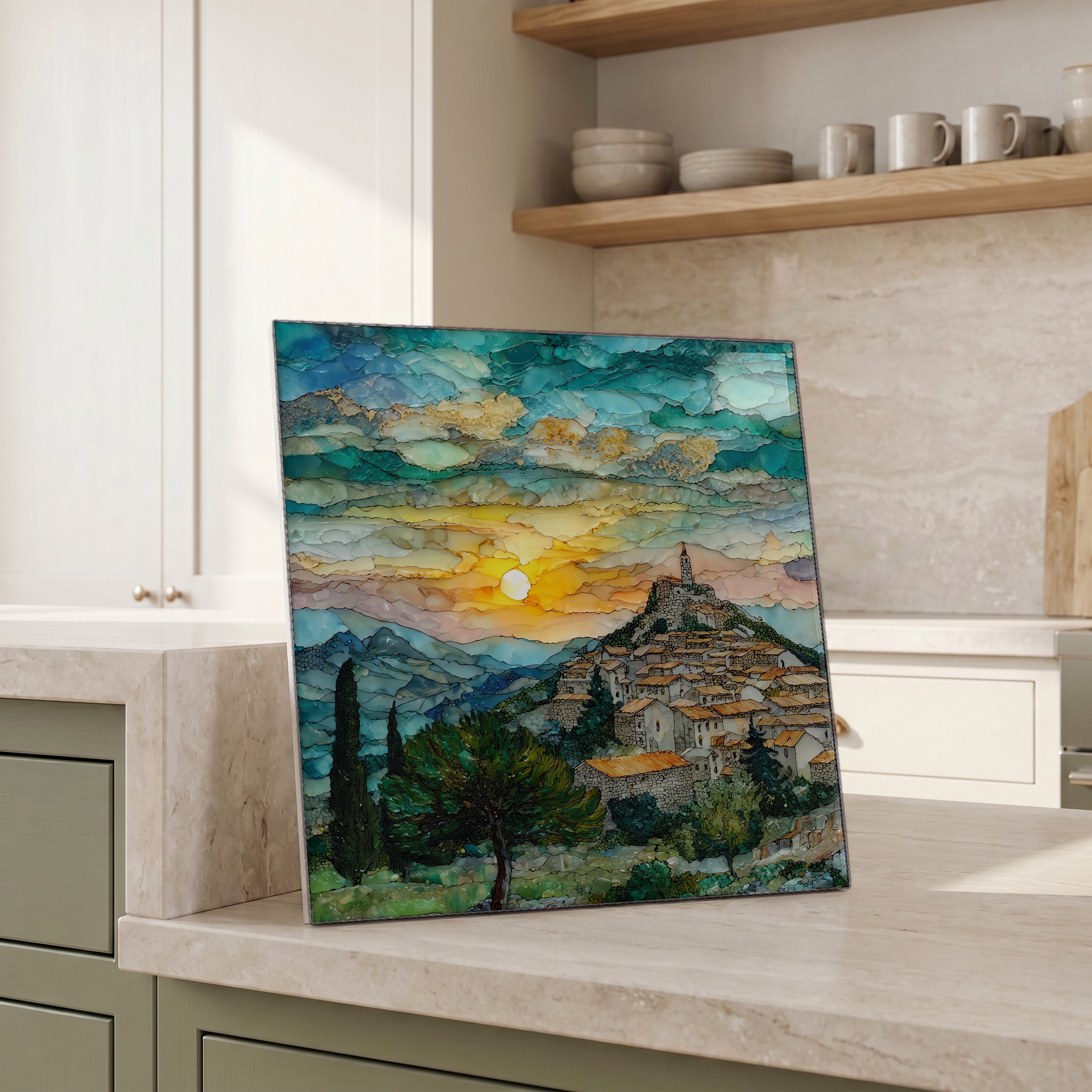
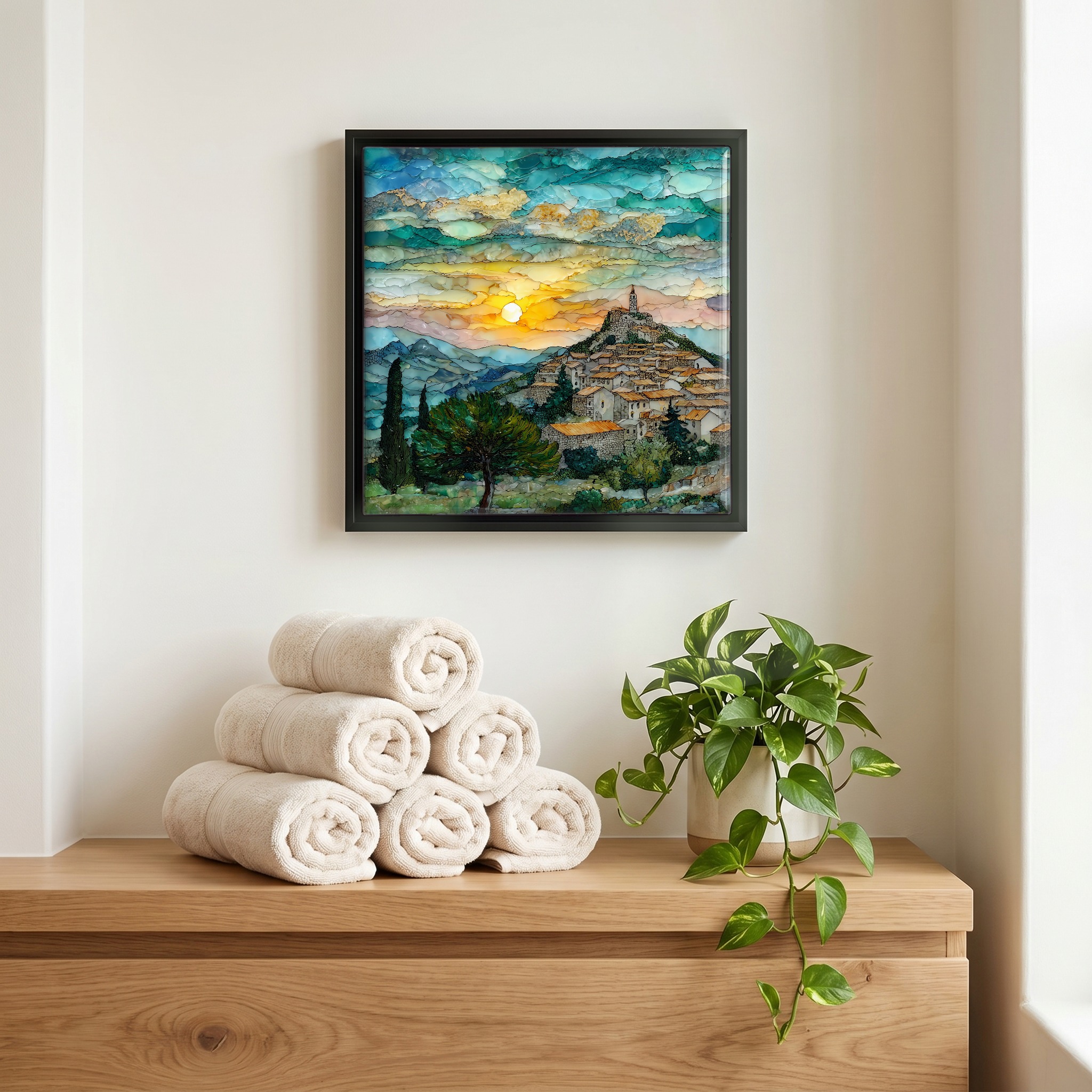
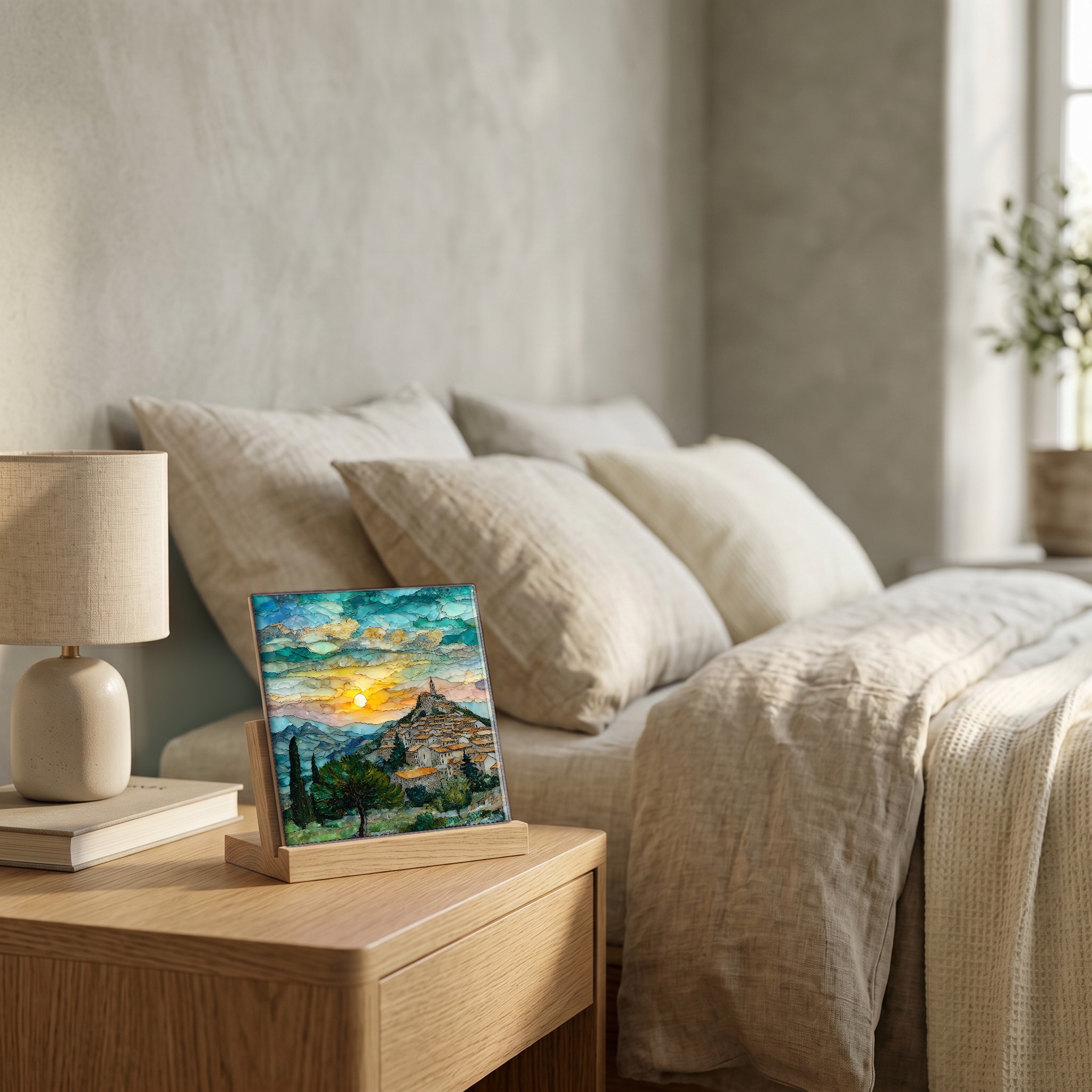
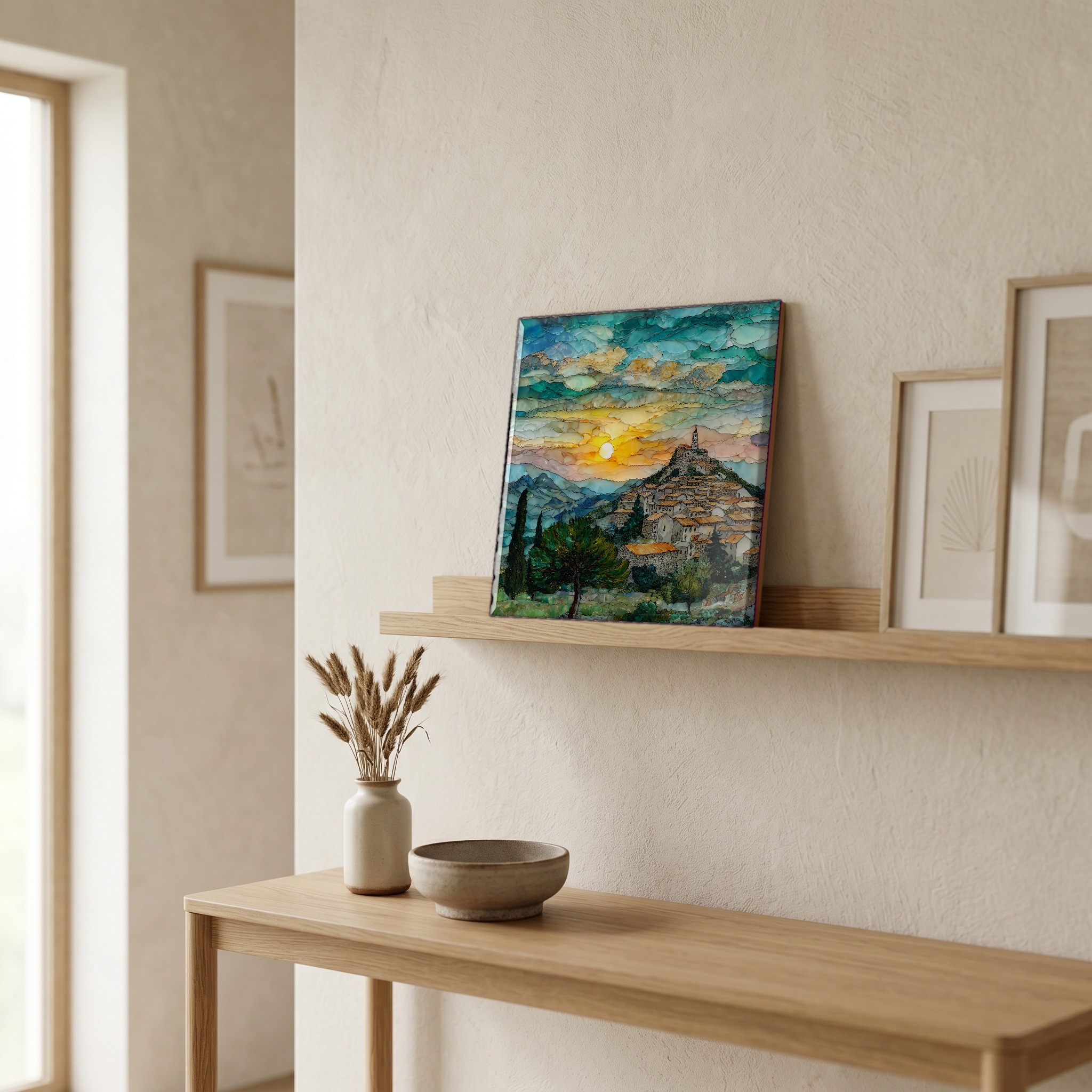
“A perched village on a long ridge of limestone, halfway between the Petit and Grand Luberon. The houses climb in tiers along the spur and the citadel holds the eastern point. Painters and writers have come here for the light: Picasso bought a house for Dora Maar in 1944, Nicolas de Staël kept a studio in the years before he died, Peter Mayle wrote A Year in Provence from a farmhouse outside the walls. The cypresses at the western end lean the same way the wind does.
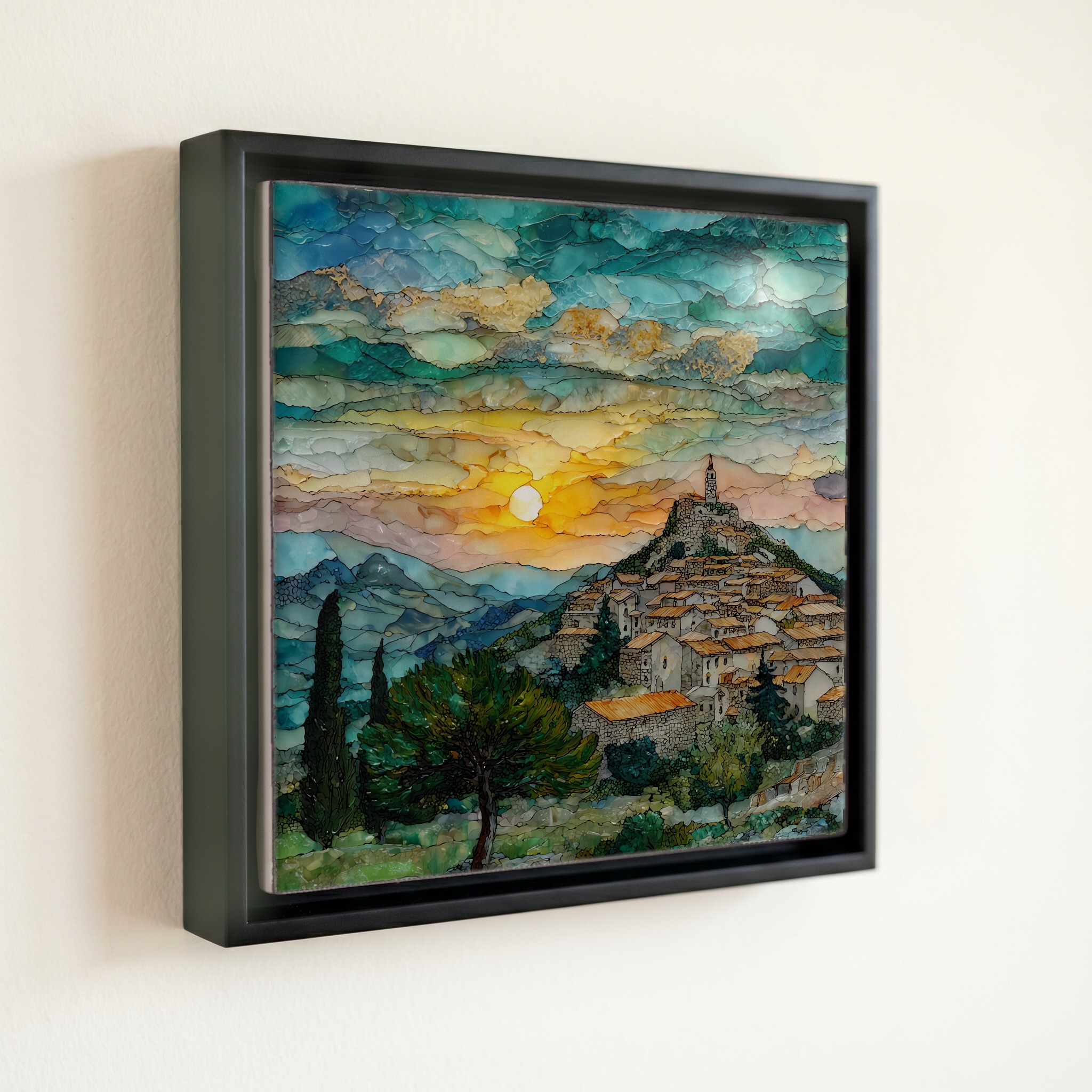
Menerbes Ridge Village, on ceramic.
Each tile is finished by hand in our Knoxville studio. Artwork is slowly infused into the ceramic surface under high heat and pressure, and rests beneath a thin glossy finish. The colour lives in the surface, not on top of it.
Pick any four 4-inch tiles — National Parks you've been to, a Smokies set, the four seasons of one place. $ for a set of , cork-backed, ready to live on the table.
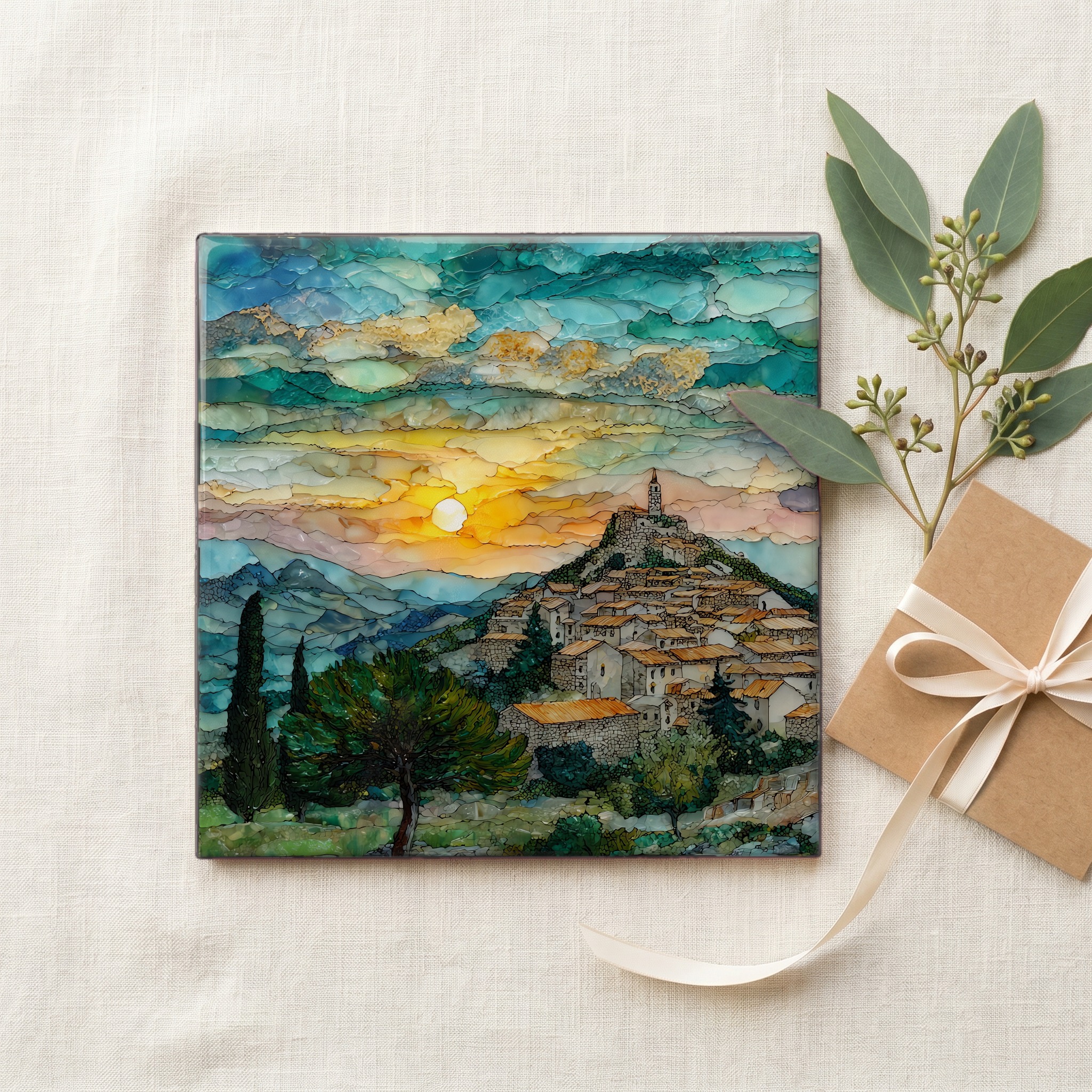
Each tile ships in a kraft box, tied with cream ribbon, with a handwritten note from the studio if you'd like to add one.
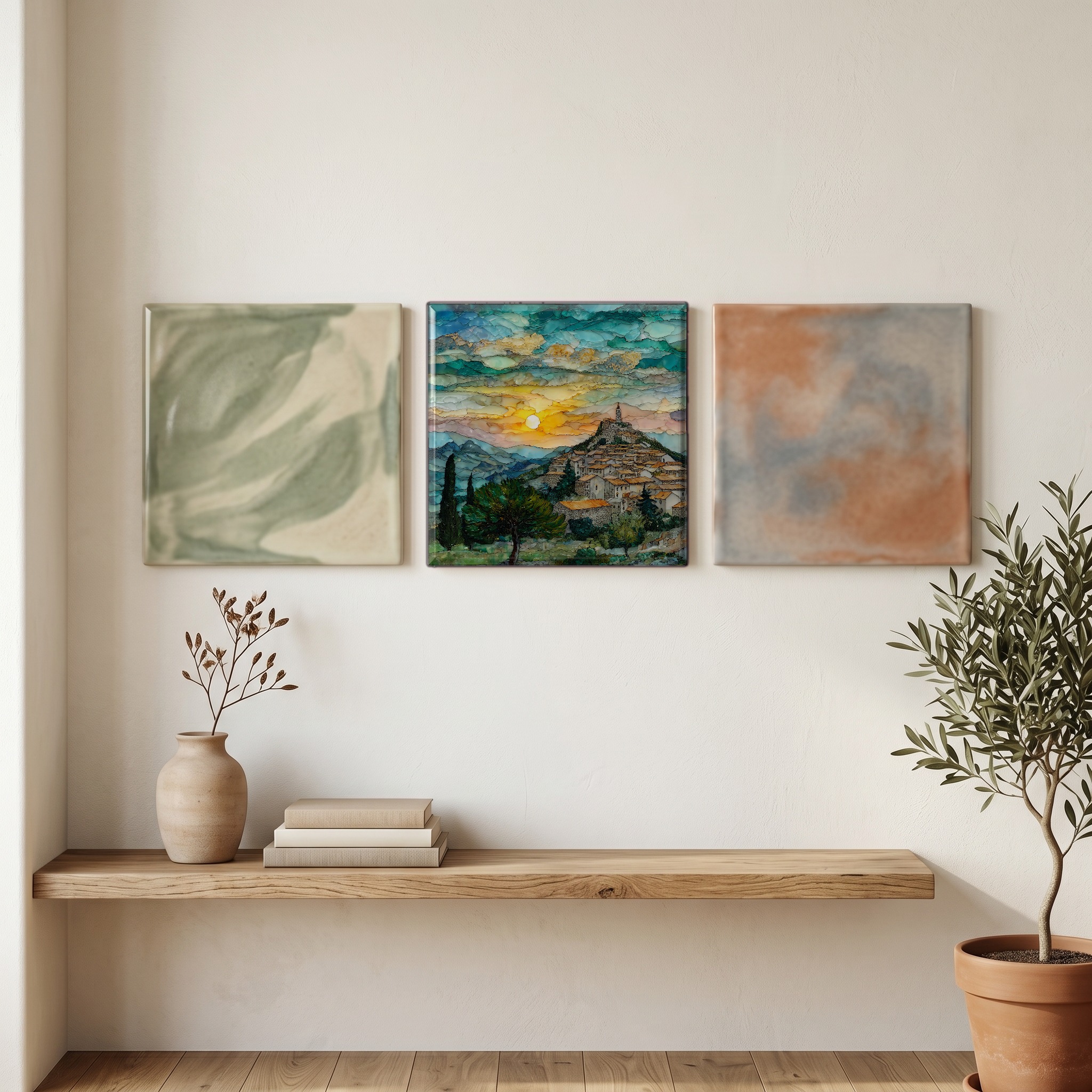
Three or five different vistas, hung together — a chapter of places you've been, or want to go.
The place, in three passes.
Ménerbes sits on a long limestone spur in the central Luberon, in the Vaucluse department of Provence-Alpes-Côte d'Azur. The commune lies within the Luberon Regional Natural Park, established in 1977, between the Petit Luberon to the south and the Monts de Vaucluse to the north. The village runs east to west along the crest, with the medieval citadel at the eastern end and the 14th-century Église Saint-Luc near the western tip. Population is approximately 1,000. The village is a member of Les Plus Beaux Villages de France. The nearest large town is Cavaillon, about 17 kilometres west.
The ridge Ménerbes climbs is Urgonian limestone, the same Cretaceous stone that forms the cliffs of the Luberon massif. The village houses are built largely from local stone quarried within walking distance, which is why the walls read the same colour as the ground they stand on. The citadel at the eastern point dates from the 12th century and was held by Calvinists for five years during the Wars of Religion, surrendering only in 1578. The clock tower above the central square keeps a wrought-iron campanile of the kind common across Provence — ironwork that lets the mistral pass through without taking the bell with it.
The light here is the same light that drew Cézanne to Aix and Van Gogh to Arles: a clear, dry Mediterranean sun cut by the mistral, the cold dry wind that blows down the Rhône valley and scrubs the air clean. Painters have come to Ménerbes for it. Pablo Picasso bought a house in the village for Dora Maar in 1944; she lived there until her death in 1997. Nicolas de Staël bought the Castelet at the eastern end of the village in 1953 and worked there until 1955. Peter Mayle wrote A Year in Provence (1989) from a farmhouse just outside the walls, which made Ménerbes one of the most read-about villages in France.