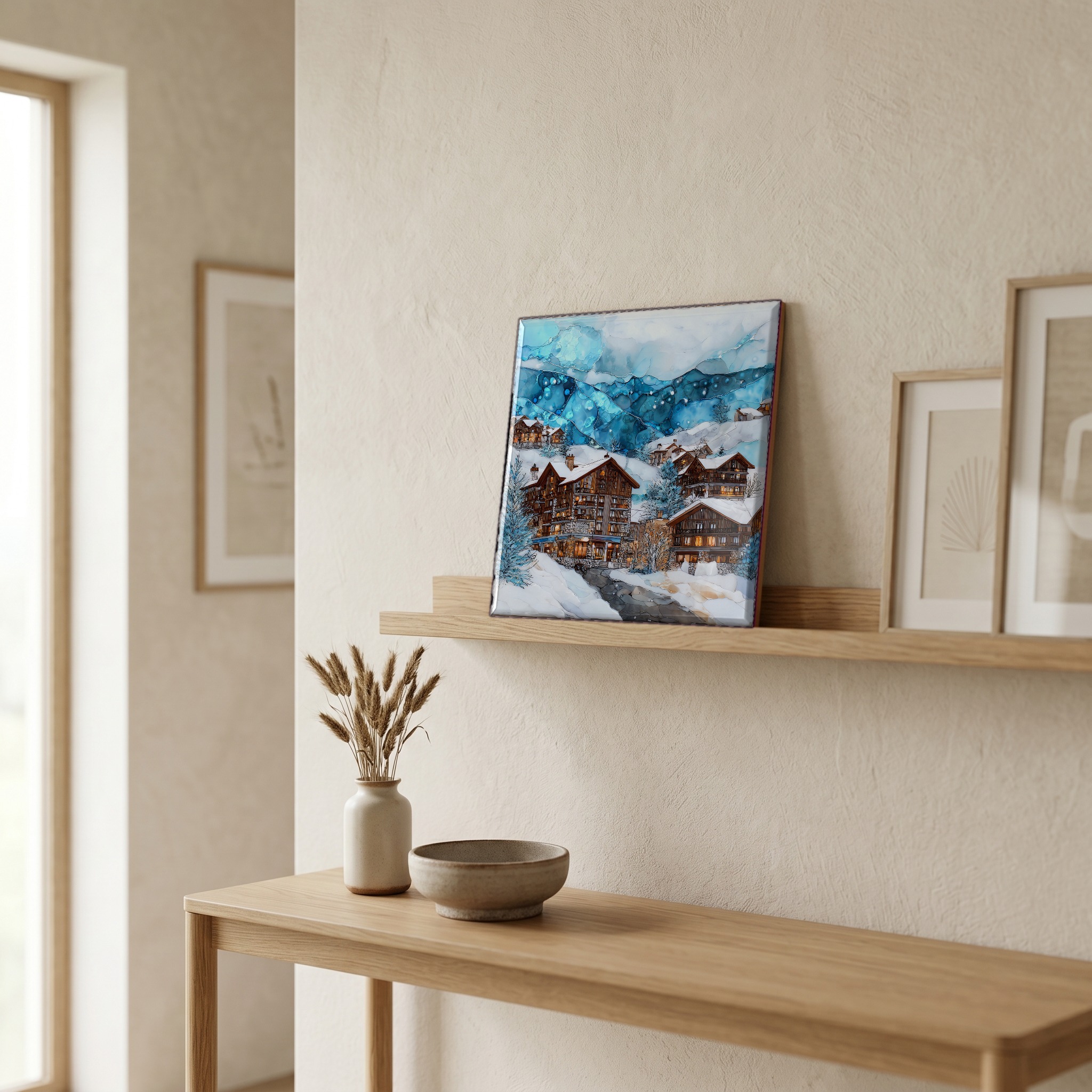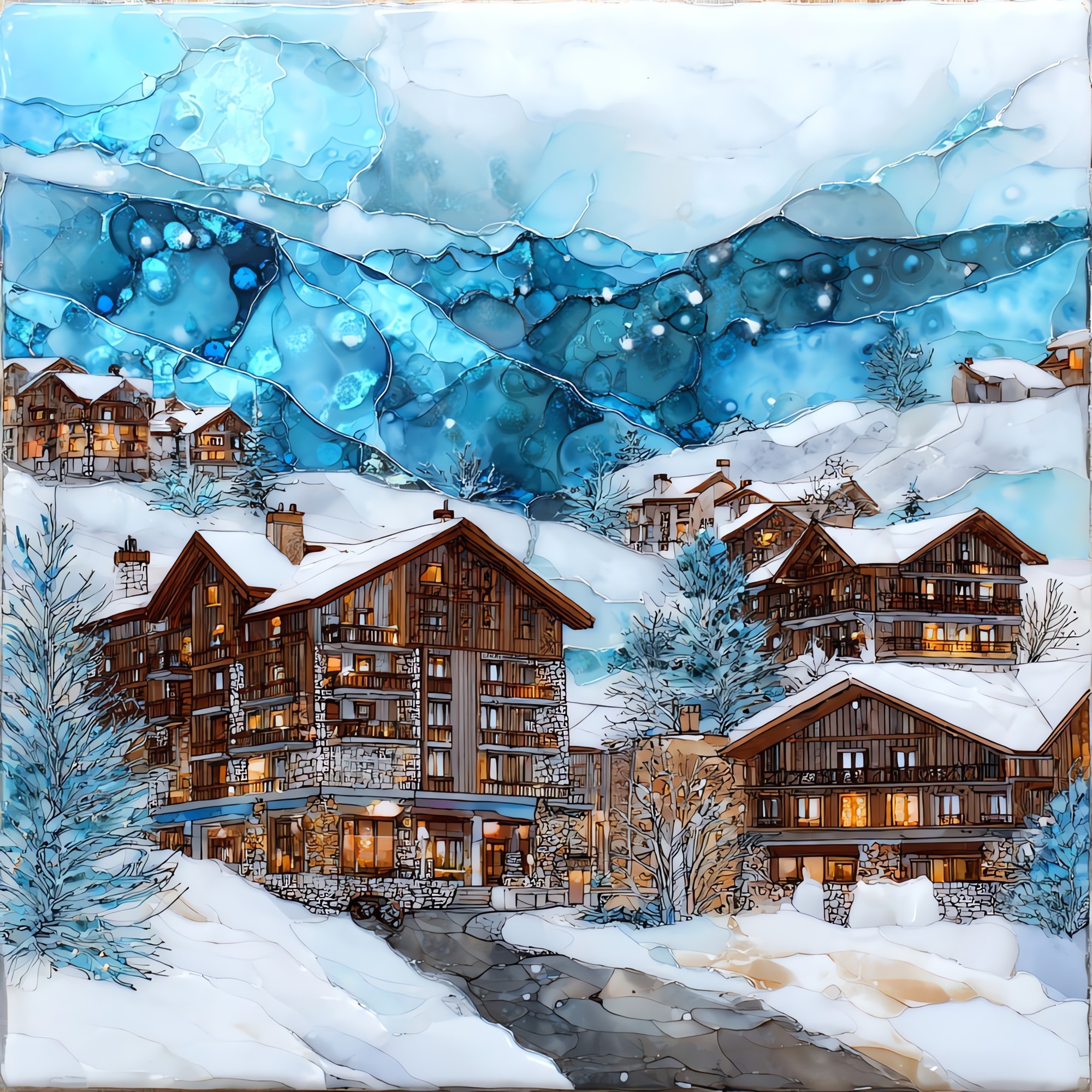
Wender·Vista
Megeve Alpine Village
shown on ceramic, 12-inch tileFrance
in the Haute-Savoie, below Mont Blanc

Megeve Alpine Village

the bell over a square the snow holds.

Where it lives

Not only on a wall.

A small tile on the nightstand catching the morning. A larger one above the fire. Yours, wherever you spend the slow hours.
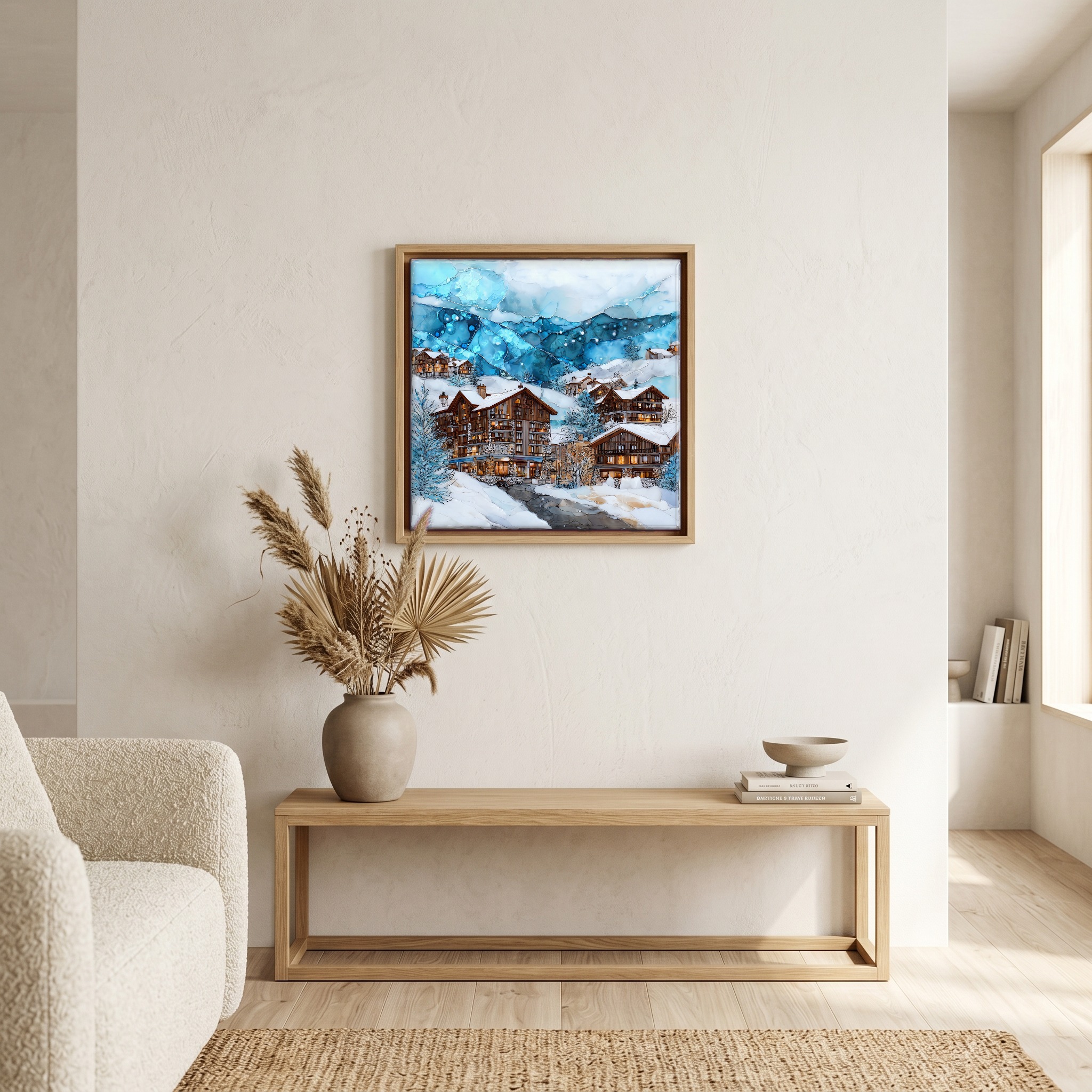
Above the bench, in a warm oak surround.
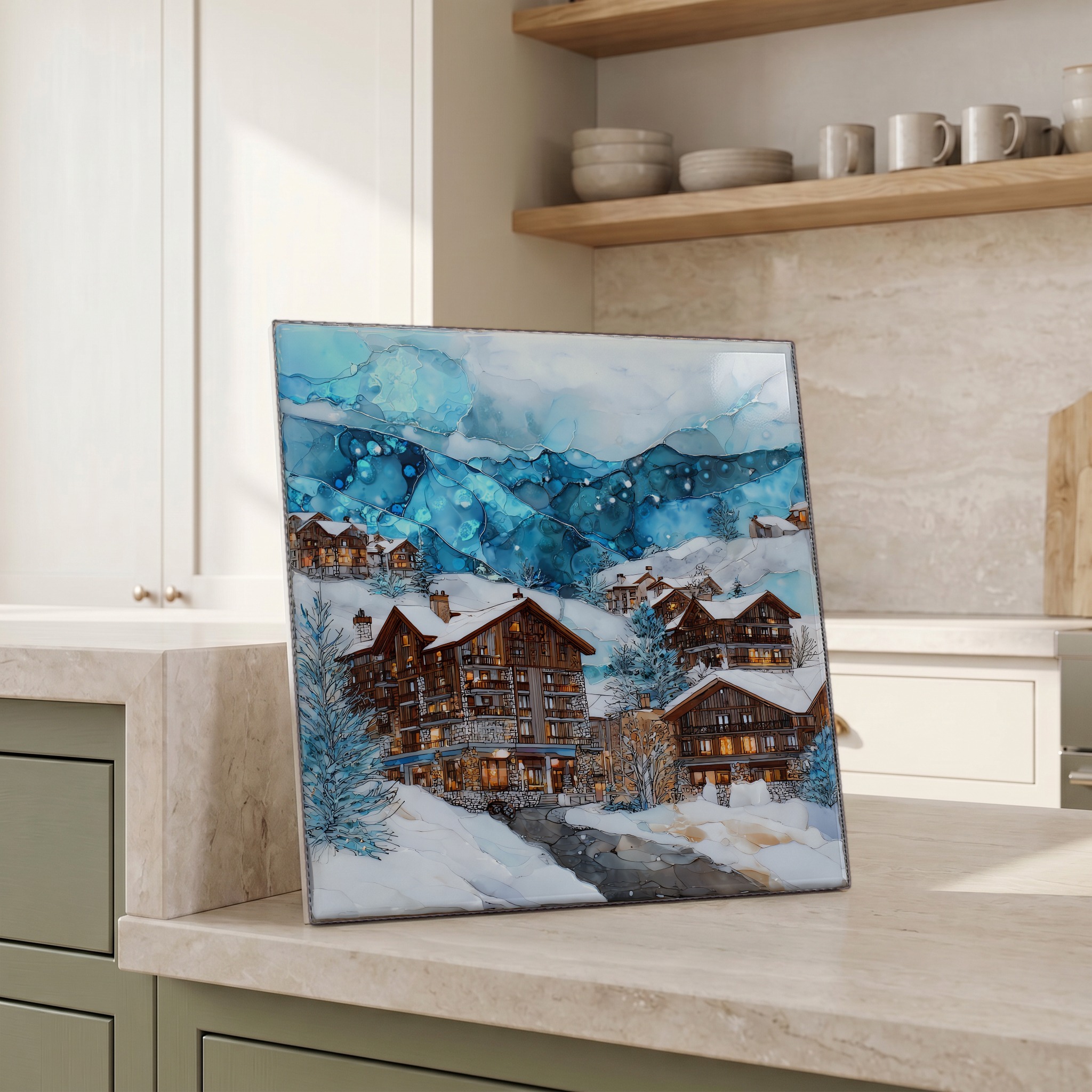
Beside the kettle, propped on the counter.
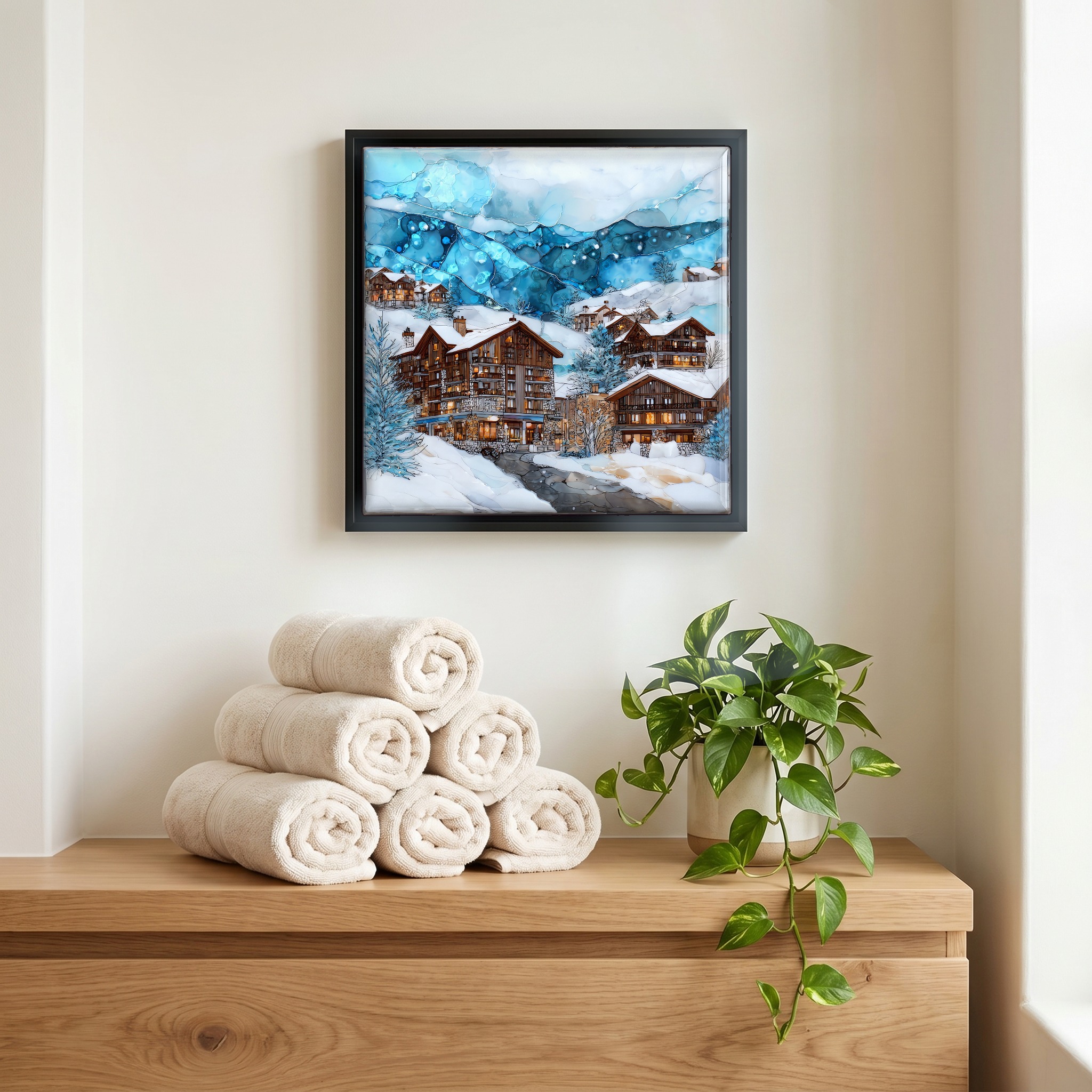
Above the linens, in a slim black surround.
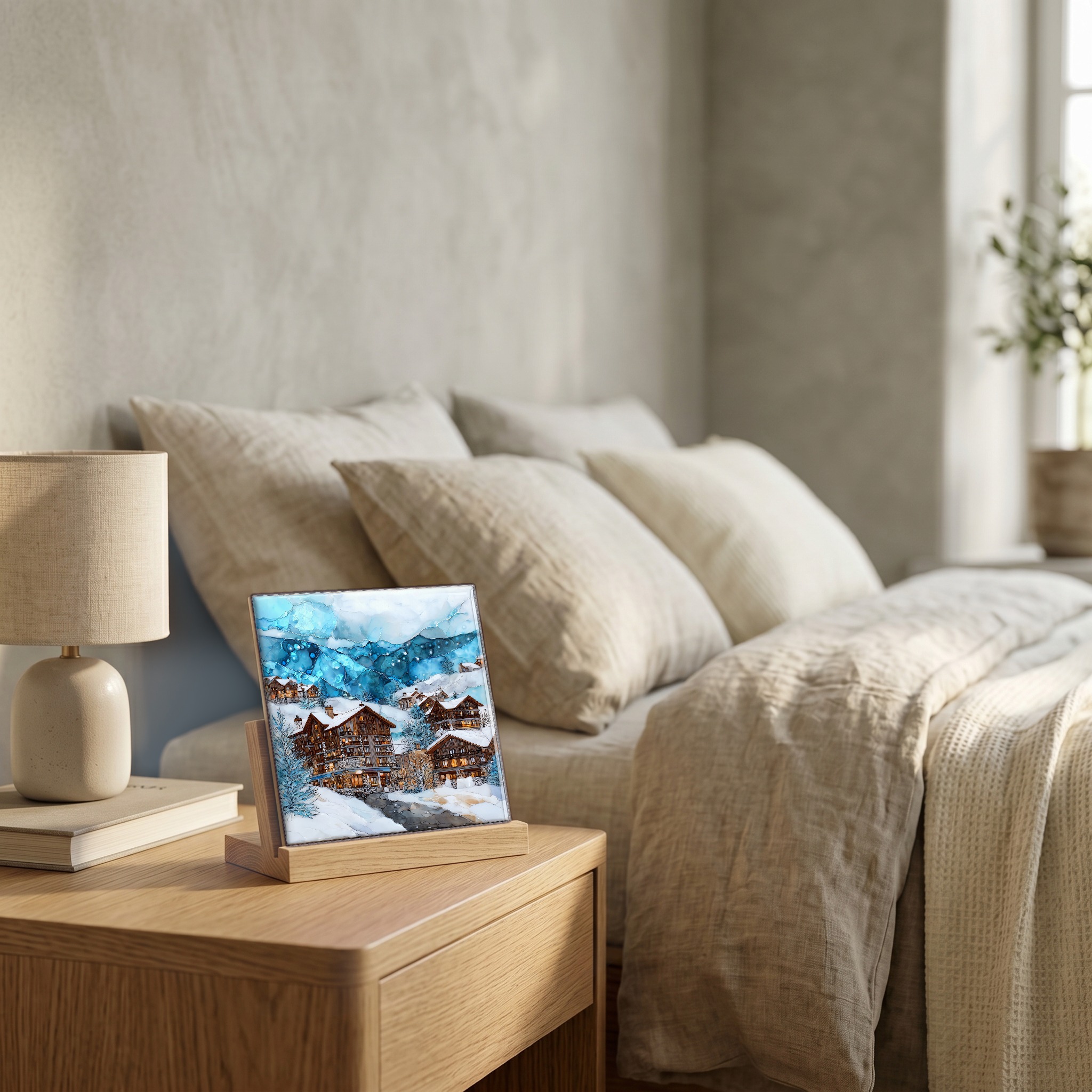
On the nightstand, on a light oak stand.
On a picture ledge, where the light comes in.
a note from the studio

Megève sits below Mont Blanc, in the Haute-Savoie. A medieval village a Rothschild turned into a winter resort in the 1920s as a French answer to St. Moritz. Calèches still cross Place de l'Église in winter, runners on the cobblestones. The old church bell tower has been there since the thirteenth century. The square hears it again every morning before the lifts open.
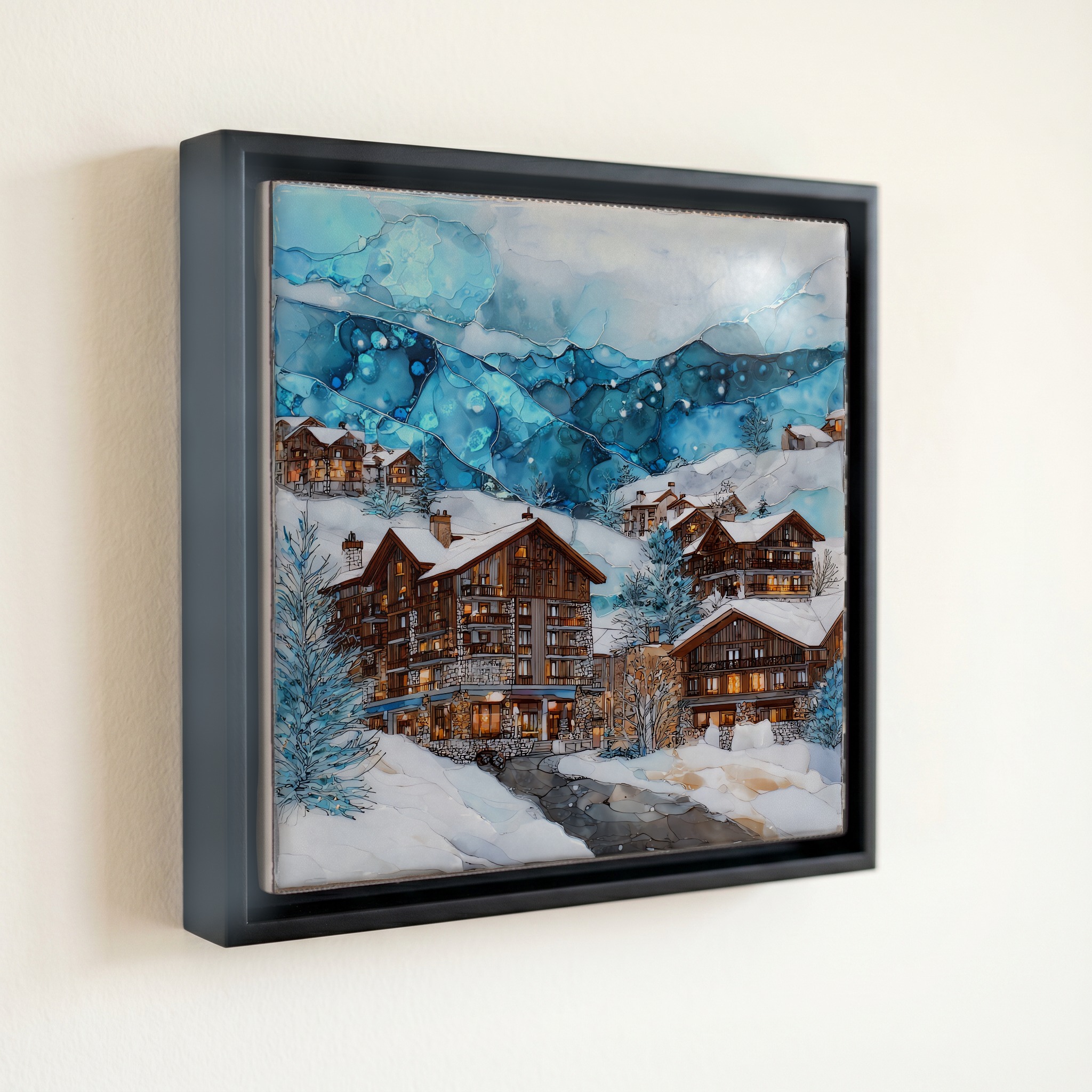
from the studio
shown in a slim black floating frame · 6 × 6 in
— bring it home

Megeve Alpine Village, on ceramic.

Each tile is finished by hand in our Knoxville studio. Artwork is slowly infused into the ceramic surface under high heat and pressure, and rests beneath a thin glossy finish. The colour lives in the surface, not on top of it.

What kind of piece?
One tile — square or rectangle.
How big?
the popular one — counter, shelf, nightstand
6 × 6 in · 15 cm · 1.6 lb
Surface finish
A clear glossy finish — the artwork reads as if under resin. Ideal for show-pieces and framed wall art.
How it sits
A hidden cleat — sits ¼″ proud of the wall.
$58
Hand-finished and shipped from our studio at the foot of the Smokies. On your wall in about ten days.
size
6 × 6 in
15 cm
weighs
1.6 lb
solid in the hand
surface
ceramic, hand-finished
art rests beneath a thin glossy finish
from
Knoxville, TN
our family studio, at the foot of the Smokies
— start a Coaster Set

Pick any four 4-inch tiles — National Parks you've been to, a Smokies set, the four seasons of one place. $ for a set of , cork-backed, ready to live on the table.
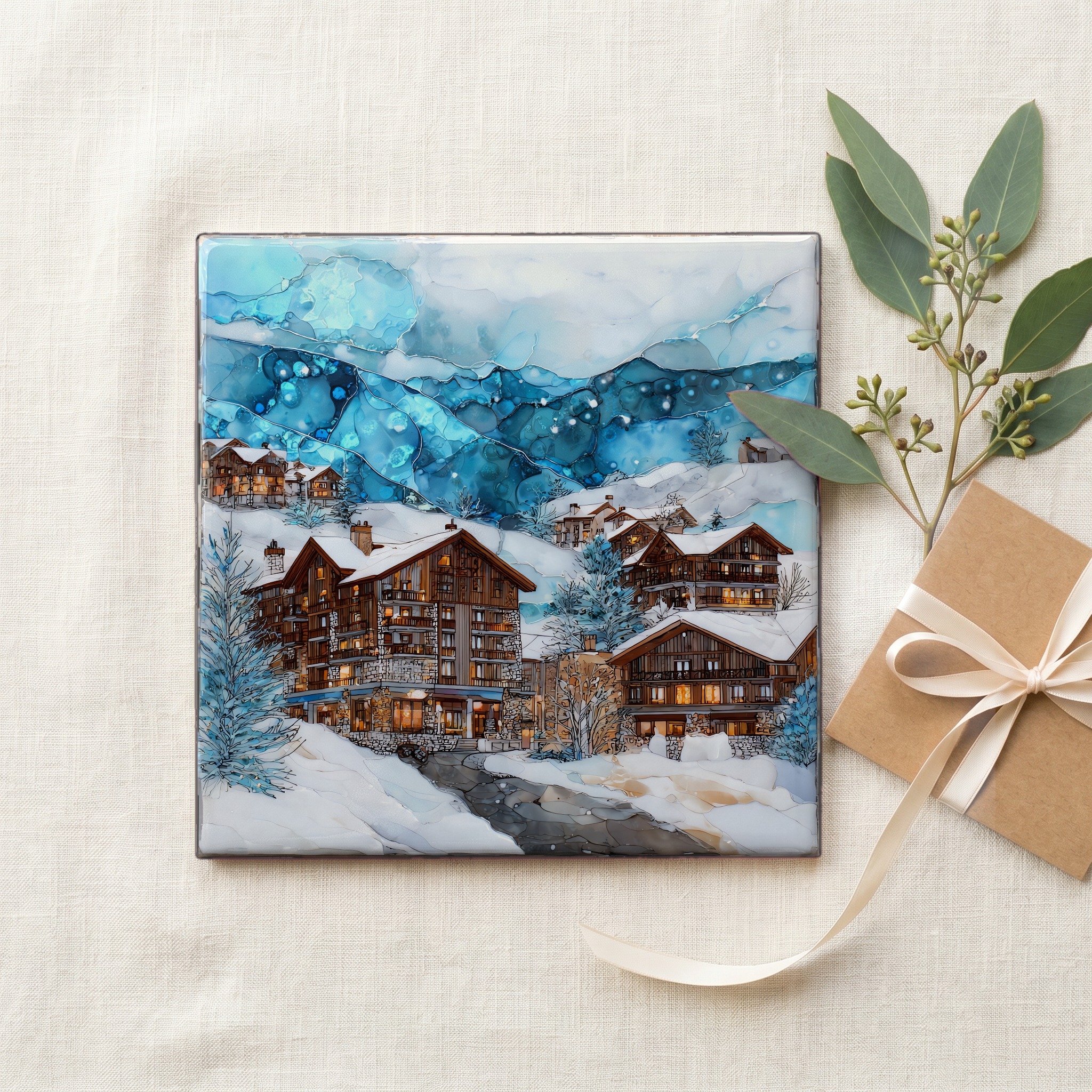
comes gift-ready
comes gift-ready

Each tile ships in a kraft box, tied with cream ribbon, with a handwritten note from the studio if you'd like to add one.
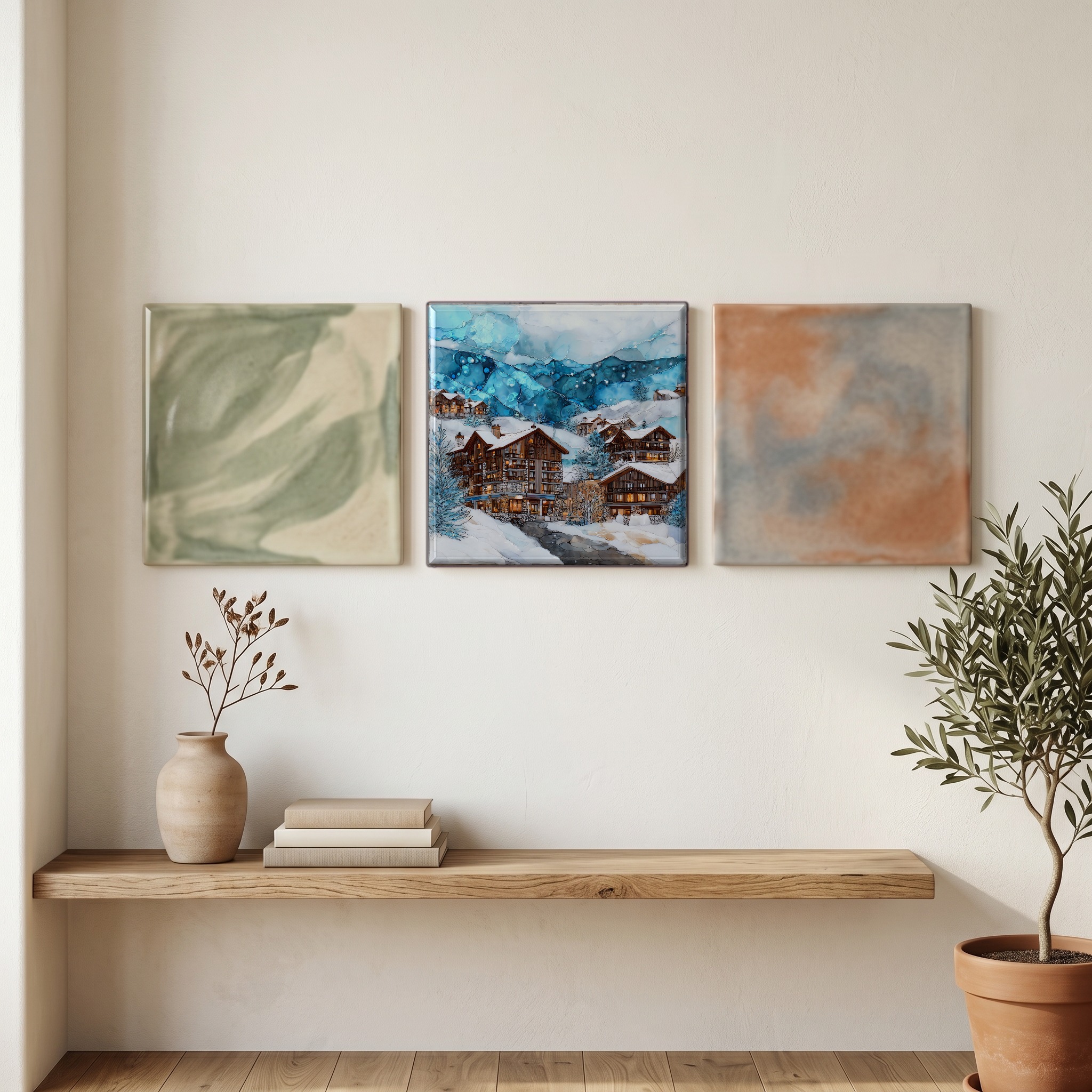
or build a grouping
or build a grouping

Three or five different vistas, hung together — a chapter of places you've been, or want to go.

about Megeve Alpine Village

The place, in three passes.

A little of what's known, in case you fall down the rabbit hole — or want to go see it yourself.
the place

Megève is a commune in the Haute-Savoie department of southeastern France, on the western flank of the Mont Blanc massif at roughly 1,113 metres. The commune covers about 44 square kilometres, with a permanent population near 3,000 that doubles or more in season. The medieval village center predates the resort by centuries; the parish church of Saint-Jean-Baptiste sits on Place de l'Église, the central square. The nearest rail station, Sallanches-Combloux-Megève, lies about 12 kilometres north in the Arve valley. Three local ski areas, Rochebrune, Le Jaillet, and Mont d'Arbois, connect the village to the wider Évasion Mont-Blanc domain shared with Saint-Gervais and Combloux.

the stone

The center of Megève is medieval, pedestrian, and paved in cobblestone. The square is closed to cars; the principal winter traffic is horse-drawn calèches that cross Place de l'Église between the church and the rue Charles-Feige. The parish church of Saint-Jean-Baptiste dates in part to the thirteenth century, with later modifications, and its bell tower carries the village's daily rhythm. Older buildings around the square are built of cut stone and timber with the broad eaves of Savoyard tradition. The cobbles spend most of the winter under snow; when they surface again in spring the smell shifts from woodsmoke to wet stone overnight.

the season

Megève is a winter resort first. The ski season runs roughly from mid-December to mid-April, depending on snowfall, across the three local areas and the wider Évasion Mont-Blanc network of about 445 kilometres of pistes. The village was developed as a winter destination in the 1920s by Baroness Noémie de Rothschild, who set out to build a French alternative to St. Moritz after the First World War. Summer is quieter, with hiking on Mont d'Arbois and the surrounding alpages, and the lifts running on a reduced schedule. The shoulder months, late April through May and late October through November, are when the village empties and the locals get the cobblestones back.

where
France · Megève, Haute-Savoie
elevation
1,113 m · 3,652 ft
position
45.8570° N · 6.6170° E
the neighborhood

What's nearby.

A handful of named places within an hour's walk or short drive. Some we've already painted; some we will.
5 km N
Combloux
alpine village
5 km E
Mont d'Arbois
alpine peak
11 km NE
Saint-Gervais-les-Bains
alpine commune
12 km NW
Sallanches
valley commune
30 km E
Mont Blanc
alpine peak
N
Megeve Alpine Village
Combloux
Mont d'Arbois
Saint-Gervais-les-Bains
Sallanches
Mont Blanc
common questions

What people ask.

A few questions we get about Megeve Alpine Village — and about bringing the piece home.
about the place

Megève is a commune in the Haute-Savoie department of southeastern France, in the Auvergne-Rhône-Alpes region. It sits at roughly 1,113 metres on the western edge of the Mont Blanc massif, about 35 kilometres from Chamonix and 70 from Geneva.

The village was developed in the 1920s by Baroness Noémie de Rothschild as a French alternative to St. Moritz. Its medieval cobblestone center, the parish church of Saint-Jean-Baptiste on Place de l'Église, and three connected ski areas have anchored its reputation ever since.

Three local areas, Rochebrune, Le Jaillet, and Mont d'Arbois, connect Megève to the wider Évasion Mont-Blanc domain, which links Megève with Saint-Gervais, Combloux, La Giettaz, and Les Contamines for roughly 445 kilometres of pistes.

Mid-December through mid-April for skiing; July and August for hiking on Mont d'Arbois and the surrounding alpages. The shoulder months are quiet and many lifts and restaurants close. The village is busiest between Christmas and the new year.

The nearest rail station is Sallanches-Combloux-Megève, about 12 kilometres north in the Arve valley, with shuttle service to the village. By air, Geneva Airport is the standard entry point, around 70 kilometres away, with a road transfer of about 90 minutes in winter conditions.

Yes. The medieval center of Megève is pedestrian. Most of the square is closed to cars, and horse-drawn calèches still cross Place de l'Église in winter. The cobblestone streets around the parish church are easily walked end to end.

about the piece in your home

It's a meaningful gift for anyone with ties to Megève or to the wider Haute-Savoie. The village holds a particular place for skiers, second-home owners, and those who associate winter with the church bell over a quiet square. A Coaster or Small carries the village well.

The Voynich palette of stained-glass blues against a textured ground sits well in Alpine-modern interiors, Mountain-modern living rooms, and Maximalist hallways that already hold warm wood. It will also work in a quieter Scandinavian-leaning room as a single colour accent.

Alpine-modern as a category has held since the late 2010s and shows no sign of slowing: warm wood, stone, mountain references, restrained pattern. A Megève tile sits naturally in that vocabulary, particularly above a console table or in a stairwell with linen-shaded sconces.

Above a standard three-seat sofa, a Large works on its own; a four-tile Mural fills the wall more completely. A nine-tile Mural is the right scale for an open feature wall. Above a console, a Medium or Large is usually the cleaner choice.

Yes, with the Dura Satin or Matte finish. Both are scratch-resistant and rated for humid rooms, including backsplashes, shower walls, and powder-room features. The Glossy finish is meant for framed display in dry rooms.

A soft microfibre cloth with warm water. The colour is slowly infused into the ceramic surface and lives beneath a thin glossy or satin finish, so it will not lift with normal cleaning. Avoid abrasive pads and acidic cleaners.

Yes. Every WenderVista piece is painted by Reid Wender, the curator, and produced in the studio in Knoxville, Tennessee. There is no licensing, no third-party stock, and no other source for these tiles.

if this one stayed with you

A few you might also love.

Hand-picked by the eye that found Sorapis. Same air, same kind of quiet.