
Medici Fountain
— — the long green hour, held by plane trees.
Not only on a wall.
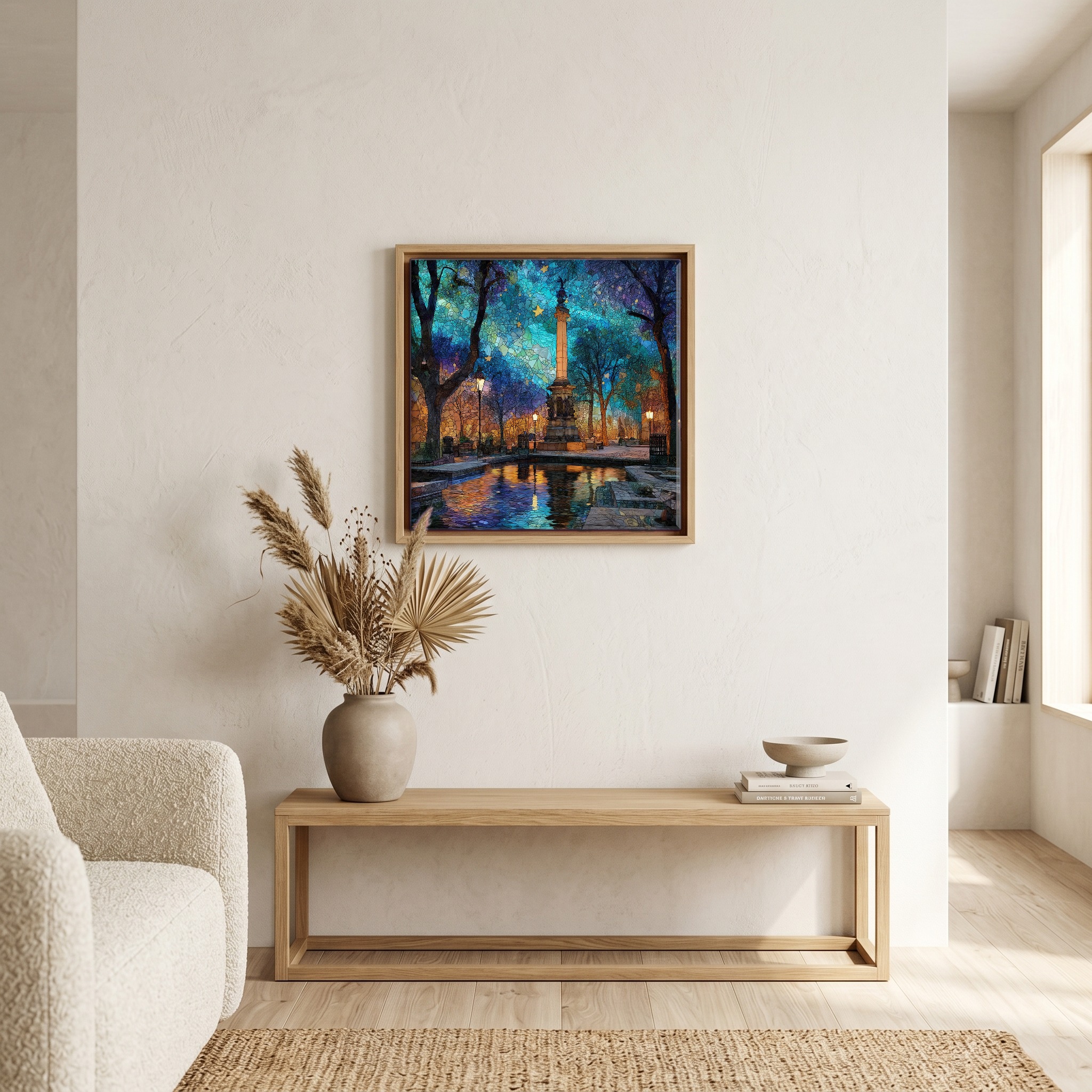
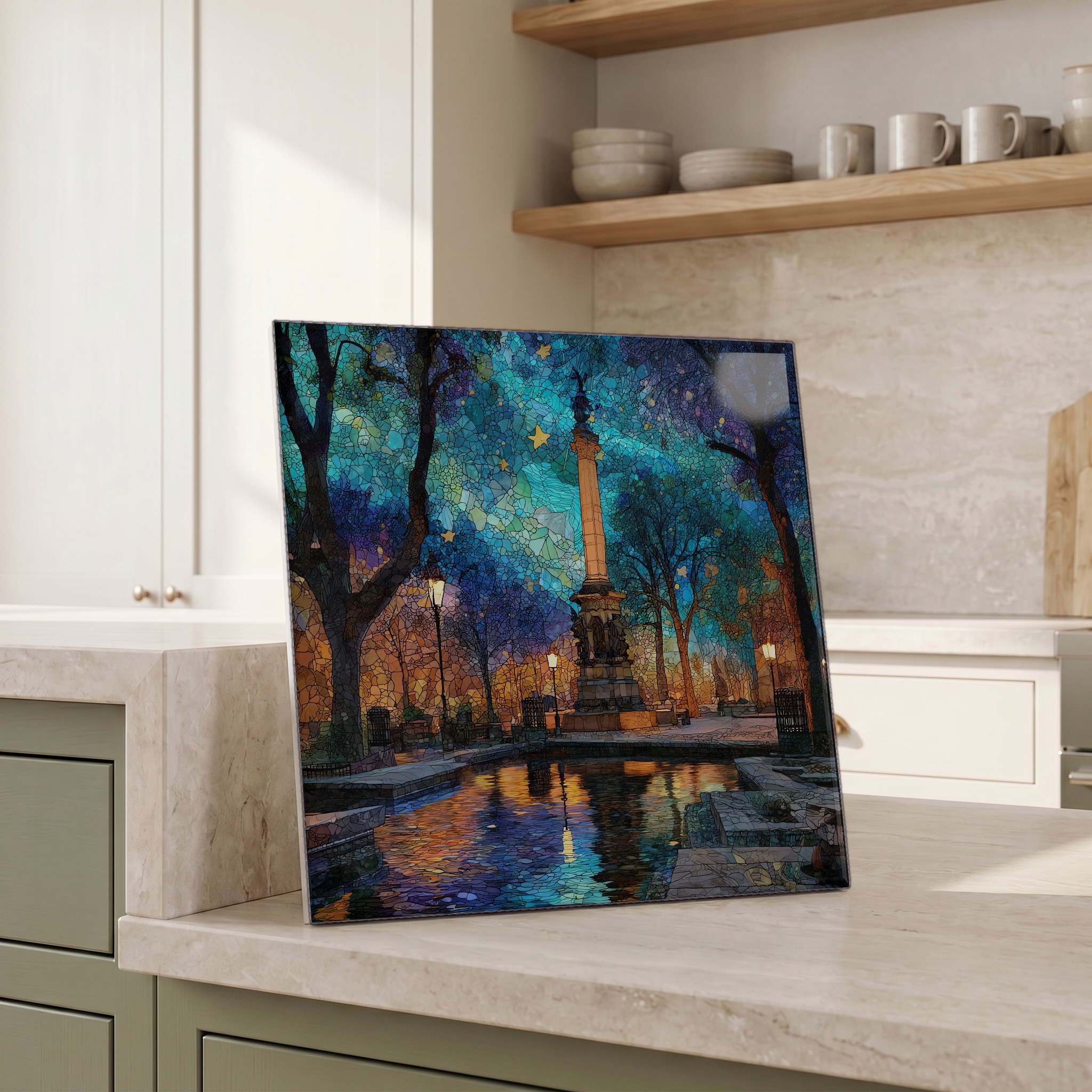


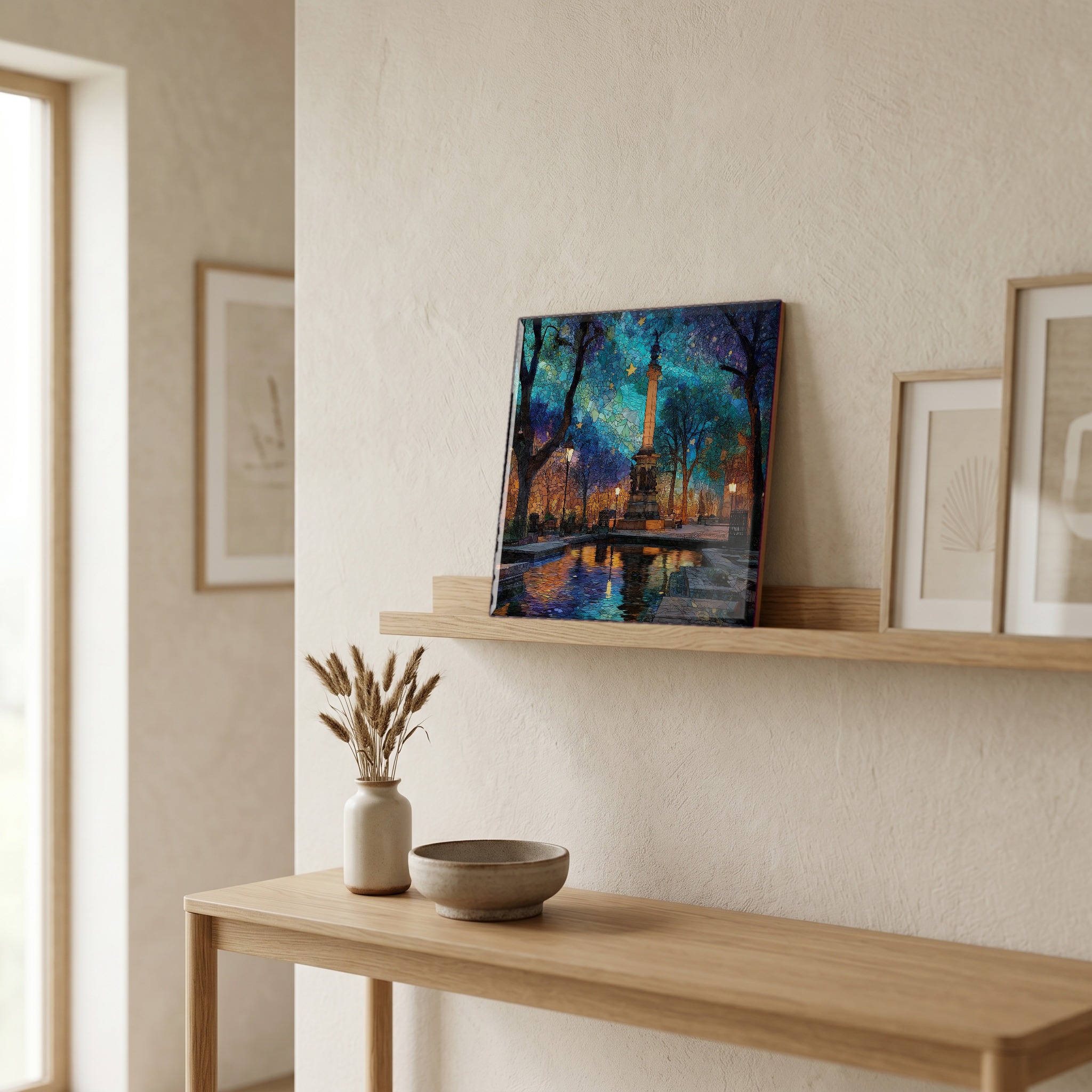
“A long shallow basin in the Jardin du Luxembourg, lined with plane trees and the green metal chairs Parisians drag wherever they please. At the far end, a grotto holds Polyphemus surprising the lovers Acis and Galatea, Auguste Ottin's 1866 tableau set into the original 1630 fountain Marie de' Medici built to remember Florence. People come here to read. The light filters slowly through the canopy, the basin sits half in shade, and the city overhead seems further away than the few blocks it actually is.
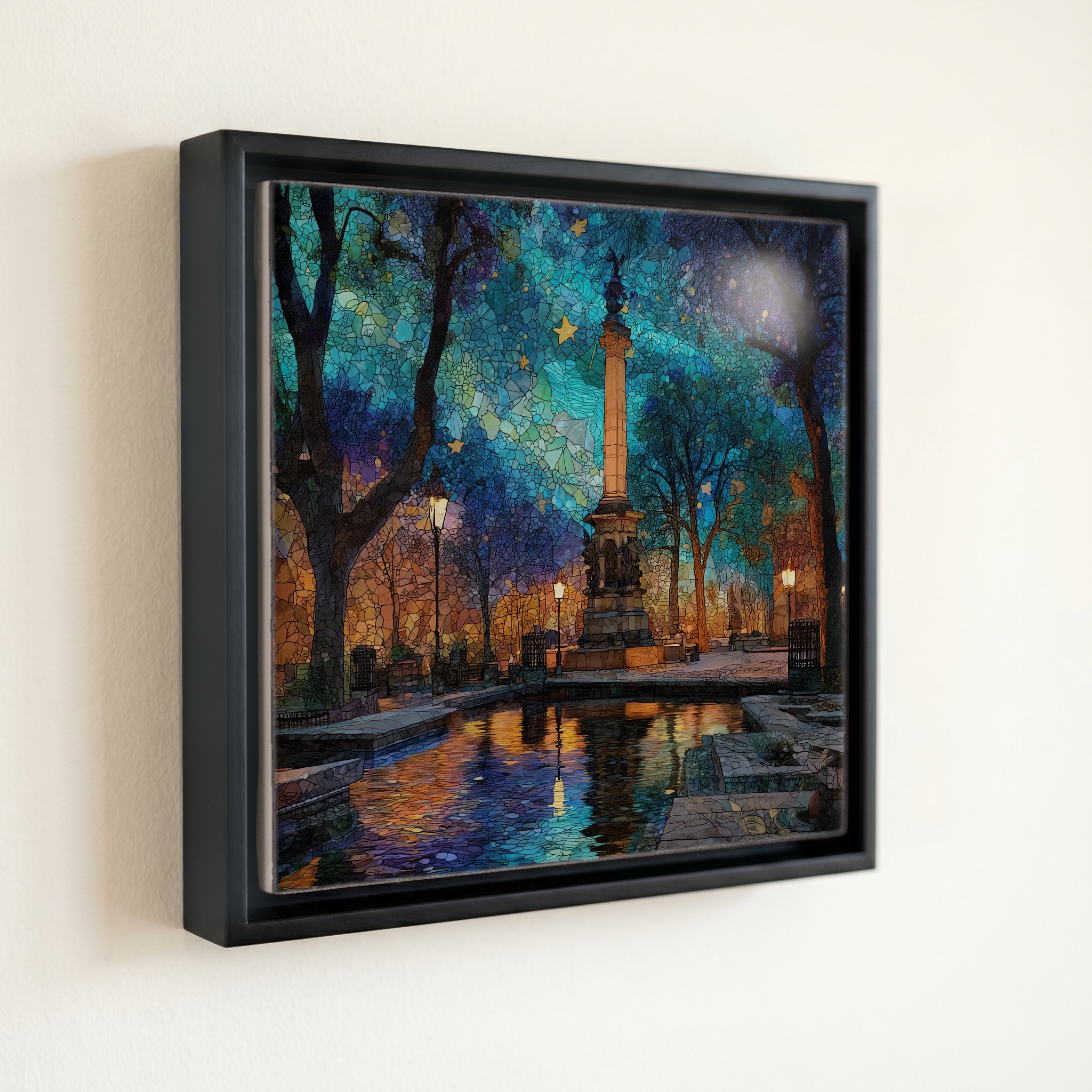
Medici Fountain, on ceramic.
Each tile is finished by hand in our Knoxville studio. Artwork is slowly infused into the ceramic surface under high heat and pressure, and rests beneath a thin glossy finish. The colour lives in the surface, not on top of it.
Pick any four 4-inch tiles — National Parks you've been to, a Smokies set, the four seasons of one place. $ for a set of , cork-backed, ready to live on the table.

Each tile ships in a kraft box, tied with cream ribbon, with a handwritten note from the studio if you'd like to add one.

Three or five different vistas, hung together — a chapter of places you've been, or want to go.
The place, in three passes.
The Medici Fountain sits in the eastern half of the Jardin du Luxembourg, a few steps off the Rue de Médicis in the 6th arrondissement of Paris. The garden was commissioned in 1612 by Marie de' Medici, widow of King Henri IV, and modelled on the Boboli Gardens of her native Florence. The fountain itself was built around 1630, attributed to the Florentine engineer Tommaso Francini. In 1864, when Boulevard Saint-Michel was cut through the quarter, the architect Alphonse de Gisors moved the fountain to its present position and added the long reflecting basin that gives it its modern shape.
The grotto's central tableau is Auguste Ottin's sculptural group of Polyphemus surprising the lovers Acis and Galatea, installed in 1866. The bronze cyclops looms above two figures in white Carrara marble; the contrast across the materials is the work's whole point. Behind it is the Mannerist shell of the original 1630 grotto, with rusticated stonework and the Medici coat of arms set into the pediment. The narrative comes from Ovid's Metamorphoses, Book XIII. On the back face of the fountain, a smaller relief shows Leda and the Swan, also by Ottin.
The Jardin du Luxembourg is open every day, with hours that shift through the year: from early morning to dusk in summer, later opening and earlier close in winter. Entry is free. The fountain sits on the east side of the garden, near the Palais du Luxembourg, which since 1879 has housed the French Senate. The signature green metal chairs are part of the experience: drag one to the basin's edge and stay. The plane-tree canopy keeps the corner shaded even in midsummer, which is why it remains the garden's reading room.