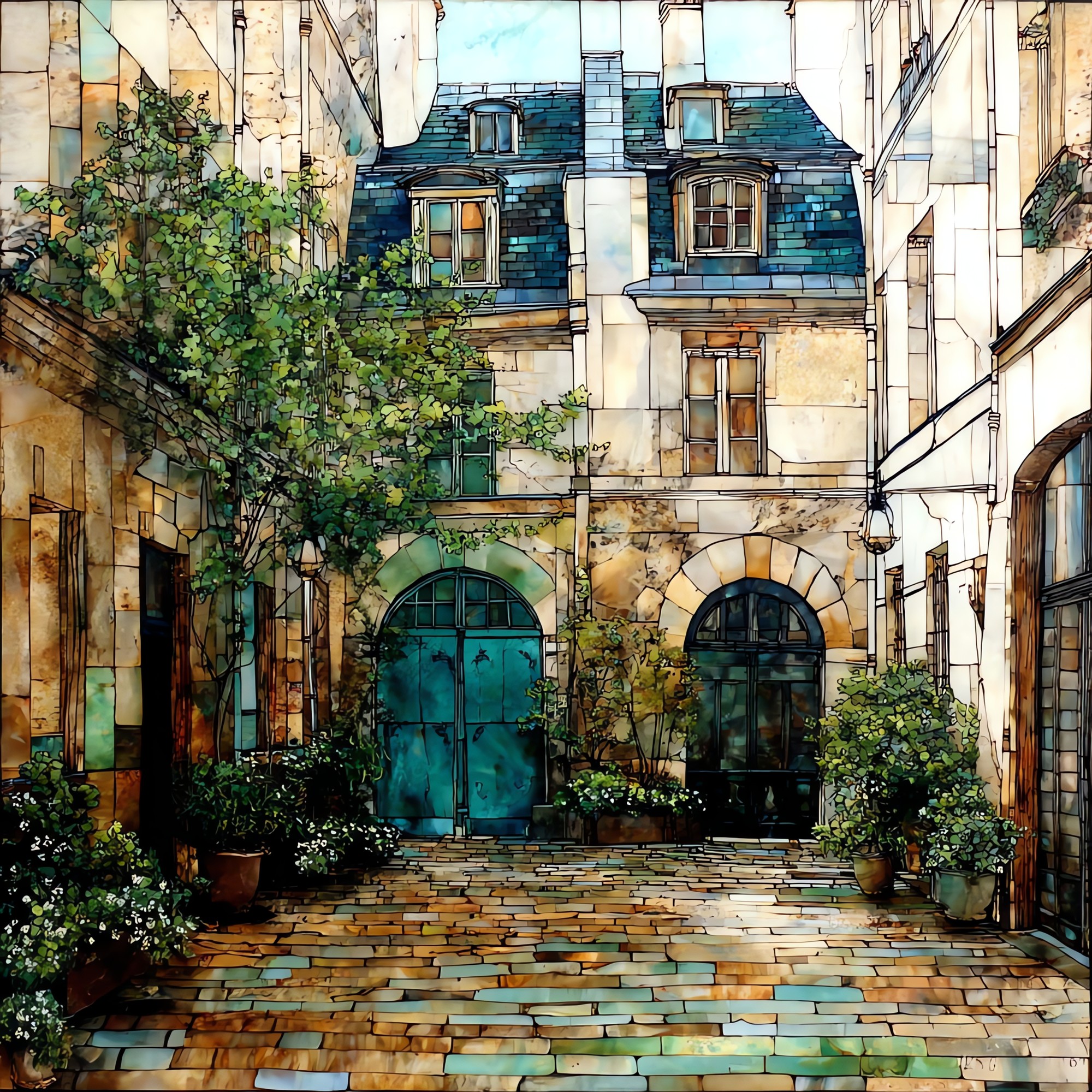
Marais Courtyard
— — the green a carriage door keeps quiet.
Not only on a wall.
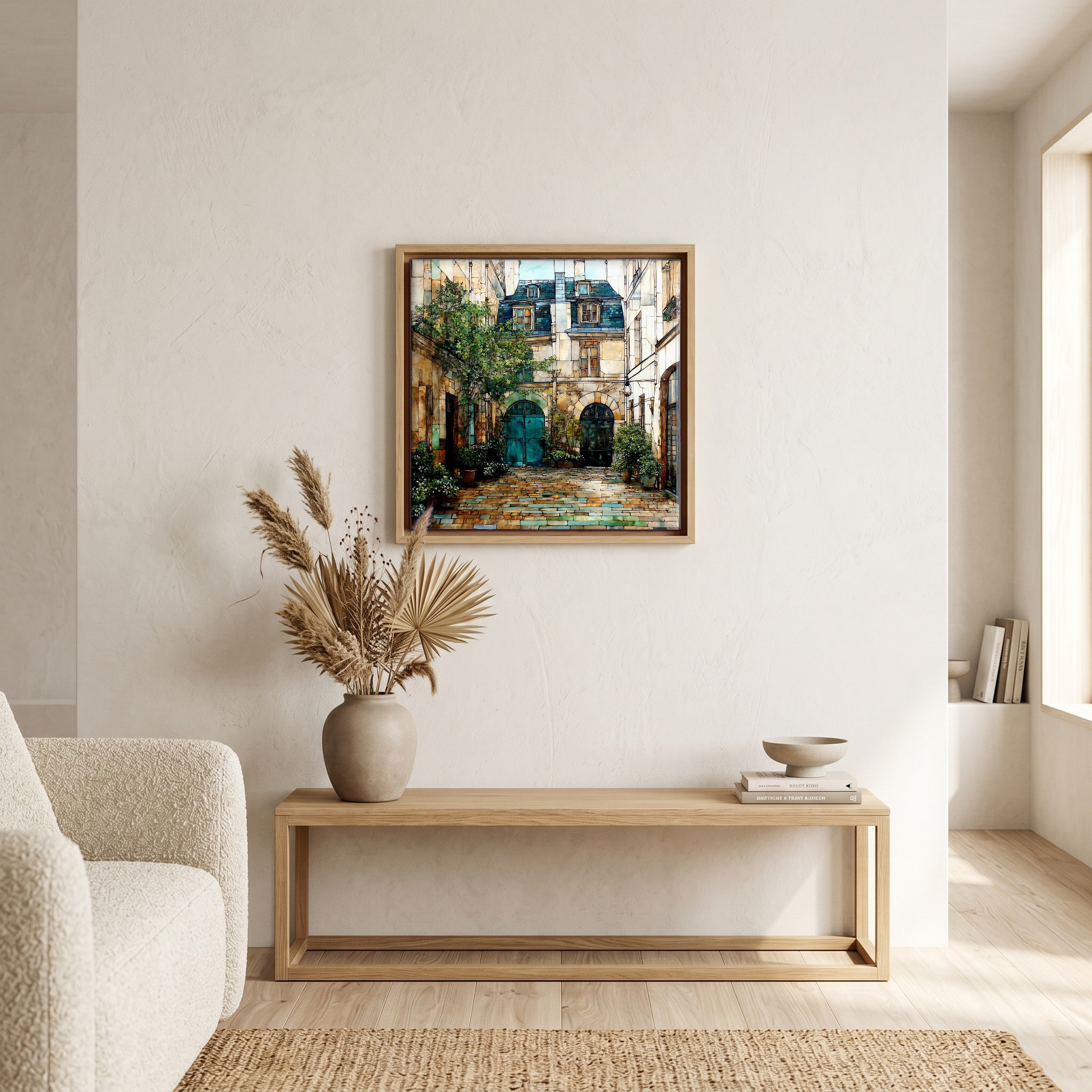
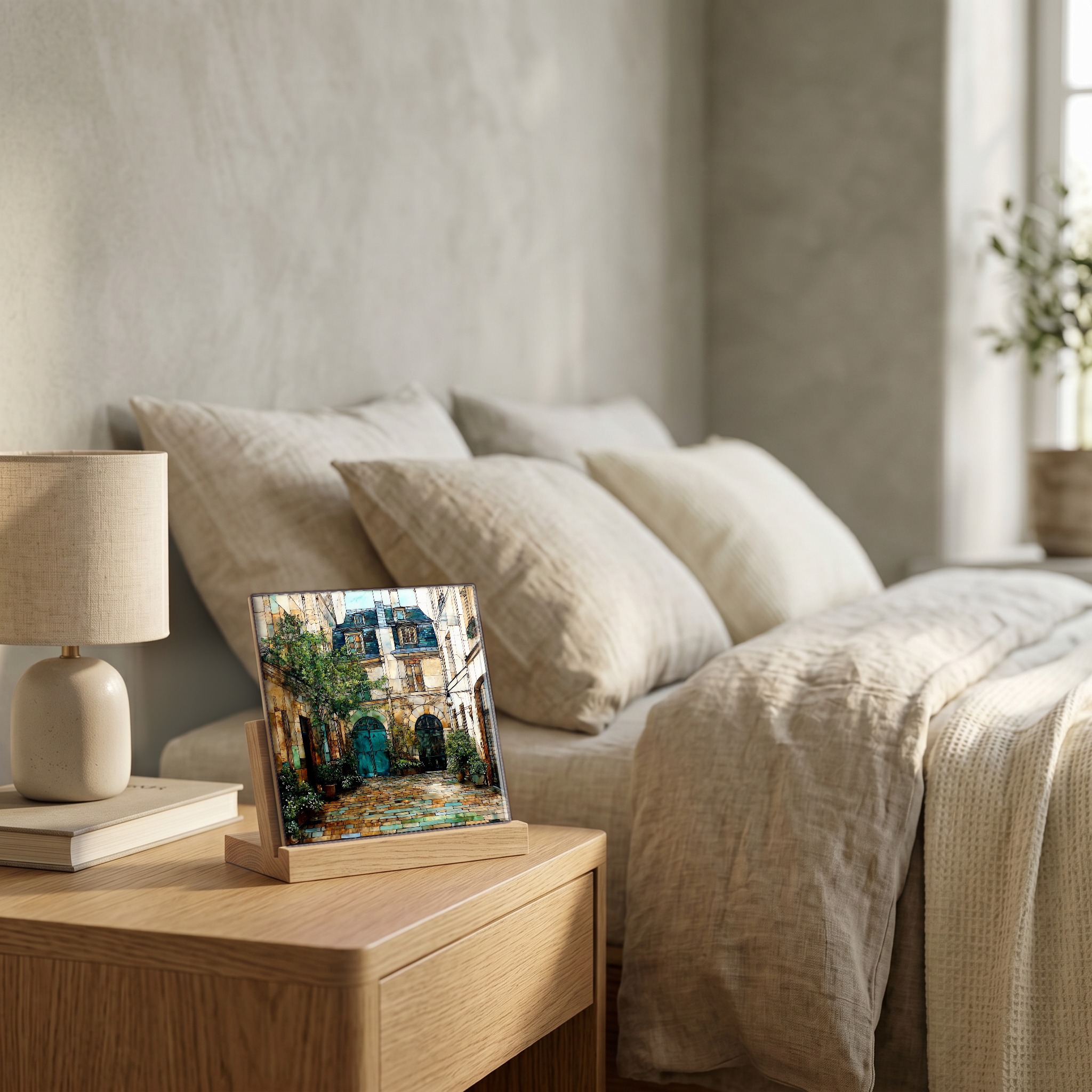
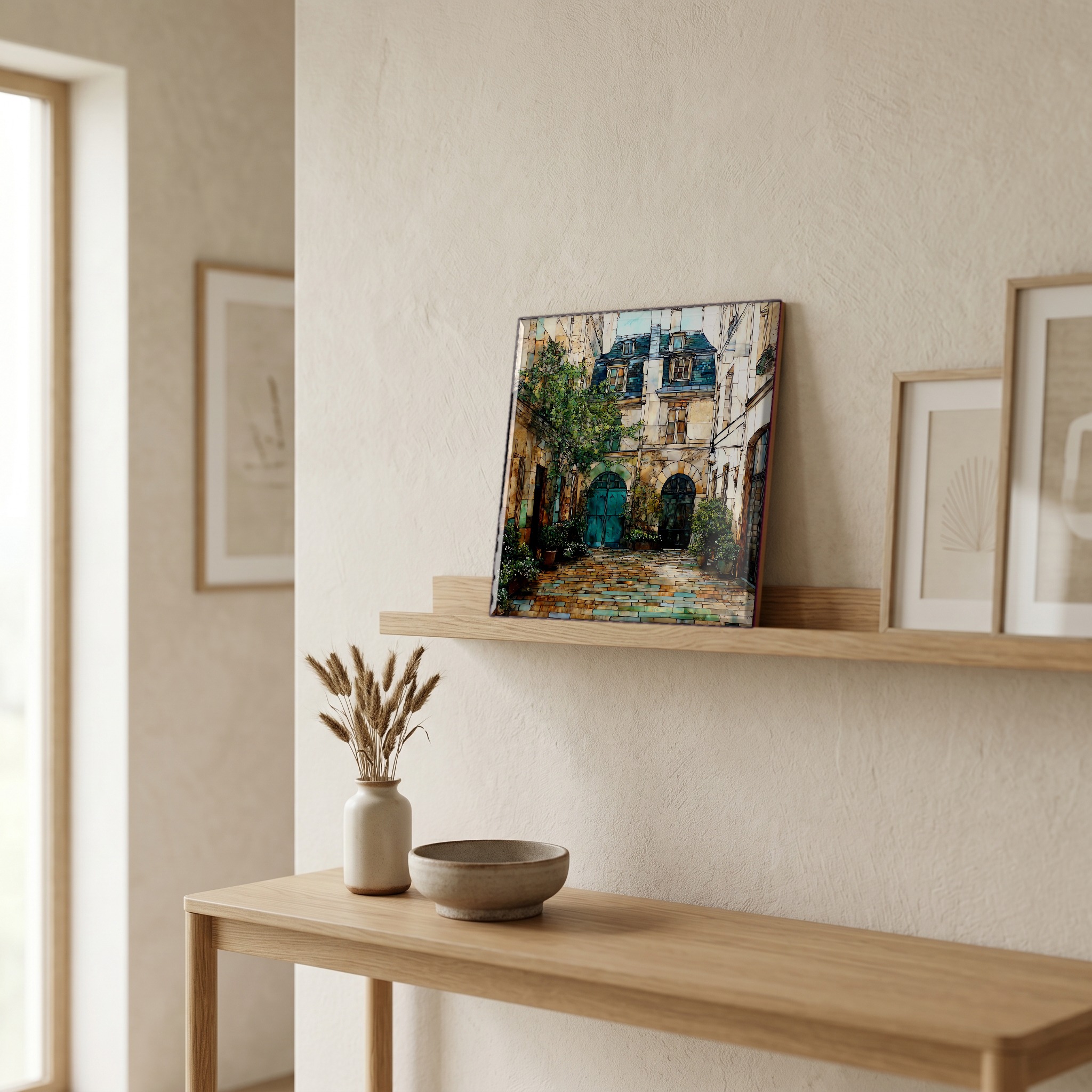
“A door tall enough for a horse and carriage opens off a Marais street, and the city goes away. Cobblestones worn pale by four hundred years of rain. A stone staircase climbing one wall, wisteria climbing another. The 17th-century hôtels particuliers of the 3rd and 4th arrondissements all hold this kind of room: a square of held quiet behind a porte cochère, the noise of rue des Francs-Bourgeois twenty feet away and already gone. Most are private. The ones open as museums (Carnavalet, the Picasso, Cognacq-Jay) let you stand in it for the price of admission.
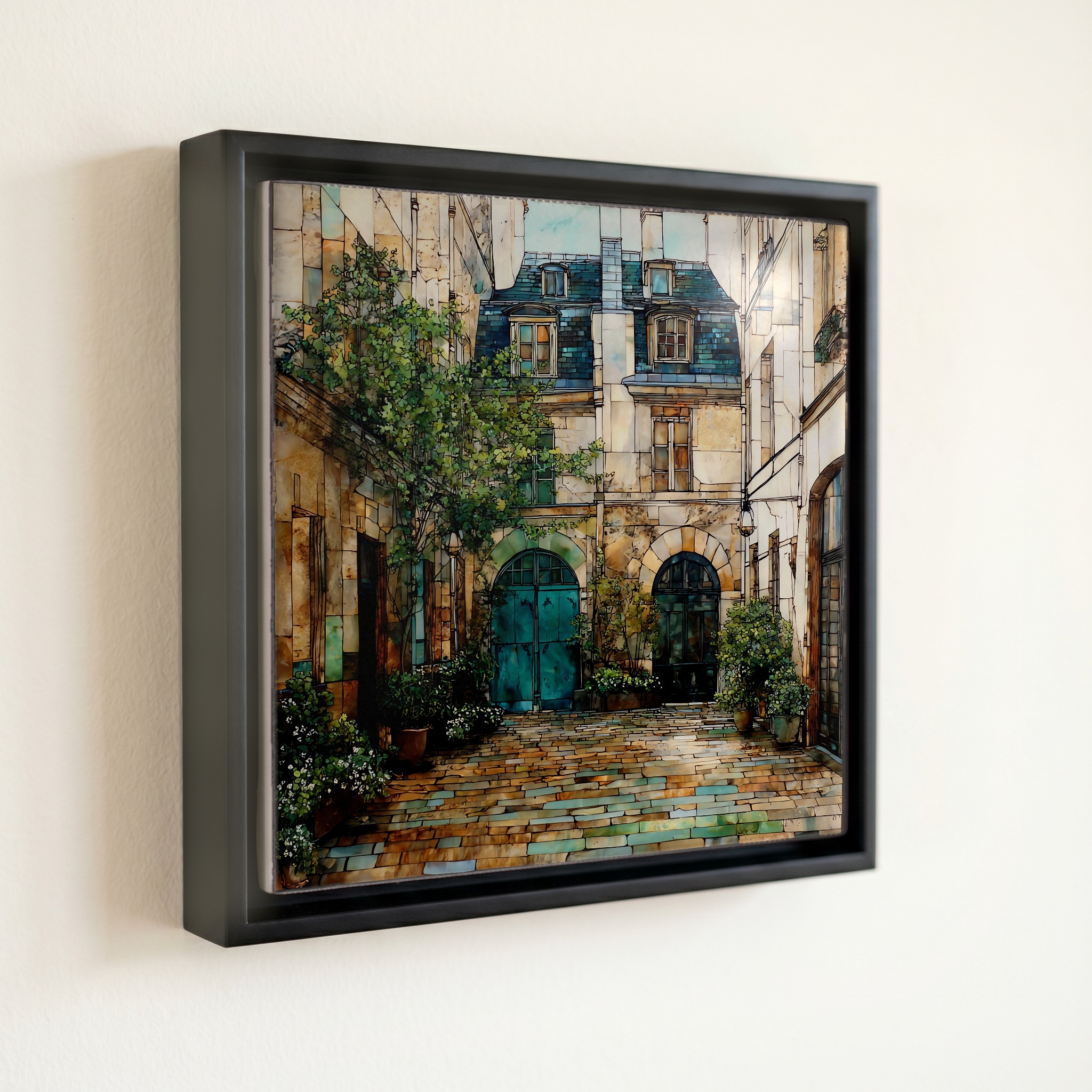
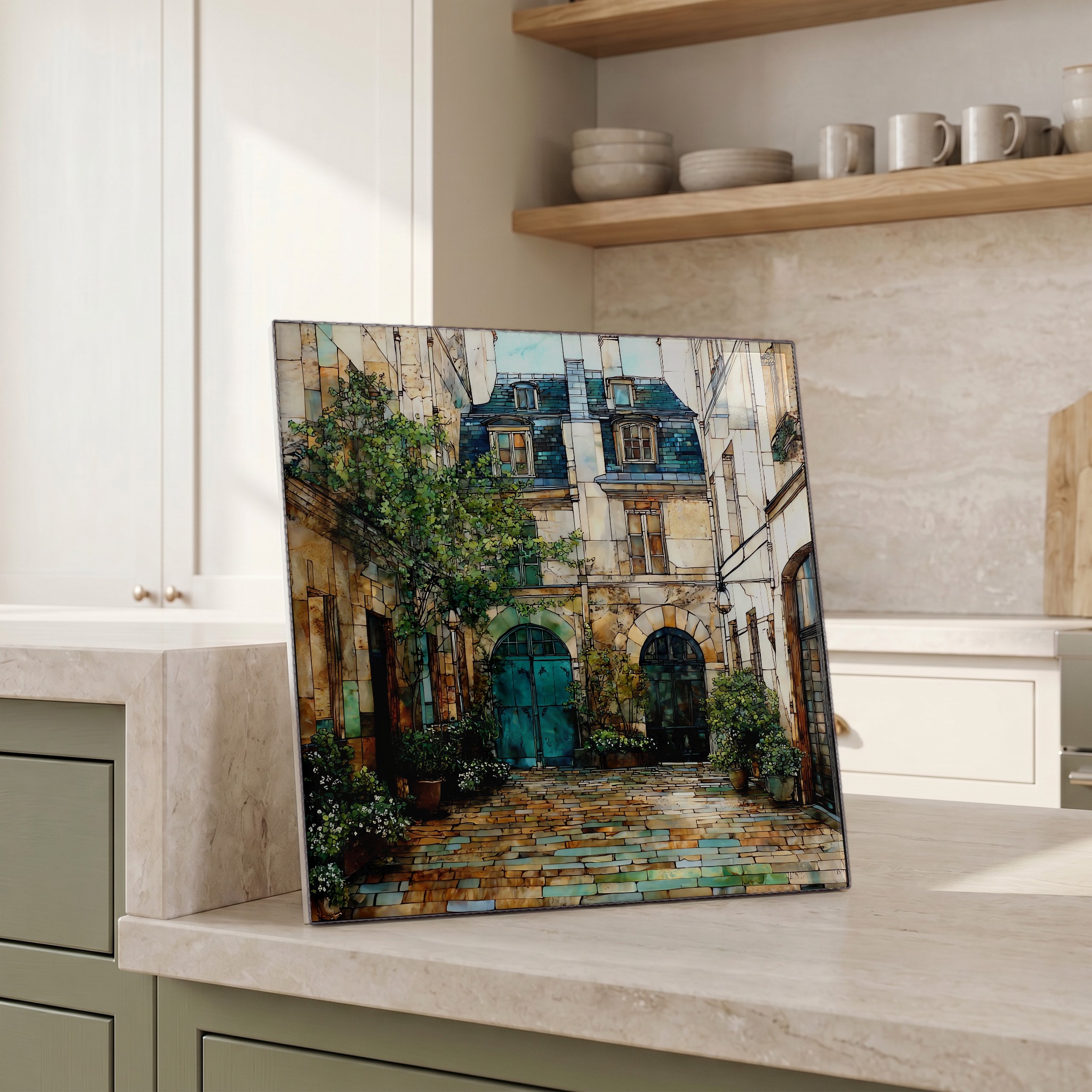
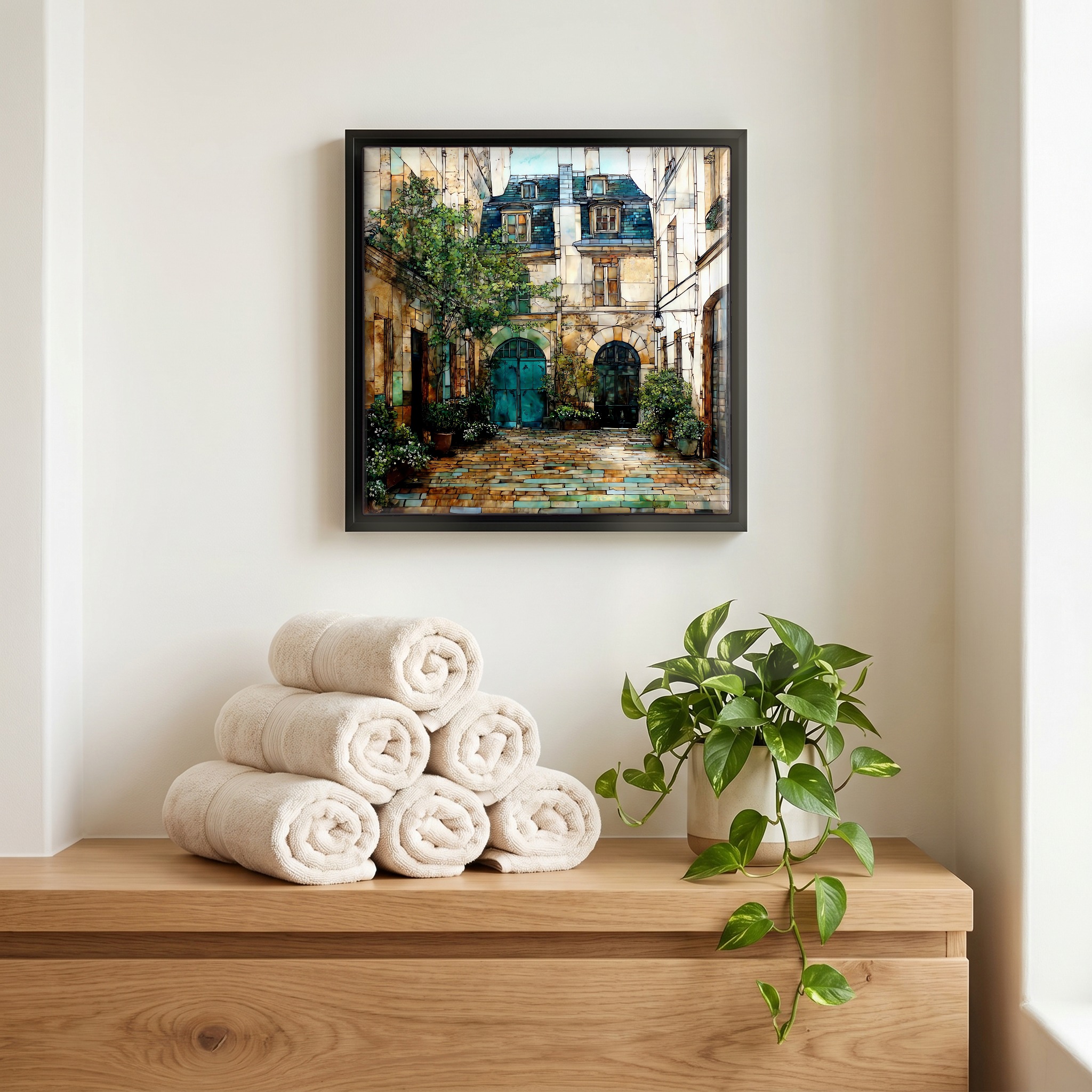
Marais Courtyard, on ceramic.
Each tile is finished by hand in our Knoxville studio. Artwork is slowly infused into the ceramic surface under high heat and pressure, and rests beneath a thin glossy finish. The colour lives in the surface, not on top of it.
Pick any four 4-inch tiles — National Parks you've been to, a Smokies set, the four seasons of one place. $ for a set of , cork-backed, ready to live on the table.
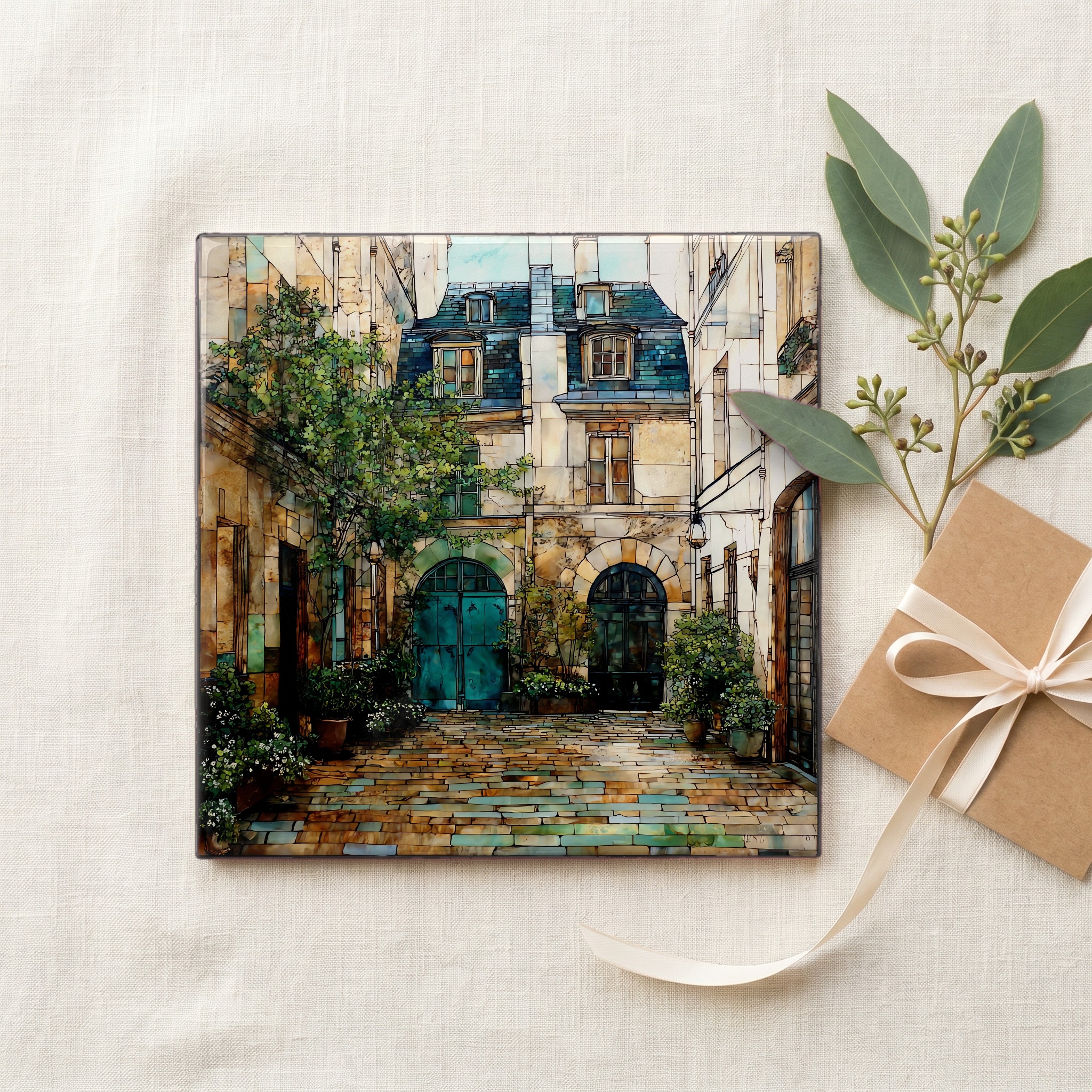
Each tile ships in a kraft box, tied with cream ribbon, with a handwritten note from the studio if you'd like to add one.
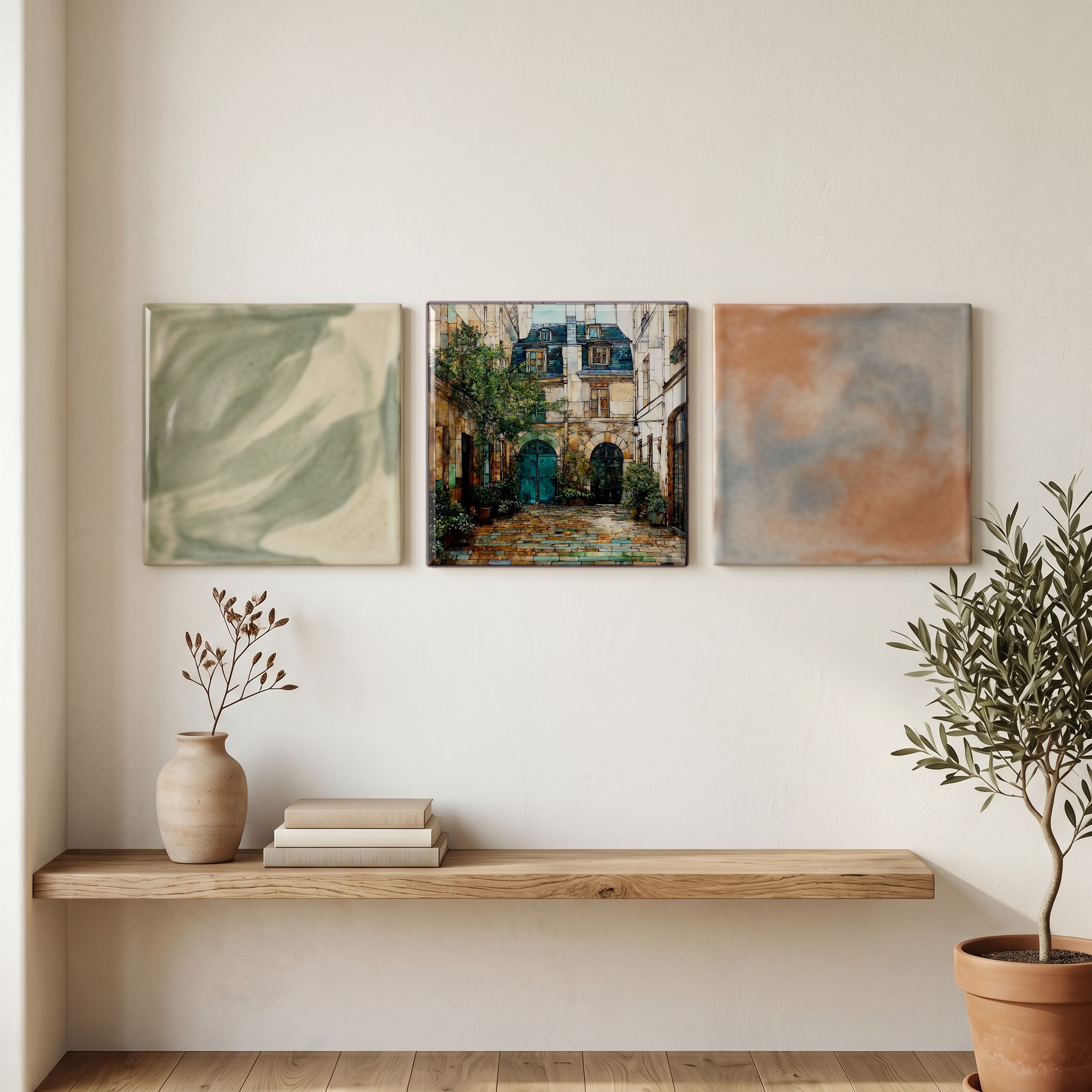
Three or five different vistas, hung together — a chapter of places you've been, or want to go.
The place, in three passes.
The Marais spans the 3rd and 4th arrondissements of Paris on the Right Bank of the Seine, between the Centre Pompidou and the Place de la Bastille. Its name, French for marsh, refers to the swampy ground drained in the 13th century by the Knights Templar and the Order of Saint-John. Aristocratic Paris arrived in the 17th century: Henri IV's Place Royale, opened in 1612 and later renamed Place des Vosges, set the tone, and the surrounding streets filled with hôtels particuliers, private mansions built around inner courtyards reached through tall portes cochères. The quarter survived Baron Haussmann's 19th-century rebuild largely intact, which is why its street plan still reads medieval.
The classic Marais courtyard is paved in pavé de Paris, the small granite setts laid in fan patterns that came to define Haussmann-era streets but which the Marais predates by two centuries. Three or four storeys of cut limestone rise on each side, faced with iron balconies and steep slate mansard roofs after the 17th-century architect François Mansart, who designed the south wing of the Hôtel Carnavalet around 1660. A stone staircase, often spiralling, climbs one wall. Wisteria or Virginia creeper takes the rest by spring. The Hôtel de Sully (1625) and the Hôtel Salé (1659, now the Musée Picasso) are the most studied surviving examples, and both are open to visitors.
Most of the great Marais courtyards belong to private residences and are closed to the public. The accessible ones are inside the quarter's museums: the Musée Carnavalet on rue de Sévigné (free admission to the permanent collection, closed Mondays), the Musée Picasso on rue de Thorigny (ticketed, closed Mondays), and the Hôtel de Sully, whose cobbled courtyard is a free public passage between rue Saint-Antoine and the Place des Vosges during daylight hours. The Journées Européennes du Patrimoine, on the third weekend of September, open dozens of normally private hôtels for two days each year. The Métro stations Saint-Paul (line 1) and Chemin Vert (line 8) sit at the quarter's spine.