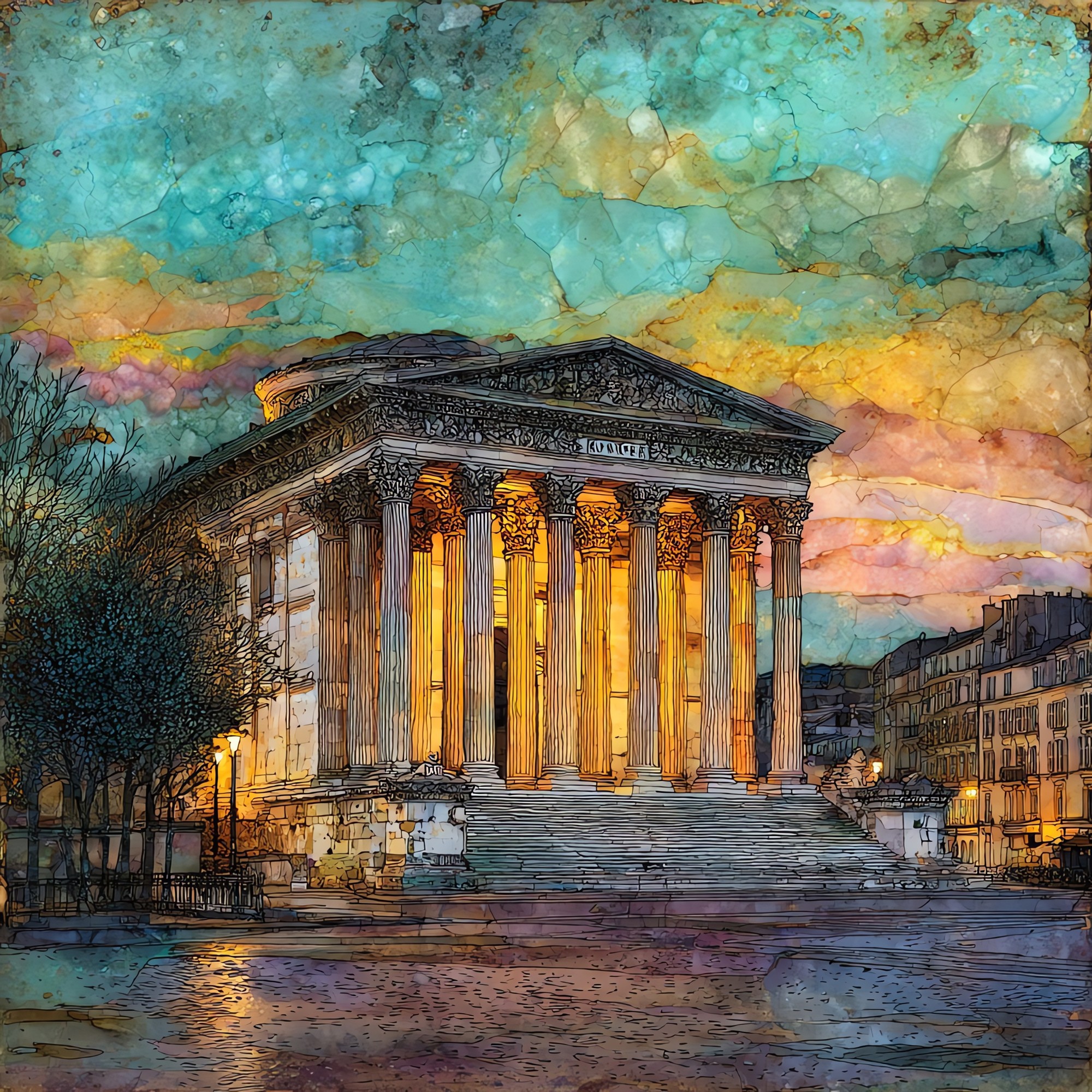
Maison Carree
— the temple the centuries left alone.
Not only on a wall.
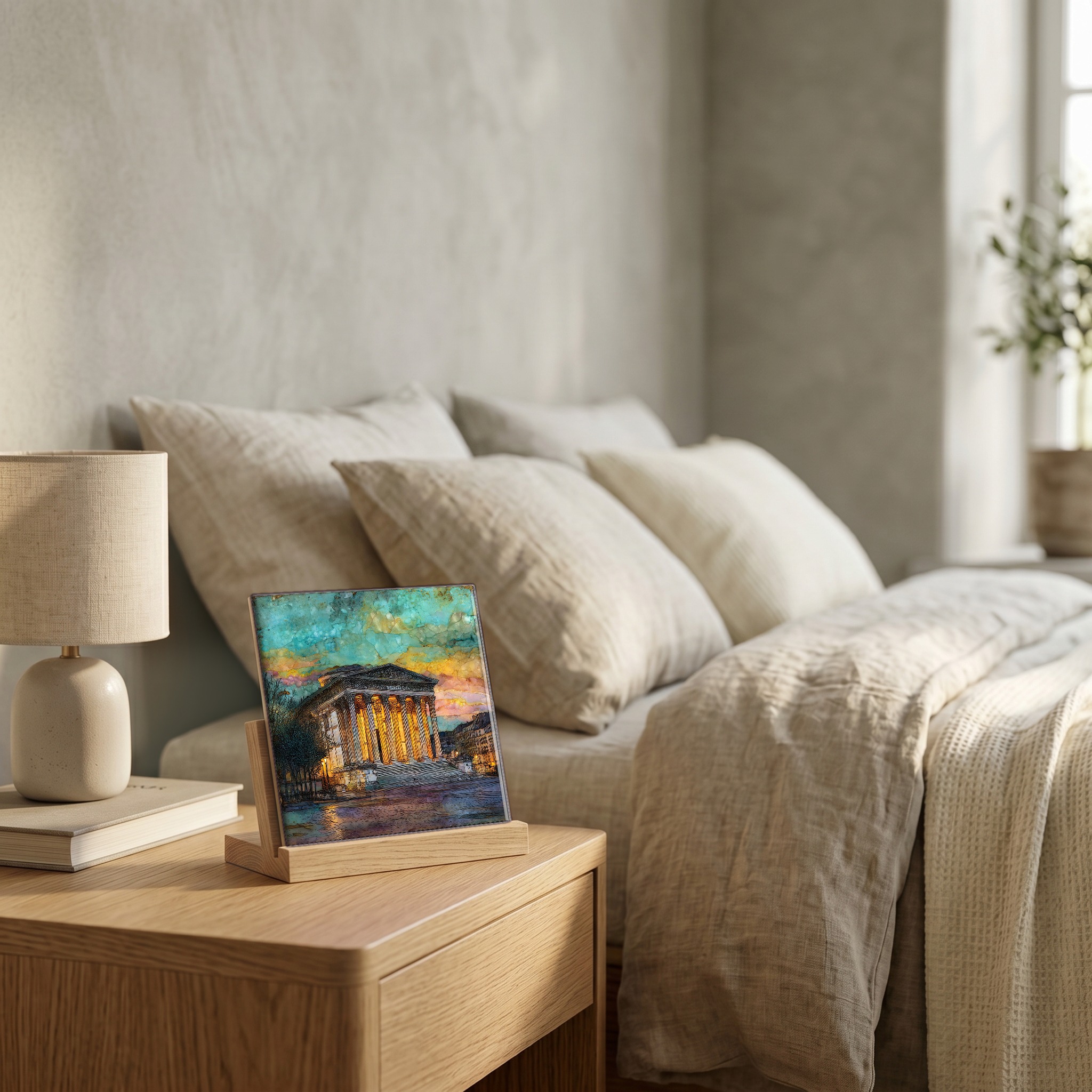
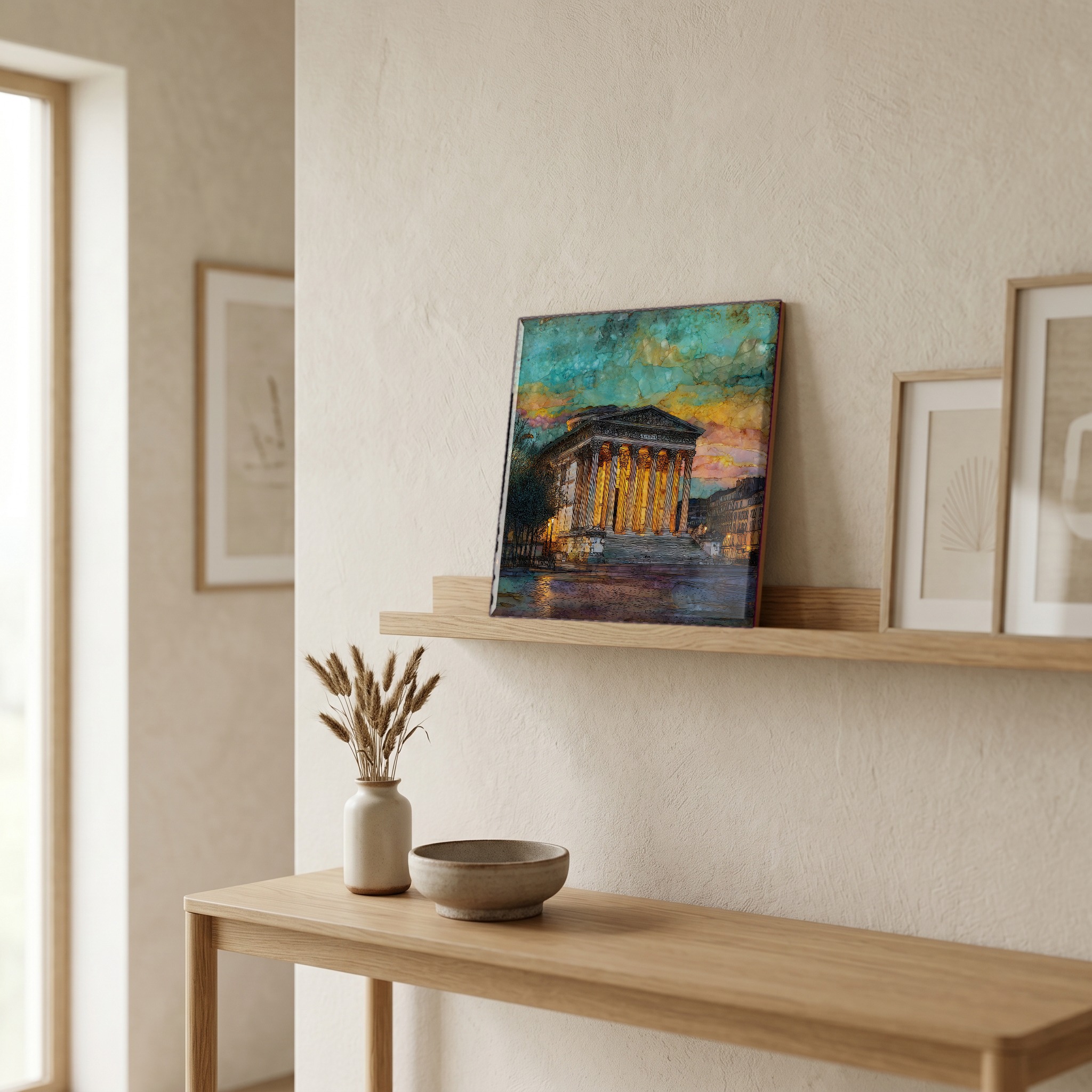
“A small Roman temple in the old centre of Nîmes, more or less intact after two thousand years. Built early in the first century, dedicated to two of Augustus's grandsons. Six Corinthian columns at the front, a tall podium, the warm pale limestone of the Gard. Thomas Jefferson had a stucco model made of it in 1785 while American minister to France, and copied the plan for the Virginia State Capitol. UNESCO added it to the World Heritage list in 2023, late recognition for something that has been quietly standing in plain view for the whole of European history.
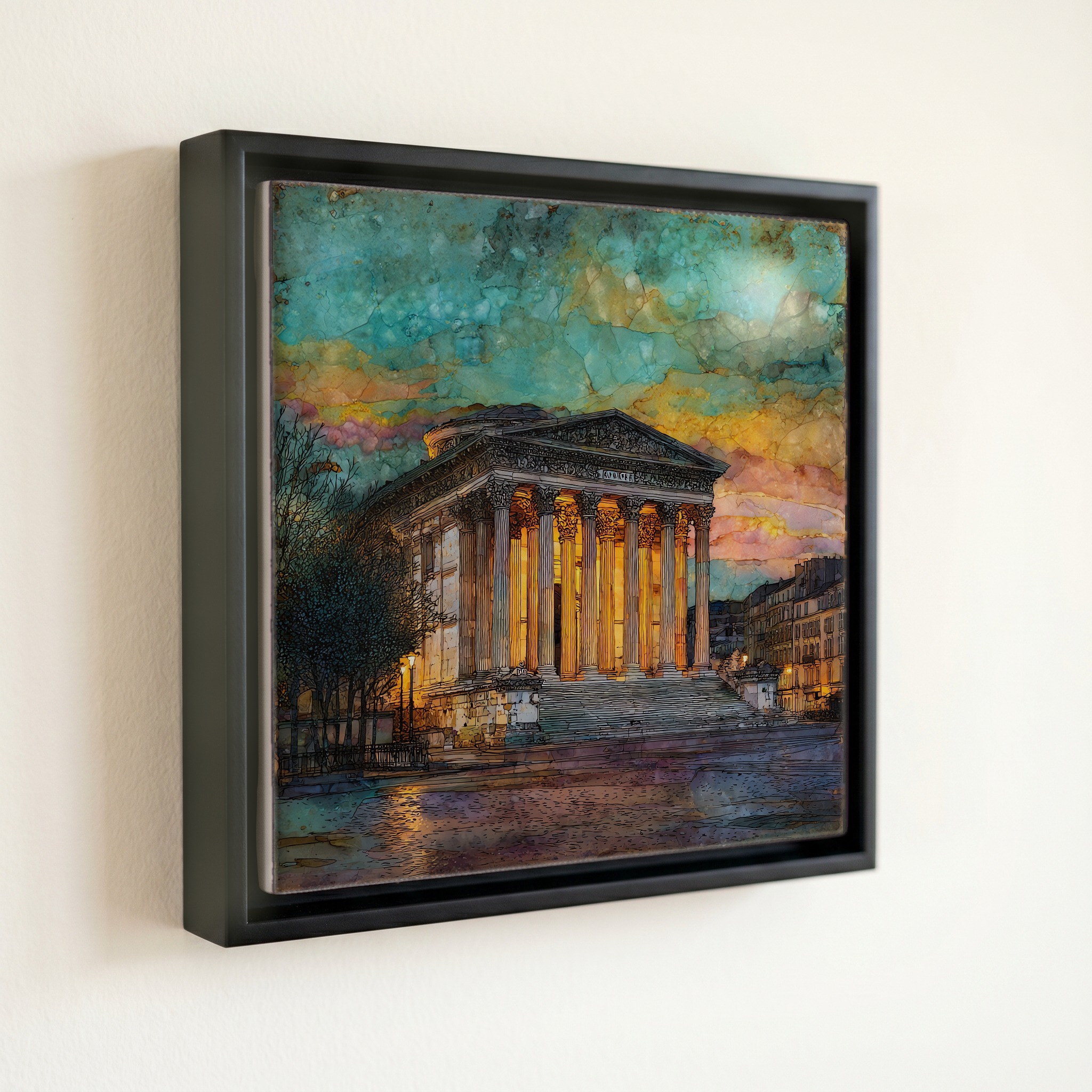
Maison Carree, on ceramic.
Each tile is finished by hand in our Knoxville studio. Artwork is slowly infused into the ceramic surface under high heat and pressure, and rests beneath a thin glossy finish. The colour lives in the surface, not on top of it.
Pick any four 4-inch tiles — National Parks you've been to, a Smokies set, the four seasons of one place. $ for a set of , cork-backed, ready to live on the table.
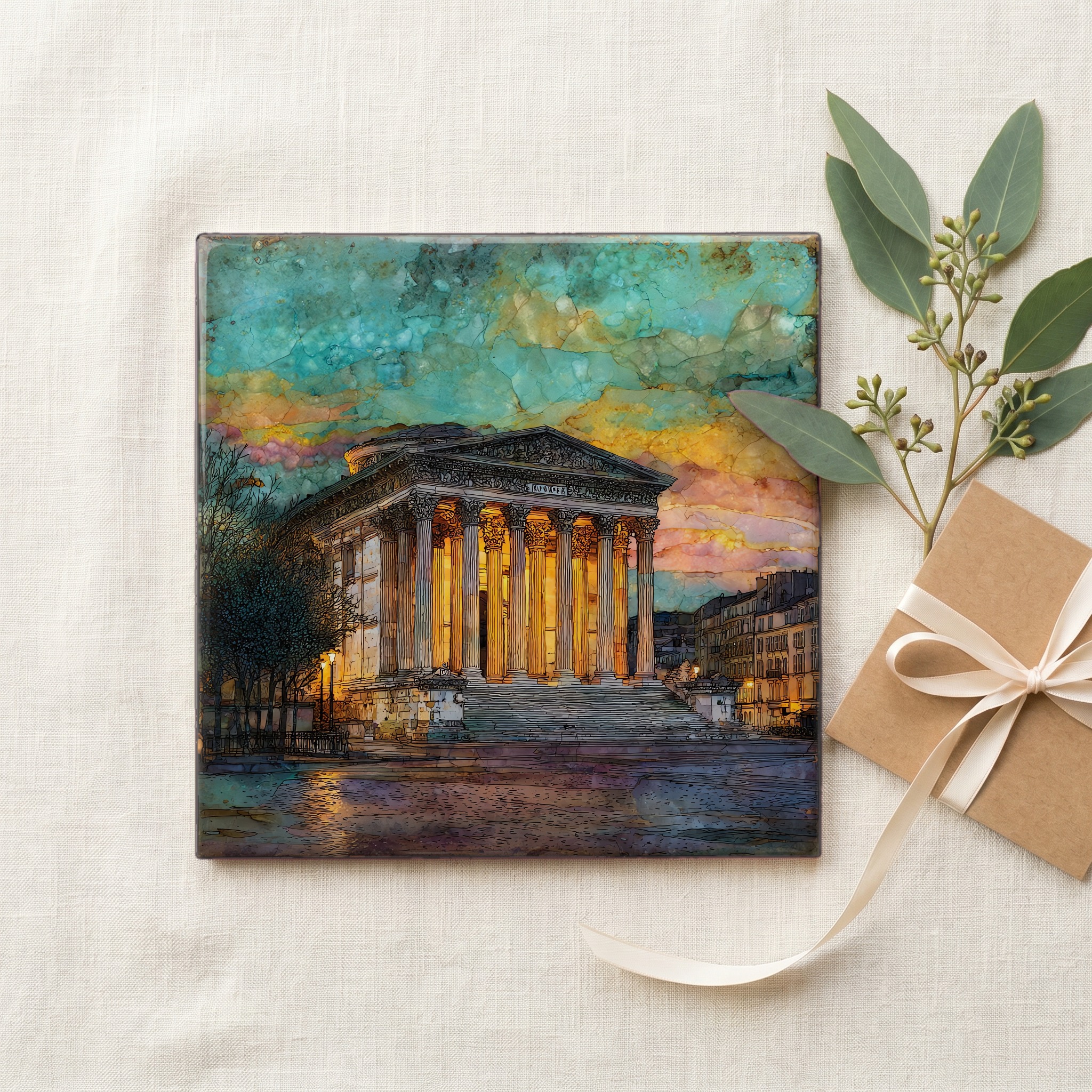
Each tile ships in a kraft box, tied with cream ribbon, with a handwritten note from the studio if you'd like to add one.
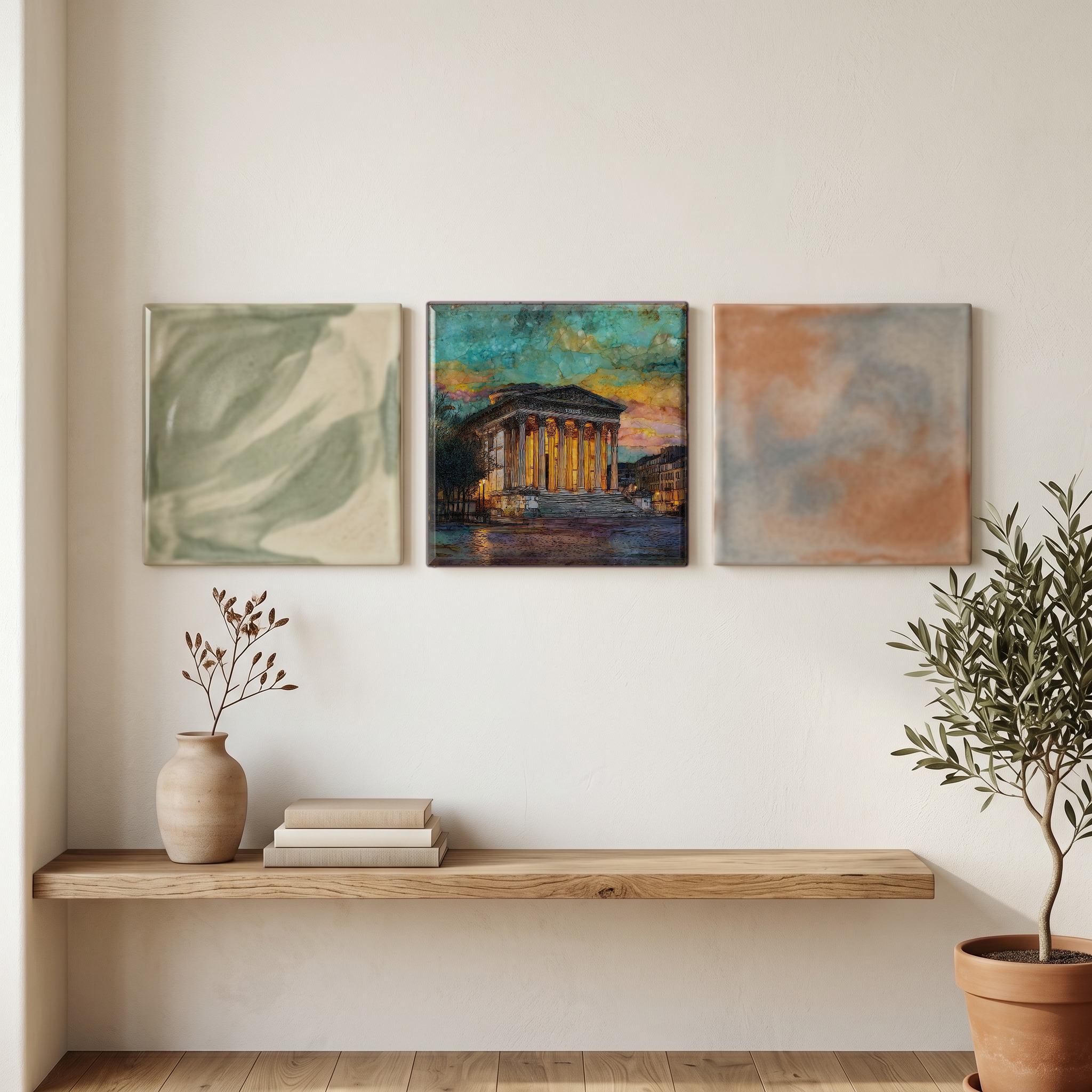
Three or five different vistas, hung together — a chapter of places you've been, or want to go.
The place, in three passes.
The Maison Carrée stands at the centre of Nîmes, a city of about 150,000 in the Gard department of southern France, roughly 30 kilometres southwest of Avignon. The temple was completed around 2 AD and inaugurated between 4 and 7 AD, as part of the forum of Roman Nemausus, the colony Augustus established for veterans of his Egyptian campaign. It sits on a high podium, hexastyle in plan, with six fluted Corinthian columns at the front and engaged columns along the sides, in the pseudoperipteral form the Romans adapted from earlier Greek and Etruscan models. Across the square stands the Carré d'Art, Norman Foster's glass-and-steel museum and library, built between 1988 and 1992 to echo the temple's proportions in modern material.
The temple is the most complete Roman temple still standing anywhere in the former empire, owing its survival to nearly two thousand years of continuous re-use through the Middle Ages and into the modern era, including a long run as the Musée des Beaux-Arts de Nîmes from 1821 to 1907. The limestone is local, quarried from the hills of the Gard, and was carved in the high Augustan style at the moment Roman architecture was setting the templates for the rest of European public building. The dedication inscription on the frieze, lost over the centuries, was reconstructed in 1758 by the Nîmes scholar Jean-François Séguier from the pattern of nail-holes left in the cornice. The holes had once held bronze letters reading to Gaius and Lucius Caesar, the grandsons and adopted heirs of the emperor Augustus.
The temple is open every day, with reduced winter hours and longer hours in summer, and a modest entrance fee. Combined tickets cover the Maison Carrée, the Arena of Nîmes, and the Tour Magne, the three Roman monuments of the city. The cella now houses a short film and an exhibition on Roman Nemausus. The square in front is closed to vehicles and lined with cafés, so the high podium reads at human scale from the seats below. Nîmes itself sits on the LGV Méditerranée high-speed line, with TGV service to Paris in about three hours and to Marseille in less than one. The Pont du Gard, the Roman aqueduct that once brought water to Nemausus, is about twenty-five kilometres to the northeast.