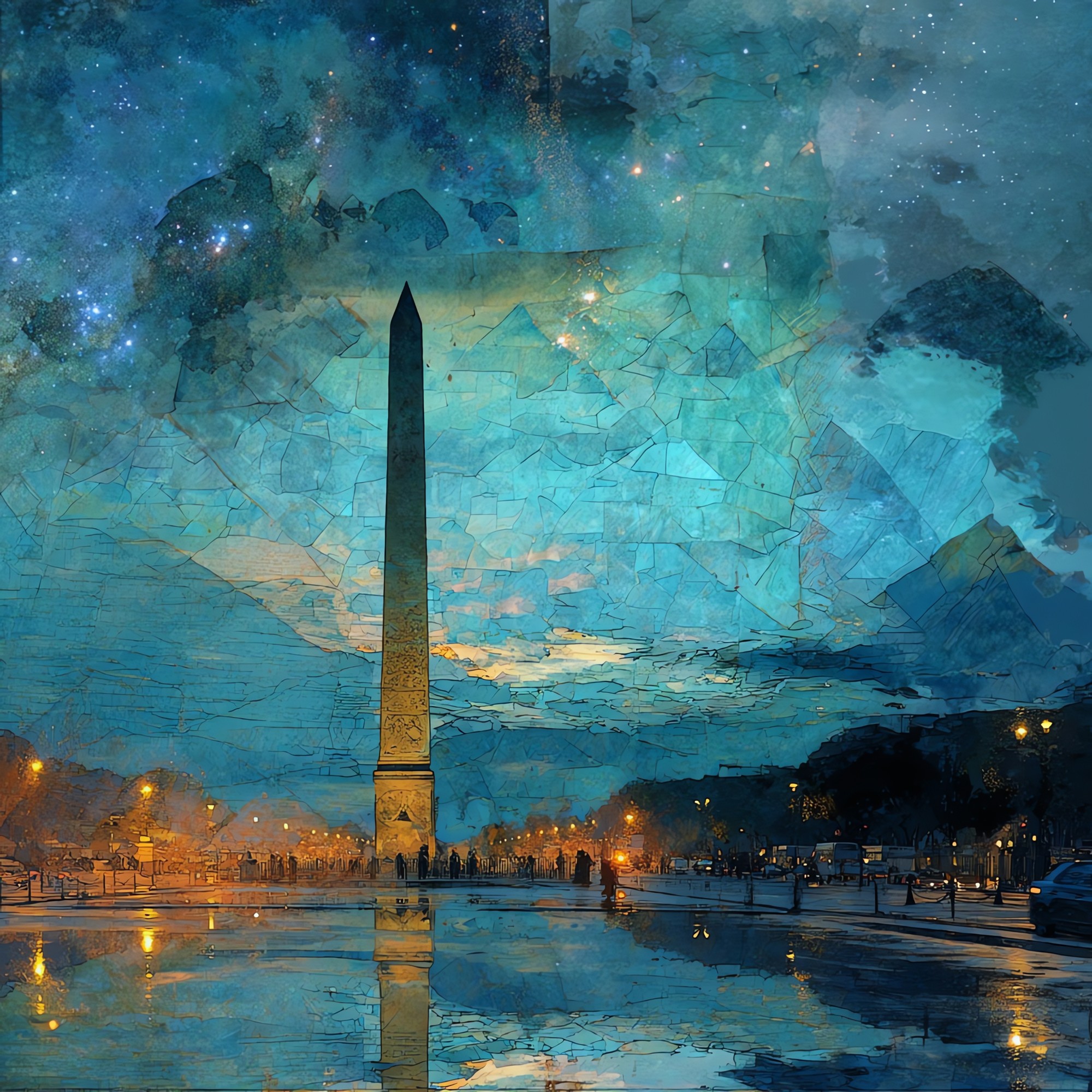
Luxor Obelisk
— older than the city it stands in.
Not only on a wall.

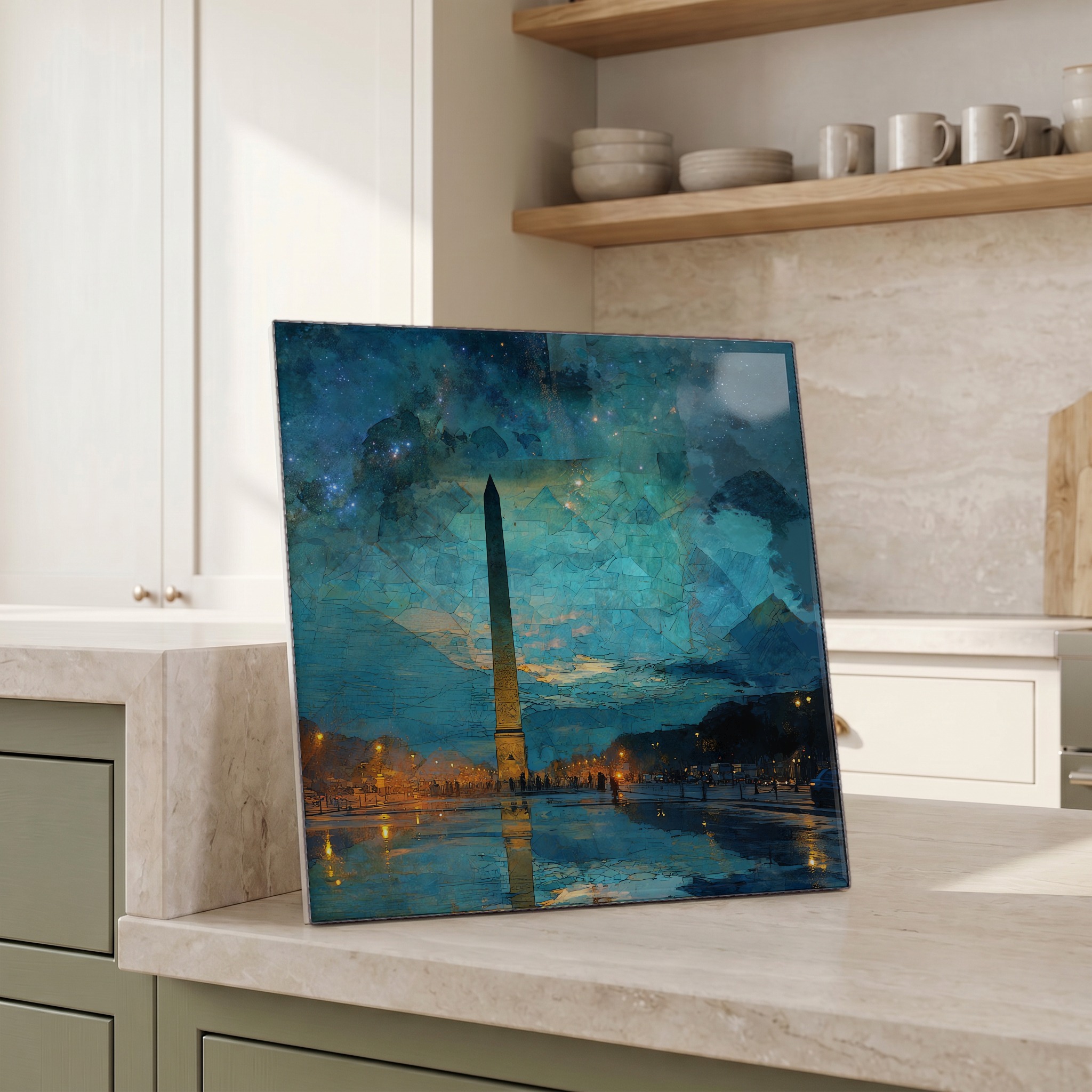


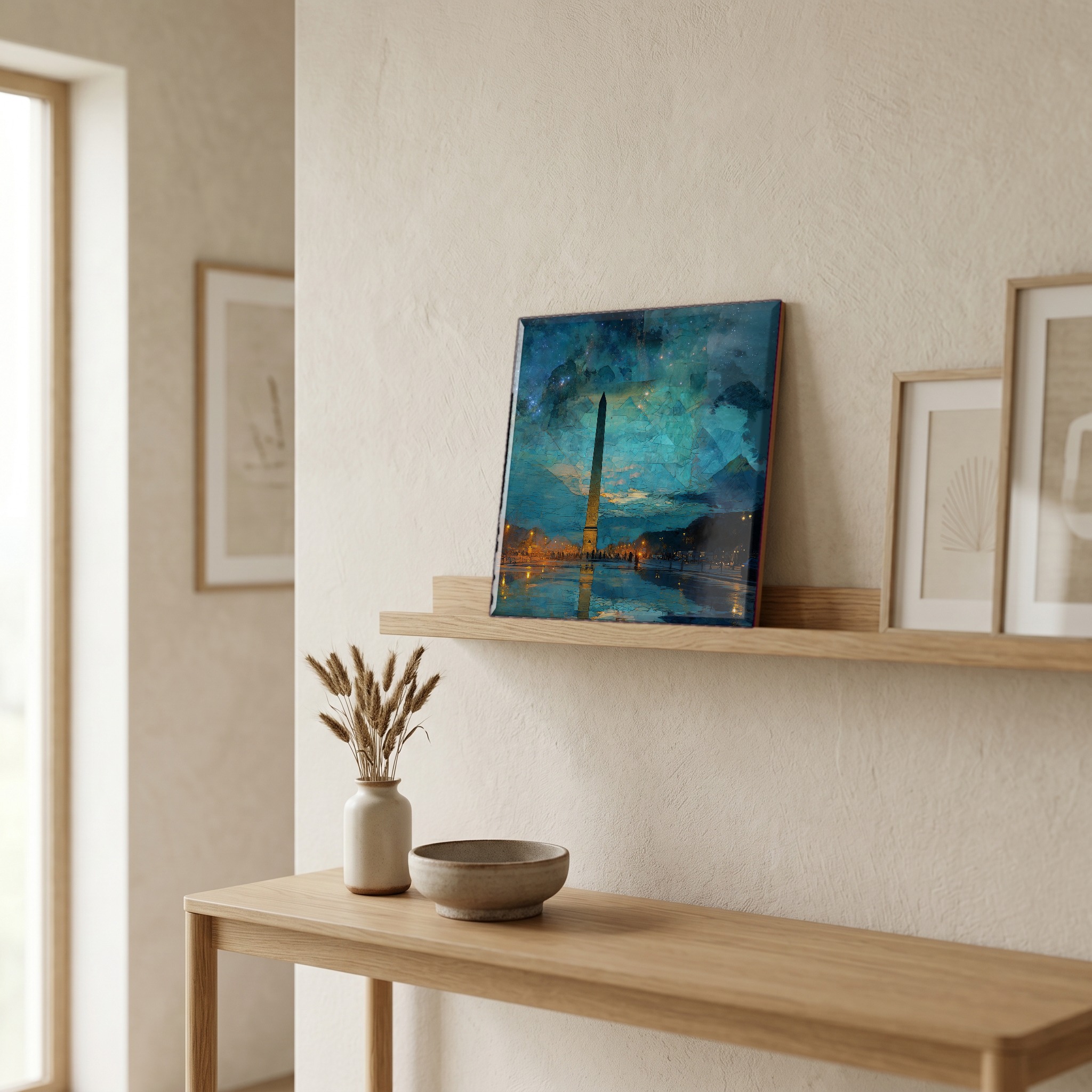
“The Luxor Obelisk stands at the center of Place de la Concorde, between the Tuileries and the Champs-Élysées. Cut from yellow granite at Aswan and raised at the entrance to Luxor Temple under Ramesses II, it stood in Egypt for some three thousand years before Muhammad Ali offered it to France. It was reset in the square on October 25, 1836, while two hundred thousand Parisians watched. The traffic comes around it now in two lanes. The gold pyramidion at the top catches the last light over the Seine.
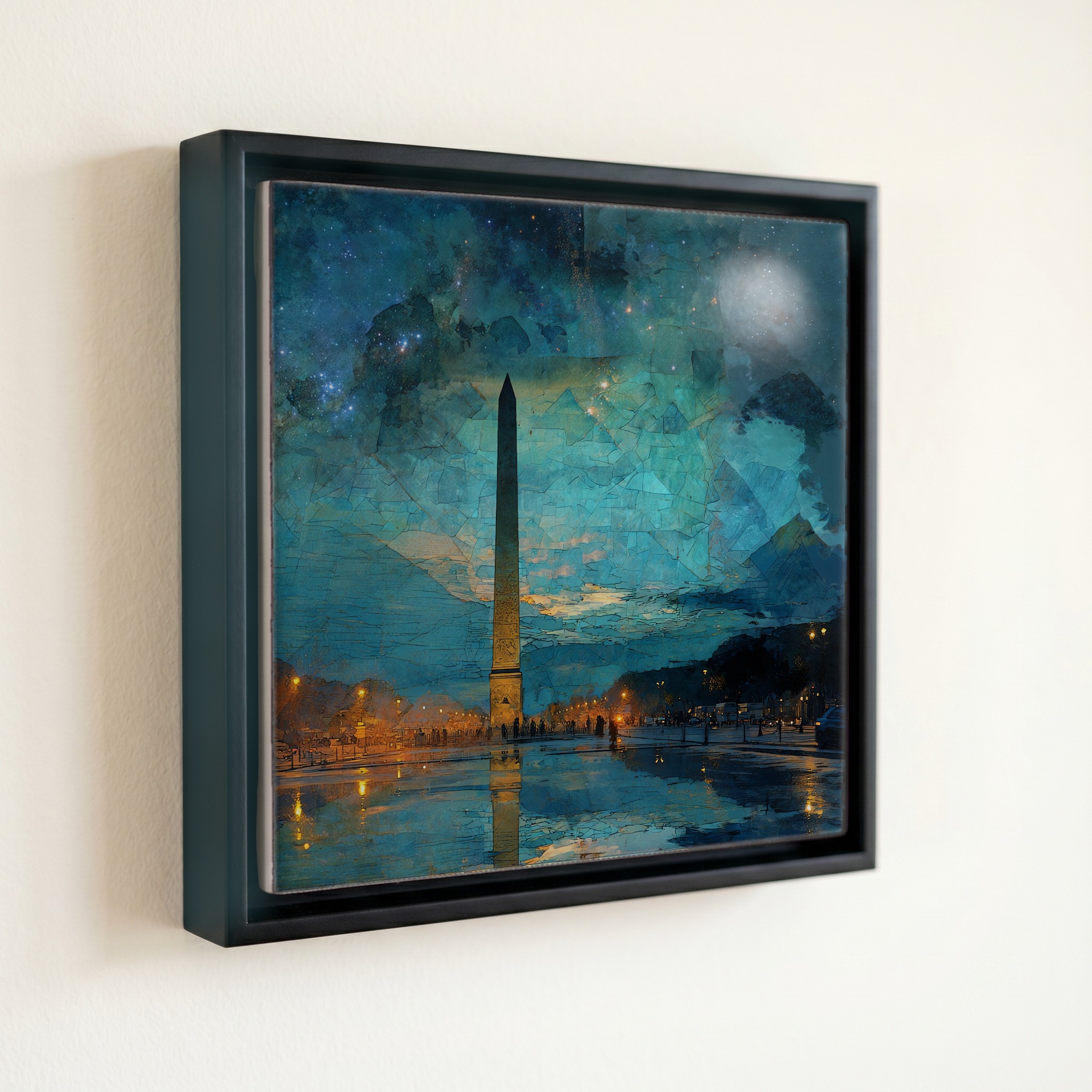
Luxor Obelisk, on ceramic.
Each tile is finished by hand in our Knoxville studio. Artwork is slowly infused into the ceramic surface under high heat and pressure, and rests beneath a thin glossy finish. The colour lives in the surface, not on top of it.
Pick any four 4-inch tiles — National Parks you've been to, a Smokies set, the four seasons of one place. $ for a set of , cork-backed, ready to live on the table.

Each tile ships in a kraft box, tied with cream ribbon, with a handwritten note from the studio if you'd like to add one.

Three or five different vistas, hung together — a chapter of places you've been, or want to go.
The place, in three passes.
The Luxor Obelisk sits at the center of Place de la Concorde, the largest public square in Paris and the western anchor of the city's grand historic axis. The square covers 8.64 hectares in the 8th arrondissement, bounded by the Tuileries garden to the east, the Seine to the south, the Hôtel de Crillon to the north, and the Champs-Élysées sweeping west toward the Arc de Triomphe. Designed by Ange-Jacques Gabriel under Louis XV and completed in 1772, the square's present form dates from Jakob Ignaz Hittorff's redesign of 1836–1840, the same campaign that set the obelisk. The square sits inside the UNESCO-inscribed Paris, Banks of the Seine zone, listed in 1991.
The obelisk is a single shaft of yellow granite from the Aswan quarries on the upper Nile, standing roughly 23 metres (75 feet) and weighing about 222 tonnes. It was cut, dressed, and inscribed under Ramesses II in the thirteenth century BCE, then raised with its twin in front of the first pylon of Luxor Temple, where it stood for some three thousand years. Muhammad Ali Pasha, viceroy of Egypt, offered it to France in 1830; the engineer Apollinaire Lebas designed the purpose-built barge Luxor to carry it down the Nile and across the Mediterranean. The installation in the square on October 25, 1836 took about two hours and drew a crowd estimated at 200,000.
The square is open and unticketed, day and night. The Concorde Métro station, served by lines 1, 8, and 12, lets out at its northern edge, and the obelisk is the only object at the square's center; the rest is fountains, statues representing eight French cities, and traffic moving in many directions. The granite reads best in late afternoon, when the western light comes down the Champs-Élysées and catches the gilded pyramidion installed in May 1998. From the western balustrade the Arc de Triomphe sits about 1.9 kilometres up the axis; the Louvre's glass pyramid sits roughly 700 metres east through the Tuileries.