Wender·Vista
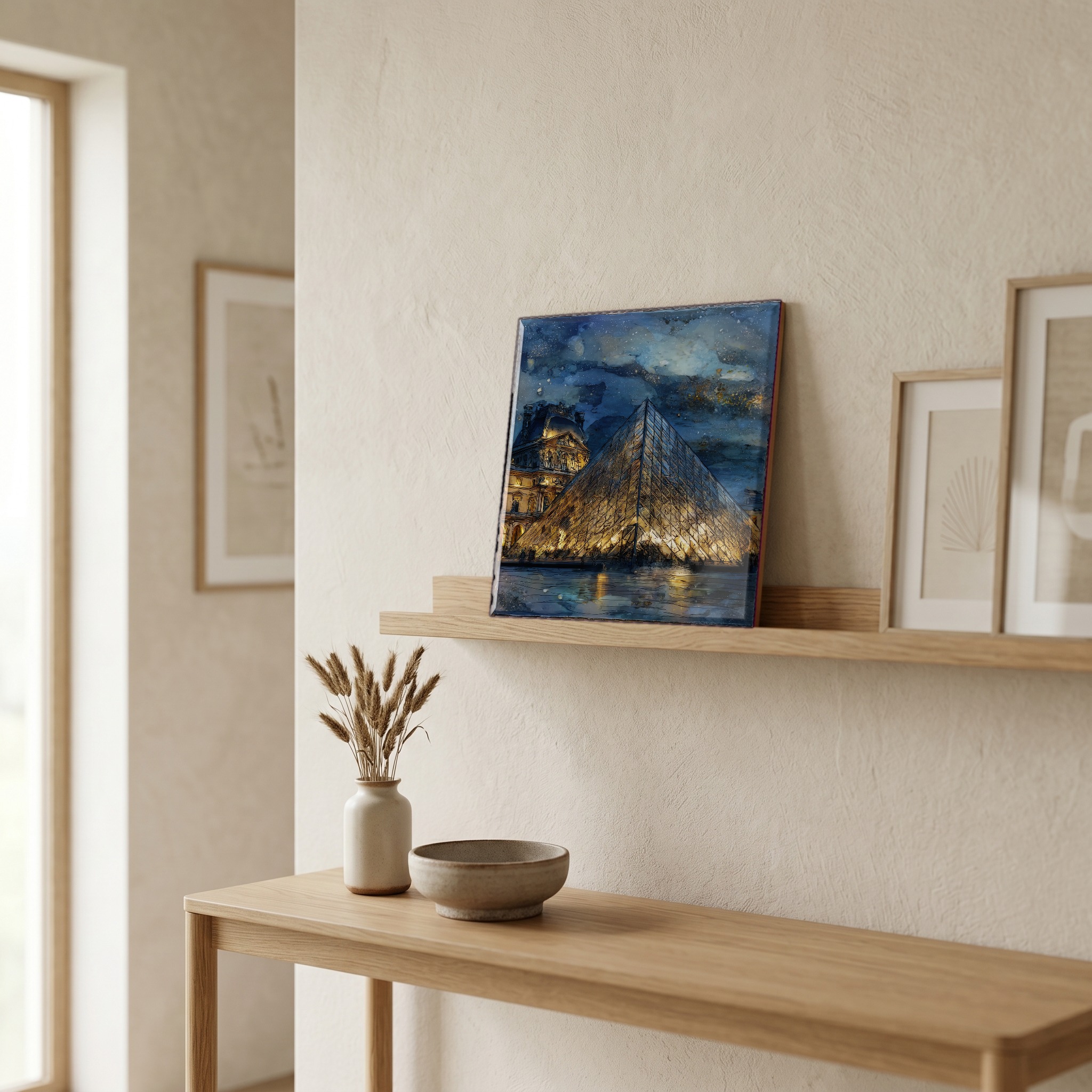
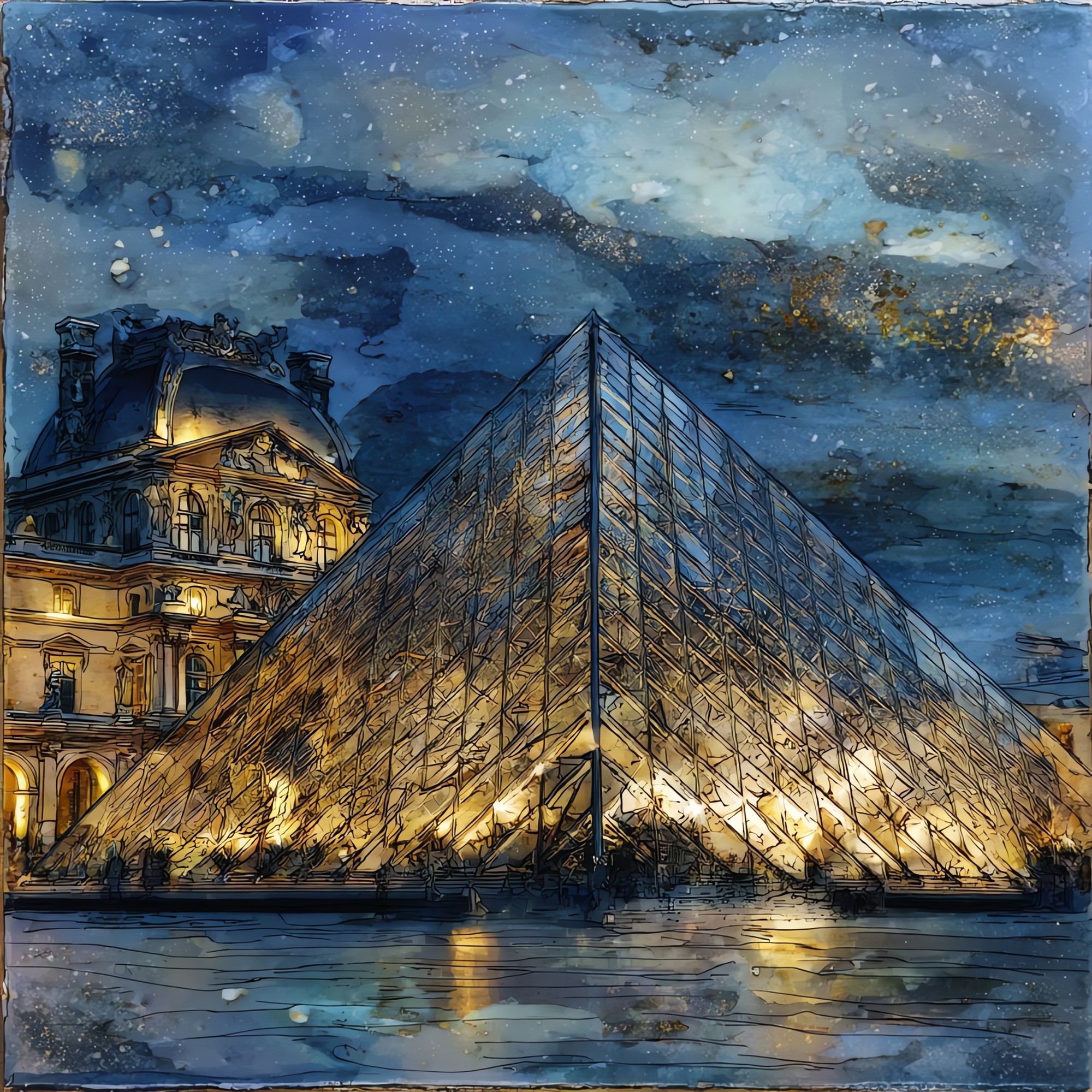
Louvre Pyramid
shown on ceramic, 12-inch tileFrance
in the courtyard of the Louvre, on the right bank of the Seine

Louvre Pyramid

— a triangle of glass in a square of stone.

Where it lives

Not only on a wall.

A small tile on the nightstand catching the morning. A larger one above the fire. Yours, wherever you spend the slow hours.
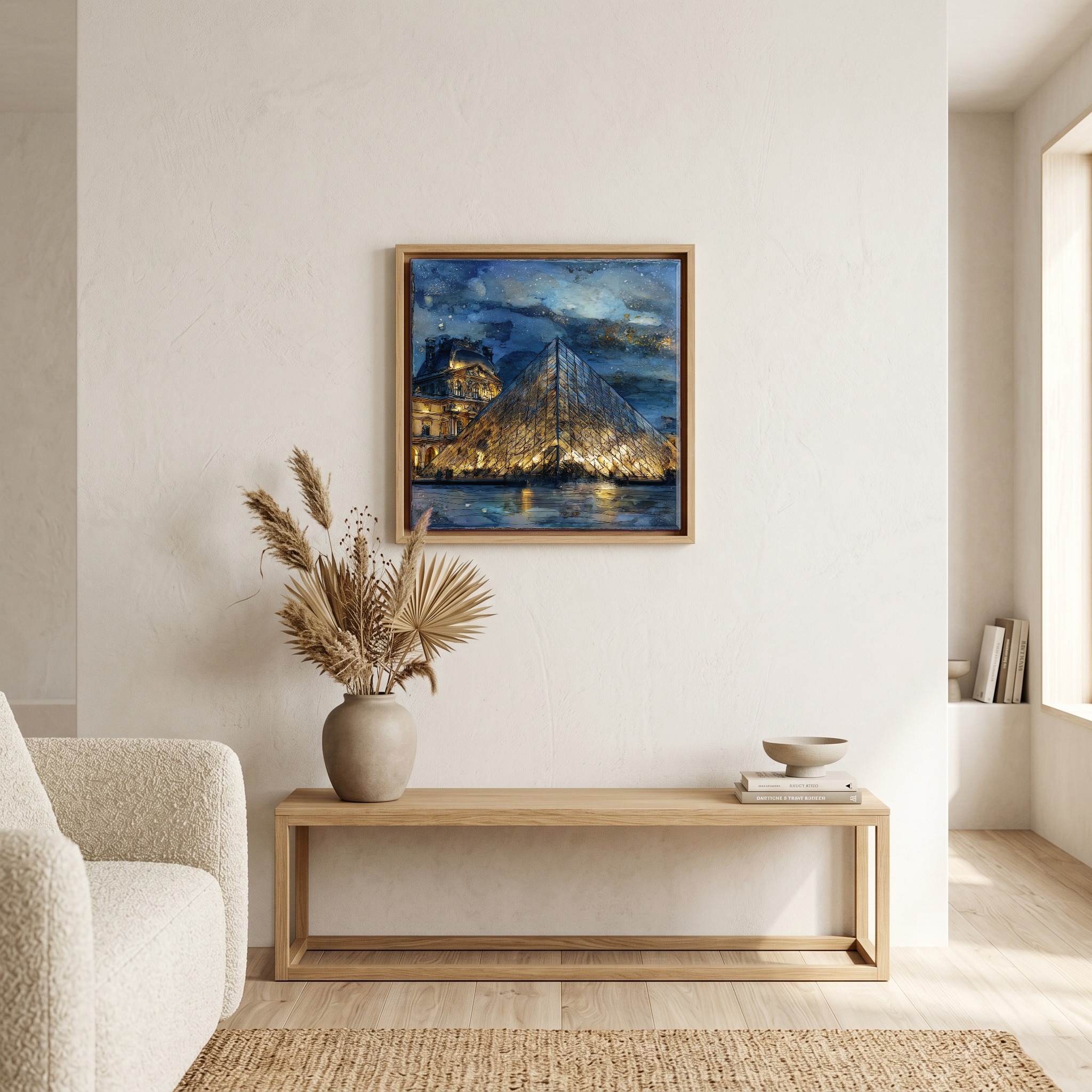
Above the bench, in a warm oak surround.
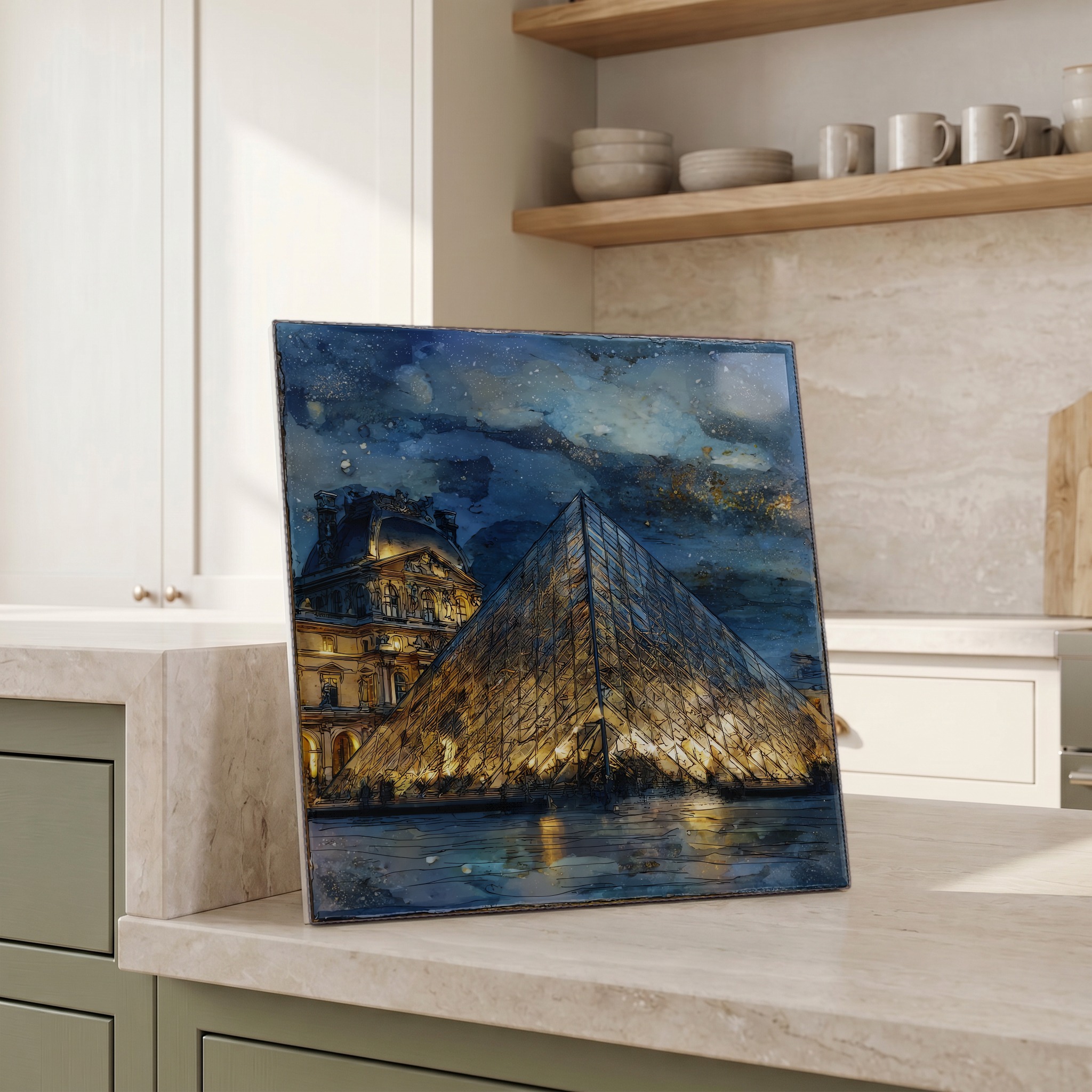
Beside the kettle, propped on the counter.
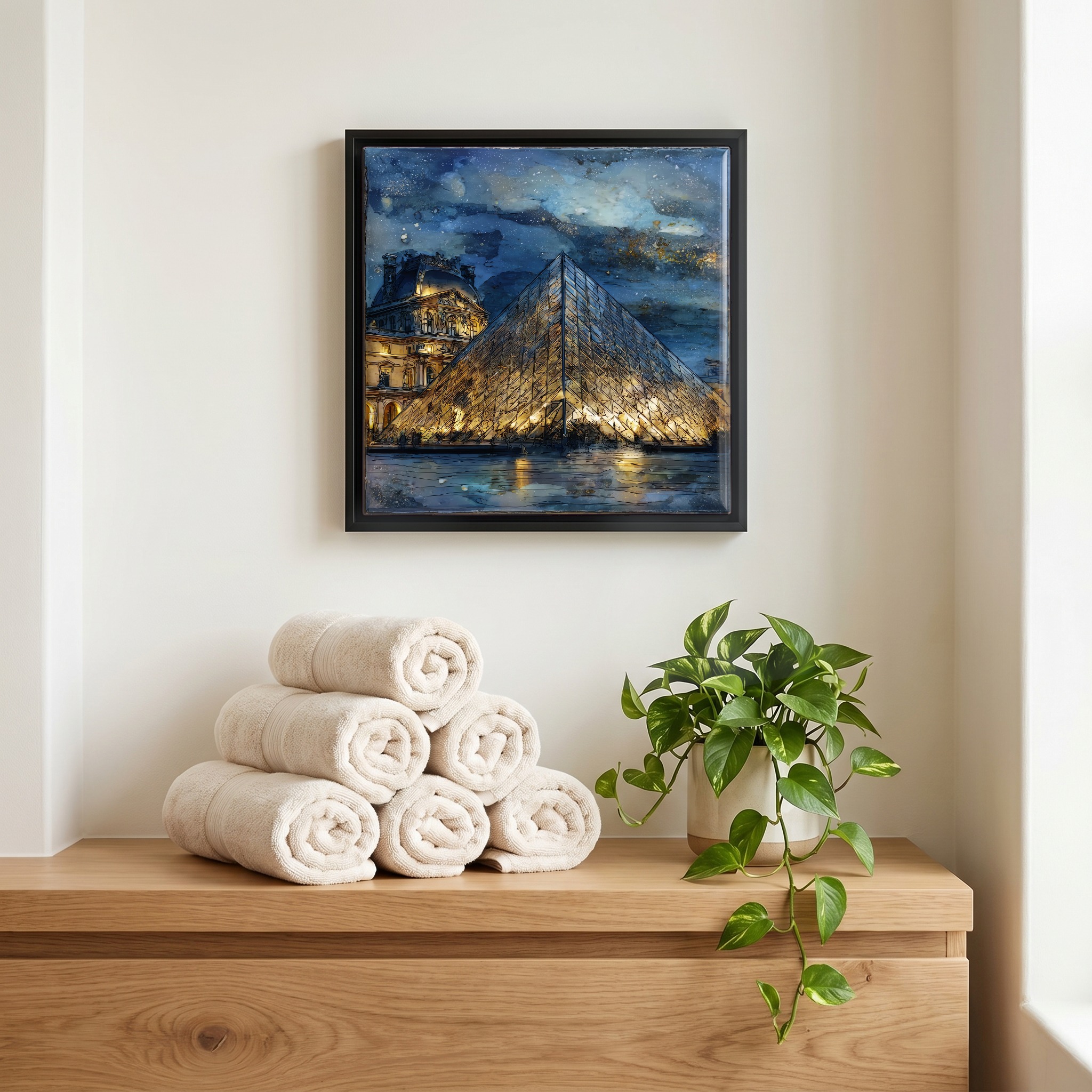
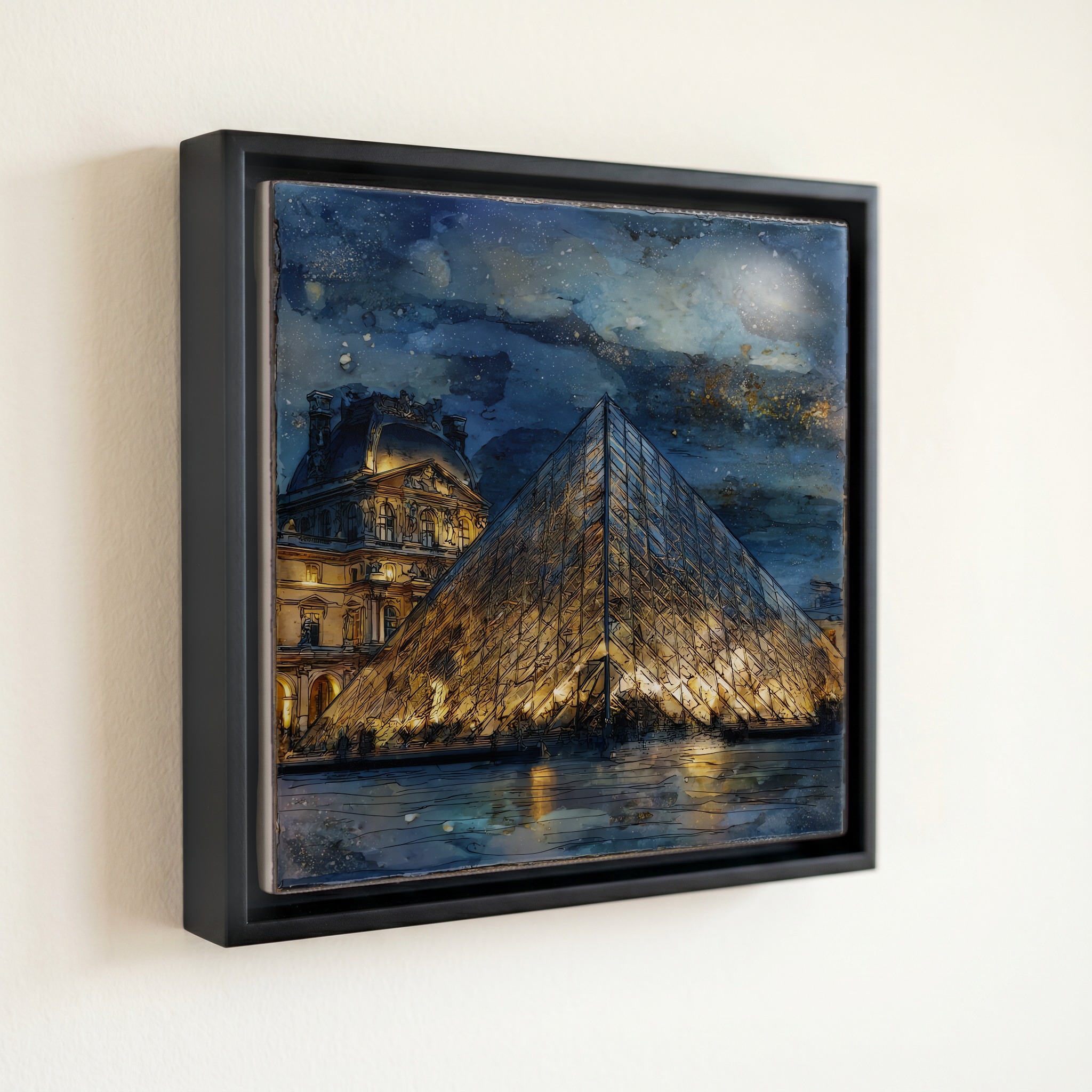
Above the linens, in a slim black surround.
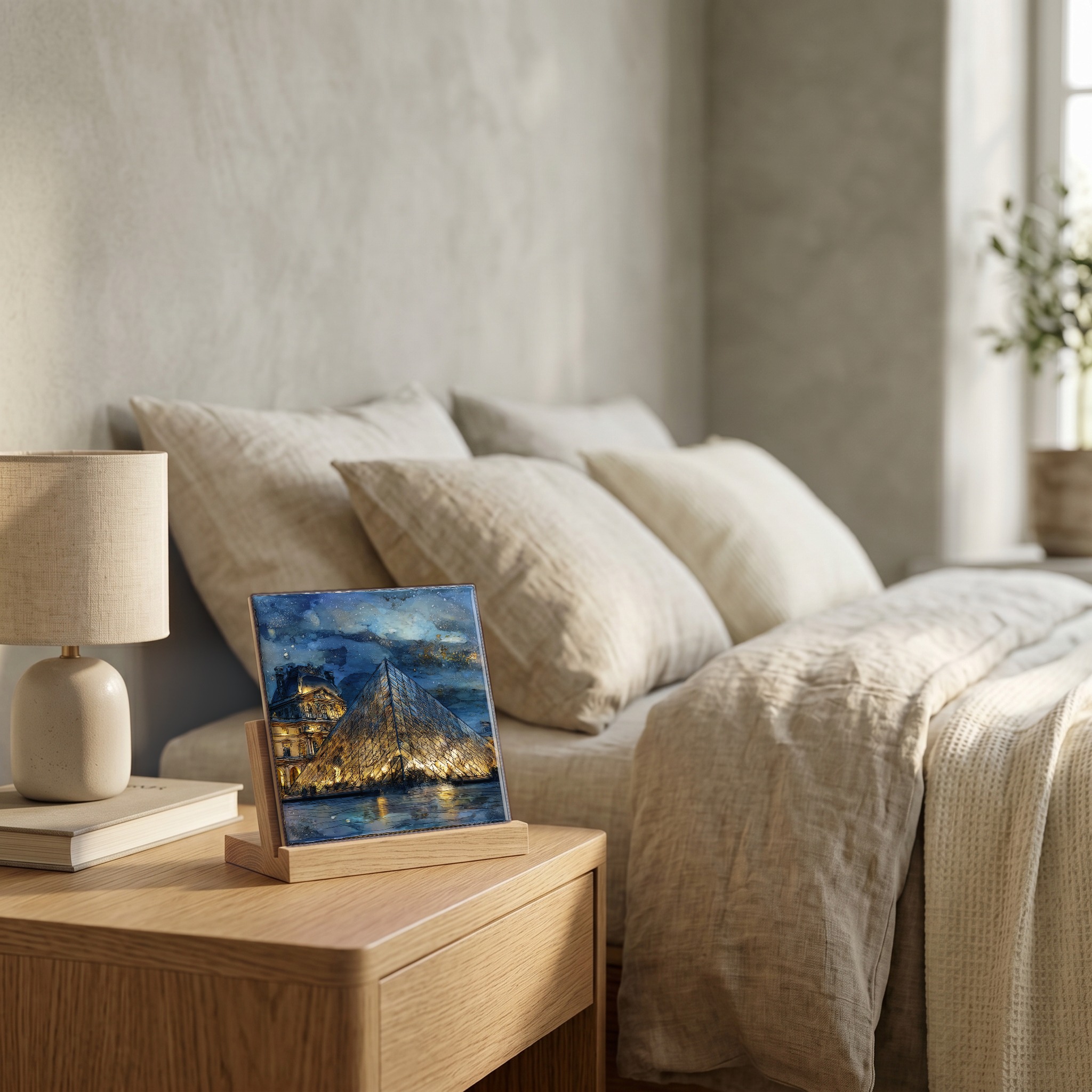
On the nightstand, on a light oak stand.
On a picture ledge, where the light comes in.
a note from the studio

Glass and steel set down in a courtyard that had held only stone for four centuries. I. M. Pei's pyramid opened to the public in 1989. It was controversial then and beloved now. Twenty-one metres high, square at the base, sharp at the apex. The light comes down through it into the lobby; people queue beneath it, by it, in its reflection in the fountains. The old palace stands on all four sides. The Mona Lisa is downstairs. The line the geometry makes against the Renaissance facades is the photograph everyone takes, and it works every time.
from the studio
shown in a slim black floating frame · 6 × 6 in
— bring it home

Louvre Pyramid, on ceramic.

Each tile is finished by hand in our Knoxville studio. Artwork is slowly infused into the ceramic surface under high heat and pressure, and rests beneath a thin glossy finish. The colour lives in the surface, not on top of it.

What kind of piece?
One tile — square or rectangle.
How big?
the popular one — counter, shelf, nightstand
6 × 6 in · 15 cm · 1.6 lb
Surface finish
A clear glossy finish — the artwork reads as if under resin. Ideal for show-pieces and framed wall art.
How it sits
A hidden cleat — sits ¼″ proud of the wall.
$58
Hand-finished and shipped from our studio at the foot of the Smokies. On your wall in about ten days.
size
6 × 6 in
15 cm
weighs
1.6 lb
solid in the hand
surface
ceramic, hand-finished
art rests beneath a thin glossy finish
from
Knoxville, TN
our family studio, at the foot of the Smokies
— start a Coaster Set

Pick any four 4-inch tiles — National Parks you've been to, a Smokies set, the four seasons of one place. $ for a set of , cork-backed, ready to live on the table.
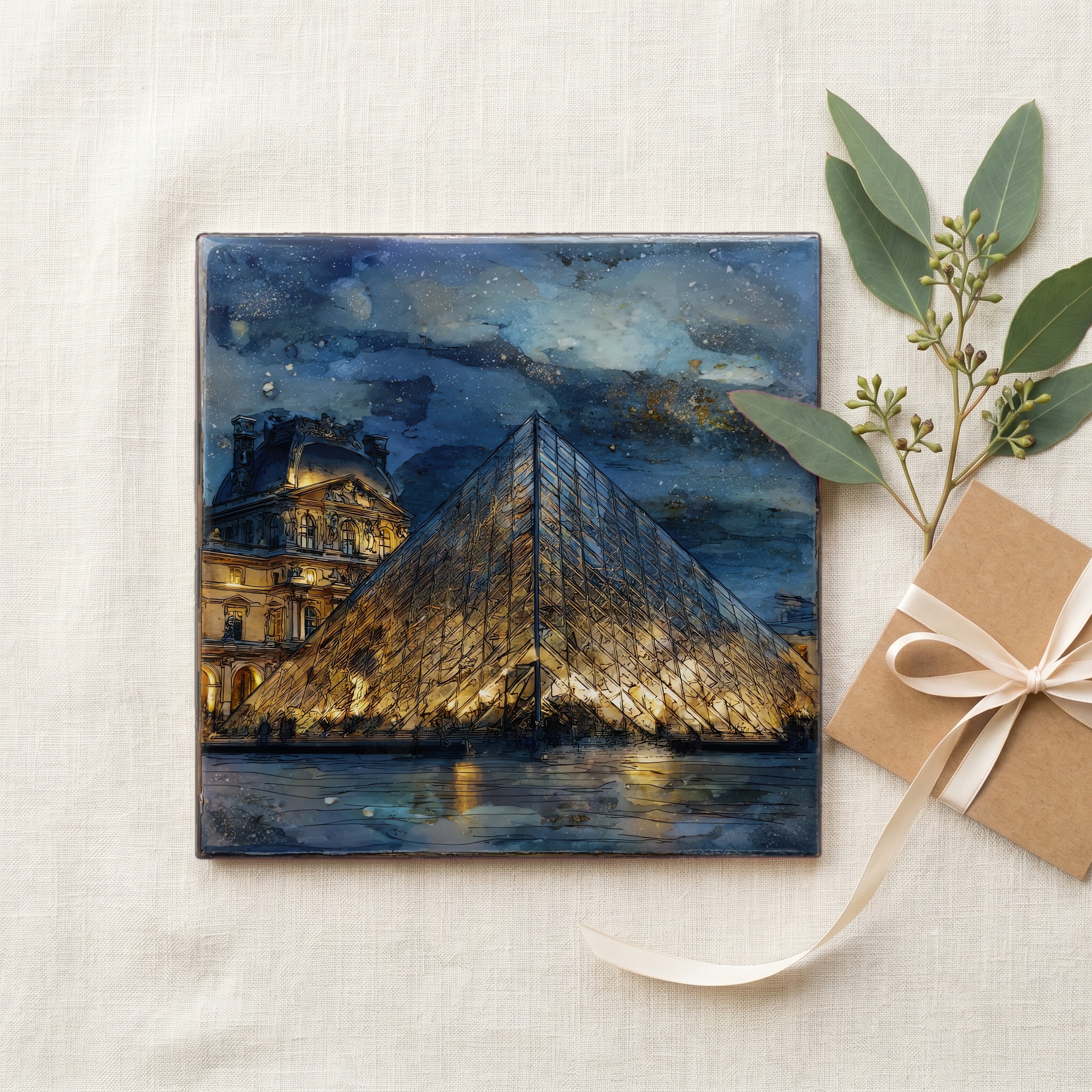
comes gift-ready
comes gift-ready

Each tile ships in a kraft box, tied with cream ribbon, with a handwritten note from the studio if you'd like to add one.
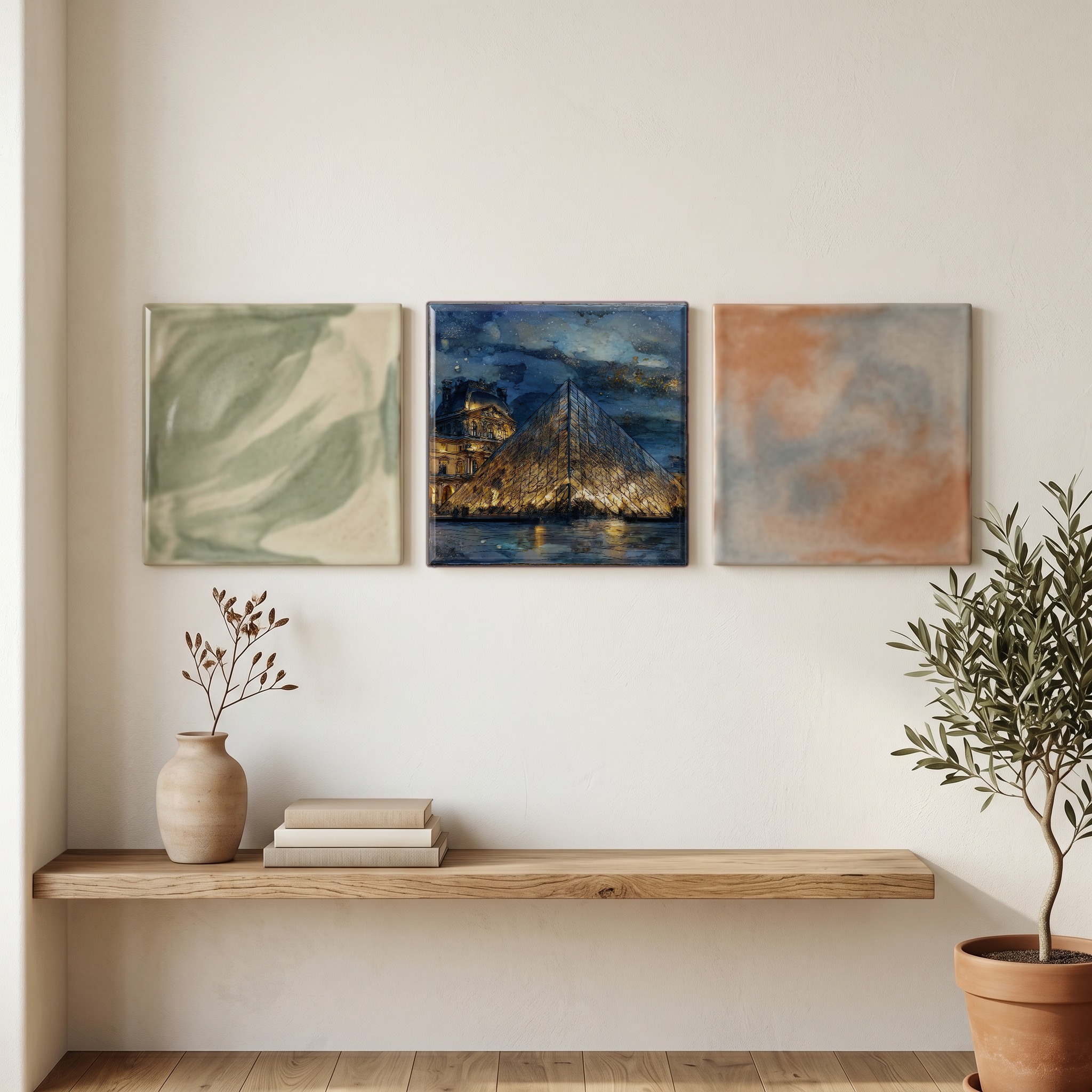
or build a grouping
or build a grouping

Three or five different vistas, hung together — a chapter of places you've been, or want to go.

about Louvre Pyramid

The place, in three passes.

A little of what's known, in case you fall down the rabbit hole — or want to go see it yourself.
the place

The Louvre Pyramid stands in the Cour Napoléon, the main courtyard of the Louvre Palace, in the 1st arrondissement of Paris. The square glass-and-steel structure rises 21.6 metres above the cobbled courtyard, with each side of its base measuring 35 metres. It was commissioned in 1984 by President François Mitterrand as the centrepiece of the Grand Louvre project, the largest of his Grands Travaux. Since 30 March 1989 it has served as the main entrance to the museum, leading visitors down into the underground Hall Napoléon, where they fan out toward the Denon, Sully, and Richelieu wings. Three smaller pyramids of the same form surround it; an inverted pyramid hangs over the Carrousel du Louvre shopping concourse below.

— informed by Wikipedia, Louvre
the stone

The architect Ieoh Ming Pei, then in his late sixties and best known for the East Building of the National Gallery in Washington, was selected by Mitterrand in 1983 without an open competition. His pyramid is built from 603 rhombus-shaped and 70 triangular panes of low-iron glass, supported by a steel and aluminium frame that disappears behind the panes when the sun hits them from the side. The geometry deliberately answers the proportions of the courtyard around it: the Renaissance and Second Empire facades of the Lescot Wing, the Pavillon de l'Horloge, and the Richelieu and Denon wings. The contrast was widely opposed when the project was announced; much of the French press called it disfiguring. By the late 1990s the argument was over.

— informed by Wikipedia, I. M. Pei
the visit

The Louvre is open every day except Tuesday, with extended hours on Friday evenings. The Pyramid is the most photographed entrance but slowest in peak hours; the Carrousel du Louvre entrance on Rue de Rivoli and the Passage Richelieu, available to ticket-holders, are usually faster. Tickets are timed; advance booking through louvre.fr is required and sells out for the busiest days. The closest Métro stop is Palais Royal–Musée du Louvre, on lines 1 and 7. The Pyramid itself can be approached and photographed from the courtyard at any hour, and is lit from within at night.

— informed by Louvre visit
where
France · Paris, Île-de-France
position
48.8606° N · 2.3376° E
the neighborhood

What's nearby.

A handful of named places within an hour's walk or short drive. Some we've already painted; some we will.
1 km W
Tuileries Garden
formal garden
1 km E
Pont Neuf
stone bridge
1 km E
Sainte-Chapelle
Gothic chapel
1 km E
Notre-Dame de Paris
Gothic cathedral
1 km SW
Musée d'Orsay
art museum
2 km W
Place de la Concorde
public square
3 km SW
Eiffel Tower
iron tower
N
Louvre Pyramid
Tuileries Garden
Pont Neuf
Sainte-Chapelle
Notre-Dame de Paris
Musée d'Orsay
Place de la Concorde
Eiffel Tower
common questions

What people ask.

A few questions we get about Louvre Pyramid — and about bringing the piece home.
about the place

The Louvre Pyramid stands in the Cour Napoléon, the main courtyard of the Louvre Palace, in the 1st arrondissement of Paris. It serves as the main entrance to the Louvre Museum and sits on the right bank of the Seine.

The Pyramid was designed by the Chinese-American architect I. M. Pei, who was selected by President François Mitterrand in 1983. Construction began in 1985, and the Pyramid opened to the public on 30 March 1989 as the centrepiece of the Grand Louvre project.

The Louvre Pyramid is 21.6 metres tall, with a square base measuring 35 metres on each side. It is made from 603 rhombus-shaped and 70 triangular panes of low-iron glass, supported by a steel and aluminium frame.

When announced in 1984, the Pyramid was widely opposed in France as an intrusion on the Renaissance facades of the Louvre Palace. Much of the press called it disfiguring. Public opinion shifted over the following decade, and it is now considered one of the city's most recognised landmarks.

Visitors descend a spiral staircase, or take the elevator at its centre, into the Hall Napoléon below, where ticket control and the entrances to the Denon, Sully, and Richelieu wings begin. Timed tickets are required; advance booking through louvre.fr is recommended for all days.

Yes. La Pyramide Inversée is a smaller, upside-down glass pyramid that hangs from the ceiling of the Carrousel du Louvre, the underground shopping concourse adjacent to the museum. Its tip nearly touches a small stone pyramid set on the floor below it.

Yes. The Pyramid can be approached and photographed from the Cour Napoléon at any hour, and is lit from within after dark. The lighting makes the geometry of the steel frame and the glass panes especially legible against the surrounding palace facades.

about the piece in your home

The Louvre Pyramid is one of the few modern landmarks Parisians and visitors share without dispute. A Coaster or Small, with a handwritten note from the studio, carries well for someone who studied in Paris, honeymooned there, or returns each year.

The pyramid's geometry and the cool glass-and-stone palette sit naturally in Modern Minimalist, Mid-Century, and Industrial-Loft rooms. The piece also reads well against warm Parisian Classic interiors with cream walls and dark wood, where the angular shape adds a contemporary counterpoint.

Yes, architectural pieces are a steady anchor in the museum-style gallery wall trend, where one bold structural image is grouped with smaller portraits or maps. The Louvre Pyramid Medium works in that role for a Paris-themed grouping or a global landmarks set.

Above a sofa, a single Large or a 4-tile Mural carries the wall. Above a console table or a mantel, the Medium reads well; the Small sits as a focal accent when paired with two or three smaller frames. A 9-tile Mural suits a full feature wall.

Yes, in the Dura Satin or Matte finish. Both are scratch-resistant and unaffected by humidity, suitable for bathroom walls, backsplashes, and shower surrounds. The Glossy finish is preferred for framed wall art in dry rooms.

Wipe with a soft microfibre cloth and water. For stuck residue, a drop of mild dish soap on a damp cloth, then wipe dry. No abrasives, no ammonia-based cleaners, no scouring pads. The colour lives in the surface and will not lift.

Yes. Every WenderVista piece is made in our Knoxville studio. The Louvre Pyramid composition is original to Reid Wender, hand-finished and slowly infused into the ceramic surface under high heat and pressure beneath a thin glossy or satin finish. We do not license third-party art.

if this one stayed with you

A few you might also love.

Hand-picked by the eye that found Sorapis. Same air, same kind of quiet.