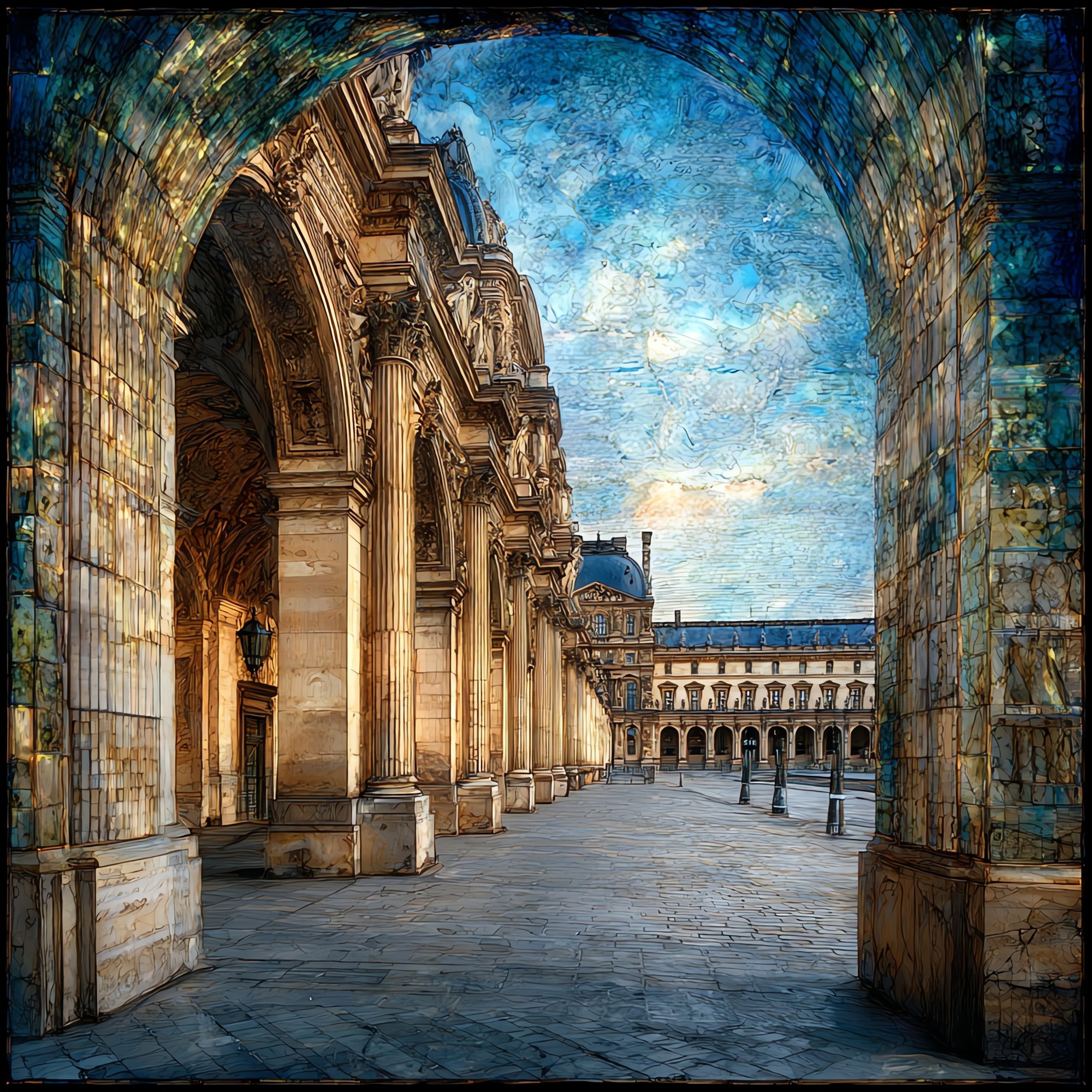
Louvre Colonnade
— — the row the morning light belongs to.
Not only on a wall.
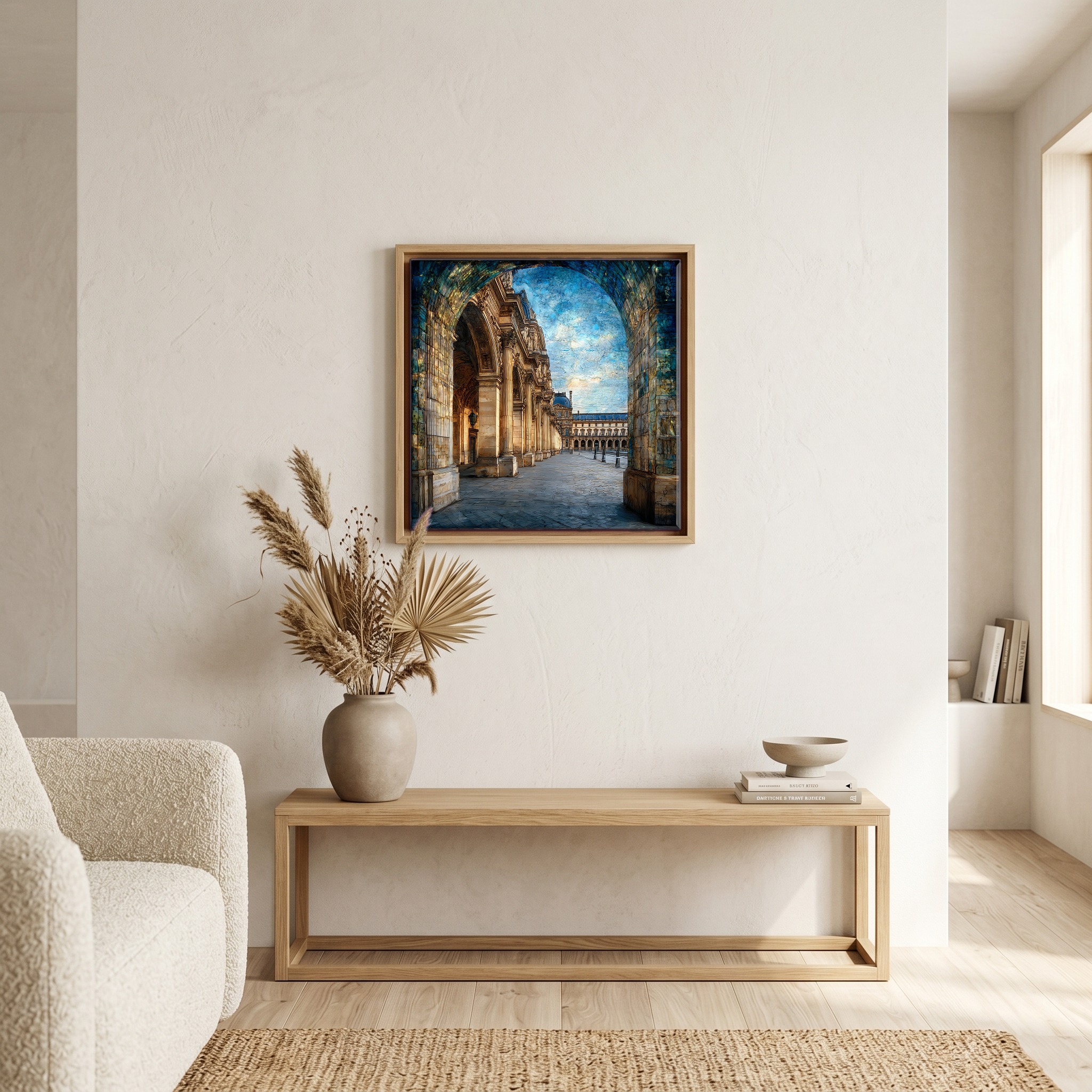
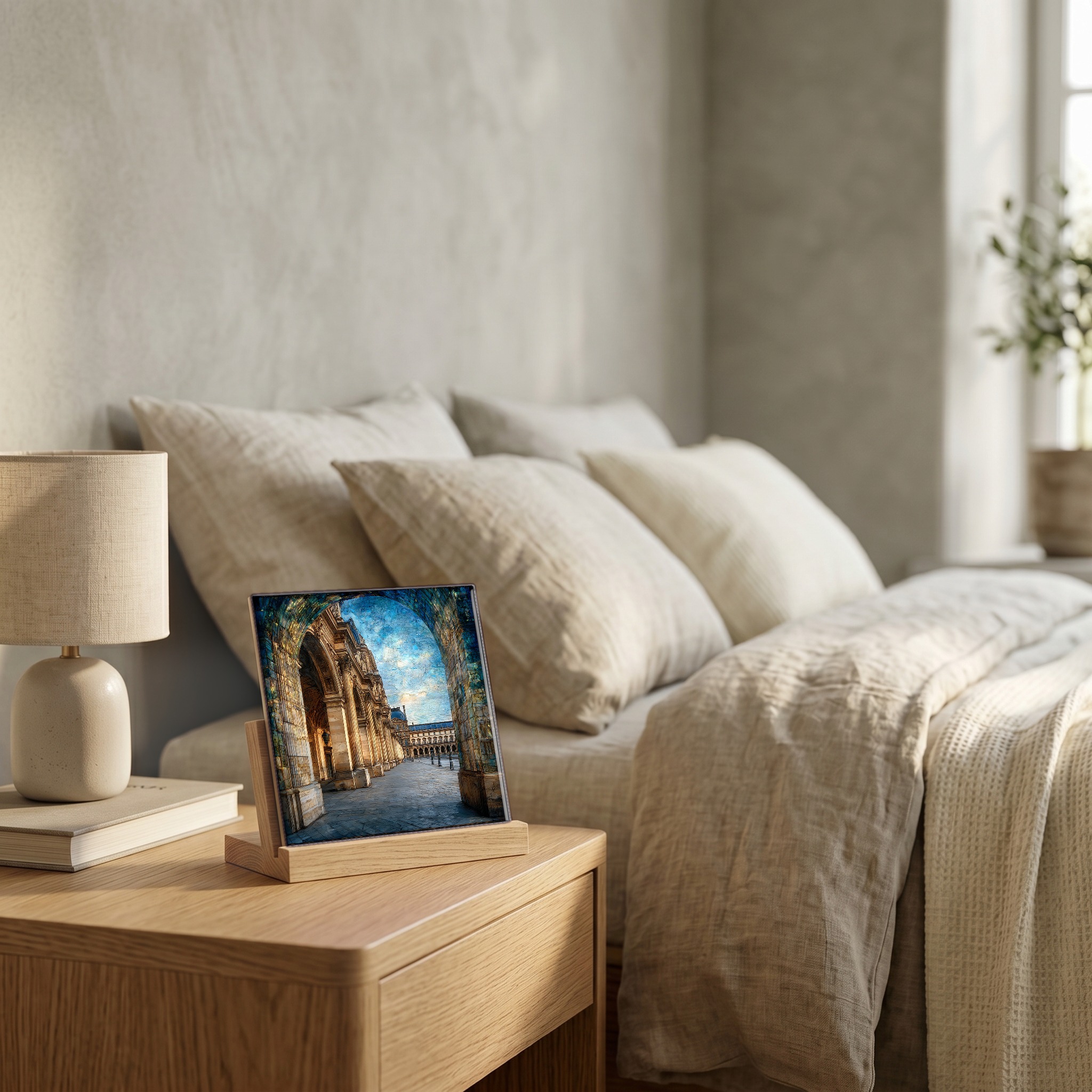
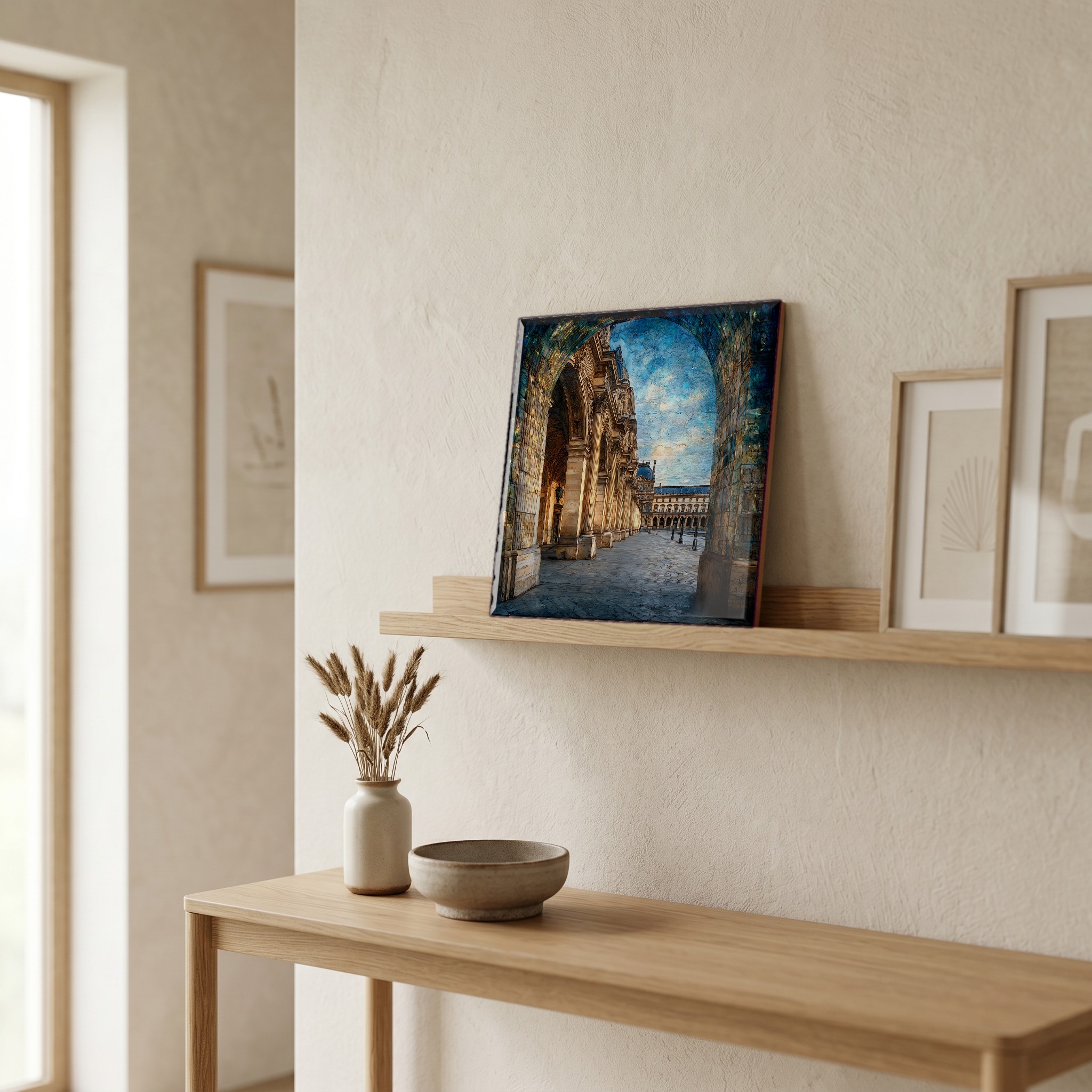
“The east facade of the Louvre, looking out toward Saint-Germain-l'Auxerrois across a small dry moat. Twenty-eight Corinthian columns in pairs, raised on a high basement that lifts the whole composition above the street. Claude Perrault drew it in the 1660s after Louis XIV passed over Gian Lorenzo Bernini's grander Italian proposal. The choice mattered: France had decided what its century would look like. Most visitors walk straight past on the way to the Cour Carrée without quite seeing what's there. Better in the early light, when the shadows between the paired columns are still long.
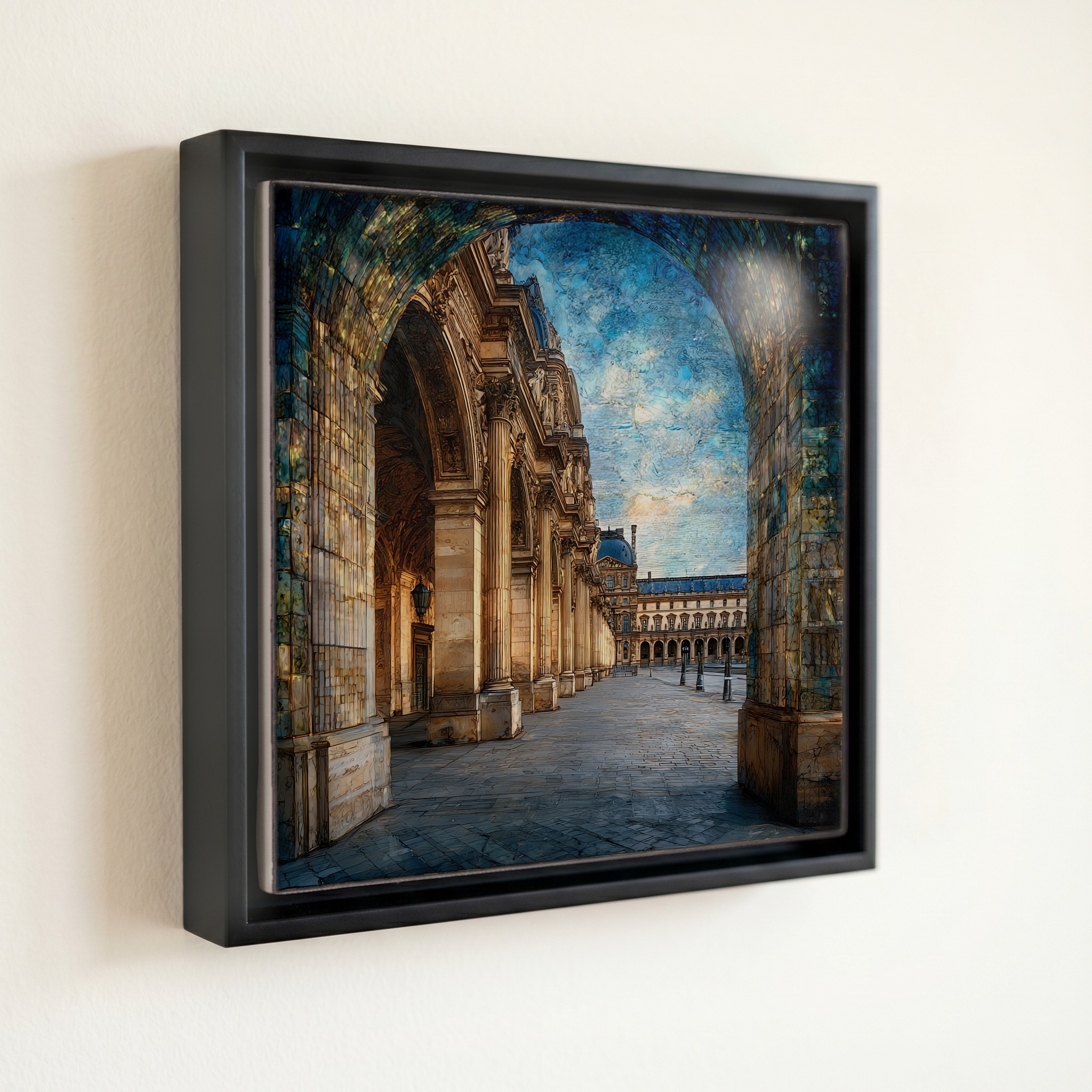
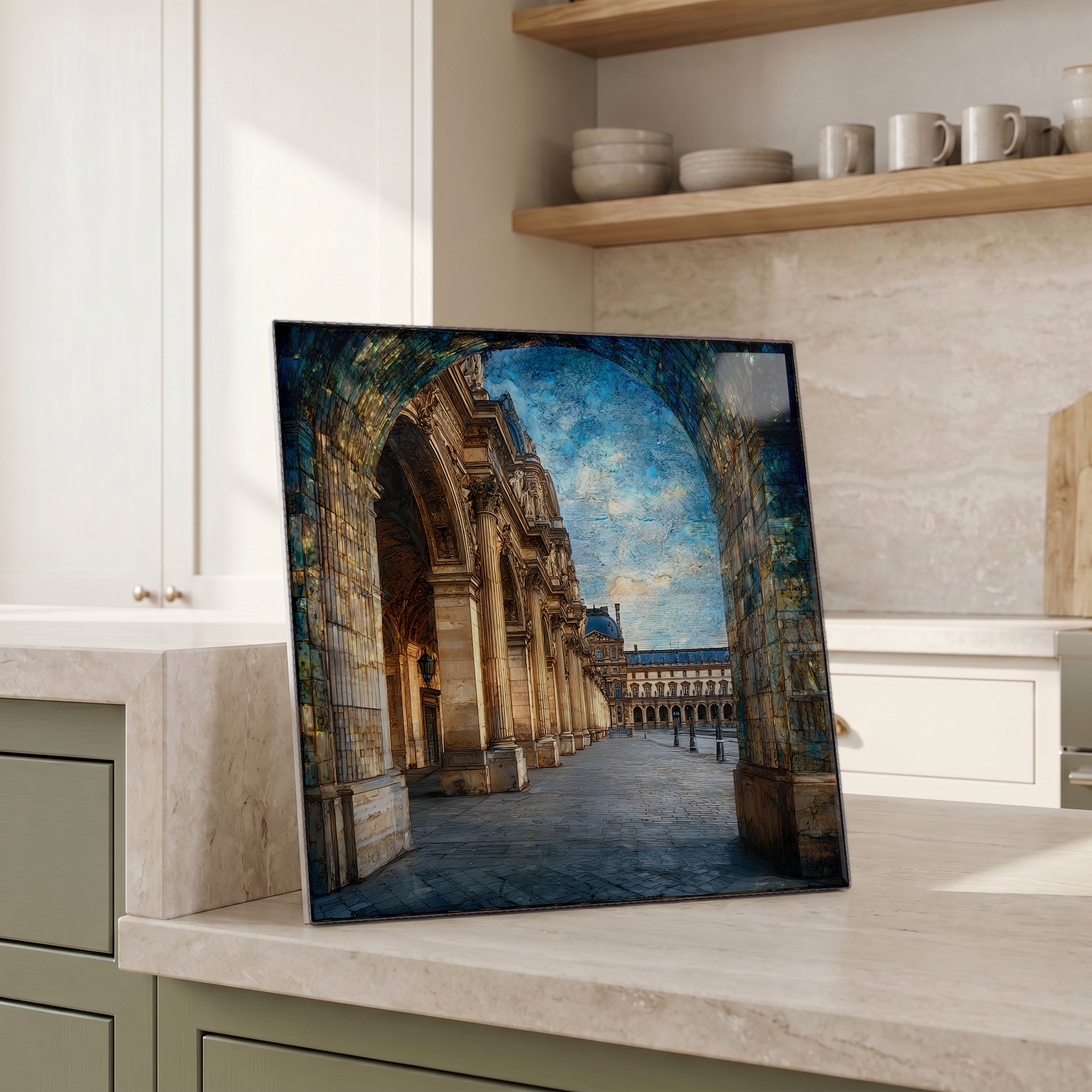
Louvre Colonnade, on ceramic.
Each tile is finished by hand in our Knoxville studio. Artwork is slowly infused into the ceramic surface under high heat and pressure, and rests beneath a thin glossy finish. The colour lives in the surface, not on top of it.
Pick any four 4-inch tiles — National Parks you've been to, a Smokies set, the four seasons of one place. $ for a set of , cork-backed, ready to live on the table.
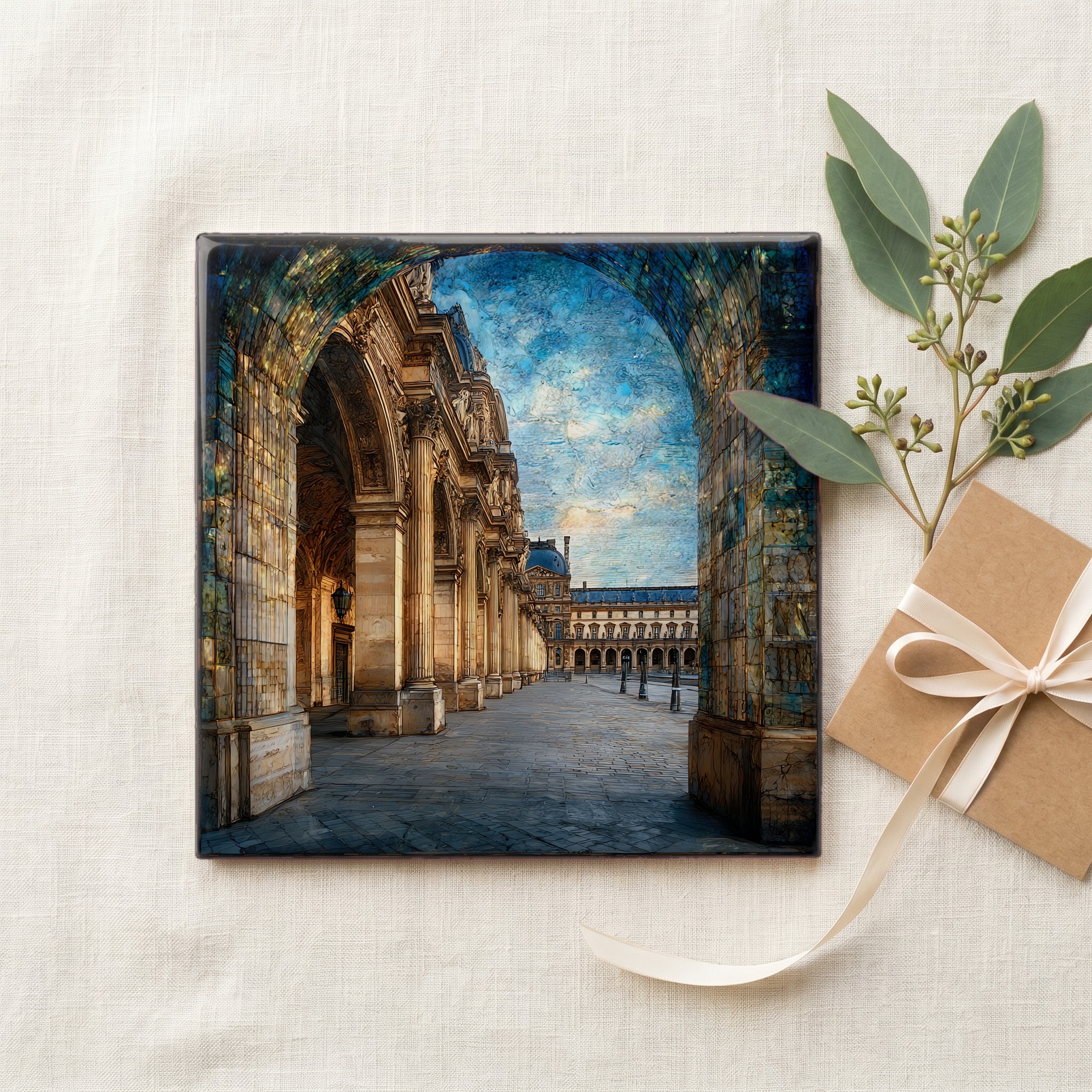
Each tile ships in a kraft box, tied with cream ribbon, with a handwritten note from the studio if you'd like to add one.
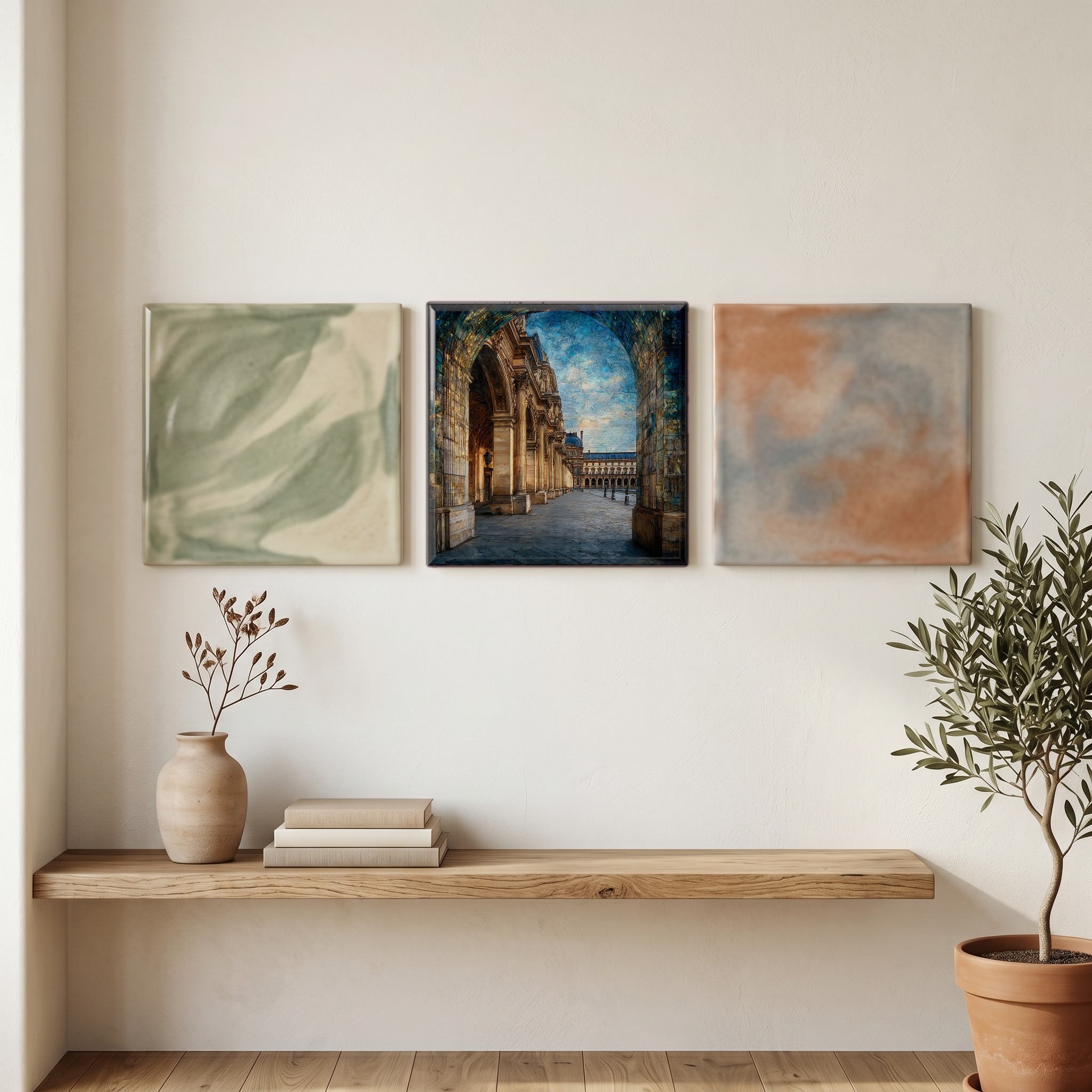
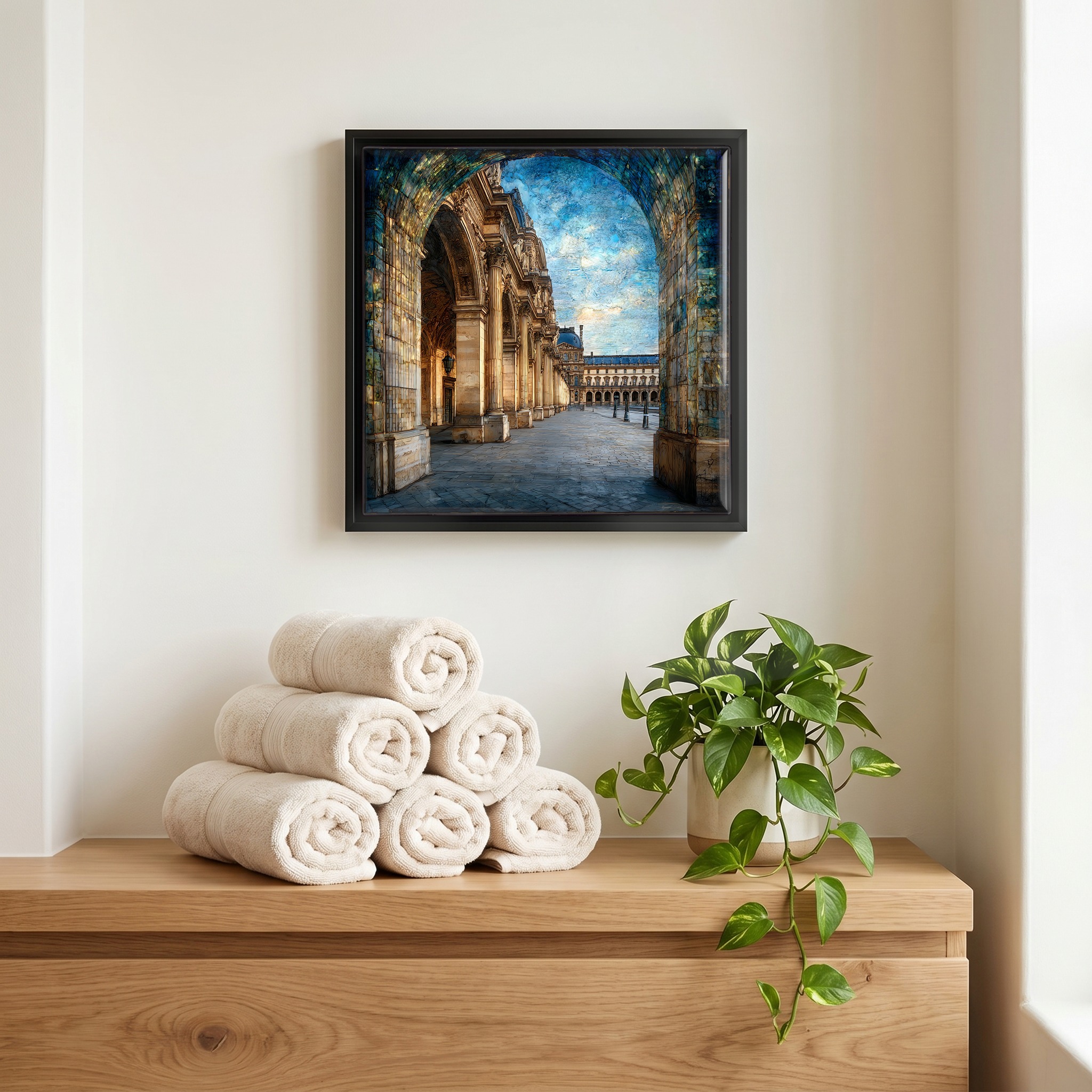
Three or five different vistas, hung together — a chapter of places you've been, or want to go.
The place, in three passes.
The Colonnade is the east facade of the Louvre, facing the small place du Louvre and the church of Saint-Germain-l'Auxerrois in the 1st arrondissement of Paris. The composition stretches across the eastern wing of the Cour Carrée, the great courtyard around which the original palace was built. It was the public face the palace turned toward the city in the seventeenth century, designed by a committee that included Claude Perrault, Louis Le Vau, and Charles Le Brun. The roof and the upper attic were not finished until 1755, under the architect Ange-Jacques Gabriel. The dry moat at the foot of the columns was cleared in 1964 at the direction of culture minister André Malraux, restoring Perrault's intended elevation.
Twenty-eight free-standing columns rise in pairs along the facade, a Corinthian order set on a tall plinth. The detail that made the design famous is structural rather than decorative: the entablature spans between the column pairs using iron tie-bars hidden inside the masonry, a borrowing from Roman engineering that let Perrault open the colonnade to air and light without compromising the load above. The stone is Paris limestone, the same calcaire grossier quarried for most of the seventeenth-century city. Claude Perrault was a physician by training and an anatomist by avocation; his brother Charles wrote the fairy tales. The Académie royale d'architecture, founded in 1671, codified the lessons of the facade for the next century of French building.
Construction began in 1667 after Louis XIV rejected three increasingly elaborate proposals from Gian Lorenzo Bernini, who had been invited from Rome and feted in Paris for nearly five months before his designs were set aside. The decision was political as much as architectural: France was declaring it would not borrow its century's style from Italy. Work on the facade was largely complete by the mid-1670s, when Louis XIV's interest shifted to Versailles and the Louvre project was effectively abandoned. The unfinished roof sat open to the weather for some eighty years until Ange-Jacques Gabriel was commissioned to close it in 1755. The colonnade remains one of the founding monuments of what became known, after the king who never quite finished it, as French classicism.