Wender·Vista
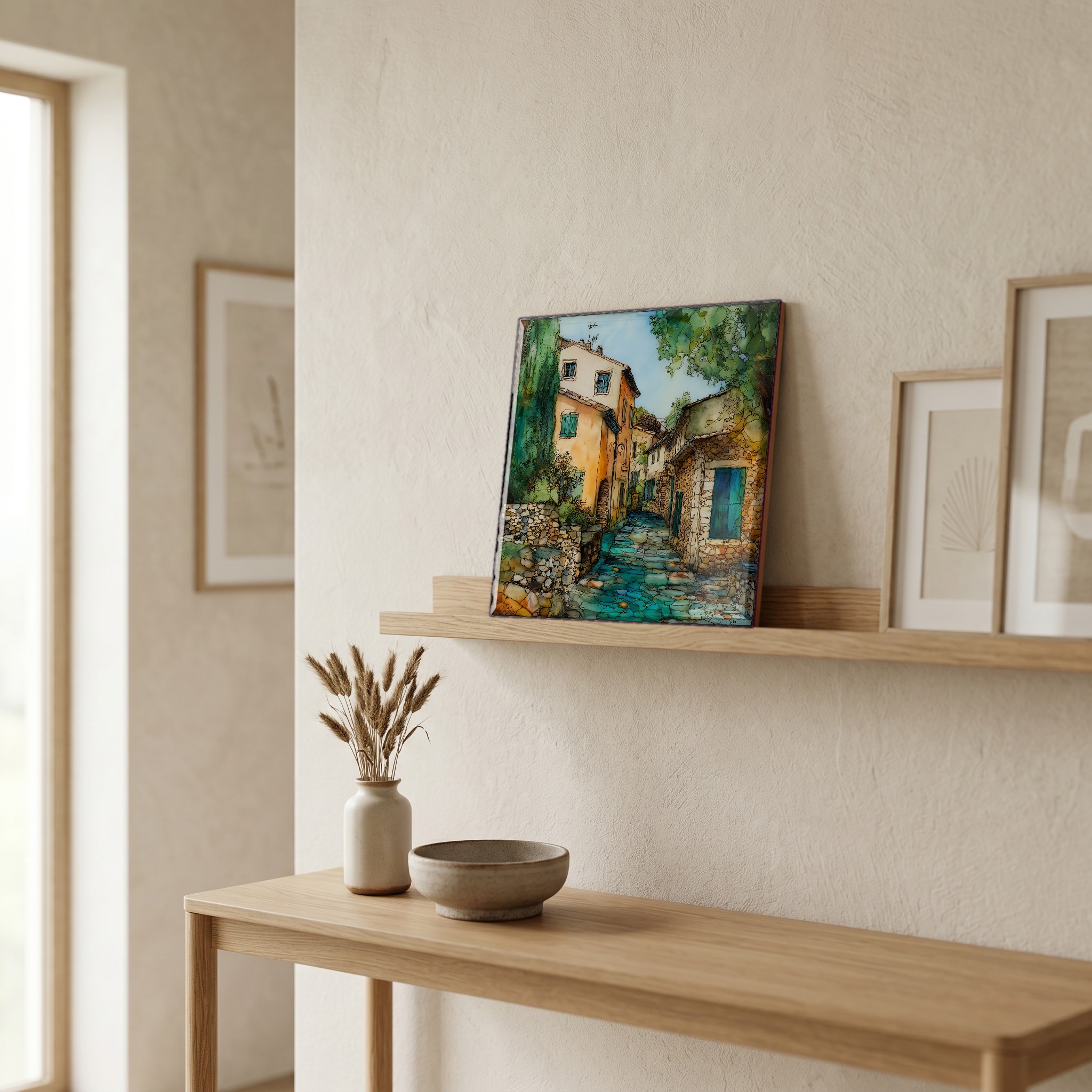
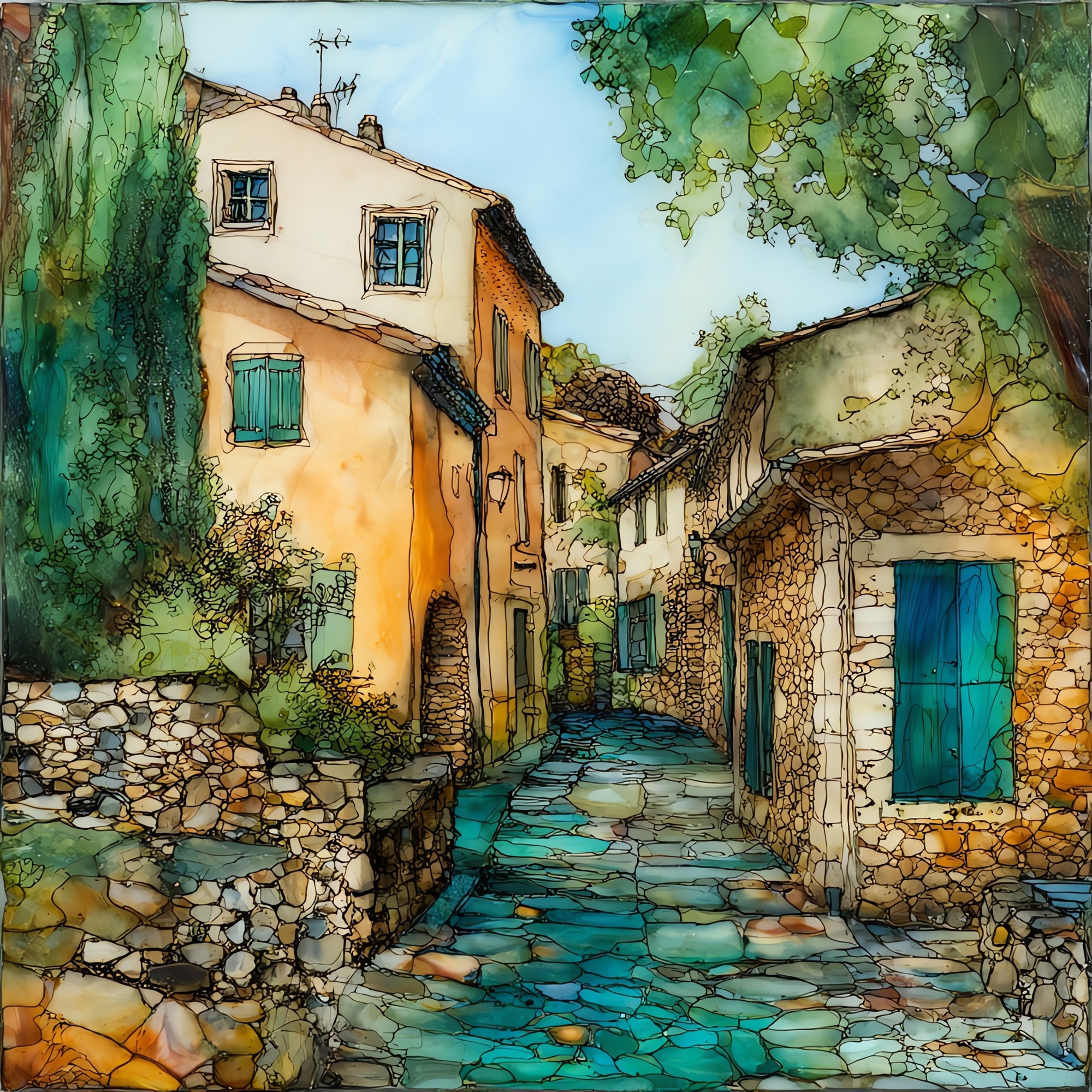
Lourmarin Village
shown on ceramic, 12-inch tileFrance
in Provence, at the foot of the Luberon

Lourmarin Village

— the gold the limestone holds until evening.

Where it lives

Not only on a wall.

A small tile on the nightstand catching the morning. A larger one above the fire. Yours, wherever you spend the slow hours.
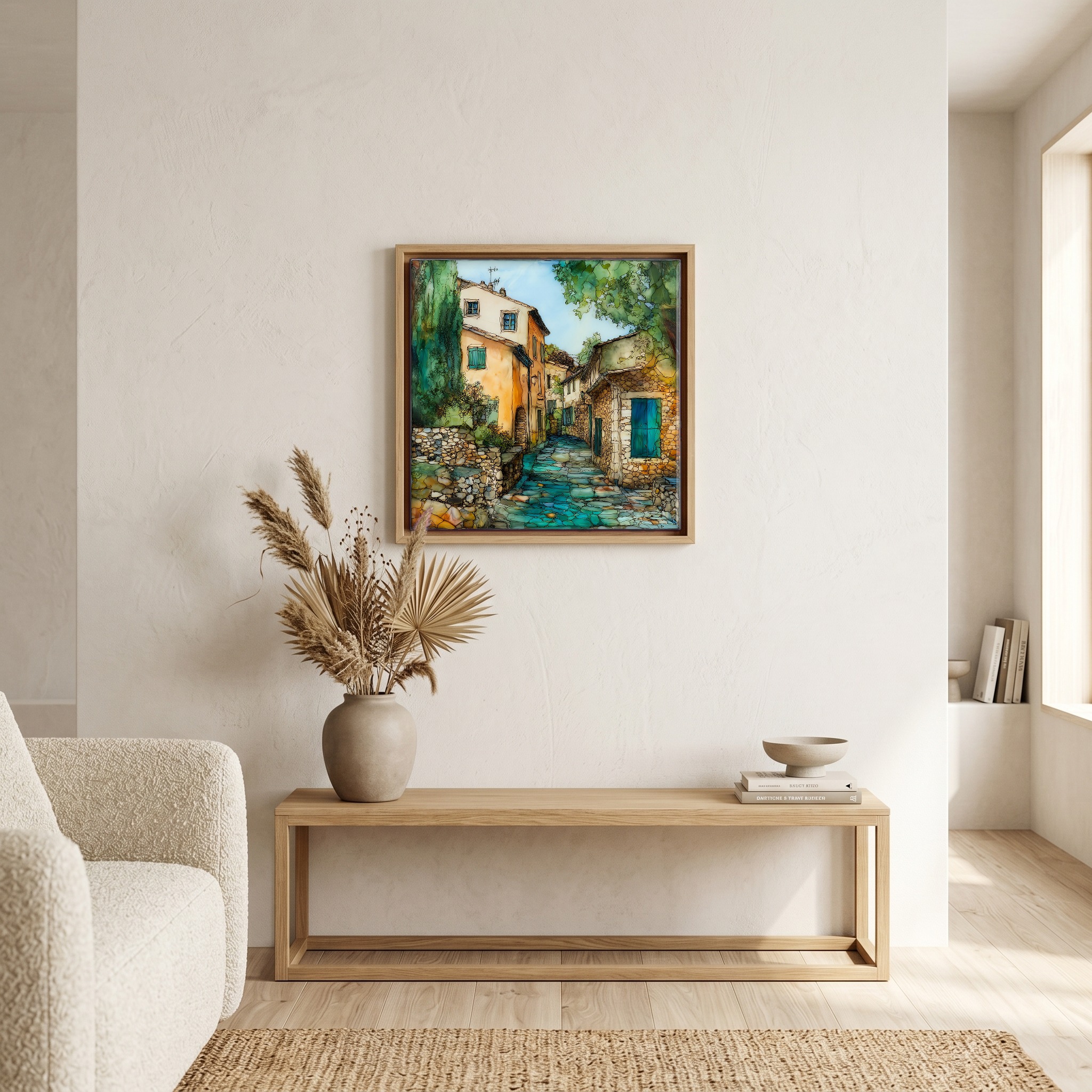
Above the bench, in a warm oak surround.
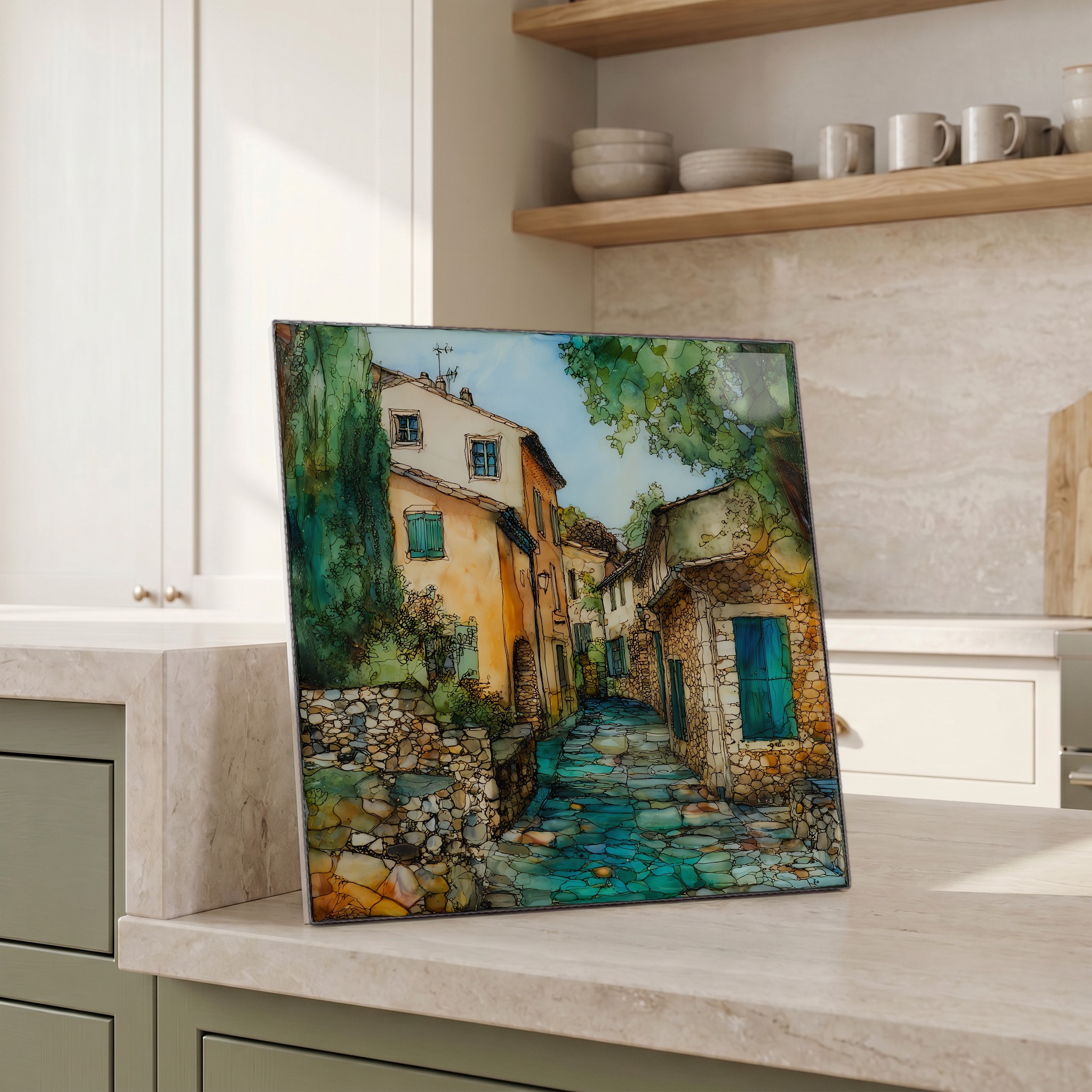
Beside the kettle, propped on the counter.
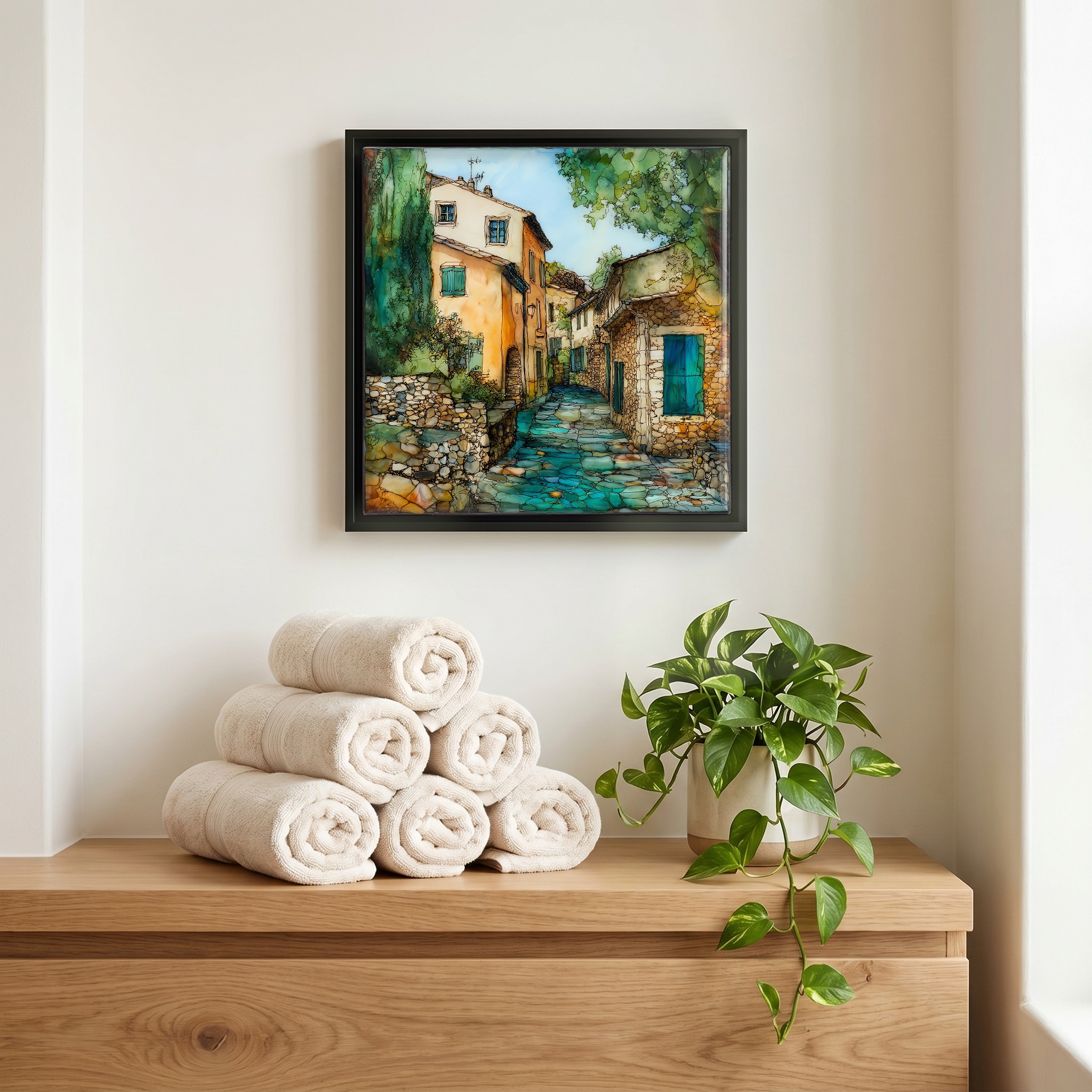
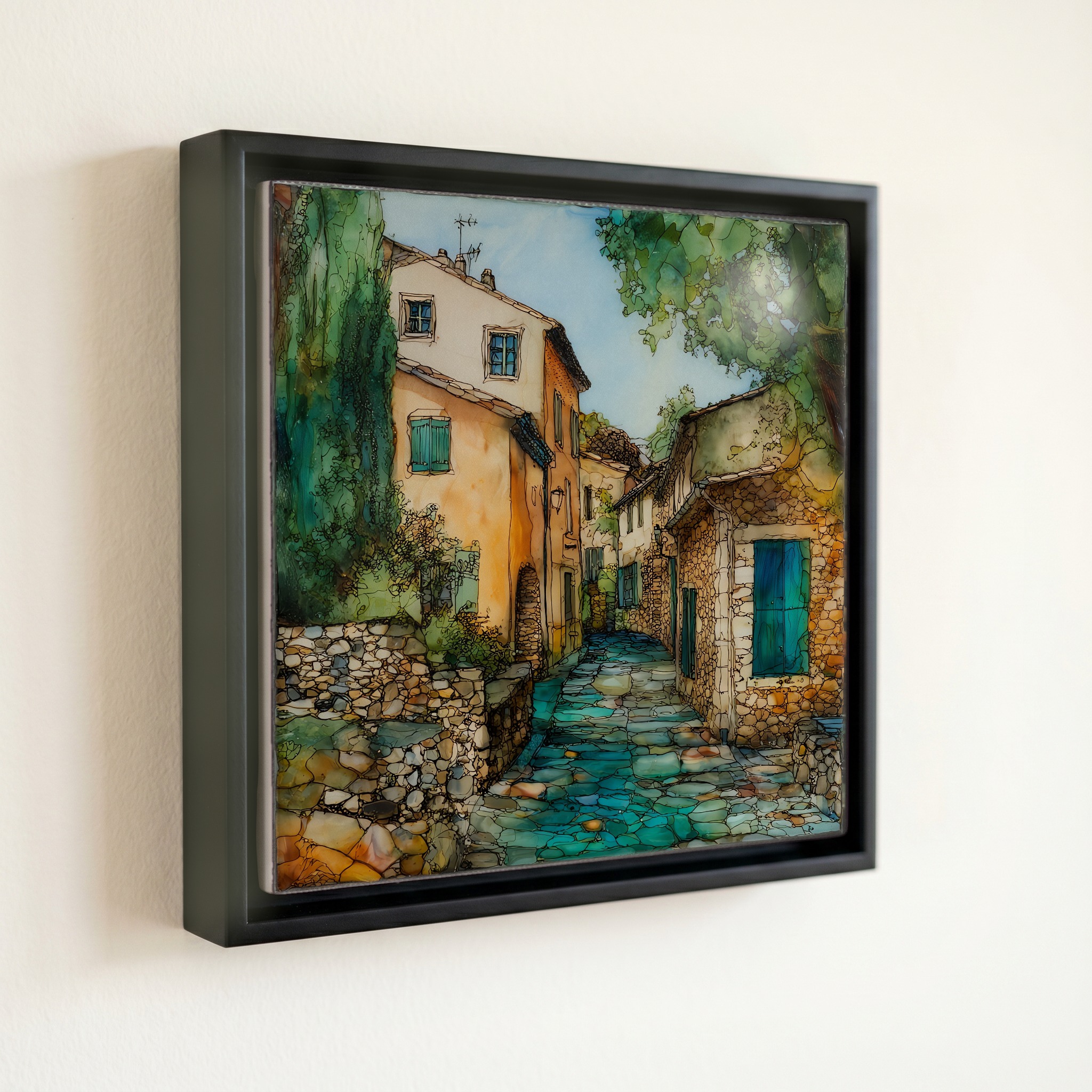
Above the linens, in a slim black surround.
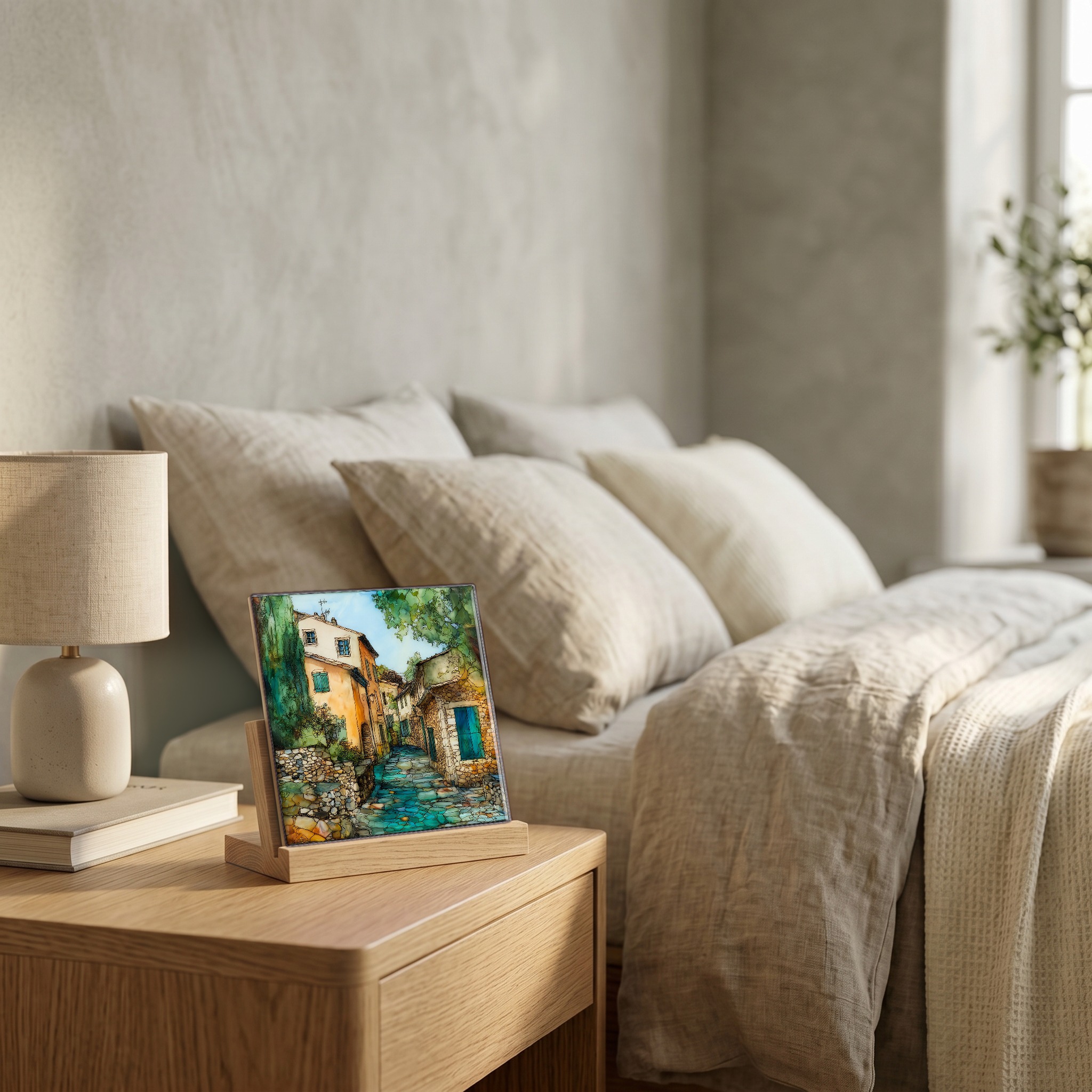
On the nightstand, on a light oak stand.
On a picture ledge, where the light comes in.
a note from the studio

The village at the southern foot of the Luberon, where the Combe de Lourmarin gorge opens out into the Pays d'Aix. Stone houses the colour of late wheat, a Renaissance château on the rise above the rooftops, plane trees over the café terraces in the place de l'Ormeau. The Friday market fills the streets by mid-morning and is gone by lunch. Albert Camus lived his last two years here and is buried in the small cemetery on the edge of the village. People come to find his grave and stay for the afternoon.
from the studio
shown in a slim black floating frame · 6 × 6 in
— bring it home

Lourmarin Village, on ceramic.

Each tile is finished by hand in our Knoxville studio. Artwork is slowly infused into the ceramic surface under high heat and pressure, and rests beneath a thin glossy finish. The colour lives in the surface, not on top of it.

What kind of piece?
One tile — square or rectangle.
How big?
the popular one — counter, shelf, nightstand
6 × 6 in · 15 cm · 1.6 lb
Surface finish
A clear glossy finish — the artwork reads as if under resin. Ideal for show-pieces and framed wall art.
How it sits
A hidden cleat — sits ¼″ proud of the wall.
$58
Hand-finished and shipped from our studio at the foot of the Smokies. On your wall in about ten days.
size
6 × 6 in
15 cm
weighs
1.6 lb
solid in the hand
surface
ceramic, hand-finished
art rests beneath a thin glossy finish
from
Knoxville, TN
our family studio, at the foot of the Smokies
— start a Coaster Set

Pick any four 4-inch tiles — National Parks you've been to, a Smokies set, the four seasons of one place. $ for a set of , cork-backed, ready to live on the table.
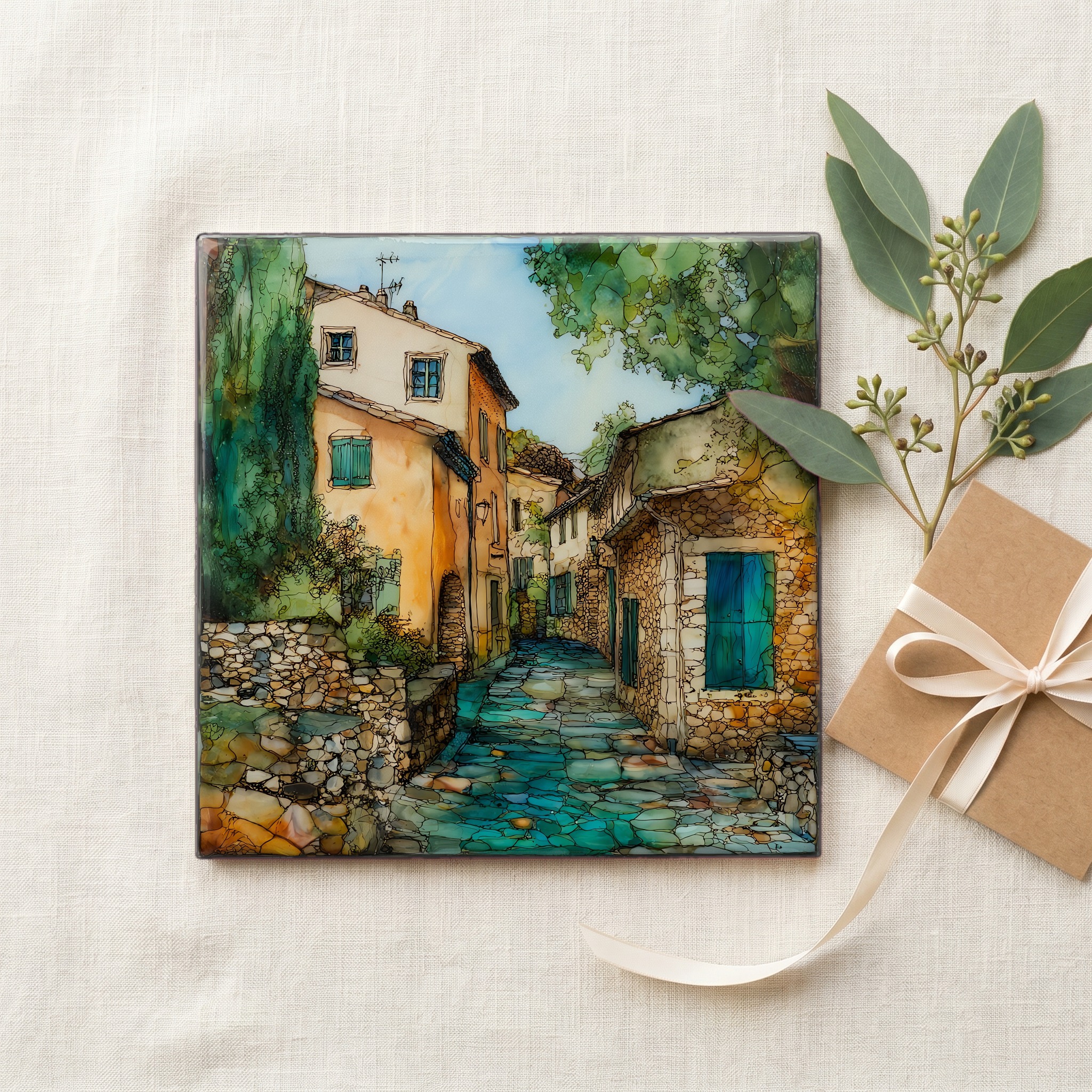
comes gift-ready
comes gift-ready

Each tile ships in a kraft box, tied with cream ribbon, with a handwritten note from the studio if you'd like to add one.
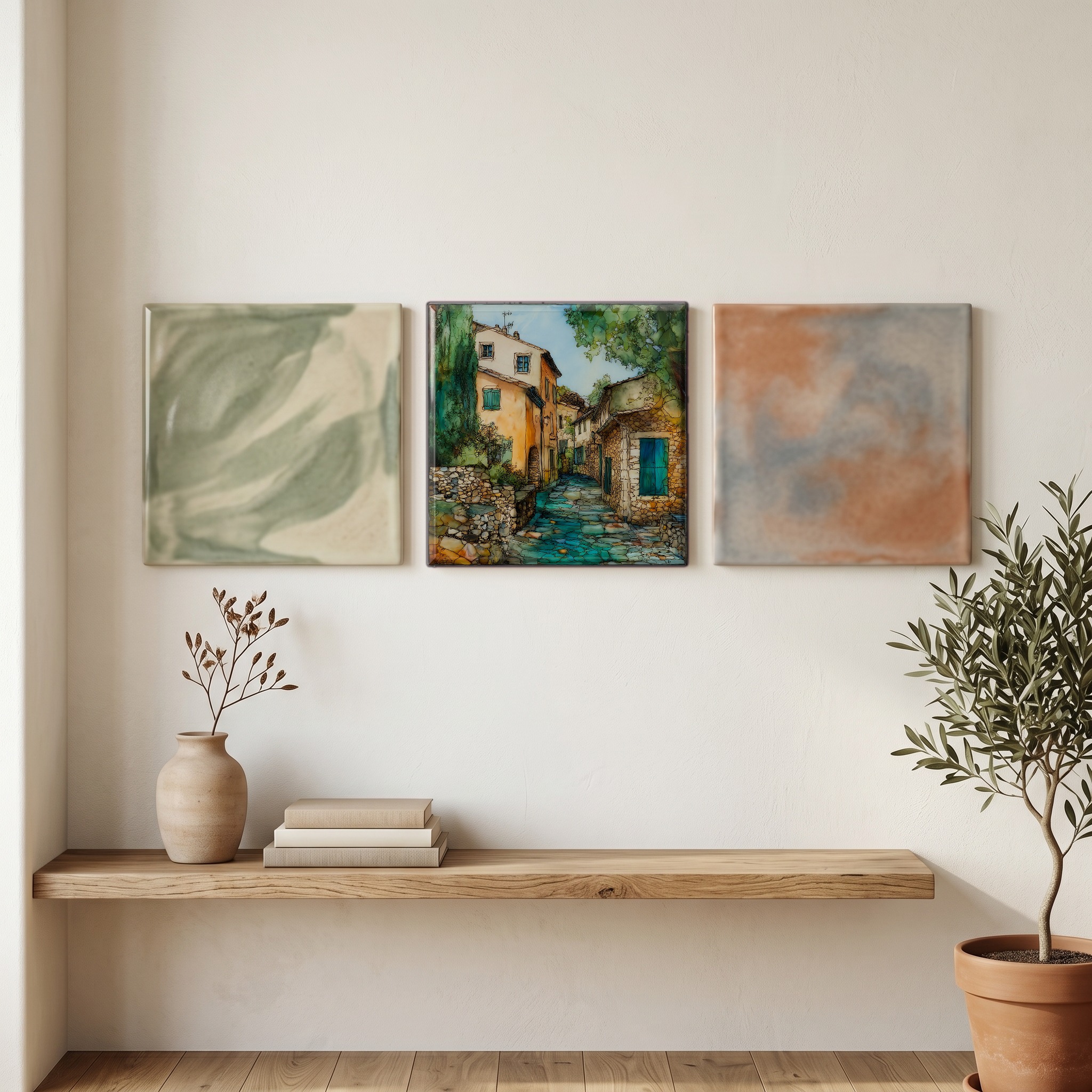
or build a grouping
or build a grouping

Three or five different vistas, hung together — a chapter of places you've been, or want to go.

about Lourmarin Village

The place, in three passes.

A little of what's known, in case you fall down the rabbit hole — or want to go see it yourself.
the place

Lourmarin sits at the southern foot of the Luberon massif in the Vaucluse département of Provence-Alpes-Côte d'Azur, where the limestone Combe de Lourmarin gorge cuts through the range and links the Pays d'Apt to the Aix basin roughly thirty kilometres south. The commune covers about 23 square kilometres at a village-centre elevation of 224 metres, with a population just over 1,100. It is one of the official Plus Beaux Villages de France, the national association that has designated roughly 175 villages since 1982. The nearest larger towns are Cadenet to the south and Cucuron to the east; Aix-en-Provence lies within an hour by car.

the stone

The Château de Lourmarin rises on a low ridge at the western edge of the village, the older medieval keep and the early-Renaissance wing built between roughly 1475 and 1526 by the Agoult family. It is generally cited as one of the first Renaissance châteaux constructed in Provence. By the nineteenth century it stood in ruin; the industrialist Robert Laurent-Vibert bought it in 1920 and willed it to the Académie des Sciences, Agriculture, Arts et Belles-Lettres d'Aix, which still runs it as an artists' residence and concert venue. The pale, faintly golden limestone of the village comes from the Luberon itself, and the same stone carries up into the houses, the bell tower, and the dry walls that climb the slopes.

the visit

The Friday morning market is the practical anchor of the week. Stalls fill the place de l'Ormeau and the surrounding lanes from about eight until noon, then the village empties for lunch. The Château de Lourmarin is open most of the year for self-guided visits, with seasonal hours and a small admission. Albert Camus and his wife Francine are buried in the village cemetery on the eastern edge; visitors leave stones and pens on the grave. The novelist Henri Bosco lies in the same cemetery. Lourmarin sits roughly thirty kilometres north of Aix-en-Provence, reached by road from the south through Cadenet. Lavender south of the massif peaks from late June through early July.

where
France · Vaucluse, Provence-Alpes-Côte d'Azur
within
Parc naturel régional du Luberon
elevation
224 m · 735 ft
position
43.7644° N · 5.3628° E
the neighborhood

What's nearby.

A handful of named places within an hour's walk or short drive. Some we've already painted; some we will.
3 km E
Vaugines
Provençal village
2 km N
Combe de Lourmarin
limestone gorge
6 km E
Cucuron
Provençal village
6 km S
Cadenet
market town
13 km N
Bonnieux
perched village
17 km NW
Ménerbes
perched village
30 km S
Aix-en-Provence
Provençal city
N
Lourmarin Village
Vaugines
Combe de Lourmarin
Cucuron
Cadenet
Bonnieux
Ménerbes
Aix-en-Provence
common questions

What people ask.

A few questions we get about Lourmarin Village — and about bringing the piece home.
about the place

Lourmarin is a village in the Vaucluse département of Provence, in southern France. It sits at the southern foot of the Luberon massif, where the Combe de Lourmarin gorge cuts through the range, about thirty kilometres north of Aix-en-Provence.

The national association added Lourmarin to its list of Most Beautiful Villages of France for its intact stone village fabric, the Renaissance Château de Lourmarin on the ridge above, and its setting at the mouth of the limestone gorge through the Luberon.

A Renaissance château built between roughly 1475 and 1526 by the Agoult family, generally cited as the first true Renaissance château in Provence. The industrialist Robert Laurent-Vibert rebuilt it in the 1920s; it now operates as an artists' residence and concert venue.

Albert Camus, the Nobel laureate, who lived in Lourmarin from 1958 until his death in a car accident in January 1960, is buried in the village cemetery with his wife Francine. The Provençal novelist Henri Bosco rests there as well.

Every Friday morning, year-round. Stalls fill the place de l'Ormeau and the surrounding lanes from about eight until noon, then the village clears for lunch. It is considered one of the strongest weekly markets in the Luberon.

Late spring through early autumn. Lavender south of the Luberon peaks from late June through early July; the cafés keep their full hours from May into October. The village stays open in winter, but a number of restaurants close for several weeks.

about the piece in your home

It has been a steady gift for our customers with ties to the Luberon and to the south of France. A Small or a Medium with a handwritten note from the studio carries the feeling of a particular village rather than a region in general.

The pale gold and Provençal blues read well with Mediterranean-modern, French country, and warm minimalist rooms. The tile holds its own as a single Large above a kitchen island or arranged as a four-tile Mural across a tiled backsplash.

Mediterranean and quiet-luxury Provençal interiors are an active design direction in 2026. The tile sits comfortably with linen, terracotta floor tile, and unbleached oak, and reads as a personal artwork rather than a stock print.

A single Large reads well above a console or a slim sofa. Above a full-size sofa, a four-tile Mural in a square or row layout gives the artwork the scale of the wall. A nine-tile Mural anchors a larger feature wall.

Yes. Ask for the Dura Satin or Matte finish for installations that meet water, such as a backsplash, a shower wall, or the splash zone behind a sink. The colour lives in the ceramic surface and does not lift with cleaning.

A soft microfibre cloth with plain water for routine wiping. For stubborn marks, a drop of dish soap on the cloth. The colour is slowly infused into the ceramic surface under high heat and pressure, beneath a thin glossy finish, so it does not scratch or fade with normal household use.

Yes. Every WenderVista piece is original to the Wender Studios atlas, made by one studio in Knoxville, Tennessee, with Reid Wender as the eye. We do not license the work to third parties; the Lourmarin tile exists only through Wender Studios.

if this one stayed with you

A few you might also love.

Hand-picked by the eye that found Sorapis. Same air, same kind of quiet.