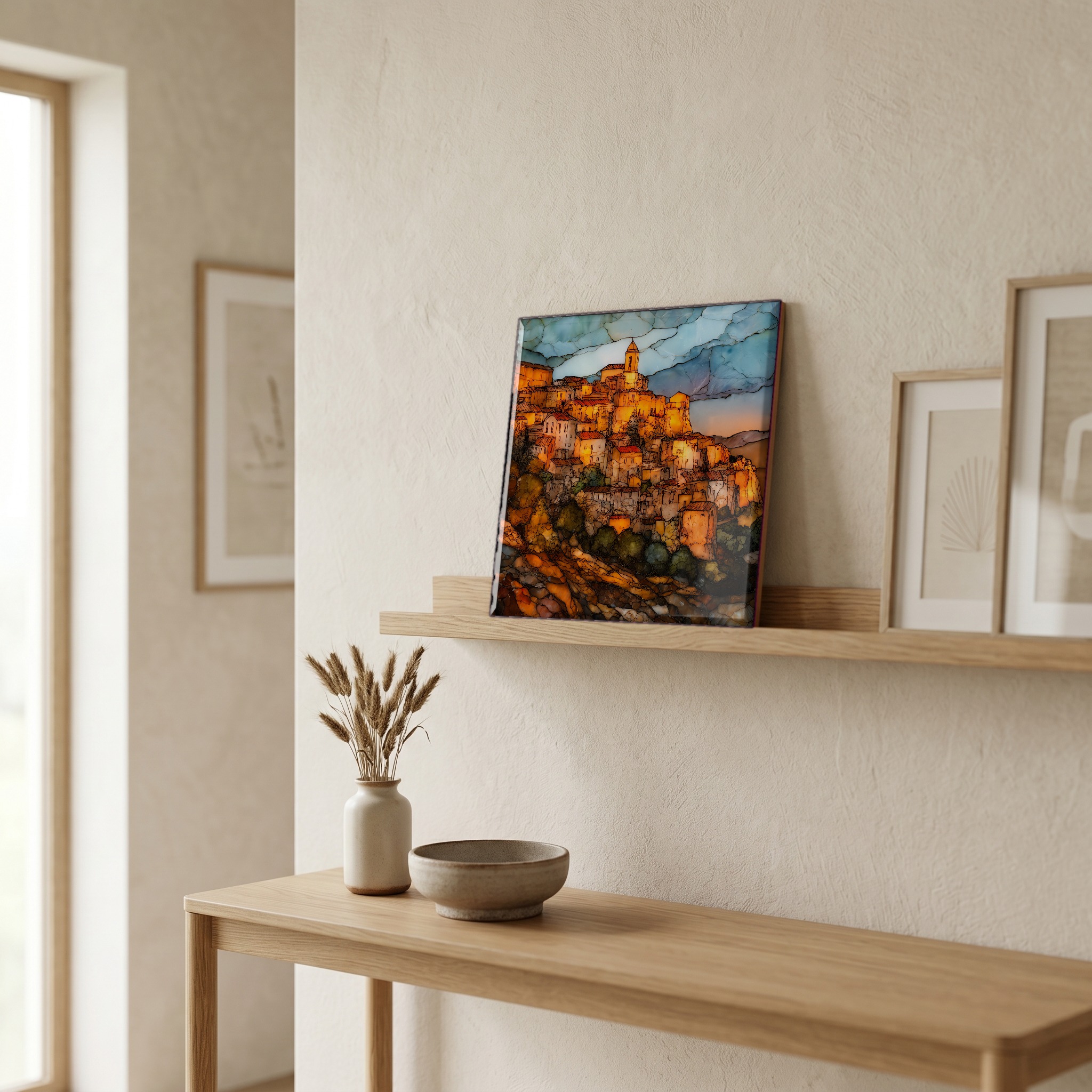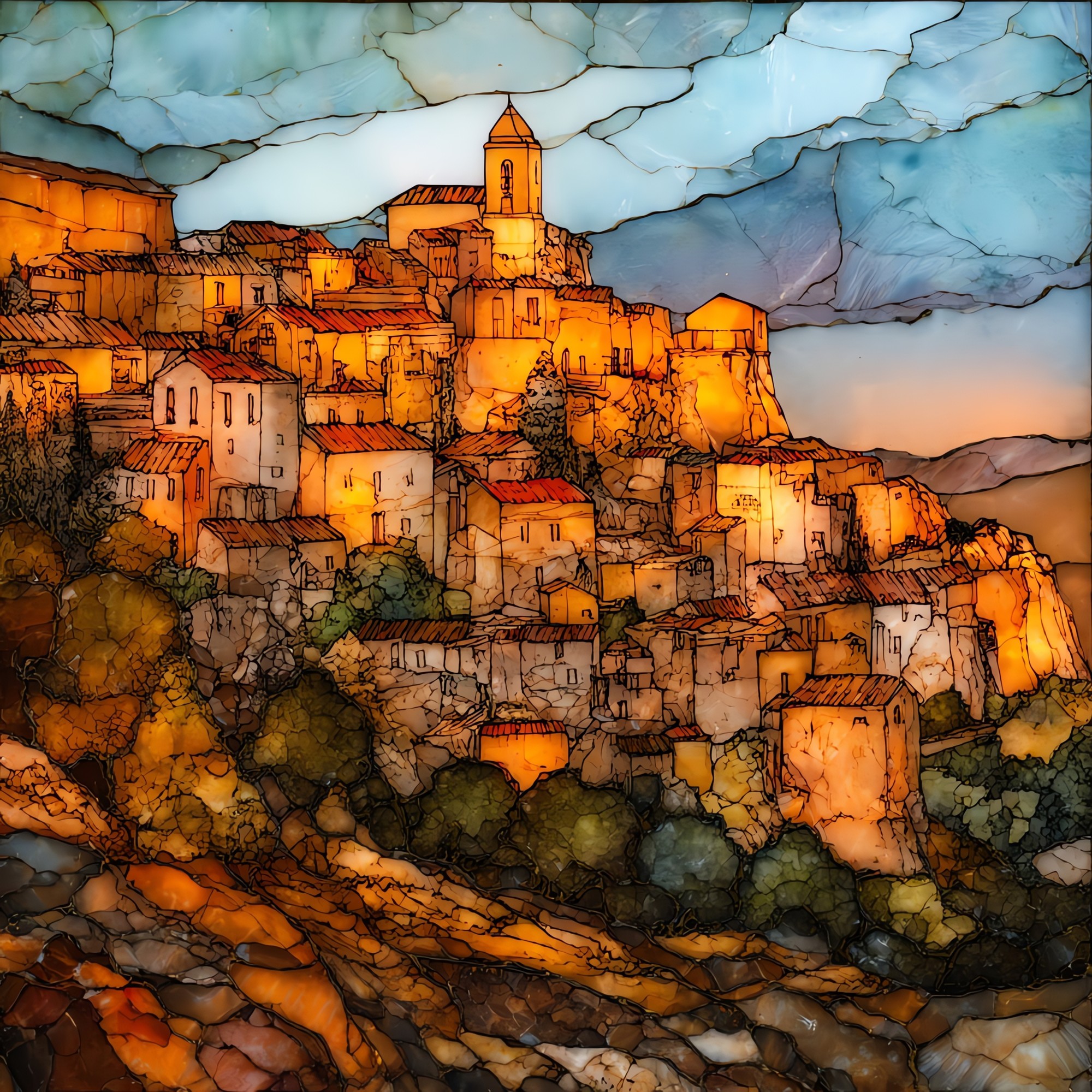
Wender·Vista
Les Baux-de-Provence
shown on ceramic, 12-inch tileFrance
high in the Alpilles, between Avignon and Arles

Les Baux-de-Provence

the village the limestone built and the wind kept.

Where it lives

Not only on a wall.

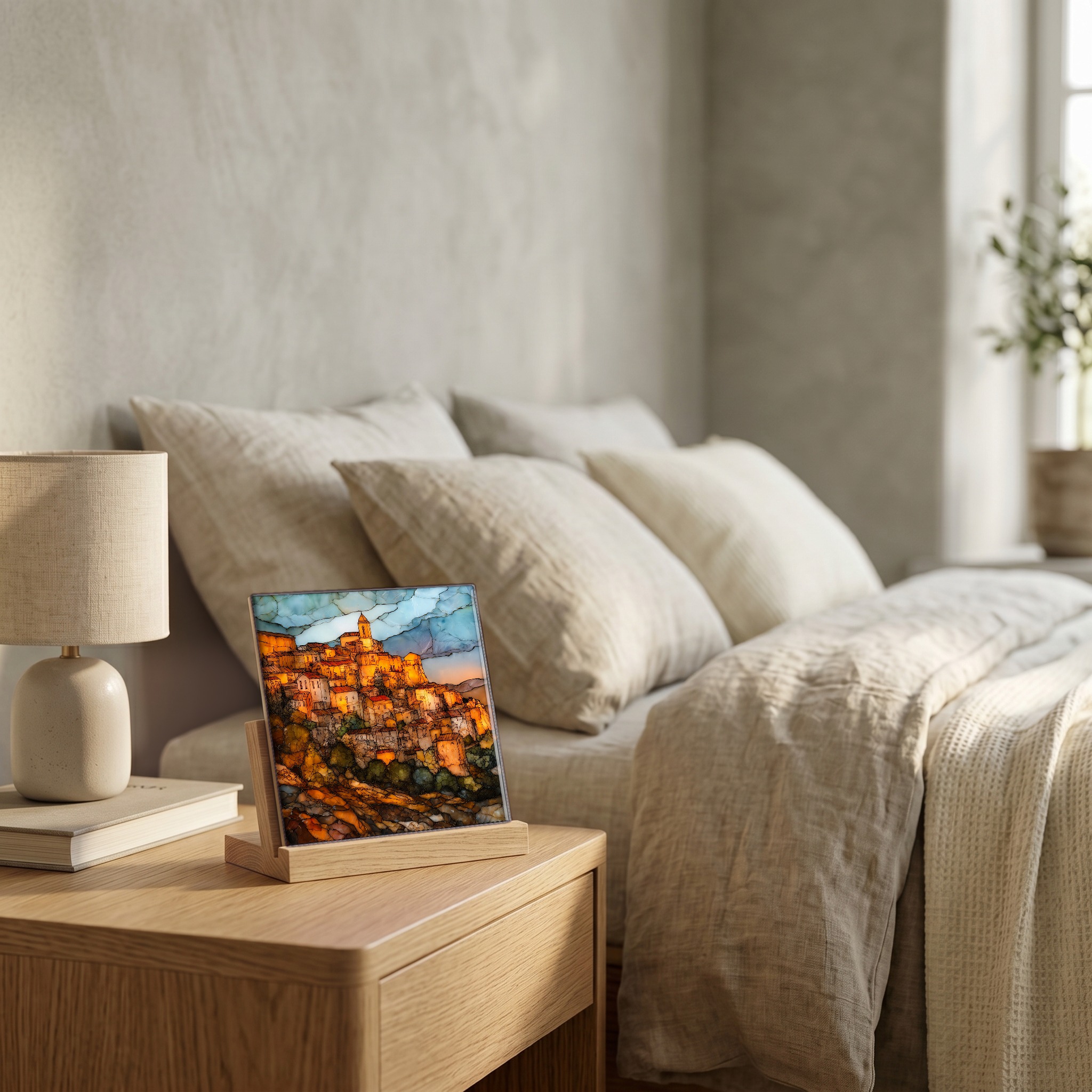
A small tile on the nightstand catching the morning. A larger one above the fire. Yours, wherever you spend the slow hours.
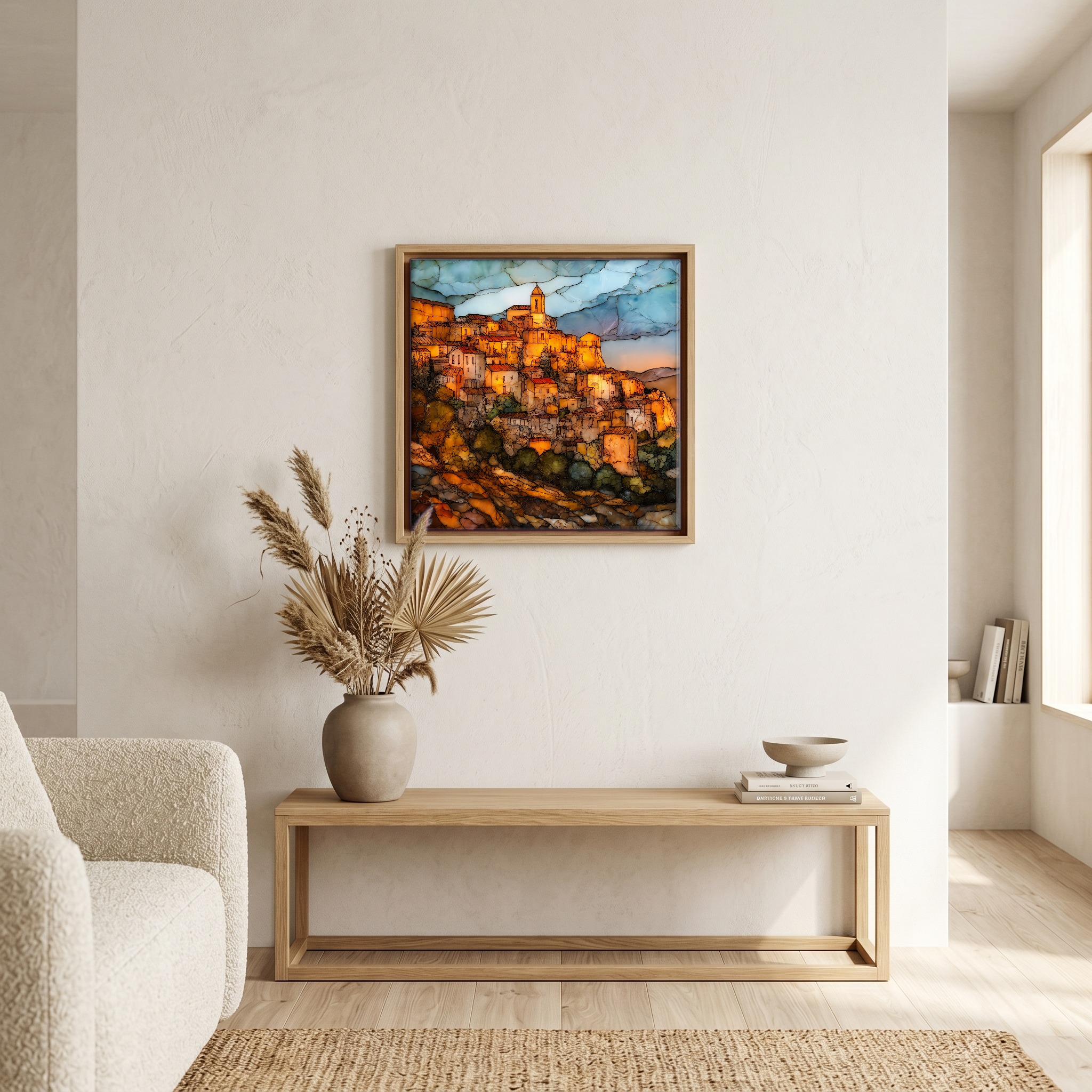
Above the bench, in a warm oak surround.
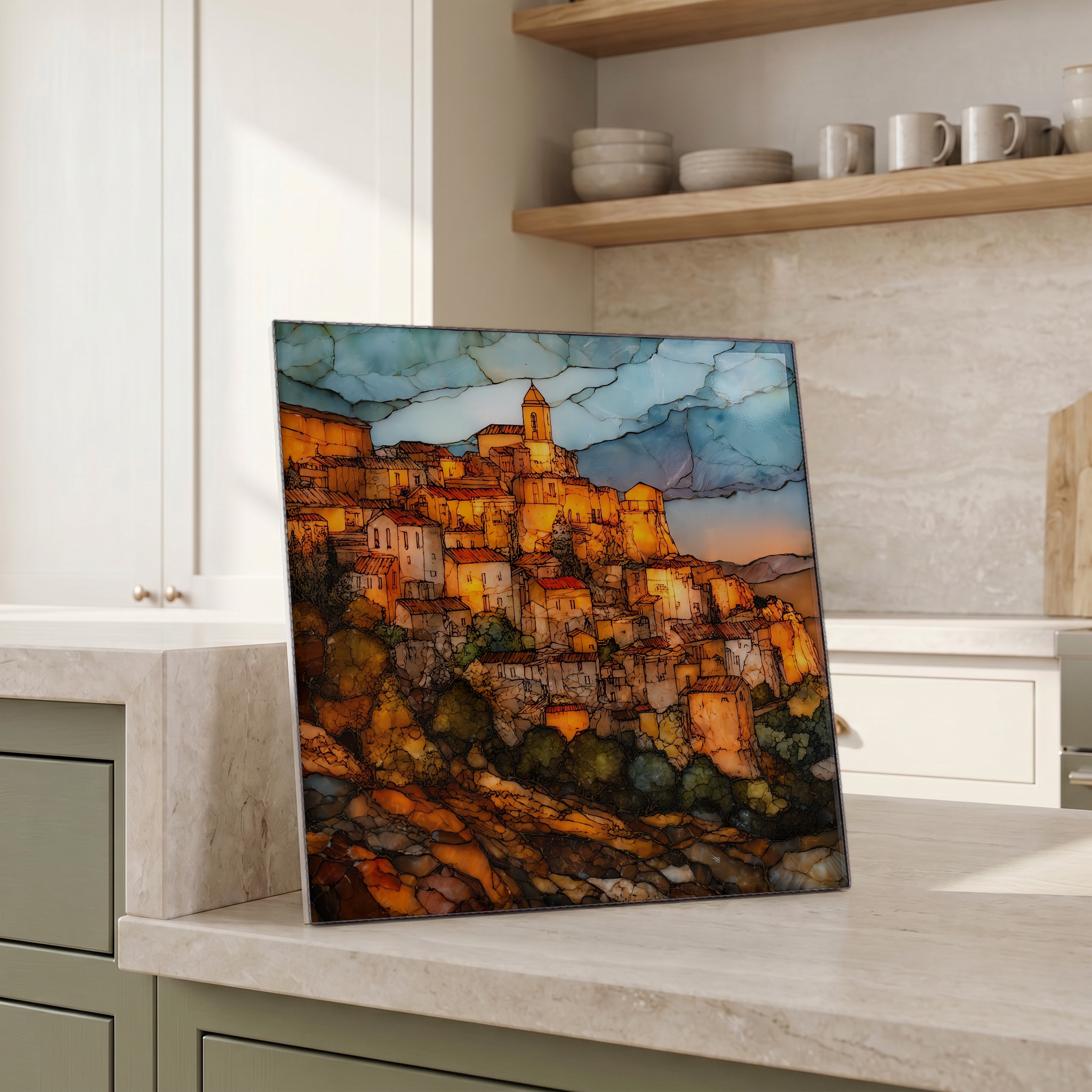
Beside the kettle, propped on the counter.
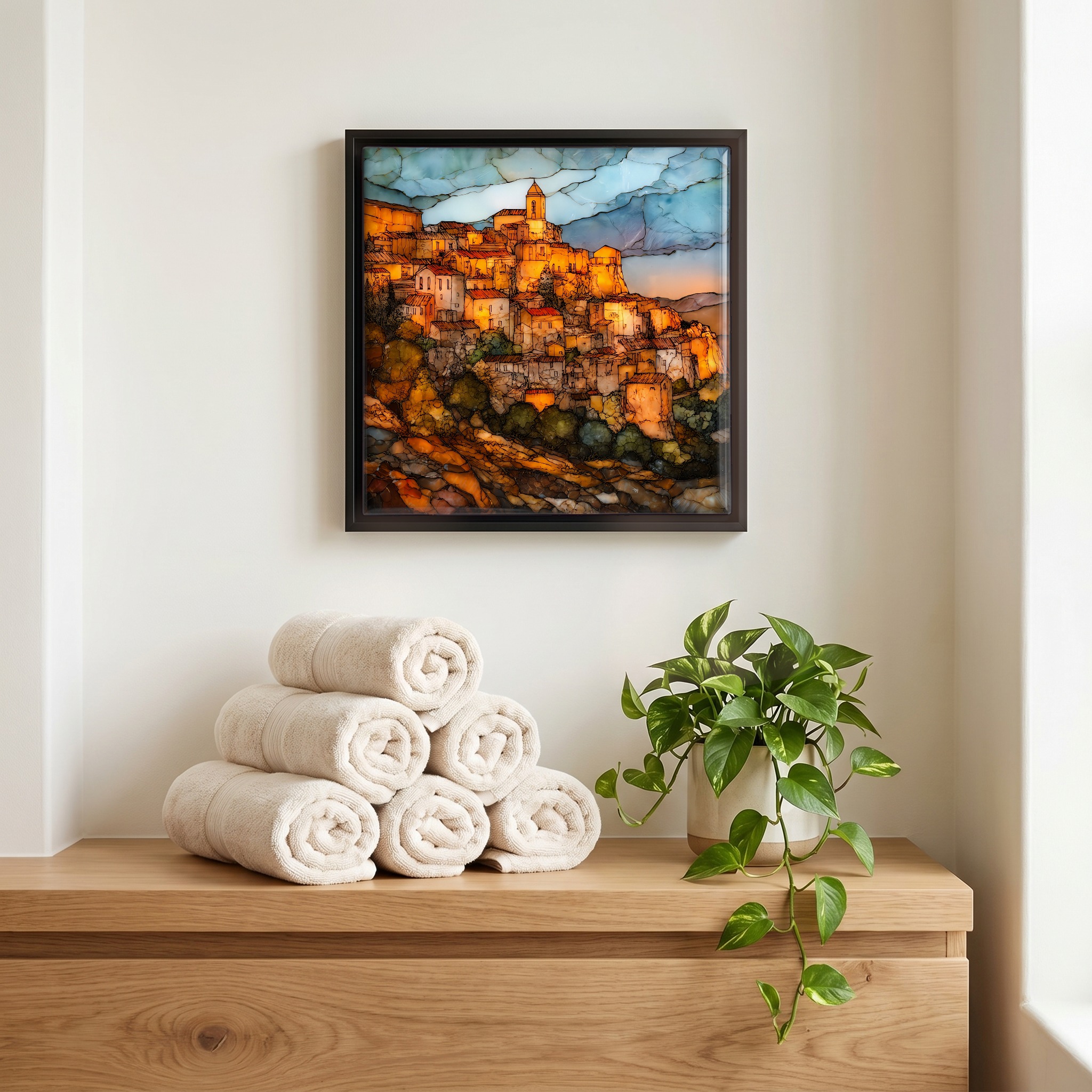
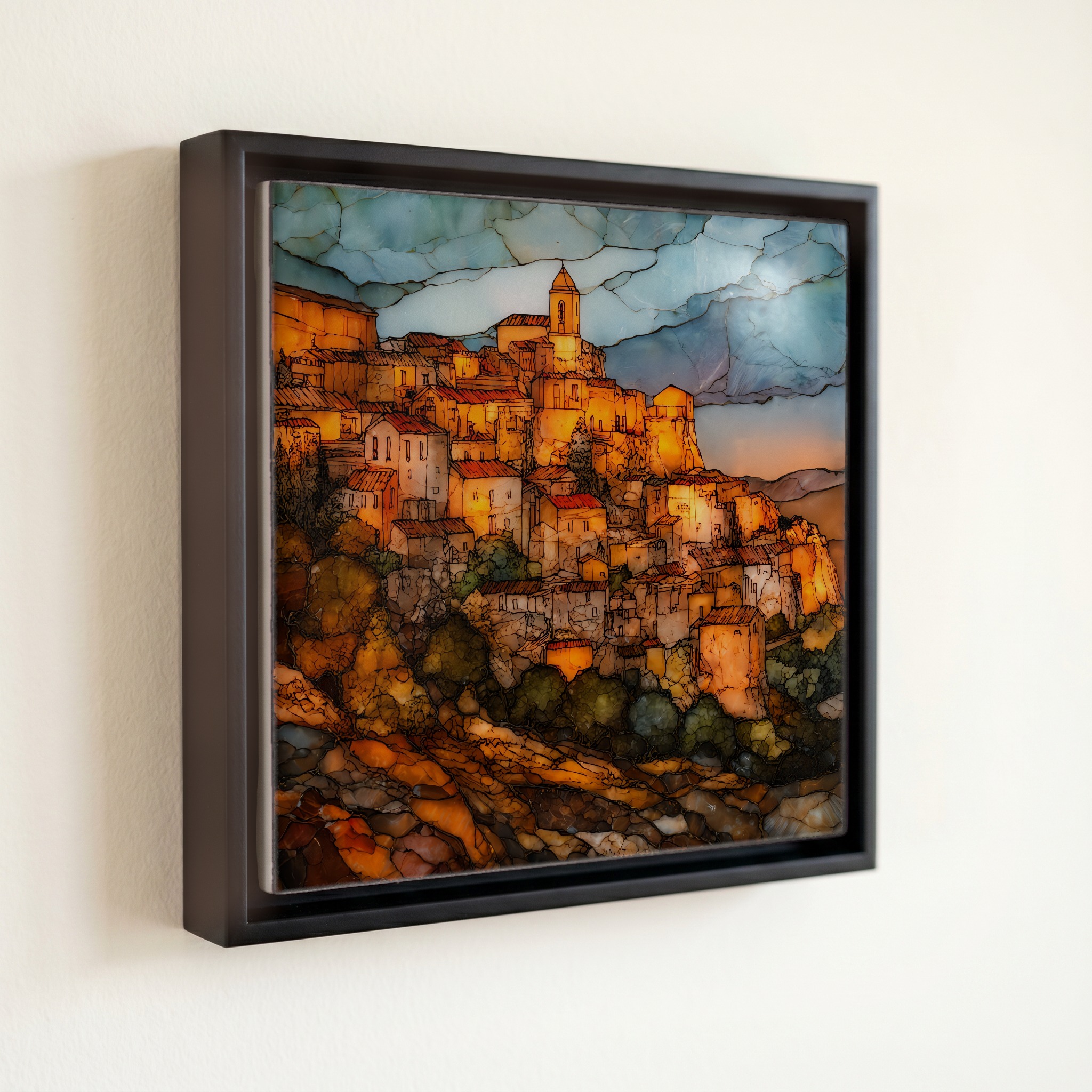
Above the linens, in a slim black surround.
On the nightstand, on a light oak stand.
On a picture ledge, where the light comes in.
a note from the studio

A village built straight into the limestone of the Alpilles, with a ruined castle above the lanes and the old bauxite quarries below. The castle was pulled down on orders from Paris in 1633 and never rebuilt; the quarries have been turned into a hall of moving paintings, the colour climbing rock walls in the dark. About three hundred and seventy people live up here. Coaches arrive by mid-morning and thin out by dinner; the stones are quietest just after.
from the studio
shown in a slim black floating frame · 6 × 6 in
— bring it home

Les Baux-de-Provence, on ceramic.

Each tile is finished by hand in our Knoxville studio. Artwork is slowly infused into the ceramic surface under high heat and pressure, and rests beneath a thin glossy finish. The colour lives in the surface, not on top of it.

What kind of piece?
One tile — square or rectangle.
How big?
the popular one — counter, shelf, nightstand
6 × 6 in · 15 cm · 1.6 lb
Surface finish
A clear glossy finish — the artwork reads as if under resin. Ideal for show-pieces and framed wall art.
How it sits
A hidden cleat — sits ¼″ proud of the wall.
$58
Hand-finished and shipped from our studio at the foot of the Smokies. On your wall in about ten days.
size
6 × 6 in
15 cm
weighs
1.6 lb
solid in the hand
surface
ceramic, hand-finished
art rests beneath a thin glossy finish
from
Knoxville, TN
our family studio, at the foot of the Smokies
— start a Coaster Set

Pick any four 4-inch tiles — National Parks you've been to, a Smokies set, the four seasons of one place. $ for a set of , cork-backed, ready to live on the table.
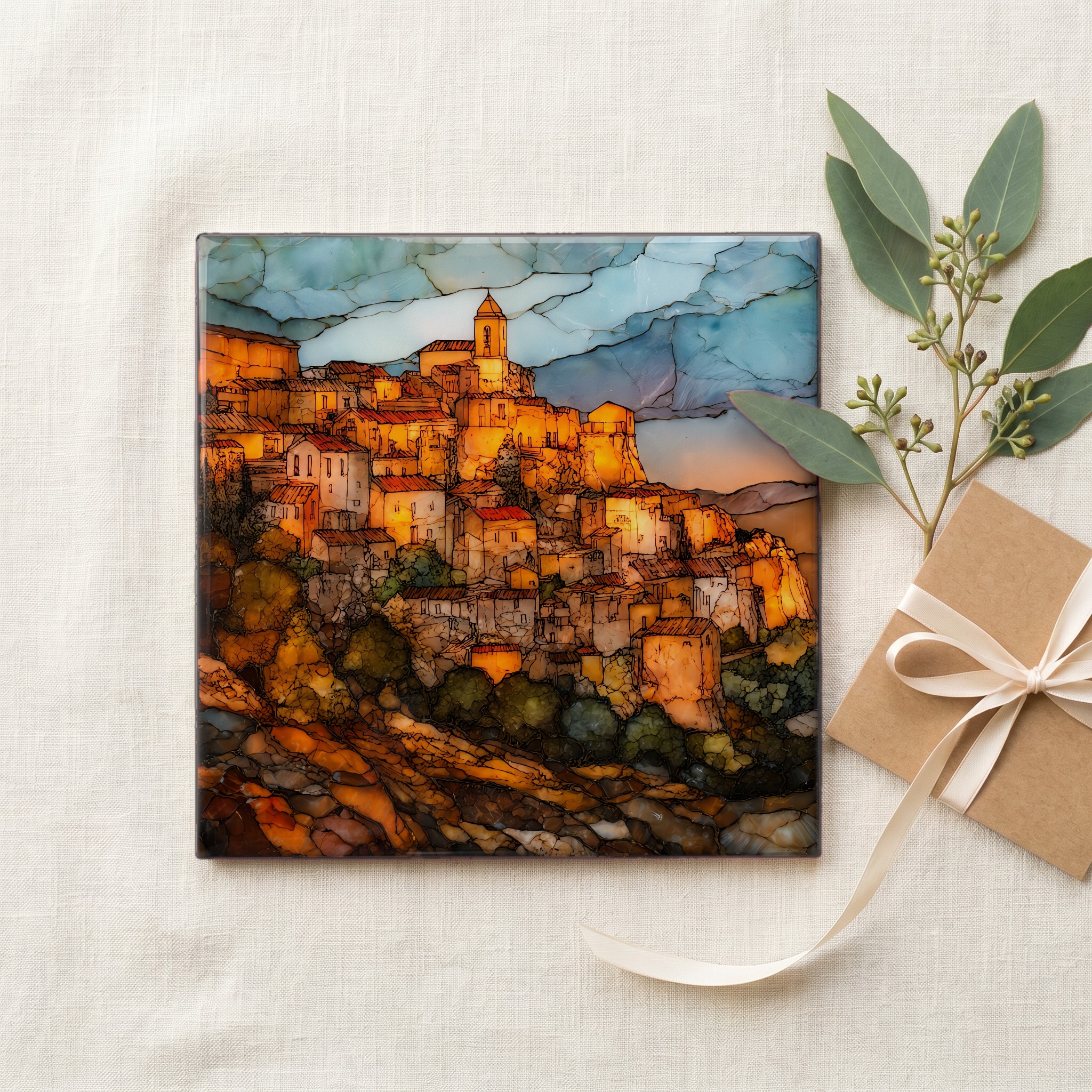
comes gift-ready
comes gift-ready

Each tile ships in a kraft box, tied with cream ribbon, with a handwritten note from the studio if you'd like to add one.
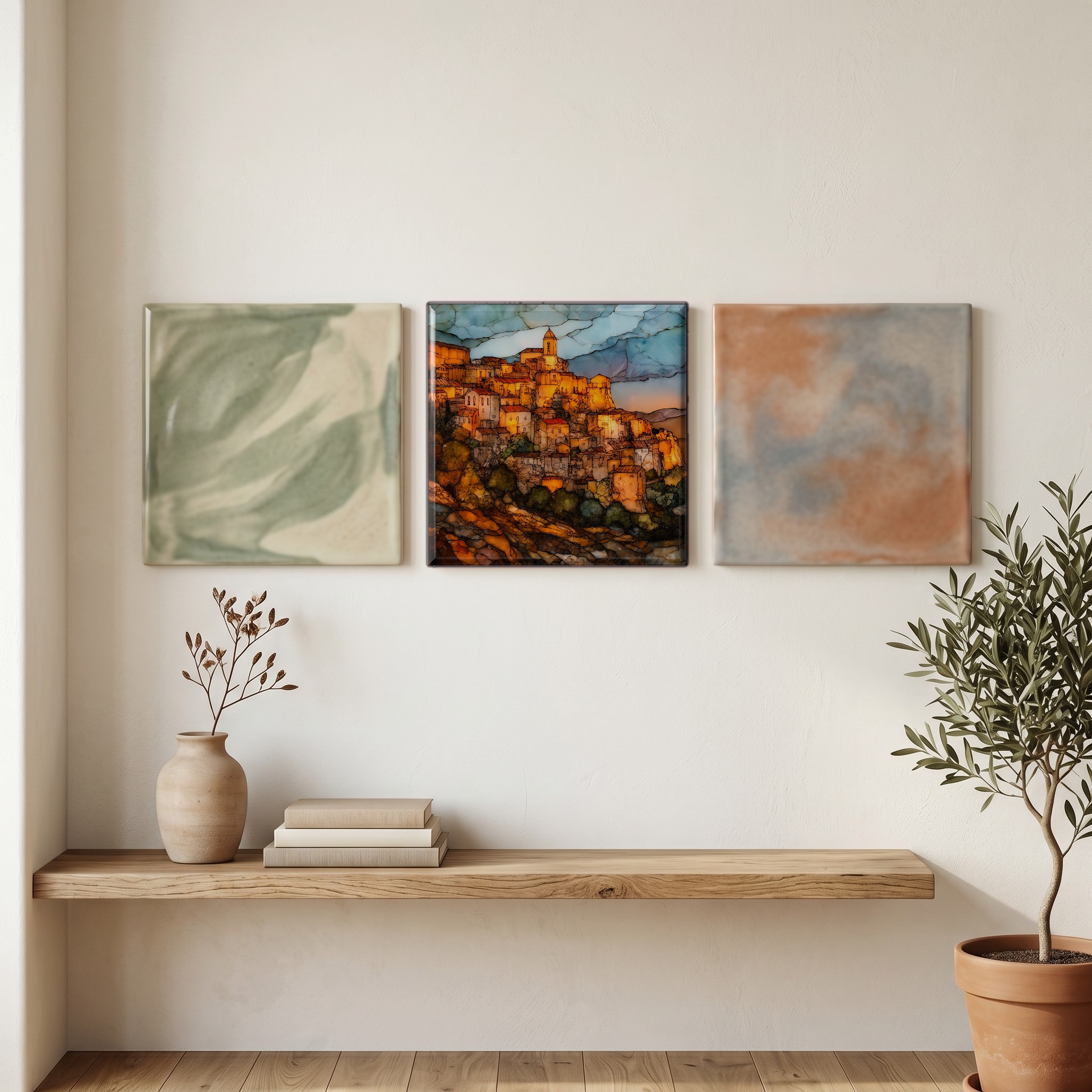
or build a grouping
or build a grouping

Three or five different vistas, hung together — a chapter of places you've been, or want to go.

about Les Baux-de-Provence

The place, in three passes.

A little of what's known, in case you fall down the rabbit hole — or want to go see it yourself.
the place

Les Baux-de-Provence sits on a limestone outcrop in the Alpilles, a low range of jagged hills in the Bouches-du-Rhône department of southern France. The commune is small, roughly 18 square kilometres with around 370 residents, but it receives well over a million visitors a year, drawn to the castle ruins and the old bauxite quarries below. The village lies about 20 kilometres northeast of Arles and 30 kilometres south of Avignon, reachable from Saint-Rémy-de-Provence by the D27. It is listed among Les Plus Beaux Villages de France, a national association of about 170 villages chosen for architectural and landscape integrity.

the stone

The mineral bauxite takes its name from Les Baux. In 1821 the French geologist Pierre Berthier identified a reddish ore at the foot of the village and named it after the place; the same ore today supplies most of the world's commercial aluminium. The castle on the spur dates from the 11th century and once held one of the most powerful lordly families in Provence, the House of Baux. After a long rebellion against Louis XIII, Cardinal Richelieu ordered the citadel demolished in 1633; what remains is a working ruin, walked over rather than restored. The lower village, the bourg below, kept its 16th-century Renaissance houses largely intact.

the visit

The village itself is freely accessible; the castle ruin (Château des Baux) and the Carrières de Lumières each charge admission and run roughly 9 to 6 in summer, shorter in winter. The Carrières, set in the old bauxite quarry galleries below the village, projects rotating immersive shows of work by single painters (Van Gogh, Vermeer, and Cézanne in past seasons) across rock walls about 14 metres high. Coaches arrive from Avignon and Marseille from late morning; the lanes are calmest at opening and after about 5pm. Mistral wind days carry far across the Alpilles, so a windbreaker matters even in July. The village closes early; most restaurants stop seating by 9pm.

where
France · Bouches-du-Rhône, Provence-Alpes-Côte d'Azur
within
Parc Naturel Régional des Alpilles
position
43.7444° N · 4.7950° E
the neighborhood

What's nearby.

A handful of named places within an hour's walk or short drive. Some we've already painted; some we will.
10 km NE
Saint-Rémy-de-Provence
Provençal town
10 km NE
Saint-Paul-de-Mausole
monastery
10 km NE
Glanum
Roman archaeological site
20 km SW
Arles
Roman city
30 km N
Avignon
papal city
N
Les Baux-de-Provence
Saint-Rémy-de-Provence
Saint-Paul-de-Mausole
Glanum
Arles
Avignon
common questions

What people ask.

A few questions we get about Les Baux-de-Provence — and about bringing the piece home.
about the place

Les Baux is a village on a limestone outcrop in the Alpilles, in the Bouches-du-Rhône department of southern France. It sits about 20 kilometres northeast of Arles and 30 kilometres south of Avignon, reachable by road from Saint-Rémy-de-Provence.

The Château des Baux was largely demolished in 1633 on the order of Louis XIII, after the lords of Baux backed one rebellion too many against the French crown. Cardinal Richelieu carried out the demolition. The walls and towers were never rebuilt.

The Carrières are former bauxite quarries below the village, now used as projection galleries for immersive art shows. Single-painter programmes (Van Gogh, Vermeer, Cézanne in past seasons) play across rock walls roughly 14 metres high, set to music. The site is operated by Culturespaces and runs daily.

From Les Baux. In 1821 the French geologist Pierre Berthier identified a reddish aluminium-bearing ore in deposits near the village and named it bauxite after the place. The same mineral, now mined elsewhere, remains the world's main commercial source of aluminium.

Spring (April and May) and autumn (September and October) are easiest: mild weather, olive groves in leaf, fewer coaches. July and August are hot and busy. Winter is quiet but the Mistral wind can be sharp on the spur, and some shops shorten their hours.

The nearest TGV stations are Avignon (about 35 minutes by car) and Aix-en-Provence (about an hour). Car is easiest; the D27 climbs from Saint-Rémy-de-Provence. Parking is at the foot of the village; the lanes inside are pedestrian-only. Some seasonal shuttles run from Arles and Avignon.

Yes. The village stays open through the year, including a small permanent population of about 370. The castle and the Carrières keep reduced winter hours and may close for short stretches in January or February for maintenance.

about the piece in your home

It has been a meaningful gift for many of our customers with ties to the Alpilles or to Arles. Les Baux is one of a small list of Provençal villages that people from the region recognise immediately, alongside Gordes and Roussillon. A Small or Medium tile with a handwritten note from the studio carries well.

The palette runs warm limestone ochres, deep Provençal greens, and a vein of cobalt sky. It sits well in Mediterranean modern, Mountain-modern, and Jewel-tone Maximalist rooms, and reads quietly against terracotta tile or limewashed plaster walls common in farmhouse Provençal interiors.

Yes. Mediterranean modern has carried real momentum since 2023, especially the Provençal subvariant with its pale stone, olive, and restrained metals. The tile's stained-glass treatment of the limestone village fits that palette directly and gives the focal point most Mediterranean modern rooms ask for.

Above a standard three-seat sofa, a single Large reads as a focused vignette and a 4-tile Mural fills the wall. For a console table or a hallway, a Medium or a pair of Smalls keeps the proportion right. Murals scale further to 9 tiles for a long wall.

Yes, in the Dura Satin or Matte finish, which is scratch-resistant and handles humidity. The Glossy finish is reserved for framed wall pieces in dry rooms. The Coaster Set is fine on a wet bar or near a sink.

A microfibre cloth and plain water. Avoid abrasive cleaners. The colour lives in the ceramic surface, slowly infused under high heat and pressure beneath a thin glossy finish, so day-to-day wiping does not affect it.

Yes. Reid Wender, the curator, paints every place in the WenderVista atlas in the studio's distinctive stained-glass and alcohol-ink visual language. The work is finished in-house in Knoxville, Tennessee. There is no licensing and no third-party reproduction.

if this one stayed with you

A few you might also love.

Hand-picked by the eye that found Sorapis. Same air, same kind of quiet.