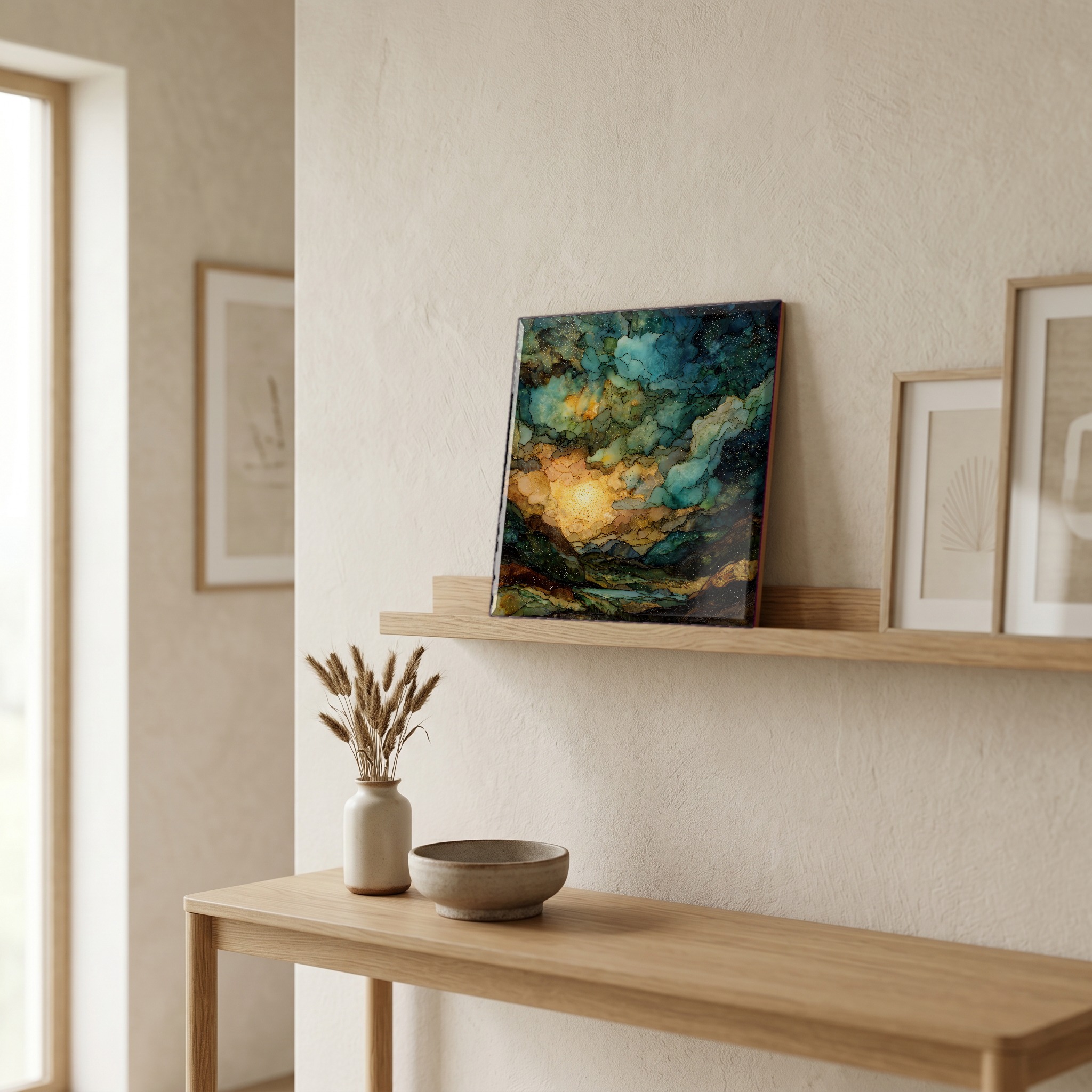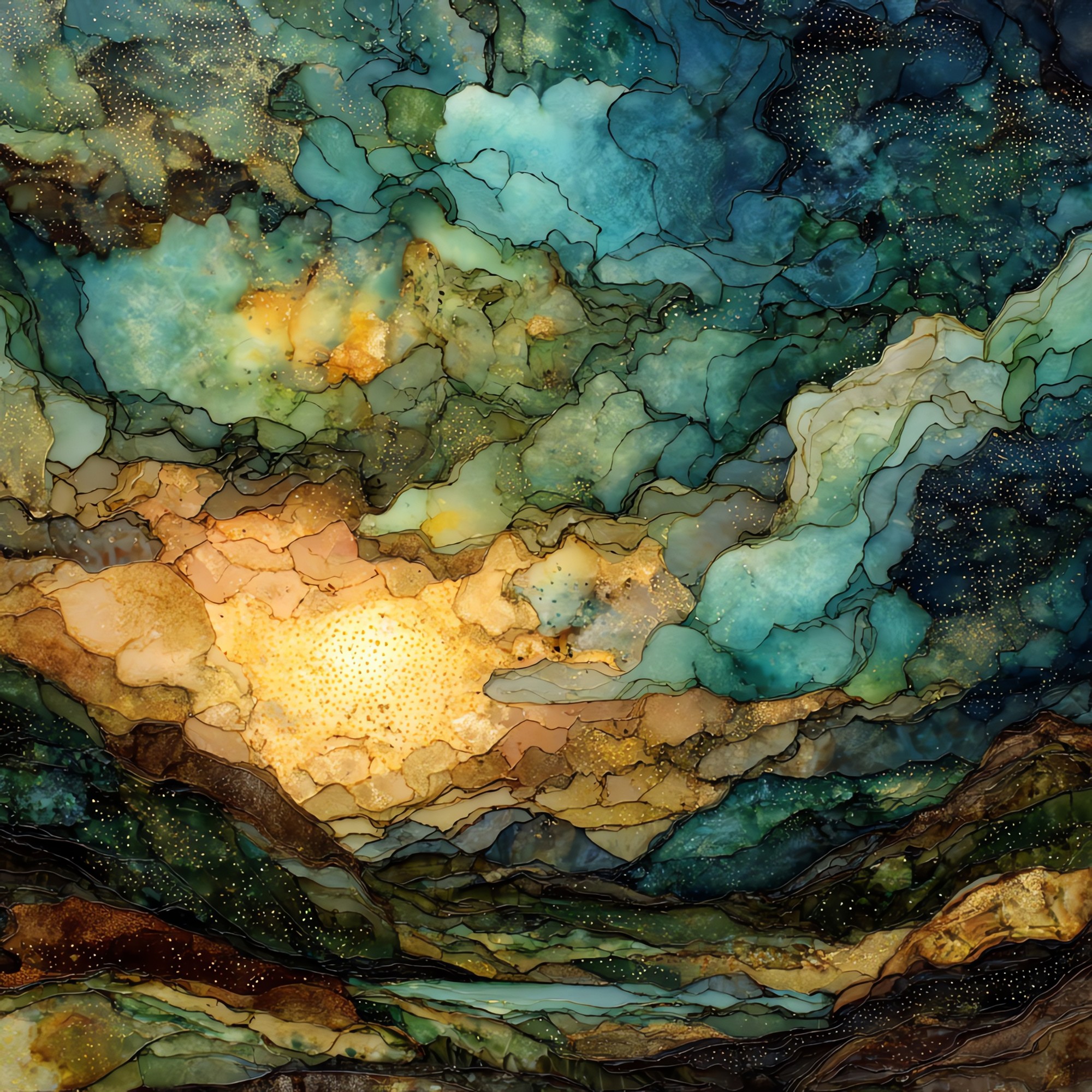
Wender·Vista
Lascaux Cave Painting
shown on ceramic, 12-inch tileFrance
in the Dordogne, southwestern France

Lascaux Cave Painting

the dark that held its colour for seventeen thousand years.

Where it lives

Not only on a wall.

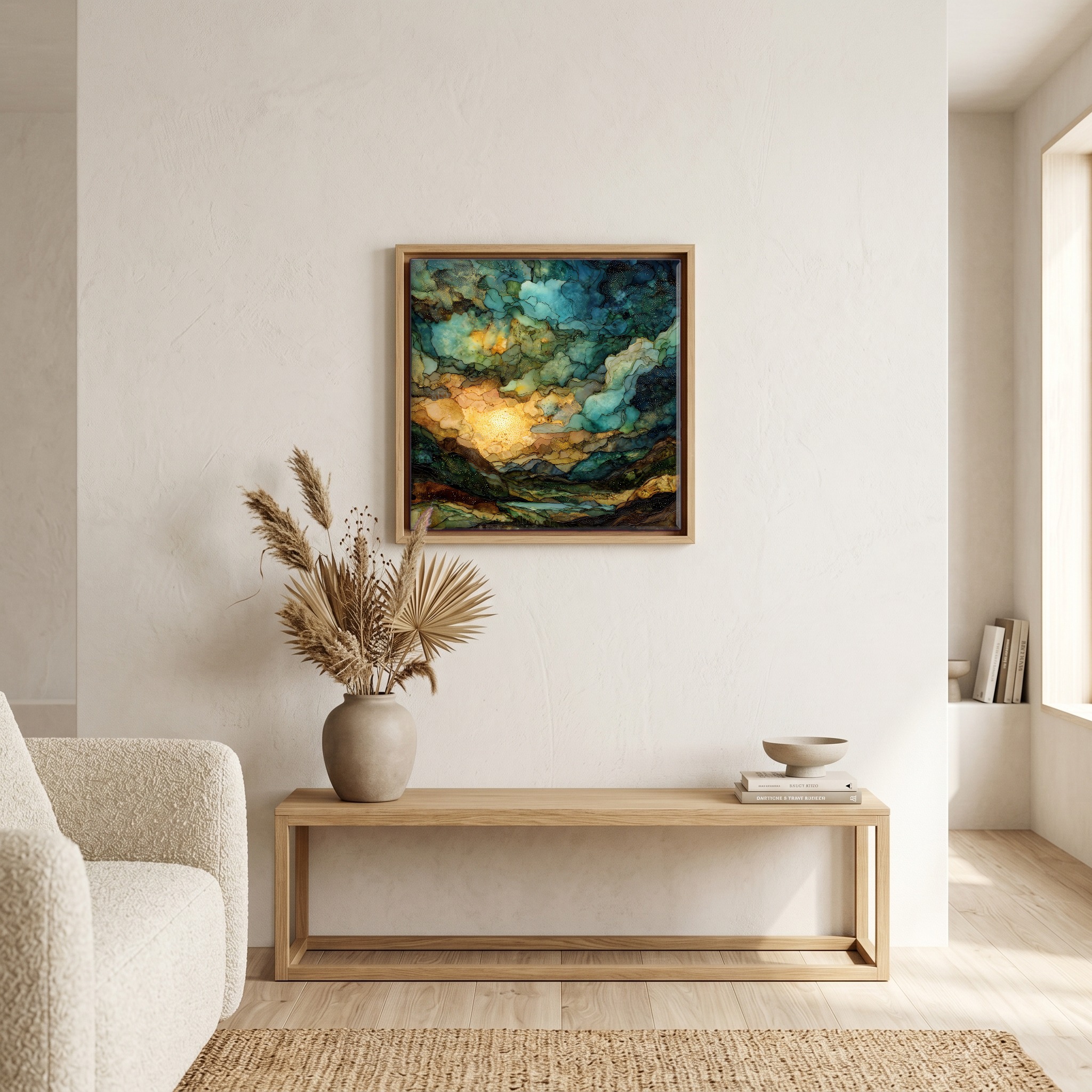
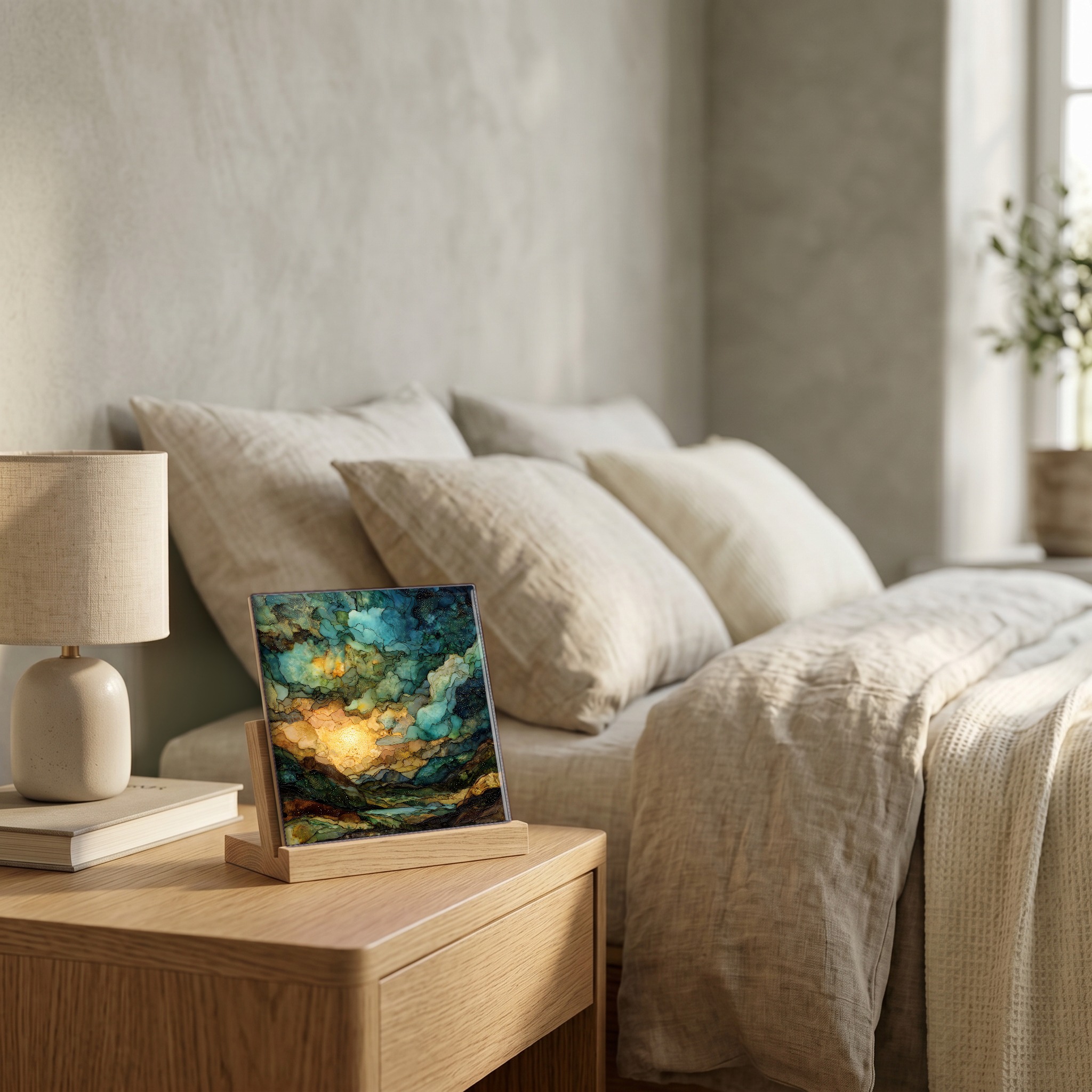
A small tile on the nightstand catching the morning. A larger one above the fire. Yours, wherever you spend the slow hours.
Above the bench, in a warm oak surround.
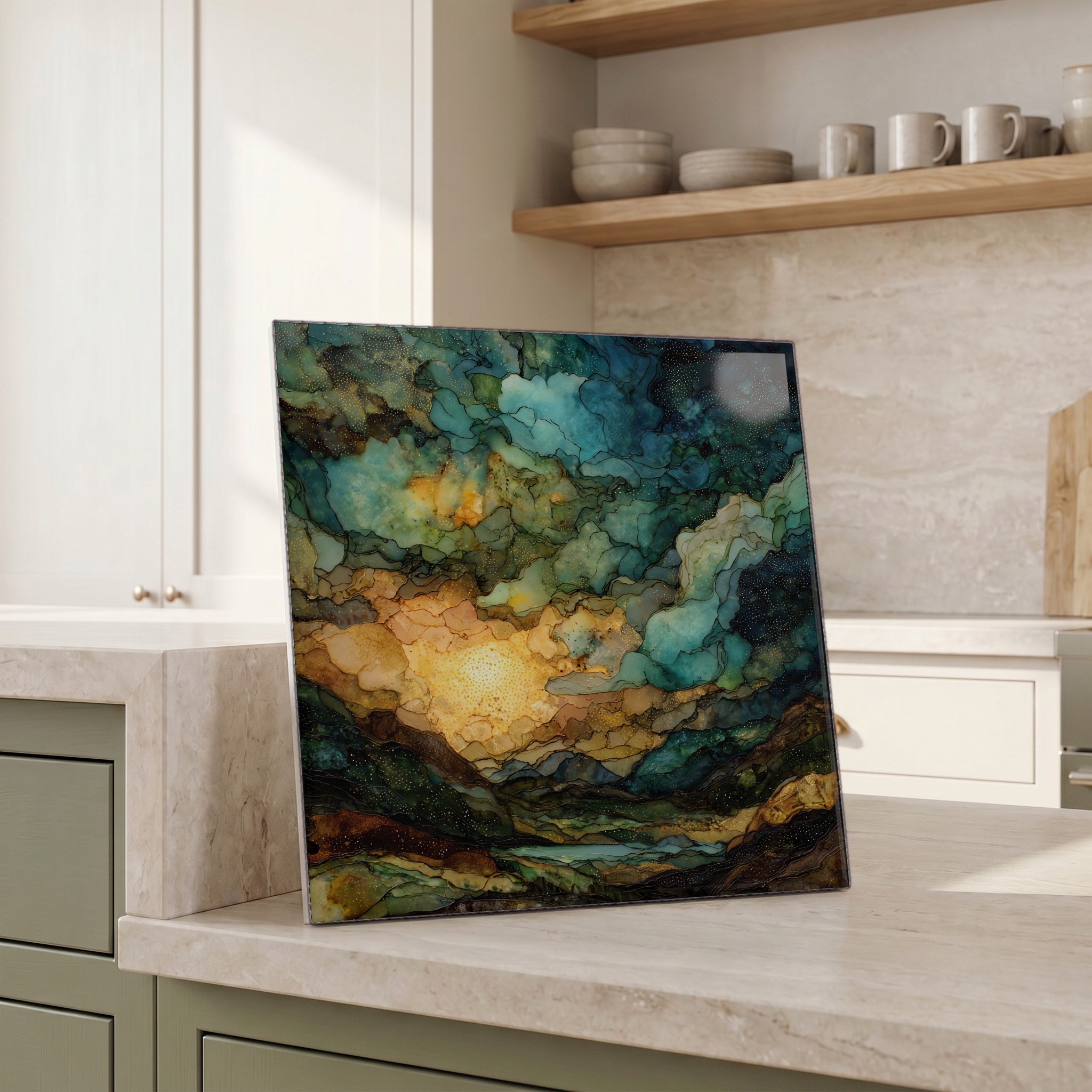
Beside the kettle, propped on the counter.
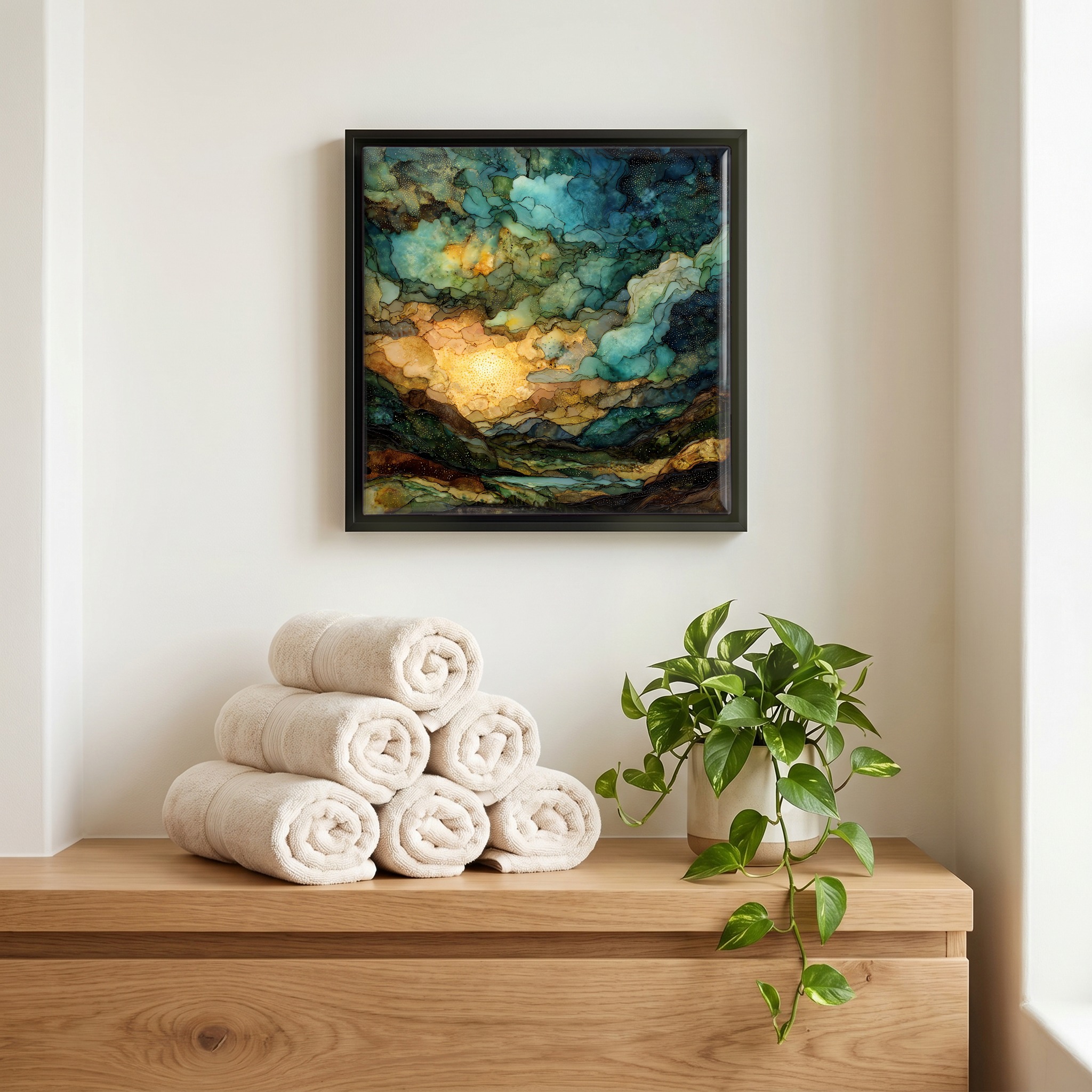
Above the linens, in a slim black surround.
On the nightstand, on a light oak stand.
On a picture ledge, where the light comes in.
a note from the studio

The shallow stone galleries above Montignac in the Vézère valley. Four teenagers and a dog called Robot found the entrance in September 1940. Inside, six hundred animals: aurochs, horses, deer, a single bear, painted in iron-oxide red and manganese black, the russet still alive on the limestone. The cave itself has been closed since 1963; the air would not bear visitors. What's open is Lascaux IV, a meticulous replica at the foot of the hill in Montignac. The herd is still running. The dark kept the colour.
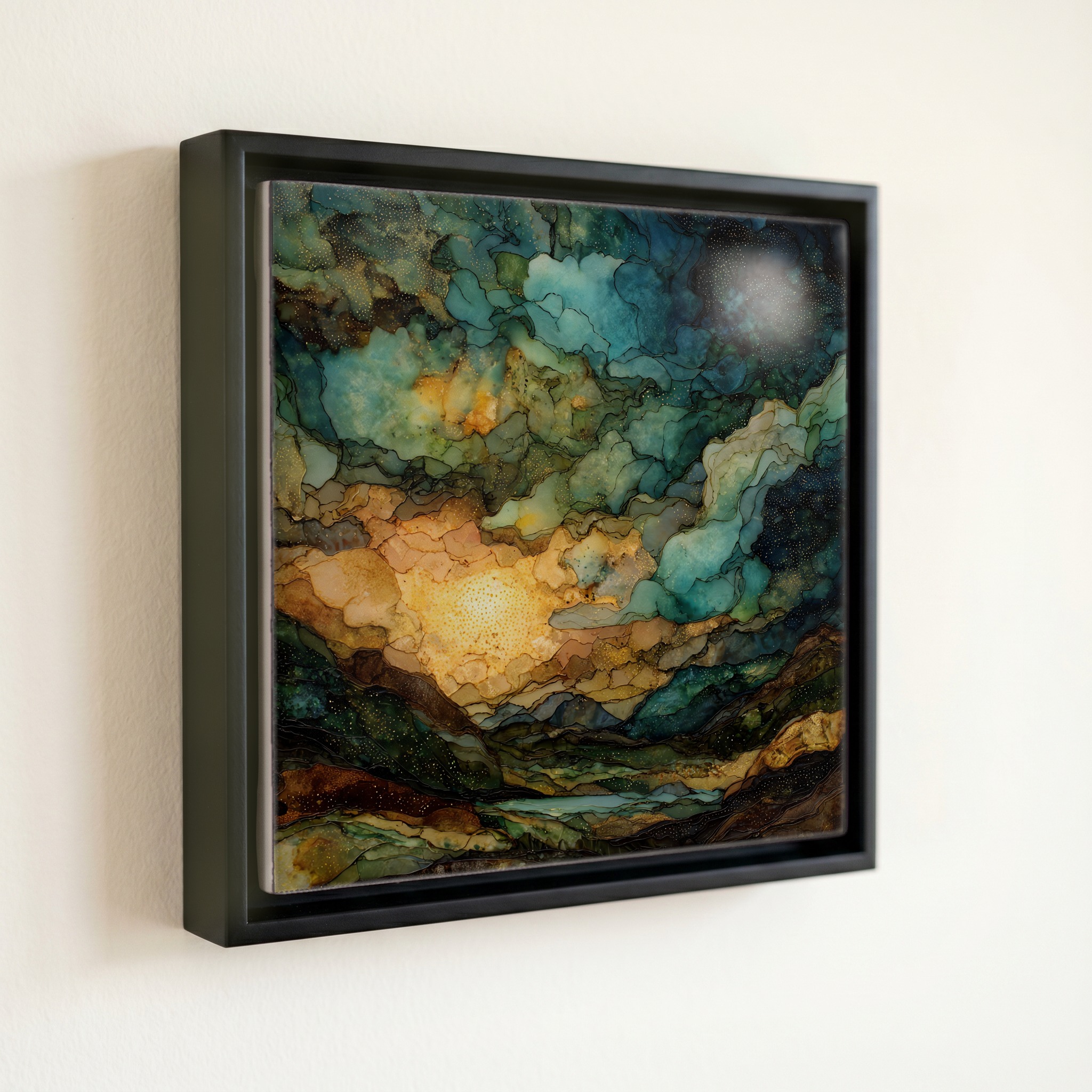
from the studio
shown in a slim black floating frame · 6 × 6 in
— bring it home

Lascaux Cave Painting, on ceramic.

Each tile is finished by hand in our Knoxville studio. Artwork is slowly infused into the ceramic surface under high heat and pressure, and rests beneath a thin glossy finish. The colour lives in the surface, not on top of it.

What kind of piece?
One tile — square or rectangle.
How big?
the popular one — counter, shelf, nightstand
6 × 6 in · 15 cm · 1.6 lb
Surface finish
A clear glossy finish — the artwork reads as if under resin. Ideal for show-pieces and framed wall art.
How it sits
A hidden cleat — sits ¼″ proud of the wall.
$58
Hand-finished and shipped from our studio at the foot of the Smokies. On your wall in about ten days.
size
6 × 6 in
15 cm
weighs
1.6 lb
solid in the hand
surface
ceramic, hand-finished
art rests beneath a thin glossy finish
from
Knoxville, TN
our family studio, at the foot of the Smokies
— start a Coaster Set

Pick any four 4-inch tiles — National Parks you've been to, a Smokies set, the four seasons of one place. $ for a set of , cork-backed, ready to live on the table.

comes gift-ready
comes gift-ready

Each tile ships in a kraft box, tied with cream ribbon, with a handwritten note from the studio if you'd like to add one.
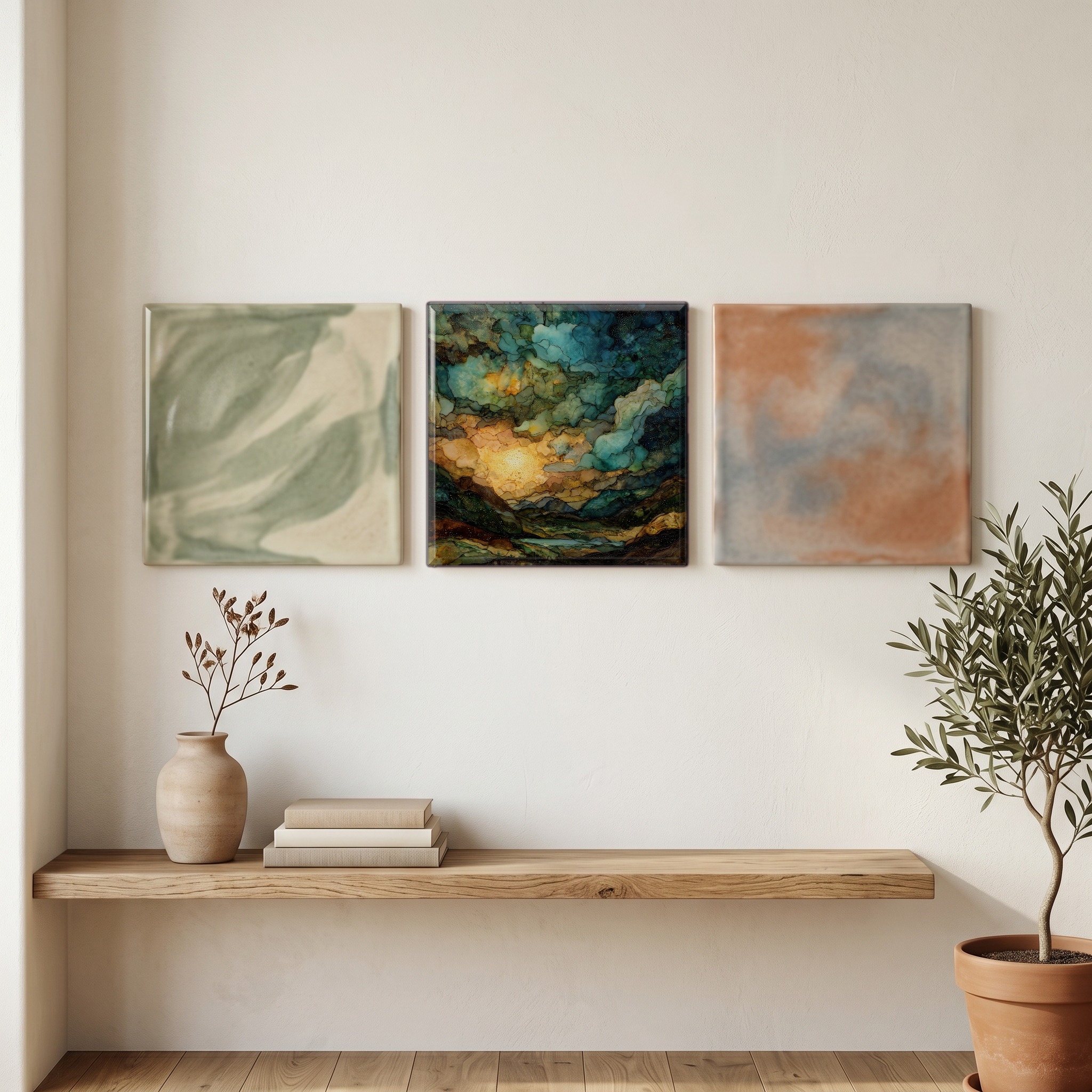
or build a grouping
or build a grouping

Three or five different vistas, hung together — a chapter of places you've been, or want to go.

about Lascaux Cave Painting

The place, in three passes.

A little of what's known, in case you fall down the rabbit hole — or want to go see it yourself.
the place

Lascaux sits on a wooded hillside above Montignac, a small town on the Vézère River in the Dordogne department of southwestern France. The cave was discovered on 12 September 1940 by four local teenagers (Marcel Ravidat, Jacques Marsal, Georges Agnel and Simon Coencas) and Ravidat's dog Robot. The Vézère valley is a UNESCO World Heritage Site as a complex of 15 prehistoric sites and 25 decorated caves, inscribed in 1979. The original cave has been closed to the public since 1963, after rising carbon-dioxide levels and the resulting algae and calcite growth began to damage the paintings. Replicas were built nearby: Lascaux II opened in 1983, and Lascaux IV at the foot of the hill in Montignac in 2016.

the colour

The palette is essentially four pigments. Red and yellow ochres from iron oxides found in clay deposits in the valley; black from manganese dioxide; a sparse white from china clay (kaolin). The artists ground them with mortars made from local stone, mixed them with water or animal fat, and applied them with chewed-twig brushes, blowing tubes made of hollow bone, and the palms of their hands. The paint sank into the limestone wall and bonded with the rock. Seventeen thousand years later the bulls of the Salle des Taureaux still read red. The same family of pigments turns up in other Vézère valley caves: Font-de-Gaume, Combarelles, Rouffignac.

the visit

The cave itself is closed and will not reopen. What's open is Lascaux IV, formally the Centre International de l'Art Pariétal Montignac-Lascaux, which opened in December 2016 at the foot of the hill in Montignac. The 8,500-square-metre facility, designed by the Norwegian firm Snøhetta, contains a complete facsimile of the cave produced by laser scanning and hand-painted by the Atelier des Fac-Similés du Périgord. A separate, older replica, Lascaux II (1983), reproduces the Hall of the Bulls and the Painted Gallery and stands 200 metres from the original. Both open most days of the calendar; tickets are timed and frequently sell out around French school holidays.

where
France · Montignac, Dordogne, Nouvelle-Aquitaine
within
Vézère Valley
elevation
185 m · 607 ft
position
45.0531° N · 1.1714° E
the neighborhood

What's nearby.

A handful of named places within an hour's walk or short drive. Some we've already painted; some we will.
10 km SW
La Roque Saint-Christophe
cliff dwelling
20 km SW
Font-de-Gaume
decorated cave
20 km W
Rouffignac Cave
decorated cave
20 km SW
Les Eyzies-de-Tayac
village
25 km S
Sarlat-la-Canéda
medieval town
30 km S
Castelnaud Castle
medieval castle
N
Lascaux Cave Painting
La Roque Saint-Christophe
Font-de-Gaume
Rouffignac Cave
Les Eyzies-de-Tayac
Sarlat-la-Canéda
Castelnaud Castle
common questions

What people ask.

A few questions we get about Lascaux Cave Painting — and about bringing the piece home.
about the place

Lascaux sits on a wooded hillside above Montignac, a town on the Vézère River in the Dordogne department of southwestern France. It is part of the Vézère valley UNESCO World Heritage Site, which protects 15 prehistoric sites and 25 decorated caves inscribed in 1979.

The cave was closed to the public in April 1963 after carbon dioxide, heat, and humidity from visitors triggered algae (the so-called maladie verte) and white calcite deposits that began to grow over the paintings. It will not reopen. Visitors today see the Lascaux IV facsimile in Montignac.

Four teenagers from Montignac entered the cave on 12 September 1940: Marcel Ravidat, Jacques Marsal, Georges Agnel and Simon Coencas, along with Ravidat's dog Robot. Ravidat had noticed a hole left by an uprooted tree a few days earlier and returned with the others to climb in.

The paintings are approximately 17,000 years old, from the late Solutrean and early Magdalenian periods of the Upper Paleolithic. The site contains about 600 painted figures and 1,500 engravings: aurochs, horses, deer, ibex, one bear, one rhinoceros, and the Shaft scene with its wounded bison and bird-headed figure.

Lascaux II opened in 1983 about 200 metres from the original and reproduces the Hall of the Bulls and the Painted Gallery. Lascaux IV opened in December 2016 in Montignac as the Centre International de l'Art Pariétal; it reproduces the whole cave using laser-scanned, hand-painted facsimiles.

Four mineral pigments. Red and yellow ochres from iron-oxide-bearing clays in the Vézère valley, black from manganese dioxide, and a sparse white from kaolin (china clay). They were applied with chewed-twig brushes, hollow-bone blowing tubes, and palm prints, and bonded into the limestone surface.

A black aurochs in the Hall of the Bulls (Salle des Taureaux) measures roughly 5.2 metres in length and is the largest known prehistoric cave painting. The Hall holds four aurochs alongside horses and stags, painted directly onto white-calcite-coated limestone.

about the piece in your home

It's been a meaningful gift for our customers who keep books on parietal painting, archaeology, or Werner Herzog's Cave of Forgotten Dreams. The Lascaux tile carries that russet-and-black palette into a room without flattening it into a textbook reproduction. A Small or Medium works on a desk or in a reading nook.

The deep ochre, charcoal, and white palette settles into rooms built around earth tones. It reads well in Wabi-sabi, Earthy Modern, and Library-Maximalist interiors, anywhere old leather, walnut, kilim rugs, and ceramic vessels already live. It is less at home in a high-gloss minimalist room.

Earth-tone palettes and ancestral-modern interiors, which lean on natural pigments, clay tones, and primitive forms, have been a sustained design through-line since around 2023. The Lascaux tile sits naturally inside that family alongside terracotta, oxblood, unbleached linen, and unfinished wood.

Above a standard three-seat sofa, a single Large reads as the focal piece. A 4-tile Mural fills the wall above without crowding the seating; a 9-tile Mural carries a wider wall. Above a console table in an entryway, a Medium or a 4-tile Mural is the more proportioned choice.

Yes. Order it in Dura Satin or Matte for those rooms. Both finishes are scratch-resistant and handle direct water contact, splashes, and steam without degrading. Glossy is best kept to framed wall art in dry rooms, where the deeper sheen reads as showpiece.

A microfibre cloth with warm water is enough for most marks. For stubborn residue (cooking grease, soap film) add a drop of mild dish soap. Avoid abrasive scrubbers, bleach, and ammonia-based cleaners; they degrade the surface finish over time.

Yes. The Lascaux composition was painted by Reid Wender in the studio's stained-glass-and-alcohol-ink visual language, then slowly infused into the ceramic surface under high heat and pressure beneath a thin glossy finish. Single studio. No licensing. No outside artists.

if this one stayed with you

A few you might also love.

Hand-picked by the eye that found Sorapis. Same air, same kind of quiet.