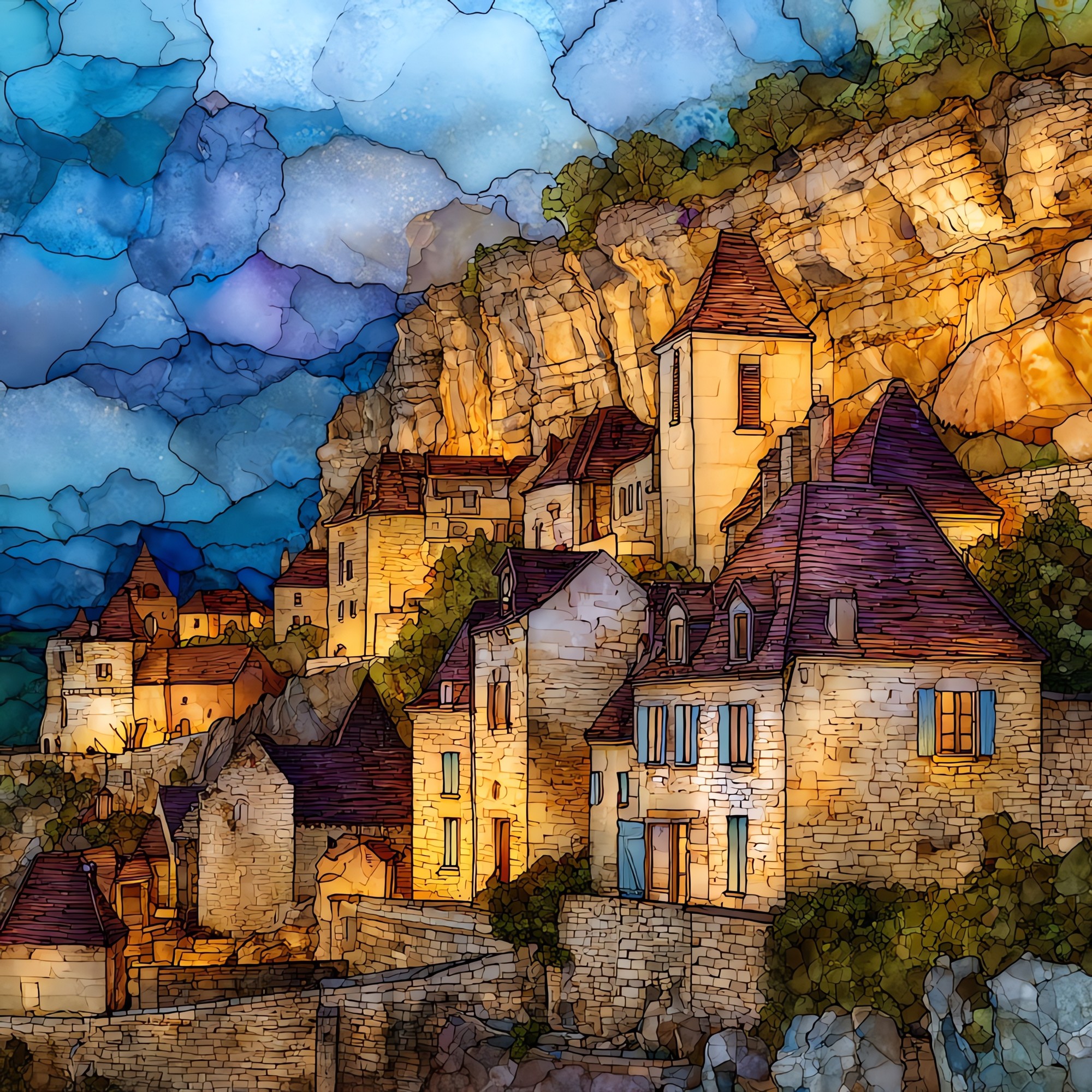
La Roque-Gageac
— the village the cliff keeps warm.
Not only on a wall.
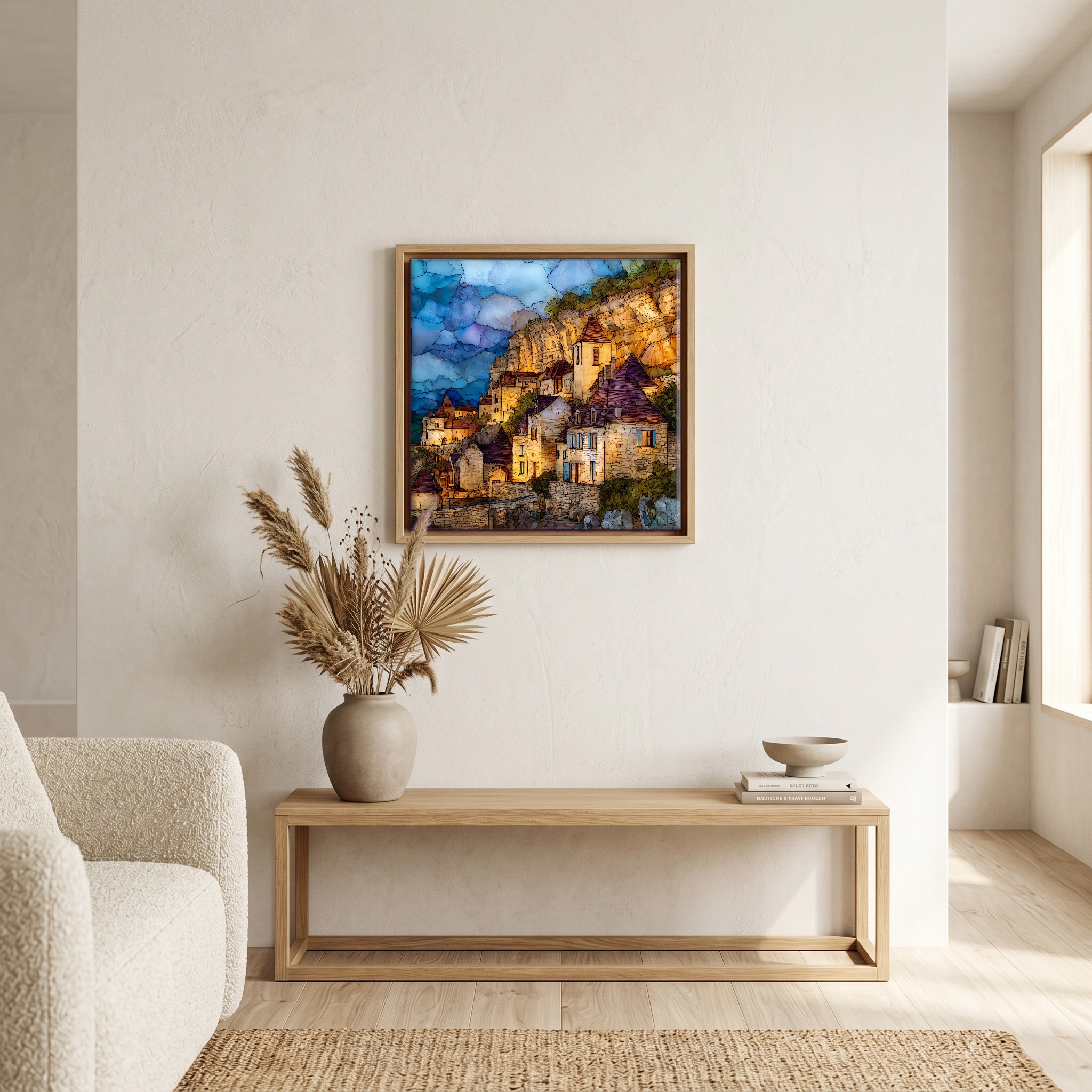
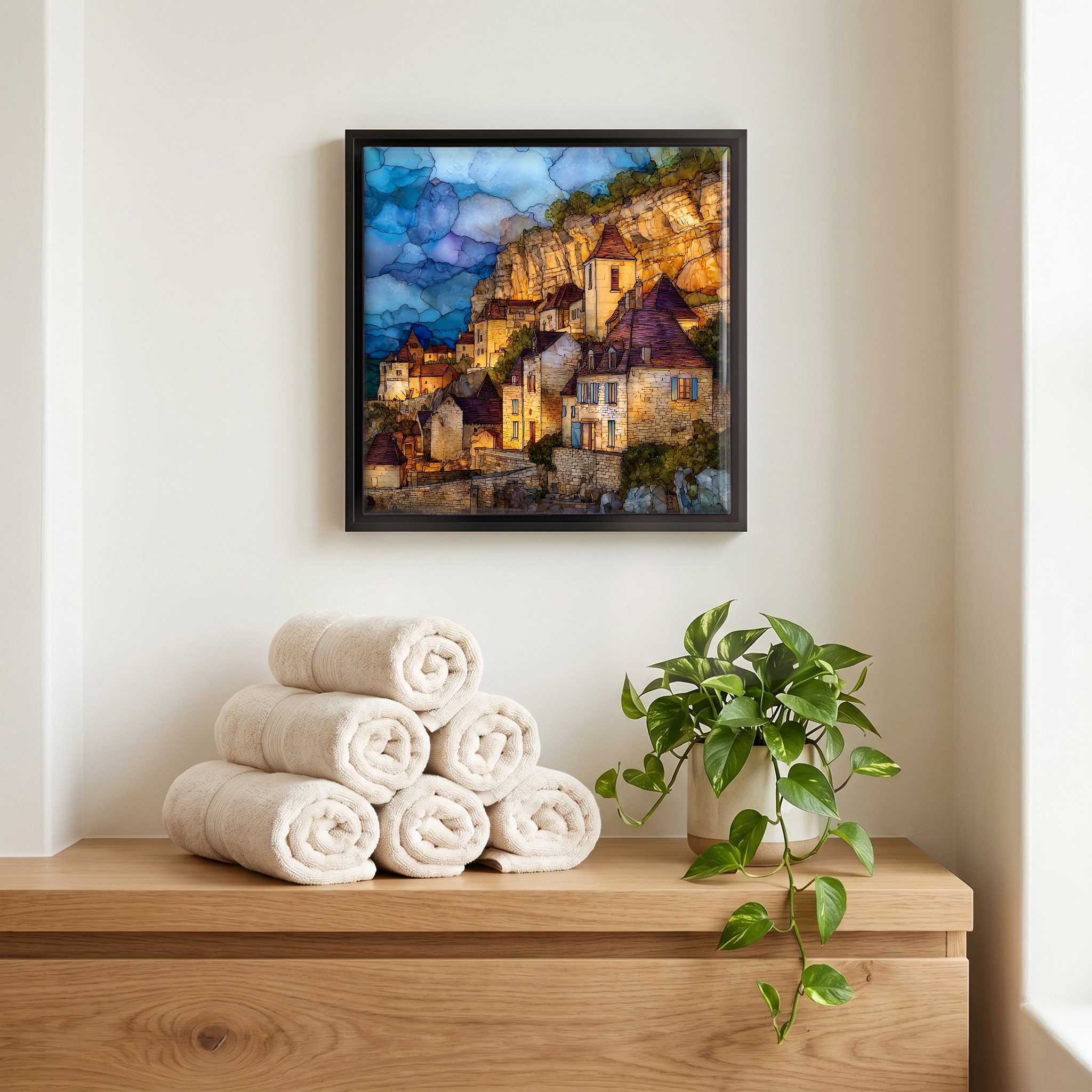

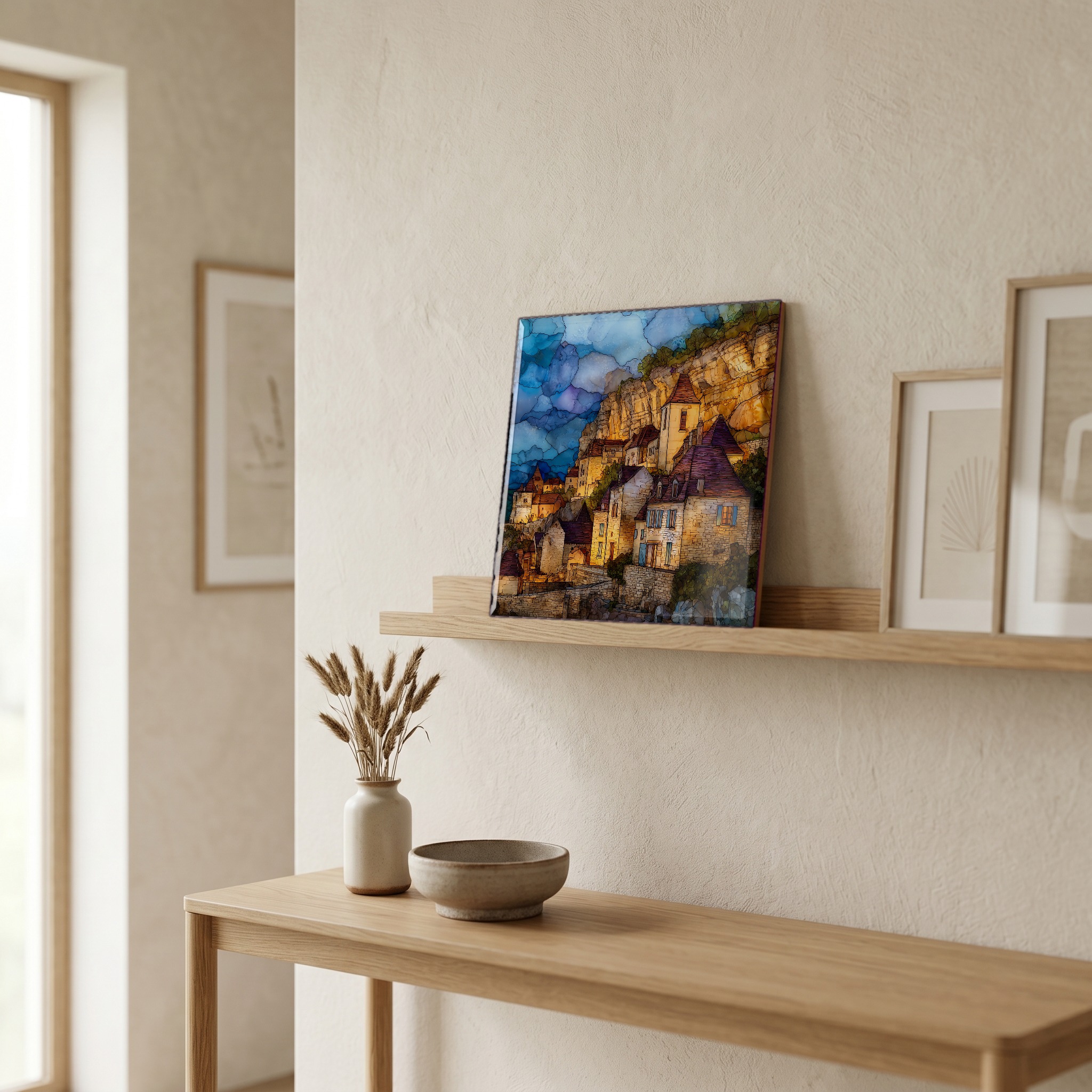
“A village pressed against a limestone cliff on the Dordogne, between Beynac and Domme in the Périgord Noir. The cliff faces south and stores the day's warmth, which is why oleander and banana grow in the public garden below it. Brown-red Périgord roofs, ochre stone, the river slow and shallow. Above the village, the twelfth-century troglodyte fort cut into the rock looks down on the gabarres setting out from the quay. Nobody hurries past it.
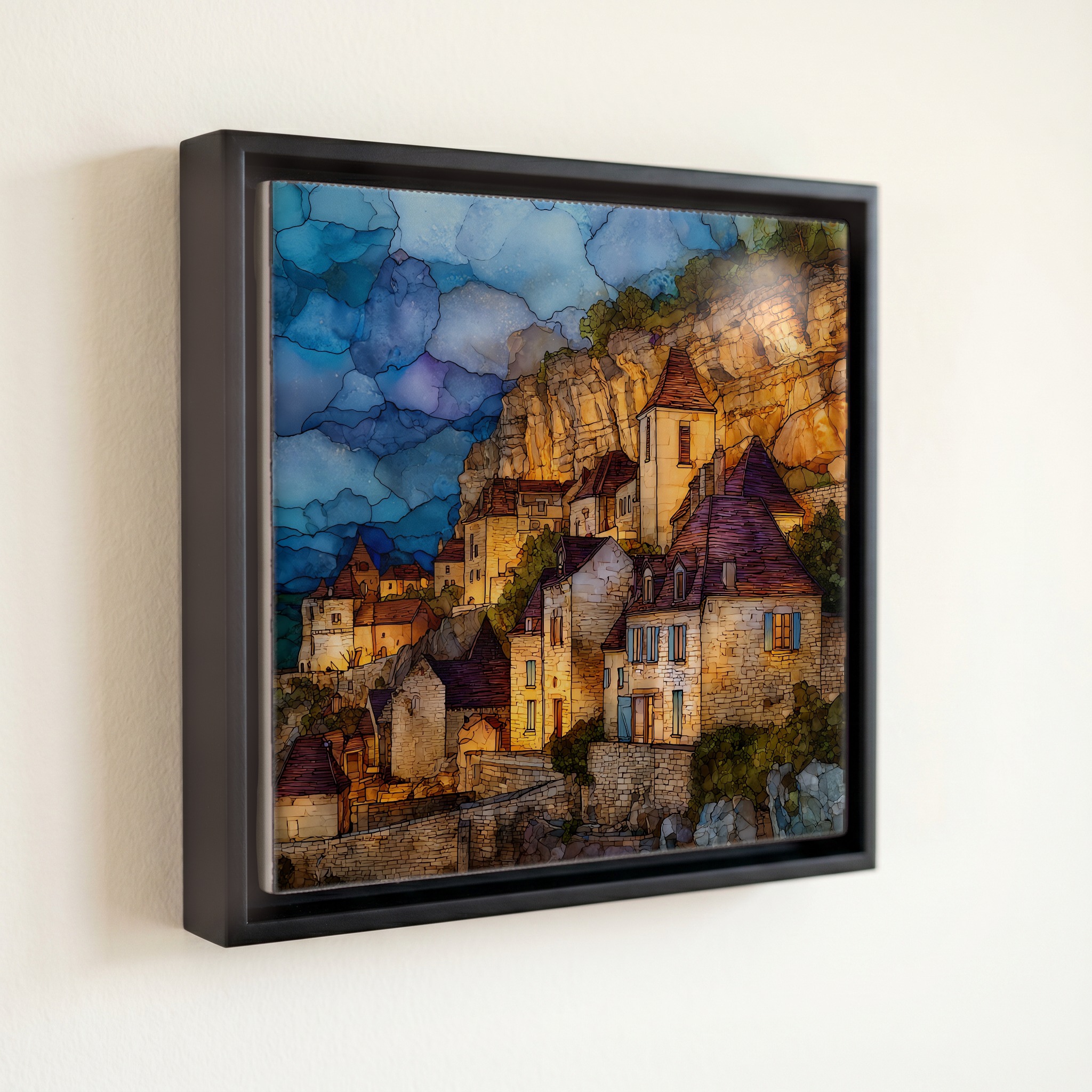
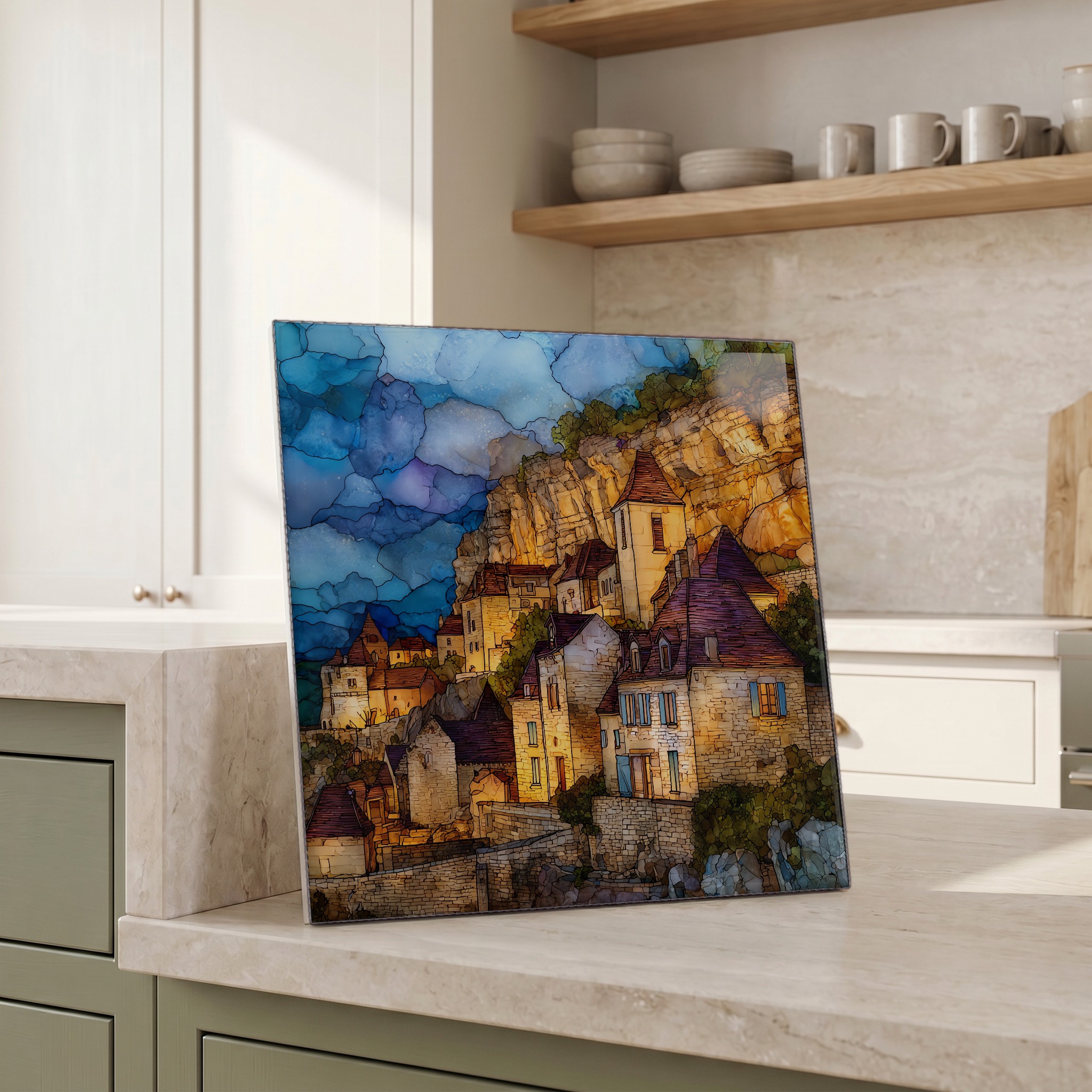
La Roque-Gageac, on ceramic.
Each tile is finished by hand in our Knoxville studio. Artwork is slowly infused into the ceramic surface under high heat and pressure, and rests beneath a thin glossy finish. The colour lives in the surface, not on top of it.
Pick any four 4-inch tiles — National Parks you've been to, a Smokies set, the four seasons of one place. $ for a set of , cork-backed, ready to live on the table.
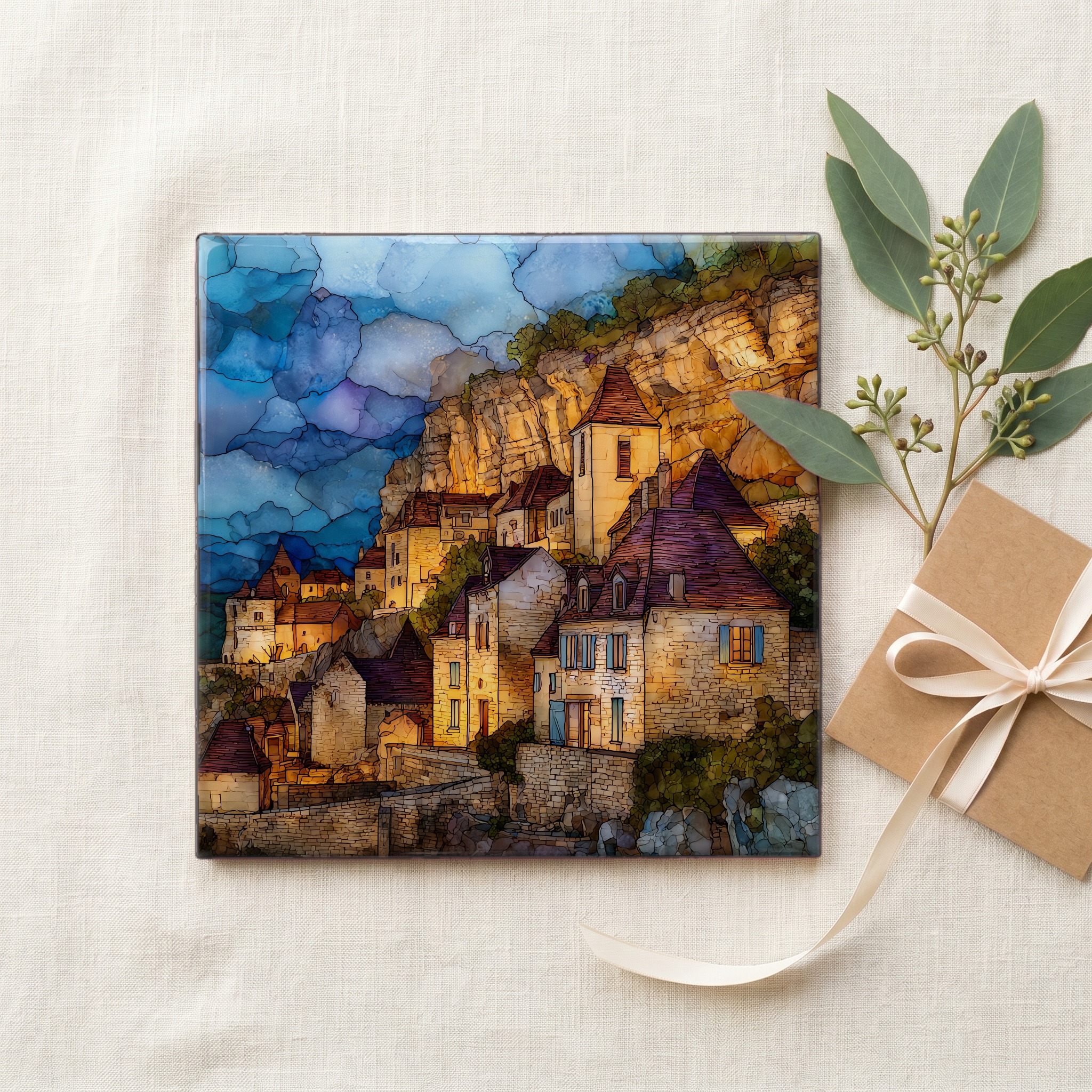
Each tile ships in a kraft box, tied with cream ribbon, with a handwritten note from the studio if you'd like to add one.
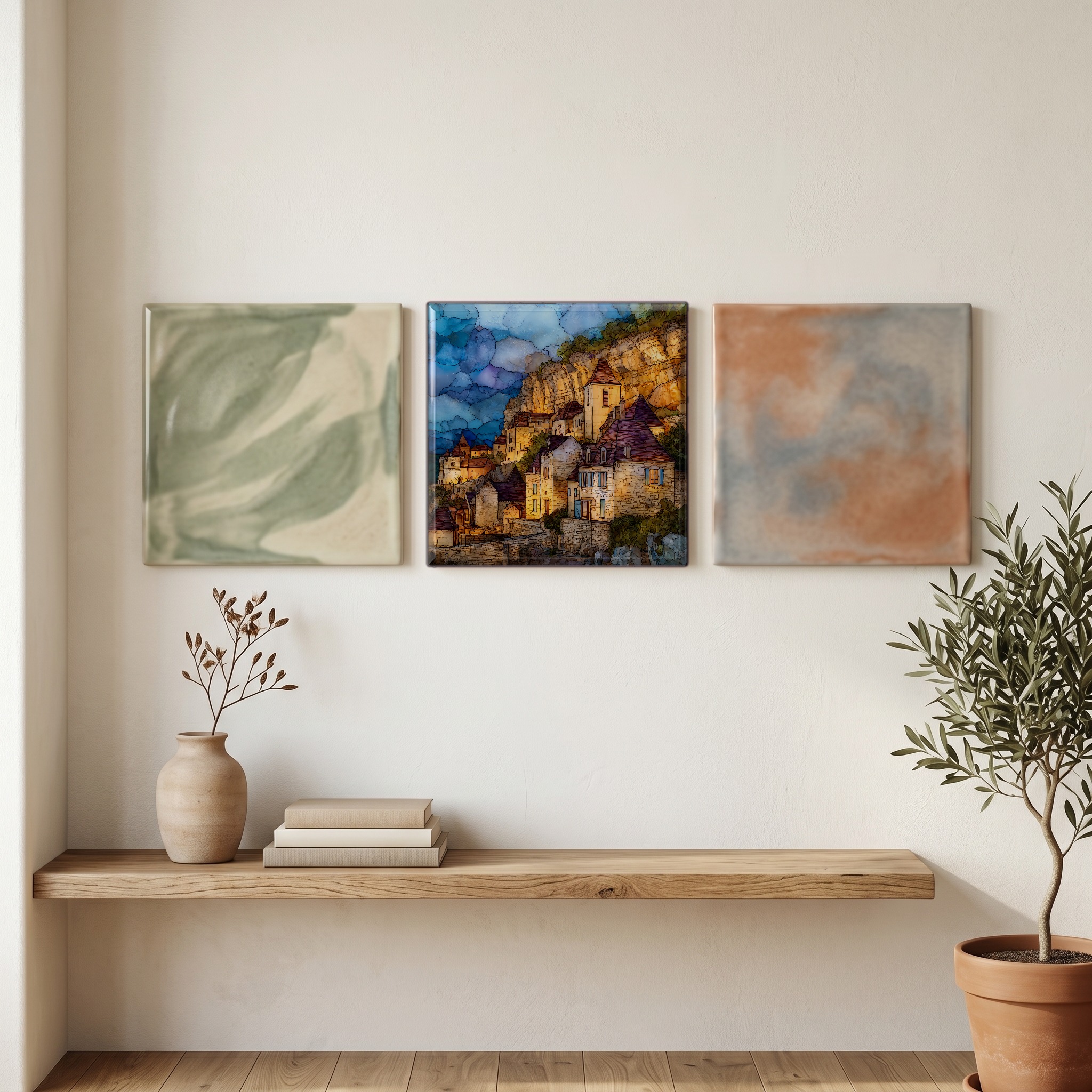
Three or five different vistas, hung together — a chapter of places you've been, or want to go.
The place, in three passes.
La Roque-Gageac sits on the right bank of the Dordogne River in the Dordogne department of Nouvelle-Aquitaine, in south-western France. The village holds roughly four hundred residents along about a kilometre of riverbank between Beynac-et-Cazenac, three kilometres downstream, and Domme, six kilometres upstream. A south-facing limestone cliff over a hundred metres high rises directly behind the houses; the village is squeezed onto the narrow shelf between cliff and water. The nearest town of any size is Sarlat-la-Canéda, twelve kilometres north. La Roque-Gageac has been listed among Les Plus Beaux Villages de France since the association was founded in 1982.
The cliff is Cretaceous limestone, the same band of pale stone that runs through the Périgord and stores the prehistoric painted caves of the Vézère valley to the north. Halfway up the wall, the Fort de la Roque-Gageac was cut into the rock in the twelfth century by the bishops of Sarlat as a refuge from English raids during the Hundred Years' War. It was reachable only by retractable ladders. The fort fell into ruin after the seventeenth century. The stone itself is fragile in places: a major collapse in January 1957 destroyed several houses in the upper village and killed three residents, and a further fall in 2010 prompted permanent monitoring of the cliff face.
The cliff at La Roque-Gageac faces almost due south and stores the day's heat against its face, which creates a microclimate several degrees warmer than the surrounding Dordogne valley. The Jardin exotique, planted at the foot of the wall in 1970, holds banana trees, bamboo, agaves, oleander, and a fan palm. All are species normally limited to the Mediterranean coast some four hundred kilometres south. The afternoon sun pushes shadow off the cliff onto the river, so the gabarres heading downstream from the village quay run through warm light long after the opposite bank is in shade. In late summer the ochre stone of the houses reads almost pink against the green water.