Wender·Vista
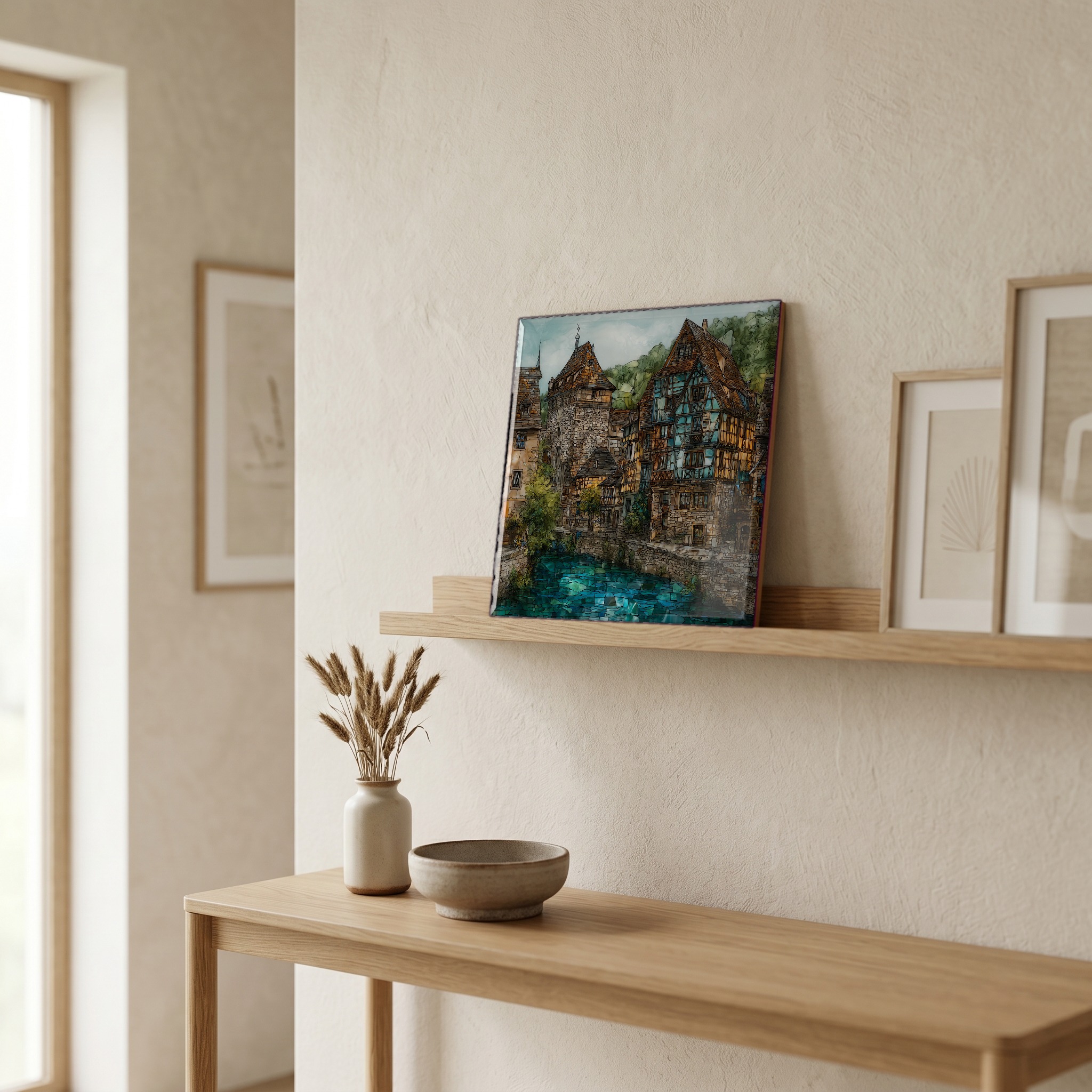
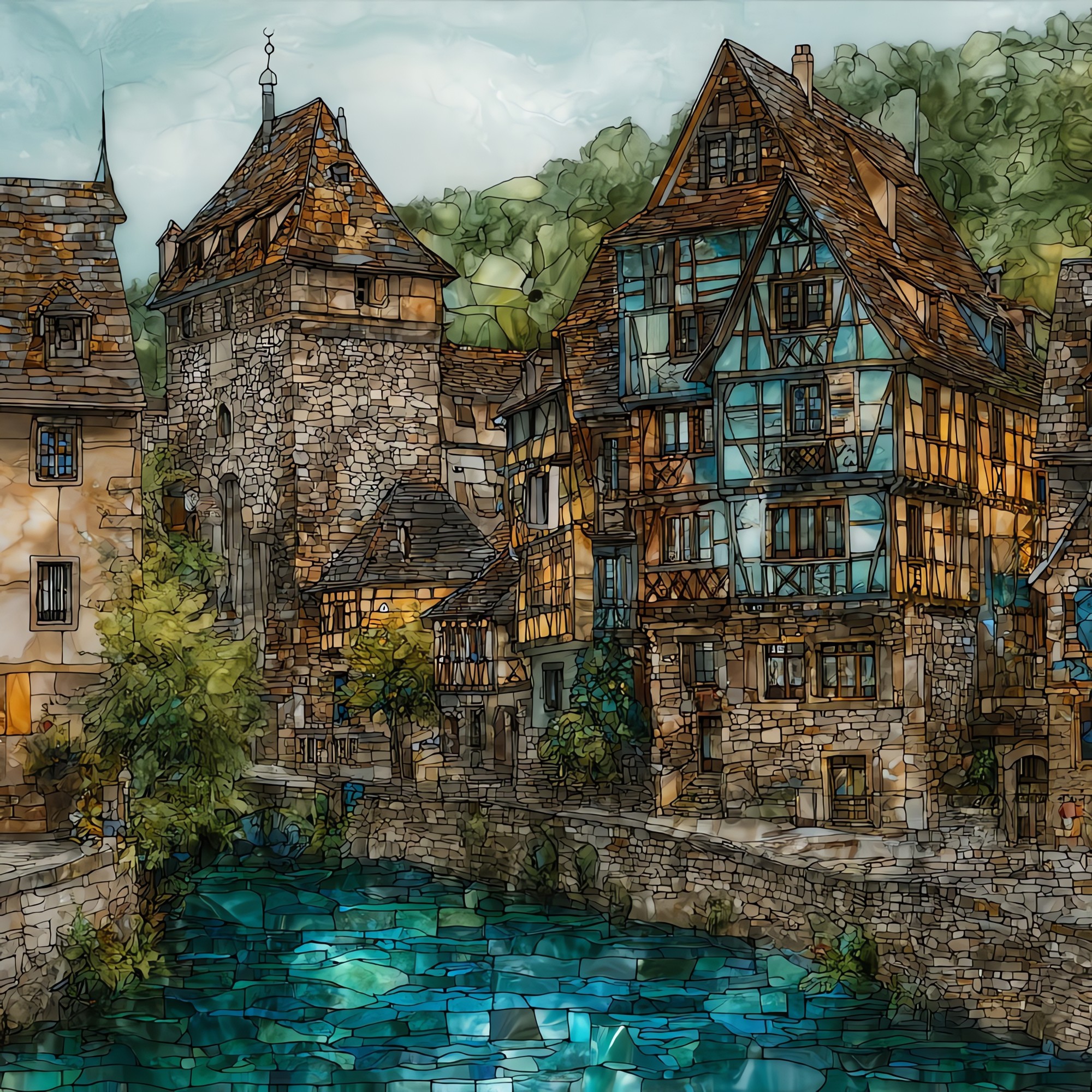
Kaysersberg Ramparts
shown on ceramic, 12-inch tileFrance
in upper Alsace, where the vineyards climb the Vosges

Kaysersberg Ramparts

the river the rampart still watches.

Where it lives

Not only on a wall.

A small tile on the nightstand catching the morning. A larger one above the fire. Yours, wherever you spend the slow hours.
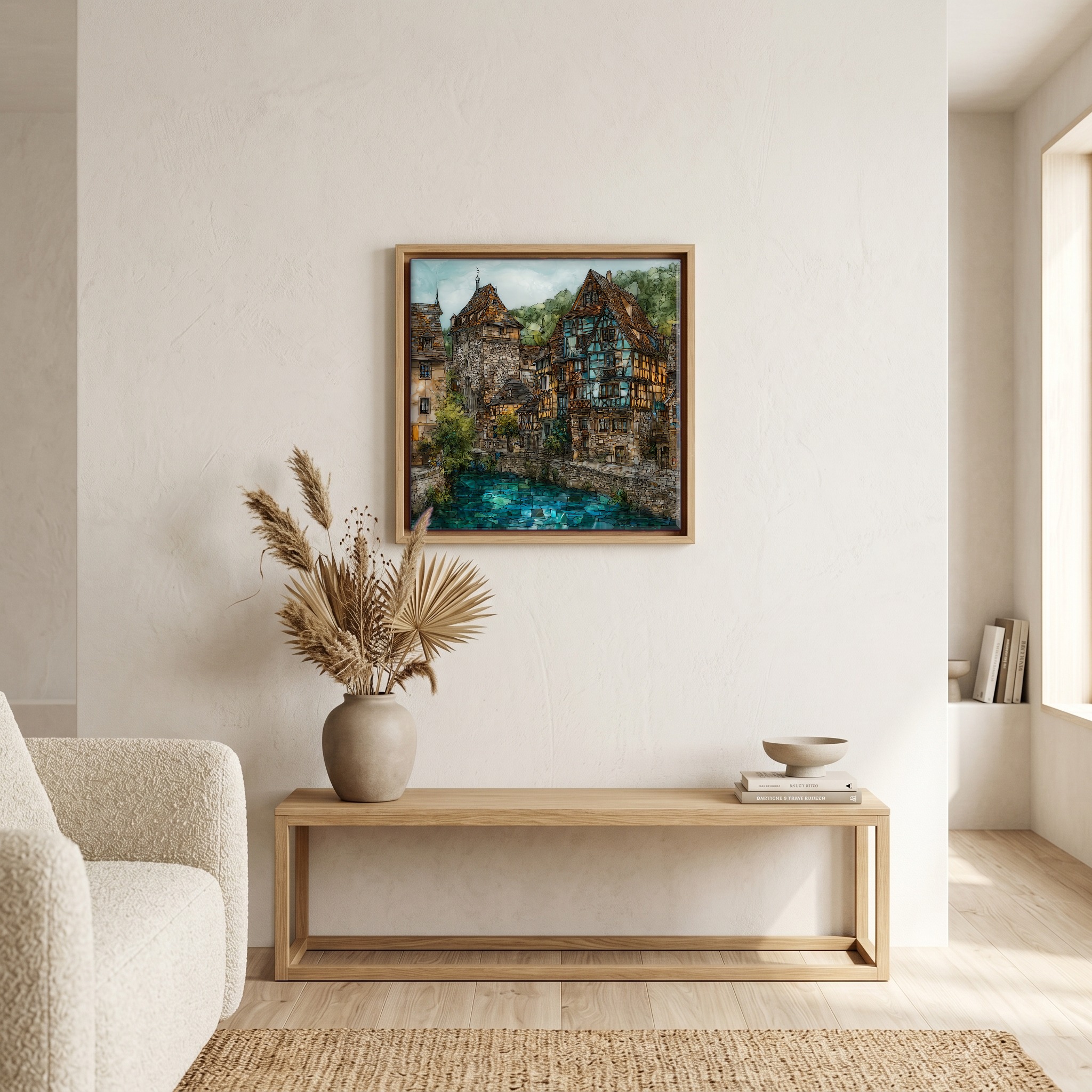
Above the bench, in a warm oak surround.
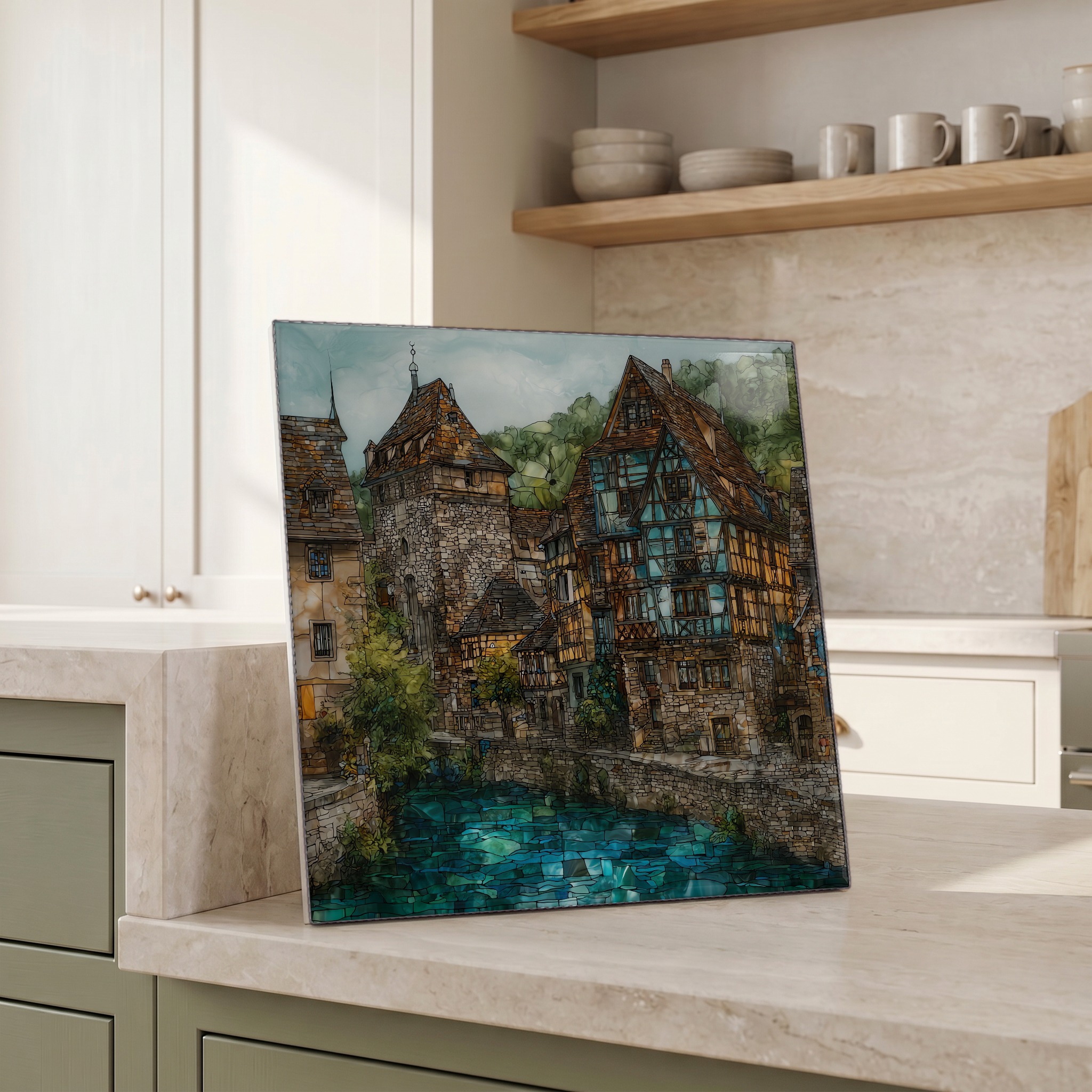
Beside the kettle, propped on the counter.
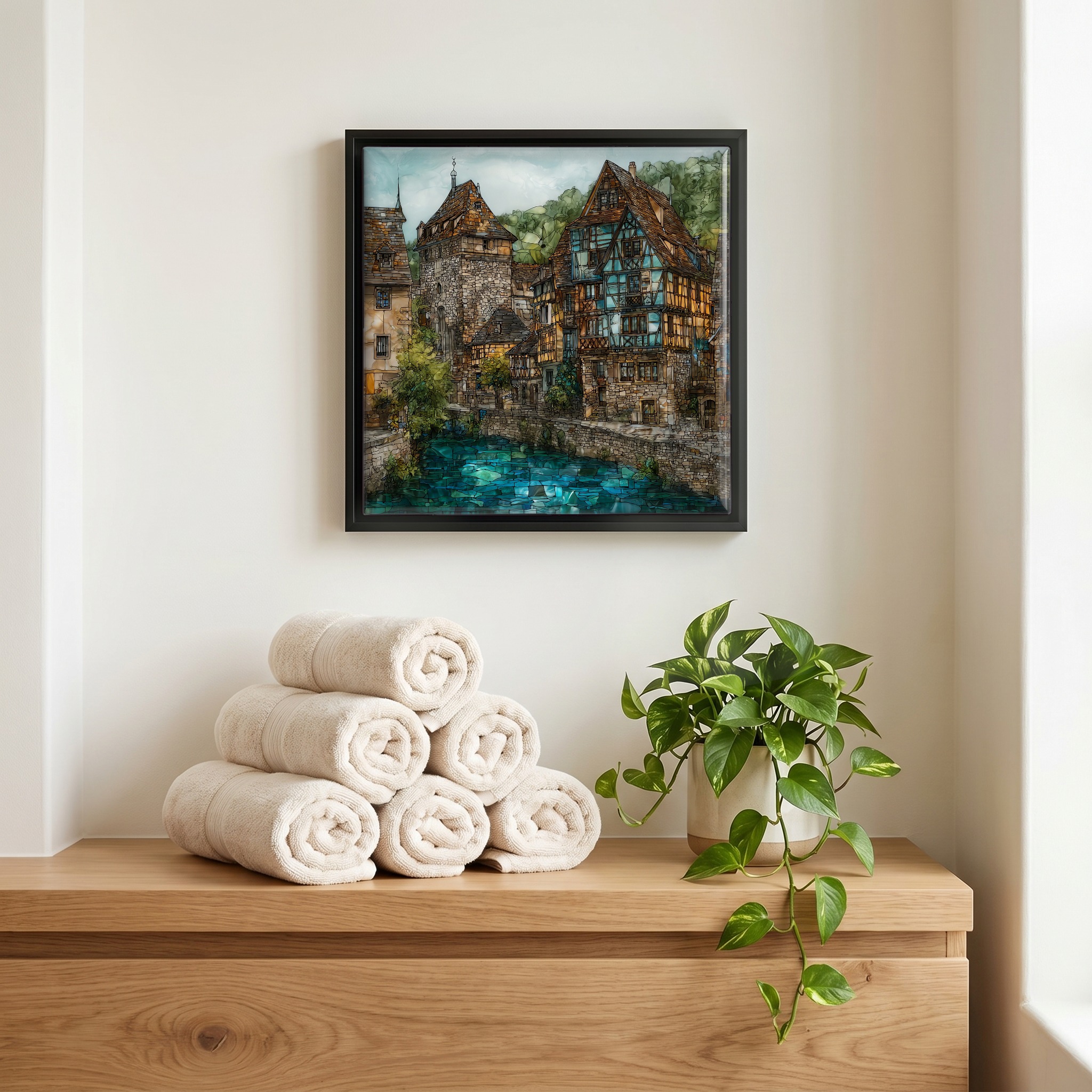
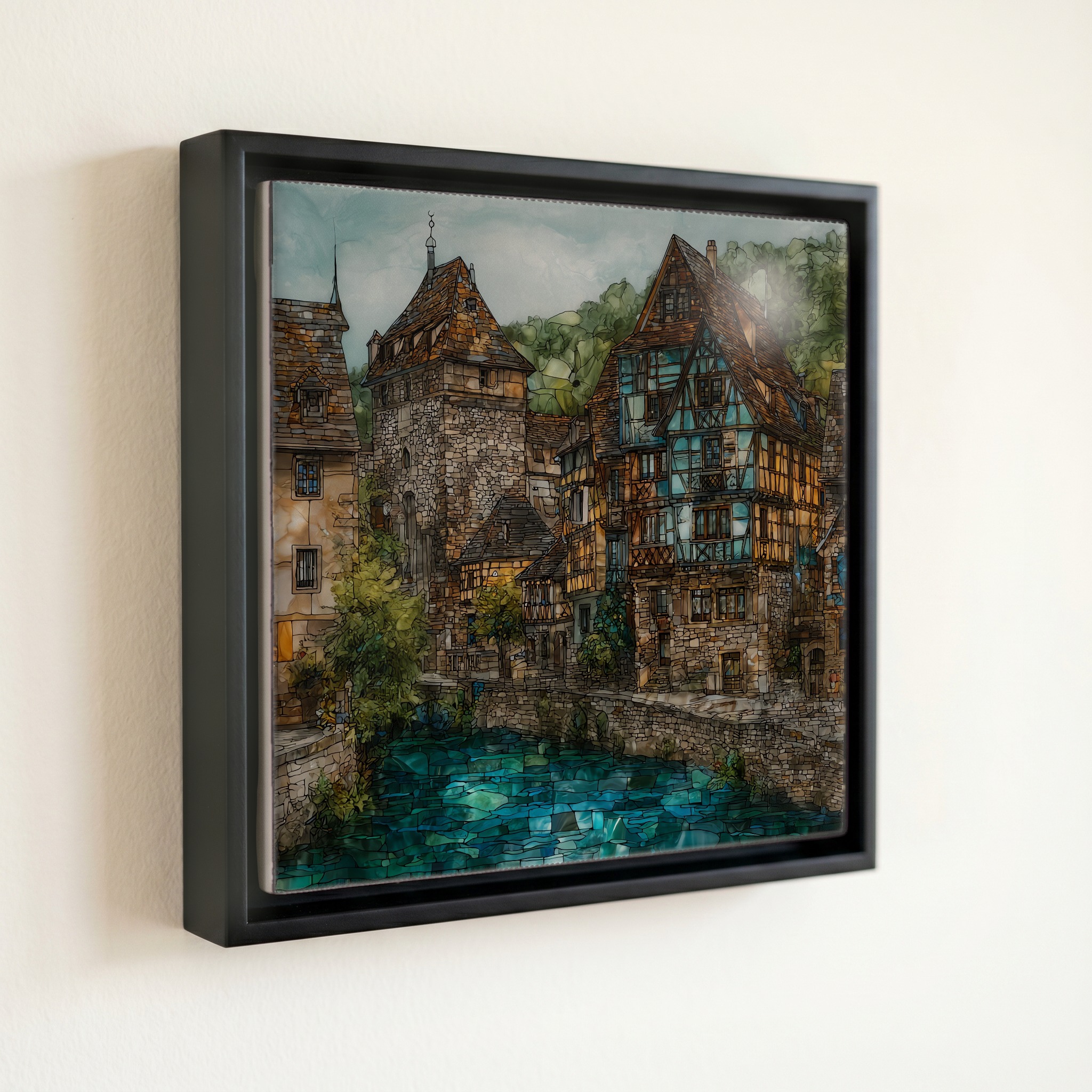
Above the linens, in a slim black surround.
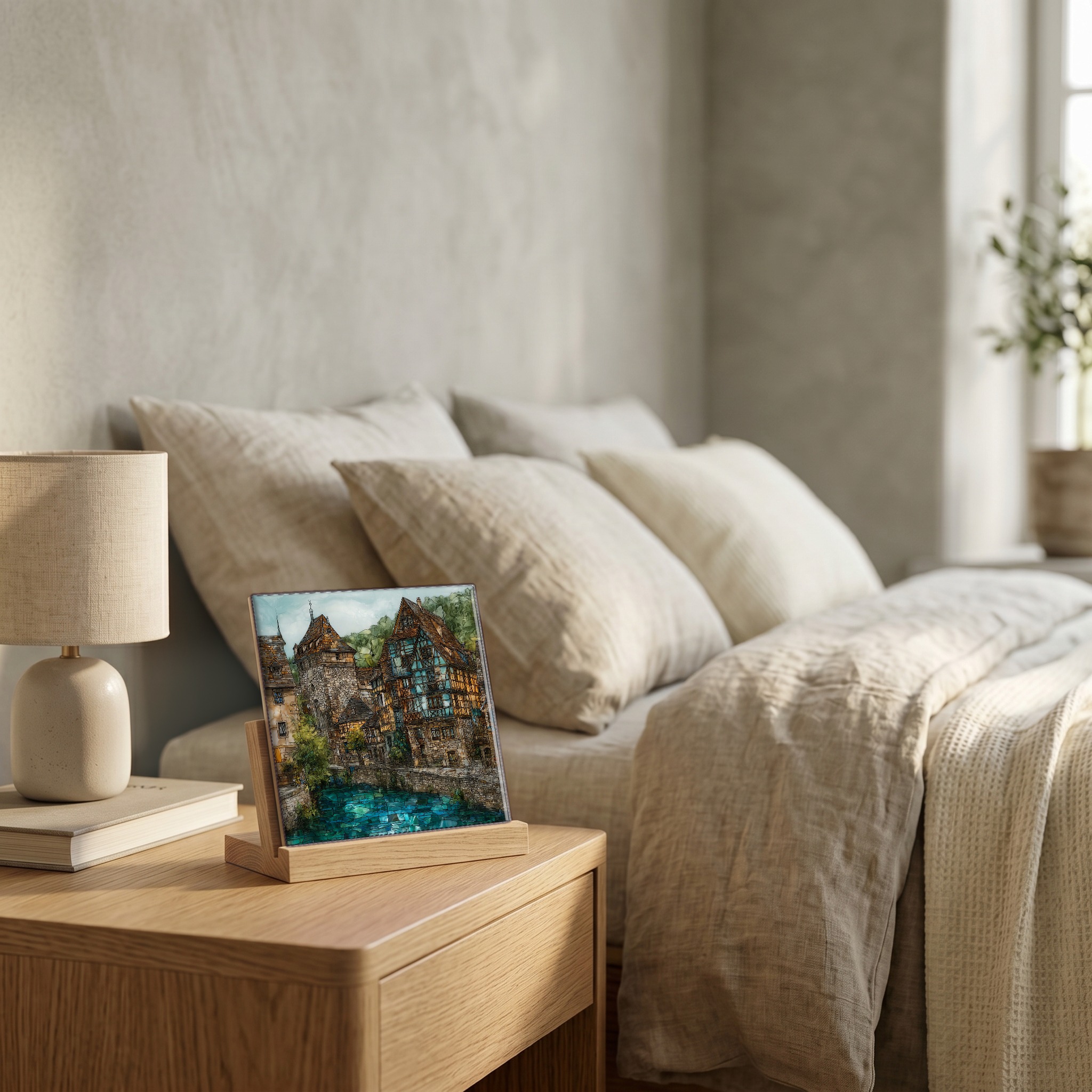
On the nightstand, on a light oak stand.
On a picture ledge, where the light comes in.
a note from the studio

The fortified bridge over the Weiss is the photograph everyone leaves with. Crenellated parapet, a single sandstone arch, a small Pietà set into a niche above the water on the upstream side. Above the town the keep of the upper castle holds the ridge, the one Frederick II bought in 1227 to hold the road over the Vosges. The vineyards begin at the gate and don't stop until the Rhine. The village voted itself out of obscurity in 2017, but the ramparts have been here a thousand years and weren't planning to leave.
from the studio
shown in a slim black floating frame · 6 × 6 in
— bring it home

Kaysersberg Ramparts, on ceramic.

Each tile is finished by hand in our Knoxville studio. Artwork is slowly infused into the ceramic surface under high heat and pressure, and rests beneath a thin glossy finish. The colour lives in the surface, not on top of it.

What kind of piece?
One tile — square or rectangle.
How big?
the popular one — counter, shelf, nightstand
6 × 6 in · 15 cm · 1.6 lb
Surface finish
A clear glossy finish — the artwork reads as if under resin. Ideal for show-pieces and framed wall art.
How it sits
A hidden cleat — sits ¼″ proud of the wall.
$58
Hand-finished and shipped from our studio at the foot of the Smokies. On your wall in about ten days.
size
6 × 6 in
15 cm
weighs
1.6 lb
solid in the hand
surface
ceramic, hand-finished
art rests beneath a thin glossy finish
from
Knoxville, TN
our family studio, at the foot of the Smokies
— start a Coaster Set

Pick any four 4-inch tiles — National Parks you've been to, a Smokies set, the four seasons of one place. $ for a set of , cork-backed, ready to live on the table.
comes gift-ready
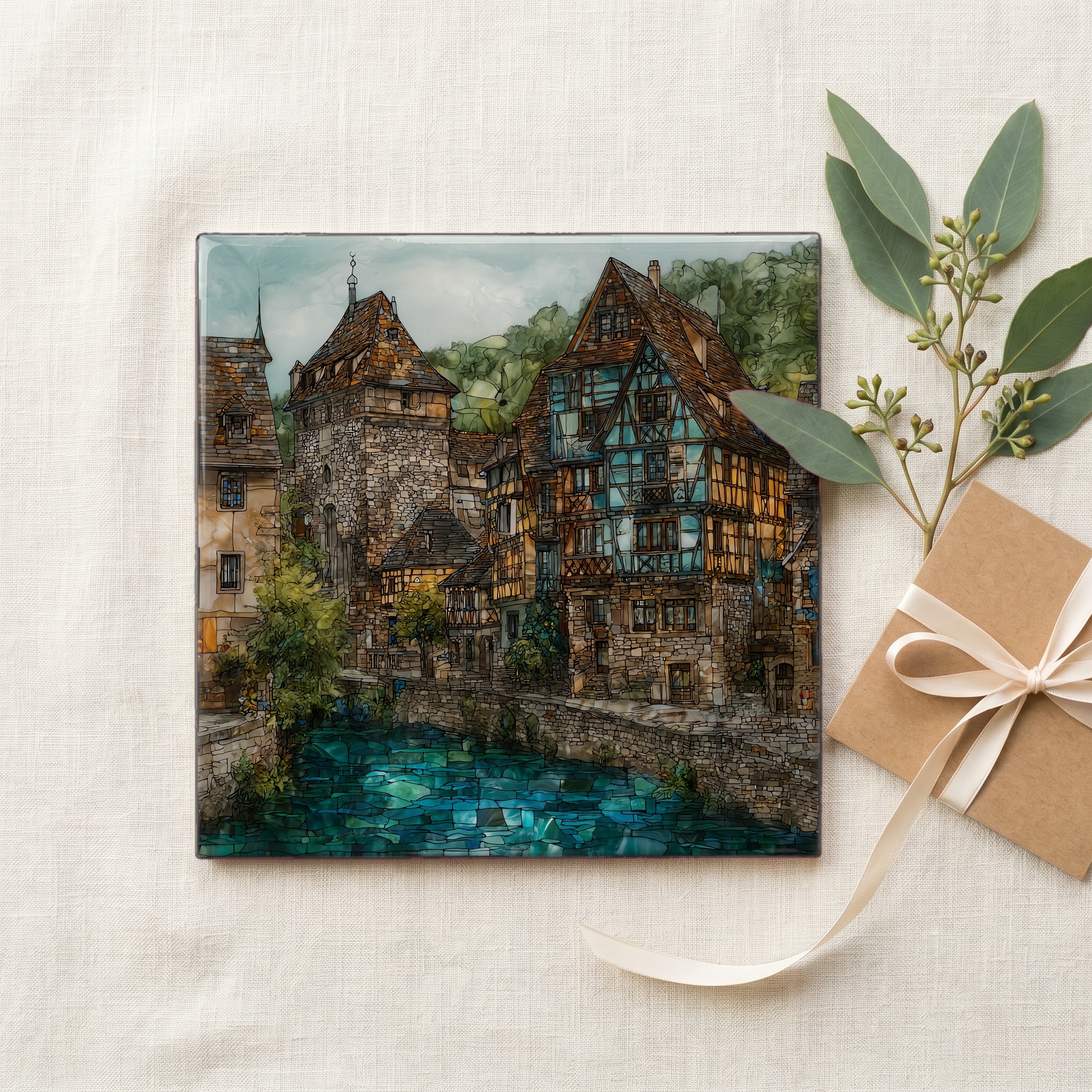
comes gift-ready

Each tile ships in a kraft box, tied with cream ribbon, with a handwritten note from the studio if you'd like to add one.
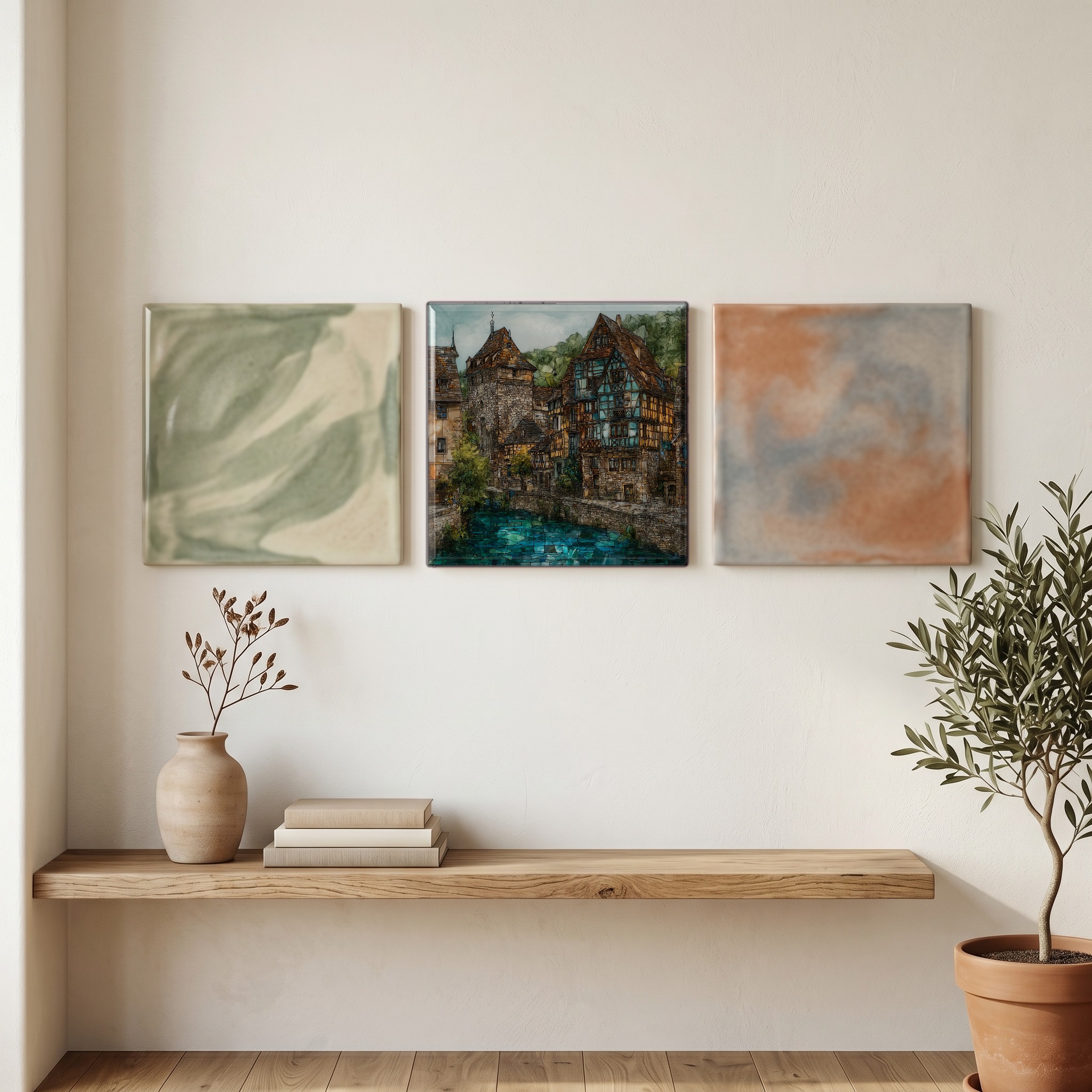
or build a grouping
or build a grouping

Three or five different vistas, hung together — a chapter of places you've been, or want to go.

about Kaysersberg Ramparts

The place, in three passes.

A little of what's known, in case you fall down the rabbit hole — or want to go see it yourself.
the place

Kaysersberg sits at the mouth of the Weiss valley in upper Alsace, 12 km northwest of Colmar in the Haut-Rhin department. The medieval commune merged in 2016 with Kientzheim and Sigolsheim to form Kaysersberg Vignoble, but the medieval centre still answers to the older name. The town is a stop on the Route des Vins d'Alsace, the long wine road that runs from Marlenheim south to Thann. In 2017 it was voted Village préféré des Français in the annual France 2 viewer poll, a recognition that has driven visitor traffic without changing the shape of the streets. The historic core holds a population of around 2,720 at an elevation of 236 metres, and a ring of fortifications that includes the curtain wall, four surviving gates, the fortified bridge over the Weiss, and the keep of the upper castle on the ridge above.

the stone

The fortified bridge, the Pont fortifié, spans the Weiss in a single arch of pink Vosges sandstone, built in 1501 with a crenellated parapet and a small Pietà set into a niche above the water. It is the only surviving fortified bridge of its kind in Alsace. The upper castle, the Château de Kaysersberg, was bought by the Holy Roman Emperor Frederick II in 1227 to control the road across the Vosges between Lorraine and the Rhine plain. Its circular keep, about 11 metres in diameter, still stands. The town's curtain wall and four gates were begun in the 13th century and reinforced after the town joined the Décapole, the league of ten Alsatian imperial cities, in 1354. Pink Vosges sandstone, quarried from the same hills the vineyards climb, is the constant.

the visit

Kaysersberg is a town, not a paid site. The ramparts, the gates, and the fortified bridge are walkable any hour of any day with no fee. The castle keep is reached by a short marked path that climbs from the upper end of the rue du Général-de-Gaulle; the climb takes about 15 minutes and the keep is freely open in daylight from spring through autumn. The town's Christmas market, one of the most respected on the Alsace circuit, runs the last weekend of November and the four weekends of Advent. High summer fills the rue du Général-de-Gaulle to elbow density by midday; for the bridge in unhurried light, the best window is the half hour either side of sunrise.

where
France · Kaysersberg Vignoble, Haut-Rhin
elevation
236 m · 774 ft
position
48.1333° N · 7.2667° E
the neighborhood

What's nearby.

A handful of named places within an hour's walk or short drive. Some we've already painted; some we will.
5 km NE
Riquewihr
walled wine village
5 km N
Hunawihr
hilltop village
7 km SE
Turckheim
fortified town
8 km N
Ribeauvillé
castle town
12 km SE
Colmar
cathedral city
15 km S
Eguisheim
medieval village
N
Kaysersberg Ramparts
Riquewihr
Hunawihr
Turckheim
Ribeauvillé
Colmar
Eguisheim
common questions

What people ask.

A few questions we get about Kaysersberg Ramparts — and about bringing the piece home.
about the place

Kaysersberg is a medieval town in upper Alsace, in the Haut-Rhin department of northeastern France, about 12 km northwest of Colmar at the mouth of the Weiss valley where the Vosges meet the plain. Since 2016 it has formed part of the merged commune of Kaysersberg Vignoble.

The Pont fortifié spans the Weiss River in a single arch of pink Vosges sandstone, built in 1501 with a crenellated parapet and a small Pietà set into a niche above the water. It is the only surviving fortified bridge of its kind in Alsace and remains the most photographed view of the town.

The keep of the upper castle was acquired by the Holy Roman Emperor Frederick II in 1227 to control the road across the Vosges between Lorraine and the Rhine plain. The circular keep is about 11 metres across and still stands above the town as the Château de Kaysersberg.

Kaysersberg won the Village préféré des Français title in 2017, in the annual France 2 television viewer poll. The award has increased visitor traffic at the bridge and along the rue du Général-de-Gaulle but has not changed the medieval shape of the town.

Yes. The theologian, physician, and 1952 Nobel Peace Prize laureate Albert Schweitzer was born in Kaysersberg in 1875. His birthplace on the rue du Général-de-Gaulle is now a small museum dedicated to his life and his work at Lambaréné in Gabon.

Late spring and early autumn give the longest daylight and the fullest vineyards along the Route des Vins d'Alsace. The Christmas market, running the last weekend of November and the four Advent weekends, is one of the most respected on the Alsace circuit. High summer fills the streets by midday.

Much of the curtain wall is woven into private property in the working town, but four medieval gates and long stretches of wall are visible from public streets. The fortified bridge and the upper castle keep are both freely walkable, with no fee and no opening hours.

about the piece in your home

It has been a meaningful gift for our customers with roots in the region. Kaysersberg is one of the best-loved villages on the Route des Vins, the birthplace of Albert Schweitzer, and the home of one of the most respected Christmas markets in Alsace. A Coaster or Small with a handwritten note from the studio carries well.

The piece carries the pink-sandstone warmth of the bridge, the green of the surrounding vineyards, and the deep stained-glass blues of our visual language. It sits well in European Country, Old-World Maximalist, and Warm Modern rooms with oak, brass, and softer textiles.

The piece reads within the Old-World Storybook and Alpine Modern movements that have run through interior design since 2024. Pinterest collections under European cottage and fortified medieval village continue to grow; the colour palette overlaps with the recent return of jewel-tone interiors.

Above a standard three-seat sofa or a long console, a single Large reads as a clear focal point. A four-tile Mural fills the wall above a wider sofa, and a nine-tile Mural takes the full above-console field for a more architectural installation.

Yes. For damp or splash-zone walls — a kitchen backsplash, a bathroom feature wall, a shower surround — order the tile in Dura Satin or Matte finish. Both are scratch-resistant, and the colour is slowly infused into the ceramic surface under high heat and pressure, so it does not lift or fade.

A soft microfibre cloth and warm water are enough. For backsplash spatter, a little mild dish soap on the cloth lifts most kitchen residues. Avoid bleach, abrasive scrubs, and acidic descalers; the colour lives in the surface and a thin glossy finish protects it.

Yes. Every WenderVista piece is curated by Reid Wender and finished by hand at our Knoxville studio at the foot of the Smoky Mountains. We do not license third-party art. The Kaysersberg painting belongs to the studio's continuous visual language across the atlas of places.

if this one stayed with you

A few you might also love.

Hand-picked by the eye that found Sorapis. Same air, same kind of quiet.