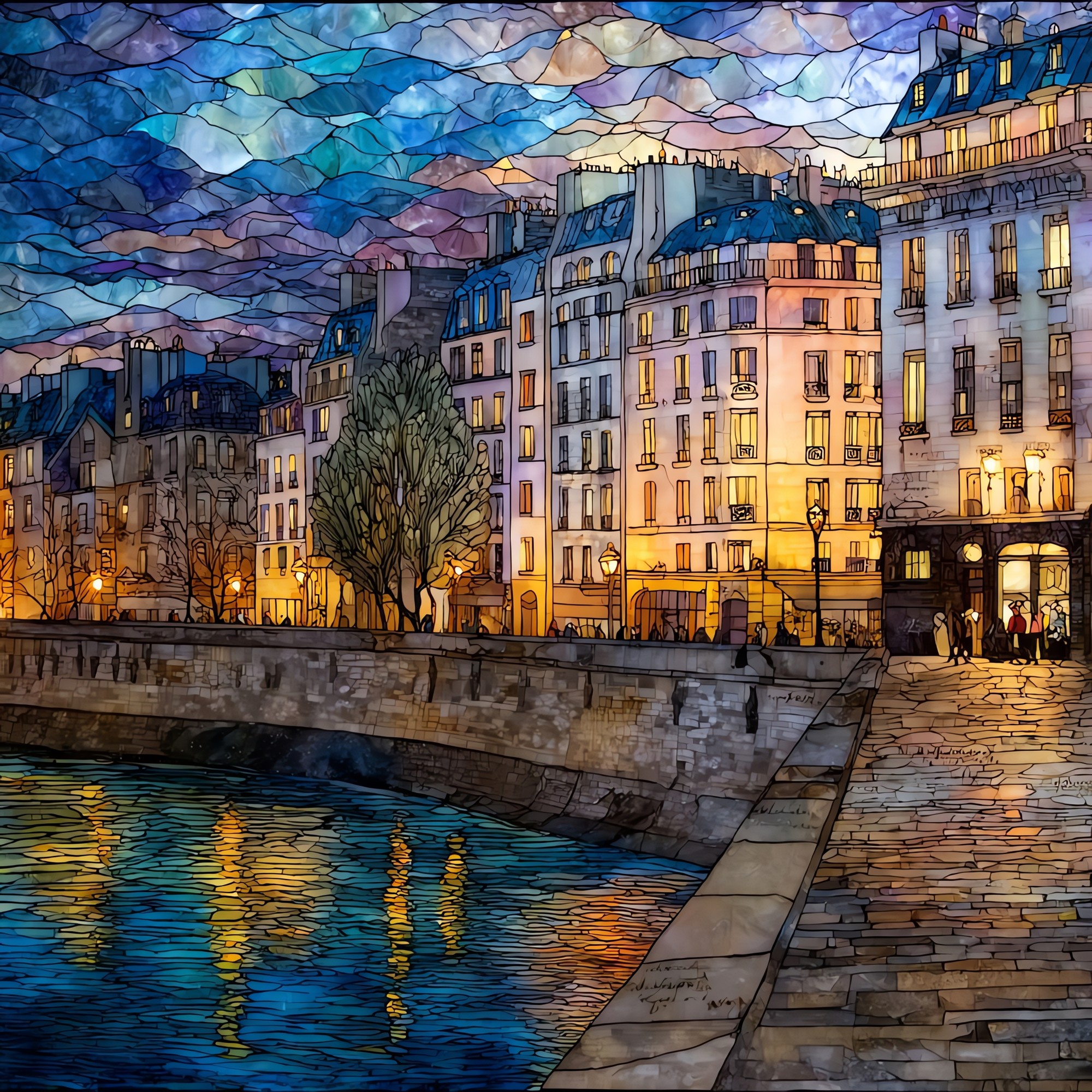
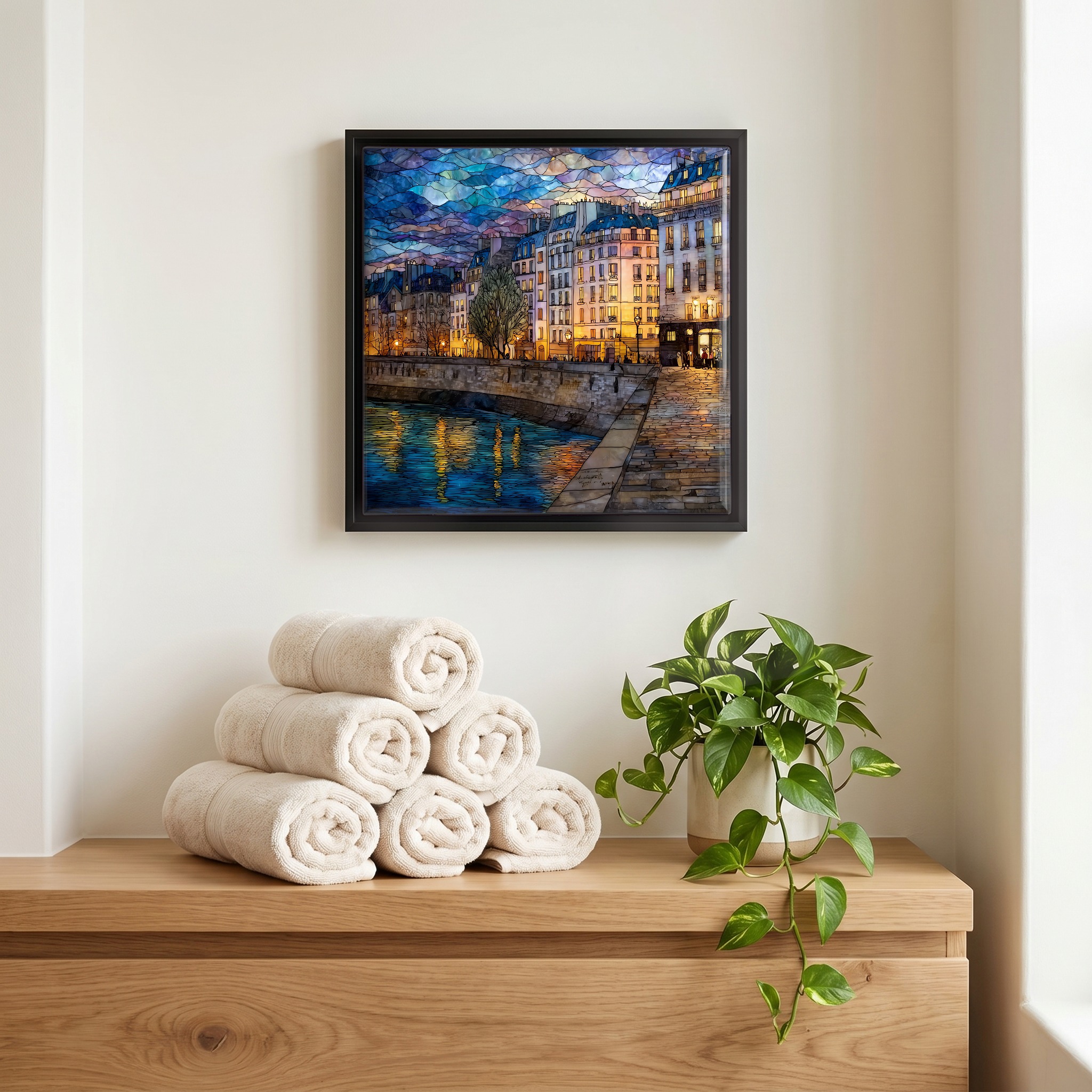
Ile Saint-Louis Quayside
— — the light the Seine takes home each evening.
Not only on a wall.
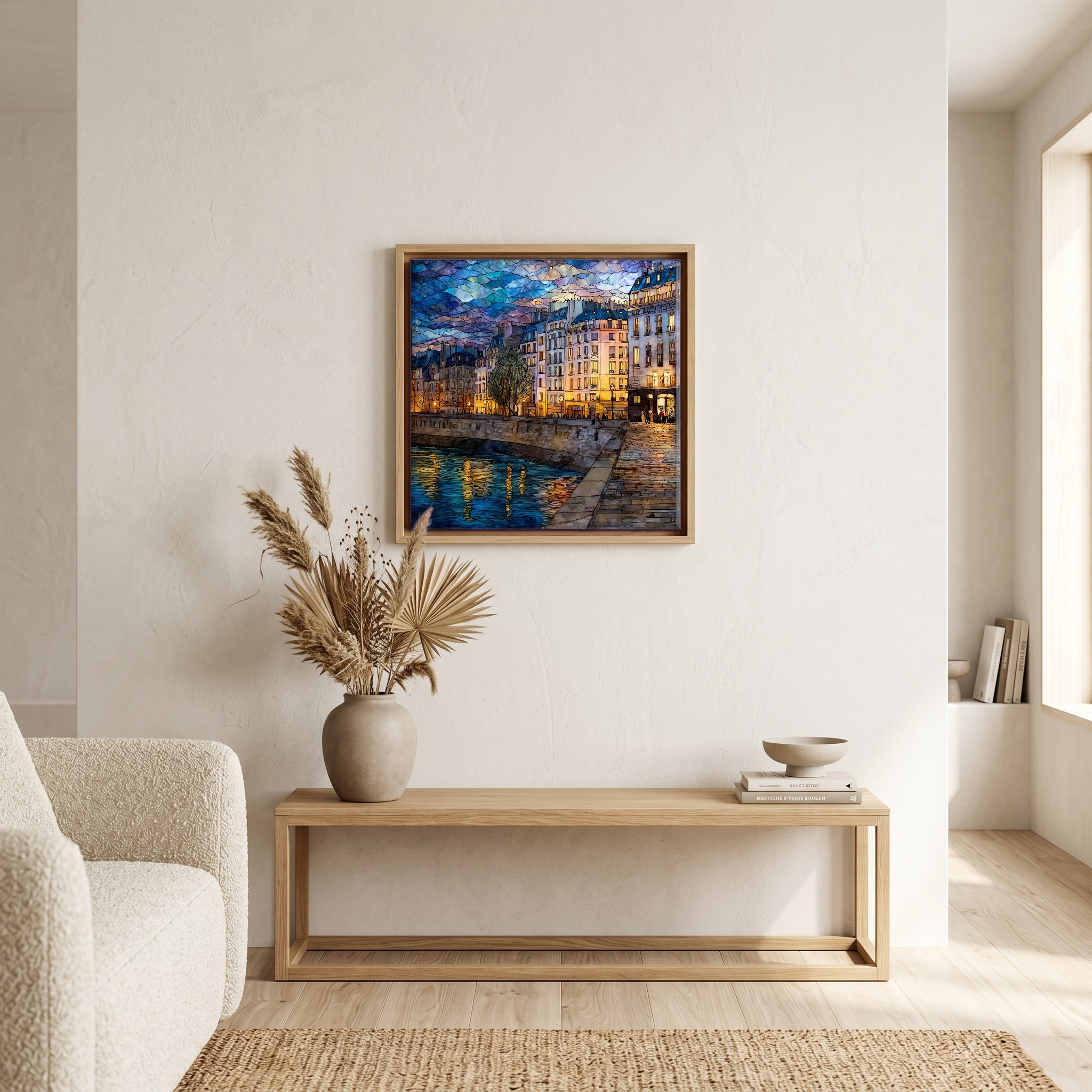
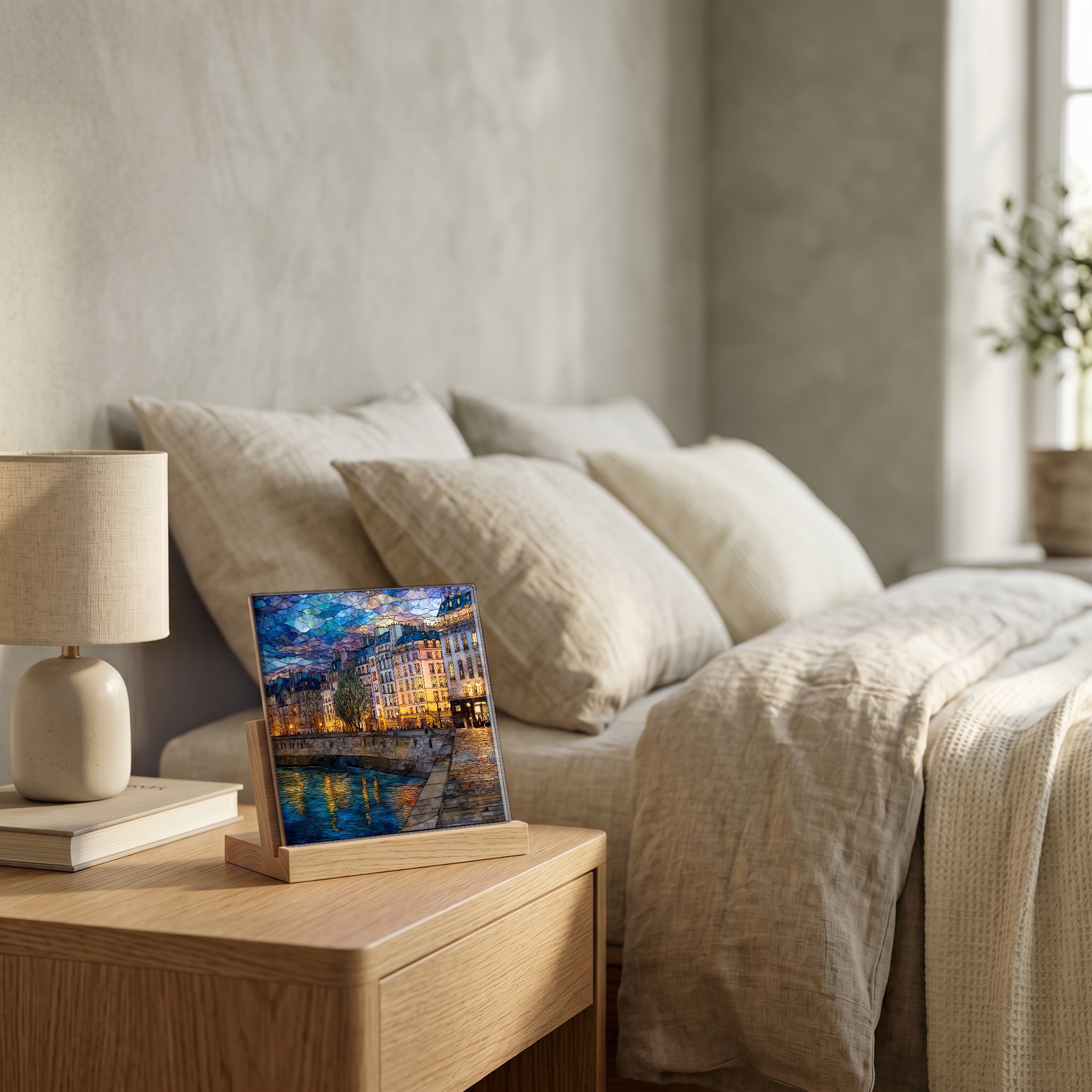
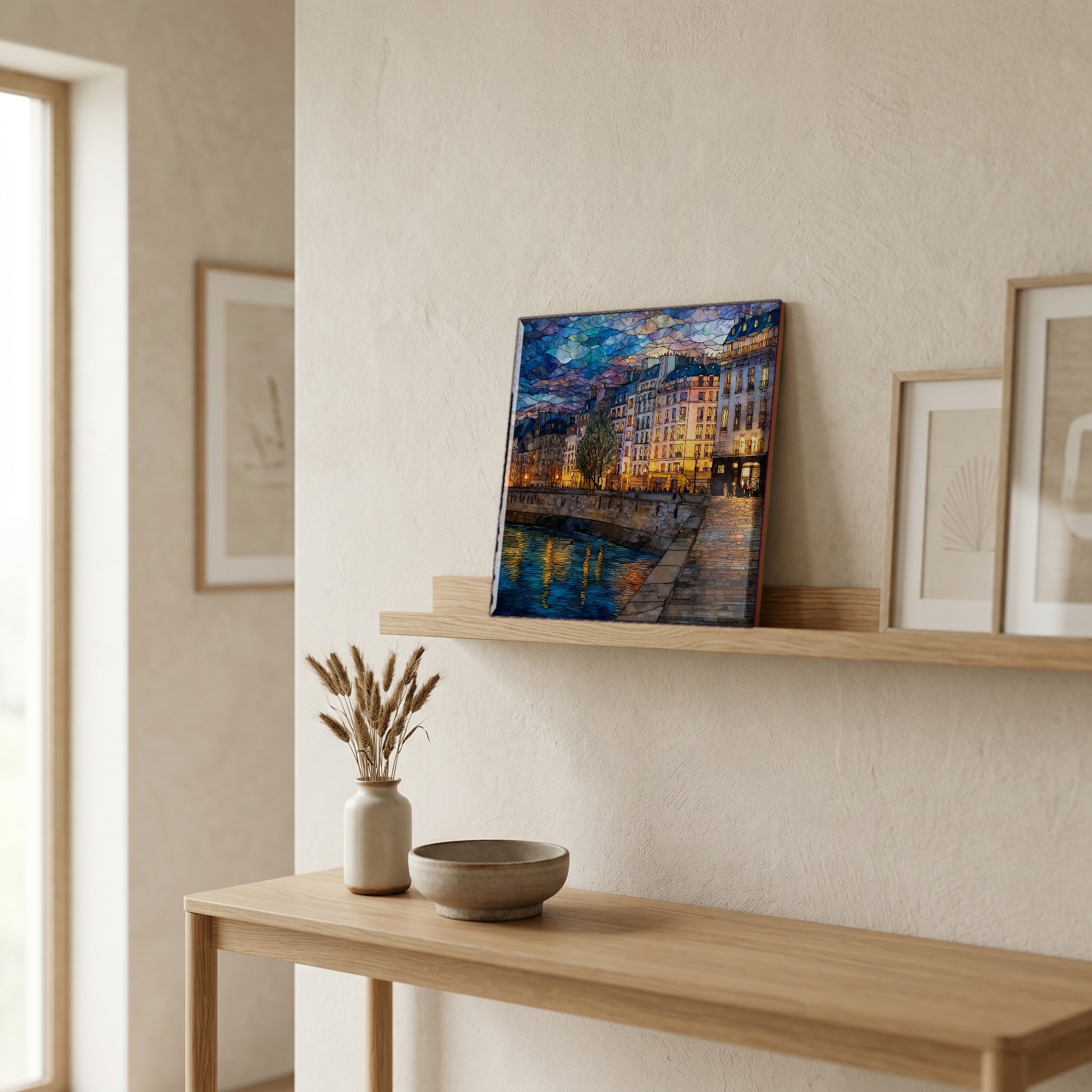
“A residential island in the middle of the Seine, just east of Notre-Dame and across the river from the Marais. Five small bridges, plane trees along the parapets, and a row of seventeenth-century houses that have been the same address since Louis XIV. Quai d'Orléans faces south and holds the late light; Quai d'Anjou faces north and stays in shade. The Berthillon counter on Rue Saint-Louis-en-l'Île has been there since 1954. The river runs slowly here. from the studio
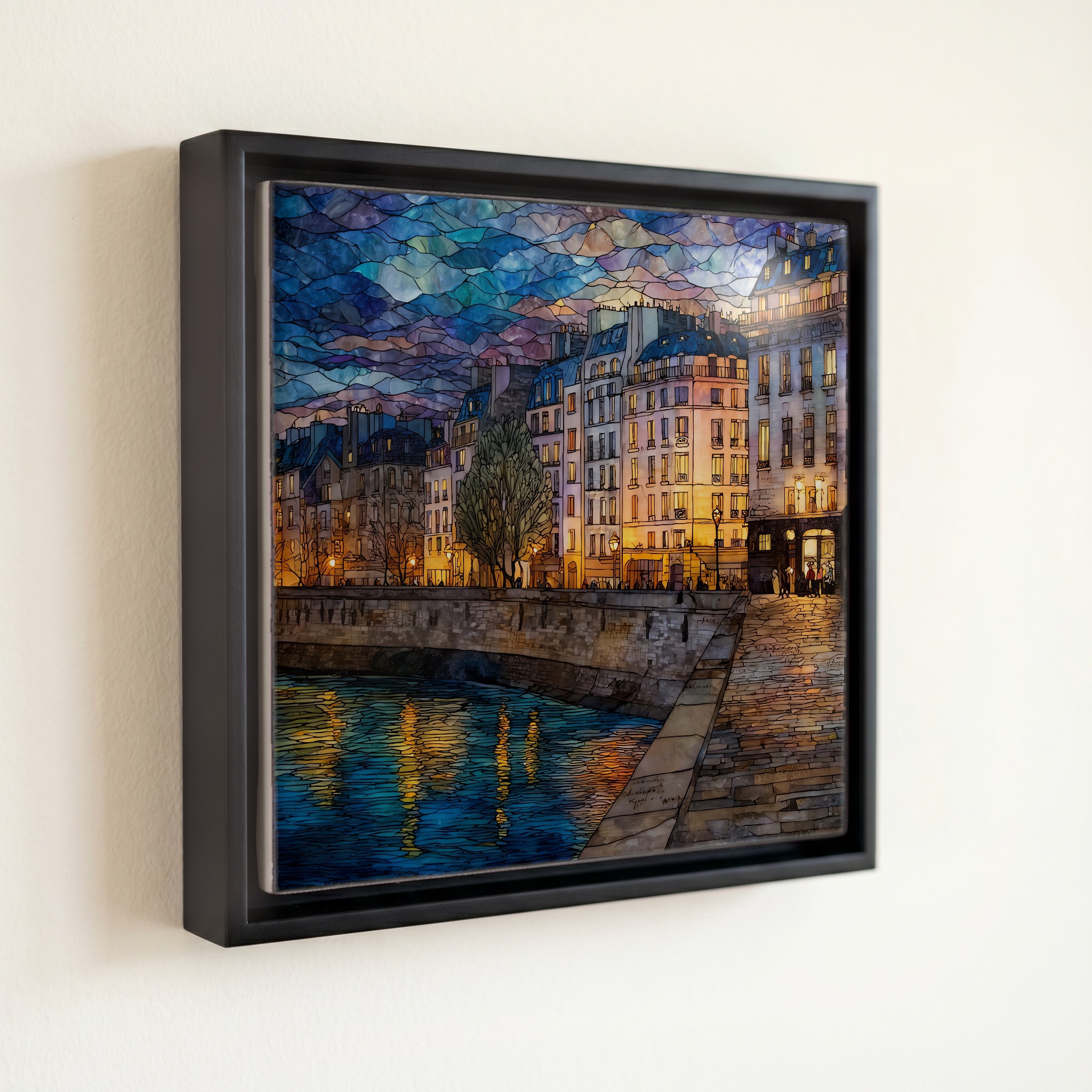
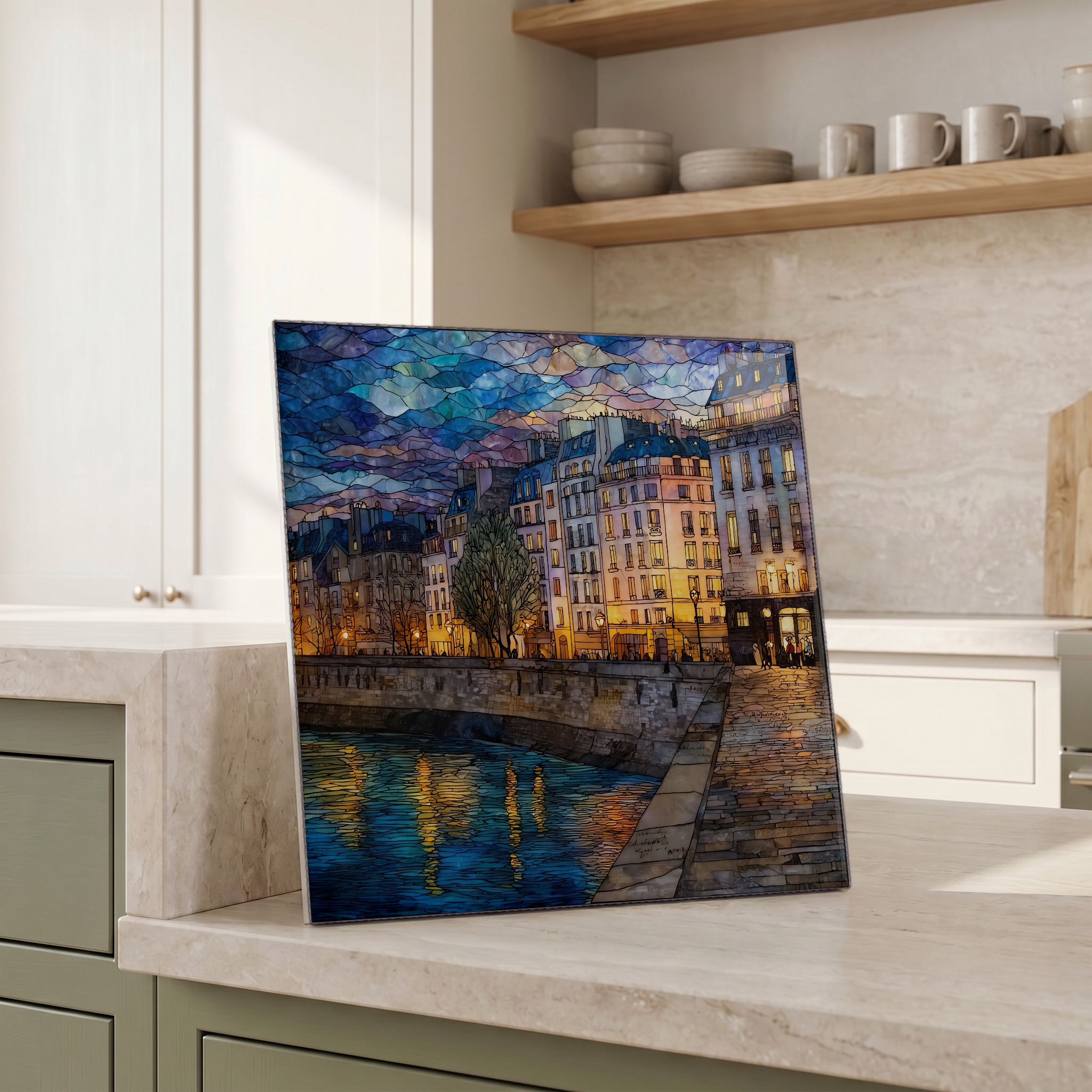
Ile Saint-Louis Quayside, on ceramic.
Each tile is finished by hand in our Knoxville studio. Artwork is slowly infused into the ceramic surface under high heat and pressure, and rests beneath a thin glossy finish. The colour lives in the surface, not on top of it.
Pick any four 4-inch tiles — National Parks you've been to, a Smokies set, the four seasons of one place. $ for a set of , cork-backed, ready to live on the table.
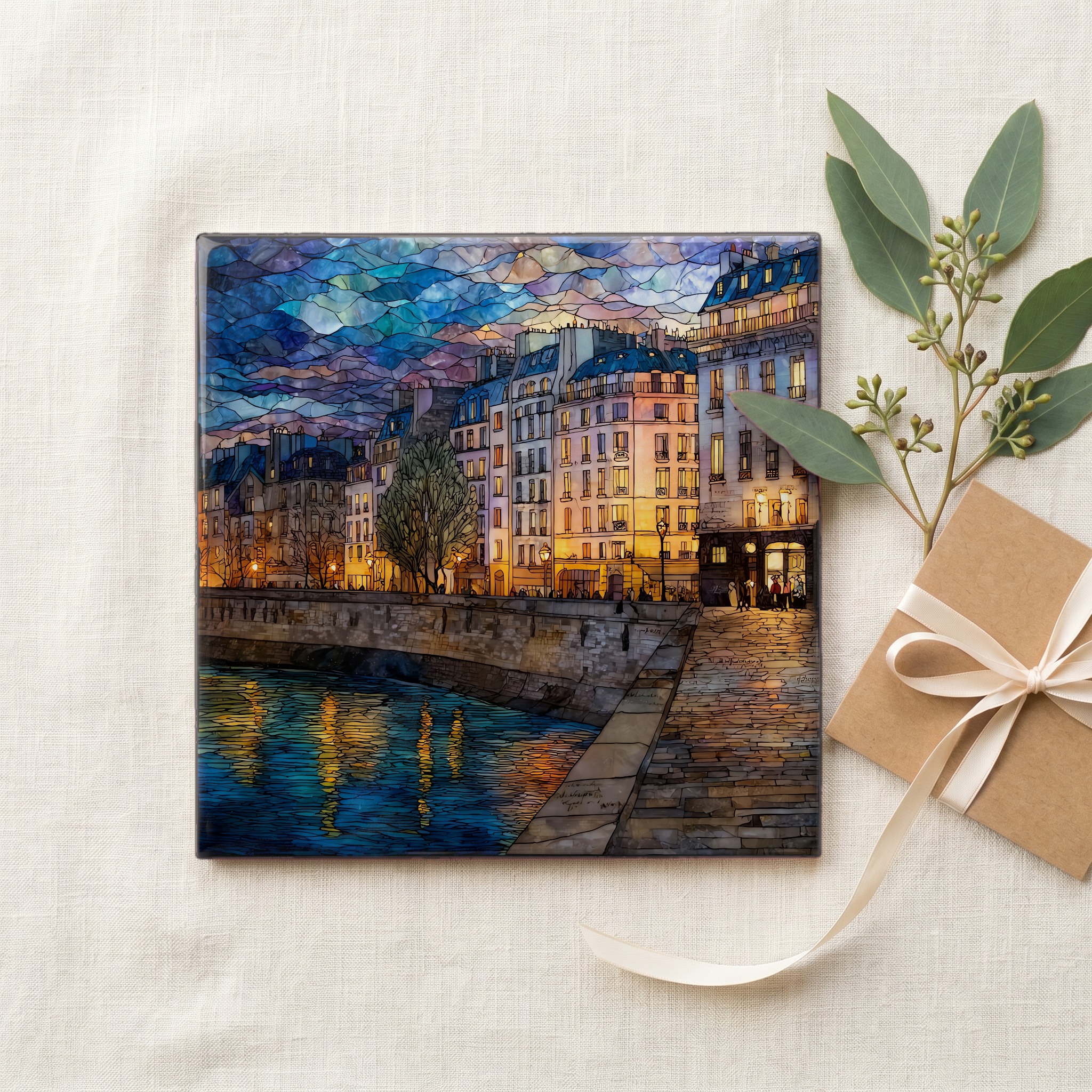
Each tile ships in a kraft box, tied with cream ribbon, with a handwritten note from the studio if you'd like to add one.
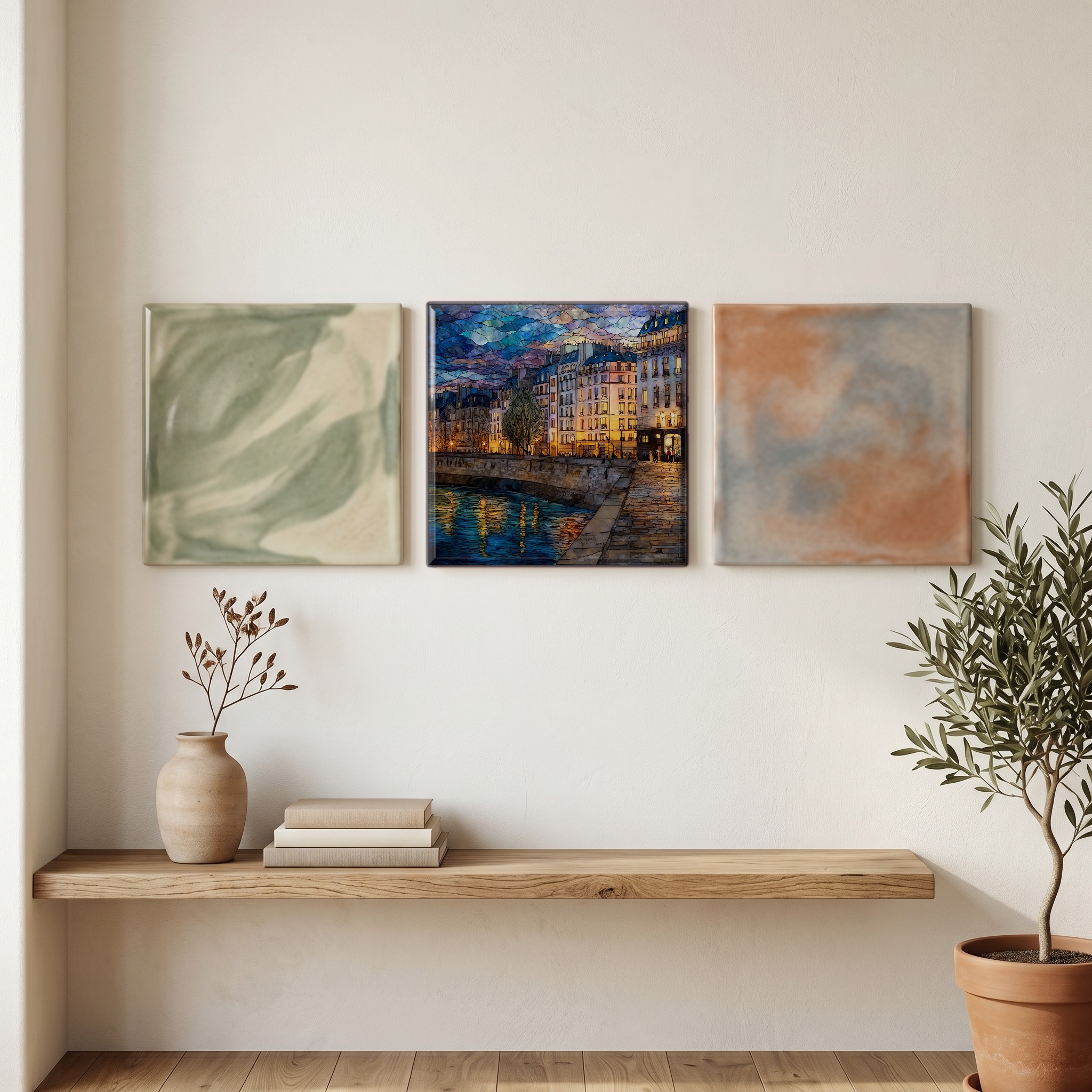
Three or five different vistas, hung together — a chapter of places you've been, or want to go.
The place, in three passes.
Île Saint-Louis is one of the two natural islands in the Seine in central Paris, the other being the larger Île de la Cité directly to the west. It sits in the 4th arrondissement, originally two cow pastures called Île Notre-Dame and Île aux Vaches that were joined and developed beginning in 1614 under entrepreneur Christophe Marie. The island is roughly 600 metres long and 150 metres wide. Five short bridges connect it to the rest of Paris: Pont Saint-Louis to Île de la Cité, Pont de la Tournelle to the Left Bank, Pont Marie and Pont Louis-Philippe to the Right Bank, and Pont de Sully crossing both banks at the eastern tip.
The island was developed in a single coordinated programme between 1614 and the 1660s by Christophe Marie and his partners, with the architect Louis Le Vau designing several of the grand houses. Almost every building on the quayside dates to that seventy-year stretch, which makes Île Saint-Louis the most architecturally uniform neighbourhood in central Paris. Hôtel Lambert at the eastern tip, completed in 1644 to a Le Vau design, and Hôtel de Lauzun on Quai d'Anjou are the two grand hôtels particuliers; both remain private residences. The quayside walls themselves are Lutetian limestone, the same pale honey-coloured stone used for most of Haussmann-era Paris a century later, cut here for the embankment and the parapet that runs the whole circumference of the island.
The quayside is the working edge of the island, a continuous ring of stone embankment about 1.5 kilometres around, with a parapet at street level and a lower walk reached by stone stairs at the water. The Seine flows quietly past; the river is regulated by downstream barrages, so the level rises and falls with the weeks, not with tides. Paris's banks of the Seine, including both quaysides of Île Saint-Louis, were inscribed as a UNESCO World Heritage Site in 1991. Late afternoon, the south-facing Quai d'Orléans catches the light off the water and the limestone holds it; the north-facing Quai d'Anjou stays in shade and reads cooler.