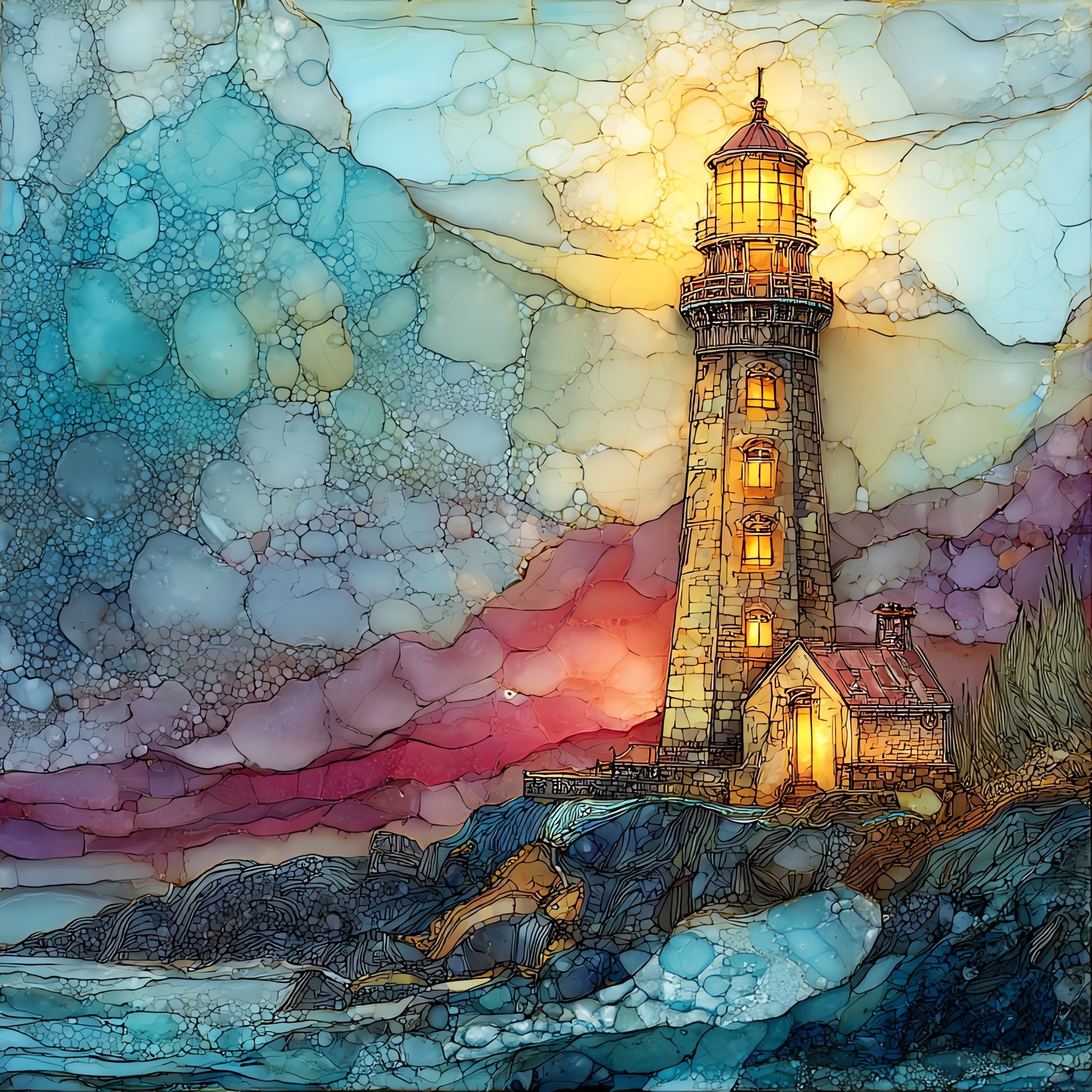
Ile de Sein Lighthouse
— — the last lit stone before the open Atlantic.
Not only on a wall.
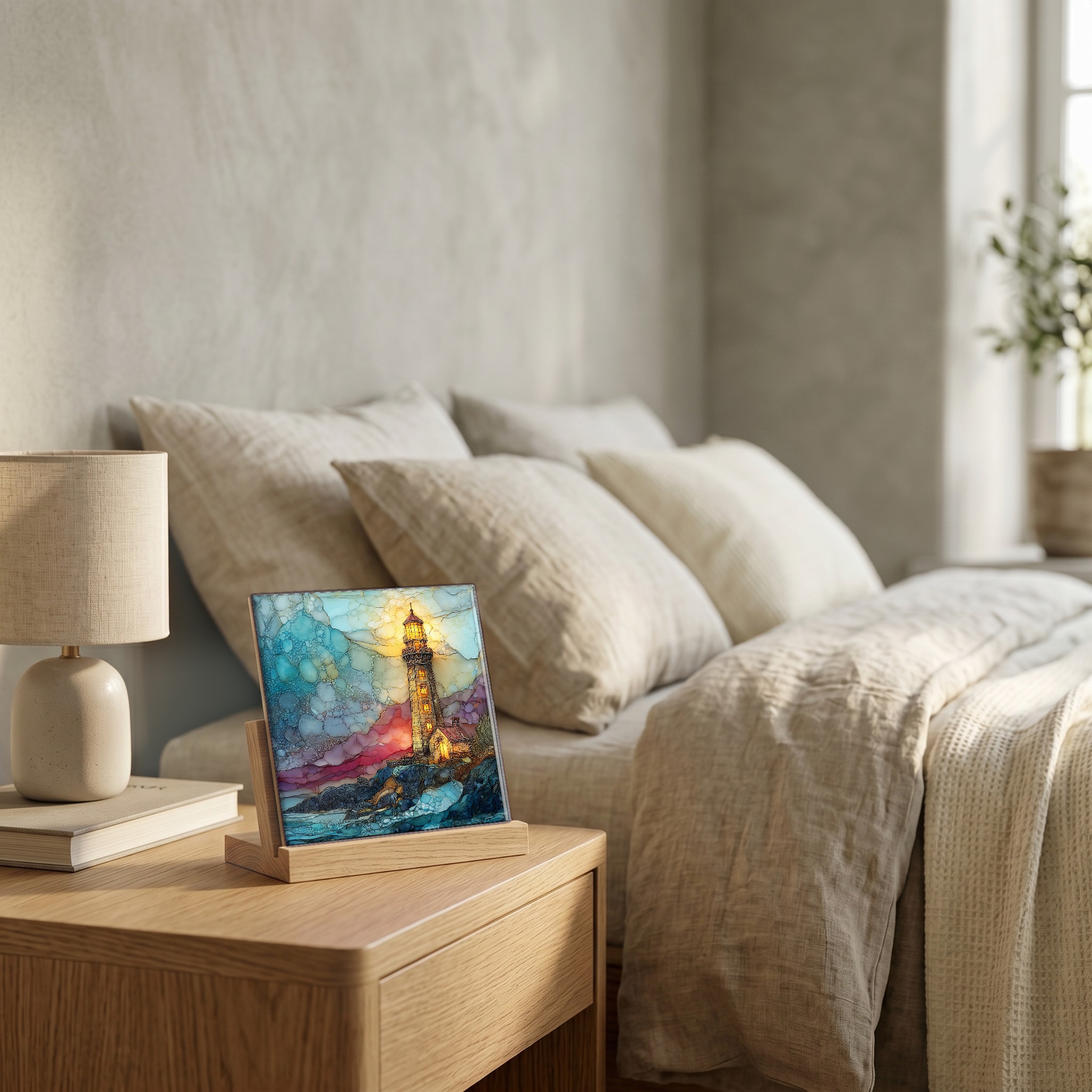
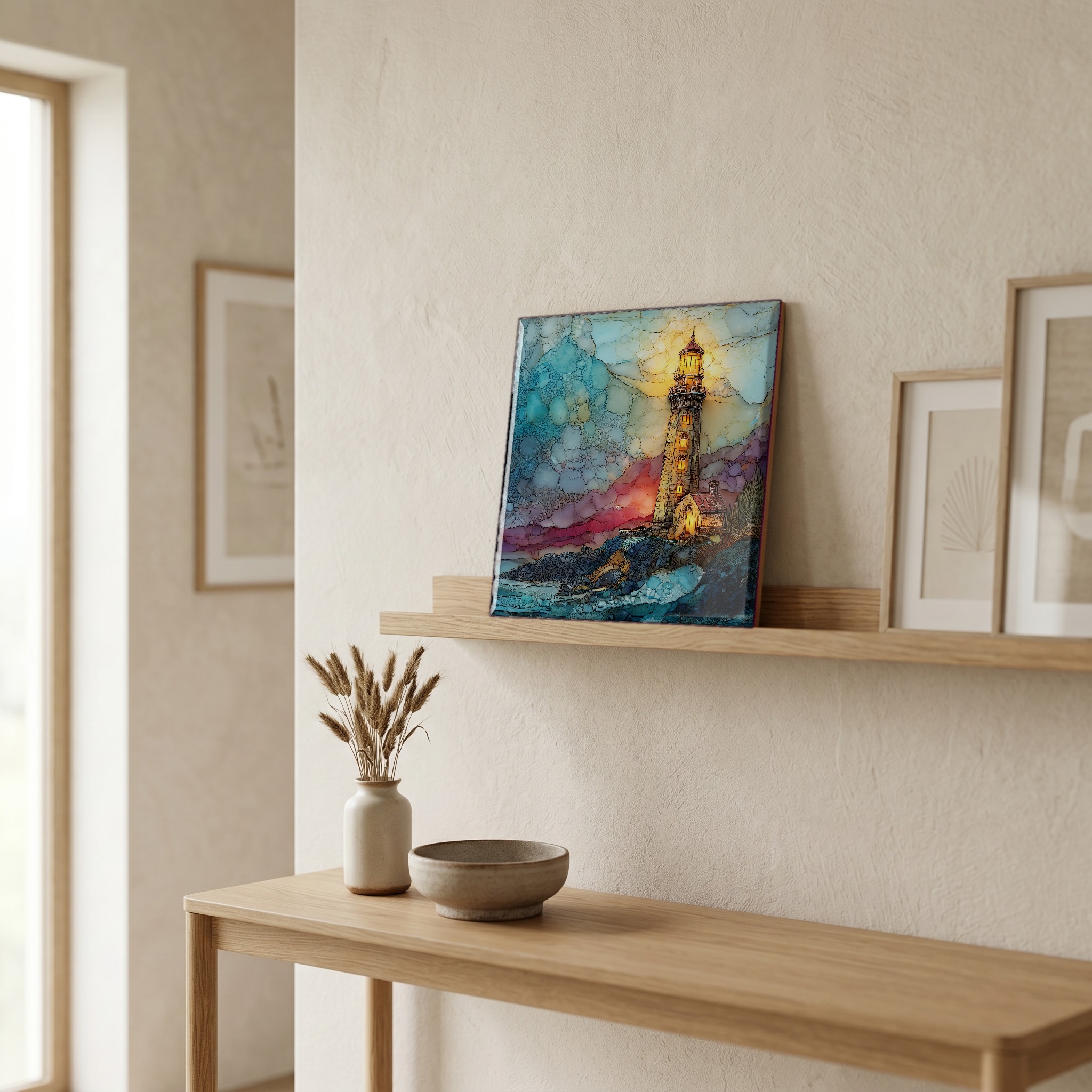
“A black-and-white tower at the far end of a long, low island, about eight kilometres west of Pointe du Raz. The Île de Sein lies almost at sea level, six metres at its highest natural point, and the great storms have flooded its lanes more than once. West of the lighthouse, the Chaussée de Sein reef runs out into open Atlantic, the kind of water that asks for a tall lamp. The current tower was rebuilt in 1951, after the war took the first one. It still stands there, in the same striped pattern, in the same wind.
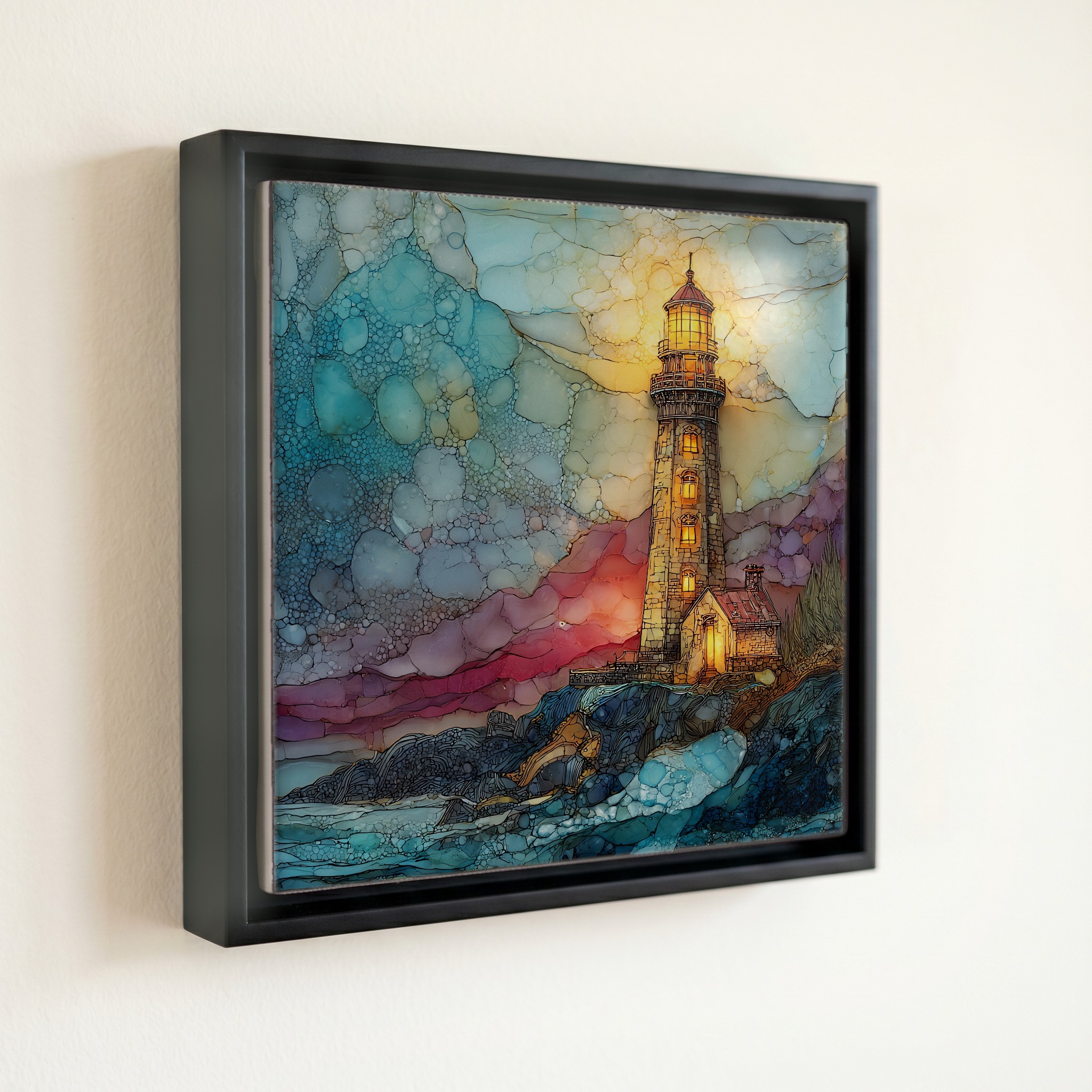
Ile de Sein Lighthouse, on ceramic.
Each tile is finished by hand in our Knoxville studio. Artwork is slowly infused into the ceramic surface under high heat and pressure, and rests beneath a thin glossy finish. The colour lives in the surface, not on top of it.
Pick any four 4-inch tiles — National Parks you've been to, a Smokies set, the four seasons of one place. $ for a set of , cork-backed, ready to live on the table.
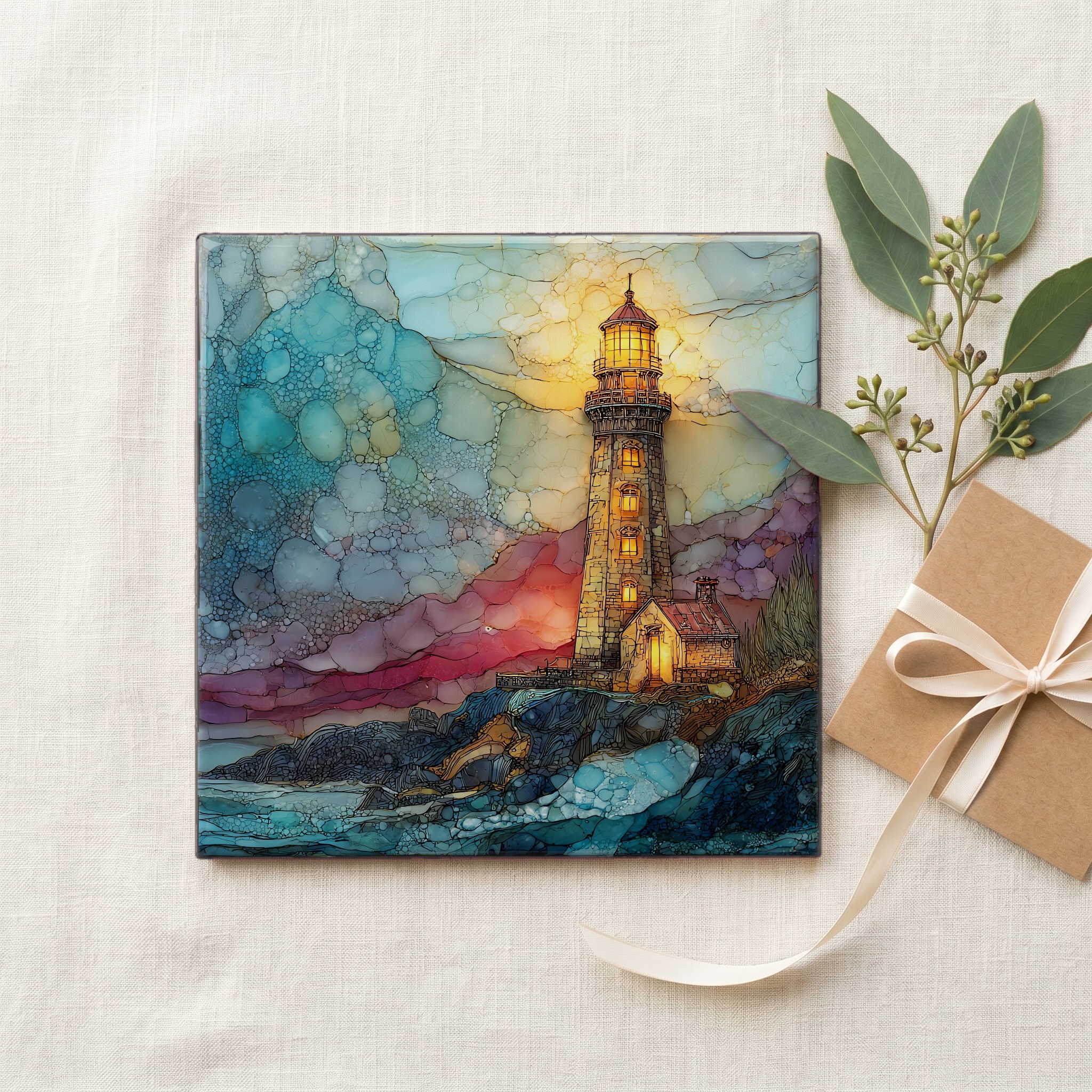
Each tile ships in a kraft box, tied with cream ribbon, with a handwritten note from the studio if you'd like to add one.
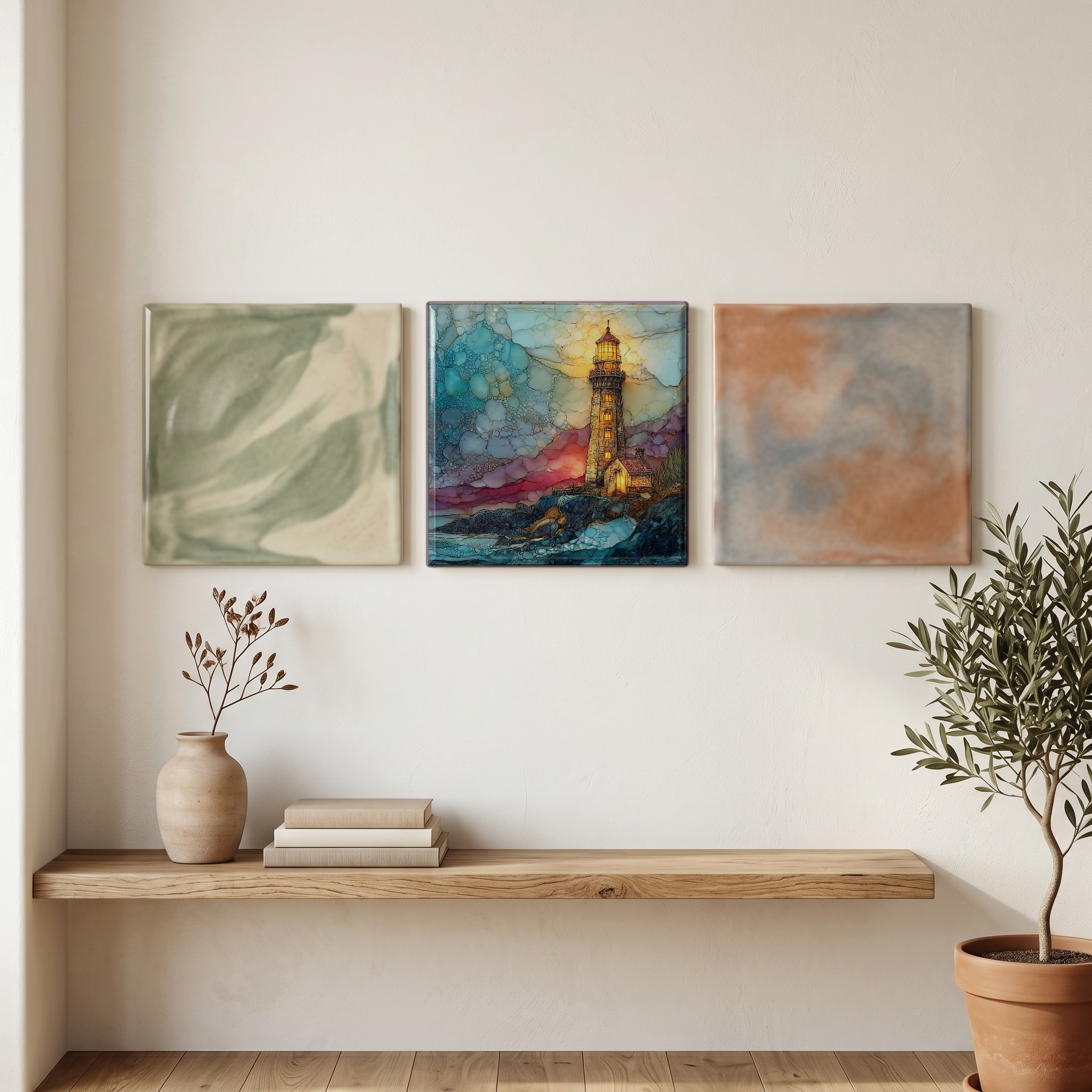
Three or five different vistas, hung together — a chapter of places you've been, or want to go.
The place, in three passes.
Île de Sein is a small island in the Iroise Sea, off the western tip of Finistère in Brittany. The lighthouse stands at the island's western end, the last lit stone before the Chaussée de Sein reef runs out into open Atlantic. The current tower was built in 1951, replacing the 1839 lighthouse destroyed by retreating forces in 1944. It rises about fifty metres in horizontal black-and-white bands. The island itself is roughly two kilometres long and never more than six metres above the sea, with a permanent population of around two hundred. Access is by passenger ferry from Audierne, a crossing of about an hour, and the waters around the island lie within the Iroise Marine Nature Park.
West of the lighthouse, the Chaussée de Sein reef extends roughly fifteen kilometres into open Atlantic, a chain of submerged and exposed rocks that has wrecked ships for centuries. At its far end, the Phare d'Ar-Men was built between 1867 and 1881: fourteen years of work on a rock so storm-battered that crews could only land in calm summer windows. The Île de Sein lighthouse stands at the inner anchor of that reef, marking the safer passage. Between the island and the mainland, the Raz de Sein tidal channel runs at speeds approaching seven knots on a spring tide. Together the reef and the Raz make this one of the most demanding stretches of water on the French coast.
The island is reached by passenger ferry from Audierne on the Finistère coast, a crossing of about an hour run by the Penn Ar Bed line, with a seasonal service from Camaret. There are no cars; the lanes are too narrow for anything but feet and small carts. The lighthouse is not generally open to the public, but the walk from the village to the western point takes about twenty minutes along a flat path past the chapel and the war memorial. The memorial honours the 128 men who sailed for England on 24 June 1940 in answer to Charles de Gaulle's appeal. That was almost the entire able-bodied male population of the island. The commune was made a Compagnon de la Libération in 1946.