Wender·Vista
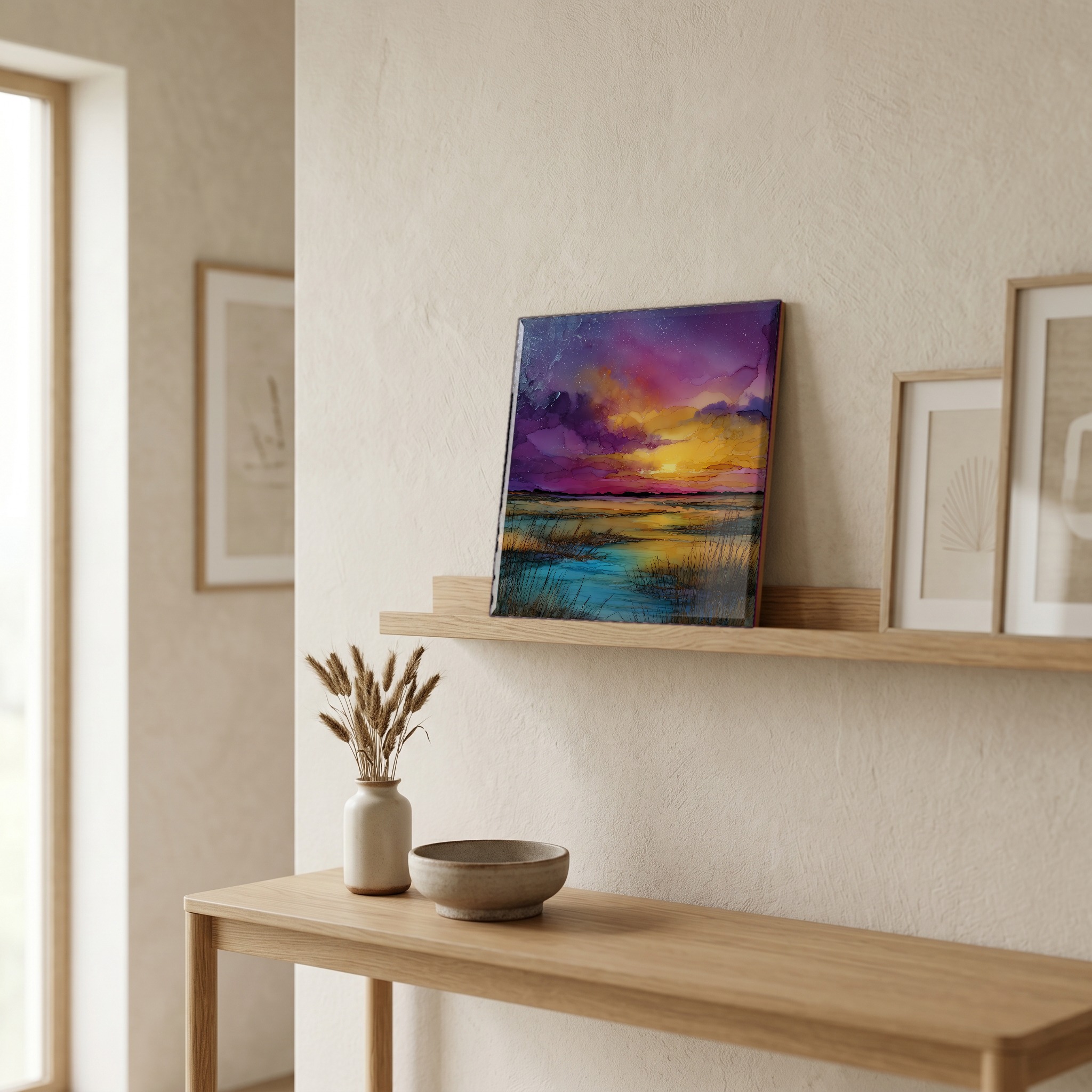
Ile de Re Salt Marshes
shown on ceramic, 12-inch tileFrance
on a low island off La Rochelle

Ile de Re Salt Marshes

— the geometry the sea leaves behind.

Where it lives

Not only on a wall.

A small tile on the nightstand catching the morning. A larger one above the fire. Yours, wherever you spend the slow hours.
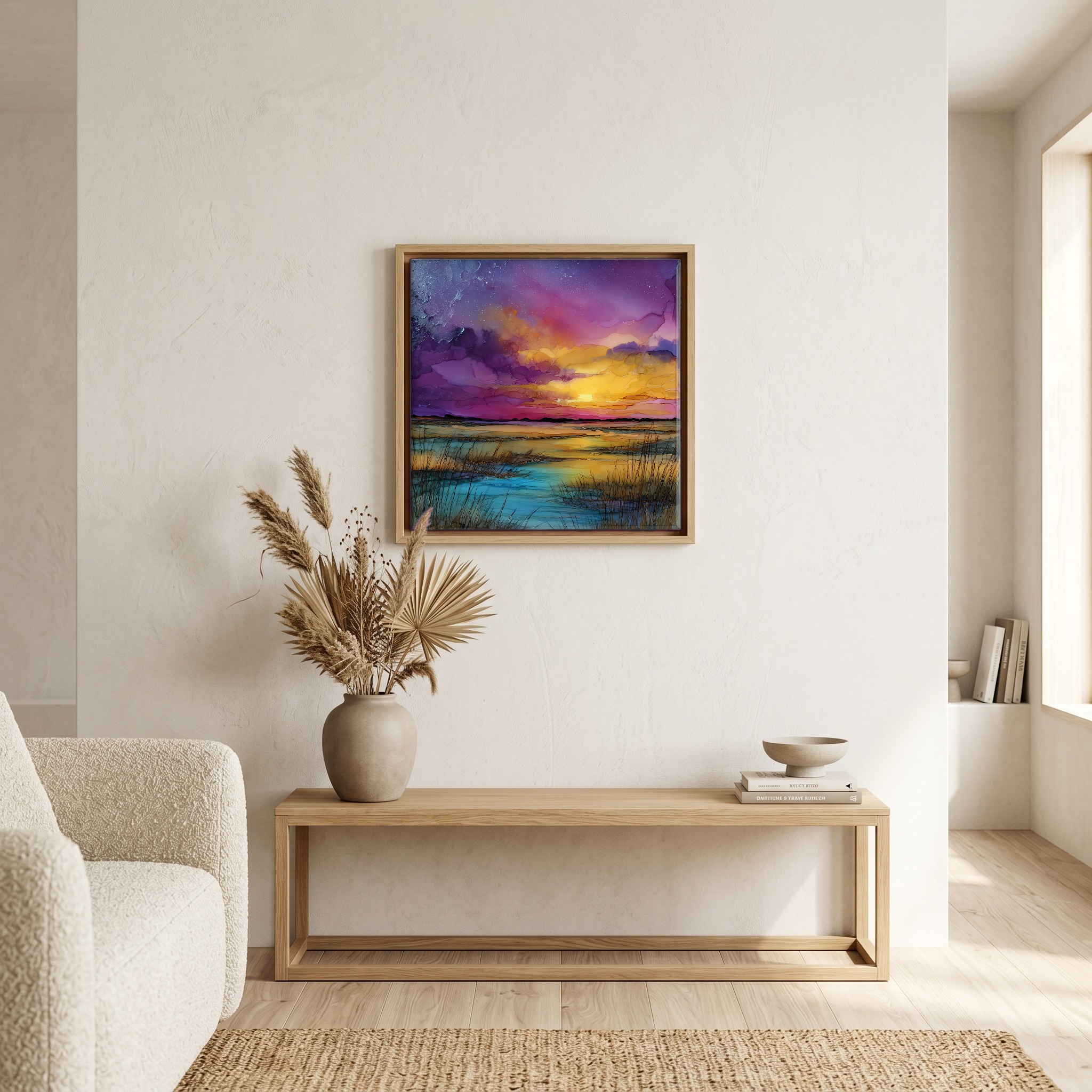
Above the bench, in a warm oak surround.
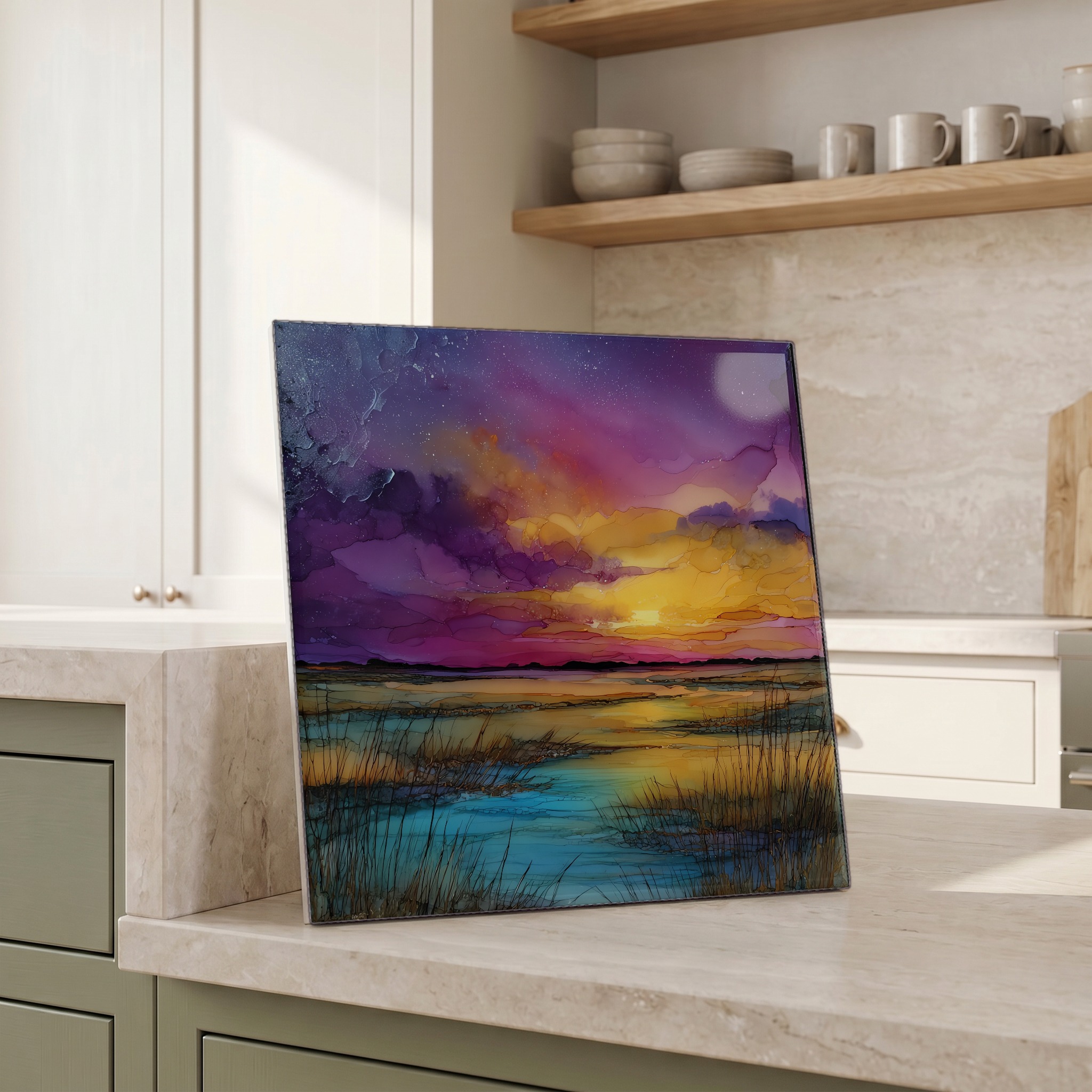
Beside the kettle, propped on the counter.
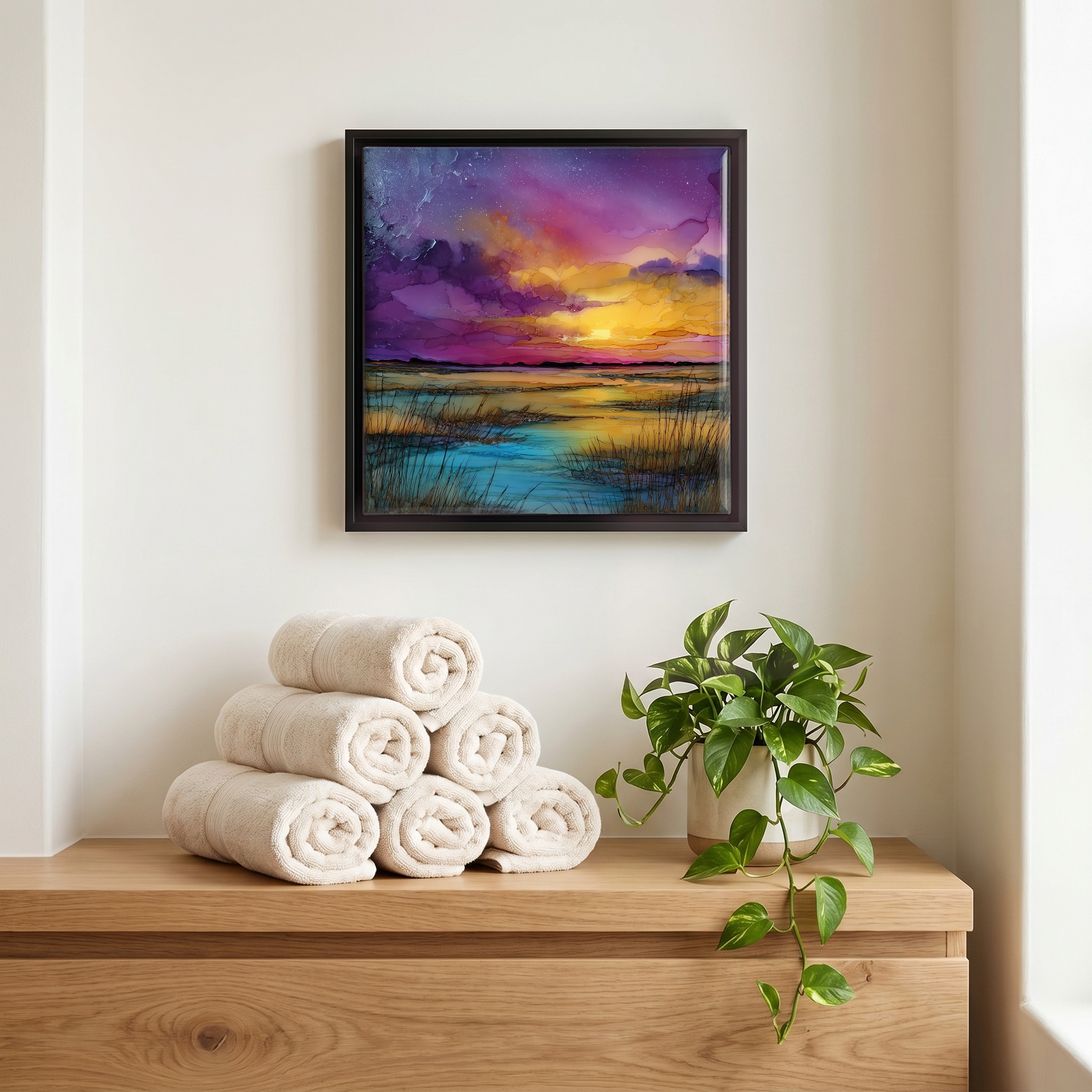
Above the linens, in a slim black surround.
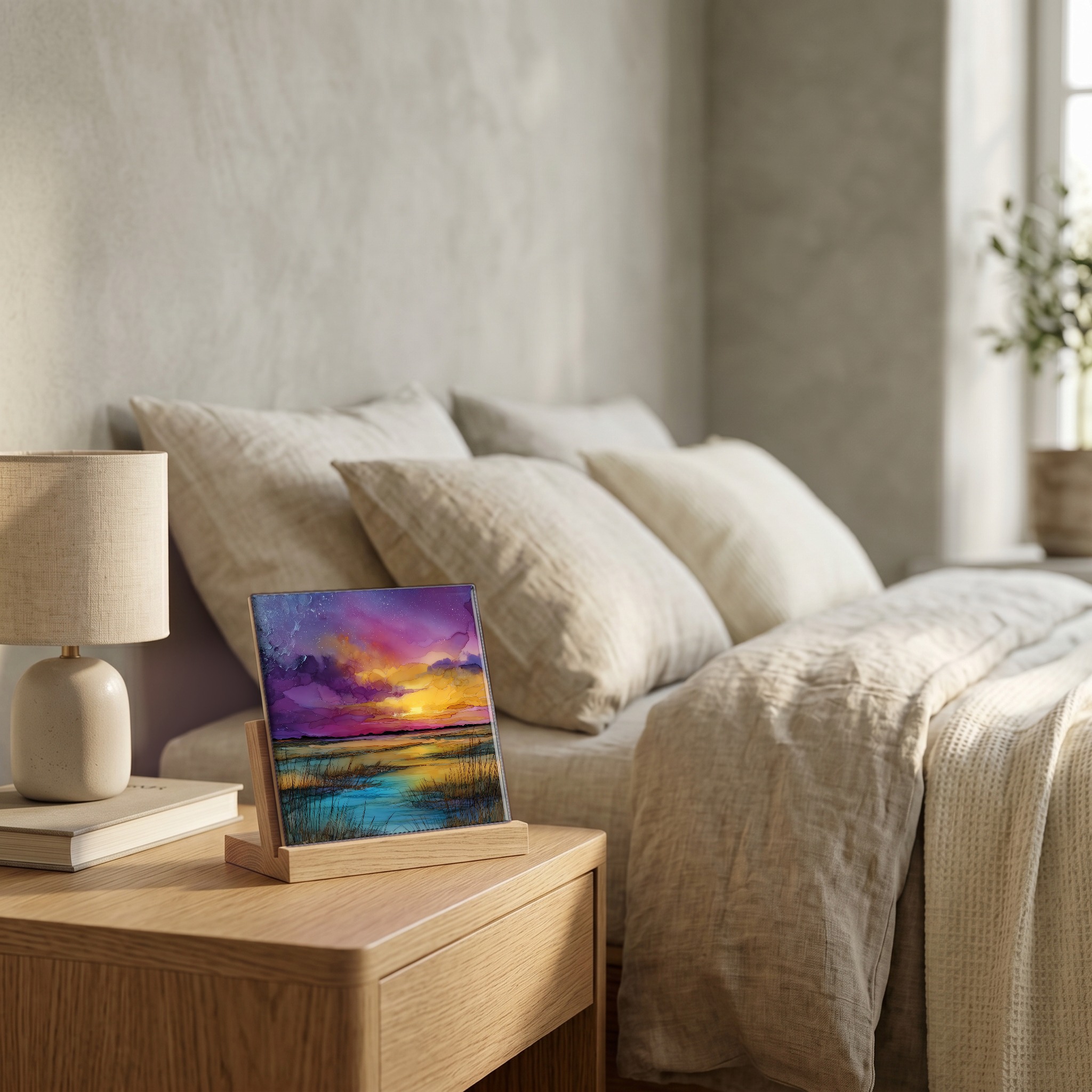
On the nightstand, on a light oak stand.
On a picture ledge, where the light comes in.
a note from the studio

A grid of shallow pans on the northern half of the island, worked since at least the seventh century and expanded by Cistercian monks from the twelfth, then by the families who hold the trade now. About a hundred sauniers still rake by hand. The squares fill and dry through summer, and by August the surface holds white crusts that get skimmed off before they sink. This is fleur de sel, the salt that only forms on hot, still days. From above the marshes read as a patchwork of pink, white and brown rectangles. From the path through them the horizon is mostly sky.
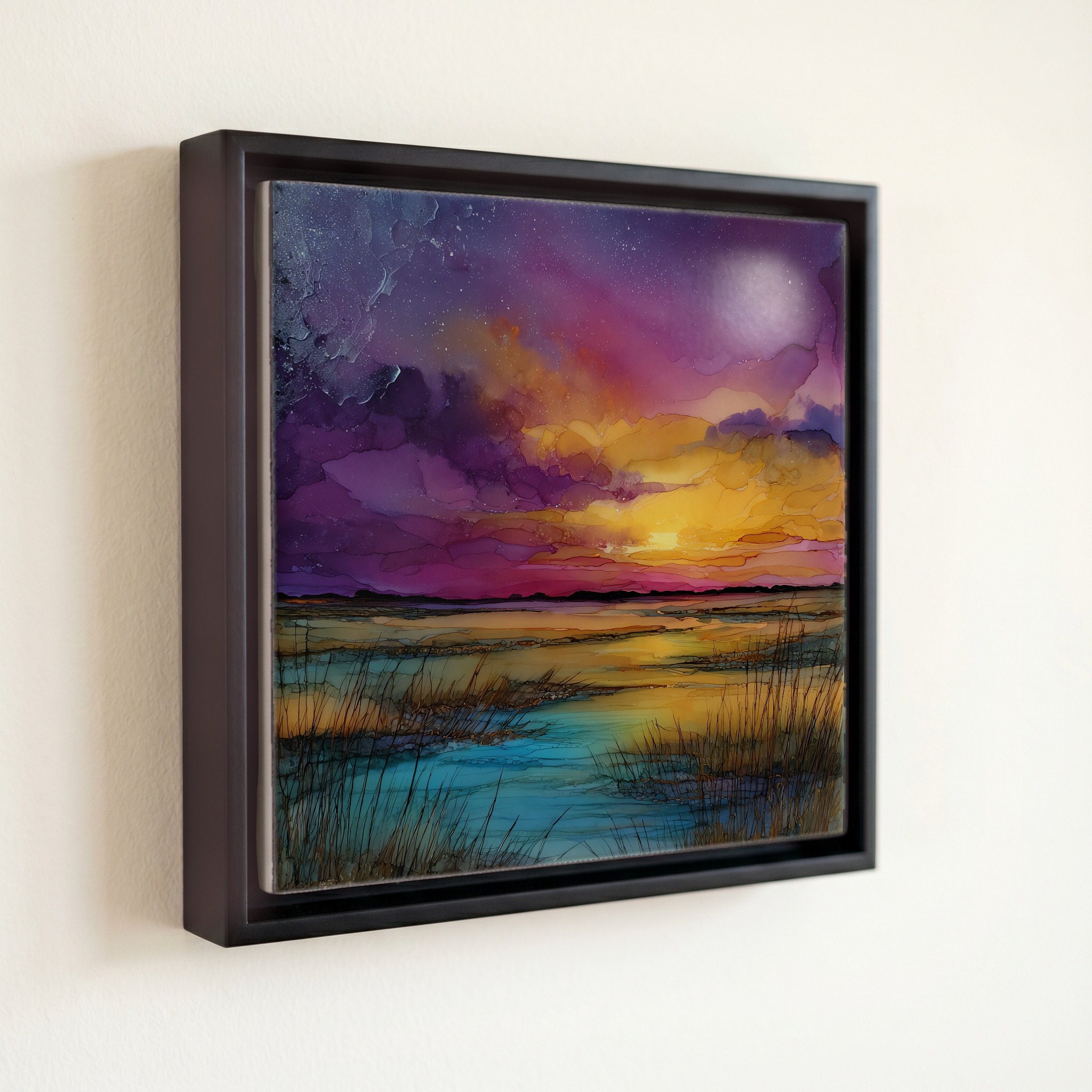
from the studio
shown in a slim black floating frame · 6 × 6 in
— bring it home

Ile de Re Salt Marshes, on ceramic.

Each tile is finished by hand in our Knoxville studio. Artwork is slowly infused into the ceramic surface under high heat and pressure, and rests beneath a thin glossy finish. The colour lives in the surface, not on top of it.

What kind of piece?
One tile — square or rectangle.
How big?
the popular one — counter, shelf, nightstand
6 × 6 in · 15 cm · 1.6 lb
Surface finish
A clear glossy finish — the artwork reads as if under resin. Ideal for show-pieces and framed wall art.
How it sits
A hidden cleat — sits ¼″ proud of the wall.
$58
Hand-finished and shipped from our studio at the foot of the Smokies. On your wall in about ten days.
size
6 × 6 in
15 cm
weighs
1.6 lb
solid in the hand
surface
ceramic, hand-finished
art rests beneath a thin glossy finish
from
Knoxville, TN
our family studio, at the foot of the Smokies
— start a Coaster Set

Pick any four 4-inch tiles — National Parks you've been to, a Smokies set, the four seasons of one place. $ for a set of , cork-backed, ready to live on the table.
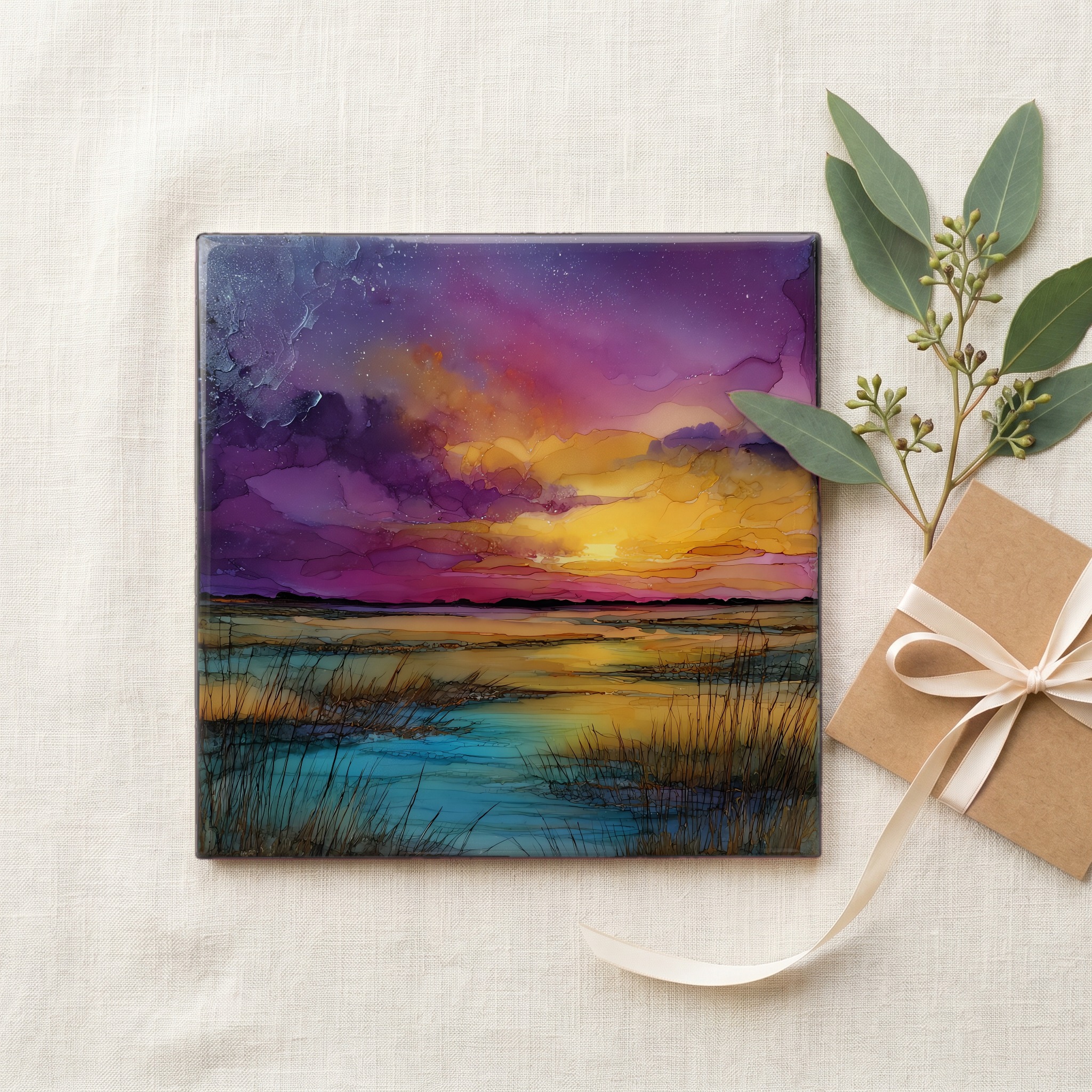
comes gift-ready
comes gift-ready

Each tile ships in a kraft box, tied with cream ribbon, with a handwritten note from the studio if you'd like to add one.
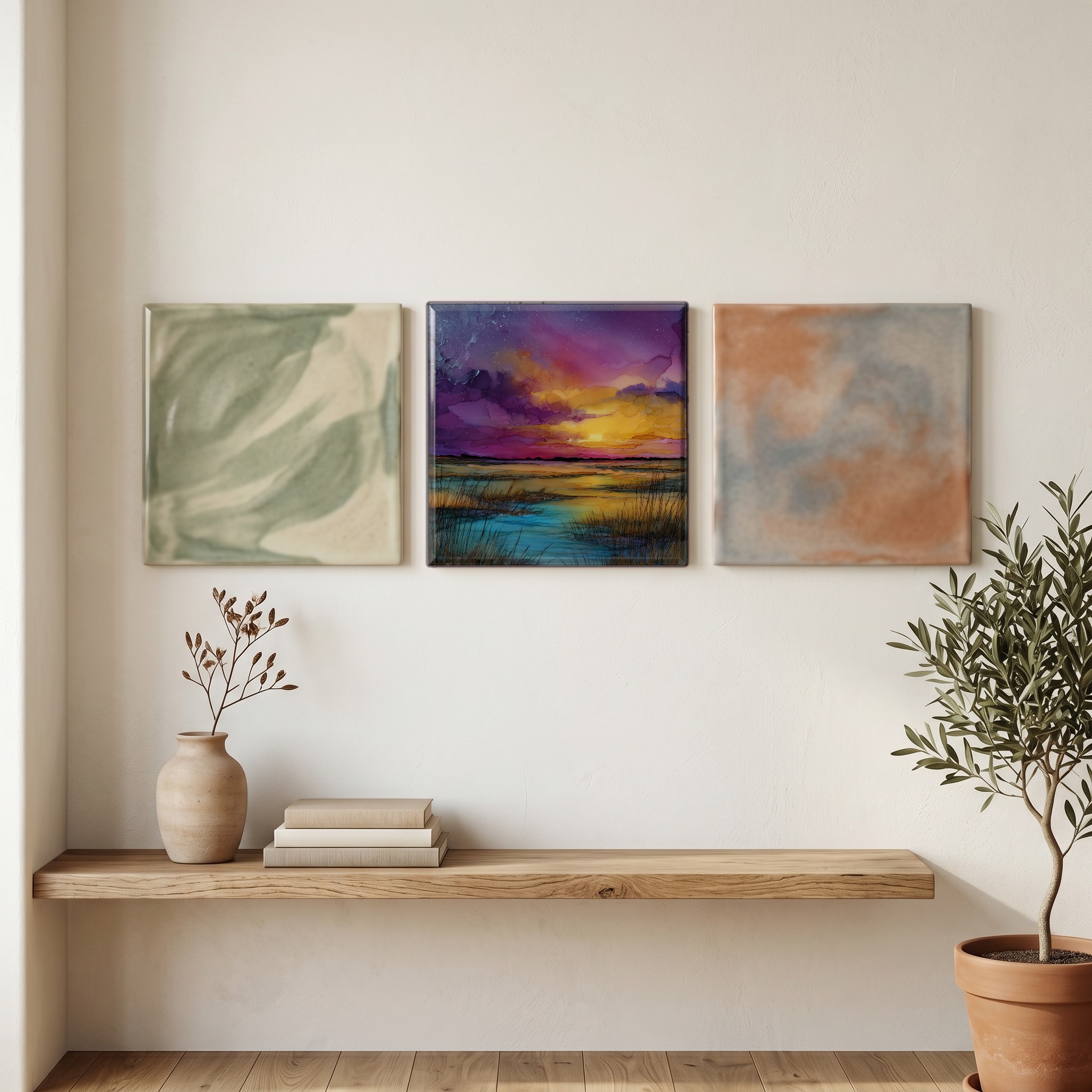
or build a grouping
or build a grouping

Three or five different vistas, hung together — a chapter of places you've been, or want to go.

about Ile de Re Salt Marshes

The place, in three passes.

A little of what's known, in case you fall down the rabbit hole — or want to go see it yourself.
the place

The salt marshes occupy the northern third of Île de Ré, an island of about 85 square kilometres in the Charente-Maritime department off the Atlantic coast of France. The island is joined to La Rochelle by a 2.9-kilometre toll bridge opened in 1988. The active salt-producing zone covers roughly 400 hectares between the villages of Loix, Ars-en-Ré, Saint-Clément-des-Baleines and Les Portes-en-Ré, a fraction of the 30,000 hectares worked here in the Middle Ages. The marshes share the island's western half with the Réserve naturelle nationale de Lilleau des Niges, a Ramsar-listed wetland that draws more than 300 bird species in migration.

the water

Salt has been gathered here since at least the seventh century, with the basin networks systematically expanded by Cistercian monks from the twelfth century onward. The process is hydraulic and entirely solar. Seawater enters at high tide and travels through a sequence of progressively shallower pans, losing water to evaporation at each step until the brine saturates. The grey coarse salt, gros sel, crystallises on the clay floor and is raked out by hand with a long wooden tool. On hot still afternoons a thin lace of white crystals forms on the surface and is skimmed off before it sinks. This is fleur de sel, about five percent of the harvest by weight. Today the cooperative counts roughly 100 working sauniers.

the season

The active harvest runs from late May to mid-September. Production depends on three things at once: full sun, low rainfall, and a steady breeze. Fleur de sel only crystallises on the surface when the air is hot and still enough for a film to form, which is why a single July week can yield more than a damp month either side of it. Off-season the pans are drained, the bunds repaired and the clay floors resealed by hand. Outside summer the marshes belong to the birds. The Réserve naturelle nationale de Lilleau des Niges hosts overwintering Eurasian spoonbills, avocets, black-tailed godwits and brent geese. The Écomusée du Marais Salant at Loix runs guided walks across a working salt farm from April through October.

where
France · Île de Ré, Charente-Maritime
within
Réserve naturelle nationale de Lilleau des Niges
elevation
1 m · 3 ft
position
46.2000° N · 1.4400° W
the neighborhood

What's nearby.

A handful of named places within an hour's walk or short drive. Some we've already painted; some we will.
3 km W
Ars-en-Ré
harbour village
6 km NW
Réserve naturelle de Lilleau des Niges
nature reserve
8 km W
Phare des Baleines
lighthouse
8 km E
Saint-Martin-de-Ré
fortified harbour
25 km SE
La Rochelle
harbour city
N
Ile de Re Salt Marshes
Ars-en-Ré
Réserve naturelle de Lilleau des Niges
Phare des Baleines
Saint-Martin-de-Ré
La Rochelle
common questions

What people ask.

A few questions we get about Ile de Re Salt Marshes — and about bringing the piece home.
about the place

They lie in the northern third of Île de Ré, an Atlantic island in the Charente-Maritime department of France, joined to La Rochelle by a 2.9-kilometre bridge opened in 1988. The active salt-producing zone covers about 400 hectares around the villages of Loix, Ars-en-Ré and Les Portes-en-Ré.

Salt has been gathered here since at least the seventh century, with the basin networks systematically expanded by Cistercian monks from the twelfth century onward. The trade peaked in the Middle Ages with around 30,000 hectares in production. Today about 400 hectares remain active, worked by roughly 100 sauniers.

The colour comes from halophilic micro-organisms, mainly the alga Dunaliella salina and certain Halobacterium species, which thrive in highly saline water and produce red and orange carotenoid pigments. The pink shade strengthens through summer as the brine concentrates and the population blooms.

Gros sel is the coarse grey salt that crystallises on the clay floor of each pan and is raked out from the bottom. Fleur de sel is the thin white crust that forms on the surface only on hot, still afternoons, hand-skimmed before it sinks. It accounts for roughly five percent of the harvest.

Yes. The Écomusée du Marais Salant at Loix offers guided walks across an active farm from April through October, explaining the basin sequence and the harvest tools. Several sauniers also sell directly from small huts beside the pans during the summer season.

The marshes are a Ramsar-listed wetland and a stop on the East Atlantic Flyway. The Réserve naturelle nationale de Lilleau des Niges, on the western edge, records more than 300 species in a typical year, including Eurasian spoonbills, pied avocets, black-winged stilts, brent geese and breeding little egrets.

Late June through early September is the peak working period, when the pans are full and the salt mounds rise alongside them. Light is best in the hour after sunrise and the hour before sunset, when the low sun catches the standing water and the white salt heaps.

about the piece in your home

It carries well as a gift for anyone with a tie to the island, to La Rochelle, or to the long stretch of Charente-Maritime coastline. The marshes are an everyday landscape there, not a tourist set piece. A Small or Medium with a handwritten note from the studio reads as considered rather than generic.

The palette runs through pale blue, white, soft pink and grey-brown, which sits comfortably in coastal-modern, French-country and quiet Scandinavian rooms. It works as a single calm anchor on a pale wall rather than as part of a busy gallery wall. White oak and limewashed walls flatter it best.

Coastal-modern and the broader quiet-luxury direction both favour low-saturation natural-light palettes anchored by a single piece of work with a strong sense of place. The Île de Ré marshes read as both, which is why the Medium tends to be the most-requested size for entry tables and bedroom walls.

Above a standard three-seat sofa or a long console, a single Large reads at the right scale; a four-tile Mural carries the wall when you want the piece to be the room's centre. For a wide horizontal sofa wall, a nine-tile Mural turns the marshes into a panorama.

Yes, with the right finish. In a bathroom, on a backsplash or in a shower, choose the Dura Satin or Matte finish; both are scratch-resistant and humidity-tolerant. The Glossy finish is for dry walls and framed pieces. The colour itself is set into the ceramic surface and does not fade with steam.

A soft microfibre cloth and clean water handle everyday dust and fingerprints. For kitchen splatters, a drop of mild dish soap on a damp cloth is enough. Avoid abrasive scrubbers and citrus-based cleaners. The colour lives inside the ceramic surface beneath a thin glossy finish, so it will not lift with normal cleaning.

Yes. Every WenderVista piece is painted in-house by Reid Wender in the studio's stained-glass and alcohol-ink visual language, then slowly infused into the ceramic surface under high heat and pressure and hand-finished. There is no licensing, no third-party catalogue, and no two tiles leave the studio without a final eye on them.

if this one stayed with you

A few you might also love.

Hand-picked by the eye that found Sorapis. Same air, same kind of quiet.